Another wheel build today (the rest is implied).
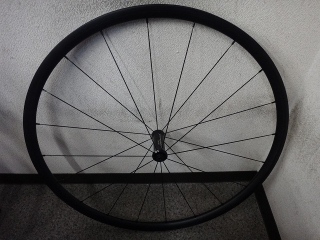
I built a wheel with a hookless carbon rim that measured about 250g by scale.
The title says it all, but the moment you say "hookless rim"
it's understood to be a tubeless (& tubeless-ready) tire-only rim.
About the weight — the vague expression is because
this rim has no holes on its outer perimeter except for the valve hole,
and you need to use a magnet to call the nipple
since the customer is doing the temporary assembly themselves.
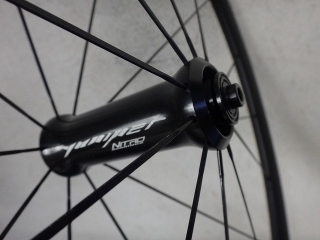
Unipro straight-pull spoke hub, 20H
Black CX Super forced radial lacing with black aluminum nipples.
From the feel during temporary assembly, it was clear
the spoke length was on the long side, but it seemed buildable,
so I went ahead with the wheel assembly.
From the feel when rolling threads with the spoke cutter,
CX-RAY is materially harder than DT Comp,
and CX Super is even harder than that,
so I wanted to avoid threading if possible.
If the materials had been brought loose, I might have done it.

As mentioned, there are no holes on the outer perimeter except the valve hole,
and rim tape isn't needed.
Using a magnet to call the nipple means
since neither brass nor aluminum stick to magnets,
you attach an iron screw-type tool to the threads to guide it,
but CX Super is a #15-based spoke,
so tools made for Zonda or Racing 3 won't work.
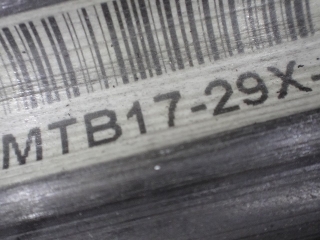
From the rim part number, it looks like a 29-inch MTB rim, but
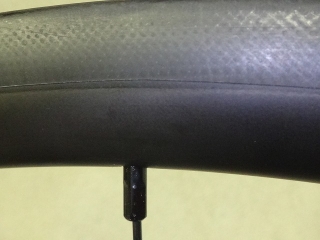
the customer had a brake zone added when they placed the order.
You can tell from the hub too, but the customer is using this with rim brakes.
A rim brake-compatible hookless rim is pretty unusual.
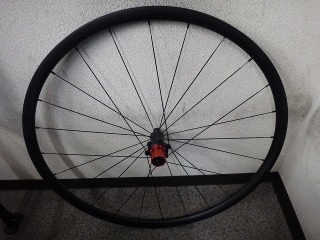
I also built the rear wheel.
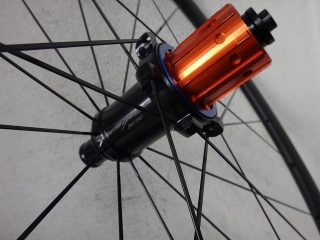
Unipro straight-pull spoke hub like the front, 24H,
all CX Super forced 4-cross lacing equivalent.
When I aligned the nipple end face with where the spoke threads begin during temporary assembly,
the rim shifted significantly toward the freewheel side,
so the non-freewheel side spokes were on the long side, but I went ahead with assembly anyway.
When I received it, the non-freewheel side hub bearing wasn't pressed in,
and the design was such that threading the straight-pull spokes was only possible
without the bearing in place.
Since it's equal-number lacing on the non-freewheel radial side,
the spoke tension difference is fairly large left-to-right, but
if you simply want a lightweight wheel, this is the optimal solution.
The freewheel ratchet pawl had three pawls,
each individually popped up by a U-shaped metal spring.
It's not some ridiculous structure like Extra Light hubs
that use rubber O-rings (→here) to pop the pawls.
Though that design has its own kind of extreme appeal, and I don't actually dislike it.
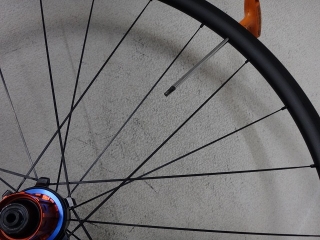
I temporarily assembled it treating the freewheel side (tangent lacing side) as a reverse rim,
but since the non-freewheel side was radial laced
and the rim holes had no centering, I just built it as-is.
If it had been tangent laced on both sides,
the valve would have ended up awkwardly
in the middle of the four-spoke set making up the final crossing on both sides.
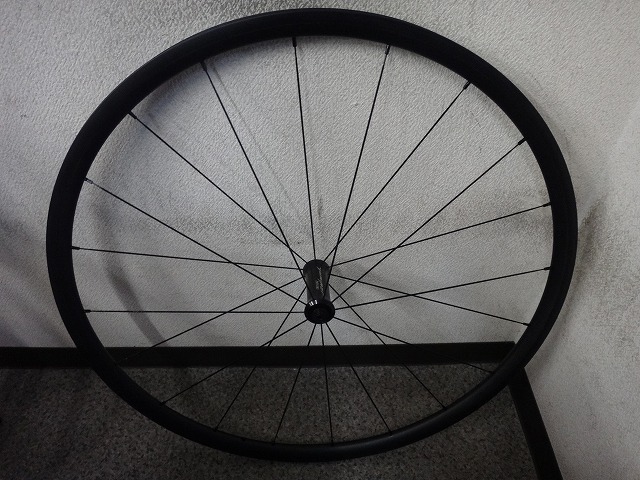
I built a wheel with a hookless carbon rim that measured about 250g by scale.
The title says it all, but the moment you say "hookless rim"
it's understood to be a tubeless (& tubeless-ready) tire-only rim.
About the weight — the vague expression is because
this rim has no holes on its outer perimeter except for the valve hole,
and you need to use a magnet to call the nipple
since the customer is doing the temporary assembly themselves.
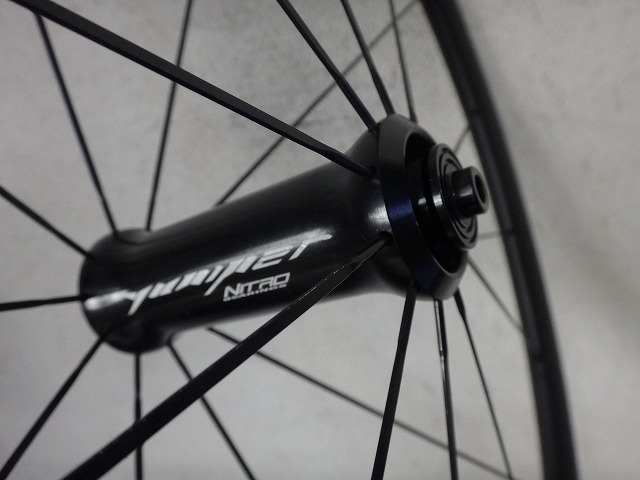
Unipro straight-pull spoke hub, 20H
Black CX Super forced radial lacing with black aluminum nipples.
From the feel during temporary assembly, it was clear
the spoke length was on the long side, but it seemed buildable,
so I went ahead with the wheel assembly.
From the feel when rolling threads with the spoke cutter,
CX-RAY is materially harder than DT Comp,
and CX Super is even harder than that,
so I wanted to avoid threading if possible.
If the materials had been brought loose, I might have done it.
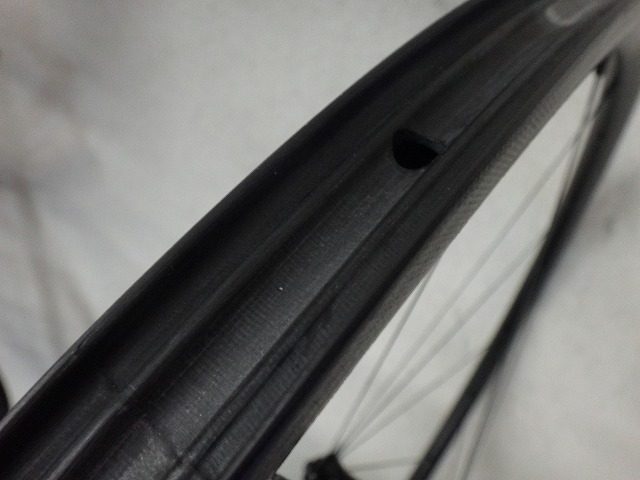
As mentioned, there are no holes on the outer perimeter except the valve hole,
and rim tape isn't needed.
Using a magnet to call the nipple means
since neither brass nor aluminum stick to magnets,
you attach an iron screw-type tool to the threads to guide it,
but CX Super is a #15-based spoke,
so tools made for Zonda or Racing 3 won't work.

From the rim part number, it looks like a 29-inch MTB rim, but
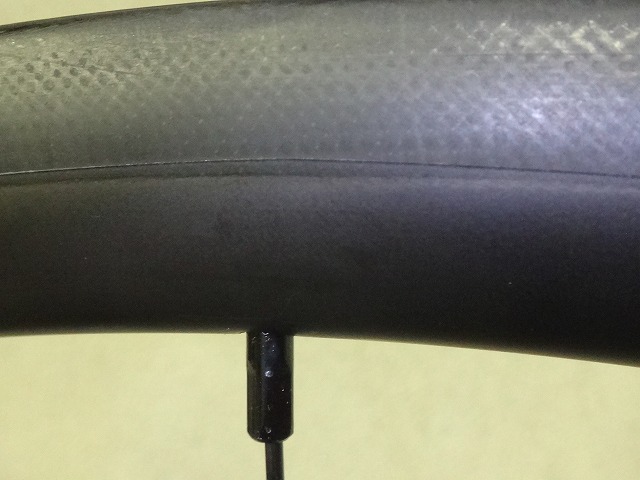
the customer had a brake zone added when they placed the order.
You can tell from the hub too, but the customer is using this with rim brakes.
A rim brake-compatible hookless rim is pretty unusual.
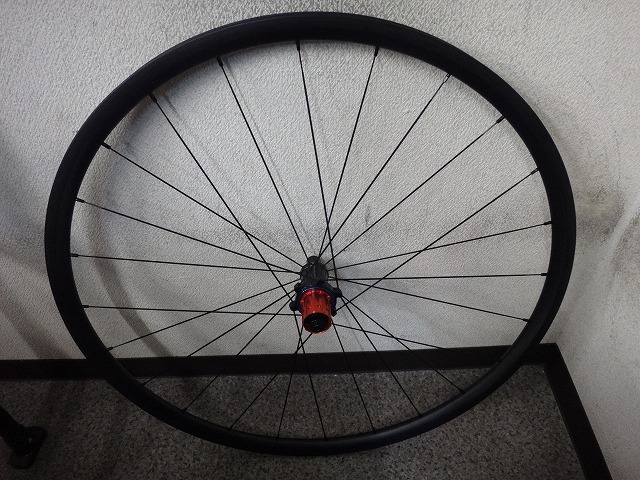
I also built the rear wheel.
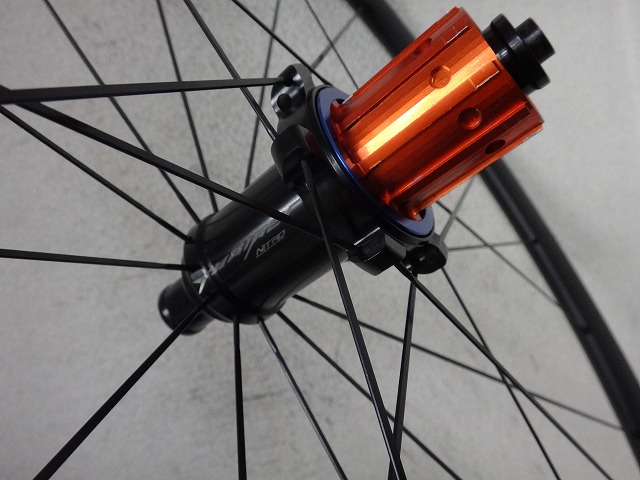
Unipro straight-pull spoke hub like the front, 24H,
all CX Super forced 4-cross lacing equivalent.
When I aligned the nipple end face with where the spoke threads begin during temporary assembly,
the rim shifted significantly toward the freewheel side,
so the non-freewheel side spokes were on the long side, but I went ahead with assembly anyway.
When I received it, the non-freewheel side hub bearing wasn't pressed in,
and the design was such that threading the straight-pull spokes was only possible
without the bearing in place.
Since it's equal-number lacing on the non-freewheel radial side,
the spoke tension difference is fairly large left-to-right, but
if you simply want a lightweight wheel, this is the optimal solution.
The freewheel ratchet pawl had three pawls,
each individually popped up by a U-shaped metal spring.
It's not some ridiculous structure like Extra Light hubs
that use rubber O-rings (→here) to pop the pawls.
Though that design has its own kind of extreme appeal, and I don't actually dislike it.
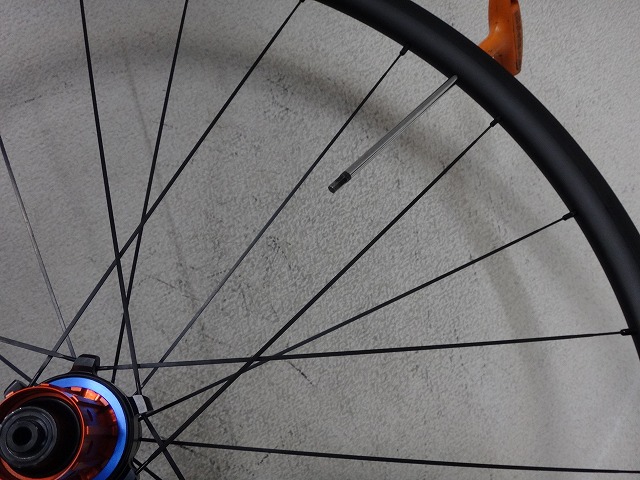
I temporarily assembled it treating the freewheel side (tangent lacing side) as a reverse rim,
but since the non-freewheel side was radial laced
and the rim holes had no centering, I just built it as-is.
If it had been tangent laced on both sides,
the valve would have ended up awkwardly
in the middle of the four-spoke set making up the final crossing on both sides.