Another wheel day (and so on).
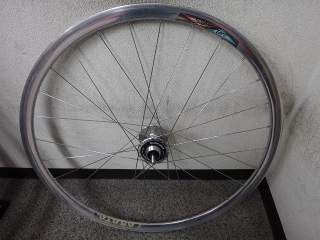
A customer brought in a wheel that was built with an Araya Super Aero rim.
They want it re-laced.
There are front and rear wheels, but today I'm working on the rear.

HB-7600 fixed-gear rear hub, 28H, #15 plain Champion spokes
laced 6-cross JIS pattern.
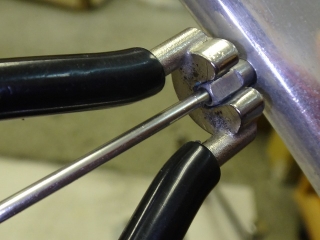
The nipples are DT as well, with a 3.2mm wrench flat.
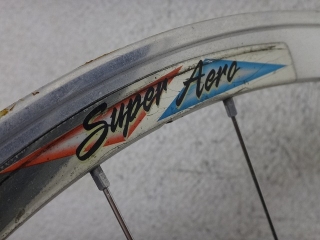
I said "vintage" Super Aero in the title because
a reissue model came out not long ago (and is already discontinued).
This rim's pet name is Super Aero, and
it's written that way on the rim decal too,
but the catalog model number is SA-230.
This is a tubular rim, but there was also a WO version.
When this Super Aero came out, it had
what was probably the deepest rim profile of any commercially available rim,
so even at this depth it was treated as an aero rim.
The reissue rim's model number is SA-730, WO version only.
The "Super Aero" decal marking on the SA-230
has been changed to an "SA-730" marking on the reissue.
The SA-230 is so thin that if you squeeze the rim sidewall hard it flexes,
and I've seen cut samples of it—
the side section outside the brake zone was extremely thin.
The SA-730 is a different beast entirely, weighing 545g nominally,
just sharing the same rim depth and outer dimensions.


Since I'm taking it apart anyway, the slight centering issues don't matter,
but what really bothered me was that it was laced so loosely
it barely qualified as a ridable wheel.
This rim too—tension it like a modern rim and you're in for trouble—
but it can take more tension than the old Aero 1.
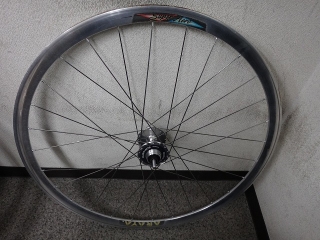
Built.
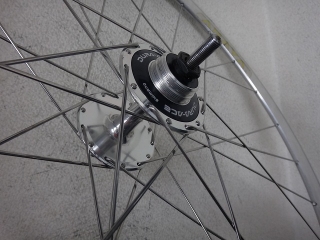
Aero Star Bright #14 spokes, 6-cross JIS pattern.
I'll do the full cross-lacing for both sides later.
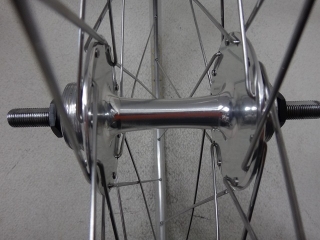
If this hub were 36H,
it would have an NJS stamp in the center of the hub shell,
which would determine the hub's left/right orientation.
Since it's fixed-gear and not road-gear,
there's no marking element on this hub to determine left and right orientation.
If I pulled out the hub axle, there might be stamps or something,
but—the thing is, even though it's a fixed-gear hub,
at one time it appears it was set up with a sprocket
on one side only.

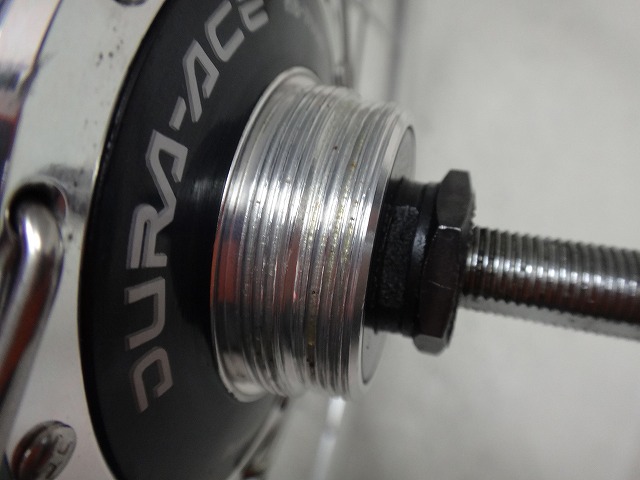
↑ mounting marks present

↑ no mounting marks
If you're going to mount a sprocket on just one side,
I'd recommend orienting the side with mounting marks as the right side.
Bonus
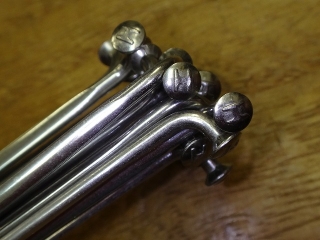
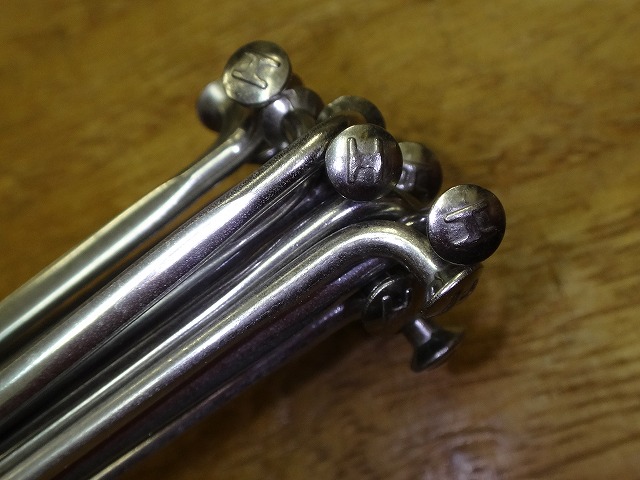
Star's current Aero Star Bright spokes—
regardless of spoke length, the non-butted section is uniform in length,
and especially at the spoke head end,
the aero shaping starts right away, which looks great.
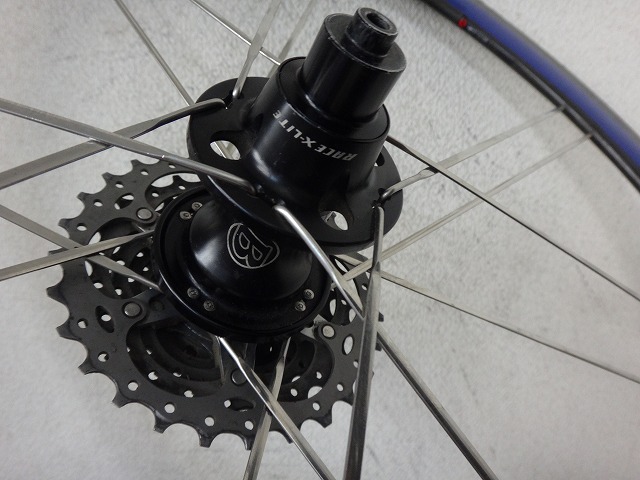
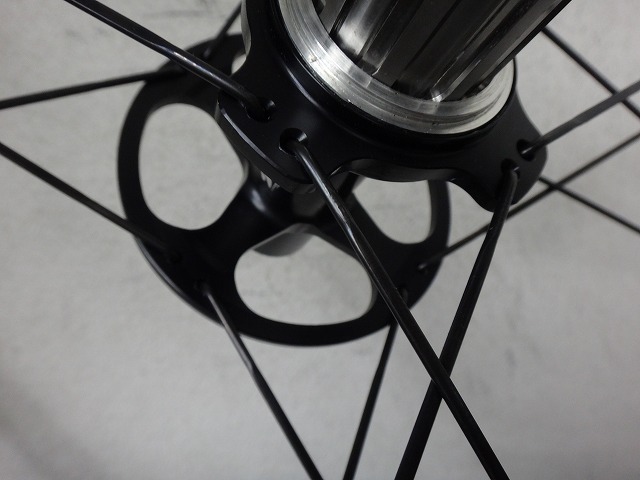
When doing a full-inpoke or full-outpoke two-build,
the final cross ends up very close to the hub flange,
but ideally that part shouldn't be round-section.
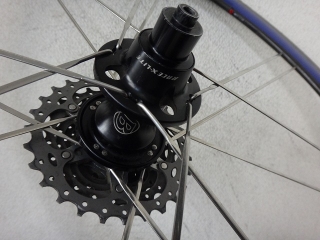
↑ This is Bontrager,
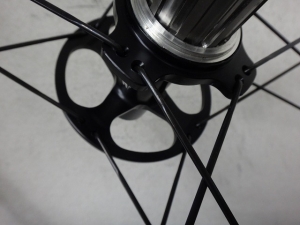
↑ and this is a Rolf Prima full-inpoke 1-cross,
both with odd/even-phase large flanges and only 16H,
so for this lacing style the final cross
sits a bit further from the hub flange.
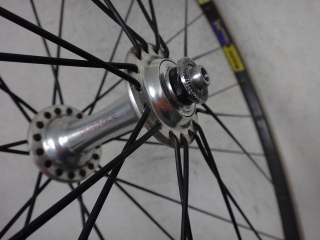
When you do it with small flanges and 32H, you get this.
In this wheel's case, it doesn't even have aero spokes to begin with.
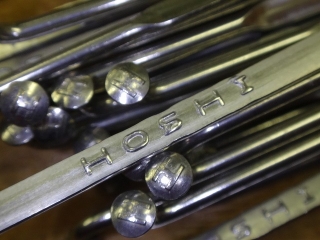
This is Star's older Aero Star Bright Type II,
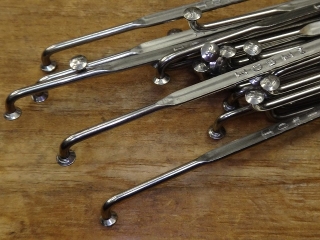
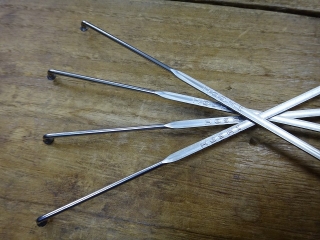
it appears to have been manufactured with "dozens of spoke lengths paired with a few butting lengths,"
so the butted length—or rather, the distance to where the butting starts—
varies considerably relative to spoke length,
and some examples look rather silly for an aero spoke.
By contrast, the current Aero Star Bright
has clearly been made with careful attention to detail,
but I still have zero plans to use it as my go-to spoke.
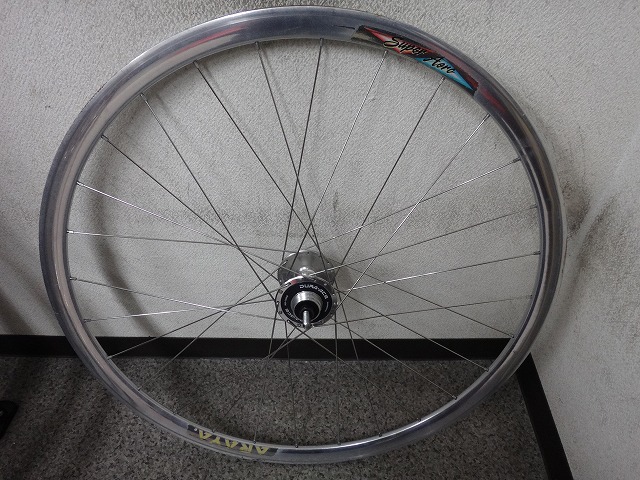
A customer brought in a wheel that was built with an Araya Super Aero rim.
They want it re-laced.
There are front and rear wheels, but today I'm working on the rear.

HB-7600 fixed-gear rear hub, 28H, #15 plain Champion spokes
laced 6-cross JIS pattern.
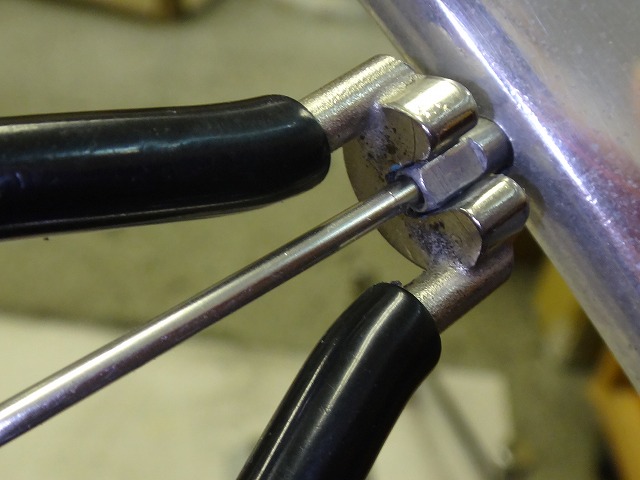
The nipples are DT as well, with a 3.2mm wrench flat.
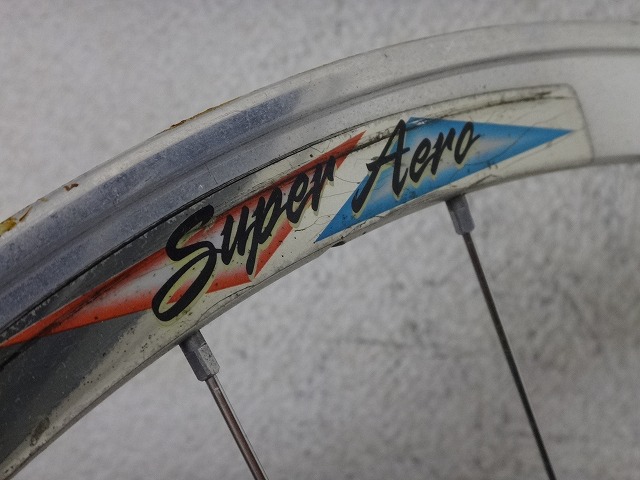
I said "vintage" Super Aero in the title because
a reissue model came out not long ago (and is already discontinued).
This rim's pet name is Super Aero, and
it's written that way on the rim decal too,
but the catalog model number is SA-230.
This is a tubular rim, but there was also a WO version.
When this Super Aero came out, it had
what was probably the deepest rim profile of any commercially available rim,
so even at this depth it was treated as an aero rim.
The reissue rim's model number is SA-730, WO version only.
The "Super Aero" decal marking on the SA-230
has been changed to an "SA-730" marking on the reissue.
The SA-230 is so thin that if you squeeze the rim sidewall hard it flexes,
and I've seen cut samples of it—
the side section outside the brake zone was extremely thin.
The SA-730 is a different beast entirely, weighing 545g nominally,
just sharing the same rim depth and outer dimensions.
Since I'm taking it apart anyway, the slight centering issues don't matter,
but what really bothered me was that it was laced so loosely
it barely qualified as a ridable wheel.
This rim too—tension it like a modern rim and you're in for trouble—
but it can take more tension than the old Aero 1.
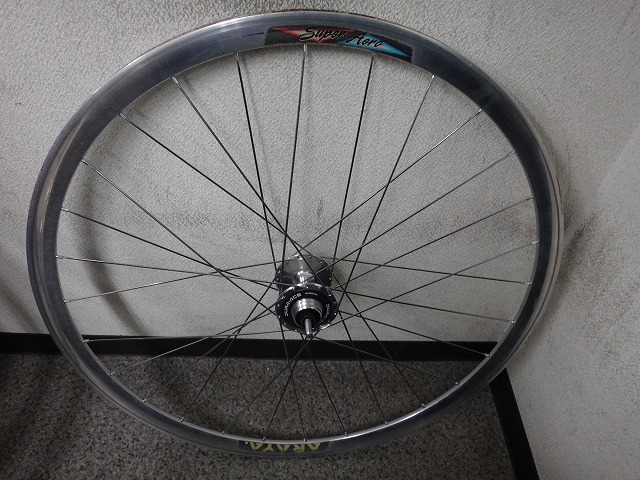
Built.

Aero Star Bright #14 spokes, 6-cross JIS pattern.
I'll do the full cross-lacing for both sides later.

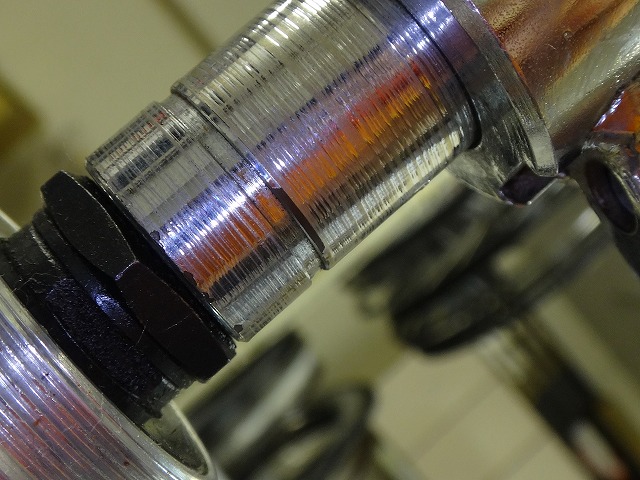
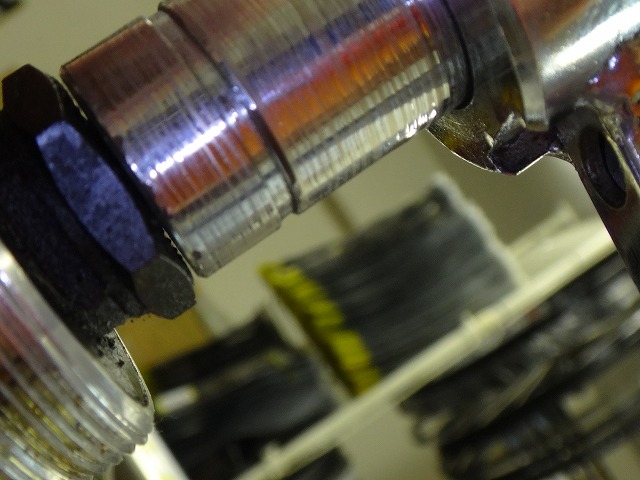
If this hub were 36H,
it would have an NJS stamp in the center of the hub shell,
which would determine the hub's left/right orientation.
Since it's fixed-gear and not road-gear,
there's no marking element on this hub to determine left and right orientation.
If I pulled out the hub axle, there might be stamps or something,
but—the thing is, even though it's a fixed-gear hub,
at one time it appears it was set up with a sprocket
on one side only.
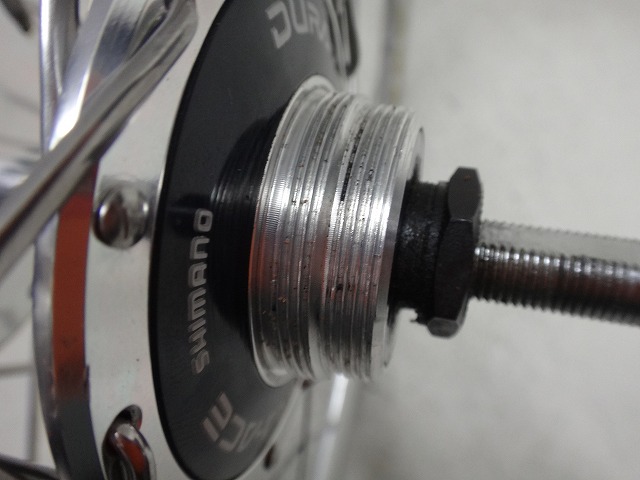
↑ mounting marks present
↑ no mounting marks
If you're going to mount a sprocket on just one side,
I'd recommend orienting the side with mounting marks as the right side.
Bonus
Star's current Aero Star Bright spokes—
regardless of spoke length, the non-butted section is uniform in length,
and especially at the spoke head end,
the aero shaping starts right away, which looks great.
When doing a full-inpoke or full-outpoke two-build,
the final cross ends up very close to the hub flange,
but ideally that part shouldn't be round-section.
↑ This is Bontrager,
↑ and this is a Rolf Prima full-inpoke 1-cross,
both with odd/even-phase large flanges and only 16H,
so for this lacing style the final cross
sits a bit further from the hub flange.
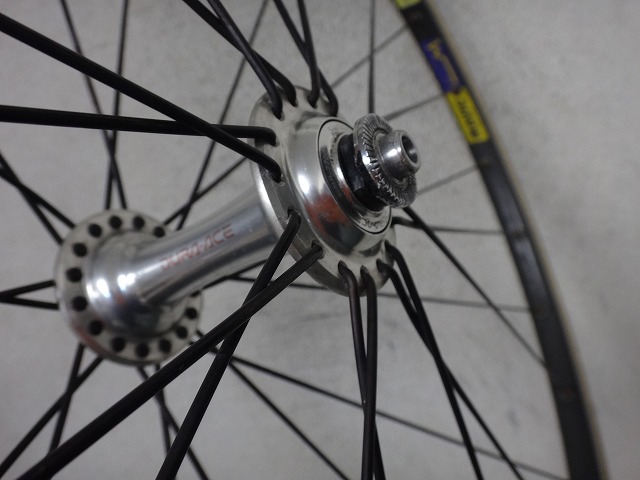
When you do it with small flanges and 32H, you get this.
In this wheel's case, it doesn't even have aero spokes to begin with.
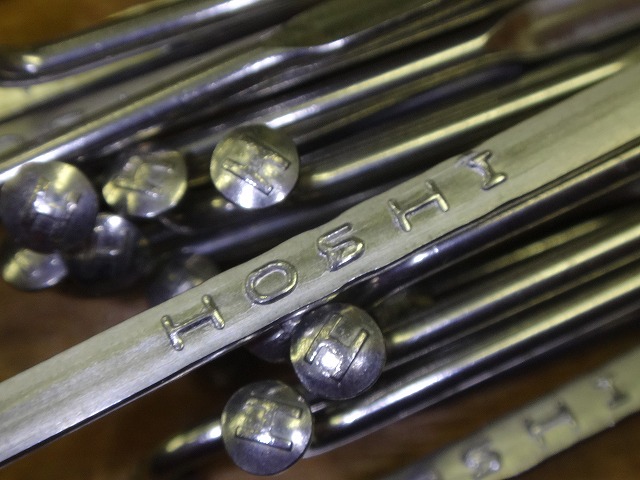
This is Star's older Aero Star Bright Type II,
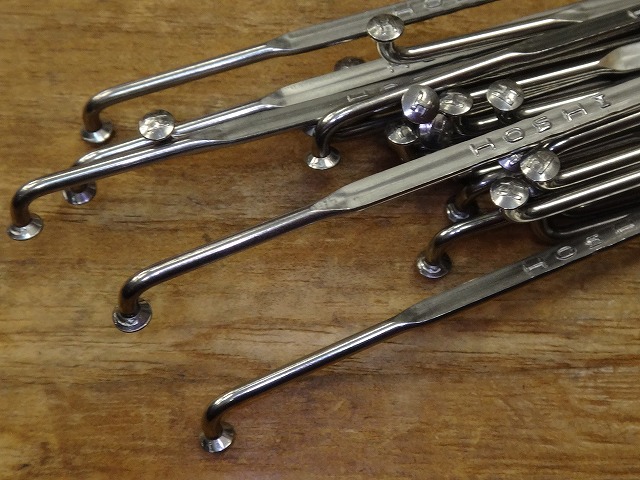
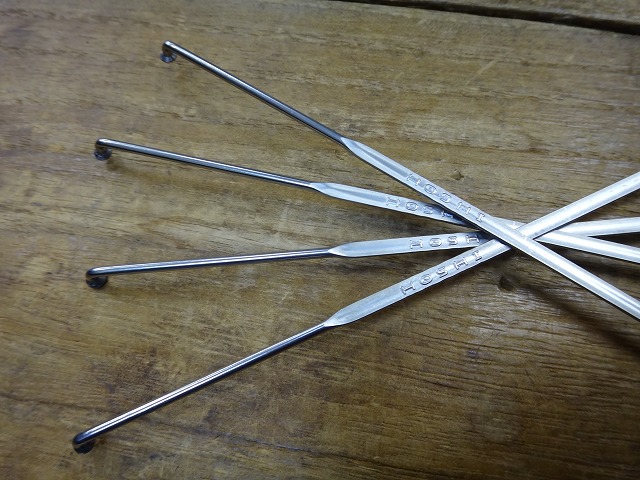
it appears to have been manufactured with "dozens of spoke lengths paired with a few butting lengths,"
so the butted length—or rather, the distance to where the butting starts—
varies considerably relative to spoke length,
and some examples look rather silly for an aero spoke.
By contrast, the current Aero Star Bright
has clearly been made with careful attention to detail,
but I still have zero plans to use it as my go-to spoke.