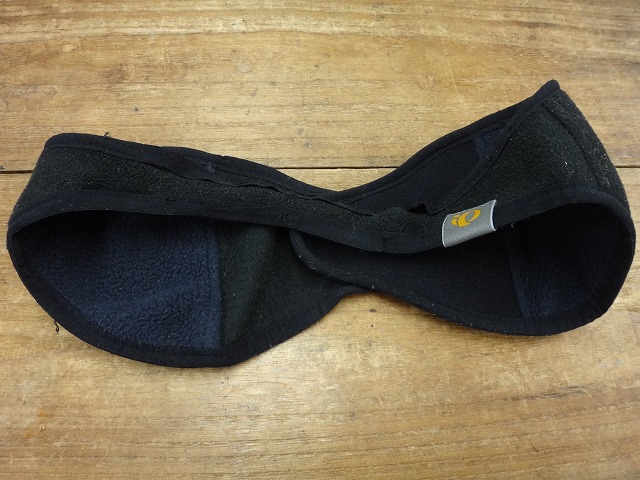
I've been using a Pearl Izumi ear warmer
for many years that I've grown attached to.
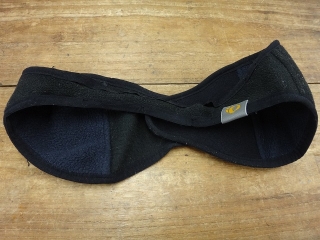
↑This one
Pearl Izumi actually calls it
an "Ear Warmer" (イアーウォーマ), not "Ear Warmer" (イヤーウォーマー).
There's something oddly Hiroshi Mori-ish about dropping the final long vowel mark.
If you search for "Ear Warmer,"
Pearl Izumi's ear warmer comes up at the top.
The model number is 82, but more precisely it's 82-2-F.
The F at the end stands for Free Size.
The current model also has the number 82, but that's 82-4-F instead.
When people simply say "Pearl Izumi 82," it currently refers to the 82-4.
The 82-4 first appeared in the 2019 autumn/winter lineup,
and has been a continuous model ever since.
The 82-2 first appeared in the 2012 autumn/winter lineup.
I wondered if there was an 82-3 that I didn't know about, so I looked into it,
but from what I could find, the red version of the 82-2 seemed to be the 82-3.
However, since the 82-2 comes in both black and gray under the same model number (the one in the image above is black),
it seems odd to advance the model number for just a color difference,
so there might be something else different about it.
What's good about the 82-2 is that the vertical width
of the forehead section connecting the front sides of the ear coverage is quite short.
It's rare to find one this short.
As a general feature of the 82 line, there's a velcro section on the back of the head
that lets you adjust the tightness as you like,
which also means you can put it on without taking off your helmet.
At first, I wrap the 82-2 around my head before putting on the helmet.
Then I put the helmet on,
so the helmet's ear strap ends up above the 82-2.
Later, if I want to take it off while I'm out,
I can just peel back the velcro on the back of my head while wearing the helmet
and pull it off.
If I then want to put the 82-2 back on,
I usually wrap it over the helmet's ear strap while still wearing the helmet,
and this is where the short vertical width of the forehead section
makes it incredibly easy to tuck into the helmet.
I could whip it on in just a moment during a traffic light wait or a brief stop at a mountain pass,
so it was truly indispensable.
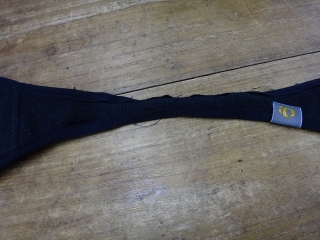
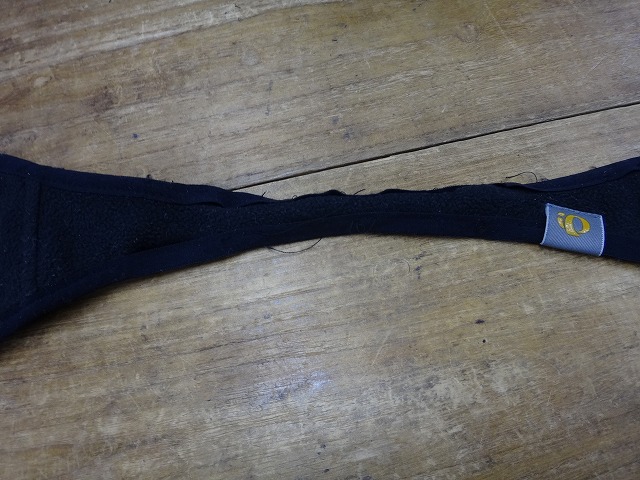
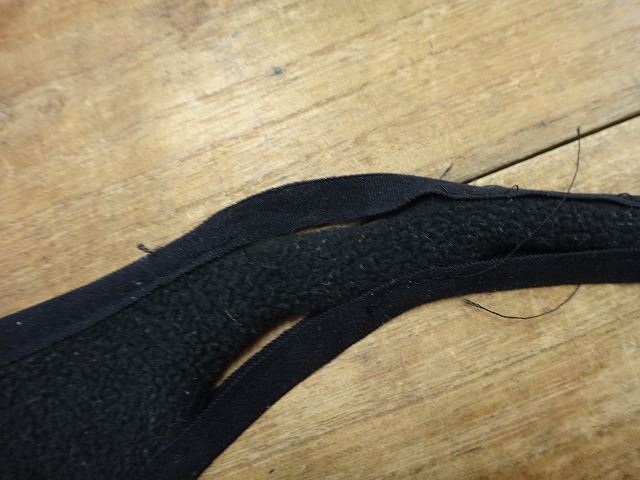
But the other day I accidentally pulled a bit too hard,
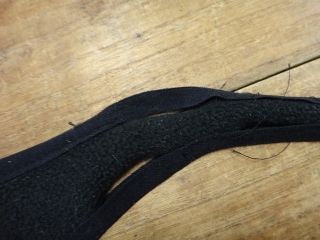
and the thread snapped.
If it were in mint or near-mint condition, this wouldn't have happened,
but I've used it extensively (well beyond what the price would suggest),
so it's unavoidable.
Looking around for places that still sell the 82-2,
I found an image of the 82-2 on Am*zon, placed an order from a seller there, and
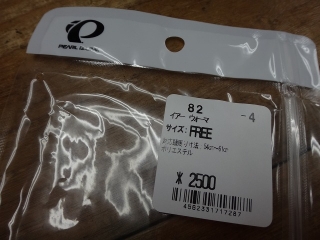
the 82-4 arrived.
Ughhhhhhhhh
I haven't filed a complaint with the seller,
but at least those of you reading this,
please don't fall into the same trap.
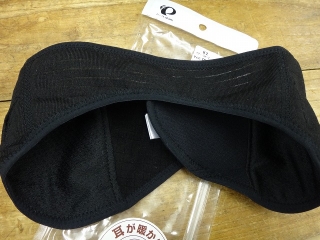
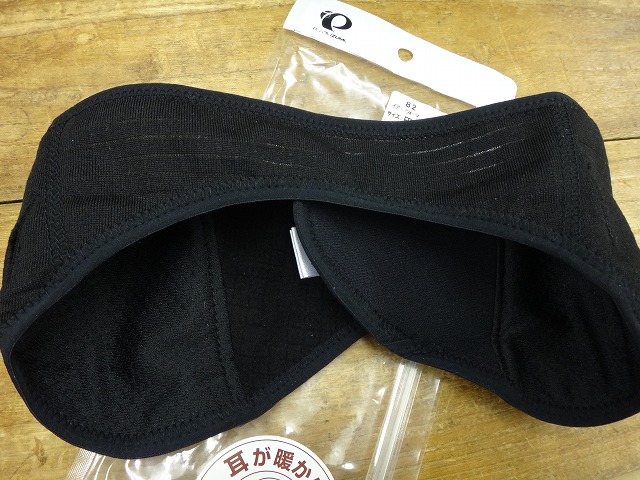
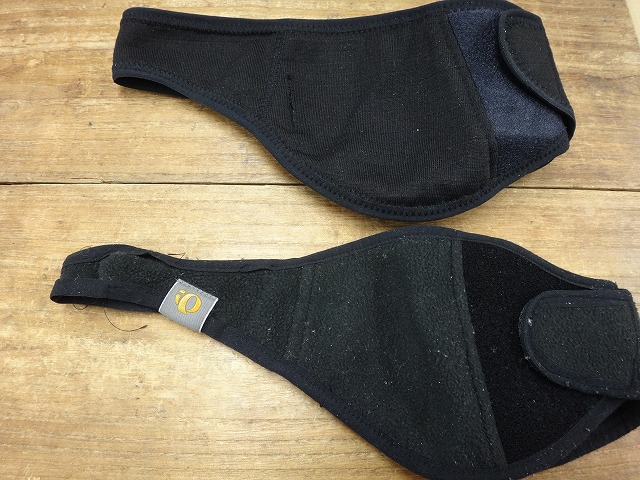
This is what the 82-4 looks like.
The forehead vertical width is on the slimmer side, but
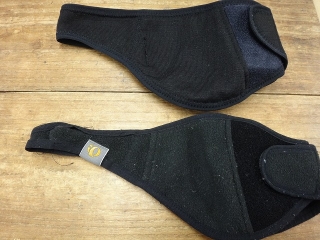
it can't compete with the 82-2 (bottom in image).
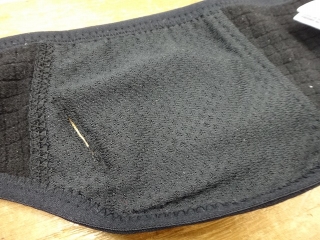
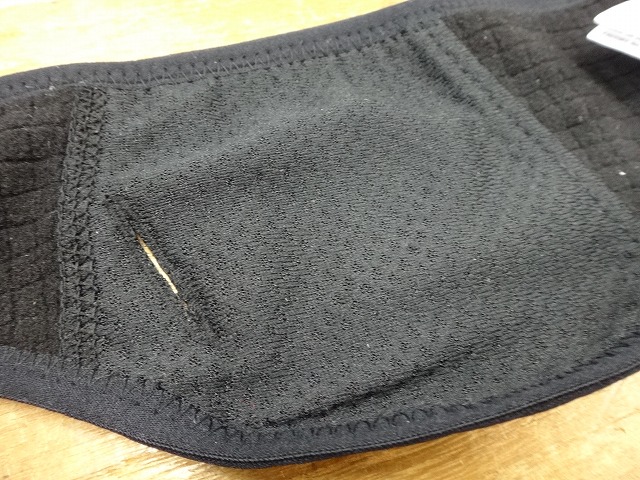
The holes in the ear coverage section that the 82-2 doesn't have
are meant for inserting eyewear temple tips,
but apparently they create wind noise from these holes.
On a separate note, the maker of the waterproof socks I also use
is Dex Shell, and they've released an under-helmet cap called the "Skull Cap,"
and it has ear coverage—something that traditional skull caps don't actually have.
Presumably to allow you to hear outside sounds,
but those ear coverage sections have
radial holes like the ones you'd find in acrylic dividers
at ticket windows or visiting rooms, and they create incredibly loud wind noise
(actually, because of these holes, you can barely hear anything outside at all).
One handkerchief wedged in quiets it right down, so
I've been meaning to someday sew on a cloth to seal those holes,
but I can't remember where I put it.
The under-helmet cap made by Goldwin in the past
with photoelectric fabric was the best I've ever known.
The model number was GWB-870.
As for what's currently available, there's the GSM-19150,
but that's what you'd call a traditional skull cap with no ear coverage.
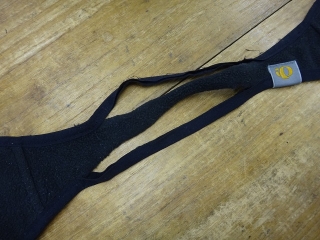
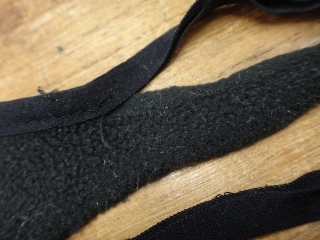
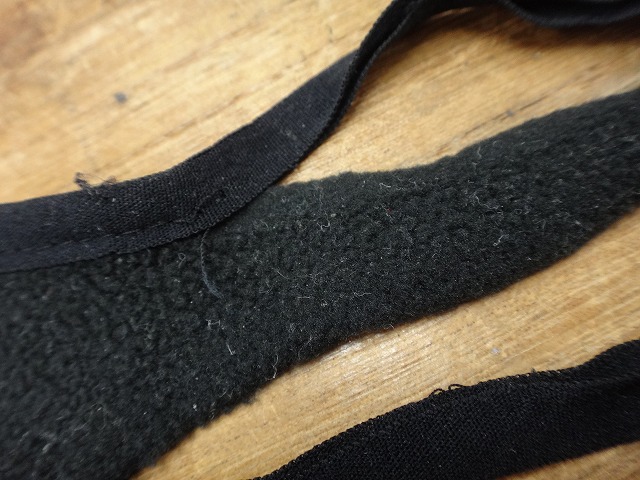
The thread was sliding out smoothly, so I pulled it and the whole thing fell apart.
I tried hand-stitching it back together with sewing pins holding it in place after that,
but the edge of the stretchy fabric had gotten all curled and frayed,
so I gave up on repairs. If I'd done it before pulling the thread out,
I might have been able to salvage it.
Like I mentioned earlier, I think I got more use out of it than the price justified,
so I'm at peace with it.
As for the 82-4, a customer of mine said
"I was just looking for an ear warmer,"
and bought it from me.
Much appreciated(Genpei Tōma Den).
I honestly explained the differences from the 82-2 and the points that bother me about it.

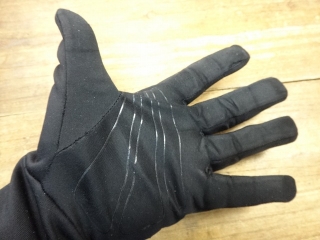
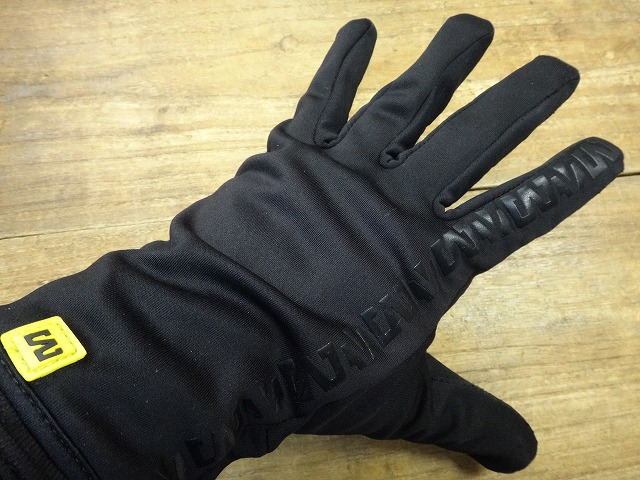
This is another unrelated matter—a pair of lightweight spring/autumn long-finger gloves from Mavic.
I really like them because there's no padding on the palm side.
When it gets too cold to tolerate with these,
I switch to Nanai Ta's winter gloves.
Back when Mavic was under the America Group umbrella,
Adidas, also under Ameria, was making bicycle apparel,
and this model is from the first year Mavic took over the Adidas brand—
back in the Adidas days it was called the Spring Glove.
The design on the back of the hand is different, but the palm side is exactly the same.
Since it's an older model, it doesn't have
the touchscreen-responsive fabric on the fingertips
that modern gloves often feature.
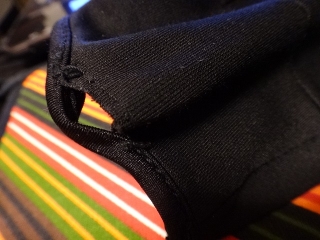
But the stitching around the wrist started coming undone on both sides.
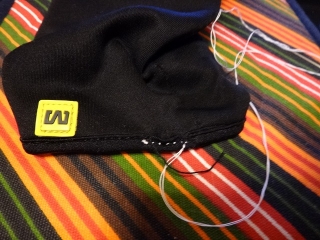
This one didn't go too far.
The thread color isn't black—that's on purpose.
When I do repairs myself, I deliberately use a noticeable color.
for many years that I've grown attached to.
↑This one
Pearl Izumi actually calls it
an "Ear Warmer" (イアーウォーマ), not "Ear Warmer" (イヤーウォーマー).
If you search for "Ear Warmer,"
Pearl Izumi's ear warmer comes up at the top.
The model number is 82, but more precisely it's 82-2-F.
The F at the end stands for Free Size.
The current model also has the number 82, but that's 82-4-F instead.
When people simply say "Pearl Izumi 82," it currently refers to the 82-4.
The 82-4 first appeared in the 2019 autumn/winter lineup,
and has been a continuous model ever since.
The 82-2 first appeared in the 2012 autumn/winter lineup.
I wondered if there was an 82-3 that I didn't know about, so I looked into it,
but from what I could find, the red version of the 82-2 seemed to be the 82-3.
However, since the 82-2 comes in both black and gray under the same model number (the one in the image above is black),
it seems odd to advance the model number for just a color difference,
so there might be something else different about it.
What's good about the 82-2 is that the vertical width
of the forehead section connecting the front sides of the ear coverage is quite short.
It's rare to find one this short.
As a general feature of the 82 line, there's a velcro section on the back of the head
that lets you adjust the tightness as you like,
which also means you can put it on without taking off your helmet.
At first, I wrap the 82-2 around my head before putting on the helmet.
Then I put the helmet on,
so the helmet's ear strap ends up above the 82-2.
Later, if I want to take it off while I'm out,
I can just peel back the velcro on the back of my head while wearing the helmet
and pull it off.
If I then want to put the 82-2 back on,
I usually wrap it over the helmet's ear strap while still wearing the helmet,
and this is where the short vertical width of the forehead section
makes it incredibly easy to tuck into the helmet.
I could whip it on in just a moment during a traffic light wait or a brief stop at a mountain pass,
so it was truly indispensable.
But the other day I accidentally pulled a bit too hard,
and the thread snapped.
If it were in mint or near-mint condition, this wouldn't have happened,
but I've used it extensively (well beyond what the price would suggest),
so it's unavoidable.
Looking around for places that still sell the 82-2,
I found an image of the 82-2 on Am*zon, placed an order from a seller there, and

the 82-4 arrived.
Ughhhhhhhhh
I haven't filed a complaint with the seller,
but at least those of you reading this,
please don't fall into the same trap.
This is what the 82-4 looks like.
The forehead vertical width is on the slimmer side, but
it can't compete with the 82-2 (bottom in image).
The holes in the ear coverage section that the 82-2 doesn't have
are meant for inserting eyewear temple tips,
but apparently they create wind noise from these holes.
On a separate note, the maker of the waterproof socks I also use
is Dex Shell, and they've released an under-helmet cap called the "Skull Cap,"
and it has ear coverage—something that traditional skull caps don't actually have.
Presumably to allow you to hear outside sounds,
but those ear coverage sections have
radial holes like the ones you'd find in acrylic dividers
at ticket windows or visiting rooms, and they create incredibly loud wind noise
(actually, because of these holes, you can barely hear anything outside at all).
One handkerchief wedged in quiets it right down, so
I've been meaning to someday sew on a cloth to seal those holes,
but I can't remember where I put it.
The under-helmet cap made by Goldwin in the past
with photoelectric fabric was the best I've ever known.
The model number was GWB-870.
As for what's currently available, there's the GSM-19150,
but that's what you'd call a traditional skull cap with no ear coverage.

The thread was sliding out smoothly, so I pulled it and the whole thing fell apart.
I tried hand-stitching it back together with sewing pins holding it in place after that,
but the edge of the stretchy fabric had gotten all curled and frayed,
so I gave up on repairs. If I'd done it before pulling the thread out,
I might have been able to salvage it.
Like I mentioned earlier, I think I got more use out of it than the price justified,
so I'm at peace with it.
As for the 82-4, a customer of mine said
"I was just looking for an ear warmer,"
and bought it from me.
Much appreciated
I honestly explained the differences from the 82-2 and the points that bother me about it.
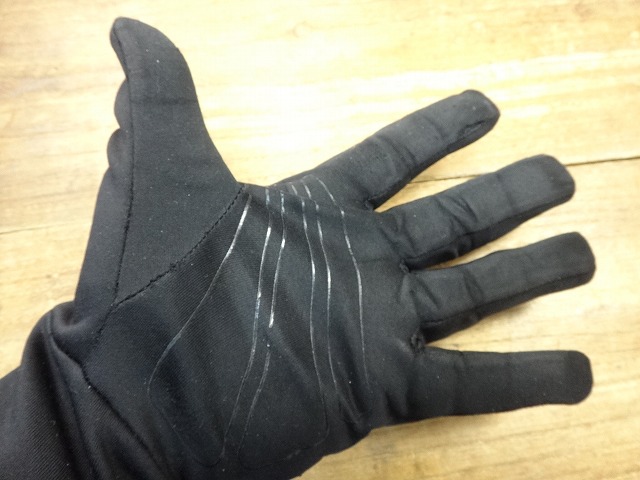
This is another unrelated matter—a pair of lightweight spring/autumn long-finger gloves from Mavic.
I really like them because there's no padding on the palm side.
When it gets too cold to tolerate with these,
I switch to Nanai Ta's winter gloves.
Back when Mavic was under the America Group umbrella,
Adidas, also under Ameria, was making bicycle apparel,
and this model is from the first year Mavic took over the Adidas brand—
back in the Adidas days it was called the Spring Glove.
The design on the back of the hand is different, but the palm side is exactly the same.
Since it's an older model, it doesn't have
the touchscreen-responsive fabric on the fingertips
that modern gloves often feature.
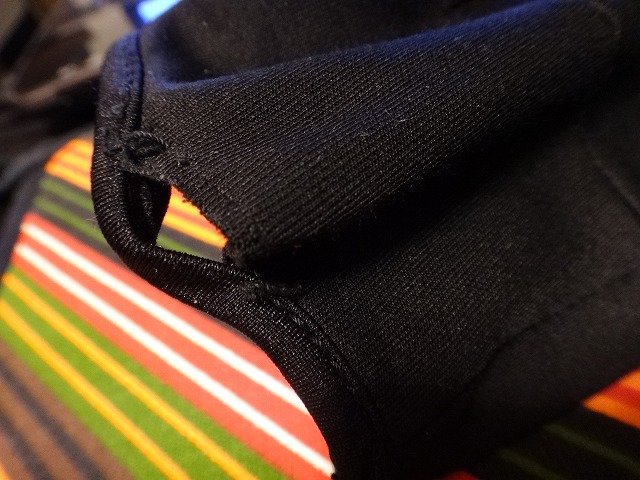
But the stitching around the wrist started coming undone on both sides.
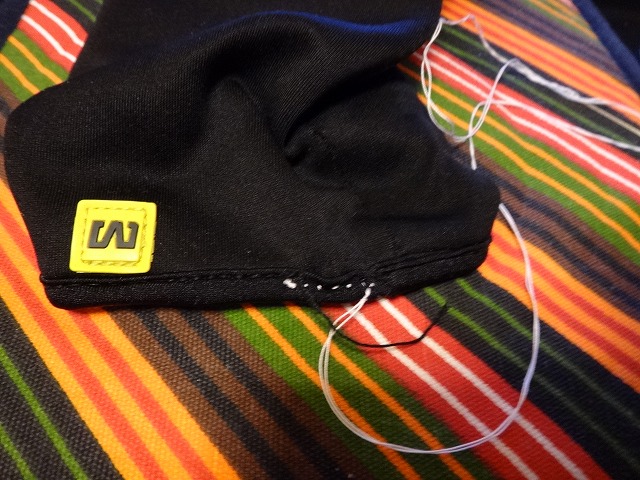
This one didn't go too far.
The thread color isn't black—that's on purpose.
When I do repairs myself, I deliberately use a noticeable color.