Another day with wheels (and so on).
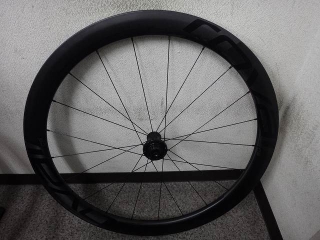
A customer brought in a Roval CL50 Disc for service.
Today I'm only doing the front wheel, but since it feels sluggish and just doesn't roll well,
they want both front and rear wheels rebuilt.
With both the CL and CLX, the issue is the spoke angle on the tangential-laced side,
and with the CLX specifically, even the selection of spoke gauges,
there's no way this wheel should roll well. If this wheel were correct,
then both Campagnolo and I would be fundamentally wrong about wheel building.
If anyone really believes Roval wheels are good,
they're welcome to think so on their own (laughs), but for people in sales positions
who can't even build wheels themselves yet have decent legs and can critique based on actual use—
in other words, people who can evaluate taste without being able to cook—
they shouldn't have such an unsophisticated palate that they can't understand the true nature of this wheel.
Yet some still praise it, though I suppose that's unavoidable given their position.
The customer who brought this in doesn't have the kind of legs to finish the 210km Tour de Okinawa in the first group
or break an hour on the Norikura, but they do have refined enough taste and normal enough sensibilities
that they can't just use this wheel as-is without questioning it.

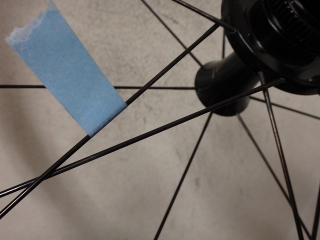
The problem with Roval's 2:1 lacing is that the spoke angles on the tangential side are too steep,
creating sharp angles at the final crossing. This could be achieved even with smaller flanges,
so this hub isn't really as high-flange as it appears.
With 24+12 spokes in a 36-hole configuration, this would be unavoidable,
but this wheel is 14+7 in a 21-hole setup.
If this weren't 2:1 laced but the opposite side were built as 6-spoke equivalent,
the weight distribution of factors would change, which would be fine.
The image above shows how the spokes deform just from hand pressure—
though I'm not gripping them that hard.
Regarding the rear wheel with rim brakes,
with the Bora 35 and 50, and the CLX 32 and 50, each with similar rim heights,
both with 2:1 21-hole rear wheels, the dish rub you hear constantly on the CLX
you almost never hear on the Bora—this is due to differences in wheel structure and spoke gauge.
With disc brake wheels, there's no dish rub, so bad wheels hide more easily.
Actually, Bora's square aero spokes have slightly higher spoke mass than CX-RAY,
and that subtle effect is also a factor.
With both Bora and CLX, when I rebuild them, the only elements I can adjust
are spoke gauge and lacing pattern. With the CLX I can definitely build something better than the original,
but with the Bora I can't.
Even if I change Roval to opposite-side reverse-diameter lacing,
the 2-spoke side will still have lower tension than the other side,
but with Bora, from the original state the spoke tension on both sides is nearly equal
or slightly higher on the 2-spoke side (freewheel side) in same-diameter lacing,
so spoke deformation is nearly equal on both sides.
Therefore, even if I rebuild and relace it carefully to correct the final crossing,
it won't change much.
If I had to name one thing Roval does better,
it's that on disc brake wheels, Roval achieves better rim weight for the height-to-weight ratio than Bora,
and with similar rim heights, Roval's rims are lighter.
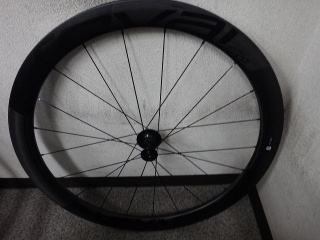
Rebuilt it.
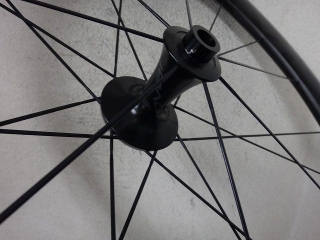
Half-black CX-Sprint spokes.
I'll do the relacing later.
I'm not criticizing Roval wheels without basis—
I'm also proposing alternatives.
Given the current constraints, I'm adjusting spoke mass,
and if the manufacturer wanted to improve it, I'd say change from 4:0 lacing equivalent
to 6:0 lacing equivalent.
If Roval did switch to 6:0 equivalent,
the difference would be noticeable, so in various reviews and impressions,
you'd see praise like "With the design revision, combat power increased further!"
But before it became delicious, when it was still disgusting,
no one from the sales side would point that out (which is only natural).
It's possible they just have an unsophisticated palate.
The customer who brought this wheel in isn't in sales,
and apparently thought it tasted bad enough that they couldn't tolerate it.
When they brought it in, the spoke deformation on the 2-spoke side was so extreme
that it seemed impossible—I wondered if they'd loosened it before coming to the shop—
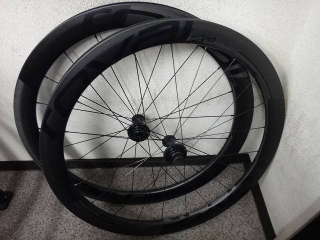
but it happens I have another completely identical wheel in for service,
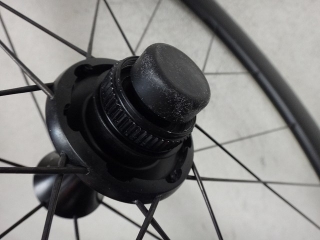
(with protective caps on the rim ends, and
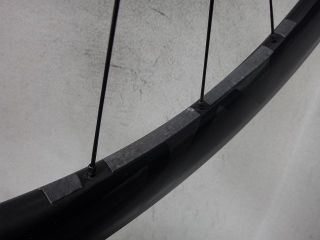
weight stickers on the rim—that's the one I'm talking about, just clarifying
so today's job doesn't get mixed up with the other customer's wheel "Oh! That's mine!")
This wheel also had nearly equal spoke tension in its original state.
It's true the one I rebuilt today is slightly lower,
but even though tensioning wouldn't transform it dramatically,
the fact is both could have been tensioned a bit more from their stock state.
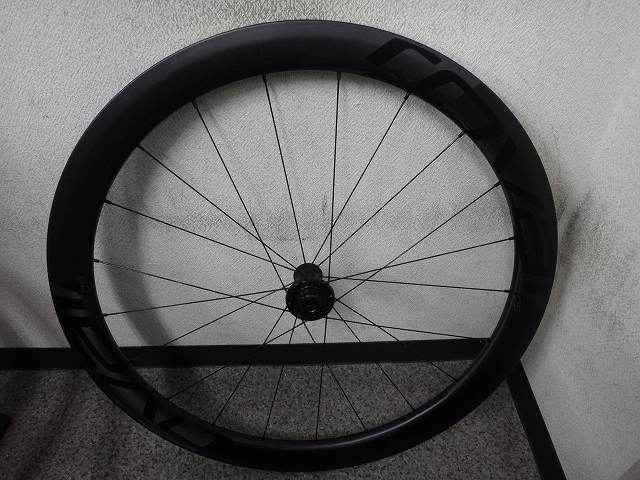
A customer brought in a Roval CL50 Disc for service.
Today I'm only doing the front wheel, but since it feels sluggish and just doesn't roll well,
they want both front and rear wheels rebuilt.
With both the CL and CLX, the issue is the spoke angle on the tangential-laced side,
and with the CLX specifically, even the selection of spoke gauges,
there's no way this wheel should roll well. If this wheel were correct,
then both Campagnolo and I would be fundamentally wrong about wheel building.
If anyone really believes Roval wheels are good,
they're welcome to think so on their own (laughs), but for people in sales positions
who can't even build wheels themselves yet have decent legs and can critique based on actual use—
in other words, people who can evaluate taste without being able to cook—
they shouldn't have such an unsophisticated palate that they can't understand the true nature of this wheel.
Yet some still praise it, though I suppose that's unavoidable given their position.
The customer who brought this in doesn't have the kind of legs to finish the 210km Tour de Okinawa in the first group
or break an hour on the Norikura, but they do have refined enough taste and normal enough sensibilities
that they can't just use this wheel as-is without questioning it.
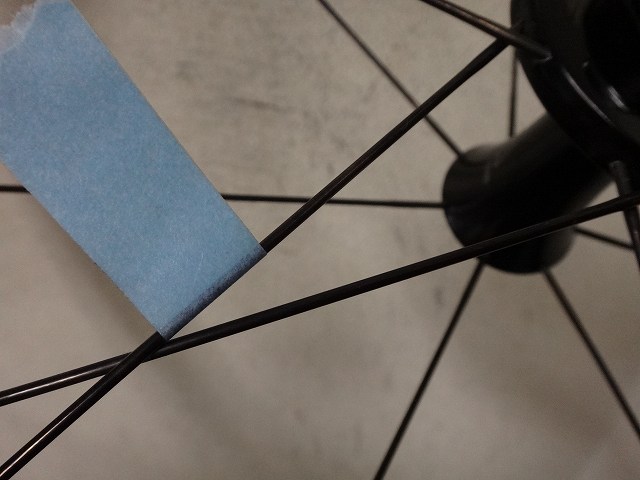

The problem with Roval's 2:1 lacing is that the spoke angles on the tangential side are too steep,
creating sharp angles at the final crossing. This could be achieved even with smaller flanges,
so this hub isn't really as high-flange as it appears.
With 24+12 spokes in a 36-hole configuration, this would be unavoidable,
but this wheel is 14+7 in a 21-hole setup.
If this weren't 2:1 laced but the opposite side were built as 6-spoke equivalent,
the weight distribution of factors would change, which would be fine.
The image above shows how the spokes deform just from hand pressure—
though I'm not gripping them that hard.
Regarding the rear wheel with rim brakes,
with the Bora 35 and 50, and the CLX 32 and 50, each with similar rim heights,
both with 2:1 21-hole rear wheels, the dish rub you hear constantly on the CLX
you almost never hear on the Bora—this is due to differences in wheel structure and spoke gauge.
With disc brake wheels, there's no dish rub, so bad wheels hide more easily.
Actually, Bora's square aero spokes have slightly higher spoke mass than CX-RAY,
and that subtle effect is also a factor.
With both Bora and CLX, when I rebuild them, the only elements I can adjust
are spoke gauge and lacing pattern. With the CLX I can definitely build something better than the original,
but with the Bora I can't.
Even if I change Roval to opposite-side reverse-diameter lacing,
the 2-spoke side will still have lower tension than the other side,
but with Bora, from the original state the spoke tension on both sides is nearly equal
or slightly higher on the 2-spoke side (freewheel side) in same-diameter lacing,
so spoke deformation is nearly equal on both sides.
Therefore, even if I rebuild and relace it carefully to correct the final crossing,
it won't change much.
If I had to name one thing Roval does better,
it's that on disc brake wheels, Roval achieves better rim weight for the height-to-weight ratio than Bora,
and with similar rim heights, Roval's rims are lighter.
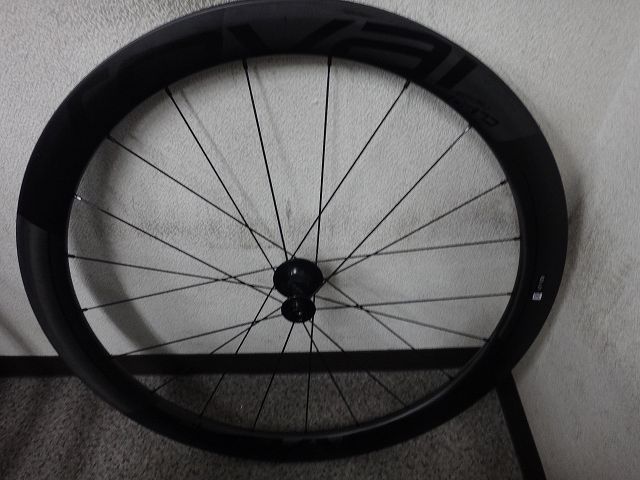
Rebuilt it.
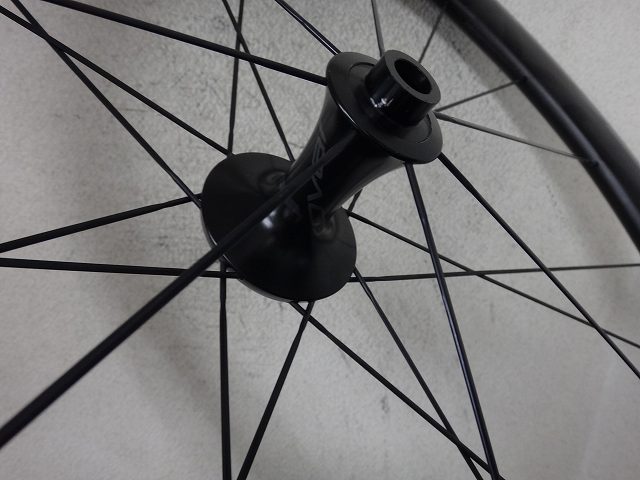
Half-black CX-Sprint spokes.
I'll do the relacing later.
I'm not criticizing Roval wheels without basis—
I'm also proposing alternatives.
Given the current constraints, I'm adjusting spoke mass,
and if the manufacturer wanted to improve it, I'd say change from 4:0 lacing equivalent
to 6:0 lacing equivalent.
If Roval did switch to 6:0 equivalent,
the difference would be noticeable, so in various reviews and impressions,
you'd see praise like "With the design revision, combat power increased further!"
But before it became delicious, when it was still disgusting,
no one from the sales side would point that out (which is only natural).
It's possible they just have an unsophisticated palate.
The customer who brought this wheel in isn't in sales,
and apparently thought it tasted bad enough that they couldn't tolerate it.
When they brought it in, the spoke deformation on the 2-spoke side was so extreme
that it seemed impossible—I wondered if they'd loosened it before coming to the shop—
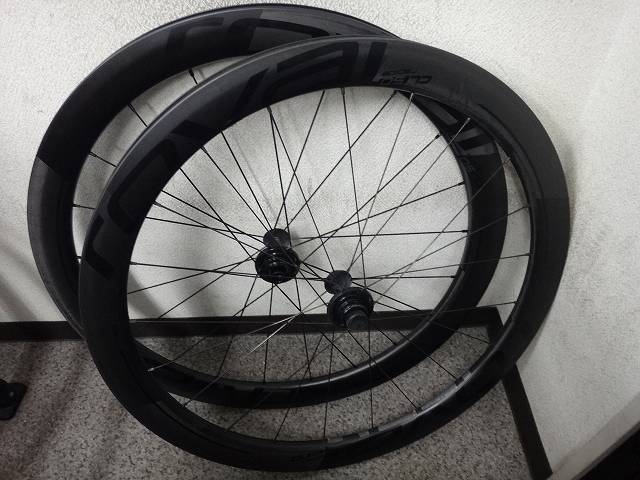
but it happens I have another completely identical wheel in for service,
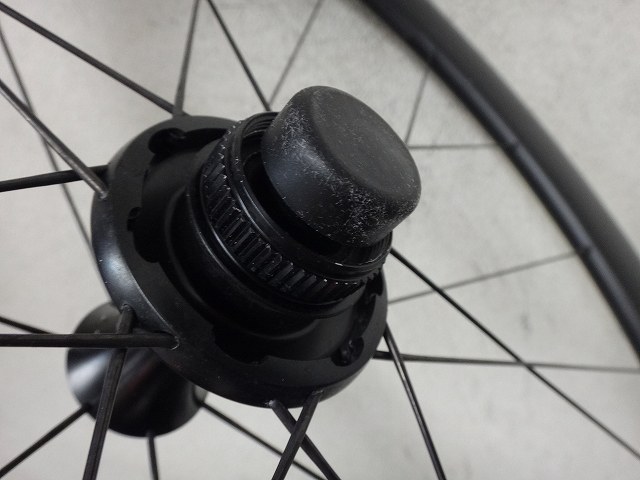
(with protective caps on the rim ends, and
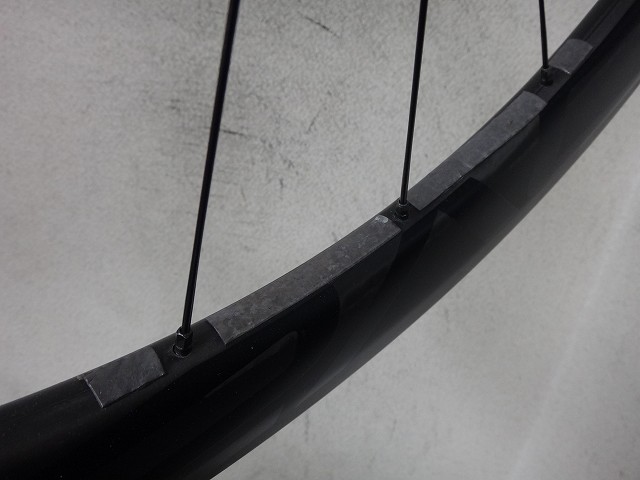
weight stickers on the rim—that's the one I'm talking about, just clarifying
so today's job doesn't get mixed up with the other customer's wheel "Oh! That's mine!")
This wheel also had nearly equal spoke tension in its original state.
It's true the one I rebuilt today is slightly lower,
but even though tensioning wouldn't transform it dramatically,
the fact is both could have been tensioned a bit more from their stock state.