Another day with wheels (and so on).
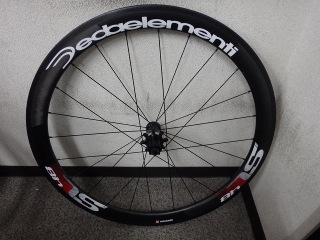
I rebuilt the rear wheel of a Deda SL48C wheelset.
This wasn't a customer request—
it's a rim brake wheelset that I sourced as a special price item
from a wholesale distributor that carries Deda.
I made some modifications before selling it because there were various things I didn't like about it.

The rear wheel uses a 2:1 spoke pattern, but unlike some other wheels,
it's designed so that the final crossing angle becomes more obtuse.
Unlike some other wheels, when you squeeze the spokes,
the freewheel side doesn't show greater deformation (it's not a botched 2:1 build).
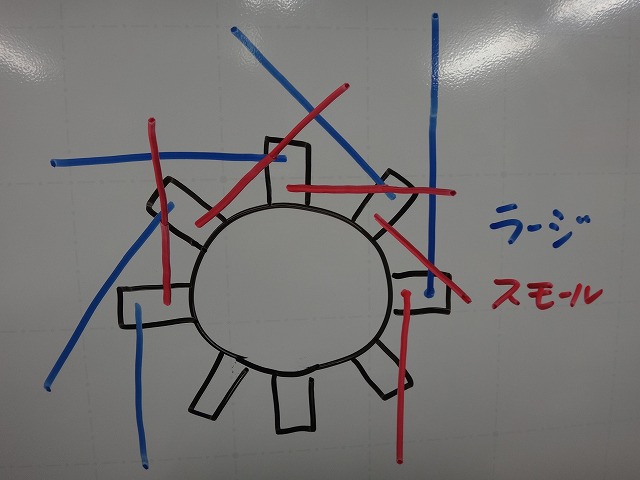
Two spokes emerge from a single flange,
but that's my preferred way of doing it.
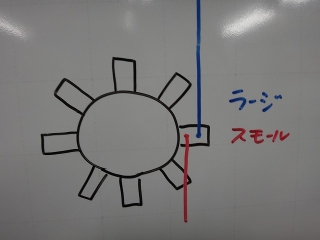
What I mean is,
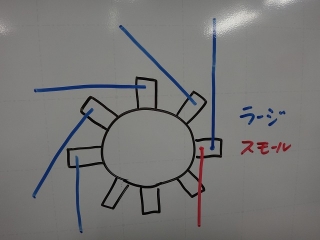
the spokes going in the "porcupine" direction
all emerge from the large flange side, and
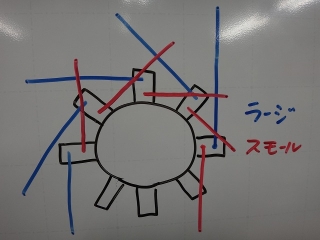
the spokes going in the opposite direction
all emerge from the small flange side.
I think drive wheels should always be this way.
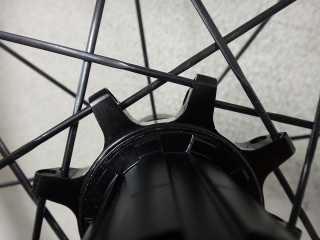
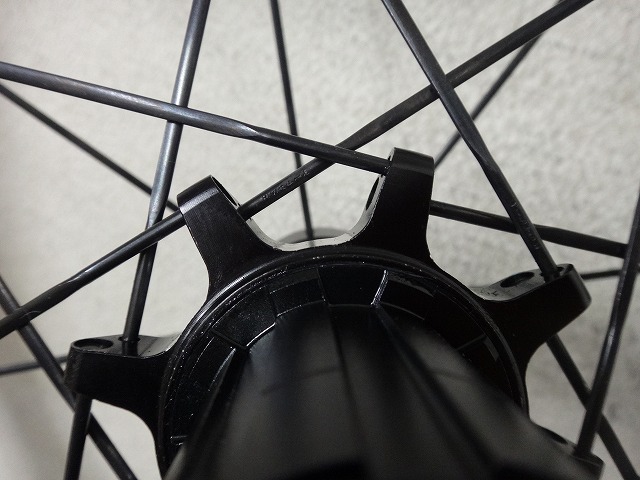
So at every first crossing, a large flange spoke and
a small flange spoke intersect, and
when viewed from the side, the space framed by the hub body and first crossing
repeats in the same pattern (8 times, since it's 24H with 16H on one side).
I expect someone to say "that's obvious," so
I'll provide an example of something that's not.
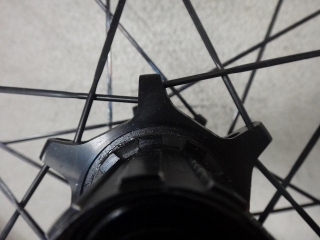
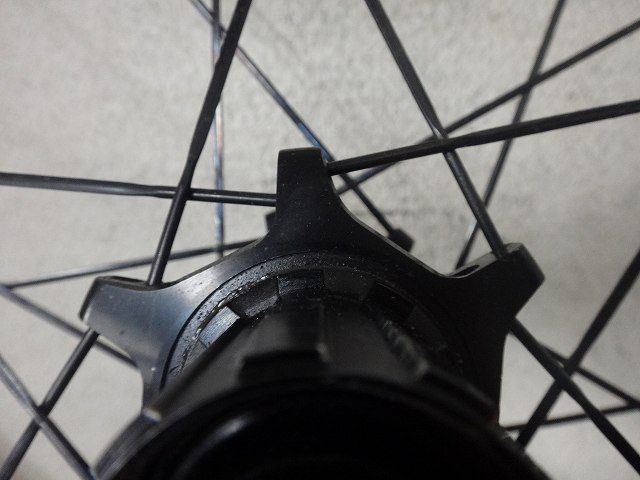
↑This is a ZIPP hub, but spokes of the same direction alternate
between large and small flanges, so
the first crossings alternate between
large-side spokes crossing with each other and
small-side spokes crossing with each other.
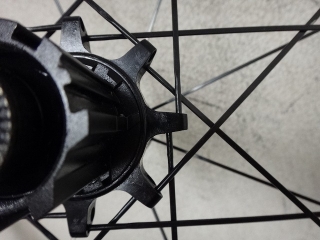
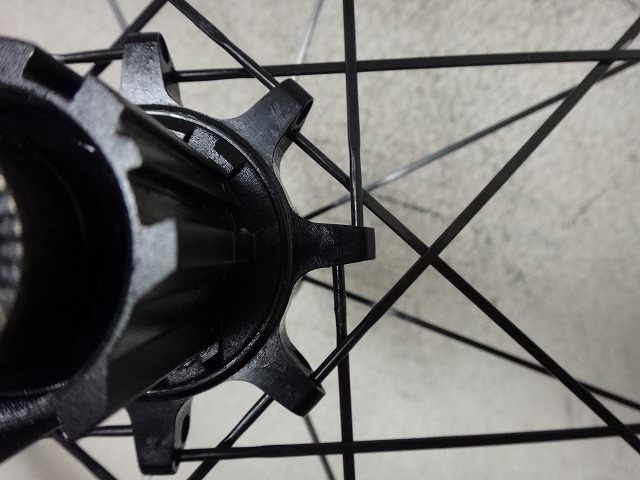
The spoke path is arranged to be nearly perfectly
tangent to the rim.
Apart from the difference in flange hole diameter, this is evident from the fact that
the two spokes coming from a single flange are nearly collinear.
In fact, the only way to explain this is that
even though the rim holes are evenly spaced,
the flange diameter was designed to achieve this.
Imagine a rim with no holes drilled. If you run nearly tangent spokes
from the freewheel-side flange and mark holes on the rim where they hit,
without necessarily adhering to evenly-spaced holes—
that's essentially the ultimate form of spoke design, which is Campagnolo's G3.
The spoke paths on G3 wheels aren't perfectly tangent
(the two freewheel-side spokes at the ends of what appears to be a 3-spoke group on G3
aren't perfectly parallel), which often stems from
a different kind of bias that isn't mine to explain—
it comes from Campagnolo's internal considerations. They don't mention it in catalogs,
but there's no way this is accidental.
This Deda hub has no such bias, so
it draws spokes in nearly perfect tangent form.
A wheel where "the virtual flange diameter obtained by extending the spoke line from the spoke head
as a perfect tangent differs barely at all from the actual flange diameter"
is not impossible to achieve with hand-built wheels depending on hub dimensions and building method,
but with equal-sided lacing, if you obsess over "only" this condition
(overweighting it relative to other factors), you often end up deciding
that 6x6 lacing would be better than 4x6 lacing, making it nearly impossible
to build a decent hand-built wheel.
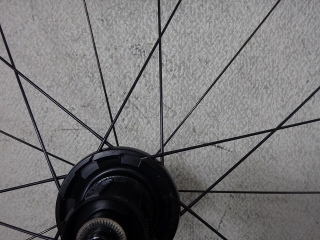
This is a botched 2:1 build from some brand's wheel.
↑You get pretty animated when dissing wheels like this, don't you!
The acute angle at the final crossing is also undesirable, but
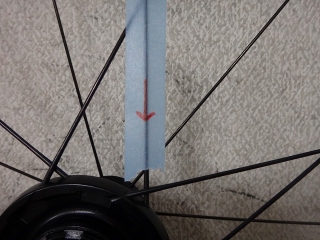
if you extend the spoke path to a perfect tangent, the
virtual spoke head would be located at

↑around the white dot I drew on the hub flange.
So in a sense, this freewheel-side flange isn't as "large" as it appears.
And with this Deda rear hub, the white dot and the actual spoke head position
are nearly at the same location.
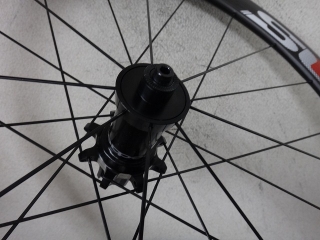
The left and right flanges of the front hub and the left flange of the rear hub
are radially laced with the widest flange possible.
As for the hub shape, I think this wheel is quite well-designed,
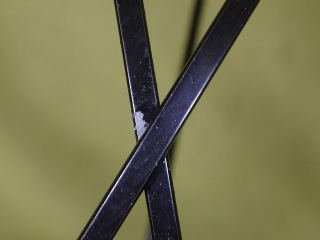
but the only problem was that the paint on the final crossing of the freewheel side of the rear wheel,
where the spokes are laced, was chipped despite being brand new.
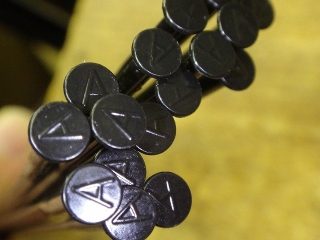
The timeline jumps ahead, but here are the disassembled spokes.
They have an "A" marking, which I believe is from Alpina (イタリアのアルピナ, an Italian company already defunct),
not Asahi.
The sharpness of the letters suggests that too.
I had other reasons for being certain (detailed below).

When I lay out the freewheel-side spokes,
at a constant distance from the spoke head, at the final crossing point,
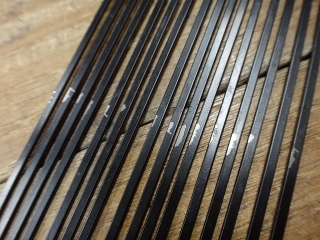
the paint is mostly chipped.
There are two spokes where it's not chipped,
but that's not because the other side is what's damaged.
I just didn't notice when disassembling—there's a possibility
that these two spokes weren't actually laced at the crossing.
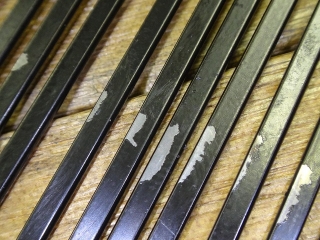
I tried to scratch the chipped paint with my fingernail to expand the damage,
and while the paint layer had some perceptible thickness,
I couldn't get it to chip any further.
It seems that paint chipping doesn't occur easily on radially-laced wheels where spokes don't contact each other.
I wanted to replace just the freewheel-side spokes with black CX-RAY straight or
black CX Sprint, but to do that I need to know the spoke specific gravity.
Sixteen spokes would be sufficient.
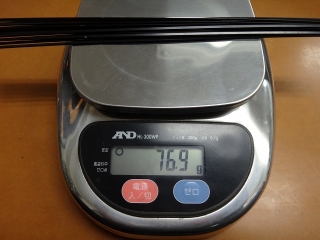
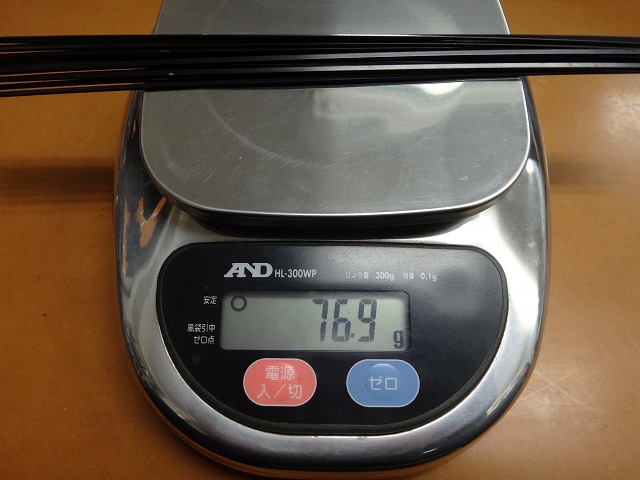
16 spokes at 274mm weighing 76.9g gives a specific gravity of 0.682529...,
so roughly 68%. These spokes measured 274mm by my method,
though the nominal length is 275mm. If they were actually 275mm, it would be 0.680049...,
still coming to 68%. With 2:1 lacing, the wheel should either have equal spoke diameters
on both sides, or use reverse differential lacing with larger specific gravity on the fewer-spoke side.
If I reuse the non-freewheel-side spokes as-is, CX-RAY is the only option for the freewheel side.
If I go with CX Sprint, I need to replace both sides.
If I used CX-RAY only on the freewheel side, I felt I'd want to tie the final crossing,
so I decided to rebuild with all CX Sprint instead.
Incidentally, black CX-RAY (16 spokes) is more expensive than black CX Sprint (24 spokes).
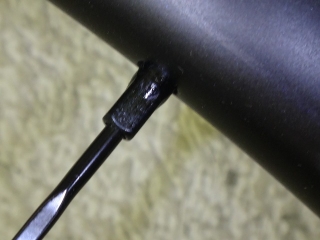
The timeline goes back to before disassembly, but
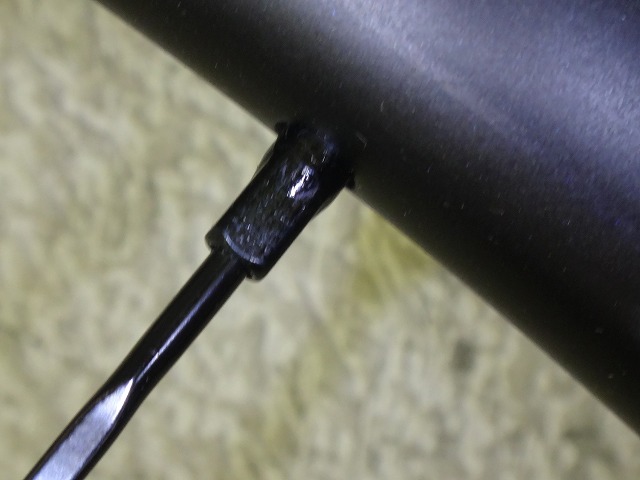
the nipples on Deda wheels are neither DT nor Sapim's 3.2mm,
nor Stella's 3.4mm—they're 3.3mm.
The handlebar clamp diameter is also not 31.8mm
but rather nominally 31.7mm, typical of Deda's
proprietary standards nonsense.
The inner square grip area is short with rounded corners, so
I was almost certain of this, but since there's also a hex grip on the outside,
I've been turning the outer side for both disassembly and reassembly.
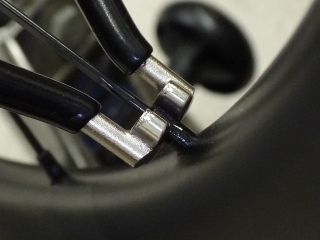
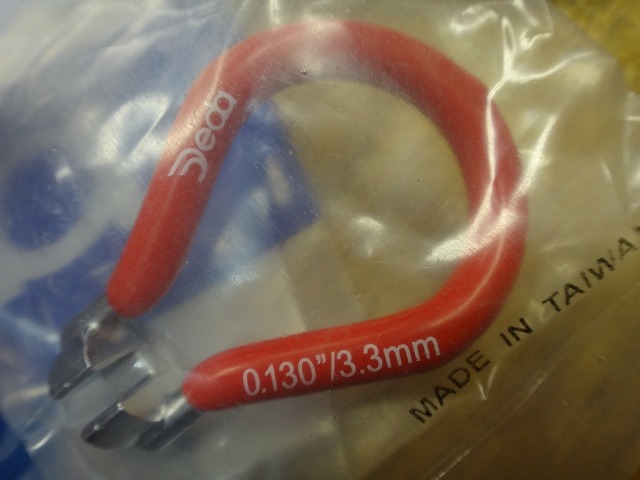
A 3.2mm nipple wrench that's been worn down from use
will fit, but barely,
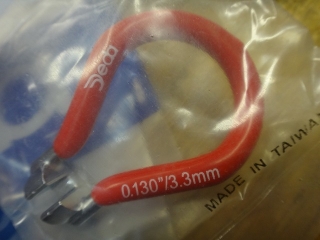
and I've already bought a dedicated nipple wrench.
I could use this for emergency truing if needed.
By the way, I forgot to mention that the SL48C wheels come with a tubeless-ready rim specification.
The wheels include a stretch-band type rim tape for people using them with tubed tires,
and in that case removing the tire and rim tape for truing isn't that much work.
If someone's running tubeless tires, using sealant, and has tubeless tape installed,
even I might go inside.
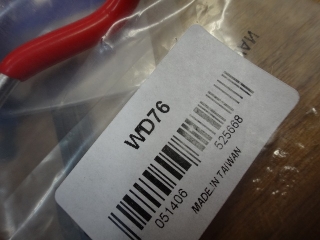
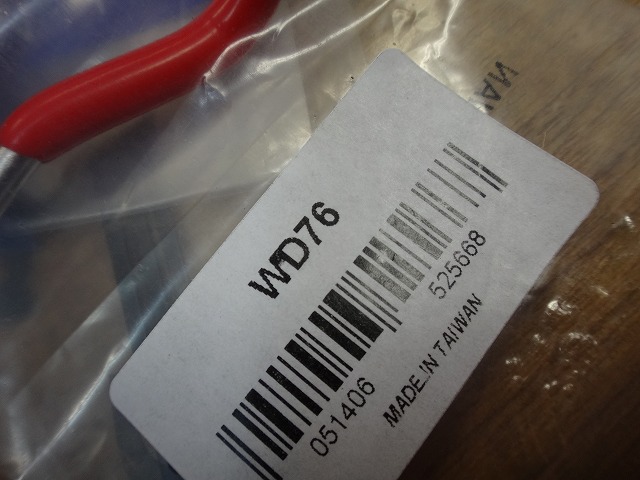
The nipple wrench model number is WD76.
WD presumably stands for "Wheel Deda."
For spokes, the code is WDSP followed by the nominal length number.
From this, I infer that all models use the same gauge of spoke
regardless of rim height and such.
Also, it says "Made in Taiwan."

There were 2:1 lacing hole patterns on the inner rim holes, so I considered
rebuilding a 16+8H 24H rim as a 12+12H 24H rim with an Evo-Lite hub,
but I abandoned that idea.
On the image above, there are hole offsets on the outer side too, aligned with tool paths,
so for example the rim holes for the freewheel-side spokes are offset to the left.

The reason I wanted to swap hubs was
that it came with a Campagnolo freebody.
After checking the rim hole offsets, I switched to a Shimano freebody and
decided to rebuild with this hub instead.
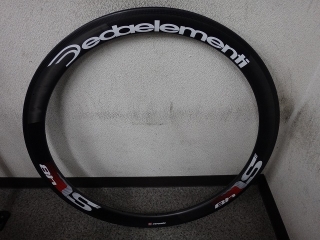
I disassembled it.
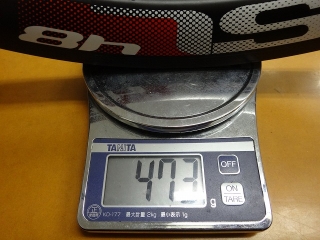
The measured weight of the rim.
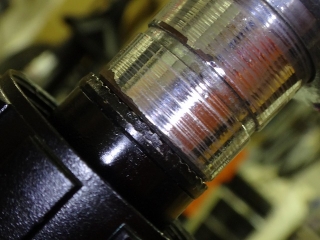
I built it
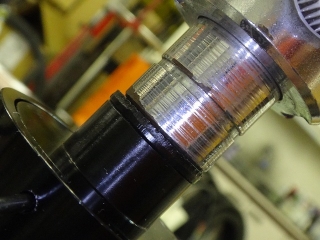
back up.
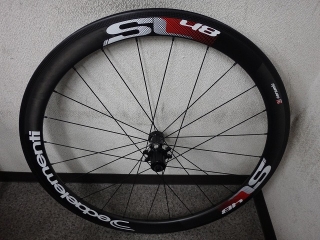
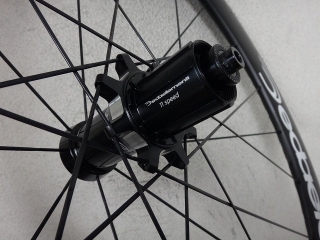
All black CX Sprint straight spokes.
I'm not tying the freewheel side.
The freebody has been swapped to Shimano spec.
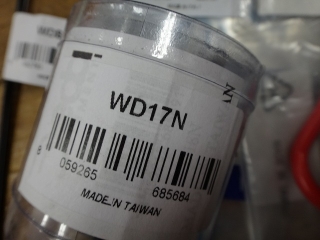
The freebody model number is WD17N. When I saw the Campagnolo version,
I thought it might be Edco-made, but looking at the spring clip and such,
it appears to be made by CHOSEN (チョーズン). Also Taiwan-made.
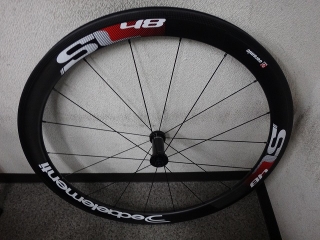
Next, the front wheel.
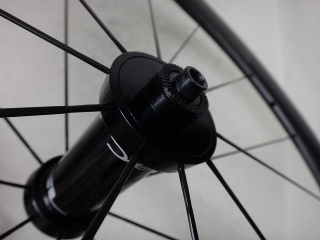
Quite wide flange, with Alpina 68% black aero spokes, 18H radial lacing.
I'm not replacing the front wheel spokes.
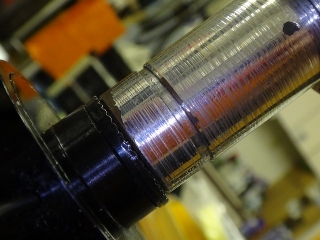
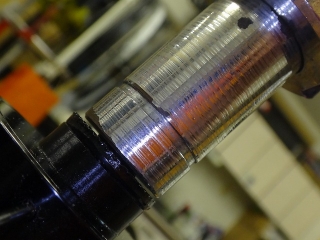
It had some centering issues and minor runout, so
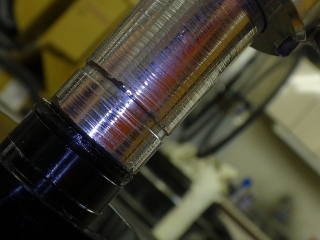

I corrected them.
I'll be selling the front wheel with these special, hard-to-source spokes,
but in case someone bends or breaks a spoke,
to ease concerns about what to do,
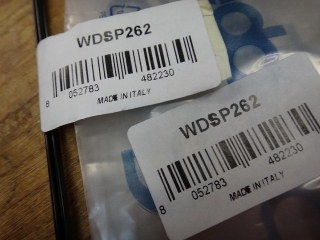
I've already sourced spokes from the distributor in advance.
The distributor's spoke inventory was so small
it didn't seem like they were planning to stock wheels,
so I've essentially bought out their supply.
Other shops won't be able to do spoke replacement on this wheel for at least
several more months, but that's not my problem.
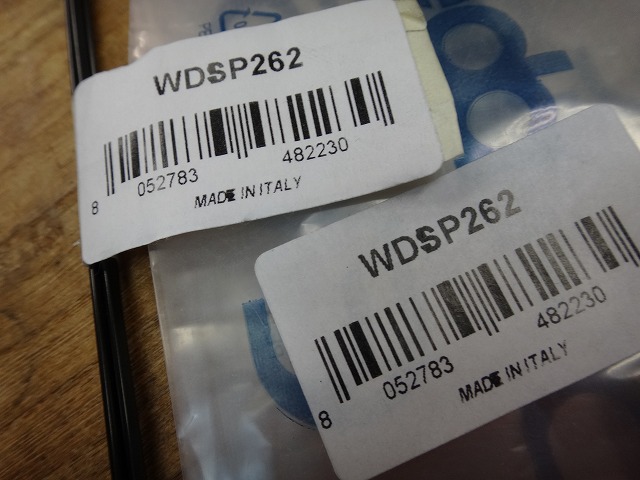
The spoke model number is WDSP262, so the nominal length is 262mm.
And it says "Made in Italy."
This, along with the marking on the spoke head,
is my basis for definitively attributing these spokes to Alpina.
While unlikely, if someone damages more spokes than I have in stock,
I'll still repair them by swapping in CX Sprint or similar spokes.
I hate wheels that can't be fixed.
This SL48C wheelset will be sold as a one-set limited special price item.
Currently spec'd for Shimano freebody, but conversion to Campagnolo is also possible since that's how it came.
List price ¥236,454 (excluding tax), ¥261,000 (including tax)...
Details are posted at the usual place.
Also, this will be limited to in-store customers only.
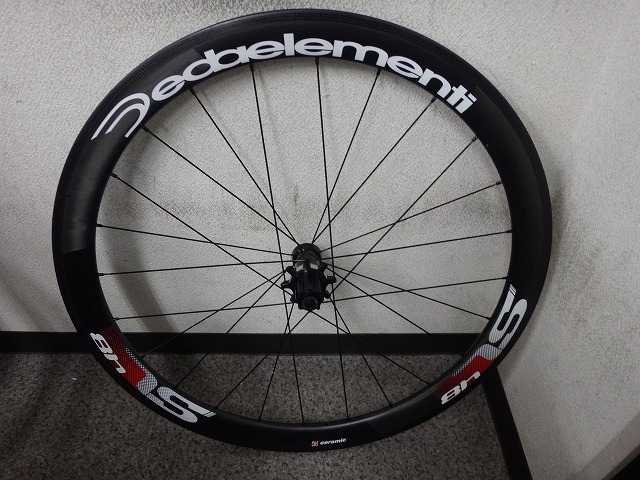
I rebuilt the rear wheel of a Deda SL48C wheelset.
This wasn't a customer request—
it's a rim brake wheelset that I sourced as a special price item
from a wholesale distributor that carries Deda.
I made some modifications before selling it because there were various things I didn't like about it.
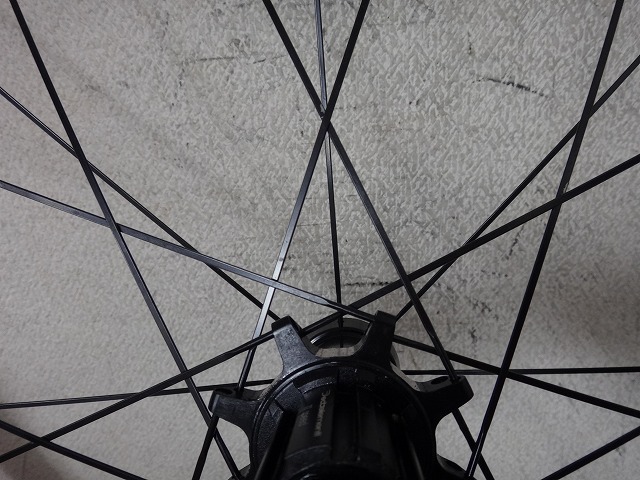
The rear wheel uses a 2:1 spoke pattern, but unlike some other wheels,
it's designed so that the final crossing angle becomes more obtuse.
Unlike some other wheels, when you squeeze the spokes,
the freewheel side doesn't show greater deformation (it's not a botched 2:1 build).
Two spokes emerge from a single flange,
but that's my preferred way of doing it.
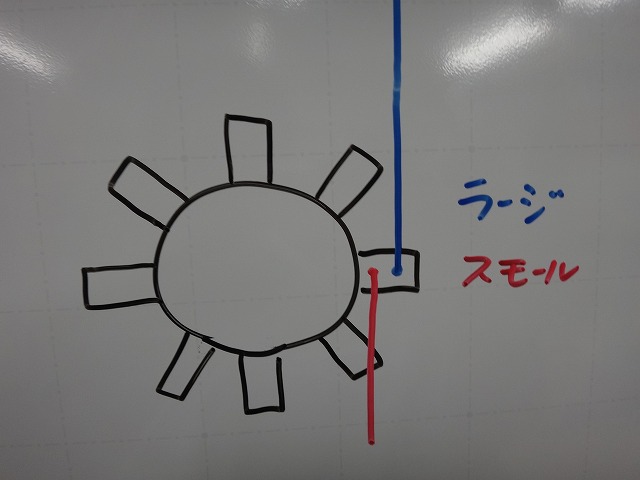
What I mean is,
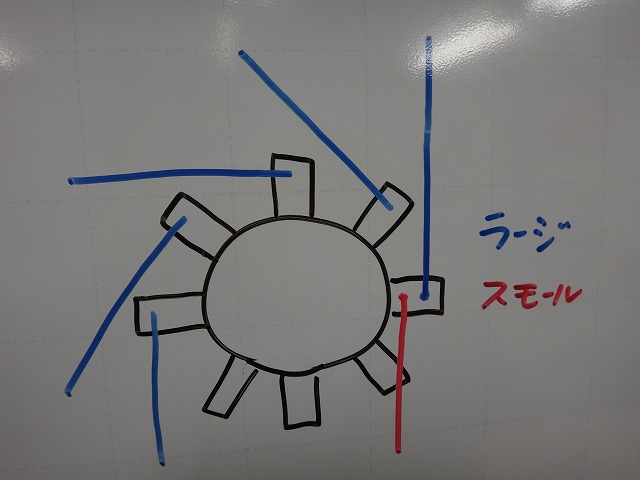
the spokes going in the "porcupine" direction
all emerge from the large flange side, and
the spokes going in the opposite direction
all emerge from the small flange side.
I think drive wheels should always be this way.
So at every first crossing, a large flange spoke and
a small flange spoke intersect, and
when viewed from the side, the space framed by the hub body and first crossing
repeats in the same pattern (8 times, since it's 24H with 16H on one side).
I expect someone to say "that's obvious," so
I'll provide an example of something that's not.
↑This is a ZIPP hub, but spokes of the same direction alternate
between large and small flanges, so
the first crossings alternate between
large-side spokes crossing with each other and
small-side spokes crossing with each other.
The spoke path is arranged to be nearly perfectly
tangent to the rim.
Apart from the difference in flange hole diameter, this is evident from the fact that
the two spokes coming from a single flange are nearly collinear.
In fact, the only way to explain this is that
even though the rim holes are evenly spaced,
the flange diameter was designed to achieve this.
Imagine a rim with no holes drilled. If you run nearly tangent spokes
from the freewheel-side flange and mark holes on the rim where they hit,
without necessarily adhering to evenly-spaced holes—
that's essentially the ultimate form of spoke design, which is Campagnolo's G3.
The spoke paths on G3 wheels aren't perfectly tangent
(the two freewheel-side spokes at the ends of what appears to be a 3-spoke group on G3
aren't perfectly parallel), which often stems from
a different kind of bias that isn't mine to explain—
it comes from Campagnolo's internal considerations. They don't mention it in catalogs,
but there's no way this is accidental.
This Deda hub has no such bias, so
it draws spokes in nearly perfect tangent form.
A wheel where "the virtual flange diameter obtained by extending the spoke line from the spoke head
as a perfect tangent differs barely at all from the actual flange diameter"
is not impossible to achieve with hand-built wheels depending on hub dimensions and building method,
but with equal-sided lacing, if you obsess over "only" this condition
(overweighting it relative to other factors), you often end up deciding
that 6x6 lacing would be better than 4x6 lacing, making it nearly impossible
to build a decent hand-built wheel.
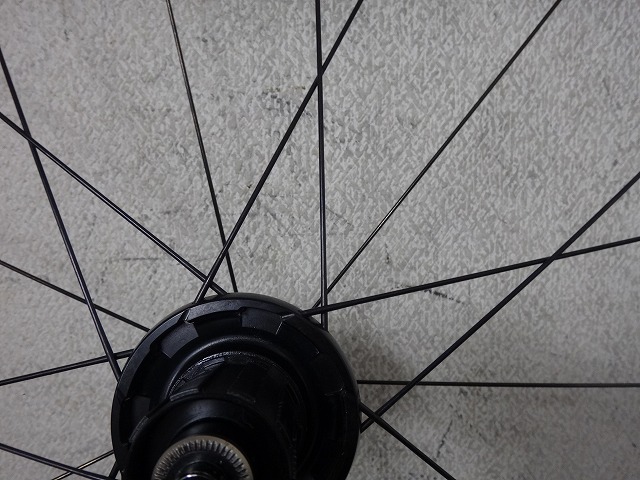
This is a botched 2:1 build from some brand's wheel.
The acute angle at the final crossing is also undesirable, but
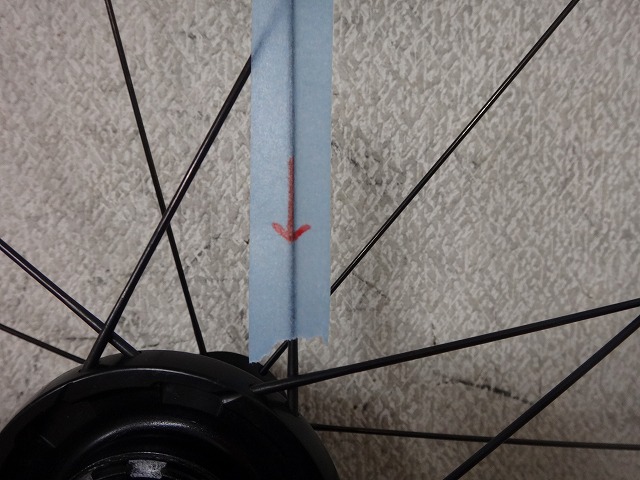
if you extend the spoke path to a perfect tangent, the
virtual spoke head would be located at
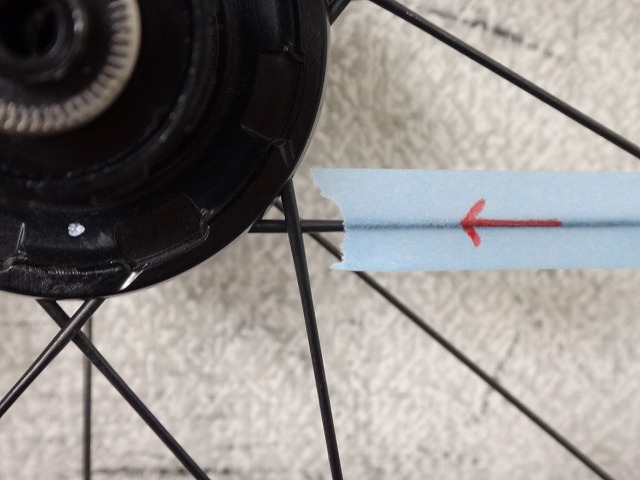
↑around the white dot I drew on the hub flange.
So in a sense, this freewheel-side flange isn't as "large" as it appears.
And with this Deda rear hub, the white dot and the actual spoke head position
are nearly at the same location.

The left and right flanges of the front hub and the left flange of the rear hub
are radially laced with the widest flange possible.
As for the hub shape, I think this wheel is quite well-designed,
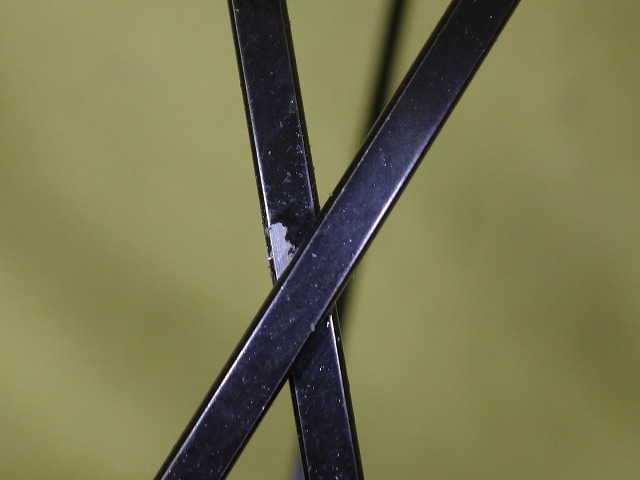
but the only problem was that the paint on the final crossing of the freewheel side of the rear wheel,
where the spokes are laced, was chipped despite being brand new.
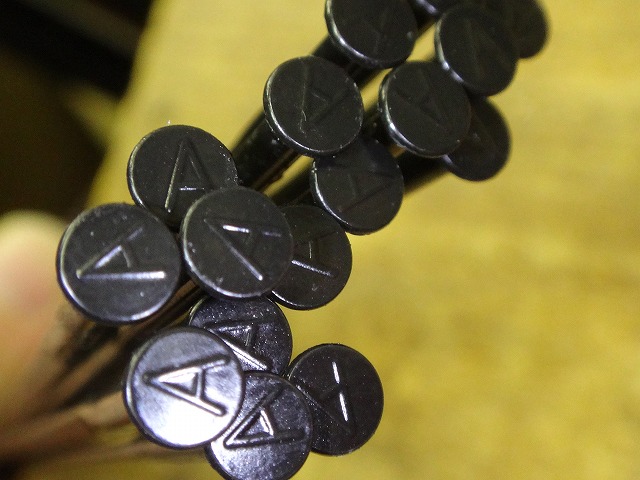
The timeline jumps ahead, but here are the disassembled spokes.
They have an "A" marking, which I believe is from Alpina (イタリアのアルピナ, an Italian company already defunct),
not Asahi.
The sharpness of the letters suggests that too.
I had other reasons for being certain (detailed below).
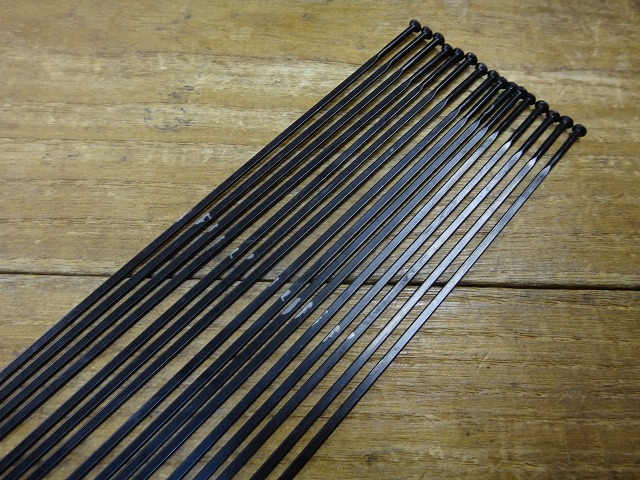
When I lay out the freewheel-side spokes,
at a constant distance from the spoke head, at the final crossing point,
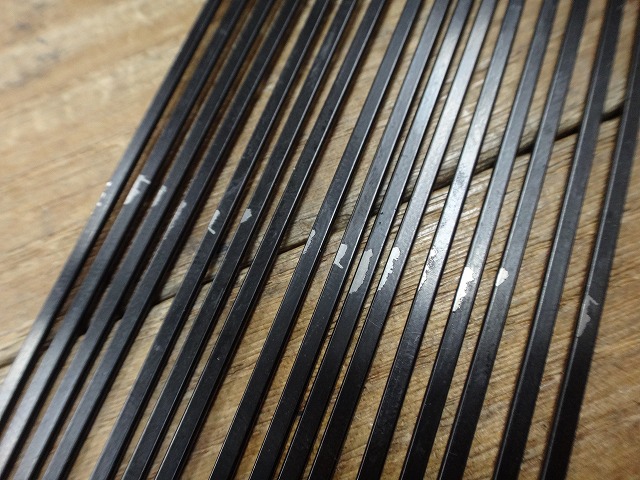
the paint is mostly chipped.
There are two spokes where it's not chipped,
but that's not because the other side is what's damaged.
I just didn't notice when disassembling—there's a possibility
that these two spokes weren't actually laced at the crossing.
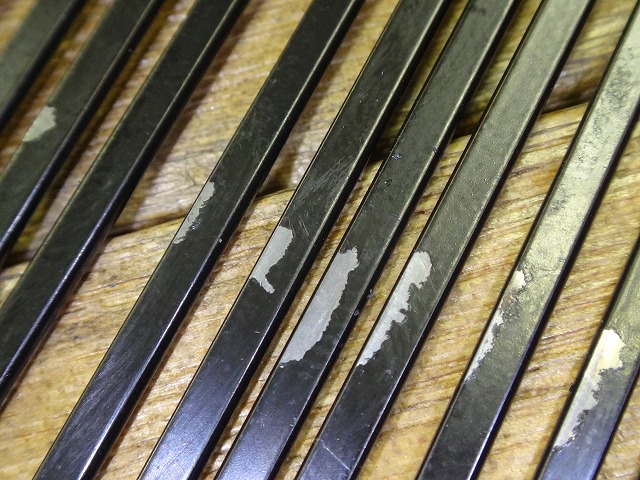
I tried to scratch the chipped paint with my fingernail to expand the damage,
and while the paint layer had some perceptible thickness,
I couldn't get it to chip any further.
It seems that paint chipping doesn't occur easily on radially-laced wheels where spokes don't contact each other.
I wanted to replace just the freewheel-side spokes with black CX-RAY straight or
black CX Sprint, but to do that I need to know the spoke specific gravity.
Sixteen spokes would be sufficient.
16 spokes at 274mm weighing 76.9g gives a specific gravity of 0.682529...,
so roughly 68%. These spokes measured 274mm by my method,
though the nominal length is 275mm. If they were actually 275mm, it would be 0.680049...,
still coming to 68%. With 2:1 lacing, the wheel should either have equal spoke diameters
on both sides, or use reverse differential lacing with larger specific gravity on the fewer-spoke side.
If I reuse the non-freewheel-side spokes as-is, CX-RAY is the only option for the freewheel side.
If I go with CX Sprint, I need to replace both sides.
If I used CX-RAY only on the freewheel side, I felt I'd want to tie the final crossing,
so I decided to rebuild with all CX Sprint instead.
Incidentally, black CX-RAY (16 spokes) is more expensive than black CX Sprint (24 spokes).
The timeline goes back to before disassembly, but
the nipples on Deda wheels are neither DT nor Sapim's 3.2mm,
nor Stella's 3.4mm—they're 3.3mm.
The handlebar clamp diameter is also not 31.8mm
but rather nominally 31.7mm, typical of Deda's
proprietary standards nonsense.
The inner square grip area is short with rounded corners, so
I was almost certain of this, but since there's also a hex grip on the outside,
I've been turning the outer side for both disassembly and reassembly.

A 3.2mm nipple wrench that's been worn down from use
will fit, but barely,
and I've already bought a dedicated nipple wrench.
I could use this for emergency truing if needed.
By the way, I forgot to mention that the SL48C wheels come with a tubeless-ready rim specification.
The wheels include a stretch-band type rim tape for people using them with tubed tires,
and in that case removing the tire and rim tape for truing isn't that much work.
If someone's running tubeless tires, using sealant, and has tubeless tape installed,
even I might go inside.
The nipple wrench model number is WD76.
WD presumably stands for "Wheel Deda."
For spokes, the code is WDSP followed by the nominal length number.
From this, I infer that all models use the same gauge of spoke
regardless of rim height and such.
Also, it says "Made in Taiwan."

There were 2:1 lacing hole patterns on the inner rim holes, so I considered
rebuilding a 16+8H 24H rim as a 12+12H 24H rim with an Evo-Lite hub,
but I abandoned that idea.
On the image above, there are hole offsets on the outer side too, aligned with tool paths,
so for example the rim holes for the freewheel-side spokes are offset to the left.

The reason I wanted to swap hubs was
that it came with a Campagnolo freebody.
After checking the rim hole offsets, I switched to a Shimano freebody and
decided to rebuild with this hub instead.

I disassembled it.
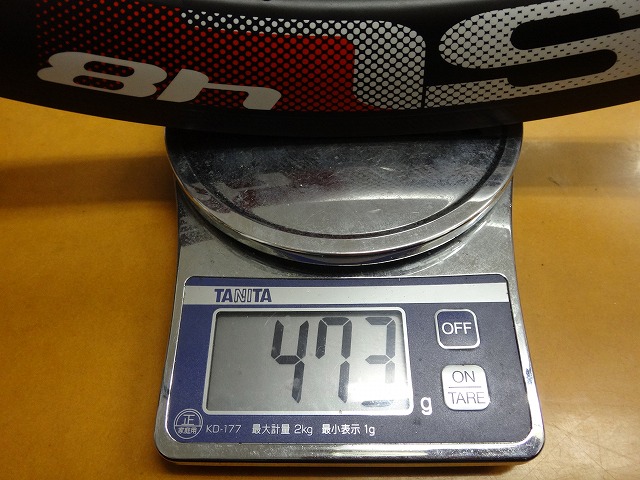
The measured weight of the rim.

I built it
back up.
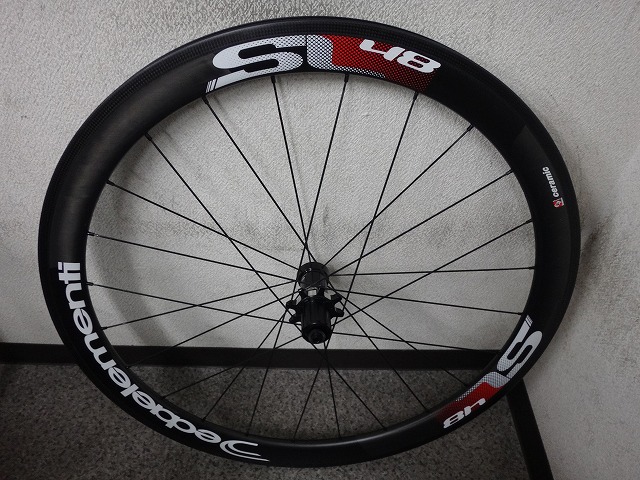
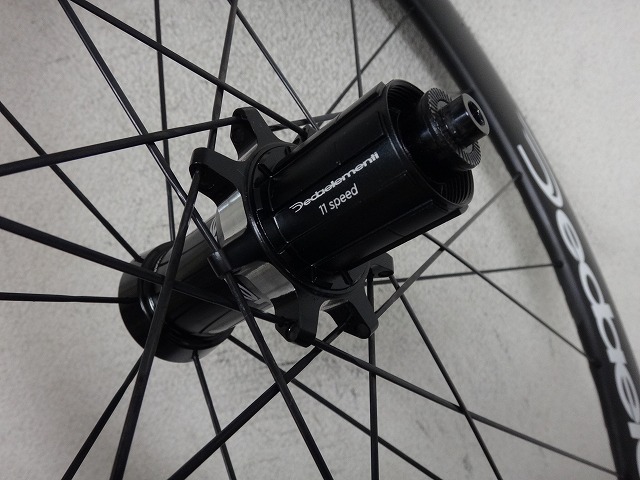
All black CX Sprint straight spokes.
I'm not tying the freewheel side.
The freebody has been swapped to Shimano spec.
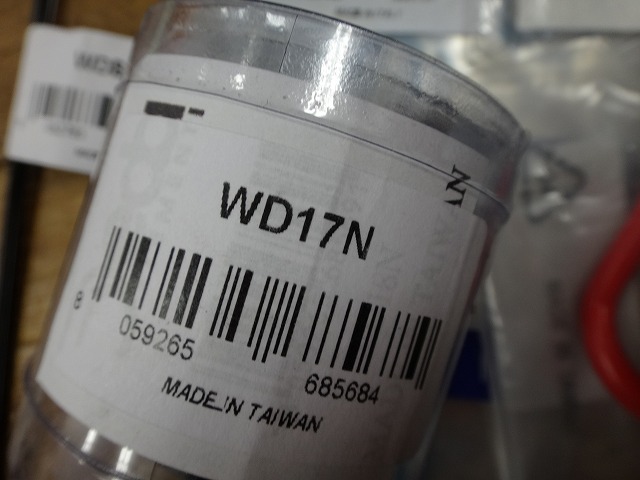
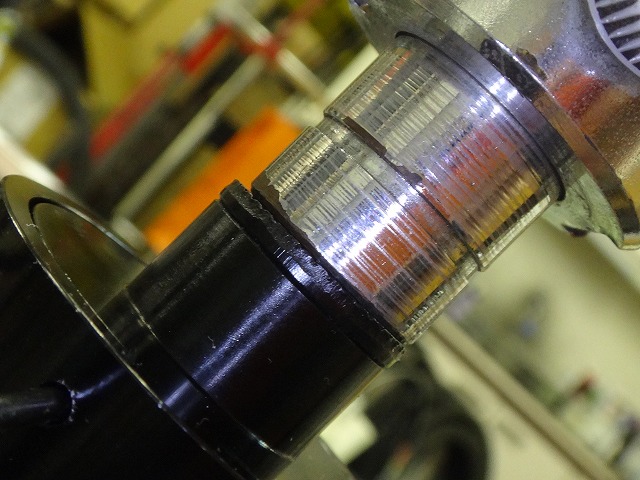
The freebody model number is WD17N. When I saw the Campagnolo version,
I thought it might be Edco-made, but looking at the spring clip and such,
it appears to be made by CHOSEN (チョーズン). Also Taiwan-made.

Next, the front wheel.
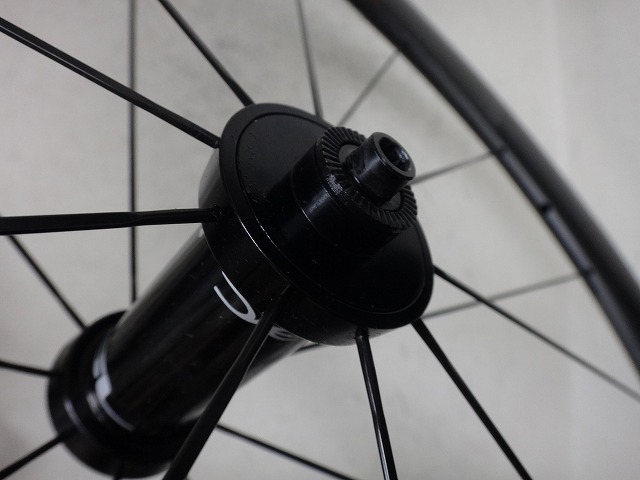
Quite wide flange, with Alpina 68% black aero spokes, 18H radial lacing.
I'm not replacing the front wheel spokes.


It had some centering issues and minor runout, so
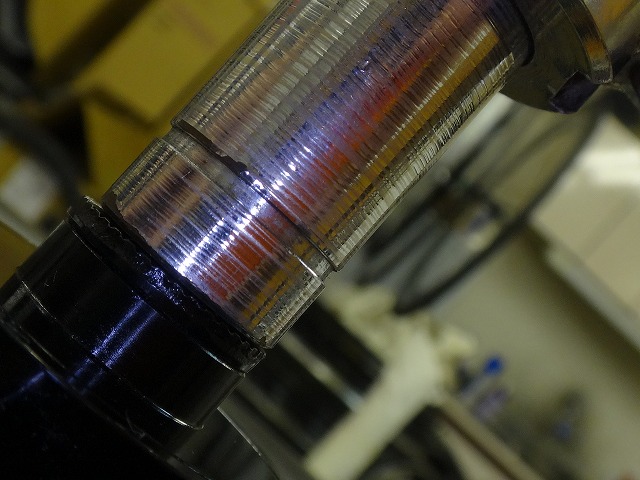
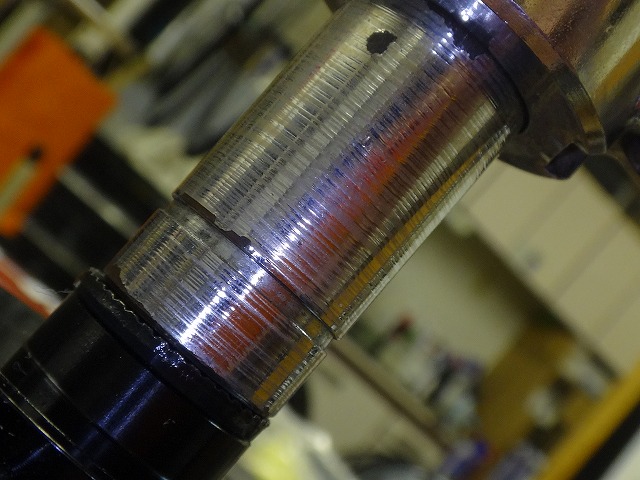
I corrected them.
I'll be selling the front wheel with these special, hard-to-source spokes,
but in case someone bends or breaks a spoke,
to ease concerns about what to do,
I've already sourced spokes from the distributor in advance.
The distributor's spoke inventory was so small
it didn't seem like they were planning to stock wheels,
so I've essentially bought out their supply.
several more months, but that's not my problem.
The spoke model number is WDSP262, so the nominal length is 262mm.
And it says "Made in Italy."
This, along with the marking on the spoke head,
is my basis for definitively attributing these spokes to Alpina.
While unlikely, if someone damages more spokes than I have in stock,
I'll still repair them by swapping in CX Sprint or similar spokes.
I hate wheels that can't be fixed.
This SL48C wheelset will be sold as a one-set limited special price item.
Currently spec'd for Shimano freebody, but conversion to Campagnolo is also possible since that's how it came.
List price ¥236,454 (excluding tax), ¥261,000 (including tax)...
Details are posted at the usual place.
Also, this will be limited to in-store customers only.