A customer brought in a Racing Quattro Carbon for repair.
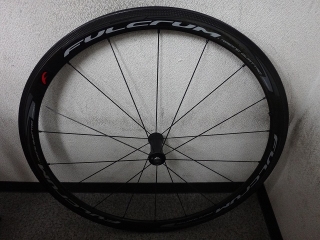
The front wheel has a broken spoke and needs repair.
The customer decided our shop was the closest one that could fix it.
It's about 150km in straight-line distance,
but probably over 200km by car.
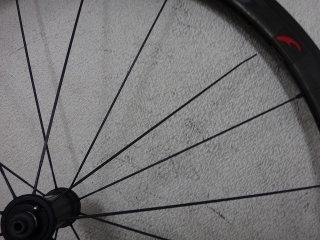
The spoke didn't break while riding — it suddenly snapped with a crack
while the bike was stored indoors.
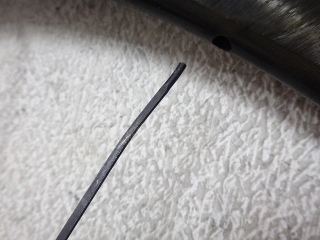
There are marks showing the spoke was bent from catching something,
and it apparently fractured while at rest after that damage accumulated.
The customer says there was no crash,
but regardless of whether they remember it,
something definitely caught the spoke at some point.
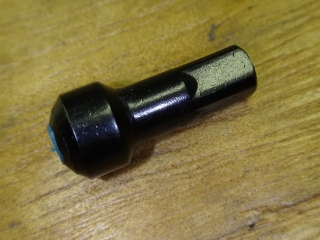
As for the nipple,
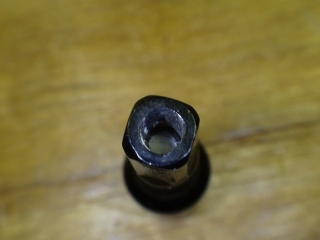
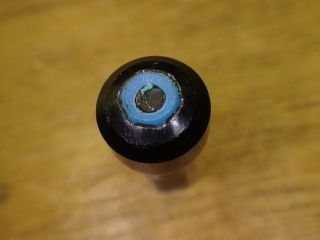
It was stuck inside in a shape where the spoke couldn't be recovered.
This is the carbon rim version of the Fulcrum "Racing Quattro,"
which is Fulcrum's take on Campagnolo's Scirocco derivative
called the "Scirocco 35" with a 35mm rim height.
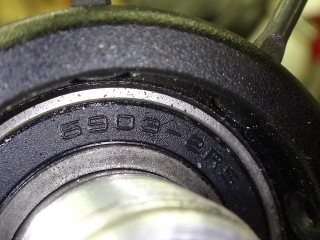
The hub bearings use cartridge-style rather than cup and cone.
They're sized 6903 with a 30mm outside diameter — quite large.
They're essentially the maximum size used in hub bearings,
and were even used on the left side of old Kshilium rear hubs.
Because the ball bearings are larger,
they're less prone to wear — that's their main strength.
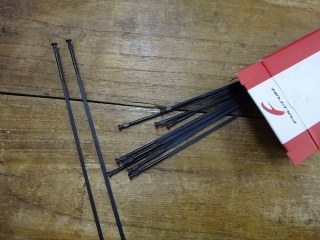
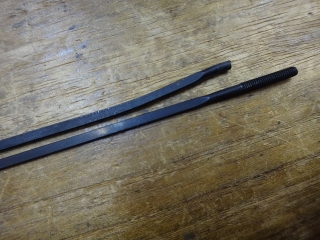
Replacement spokes in stock.
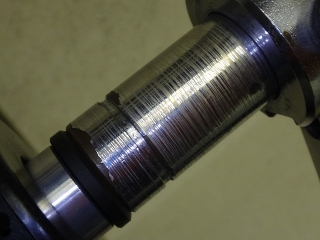
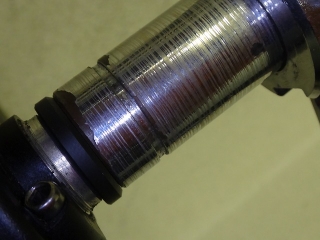
Since the spoke was missing, I didn't check the initial center,
but as usual, I first tightened only the nipple of the replacement spoke,
then worked on fine lateral adjustments at other points
after the phase with the most runout was eliminated.
After completing the lateral truing and checking with a centering gauge,
it was dead-on perfect.
That means the original state — before the spoke broke,
even before the spoke was bent —
the wheel was already perfectly centered.
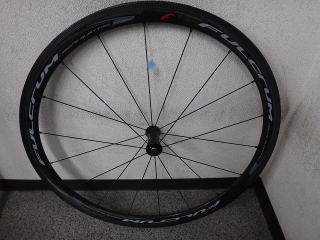
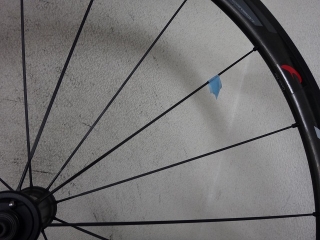
It's fixed.
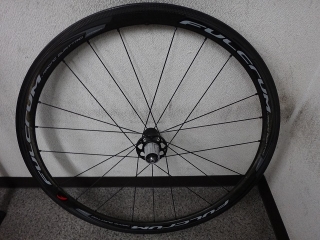
Next, the rear wheel. This one was just inspected.
The hub bore play had lateral play, so I adjusted it.
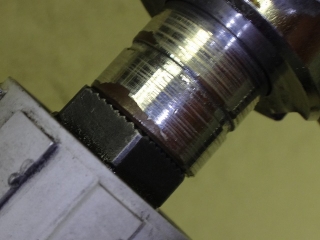
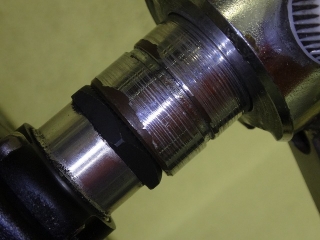
There was about a paper thickness worth of center drift toward the freehub side
from age-related wear since it was perfectly centered,
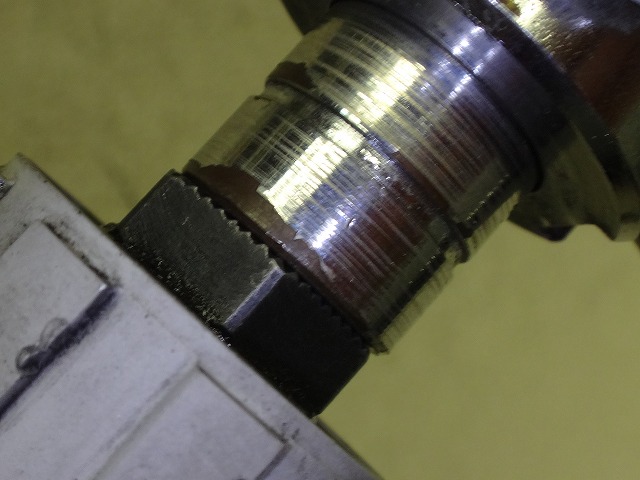
but since the right end locknut has large serrations,
I couldn't get a good shot of it, so I only captured images
after completing the truing and centering.
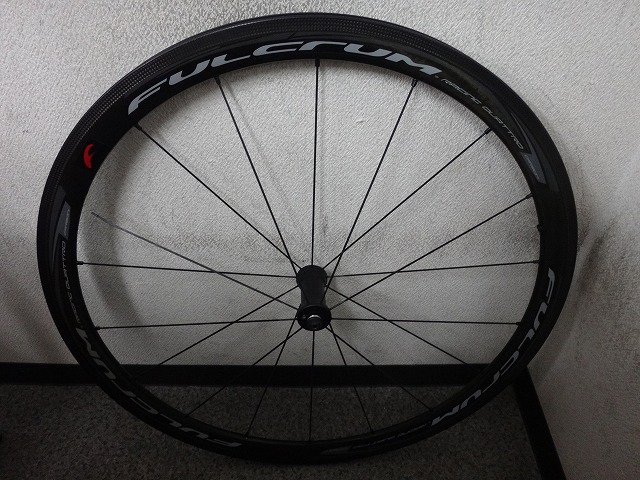
The front wheel has a broken spoke and needs repair.
The customer decided our shop was the closest one that could fix it.
It's about 150km in straight-line distance,
but probably over 200km by car.
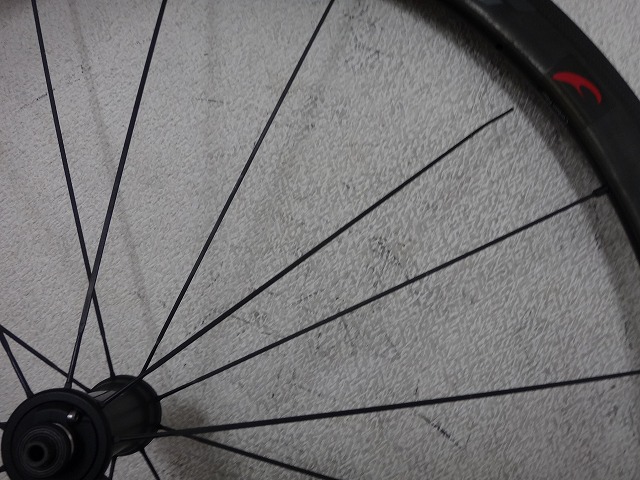
The spoke didn't break while riding — it suddenly snapped with a crack
while the bike was stored indoors.

There are marks showing the spoke was bent from catching something,
and it apparently fractured while at rest after that damage accumulated.
The customer says there was no crash,
but regardless of whether they remember it,
something definitely caught the spoke at some point.
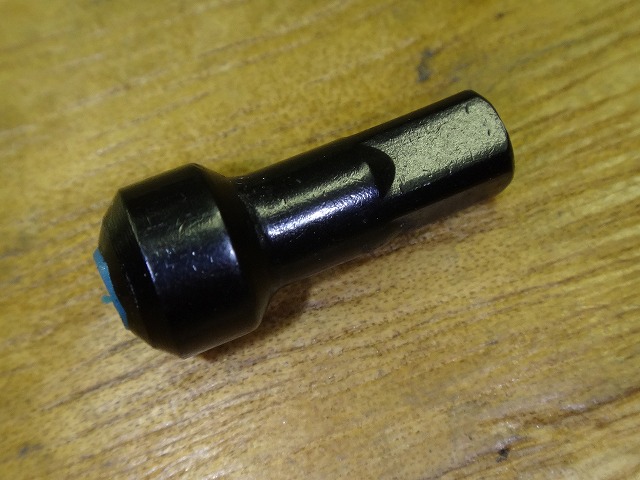
As for the nipple,
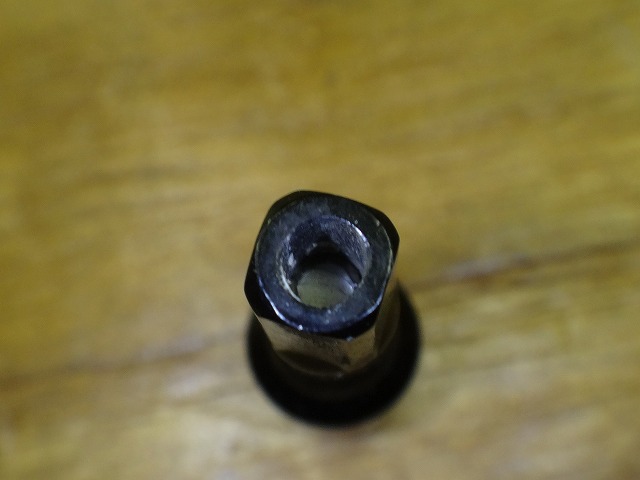
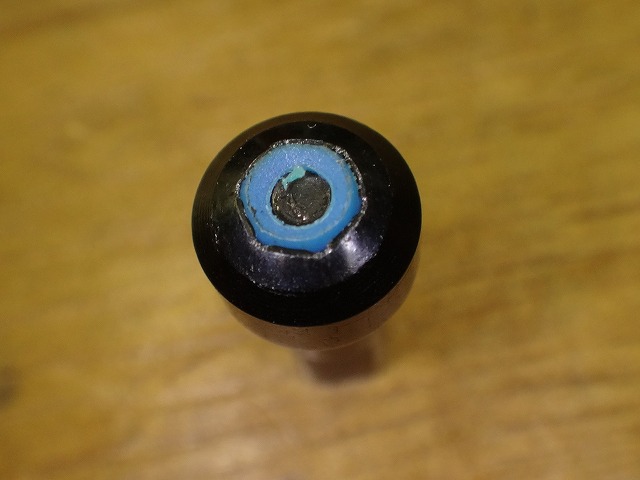
It was stuck inside in a shape where the spoke couldn't be recovered.

This is the carbon rim version of the Fulcrum "Racing Quattro,"
which is Fulcrum's take on Campagnolo's Scirocco derivative
called the "Scirocco 35" with a 35mm rim height.
The hub bearings use cartridge-style rather than cup and cone.
They're sized 6903 with a 30mm outside diameter — quite large.
They're essentially the maximum size used in hub bearings,
and were even used on the left side of old Kshilium rear hubs.
Because the ball bearings are larger,
they're less prone to wear — that's their main strength.
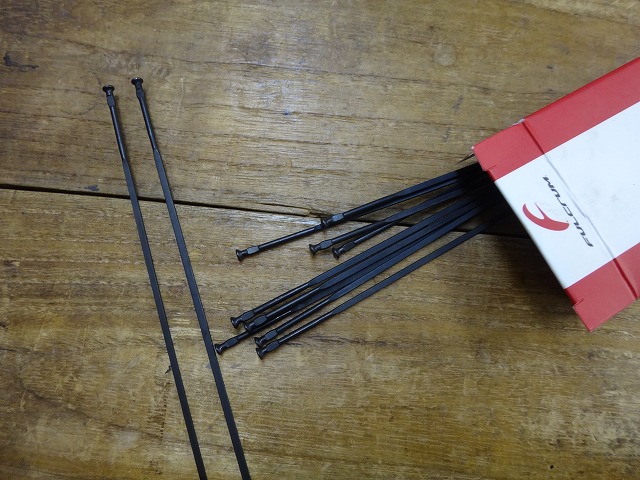
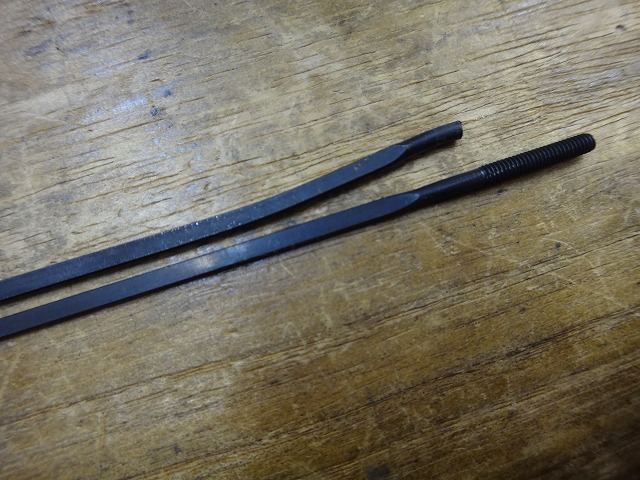
Replacement spokes in stock.


Since the spoke was missing, I didn't check the initial center,
but as usual, I first tightened only the nipple of the replacement spoke,
then worked on fine lateral adjustments at other points
after the phase with the most runout was eliminated.
After completing the lateral truing and checking with a centering gauge,
it was dead-on perfect.
That means the original state — before the spoke broke,
even before the spoke was bent —
the wheel was already perfectly centered.

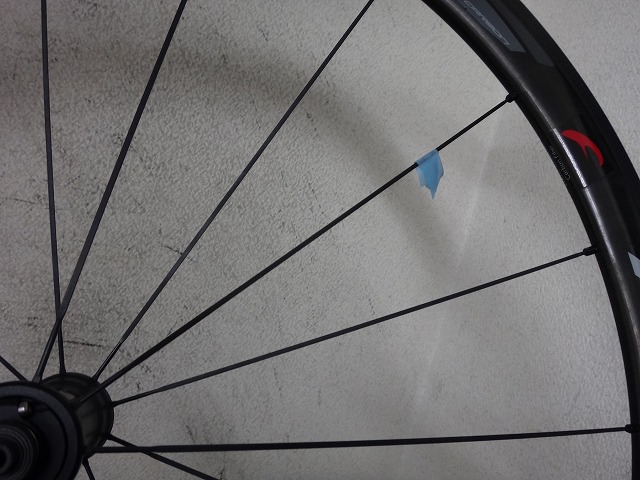
It's fixed.
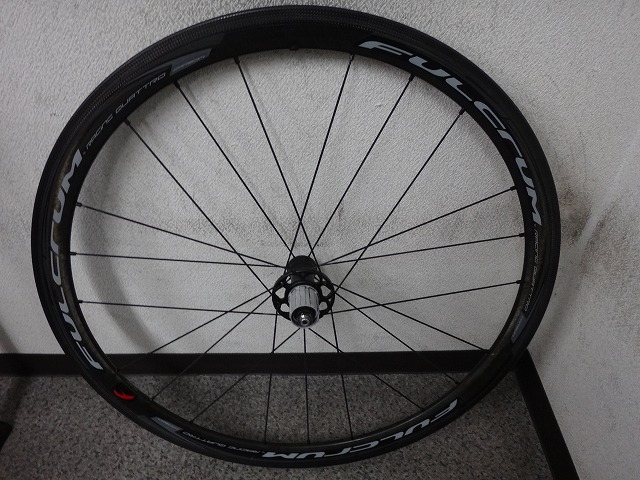
Next, the rear wheel. This one was just inspected.
The hub bore play had lateral play, so I adjusted it.

There was about a paper thickness worth of center drift toward the freehub side
from age-related wear since it was perfectly centered,
but since the right end locknut has large serrations,
I couldn't get a good shot of it, so I only captured images
after completing the truing and centering.