Tomorrow, February 18th (Friday), I have some unavoidable business to attend to, so
I'll be taking the day off.
I apologize for any inconvenience and appreciate your understanding.
The Osaka Symphony Orchestra's subscription concerts used to happen about 11 times a year,
but in both the 2021 and 2022 fiscal years, due to the effects of that global situation,
they've been reduced to 8 times a year.
Even with just 8 concerts a year, the last one was two weeks ago on February 4th,
so the schedule is quite unevenly spaced.
Apparently this is due to the logistics of securing the venue (The Symphony Hall).
By the way, the fiscal year runs from April to March,
so this subscription concert will be the last one for fiscal year 2021 (there's none in March).
The 2022 fiscal year subscription concerts are scheduled for
May, June, July, September, October, December, February, and March—
fairly evenly spaced, so I can get my prep work done much better.
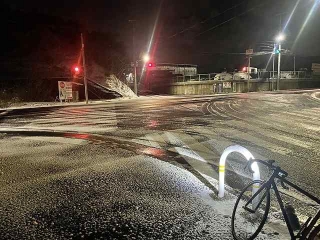
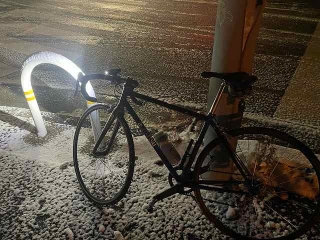
Yesterday morning around 5:30 AM, at the intersection in Ohno-cho at the base of Nabeya Pass...
This is only understandable to people in Osaka, and only a select few at that,
but at the T-intersection where Senbok Route 2 ends, if you turn left at Bessho,
you suddenly see snow piled up on the shoulder—something that wasn't visible before—
and parked cars were covered in snow
(once you turn at Bessho, it's suddenly snow country).
After that point, snow remained on the shoulders the whole way.
Beyond the outer ring, you could only drive in the tire ruts of other vehicles,
and the truck ruts—particularly the dual-wheel ruts on one side—were easiest to follow.
But partway along, those ruts turned from slush into something more like sorbet,
and the ride started making a crunchy sound.
On sections with highly permeable asphalt that doesn't kick up much wheel spray even in rain,
the snow on the road surface is almost completely absent—but such sections are rare.
From experience, you can climb through sorbet-like ruts with both feet clipped into the pedals,
but you can't descend that way, so I gave up at Ohno-cho and headed back.
Since the old road branches off from the bypass at Ohno-cho,
the old road has almost no tire ruts and gets completely covered in snow.
For the descent on the sorbet-like ruts on the way back,
I took my right foot (I'm a right-foot person in situations like this) off the pedal
and dangled it outrigger-style, descending slowly with light braking and no pedaling.
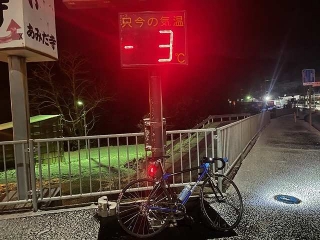
If it was minus 3°C at Ohno-cho, the prefectural border at Nabeya Pass was probably around minus 8°C.
On the return route, north of Senbok had no snow on the shoulders,
and since sunrise happened along the way,
the temperature must have been definitely higher than during the climb,
but the cold I hadn't felt while climbing
started to bite through my gloves—my hands were getting numb.
I noticed that while climbing slowly, my heart rate was in the 140s,
but on flat ground at a leisurely pace on the return, it was in the 100s.
So I picked up the intensity a bit to maintain 140-150 bpm,
and then I felt heat radiating from inside my hands to my fingertips
(close to that sensation of plunging numb hands into warm water)
and the blood flow improved—the cold in my fingertips disappeared.
What was a fresh experience was realizing clearly through my heart rate monitor
that even below the exercise intensity where you're obviously sweating,
the amount of internal heat generation noticeably changes how cold you feel.
Bonus
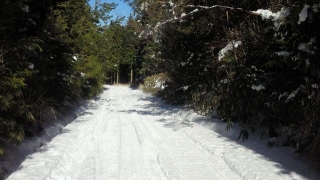
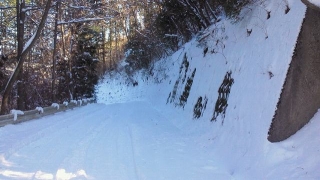
This is exactly 11 years ago, February 16th, 2011, on the Osaka side of Mount Katsuragi in Izumi.
I came from Yamanakadani, entered Wakayama,
and climbed Mount Katsuragi to return to Osaka,
but while there was no snow on the Wakayama side,
the Osaka side had accumulated snow.
Since Yamanakadani, which I climbed on the way there, is low elevation and almost never gets too snowy to pass,
I didn't realize that only the Osaka side could accumulate this much.
If the outbound route had been Kongo Tunnel or Nabeya Pass, I might have noticed.

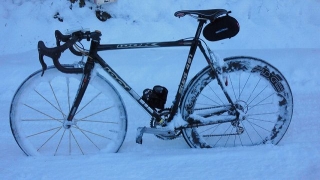
Of course, riding was impossible.
However, the snow was thick enough that my cleats didn't reach the ground,
so I was able to walk without damaging the cleats.
I probably walked about 4 kilometers.
Even after reaching rideable snow, the cleats had packed snow that turned to ice,
so the pedals wouldn't clip in for a while.
What's in the bottle cage is a helmet cover I took off.
I wasn't using a water bottle anyway.
The saddle bag is unusually large
because I was in two-tubular-tire-carrying mode.

I wasn't expecting to end up walking through snow like this, but
I generally get through winter with toe shoe covers.
The Pearl Izumi toe shoe covers in the image were the most practical I've ever used (personal opinion).
The current model has oversized rubber at the toe that interferes with the pedal (see here).
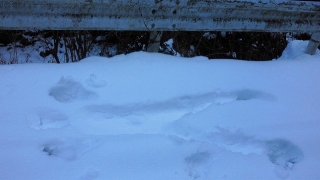
Prostrate.
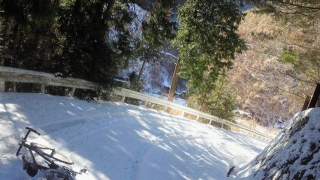
The snow had gotten somewhat thinner, and there were tire ruts,
but riding was still impossible.
On top of the ruts, the snow is thinner and the cleats contact the asphalt, so
holding the stem while keeping wheels in the ruts
and stepping with your shoes on the thick snow beside them,
you can walk fast without damaging the cleats.
I think this will be useful if you end up in the same situation,
so please refer to it if needed.
I'll be taking the day off.
I apologize for any inconvenience and appreciate your understanding.
The Osaka Symphony Orchestra's subscription concerts used to happen about 11 times a year,
but in both the 2021 and 2022 fiscal years, due to the effects of that global situation,
they've been reduced to 8 times a year.
Even with just 8 concerts a year, the last one was two weeks ago on February 4th,
so the schedule is quite unevenly spaced.
Apparently this is due to the logistics of securing the venue (The Symphony Hall).
By the way, the fiscal year runs from April to March,
so this subscription concert will be the last one for fiscal year 2021 (there's none in March).
The 2022 fiscal year subscription concerts are scheduled for
May, June, July, September, October, December, February, and March—
fairly evenly spaced, so I can get my prep work done much better.
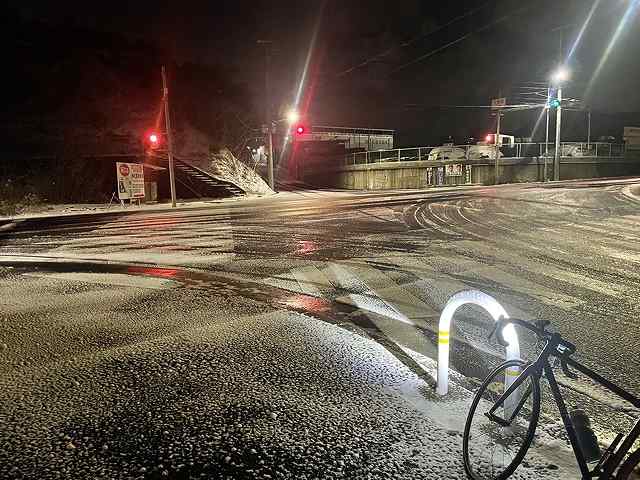

Yesterday morning around 5:30 AM, at the intersection in Ohno-cho at the base of Nabeya Pass...
This is only understandable to people in Osaka, and only a select few at that,
but at the T-intersection where Senbok Route 2 ends, if you turn left at Bessho,
you suddenly see snow piled up on the shoulder—something that wasn't visible before—
and parked cars were covered in snow
(once you turn at Bessho, it's suddenly snow country).
After that point, snow remained on the shoulders the whole way.
Beyond the outer ring, you could only drive in the tire ruts of other vehicles,
and the truck ruts—particularly the dual-wheel ruts on one side—were easiest to follow.
But partway along, those ruts turned from slush into something more like sorbet,
and the ride started making a crunchy sound.
On sections with highly permeable asphalt that doesn't kick up much wheel spray even in rain,
the snow on the road surface is almost completely absent—but such sections are rare.
From experience, you can climb through sorbet-like ruts with both feet clipped into the pedals,
but you can't descend that way, so I gave up at Ohno-cho and headed back.
Since the old road branches off from the bypass at Ohno-cho,
the old road has almost no tire ruts and gets completely covered in snow.
For the descent on the sorbet-like ruts on the way back,
I took my right foot (I'm a right-foot person in situations like this) off the pedal
and dangled it outrigger-style, descending slowly with light braking and no pedaling.
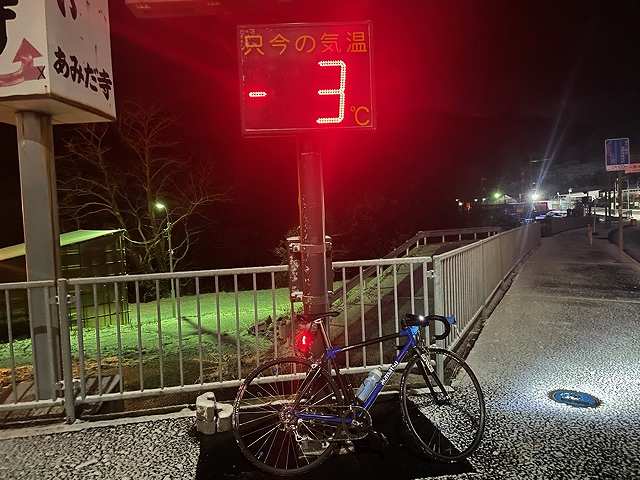
If it was minus 3°C at Ohno-cho, the prefectural border at Nabeya Pass was probably around minus 8°C.
On the return route, north of Senbok had no snow on the shoulders,
and since sunrise happened along the way,
the temperature must have been definitely higher than during the climb,
but the cold I hadn't felt while climbing
started to bite through my gloves—my hands were getting numb.
I noticed that while climbing slowly, my heart rate was in the 140s,
but on flat ground at a leisurely pace on the return, it was in the 100s.
So I picked up the intensity a bit to maintain 140-150 bpm,
and then I felt heat radiating from inside my hands to my fingertips
(close to that sensation of plunging numb hands into warm water)
and the blood flow improved—the cold in my fingertips disappeared.
What was a fresh experience was realizing clearly through my heart rate monitor
that even below the exercise intensity where you're obviously sweating,
the amount of internal heat generation noticeably changes how cold you feel.
Bonus

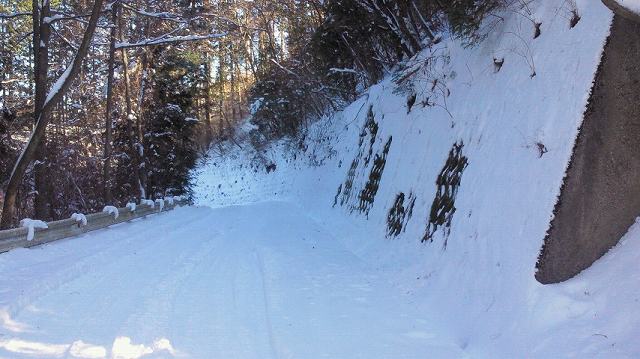
This is exactly 11 years ago, February 16th, 2011, on the Osaka side of Mount Katsuragi in Izumi.
I came from Yamanakadani, entered Wakayama,
and climbed Mount Katsuragi to return to Osaka,
but while there was no snow on the Wakayama side,
the Osaka side had accumulated snow.
Since Yamanakadani, which I climbed on the way there, is low elevation and almost never gets too snowy to pass,
I didn't realize that only the Osaka side could accumulate this much.
If the outbound route had been Kongo Tunnel or Nabeya Pass, I might have noticed.
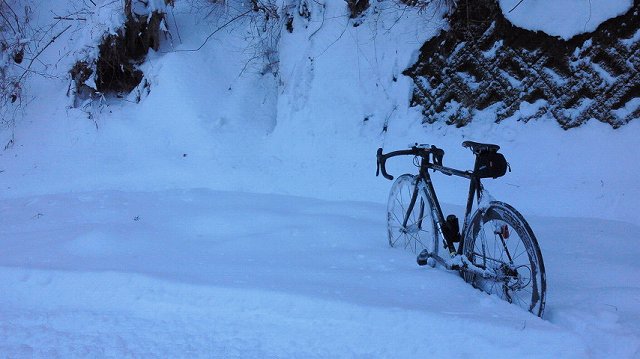

Of course, riding was impossible.
However, the snow was thick enough that my cleats didn't reach the ground,
so I was able to walk without damaging the cleats.
I probably walked about 4 kilometers.
Even after reaching rideable snow, the cleats had packed snow that turned to ice,
so the pedals wouldn't clip in for a while.
What's in the bottle cage is a helmet cover I took off.
I wasn't using a water bottle anyway.
The saddle bag is unusually large
because I was in two-tubular-tire-carrying mode.
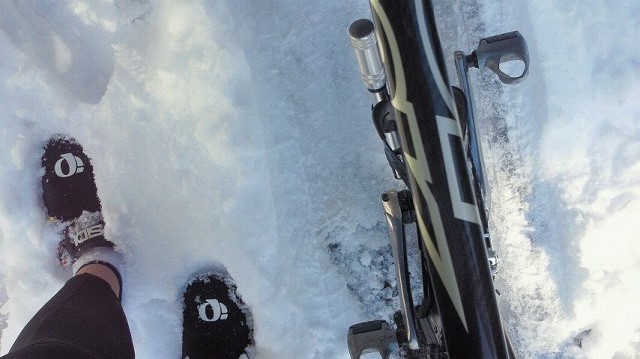
I wasn't expecting to end up walking through snow like this, but
I generally get through winter with toe shoe covers.
The Pearl Izumi toe shoe covers in the image were the most practical I've ever used (personal opinion).
The current model has oversized rubber at the toe that interferes with the pedal (see here).
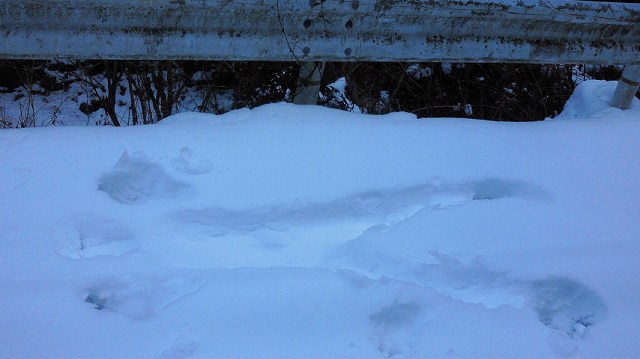
Prostrate.
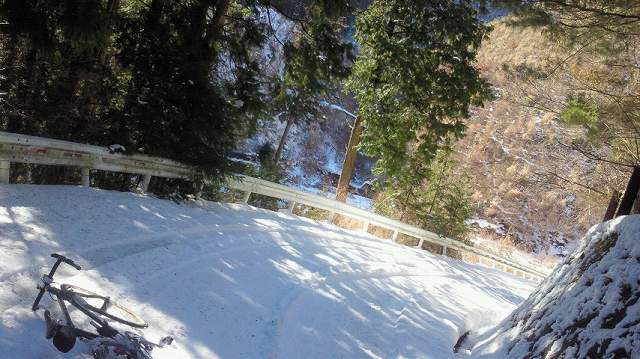
The snow had gotten somewhat thinner, and there were tire ruts,
but riding was still impossible.
On top of the ruts, the snow is thinner and the cleats contact the asphalt, so
holding the stem while keeping wheels in the ruts
and stepping with your shoes on the thick snow beside them,
you can walk fast without damaging the cleats.
I think this will be useful if you end up in the same situation,
so please refer to it if needed.