I bought Pearl Izumi toe shoe covers.
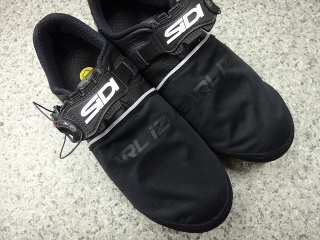
↑This thing
I had stocked them intending to use them as prizes for a year-end raffle drawing
I had been using Lizardskin toe shoe covers
since this winter, but after less than 2 months
the surface on the top of my foot started peeling off in chunks, so I threw them away.
I should have taken a photo of it.
I had let them sit for 2 years after stocking them,
but I hadn't exposed them to direct sunlight or anything like that.
I'm pretty resistant to cold feet,
so unless it's an exceptionally cold winter in Osaka,
I stick with toe-only shoe covers.
This year, only around January 13th when it was abnormally cold
did I switch to Mavic full shoe covers.
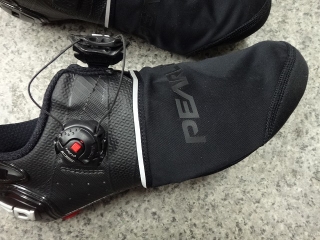
One advantage of toe shoe covers is that you can adjust
the velcro, ratchet, or dial at the top of the shoe.
This toe shoe cover's
official model name is the
7975 Windbreak Light Toe Cover from the 2020 autumn-winter lineup.
Since the specifications have reverted to an earlier model,
that knockoff-looking Mavic design
I wondered if the one with what looks like pants elastic
was being sold alongside it,
but the only toe shoe cover being offered was this one.
For details on previous specifications, please see (here).
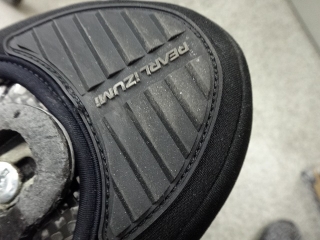
The rubber at the toe of this shoe cover extends
right to the very tip of the cleat, which makes
clipless pedal engagement abnormally difficult sometimes.
From a standstill at a traffic light, there were times when
my pedals didn't engage for over 300 meters.
I think my cleat placement being as far forward as possible is
part of the issue, but compared to
the old toe shoe covers without toe rubber from the "rat burglar" era mentioned in the linked article,
the hole position is shifted back toward the heel.
I even thought about just removing the rubber part.
Since road bike shoes don't involve toe-off walking,
I wondered if this rubber is really necessary.
It didn't exist in the rat burglar era anyway.
So I looked and found scuff marks on the rubber tip.
Ah, so when standing on one foot at traffic lights, you end up on your toes.
When I unclip one foot at traffic lights and such,
if there's a curb or something on the left, I unclip my left foot,
but if the ground is level on both sides, I unclip my right foot.
There's no particular reason—it's just a habit.
The image above is the right shoe.
I decided to partially cut away the toe rubber.
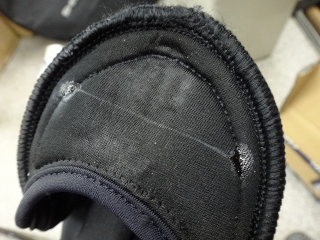
After cutting the rubber, I flipped it inside out and
sealed the edge of the seam with adhesive to prevent fraying.

↑These are Seven Bicycle winter gloves.
The owner of the wholesaler here is an old acquaintance, and
during deliveries, he commits the terrorism of filling boxes with snacks,
but apparently he only does that to me.
The dried flowers that have been at our shop since it opened
were also a gift from this owner.
As mentioned in the linked article earlier,
I usually remove the palm padding from gloves,
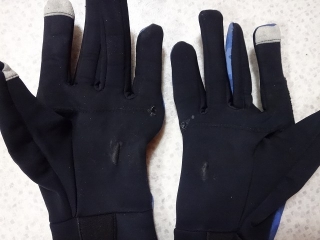
and I did the same with these gloves
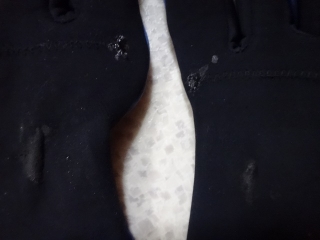
and the fraying prevention is done the same way.
Or rather, in their original state, the palm padding is so thick
that holding the drop bars is actually painful!?

I cut it open and sewed the opening closed.
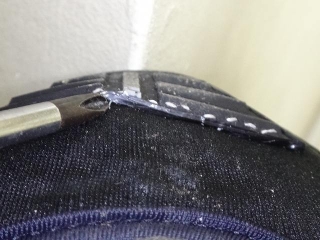
↑This is after some use with the timeline jumping ahead a bit,
and despite the messy stitching, it's sewn properly.
I poked at it with a screwdriver.
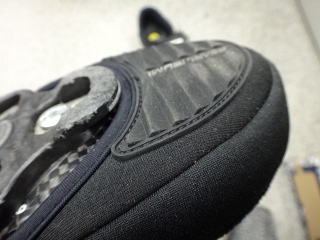
before
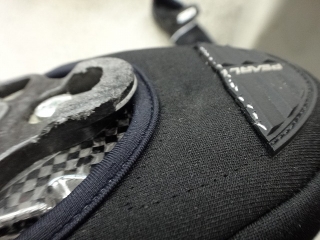
after
I've only done one side so far,
but clipless pedal engagement has improved dramatically.
Clearly the rubber was the culprit.

Before I cut the rubber away, engagement was so difficult
that sometimes I would peel back the shoe cover, clip in, and
then pull the toe section back on.
In those cases, the shoe cover would shift around a bit.
After clipping in with the rubber still there, I tried to
peel back the shoe cover as shown in the image,
but since it was caught between the shoe and pedal,
I couldn't peel it back
(at least not with one hand while riding).
So I figured it was definitely being pinched, but
even with the right shoe cover after partially cutting the rubber,
the fabric alone was catching
and I still couldn't peel it back with one-handed force.
Bonus
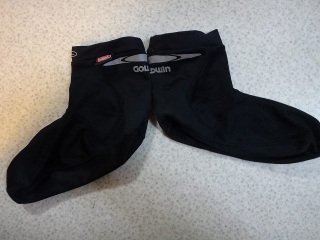

As a useful companion for my desperate attempts
to stick with toe shoe covers when possible,
these Goldwin Windstopper socks are handy.
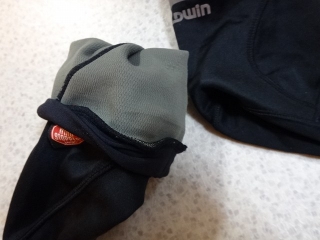
They're thin—"not" fleece-lined—so you don't feel tightness
even when wearing bike shoes,
and being completely windproof, they're warmer than they look—
or rather, they're not cold at all.
The length and thickness are perfect for road bikes, or rather
they're clearly made specifically for cycling, but
since Goldwin withdrew from the bicycle business,
they've become unobtainable.
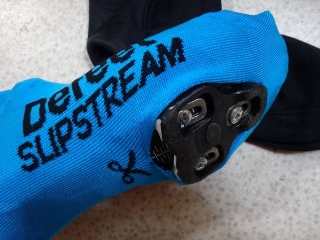
When paired with Defeet's "sock-material shoe covers,"
you get the funny look of "the sock and cover materials are backwards!"
But never mind that.
By the way, this shoe cover comes in
two sizes: S-M (23-26cm) and
L-XL (26.5-31cm),
and we got a sale price on four colors—dark blue, light blue (the color in the image above), pink, and fluorescent yellow—
so I bought out the S-M stock and stocked a decent amount of the L-XL size too, and
sold them at less than half price, but they sold out so fast
we barely had time to list them on our customer bulletin board.
Only the fluorescent yellow remains in small quantities.
As for the larger size, with MTB shoes that have a walking outsole, even 26cm shoes are
too small in the smaller size, and
people using them for cyclocross tend to wear them
expecting decent ventilation and mudguard performance.
Most of the larger sizes that sold at our shop were for cyclocross use.

↑This thing
I had been using Lizardskin toe shoe covers
since this winter, but after less than 2 months
the surface on the top of my foot started peeling off in chunks, so I threw them away.
I should have taken a photo of it.
I had let them sit for 2 years after stocking them,
but I hadn't exposed them to direct sunlight or anything like that.
I'm pretty resistant to cold feet,
so unless it's an exceptionally cold winter in Osaka,
I stick with toe-only shoe covers.
This year, only around January 13th when it was abnormally cold
did I switch to Mavic full shoe covers.

One advantage of toe shoe covers is that you can adjust
the velcro, ratchet, or dial at the top of the shoe.
This toe shoe cover's
official model name is the
7975 Windbreak Light Toe Cover from the 2020 autumn-winter lineup.
Since the specifications have reverted to an earlier model,
I wondered if the one with what looks like pants elastic
was being sold alongside it,
but the only toe shoe cover being offered was this one.
For details on previous specifications, please see (here).

The rubber at the toe of this shoe cover extends
right to the very tip of the cleat, which makes
clipless pedal engagement abnormally difficult sometimes.
From a standstill at a traffic light, there were times when
my pedals didn't engage for over 300 meters.
I think my cleat placement being as far forward as possible is
part of the issue, but compared to
the old toe shoe covers without toe rubber from the "rat burglar" era mentioned in the linked article,
the hole position is shifted back toward the heel.
I even thought about just removing the rubber part.
Since road bike shoes don't involve toe-off walking,
I wondered if this rubber is really necessary.
It didn't exist in the rat burglar era anyway.
So I looked and found scuff marks on the rubber tip.
Ah, so when standing on one foot at traffic lights, you end up on your toes.
When I unclip one foot at traffic lights and such,
if there's a curb or something on the left, I unclip my left foot,
but if the ground is level on both sides, I unclip my right foot.
There's no particular reason—it's just a habit.
The image above is the right shoe.
I decided to partially cut away the toe rubber.

After cutting the rubber, I flipped it inside out and
sealed the edge of the seam with adhesive to prevent fraying.

↑These are Seven Bicycle winter gloves.
during deliveries, he commits the terrorism of filling boxes with snacks,
but apparently he only does that to me.
The dried flowers that have been at our shop since it opened
were also a gift from this owner.
As mentioned in the linked article earlier,
I usually remove the palm padding from gloves,

and I did the same with these gloves

and the fraying prevention is done the same way.
Or rather, in their original state, the palm padding is so thick
that holding the drop bars is actually painful!?

I cut it open and sewed the opening closed.

↑This is after some use with the timeline jumping ahead a bit,
and despite the messy stitching, it's sewn properly.
I poked at it with a screwdriver.

before

after
I've only done one side so far,
but clipless pedal engagement has improved dramatically.
Clearly the rubber was the culprit.

Before I cut the rubber away, engagement was so difficult
that sometimes I would peel back the shoe cover, clip in, and
then pull the toe section back on.
In those cases, the shoe cover would shift around a bit.
After clipping in with the rubber still there, I tried to
peel back the shoe cover as shown in the image,
but since it was caught between the shoe and pedal,
I couldn't peel it back
(at least not with one hand while riding).
So I figured it was definitely being pinched, but
even with the right shoe cover after partially cutting the rubber,
the fabric alone was catching
and I still couldn't peel it back with one-handed force.
Bonus


As a useful companion for my desperate attempts
to stick with toe shoe covers when possible,
these Goldwin Windstopper socks are handy.

They're thin—"not" fleece-lined—so you don't feel tightness
even when wearing bike shoes,
and being completely windproof, they're warmer than they look—
or rather, they're not cold at all.
The length and thickness are perfect for road bikes, or rather
they're clearly made specifically for cycling, but
since Goldwin withdrew from the bicycle business,
they've become unobtainable.

When paired with Defeet's "sock-material shoe covers,"
you get the funny look of "the sock and cover materials are backwards!"
But never mind that.
By the way, this shoe cover comes in
two sizes: S-M (23-26cm) and
L-XL (26.5-31cm),
and we got a sale price on four colors—dark blue, light blue (the color in the image above), pink, and fluorescent yellow—
so I bought out the S-M stock and stocked a decent amount of the L-XL size too, and
sold them at less than half price, but they sold out so fast
we barely had time to list them on our customer bulletin board.
Only the fluorescent yellow remains in small quantities.
As for the larger size, with MTB shoes that have a walking outsole, even 26cm shoes are
too small in the smaller size, and
people using them for cyclocross tend to wear them
expecting decent ventilation and mudguard performance.
Most of the larger sizes that sold at our shop were for cyclocross use.