Another wheel day (and so on).
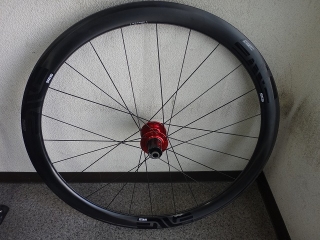
I built a rear wheel using the SES (Smart Envision System)
3.4 disc rim.
The part number for the 38mm high front rim is 38ACD,
and the 42mm high rear rim part number is 42ACD.
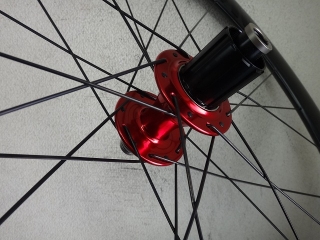
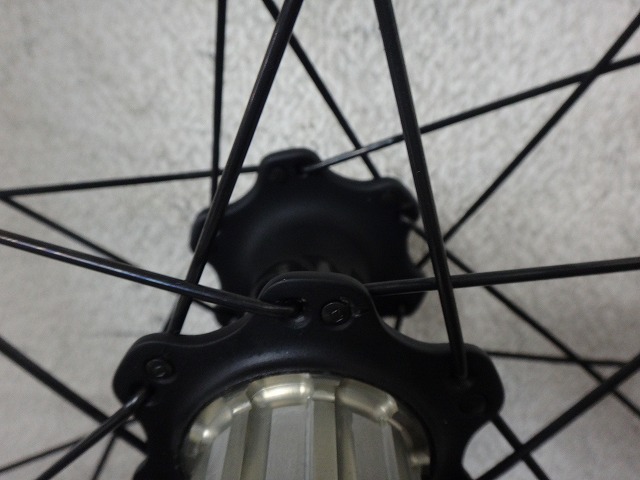
Chris King R45D hub, 24H, black semi-comp four-six lacing pattern.
I'll do the spoking later.
The rim has a sticker that says "LACE 2X," which means
"lace with 2-cross," in other words, do 4-cross on both sides,
but since this is a disc brake rim,
I interpreted it to mean "don't do radial lacing,"
so I went with four-six lacing instead of four-four.
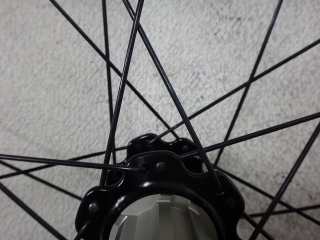

↑These are unrelated projects, but
an ENVE aluminum hub and a carbon hub.
Both have asymmetric flange spacing, and
in terms of the crossing count, they're both 2-cross on each side,
but in terms of actual spoke trajectory, they're 3-cross on each side,
meaning they're close to six-six lacing.
ENVE once officially said something like
"as long as you do tangential lacing,
there's hardly any difference in wheel characteristics between 4-cross and 6-cross,"
and that might be true for (24H) four-four and six-six lacing.
But four-six is different.
At the very least, you can see a difference in the tension meter readings.
Those guys who said "4-cross and 6-cross rear wheels are basically the same"
then went and made hubs that essentially force 6-cross lacing. The reason is unclear.
Is the company not monolithic (the person who made that statement and the hub designer are different people),
or did they change their mind?
If someone said "take a guess whether the 24H rear wheel you're riding now is four-four or six-six lacing
based only on how it feels while riding," it would be hard to say for sure.
But if the rear wheel was laced radially on both sides,
I think you could tell from the feel of the twisting and distortion.
And if you mixed in a four-six laced rear wheel
among randomly swapped-out four-four or six-six wheels
(assuming all have perfectly centered wheel centers
and the freewheel-side tension tensioned up to just before the limit),
in that case I think it would be distinguishable.
ENVE's hubs show some thought, too, but
if the freewheel-side flange holes were evenly spaced
and only the non-freewheel side had asymmetric spacing,
then it would be a hub where
"no matter who builds it, it results in four-six lacing,"
but apparently they didn't think that far.

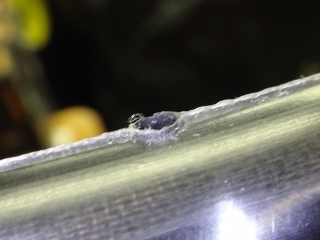
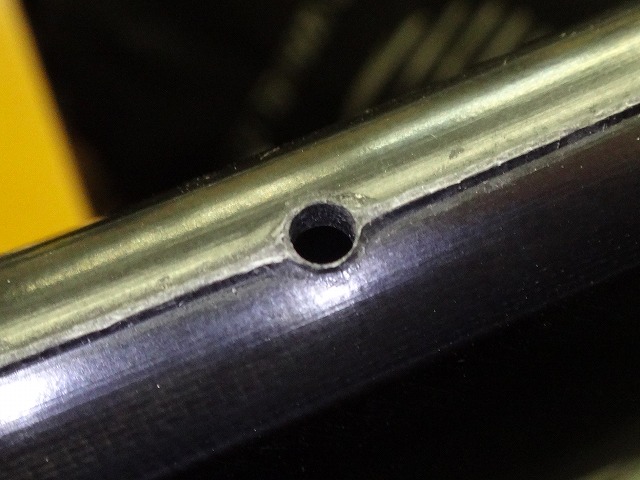
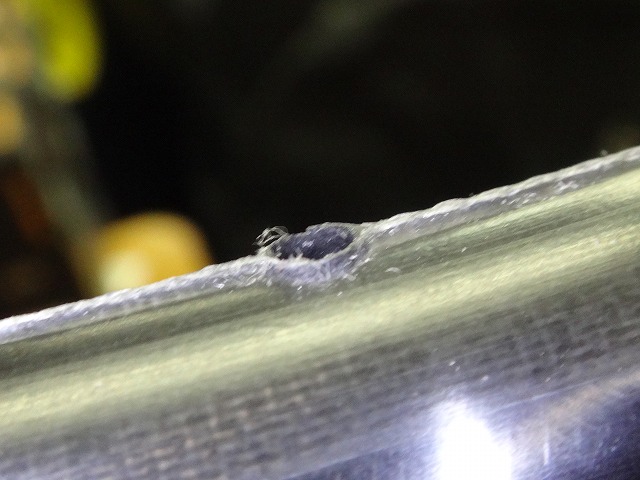
The customer for today's wheel has given me rims for a front-rear set,
but on the rear rim only, on the inner circumference,
there were burrs unlike anything I'd seen before.
But this actually made it clear that "Smart Envision's rims
don't drill the rim holes from a hole-less rim,
rather, the holes exist right when the rim is released from the mold."
With this manufacturing method and the internal nipple design,
Smart Envision rims can handle very high tension without dishing.
I've written about this before, but
the "Smart" in Smart Envision doesn't mean "clever"—it's a person's name,
and the concept is "whatever Smart thinks is best (we're not listening to any other requests),
pushy specs."
For example, if it's the SES 4.5 for rim brakes,
the front rim is ONLY 48mm high, 20H! The rear rim is ONLY 56mm high, 24H!
Just shut up and use these!
What? You want to try both front and rear at 48mm high? You want 28H for the rear rim?
Tough luck! Just quietly use what we give you!
That's how it is.
There's a reason: since SES rims have their rim holes at the molding stage,
each variation in rim hole specs requires a separate mold,
and the manufacturing costs that need to be recovered skyrocket,
so they limit variations for any given model.
They push their own convenience—something they should feel embarrassed about—
and then, smooth as silk, they say
"I'm confident this is the best, so we're not offering any other specs,"
which is very much the American corporate way of doing things.
Though I'll admit they haven't gone so far as to force stem length or handlebar width into one size fits all.
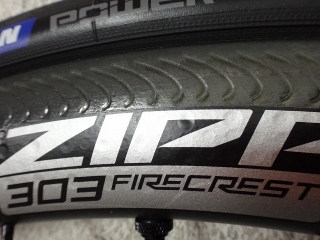
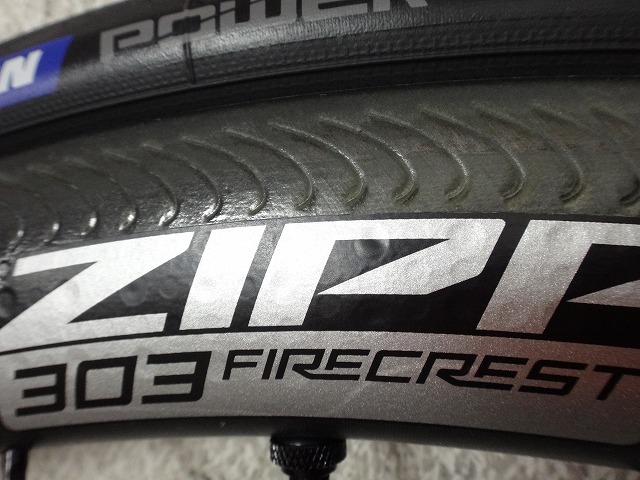
The file-textured braking surface finish you see on recent ZIPP rim brake wheels
(which also looks like salmon fillets)
is called a "show stopper" by the manufacturer.
A show stopper is
"applause and cheers from the audience so thunderous that it actually halts the progress of the play,"
but to make the image of noisy brake noise seem better, they're saying
"listen, this sounds just like applause! You agree, right?"—
which is quite a sales pitch.
One more thing. "Show stopper" also has a slang meaning mainly in IT industry
where it refers to
"a fatal defect discovered during product development that forces you to delay the release"
from the image of "(wanting to move forward, but can't because of applause),"
but you shouldn't pay attention to that.
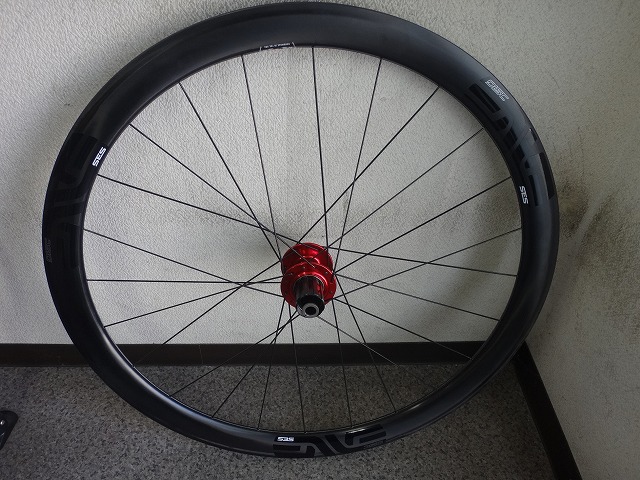
I built a rear wheel using the SES (Smart Envision System)
3.4 disc rim.
The part number for the 38mm high front rim is 38ACD,
and the 42mm high rear rim part number is 42ACD.
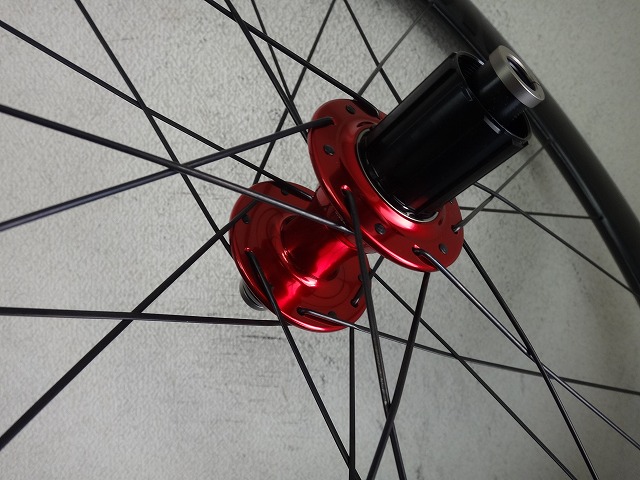
Chris King R45D hub, 24H, black semi-comp four-six lacing pattern.
I'll do the spoking later.
The rim has a sticker that says "LACE 2X," which means
"lace with 2-cross," in other words, do 4-cross on both sides,
but since this is a disc brake rim,
I interpreted it to mean "don't do radial lacing,"
so I went with four-six lacing instead of four-four.
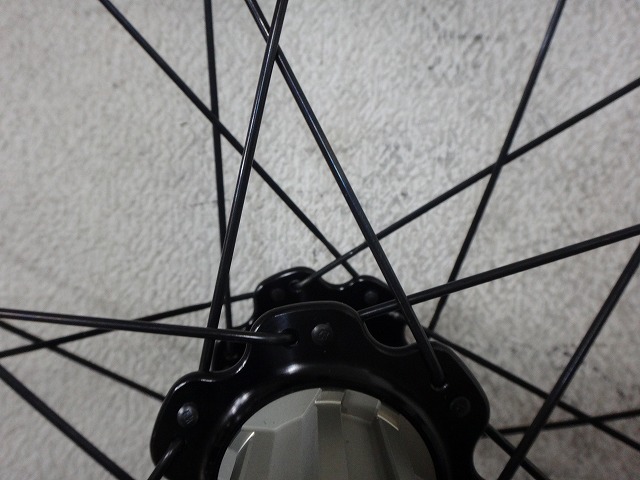
↑These are unrelated projects, but
an ENVE aluminum hub and a carbon hub.
Both have asymmetric flange spacing, and
in terms of the crossing count, they're both 2-cross on each side,
but in terms of actual spoke trajectory, they're 3-cross on each side,
meaning they're close to six-six lacing.
ENVE once officially said something like
"as long as you do tangential lacing,
there's hardly any difference in wheel characteristics between 4-cross and 6-cross,"
and that might be true for (24H) four-four and six-six lacing.
But four-six is different.
At the very least, you can see a difference in the tension meter readings.
Those guys who said "4-cross and 6-cross rear wheels are basically the same"
then went and made hubs that essentially force 6-cross lacing. The reason is unclear.
Is the company not monolithic (the person who made that statement and the hub designer are different people),
or did they change their mind?
If someone said "take a guess whether the 24H rear wheel you're riding now is four-four or six-six lacing
based only on how it feels while riding," it would be hard to say for sure.
But if the rear wheel was laced radially on both sides,
I think you could tell from the feel of the twisting and distortion.
And if you mixed in a four-six laced rear wheel
among randomly swapped-out four-four or six-six wheels
(assuming all have perfectly centered wheel centers
and the freewheel-side tension tensioned up to just before the limit),
in that case I think it would be distinguishable.
ENVE's hubs show some thought, too, but
if the freewheel-side flange holes were evenly spaced
and only the non-freewheel side had asymmetric spacing,
then it would be a hub where
"no matter who builds it, it results in four-six lacing,"
but apparently they didn't think that far.
The customer for today's wheel has given me rims for a front-rear set,
but on the rear rim only, on the inner circumference,
there were burrs unlike anything I'd seen before.
But this actually made it clear that "Smart Envision's rims
don't drill the rim holes from a hole-less rim,
rather, the holes exist right when the rim is released from the mold."
With this manufacturing method and the internal nipple design,
Smart Envision rims can handle very high tension without dishing.
I've written about this before, but
the "Smart" in Smart Envision doesn't mean "clever"—it's a person's name,
and the concept is "whatever Smart thinks is best (we're not listening to any other requests),
pushy specs."
For example, if it's the SES 4.5 for rim brakes,
the front rim is ONLY 48mm high, 20H! The rear rim is ONLY 56mm high, 24H!
Just shut up and use these!
What? You want to try both front and rear at 48mm high? You want 28H for the rear rim?
Tough luck! Just quietly use what we give you!
That's how it is.
There's a reason: since SES rims have their rim holes at the molding stage,
each variation in rim hole specs requires a separate mold,
and the manufacturing costs that need to be recovered skyrocket,
so they limit variations for any given model.
They push their own convenience—something they should feel embarrassed about—
and then, smooth as silk, they say
"I'm confident this is the best, so we're not offering any other specs,"
which is very much the American corporate way of doing things.
Though I'll admit they haven't gone so far as to force stem length or handlebar width into one size fits all.
The file-textured braking surface finish you see on recent ZIPP rim brake wheels
(which also looks like salmon fillets)
is called a "show stopper" by the manufacturer.
A show stopper is
"applause and cheers from the audience so thunderous that it actually halts the progress of the play,"
but to make the image of noisy brake noise seem better, they're saying
"listen, this sounds just like applause! You agree, right?"—
which is quite a sales pitch.
One more thing. "Show stopper" also has a slang meaning mainly in IT industry
where it refers to
"a fatal defect discovered during product development that forces you to delay the release"
from the image of "(wanting to move forward, but can't because of applause),"
but you shouldn't pay attention to that.