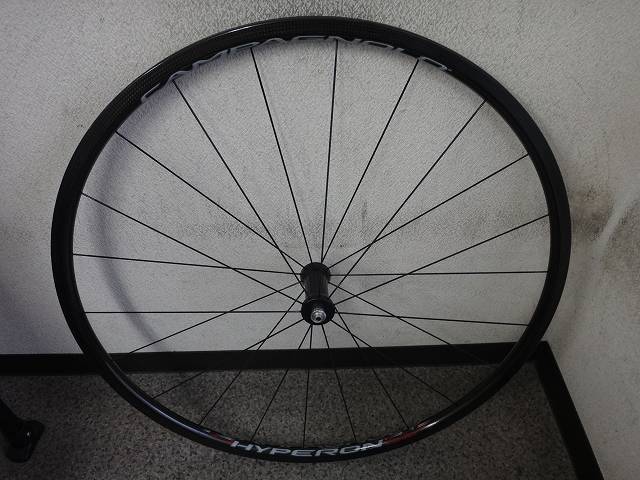
A customer entrusted me with the front and rear wheels of a Hyperion One (Campagnolo high-performance wheelset).
They requested an inspection.
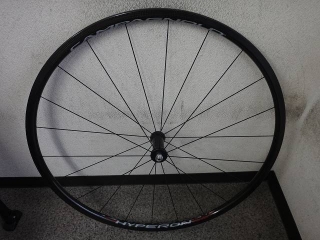
This is a budget version of the Hyperion with the same cosmetic stickers as a Bora One from a certain period,
and like the Bora One,
the rim is the same as the higher-end models, but the hub shell and bearing materials differ.
By the way, these are WO (clincher) rim spec.
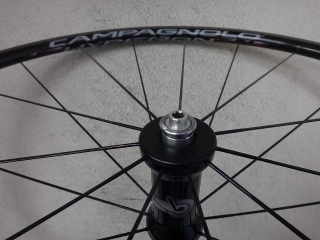
With the valve hole positioned straight up,
when viewing the wheel from the right side (opposite the bearing adjustment nut),
looking up from below, you can read the word Campagnolo in the correct orientation,
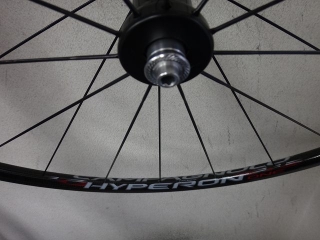
and looking from below, you can read Hyperion One in the correct orientation.
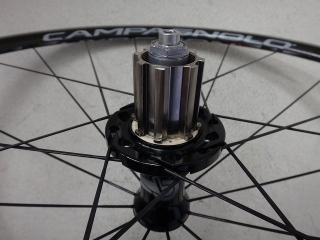
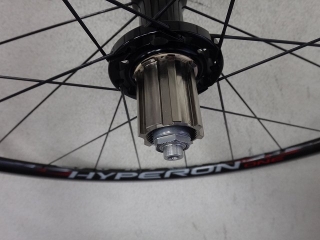
The rear wheel was exactly the same.
Moreover, on both hubs, when the hub shell sticker is positioned straight up,
it's oriented correctly from the direction of travel,
and furthermore, this orientation is exactly opposite to the valve hole
(the sticker and valve hole are visible in a straight line simultaneously).
Since the rear rim is an offset rim, if there were any discrepancies,
attempting to correct them (which almost never happens)
could in the worst case require rebuilding the front wheel,
but these front and rear wheels have none of that.
Unlike Shimano wheels, where the relationship between the hub shell marking and valve hole position is built into the wheel-building manual,
this occurs at such a low probability that it might be called a miracle.
In the first place, the hub shell stickers are often applied in the reverse orientation.
If all wheels had the stickers applied in what I call the reverse direction,
it could be interpreted as intentional,
but since it's random, it's naturally the case that the front and rear wheels sometimes face different directions.
On the Racing Zero Competizione front wheel,
the unique cosmetic red spoke adjacent to the single fixed valve hole location
should logically be on the left side for consistency with the rear wheel,
but this too is handled carelessly and is often on the right side.
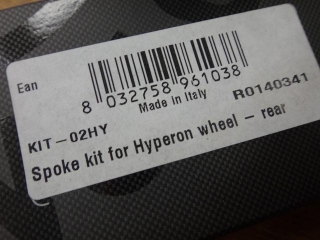
↑This is the spoke kit for the rear wheel of the original Hyperion,
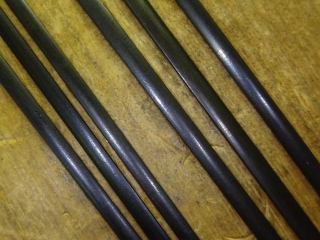
The Hyperion employs quite extreme asymmetrical spoke sizing
(as you don't need me to explain, the 3 spokes on the right side of the image are on the freewheel side),
and combined with the high-low flange hub and offset rim,
for a rear wheel with equal spoke counts on both sides using radial lacing on the non-freewheel side,
the spoke deformation on the non-freewheel side is kept quite minimal.
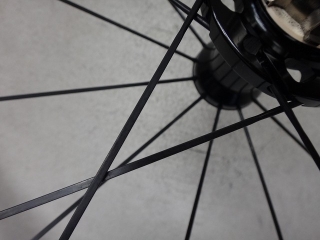
With the Hyperion One, equal spoke sizing is used on both sides,
and the spoke shape is the square aero spoke like the Bora series since the Bora One came out
(the original Hyperion used elliptical aero spokes).
The aluminum hub's high-low flange design is actually
marginally superior to the original Hyperion.
Both are inferior to the mega-flange Hyperion Ultra, though.
The plus of marginally superior hub dimensions
versus the minus of not using asymmetrical spoke sizing—
the minus wins out in terms of magnitude,
but the offset rim with an offset amount impossible without internal nipples
is a very significant factor,
so as a wheel with equal spoke count using radial lacing on the non-freewheel side,
it's quite respectable.
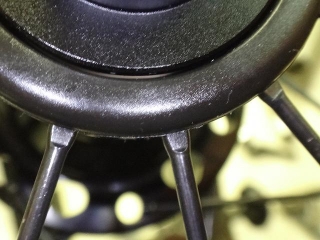
Like Bora, Zonda, and others using radial lacing,
there are spoke retention marks on the spoke head on the front and rear left spokes,
but without these, the spokes could have been used for my evil custom wheels.
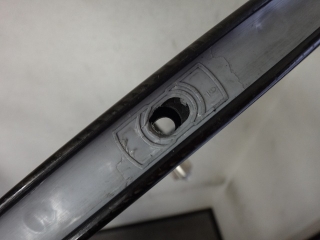
The unique shape around the valve hole is also
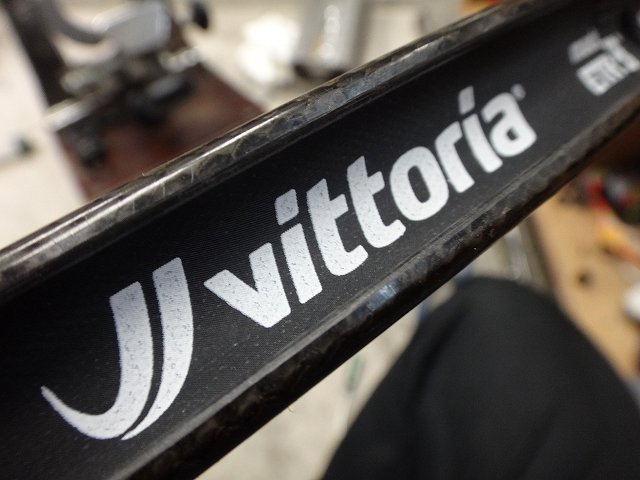
a way to identify it, but this is a Michelin-brand rim tape.
Michelin uses green, Mavic uses yellow,
but Campagnolo uses gray.
In the first place, Michelin was the first manufacturer
to properly develop and popularize genuine 700C road WO tires.
There was a period when the choice wasn't between tubular or WO,
but between tubular or Michelin WO.
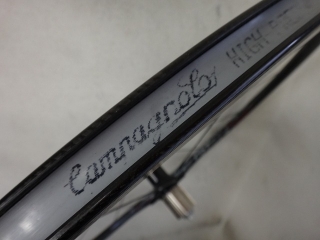
With Campagnolo branding,

it reads February 15, 2005,
but this is the manufacturing date of the rim tape, not
the manufacturing date of the wheel.
While the pet name for this wheel is Hyperion One,
the internal part number (like R32 or R33 for Skyline GTR rather than just "Skyline GTR")
is "WH10-HYCFR1". This means:
WH Wheel
10 Initial release in 2010
HY Hyperion
C Clincher
FR Front and rear set
1 The grade number signifying Hyperion One or Bora One
If the internal part number had been more widely known,
the way people talk about "The R32 was amazing back then!" might have been like
"The WH10 Hyperion One was great!"

Since it uses internal nipples, I need to peel off the rim tape,
but this rim tape is hard and tears easily,
so once applied (especially after years have passed),
removing it cleanly is extremely difficult.
I was quite careful, but it tore in a way that made reuse impossible,
so I'll replace the rim tape with something else.
The closest modern equivalent with similar properties
is the blue rim tape on Shimano wheels.

Starting with the front wheel.
The rim is off-center slightly more than a sheet of paper to the left.
It's barely discernible in the image above, but
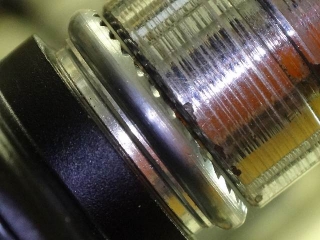
↑it looks like this.
If there was lateral runout, it would seem like there'd be some phase where
it would be judged as perfectly centered,
but the runout was minimal.
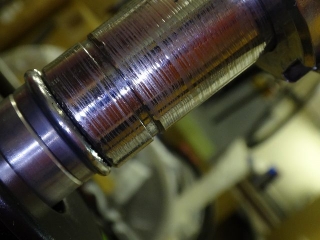
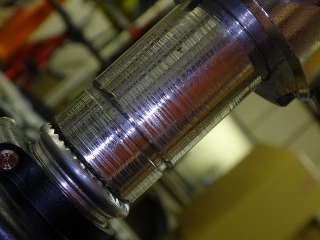
I centered it with minimal additional tightening,
and applied new rim tape.

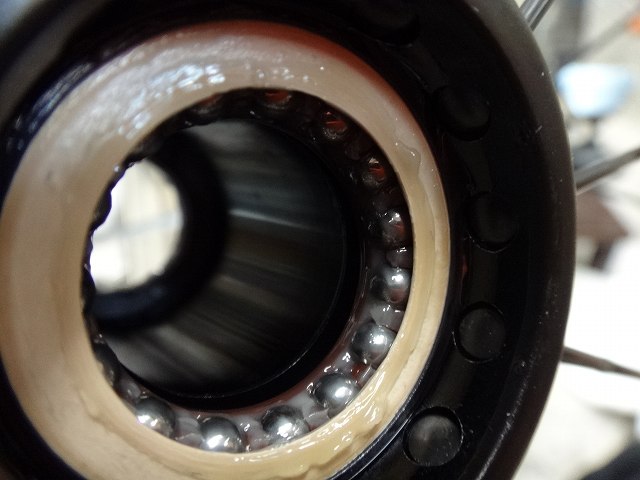
I did open the hub as a precaution, but
there were no particular issues, so I didn't do anything.
I had to open it just to confirm there were no problems.
Since this wheel predates USB (though it's right on the edge),
it uses the black ball race and steel ball specification.
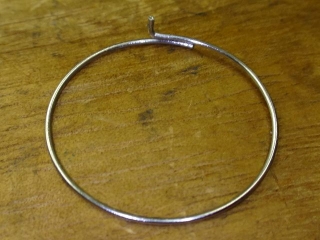
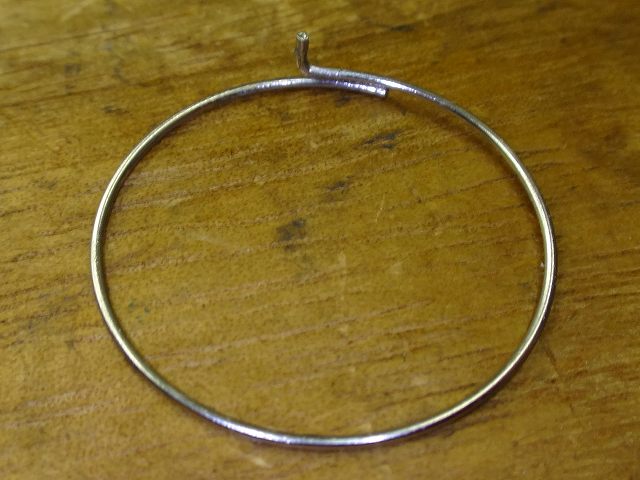
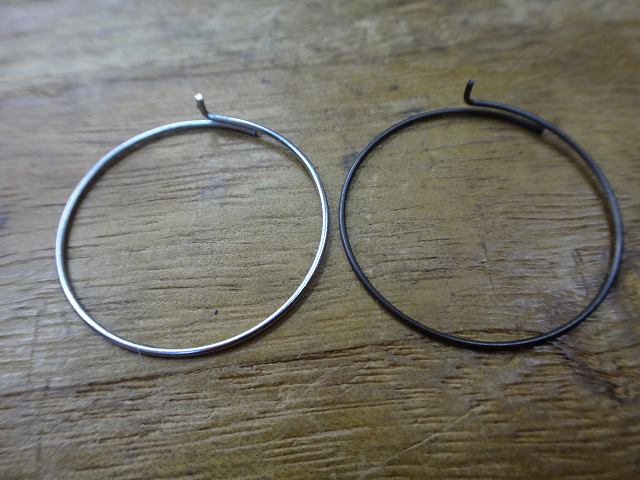
Regardless of condition, I was asked to replace the freewheel body pawl spring,
so I will replace it.
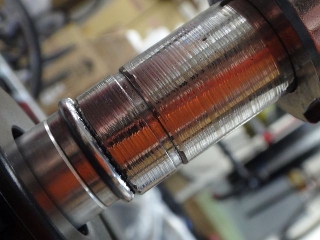
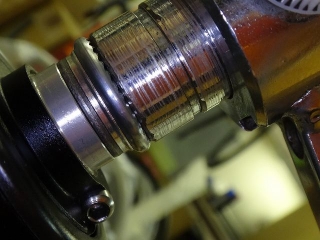
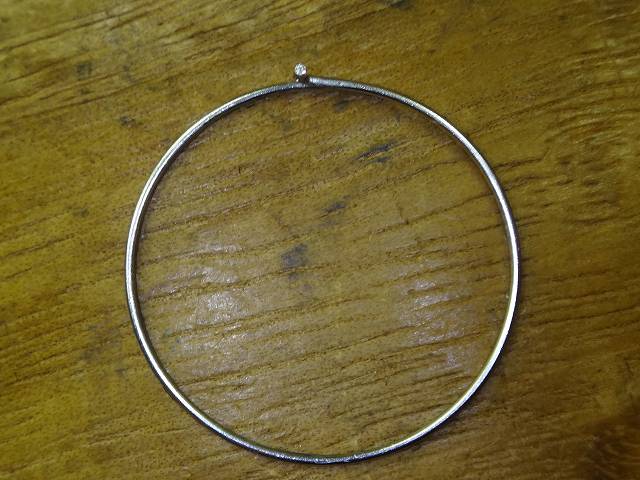
In the image above, the part where it overlaps more than 360°
looks distorted, but
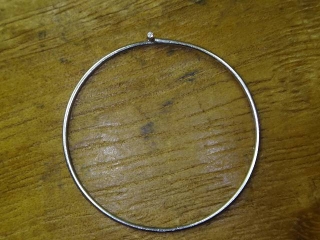
viewing it from directly above, it shows no deformation at all.
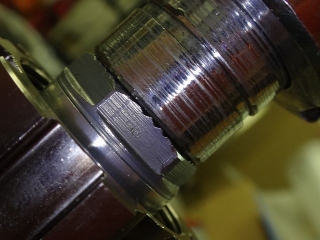
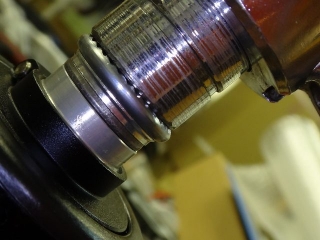
Moreover, this silver spring was installed in wheels from a certain period
and is unavailable as a spare part.
Compared to the replacement part FH-RE114,
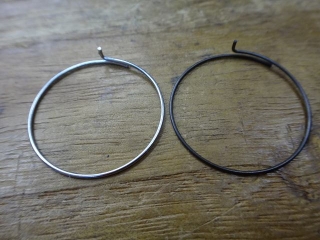
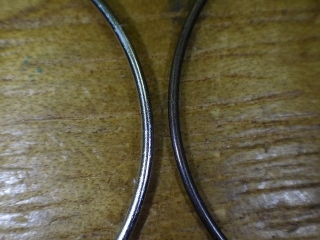
it's very slightly thicker in wire diameter (about 0.1mm).

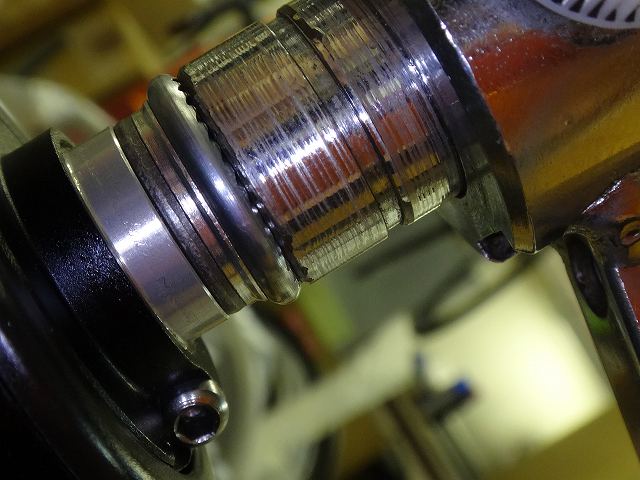
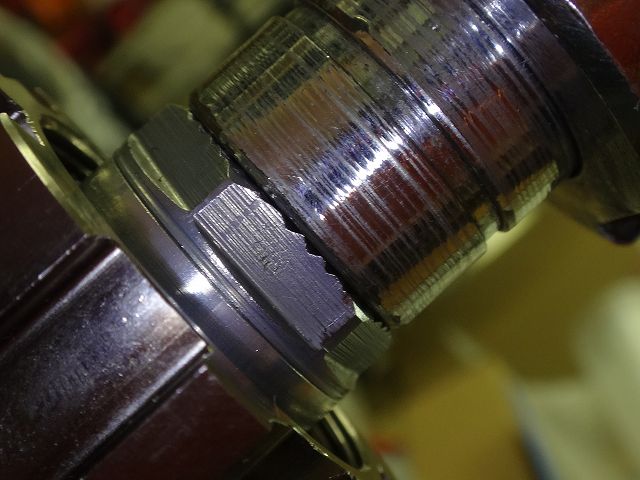
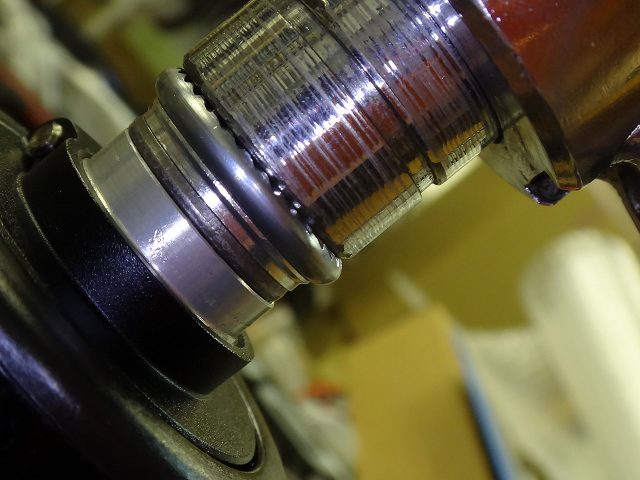
The rear wheel had the rim significantly offset toward the freewheel side.
The runout is minimal, but slightly more than the front wheel.
This wheel shows little sign of use, and it's unlikely the offset was due to active use.
I suspect the combination of the rim being slightly offset freewheel-side from the factory
and additional drift from age rather than actual use.
When a new-spoke rear wheel with freewheel-body-induced dish is built perfectly centered
and then left sitting for five to ten years,
the rim drifts toward the freewheel side due to spoke elongation and spoke angle differences between sides.
While this is theoretically clear should occur,
whether it happens at an observable level is another question—but I believe it does.
It doesn't take as long to observe as a pitched drop experiment.
If you loosen all nipples on a perfectly centered rear wheel by one quarter turn,
the rim will drift toward the freewheel side, and
since both spoke elongation and nipple loosening increase effective spoke length,
you get the same result.
Lateral rim truing on rear wheels is usually accomplished with subtle tightening on the non-freewheel side,
and ideally, this compensates nicely with the age-related freewheel-side drift.
I trued and centered the wheel.
The customer will probably use this wheel,
but if they want to observe the age-related center drift,
they might observe it by leaving it sit for a few years.
The change might be more gradual compared to starting with fresh spokes.
They requested an inspection.
This is a budget version of the Hyperion with the same cosmetic stickers as a Bora One from a certain period,
and like the Bora One,
the rim is the same as the higher-end models, but the hub shell and bearing materials differ.
By the way, these are WO (clincher) rim spec.
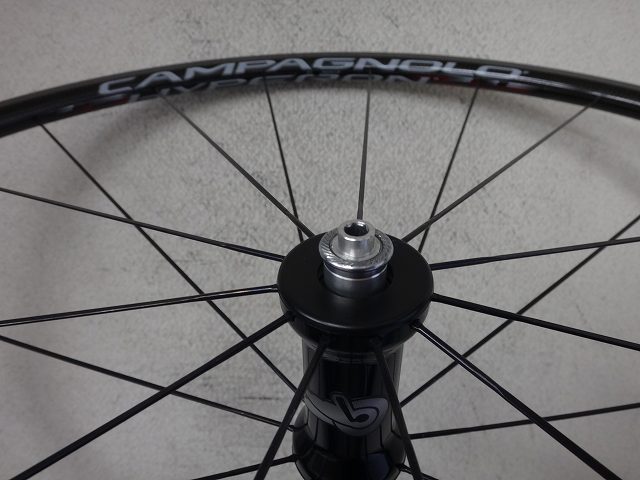
With the valve hole positioned straight up,
when viewing the wheel from the right side (opposite the bearing adjustment nut),
looking up from below, you can read the word Campagnolo in the correct orientation,
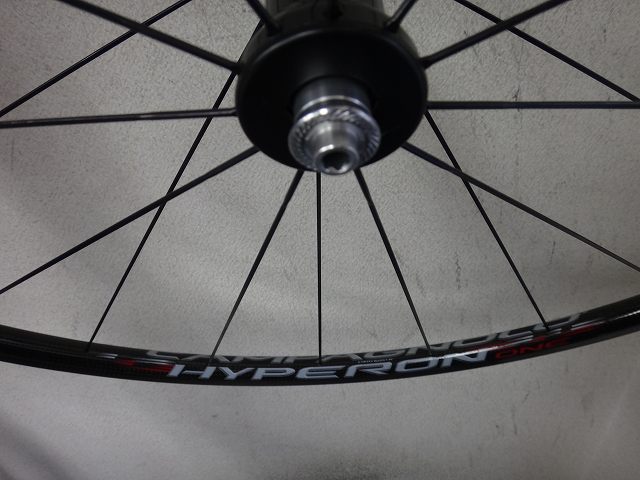
and looking from below, you can read Hyperion One in the correct orientation.
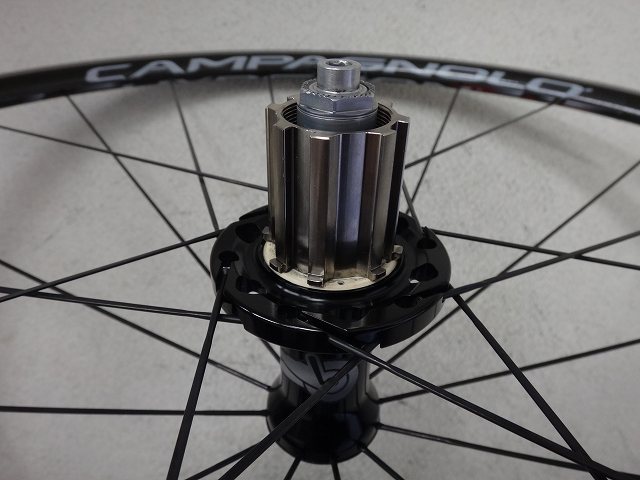
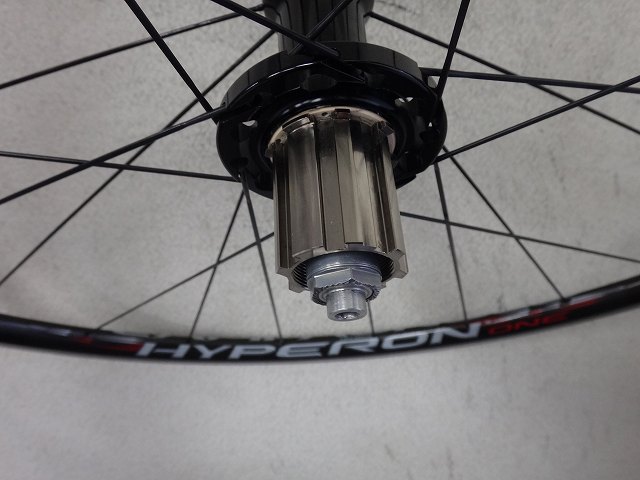
The rear wheel was exactly the same.
Moreover, on both hubs, when the hub shell sticker is positioned straight up,
it's oriented correctly from the direction of travel,
and furthermore, this orientation is exactly opposite to the valve hole
(the sticker and valve hole are visible in a straight line simultaneously).
Since the rear rim is an offset rim, if there were any discrepancies,
attempting to correct them (which almost never happens)
could in the worst case require rebuilding the front wheel,
but these front and rear wheels have none of that.
Unlike Shimano wheels, where the relationship between the hub shell marking and valve hole position is built into the wheel-building manual,
this occurs at such a low probability that it might be called a miracle.
In the first place, the hub shell stickers are often applied in the reverse orientation.
If all wheels had the stickers applied in what I call the reverse direction,
it could be interpreted as intentional,
but since it's random, it's naturally the case that the front and rear wheels sometimes face different directions.
On the Racing Zero Competizione front wheel,
the unique cosmetic red spoke adjacent to the single fixed valve hole location
should logically be on the left side for consistency with the rear wheel,
but this too is handled carelessly and is often on the right side.
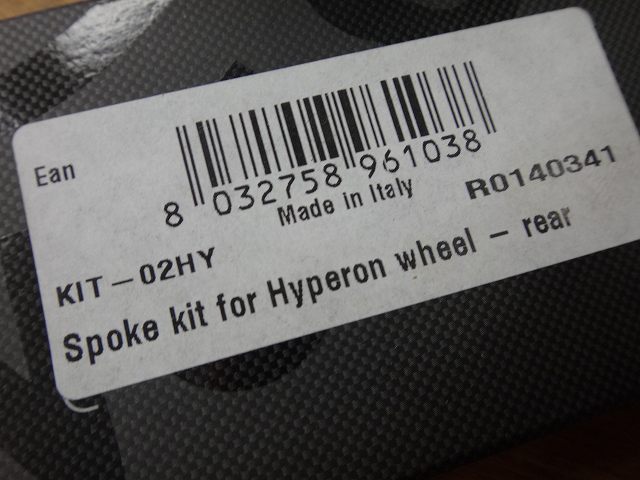
↑This is the spoke kit for the rear wheel of the original Hyperion,
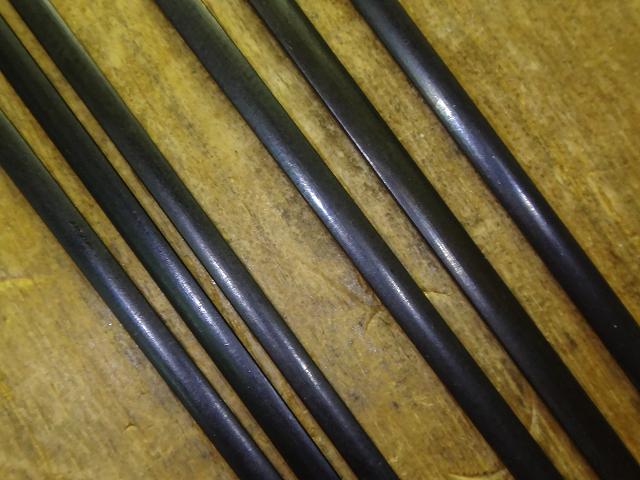
The Hyperion employs quite extreme asymmetrical spoke sizing
(as you don't need me to explain, the 3 spokes on the right side of the image are on the freewheel side),
and combined with the high-low flange hub and offset rim,
for a rear wheel with equal spoke counts on both sides using radial lacing on the non-freewheel side,
the spoke deformation on the non-freewheel side is kept quite minimal.
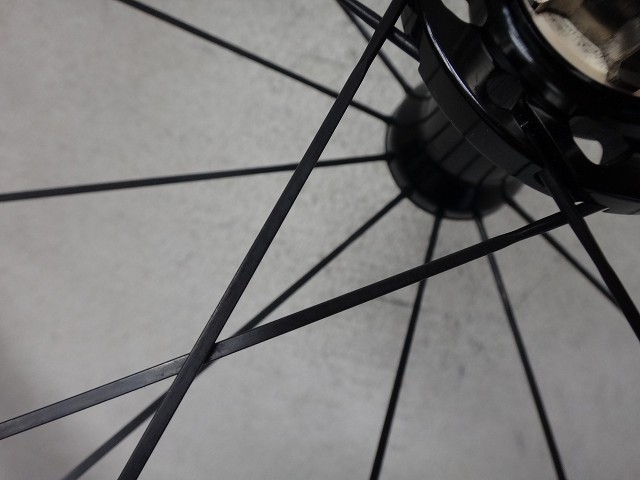
With the Hyperion One, equal spoke sizing is used on both sides,
and the spoke shape is the square aero spoke like the Bora series since the Bora One came out
(the original Hyperion used elliptical aero spokes).
The aluminum hub's high-low flange design is actually
marginally superior to the original Hyperion.
Both are inferior to the mega-flange Hyperion Ultra, though.
The plus of marginally superior hub dimensions
versus the minus of not using asymmetrical spoke sizing—
the minus wins out in terms of magnitude,
but the offset rim with an offset amount impossible without internal nipples
is a very significant factor,
so as a wheel with equal spoke count using radial lacing on the non-freewheel side,
it's quite respectable.
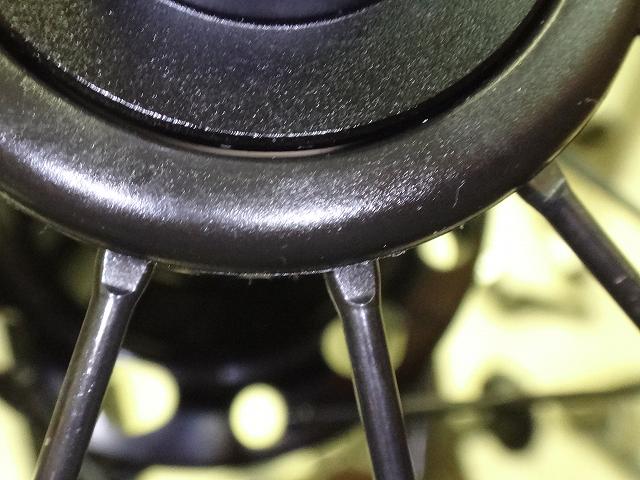
Like Bora, Zonda, and others using radial lacing,
there are spoke retention marks on the spoke head on the front and rear left spokes,
but without these, the spokes could have been used for my evil custom wheels.
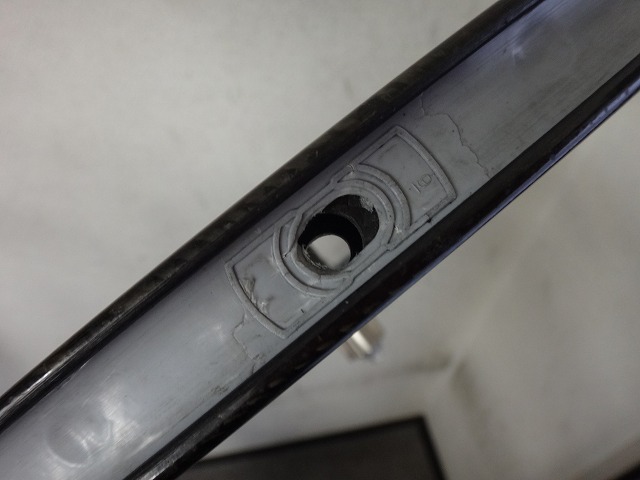
The unique shape around the valve hole is also
a way to identify it, but this is a Michelin-brand rim tape.
Michelin uses green, Mavic uses yellow,
but Campagnolo uses gray.
In the first place, Michelin was the first manufacturer
to properly develop and popularize genuine 700C road WO tires.
There was a period when the choice wasn't between tubular or WO,
but between tubular or Michelin WO.
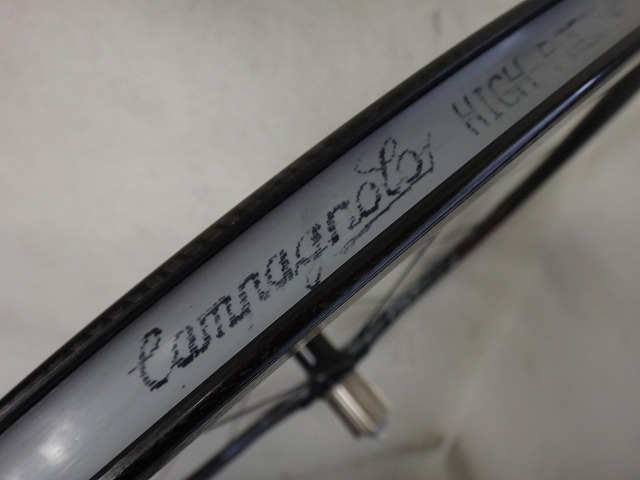
With Campagnolo branding,
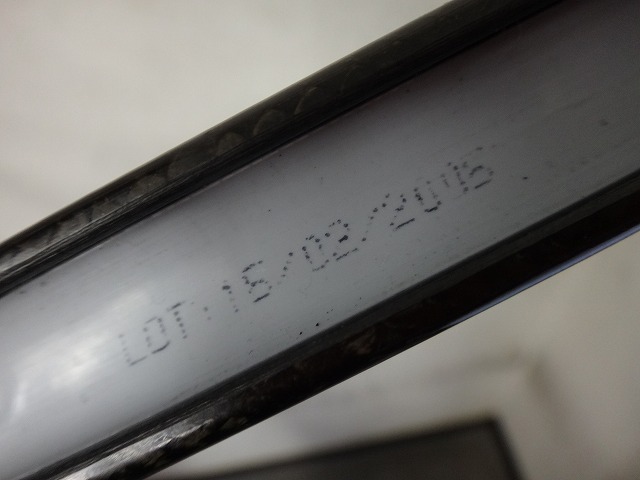
it reads February 15, 2005,
but this is the manufacturing date of the rim tape, not
the manufacturing date of the wheel.
While the pet name for this wheel is Hyperion One,
the internal part number (like R32 or R33 for Skyline GTR rather than just "Skyline GTR")
is "WH10-HYCFR1". This means:
WH Wheel
10 Initial release in 2010
HY Hyperion
C Clincher
FR Front and rear set
1 The grade number signifying Hyperion One or Bora One
If the internal part number had been more widely known,
the way people talk about "The R32 was amazing back then!" might have been like
"The WH10 Hyperion One was great!"
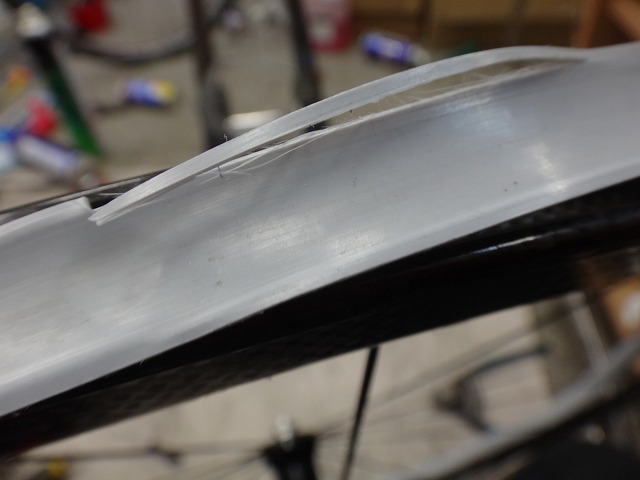
Since it uses internal nipples, I need to peel off the rim tape,
but this rim tape is hard and tears easily,
so once applied (especially after years have passed),
removing it cleanly is extremely difficult.
I was quite careful, but it tore in a way that made reuse impossible,
so I'll replace the rim tape with something else.
The closest modern equivalent with similar properties
is the blue rim tape on Shimano wheels.

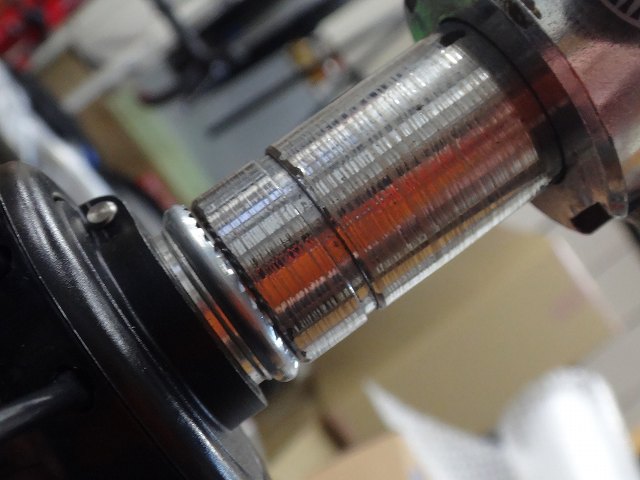
Starting with the front wheel.
The rim is off-center slightly more than a sheet of paper to the left.
It's barely discernible in the image above, but
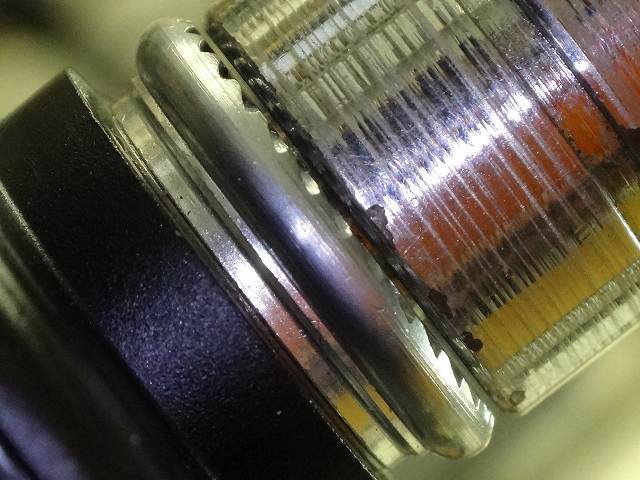
↑it looks like this.
If there was lateral runout, it would seem like there'd be some phase where
it would be judged as perfectly centered,
but the runout was minimal.
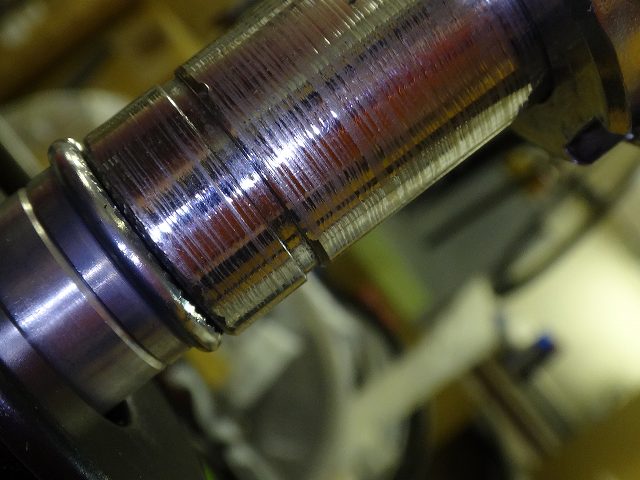
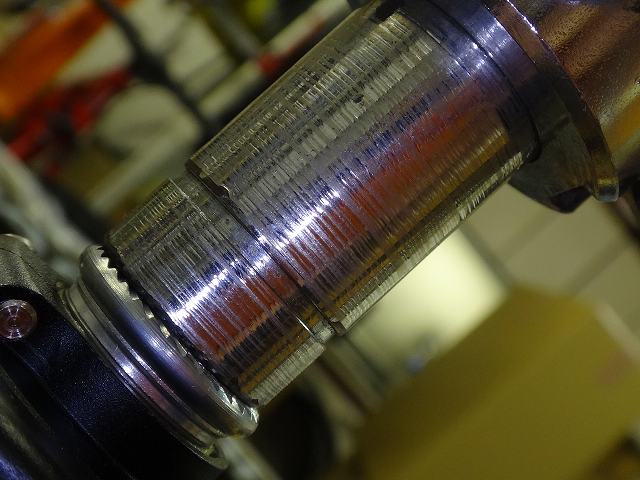
I centered it with minimal additional tightening,
and applied new rim tape.
I did open the hub as a precaution, but
there were no particular issues, so I didn't do anything.
I had to open it just to confirm there were no problems.
Since this wheel predates USB (though it's right on the edge),
it uses the black ball race and steel ball specification.
Regardless of condition, I was asked to replace the freewheel body pawl spring,
so I will replace it.
In the image above, the part where it overlaps more than 360°
looks distorted, but
viewing it from directly above, it shows no deformation at all.
Moreover, this silver spring was installed in wheels from a certain period
and is unavailable as a spare part.
Compared to the replacement part FH-RE114,

it's very slightly thicker in wire diameter (about 0.1mm).

The rear wheel had the rim significantly offset toward the freewheel side.
The runout is minimal, but slightly more than the front wheel.
This wheel shows little sign of use, and it's unlikely the offset was due to active use.
I suspect the combination of the rim being slightly offset freewheel-side from the factory
and additional drift from age rather than actual use.
When a new-spoke rear wheel with freewheel-body-induced dish is built perfectly centered
and then left sitting for five to ten years,
the rim drifts toward the freewheel side due to spoke elongation and spoke angle differences between sides.
While this is theoretically clear should occur,
whether it happens at an observable level is another question—but I believe it does.
It doesn't take as long to observe as a pitched drop experiment.
If you loosen all nipples on a perfectly centered rear wheel by one quarter turn,
the rim will drift toward the freewheel side, and
since both spoke elongation and nipple loosening increase effective spoke length,
you get the same result.
Lateral rim truing on rear wheels is usually accomplished with subtle tightening on the non-freewheel side,
and ideally, this compensates nicely with the age-related freewheel-side drift.
I trued and centered the wheel.
The customer will probably use this wheel,
but if they want to observe the age-related center drift,
they might observe it by leaving it sit for a few years.
The change might be more gradual compared to starting with fresh spokes.