Today I was talking with a customer on the phone and the conversation turned to Colima hubs.
On the wholesaler's website that's the only one handling Colima in Japan,
hubs are listed in the "Repair・Small Parts" section,
but that hub listing has disappeared from the business-to-business ordering site,
and ordering itself is no longer possible.
Regarding the hub specifications, the freewheel body comes in
three types: Shimano 11S / SRAM・Shimano 10S dedicated / Campagnolo 11S.
But the SRAM mentioned here is not XDR—
it's just listed that way because at that time SRAM
only had Shimano-compatible freewheels.
Long ago, saddles also appeared in the "Repair・Small Parts" section
(→here),
but the home country stock ran out (←I wonder why) and they're gone now.

This is a Colima hub from a certain period,
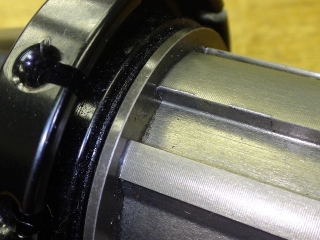
and this hub has a weak seal between the freewheel body and hub shell,
allowing water to enter the hub body. This is especially noticeable when riding in rain.
I've written about this before too, but
I once left a Colima rear wheel (which I used as a race-only wheel not in regular use)
unused after riding it in the rain during the Odaigahara hill climb,
and at the next race, the freewheel pawls had rusted while lying flat,
creating a situation where it would freewheel forward as well.
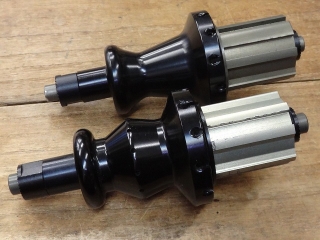
And that's what led to the improved piercing hub!
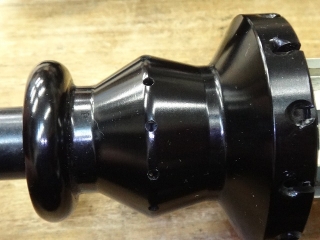
Right at the center of the overall locknut dimension,
in other words the section directly below the rim, it's angular and bulges outward,
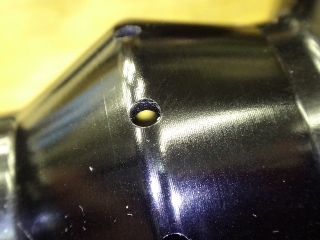
and as the name suggests, it has holes in it.
If water enters the hub shell, when you actually ride,
the centrifugal force drains it out through here.
The idea of abandoning waterproofing in favor of drainability is
clearly crazy (and I mean that as a compliment).
This piercing hub still appears on the consumer-facing website,
but the corresponding free-side aero spokes are special,
and compared to normal butted spokes, you need to use spokes with a neck
that's rotated 90° relative to the flattened sections.
Otherwise you can only use round-section spokes.
The dedicated spokes for lacing this piercing hub with rims from the same era
might be available as repair parts,
but the rims themselves have been discontinued for quite some time.
For information on special spokes, see (→here).
On the wholesaler's website that's the only one handling Colima in Japan,
hubs are listed in the "Repair・Small Parts" section,
but that hub listing has disappeared from the business-to-business ordering site,
and ordering itself is no longer possible.
Regarding the hub specifications, the freewheel body comes in
three types: Shimano 11S / SRAM・Shimano 10S dedicated / Campagnolo 11S.
But the SRAM mentioned here is not XDR—
it's just listed that way because at that time SRAM
only had Shimano-compatible freewheels.
Long ago, saddles also appeared in the "Repair・Small Parts" section
(→here),
but the home country stock ran out (←I wonder why) and they're gone now.
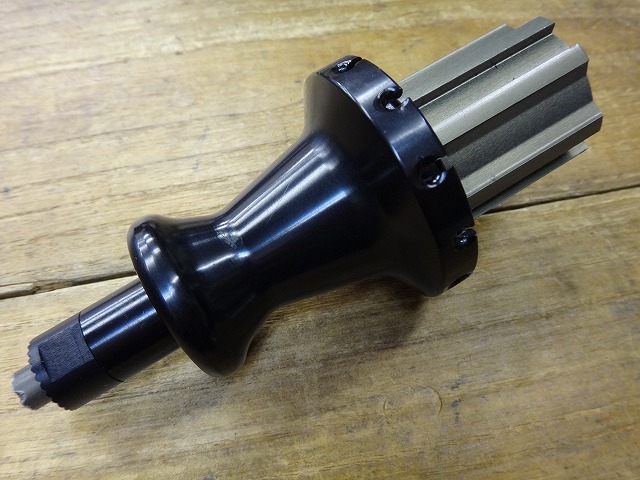
This is a Colima hub from a certain period,

and this hub has a weak seal between the freewheel body and hub shell,
allowing water to enter the hub body. This is especially noticeable when riding in rain.
I've written about this before too, but
I once left a Colima rear wheel (which I used as a race-only wheel not in regular use)
unused after riding it in the rain during the Odaigahara hill climb,
and at the next race, the freewheel pawls had rusted while lying flat,
creating a situation where it would freewheel forward as well.
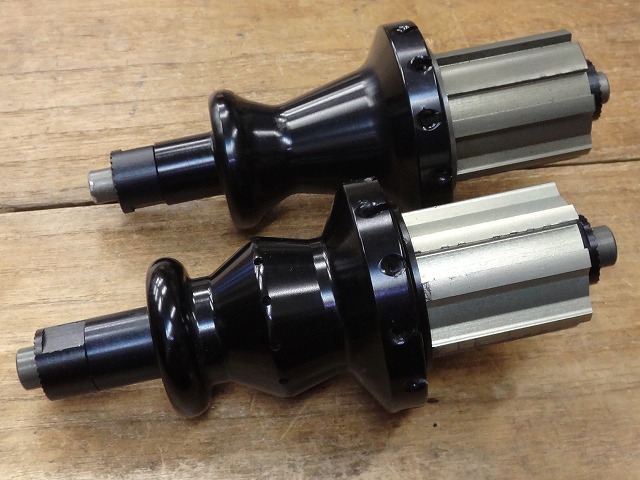
And that's what led to the improved piercing hub!
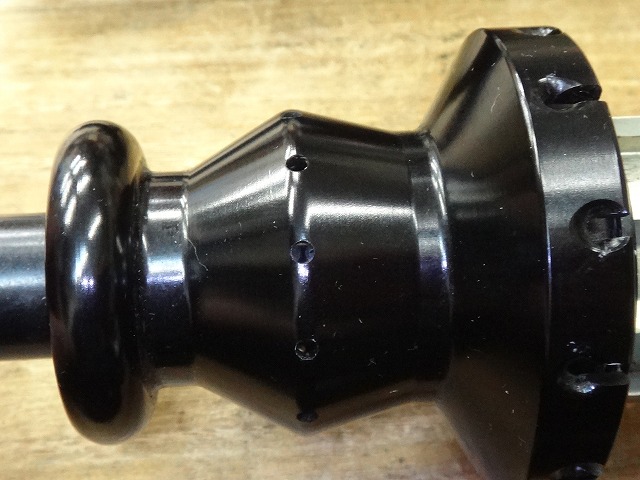
Right at the center of the overall locknut dimension,
in other words the section directly below the rim, it's angular and bulges outward,
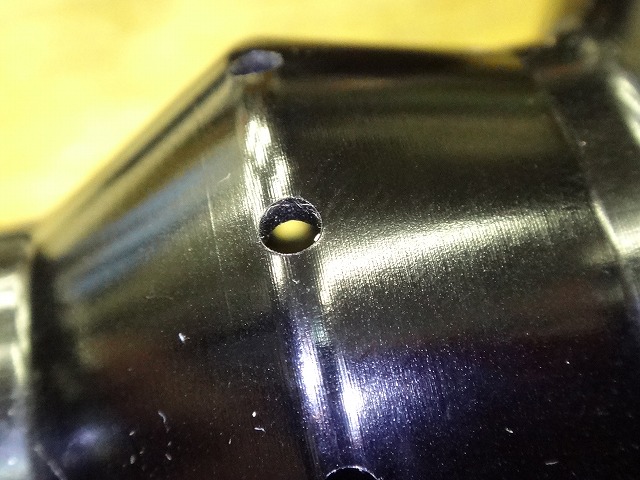
and as the name suggests, it has holes in it.
If water enters the hub shell, when you actually ride,
the centrifugal force drains it out through here.
The idea of abandoning waterproofing in favor of drainability is
clearly crazy (and I mean that as a compliment).
This piercing hub still appears on the consumer-facing website,
but the corresponding free-side aero spokes are special,
and compared to normal butted spokes, you need to use spokes with a neck
that's rotated 90° relative to the flattened sections.
Otherwise you can only use round-section spokes.
The dedicated spokes for lacing this piercing hub with rims from the same era
might be available as repair parts,
but the rims themselves have been discontinued for quite some time.
For information on special spokes, see (→here).