Today it's wheels again (and so on).
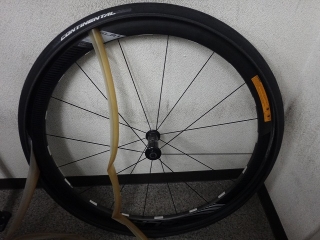
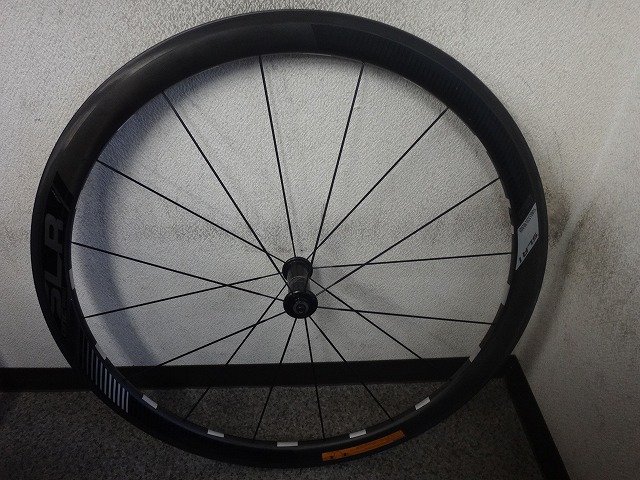
The front wheel of the GIANT SLR1, but according to the customer
it didn't feel crisp enough, so I'm rebuilding it.
The spokes are DT Aero Lites, but
if they were Aero Comps, I was planning to just retension them.
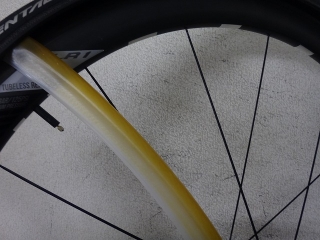
The rear wheel had a Tubolito (latex tube) in it,
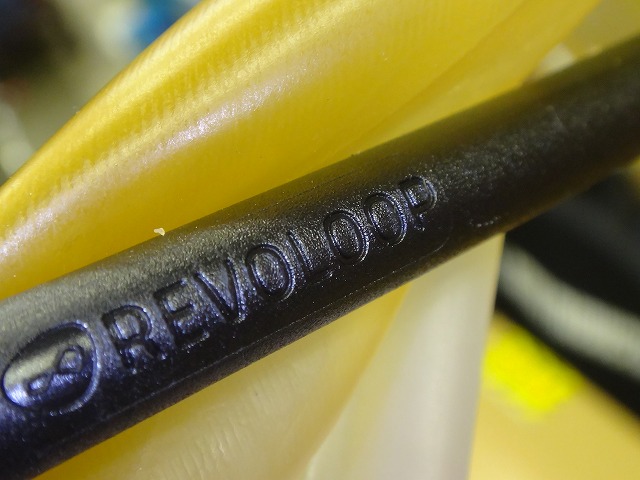
but the front wheel had a Revoloop tube in it,
and the outer edge has this burned-looking discoloration,
which apparently happens when it's in contact with tire rubber for a long time.

The reason is, there was a round spot on the tube where it wasn't discolored,

and it matched exactly in both phase and size with
the inspection label (probably) that was stuck on the inside of the tire.
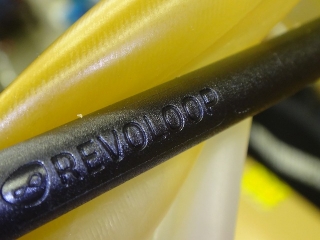
↑Revoloop valve section
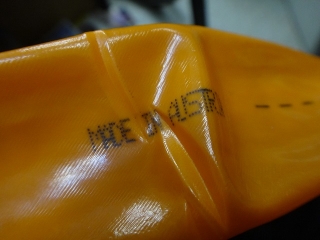
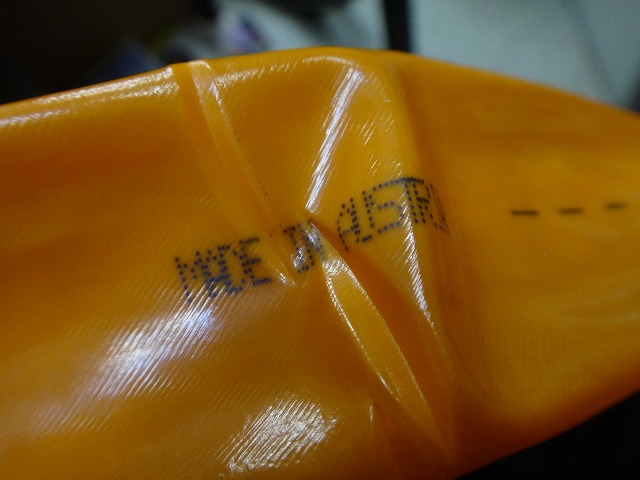
The Tubolito tube that was in the front wheel
still had creases from being folded inside the tire.
This happens almost certainly when you reuse a tube with two or more tires.
Tubolito tubes are quite narrow in width when brand new.
Once stretched, they don't shrink back (they don't return to their original size), so
there's a warning not to inflate them excessively outside the tire,
and except for putting in barely enough air to prevent twisting,
I'm very careful to only inflate them inside the tire,
but with years of use they stretch quite a bit.
The manufacturer highlights the portability from having a small size when new,
but once stretched, they actually become
bulkier than most other tubes.
Even tubes with creases can be reused.
The manufacturer says it's impossible to continue using them in smaller tires than before—
that is, going from 23C to 25C is OK,
but the reverse is impossible—but
in practice even going from 23C back to 23C, the second time and beyond
you end up having to stuff the stretched tube into the tire.
I don't think there's anyone who can't feel the difference in ride quality with a latex tube.
If anything, I think they feel better than tubeless tires.
In the same way, polyurethane tubes have extremely poor ride quality.
If they don't have the characteristic of being even lighter than
thin butyl tubes that have already become lighter than latex tubes,
there's no reason to choose a polyurethane tube.
For people who have a tubular prejudice or absolutely must do
a hill climb race on a WO rim,
they might be useful as a race-only decision tube that isn't used regularly.
I had a Tubolito in my front wheel last year,
and since it hardly ever got punctures, I ran through 3 tires with it,
but on the way back from a 280km ride around Yuasa on the way to Gohyama near Gobo in Wakayama,
it finally gave me a puncture.
I'm not actively trying to get rid of the Tubolito currently in my front wheel,
but I was secretly hoping for some unavoidable circumstance that would force me to replace it,
so I'd been feeling frustrated for months
(though it's strange to wish for a puncture),
and when it finally did puncture, I was honestly relieved.
TUFO's tires have a structural issue where
even though they're tubular, they ride like clinchers,
but with a designated pressure of 10–15 bar, I use 13 bar.
Tubolito matches that 13 bar tire so closely
in terms of ride quality that it's not very good.
Overseas, particularly in Christian cultures, there's something called triskaidekaphobia—
a phobia of avoiding 13 as an unlucky number.
The negative economic impact from it is supposedly huge!
At parties and gatherings, if someone leaves
and the remaining group ends up with 13 people, it reminds them of the Last Supper,
so people are careful to avoid having 13 people remaining by having
two or more people leave at the same time.
Even with non-TUFO track tires,
13 bar can be just the right pressure,
and I've had my own pet theory for years that Americans
mainly use psi instead of bar to avoid this,
though it might just be because psi is part of the imperial system.
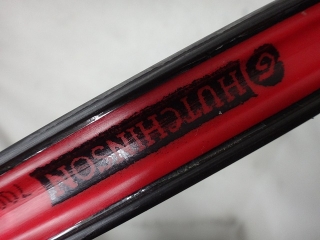
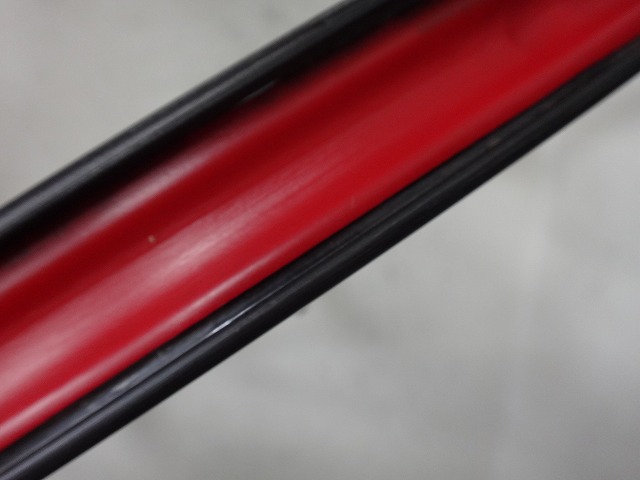
It had the same stretch-band type rim tape as the rear wheel,
and the section in the image happens to be in the middle, but
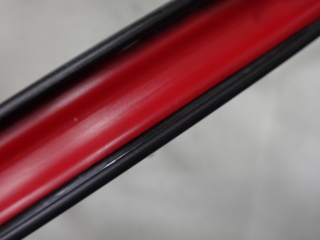
in most positions it was offset to one side or the other.

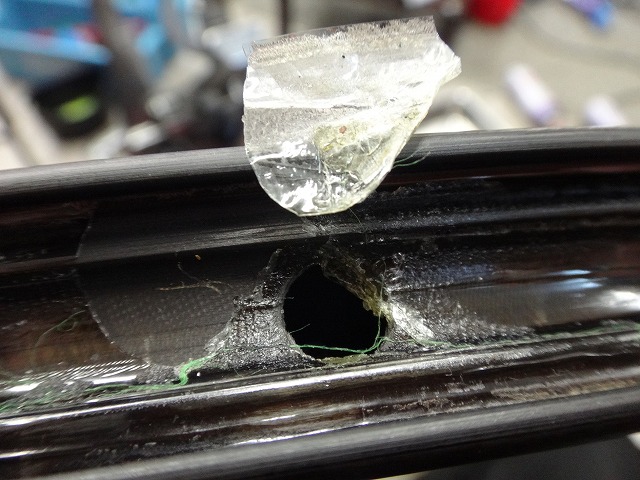
On the outer edge of the rim there's adhesive residue from tubeless tape, or
peeled film that's stuck in places, but
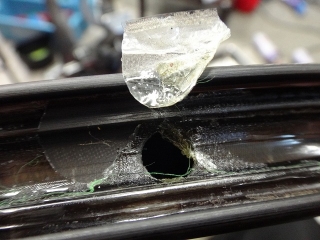
it's impossible to completely remove.
Even when trying to peel it off cleanly, it never comes off in large pieces—
it just tears right away (see image above).

Built.
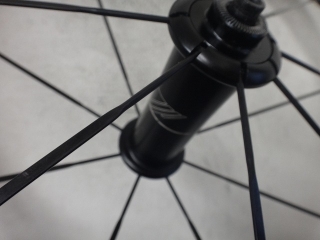
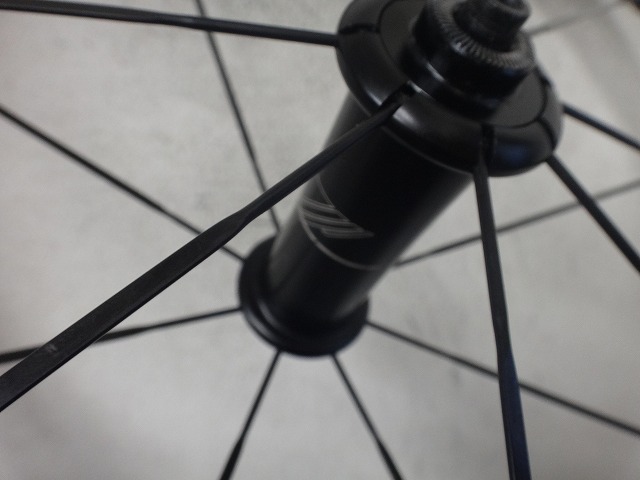
Currently black CX Sprint straight (spoke specific gravity about 78%)
doesn't have the right length for this wheel at our shop or the distributors,
so I built it using CX Sprint spokes that are almost the same thickness but wider,
with a square aero profile (about 82.5% specific gravity).
The spokes are Meshinotane cord quality, but
I'll only explain that to this wheel's customer.
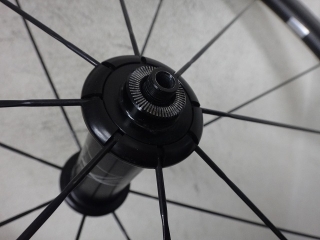
↑by the way, these are the original spokes.
This front wheel is 16H, but if it were 20H,
even Aero Lites would have no issue with spoke count.
This is the same situation as with Shimano wheels for rim brakes back then.
Since I'm rebuilding both front and rear wheels this time,
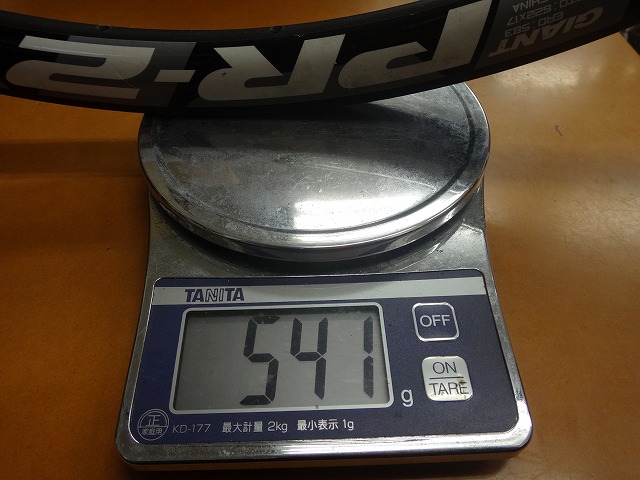
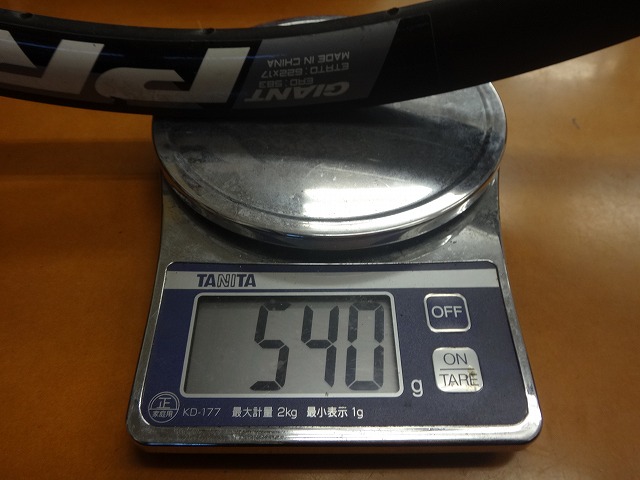
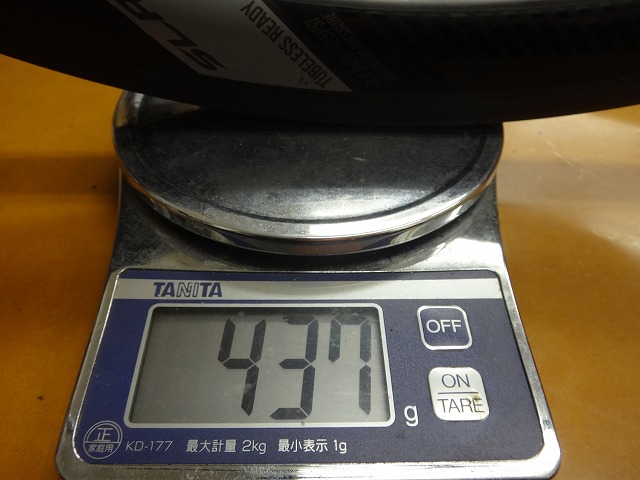
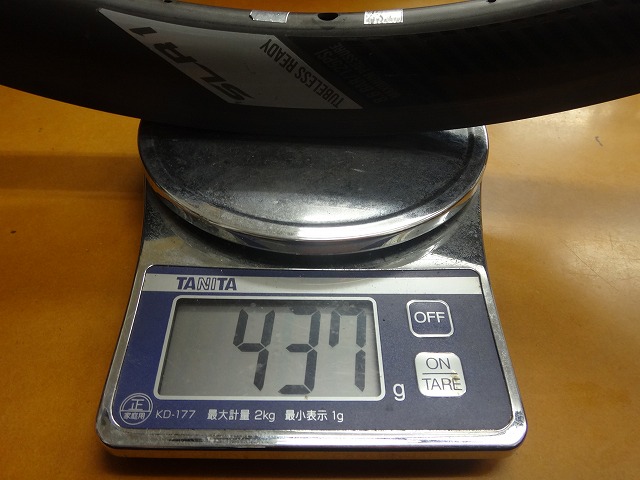
I had the chance to weigh the rims.
The aluminum tape stuck on the apex of the inner edge
is very thin, so it's not a significant weight increase,
but just for reference.
If you're concerned about that, you'd have to worry about
the adhesive residue from the tubeless tape too.
Oh, I said reference record, but I have no intention of publishing it, so
readers of this article don't even have the qualifications to reference it. Sorry about that.
↑wow this guy has bad vibes
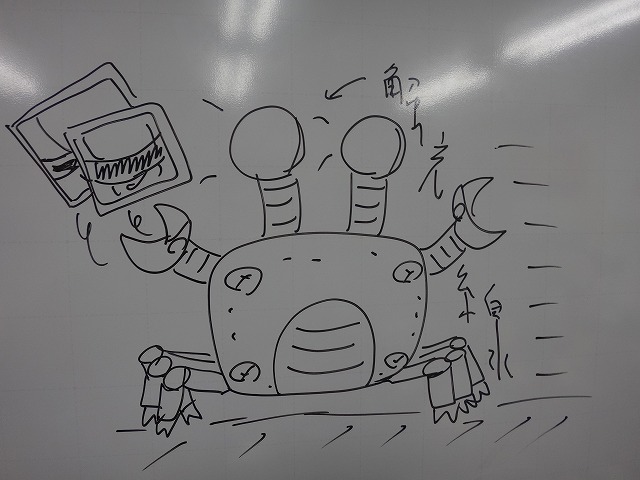
Thanks for waiting! Please take a look at this image!
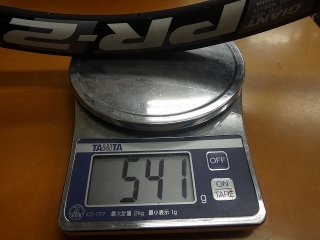
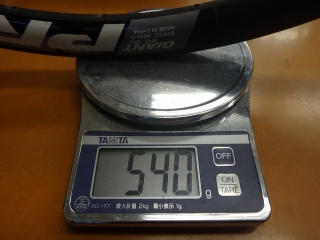
...wait, I made a mistake.
This was actually the rim used on the iron horse wheel that comes with
GIANT's budget disc brake complete bikes!
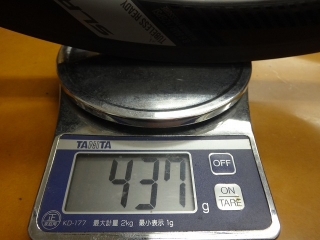
Rear rim!

Front rim!
↑Stop it!
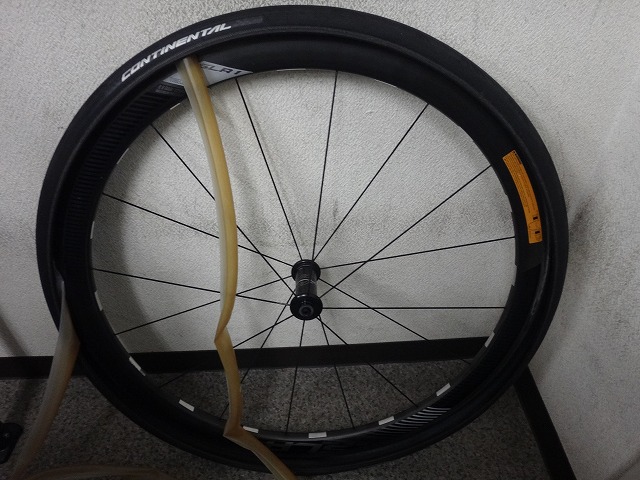
The front wheel of the GIANT SLR1, but according to the customer
it didn't feel crisp enough, so I'm rebuilding it.
The spokes are DT Aero Lites, but
if they were Aero Comps, I was planning to just retension them.

The rear wheel had a Tubolito (latex tube) in it,
but the front wheel had a Revoloop tube in it,
and the outer edge has this burned-looking discoloration,
which apparently happens when it's in contact with tire rubber for a long time.
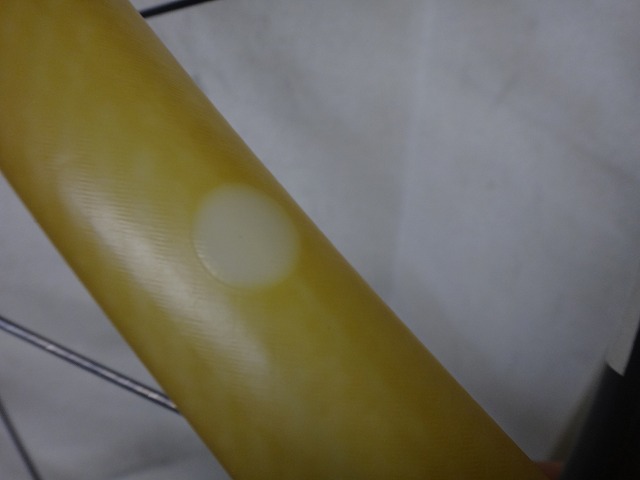
The reason is, there was a round spot on the tube where it wasn't discolored,
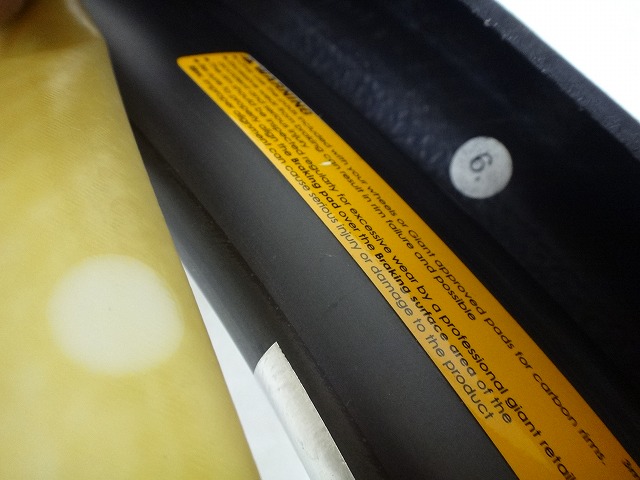
and it matched exactly in both phase and size with
the inspection label (probably) that was stuck on the inside of the tire.
↑Revoloop valve section
The Tubolito tube that was in the front wheel
still had creases from being folded inside the tire.
This happens almost certainly when you reuse a tube with two or more tires.
Tubolito tubes are quite narrow in width when brand new.
Once stretched, they don't shrink back (they don't return to their original size), so
there's a warning not to inflate them excessively outside the tire,
and except for putting in barely enough air to prevent twisting,
I'm very careful to only inflate them inside the tire,
but with years of use they stretch quite a bit.
The manufacturer highlights the portability from having a small size when new,
but once stretched, they actually become
bulkier than most other tubes.
Even tubes with creases can be reused.
The manufacturer says it's impossible to continue using them in smaller tires than before—
that is, going from 23C to 25C is OK,
but the reverse is impossible—but
in practice even going from 23C back to 23C, the second time and beyond
you end up having to stuff the stretched tube into the tire.
I don't think there's anyone who can't feel the difference in ride quality with a latex tube.
If anything, I think they feel better than tubeless tires.
In the same way, polyurethane tubes have extremely poor ride quality.
If they don't have the characteristic of being even lighter than
thin butyl tubes that have already become lighter than latex tubes,
there's no reason to choose a polyurethane tube.
For people who have a tubular prejudice or absolutely must do
a hill climb race on a WO rim,
they might be useful as a race-only decision tube that isn't used regularly.
I had a Tubolito in my front wheel last year,
and since it hardly ever got punctures, I ran through 3 tires with it,
but on the way back from a 280km ride around Yuasa on the way to Gohyama near Gobo in Wakayama,
it finally gave me a puncture.
I'm not actively trying to get rid of the Tubolito currently in my front wheel,
but I was secretly hoping for some unavoidable circumstance that would force me to replace it,
so I'd been feeling frustrated for months
(though it's strange to wish for a puncture),
and when it finally did puncture, I was honestly relieved.
TUFO's tires have a structural issue where
even though they're tubular, they ride like clinchers,
but with a designated pressure of 10–15 bar, I use 13 bar.
Tubolito matches that 13 bar tire so closely
in terms of ride quality that it's not very good.
Overseas, particularly in Christian cultures, there's something called triskaidekaphobia—
a phobia of avoiding 13 as an unlucky number.
The negative economic impact from it is supposedly huge!
At parties and gatherings, if someone leaves
and the remaining group ends up with 13 people, it reminds them of the Last Supper,
so people are careful to avoid having 13 people remaining by having
two or more people leave at the same time.
Even with non-TUFO track tires,
13 bar can be just the right pressure,
and I've had my own pet theory for years that Americans
mainly use psi instead of bar to avoid this,
though it might just be because psi is part of the imperial system.

It had the same stretch-band type rim tape as the rear wheel,
and the section in the image happens to be in the middle, but
in most positions it was offset to one side or the other.

On the outer edge of the rim there's adhesive residue from tubeless tape, or
peeled film that's stuck in places, but
it's impossible to completely remove.
Even when trying to peel it off cleanly, it never comes off in large pieces—
it just tears right away (see image above).
Built.
Currently black CX Sprint straight (spoke specific gravity about 78%)
doesn't have the right length for this wheel at our shop or the distributors,
so I built it using CX Sprint spokes that are almost the same thickness but wider,
with a square aero profile (about 82.5% specific gravity).
The spokes are Meshinotane cord quality, but
I'll only explain that to this wheel's customer.

↑by the way, these are the original spokes.
This front wheel is 16H, but if it were 20H,
even Aero Lites would have no issue with spoke count.
This is the same situation as with Shimano wheels for rim brakes back then.
Since I'm rebuilding both front and rear wheels this time,
I had the chance to weigh the rims.
The aluminum tape stuck on the apex of the inner edge
is very thin, so it's not a significant weight increase,
but just for reference.
If you're concerned about that, you'd have to worry about
the adhesive residue from the tubeless tape too.
Oh, I said reference record, but I have no intention of publishing it, so
readers of this article don't even have the qualifications to reference it. Sorry about that.
↑wow this guy has bad vibes
Thanks for waiting! Please take a look at this image!
...wait, I made a mistake.
This was actually the rim used on the iron horse wheel that comes with
GIANT's budget disc brake complete bikes!
Rear rim!
Front rim!
↑Stop it!