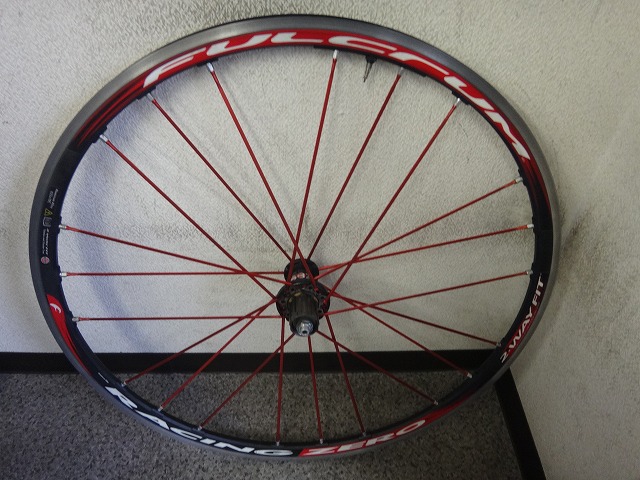
A customer dropped off a Racing Zero for me to work on.
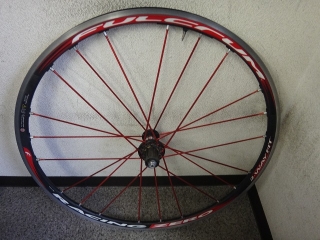
They wanted a full overhaul.
Starting with the rear wheel.
The hub rotation felt a bit rough, but
it wasn't that dirty.
I'll clean the hub internals and regrease it, but
with Campagnolo/Fulcrum
cup-and-cone hubs, once you take them apart
(strictly speaking, once you release the tension on the wedge washer for axial centering),
the contact between the ball races and balls shifts ever so slightly,
and that broken-in smoothness is lost.
The only way to get it back is to use the hub over years with zero side play.
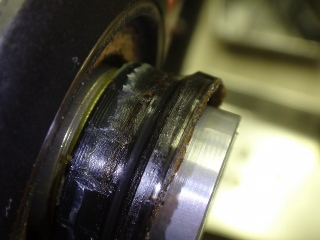
The seals are dirty and the grease is running low, but
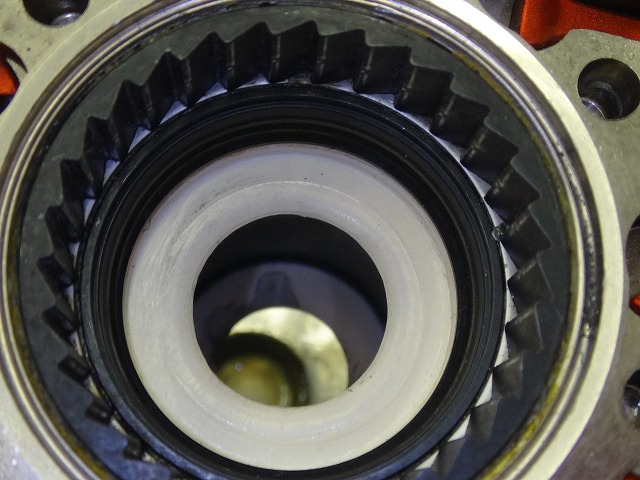
the ball races don't show any distinct wear marks like silver streaks.
It's black USB, so it's the combination most prone to wear marks, but.

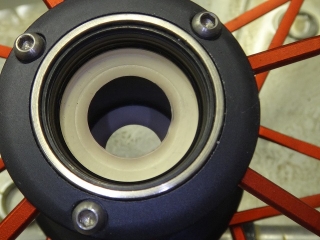
I cleaned the hub.
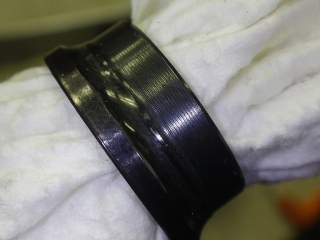
There are wear marks, just barely visible.
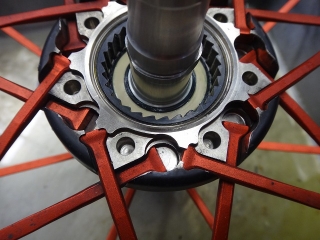
I reassembled the parts onto the hub shell.
The hub's rotation resistance is greater than before,
but in the long run, the hub's lifespan is extended.
Keep riding hard until the hub rotation breaks in.
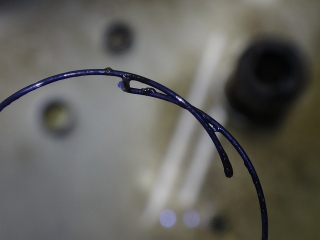
The freewheel body's pawl spring was badly bent, so I replaced it.
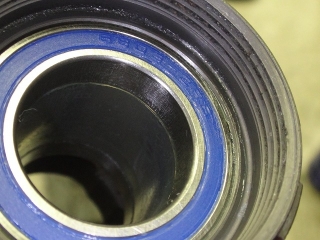
The outer bearing in the freewheel body was damaged, so I replaced it.
This is part of why the rear hub rotation felt rough.
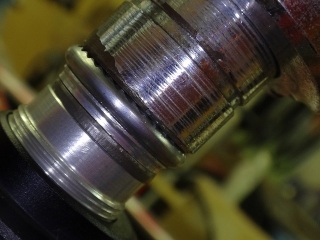
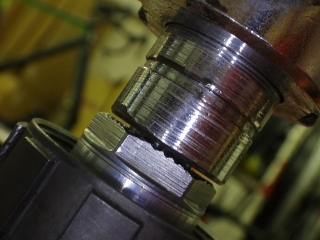
I saw the provisional centering for the first time here, so the true original state is unclear.
Since I disassembled the hub and pressed the cup adjustment nut with a press tool,
I can't say for certain that my work didn't contribute to this centering deviation.
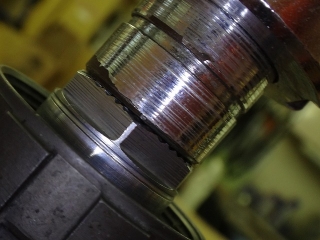
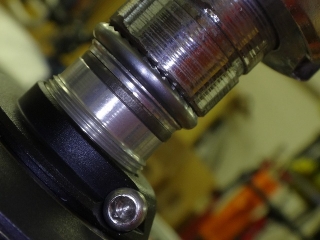
I trued and centered the wheel.
The rim was shifted toward the freewheel side with the provisional center,
so the image order is non-freewheel side → freewheel side, but
I intentionally reversed the centered image
to show the before and after of dirt
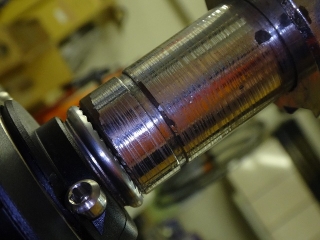
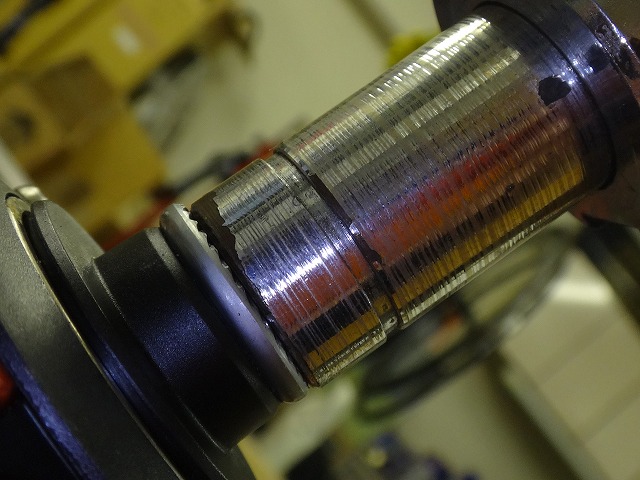
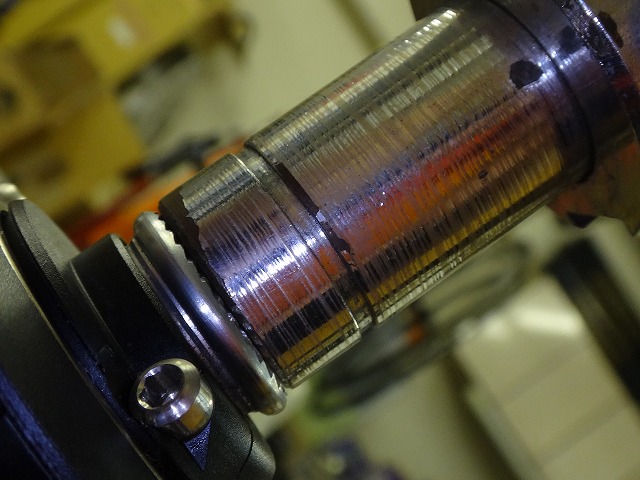
deep in the cup adjustment nut and on the hub axle threads
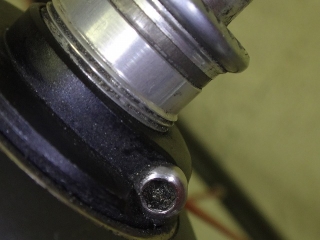
↑this before shot side by side.
And one more thing

before

after
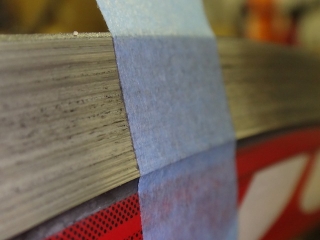
The customer wanted to replace just the rear wheel rim because "it's worn,"
and while I can see wear in the braking zone,
it's not worn enough to warrant replacement, in my judgment, and
considering the cost and turnaround time,
I told the customer that just truing the wheel for now would be best,
so this time we only did the truing work.

↑This is my Neutron's front wheel, but
I position the shoes at the top of the braking zone,
so you can see the remaining thickness at the bottom—it's worn that much.
Even so, it's still not at the point where replacement is necessary.
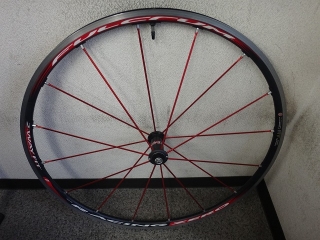
Next, the front wheel.
Given that the customer only wanted the rear rim replaced,
the front wheel rim showed almost no wear.
The hub rotation was broken in, and
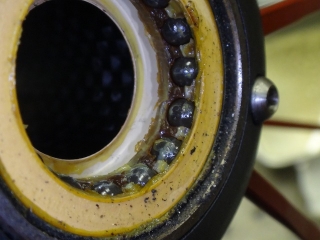
before
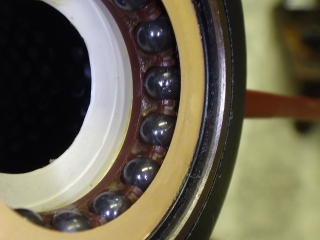
after (before regreasing)
The hub interior is indeed cleaner after the work,
but the rotation is duller and heavier after the work.
It needs to develop that smooth feel through years of use.
This characteristic isn't universal to all cup-and-cone hubs.
You see a hint of it in Shimano and Chris King hubs too
(regreasing always makes rotation heavier initially),
but not nearly this extreme.
However, once that feel develops, even with steel ball bearings,
Campagnolo hubs achieve a silky smooth rotation that other makers' hubs don't have.
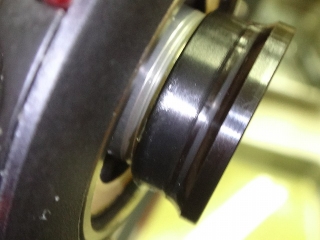
The front wheel's cup showed cleaner wear marks than the rear.
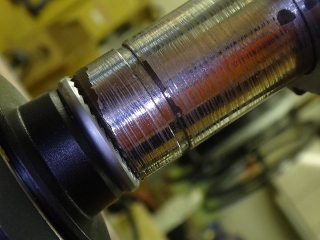
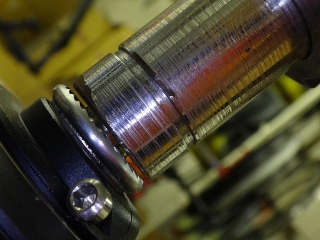
Here too, after the hub overhaul there was a provisional center,
and there was centering deviation.
The rear wheel had almost no runout, but
the front wheel had notable runout at two locations.
However, with the provisional center, I didn't just happen to position the gauge
at the most runout phase—
beyond the runout itself, the rim was generally shifted left (toward the cup adjustment nut side)
(I checked multiple spots by rotating the phase).
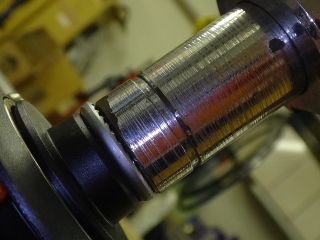
I trued and centered it.
They wanted a full overhaul.
Starting with the rear wheel.
The hub rotation felt a bit rough, but
it wasn't that dirty.
I'll clean the hub internals and regrease it, but
with Campagnolo/Fulcrum
cup-and-cone hubs, once you take them apart
(strictly speaking, once you release the tension on the wedge washer for axial centering),
the contact between the ball races and balls shifts ever so slightly,
and that broken-in smoothness is lost.
The only way to get it back is to use the hub over years with zero side play.
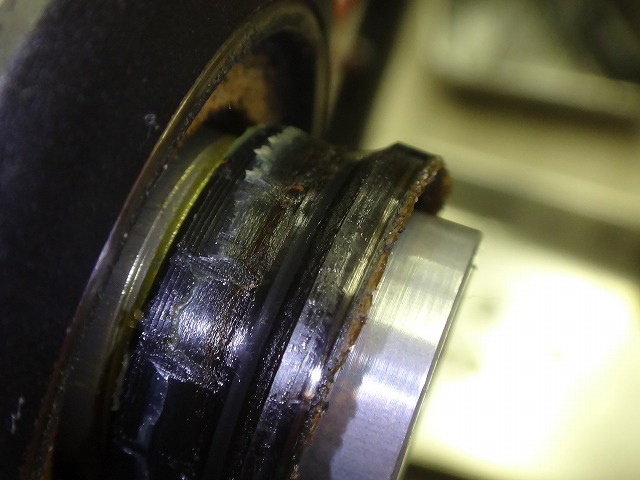
The seals are dirty and the grease is running low, but
the ball races don't show any distinct wear marks like silver streaks.
It's black USB, so it's the combination most prone to wear marks, but.
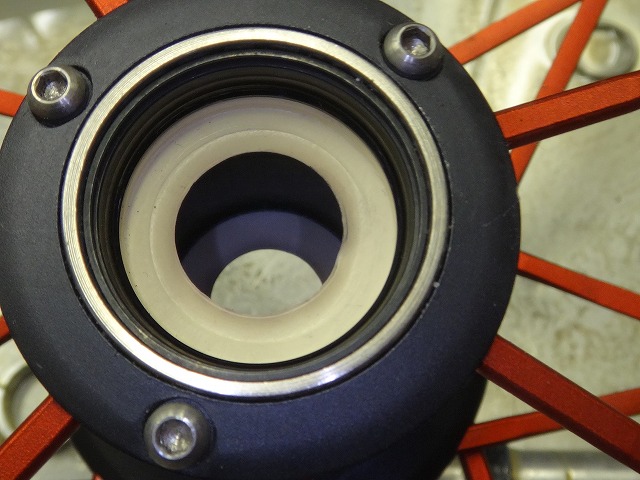
I cleaned the hub.
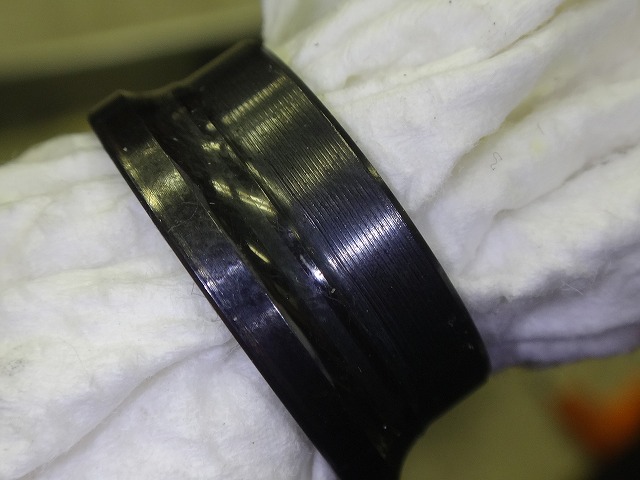
There are wear marks, just barely visible.

I reassembled the parts onto the hub shell.
The hub's rotation resistance is greater than before,
but in the long run, the hub's lifespan is extended.
Keep riding hard until the hub rotation breaks in.
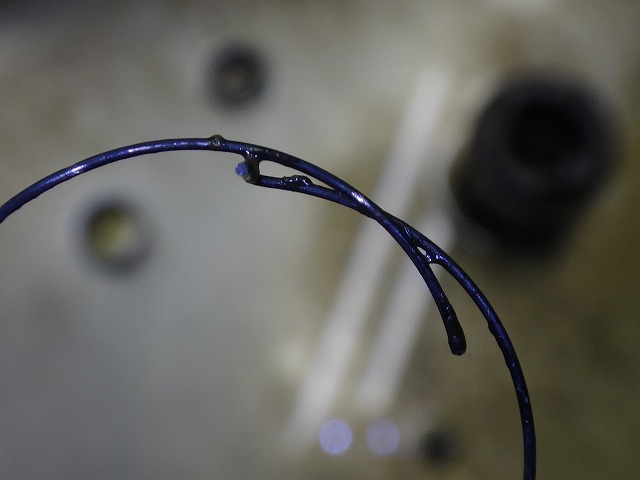
The freewheel body's pawl spring was badly bent, so I replaced it.
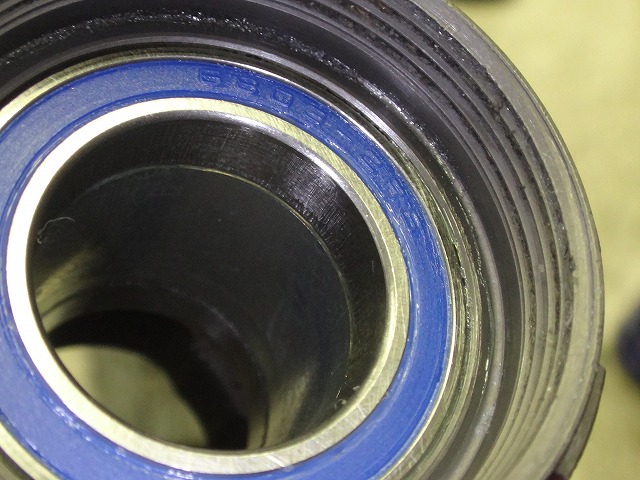
The outer bearing in the freewheel body was damaged, so I replaced it.
This is part of why the rear hub rotation felt rough.
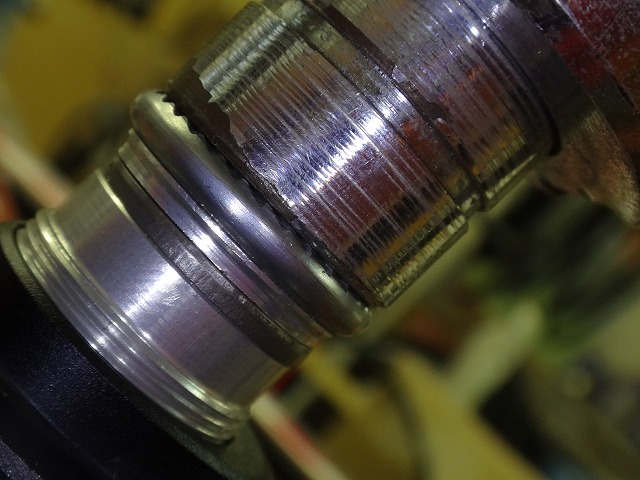
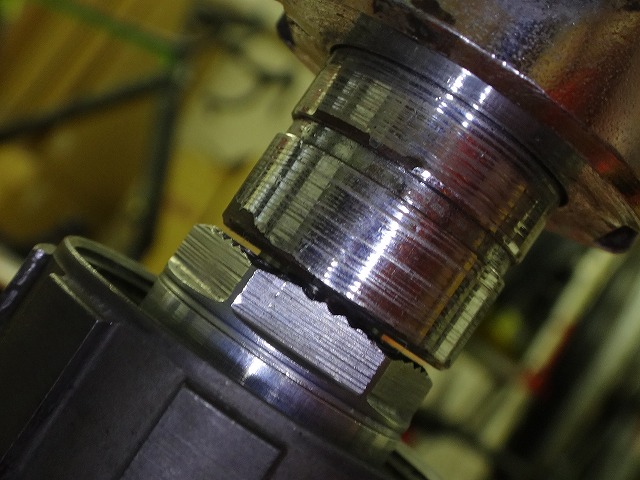
I saw the provisional centering for the first time here, so the true original state is unclear.
Since I disassembled the hub and pressed the cup adjustment nut with a press tool,
I can't say for certain that my work didn't contribute to this centering deviation.

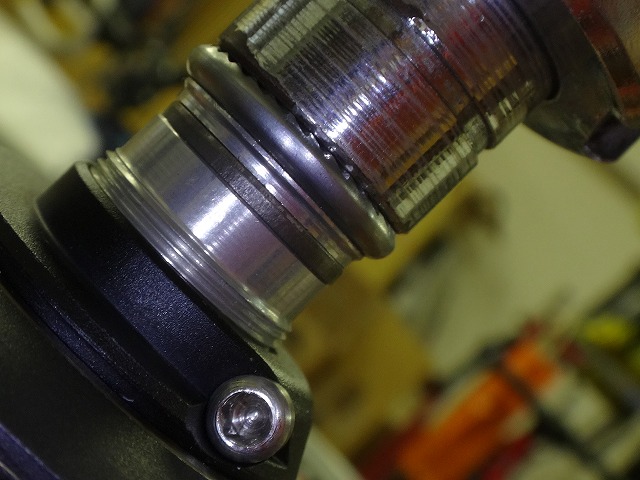
I trued and centered the wheel.
The rim was shifted toward the freewheel side with the provisional center,
so the image order is non-freewheel side → freewheel side, but
I intentionally reversed the centered image
to show the before and after of dirt
deep in the cup adjustment nut and on the hub axle threads
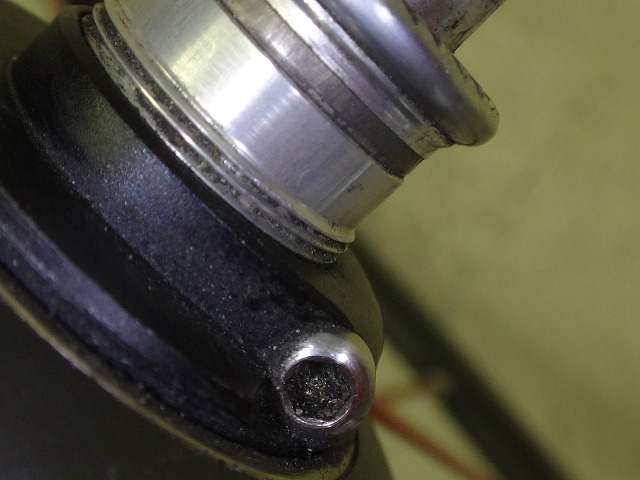
↑this before shot side by side.
And one more thing

before
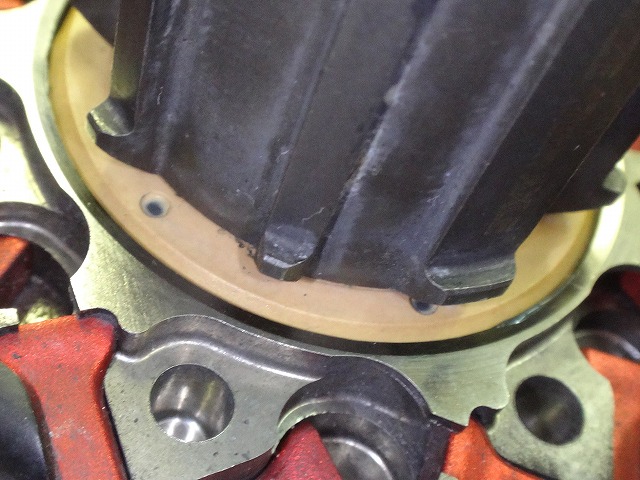
after

The customer wanted to replace just the rear wheel rim because "it's worn,"
and while I can see wear in the braking zone,
it's not worn enough to warrant replacement, in my judgment, and
considering the cost and turnaround time,
I told the customer that just truing the wheel for now would be best,
so this time we only did the truing work.
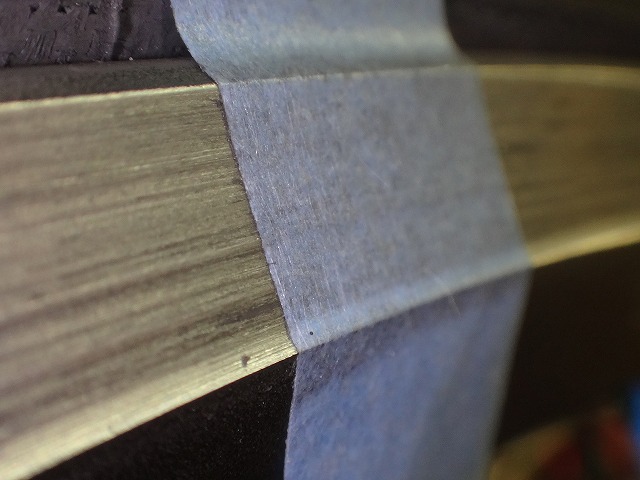
↑This is my Neutron's front wheel, but
I position the shoes at the top of the braking zone,
so you can see the remaining thickness at the bottom—it's worn that much.
Even so, it's still not at the point where replacement is necessary.
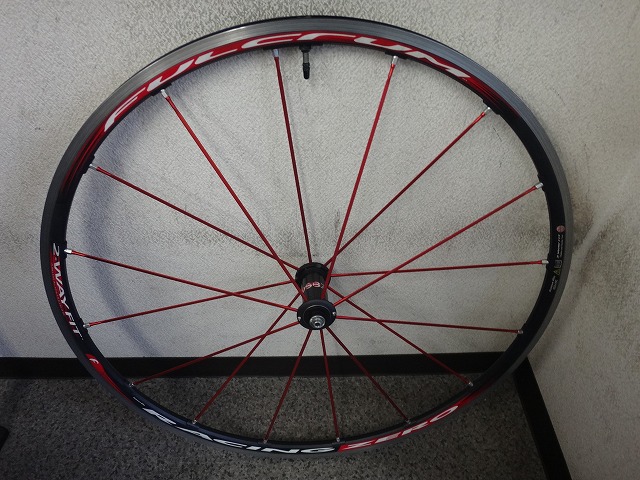
Next, the front wheel.
Given that the customer only wanted the rear rim replaced,
the front wheel rim showed almost no wear.
The hub rotation was broken in, and
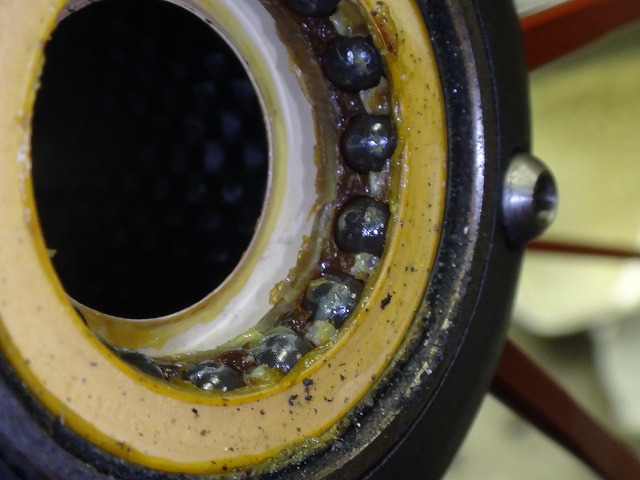
before
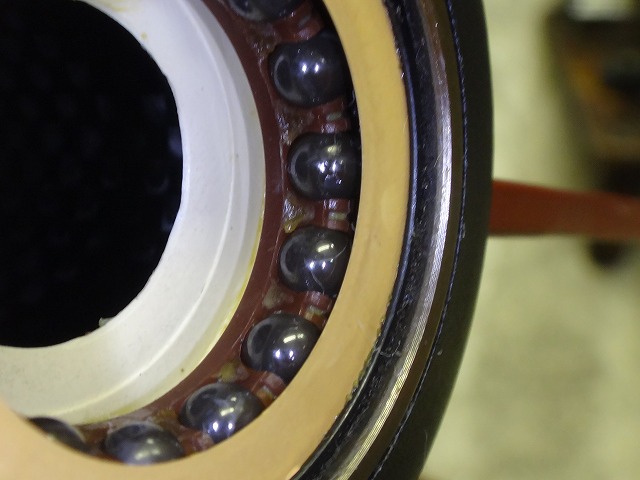
after (before regreasing)
The hub interior is indeed cleaner after the work,
but the rotation is duller and heavier after the work.
It needs to develop that smooth feel through years of use.
This characteristic isn't universal to all cup-and-cone hubs.
You see a hint of it in Shimano and Chris King hubs too
(regreasing always makes rotation heavier initially),
but not nearly this extreme.
However, once that feel develops, even with steel ball bearings,
Campagnolo hubs achieve a silky smooth rotation that other makers' hubs don't have.
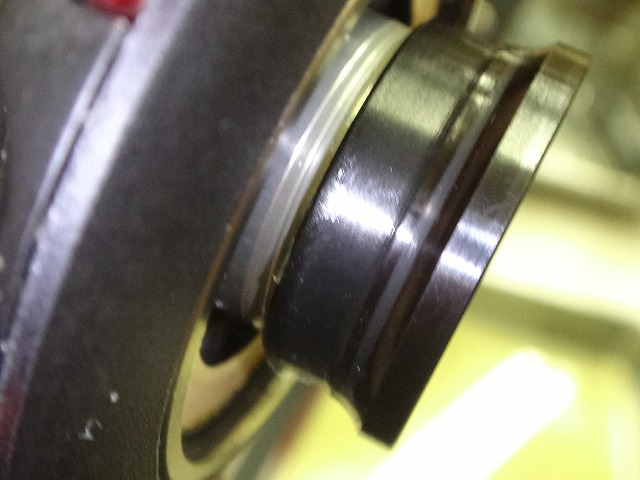
The front wheel's cup showed cleaner wear marks than the rear.
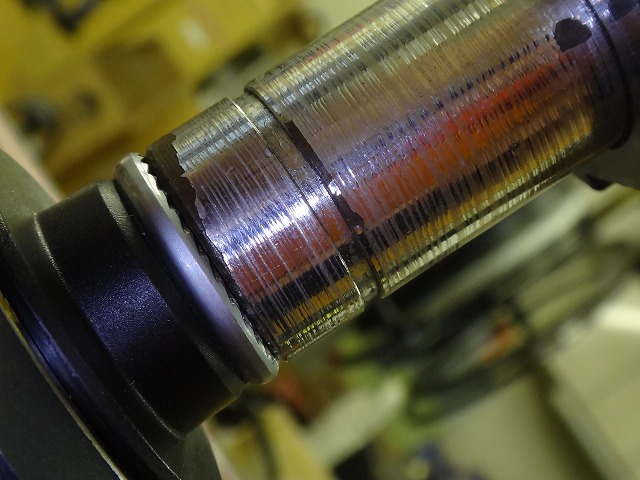
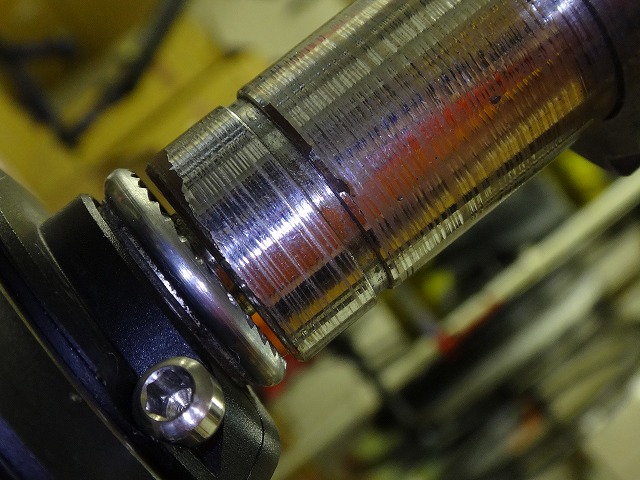
Here too, after the hub overhaul there was a provisional center,
and there was centering deviation.
The rear wheel had almost no runout, but
the front wheel had notable runout at two locations.
However, with the provisional center, I didn't just happen to position the gauge
at the most runout phase—
beyond the runout itself, the rim was generally shifted left (toward the cup adjustment nut side)
(I checked multiple spots by rotating the phase).
I trued and centered it.