Another day with wheels (and so on).

I accidentally deleted the before-rebuild photo due to a camera operation error,
so this time I'm jumping straight to the after-rebuild image.
A customer brought in a pair of front and rear wheels built on Prime 38mm-high
carbon tubular rims for rim brake use.
They had Dugast cyclocross tires taped on, and the customer felt some flex in the corners,
so they wanted both wheels rebuilt to feel more solid and responsive.
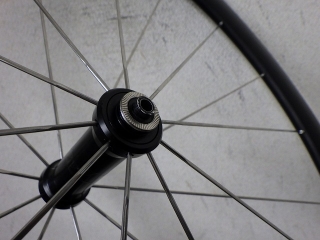
The hub is a Prime-brand 20H hub for straight spokes.
I changed the spokes from black Aero Lite straight to silver CX Sprint
and tensioned them as much as possible.
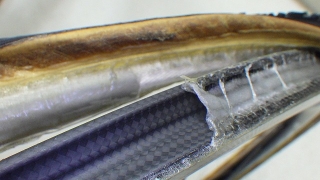
The tubular tape is Caroña (product name) by Effetto Mariposa (manufacturer).
Effetto Mariposa is well known for their Caffélatex sealant.
When you peel off tubular tape,
it can leave residue on the rim or on the tire,
but with this tire most of it stayed on the rim.
The reason I say "with this tire" is
because whether the tape residue ends up on the rim or tire
depends largely on the tire's specification.
In the case of Continental's German-made
tubular tires (other than Giro made by Lion Tire),
with black cotton base tape, when using Miyata rim tape,
almost all of it sticks to the tire side and is
virtually impossible to remove.
With tires like Vittoria or Veloflex that have waxed base tape,
the tape tends to come off cleanly.
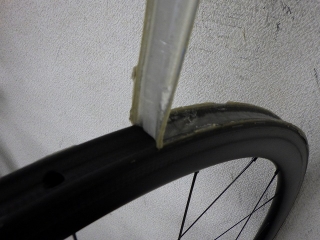
On the rim side, once you peel back a certain length,
from that point on you can remove it cleanly as long as you pull carefully.
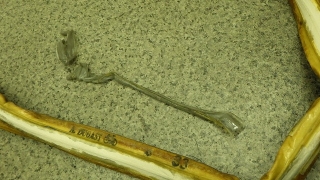
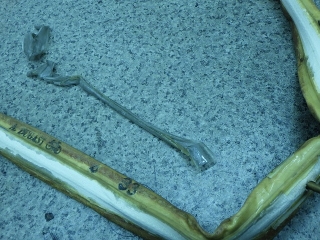
The tire side came off cleanly too.
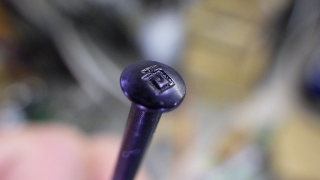
Of the two images above, the upper one is 1920×1080 pixels, 16:9,
and when compressed, the long side is set to 640 pixels,
so it becomes 640×360.
The lower image is 2592×1944 pixels (4:3) before compression,
and 640×480 after compression.
I wasn't happy with the white balance on the lower image,
and when I changed the shooting mode, I later realized
that each mode had its own image size settings saved.
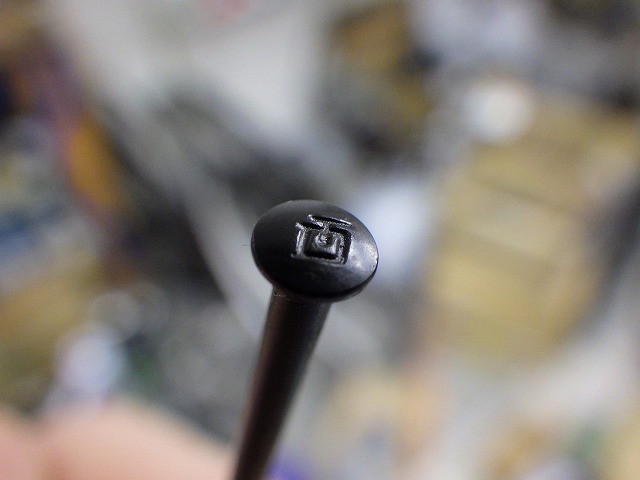
Also, there's a "Macro shooting mode" that does 1cm close-ups,
which is a type of automatic setting, but
you can only select image sizes from 16:9 formats. However,
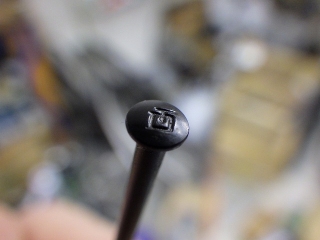
from "Program mode" where you can set detailed parameters,
if you select the 1cm macro focus setting,
you can select 4:3 image sizes. I discovered this.
The subject photographed is a black DT Aero Lite straight with a "DT" marking.
I've been using Sony digital cameras all along, and
since I was familiar with how to use them and
could maintain compatibility with batteries and chargers,
I didn't switch from Sony (or rather, couldn't switch). But
since there are no successor models anymore and
current options in the same price range aren't great at close-ups,
I looked into various options and bought a Ricoh digital camera.
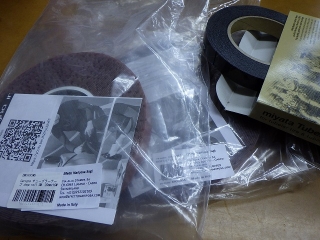
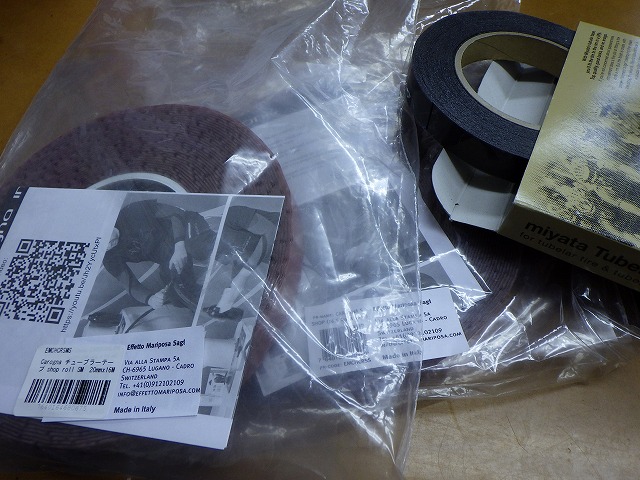
Effetto Mariposa's Caroña on the left, and
upper right in the image is Miyata tubular tape.
Miyata tubular tape is currently out of production. While they haven't explicitly said they've discontinued it,
enough time has passed that it's fair to interpret the situation as being similar to magazine hiatuses
(which in most cases are synonymous with closure).
The length of a 700C tubular rim from the outer edge minus the valve hole section
is about 1970mm (→here and further links). In other words, about 2 meters.
Miyata tubular tape comes in 16mm width / 20m rolls at a pre-tax list price of ¥3,500,
so the cost per application is ¥350.
Caroña comes in 2m and 16m rolls.
The 2m roll is for one application, but
the price varies by width, ranging from ¥2,400 to ¥3,000 pre-tax,
which feels extremely expensive by Miyata tubular tape standards.
The 16m roll is for eight applications at around ¥10,000 to ¥13,000 pre-tax,
so one application works out to roughly ¥1,500.
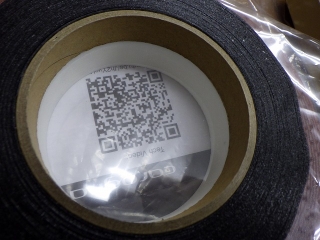
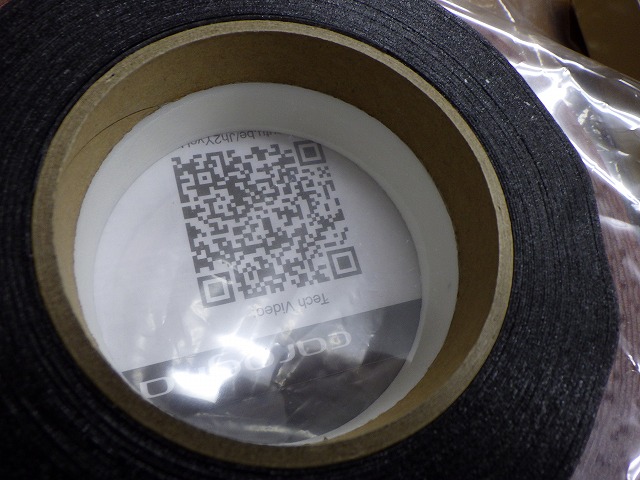
For Miyata tubular tape, our shop only has opened rolls that we use in work.
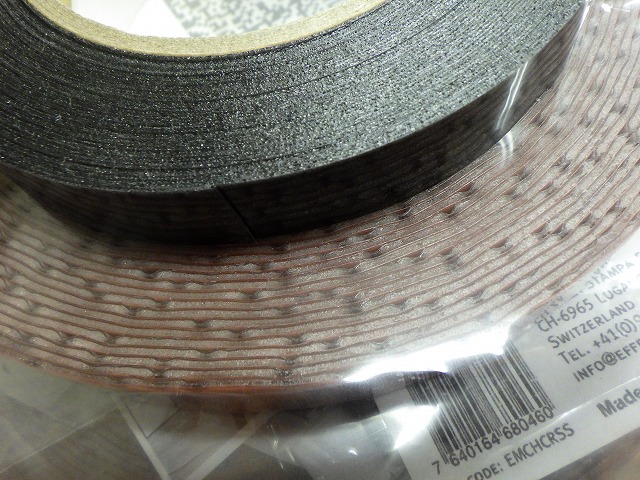
The one in the image has been used three or four times, but
even accounting for that, the core diameter is almost the same, yet
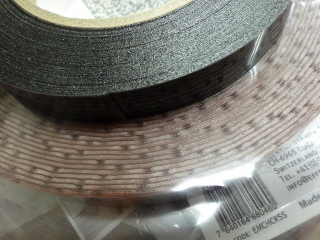
the overall diameter is larger with Caroña because
Caroña is thicker.
Miyata tubular tape causes tires to twist sideways or, in the worst case, come off in cyclocross,
but according to the customer, with Caroña they've never had it come off.
However, they have Aqua Seal applied to the tire sidewall, especially at the rim interface,
to prevent the base tape from getting wet or caked with mud,
so they said they don't know what would happen with Caroña alone.
We're aware that Caroña is expensive and
if the rim has a shallow curve, the white part of the tape
is visible from the side—it's that thick. Despite this,
we use it at our shop as backup option #1 for Miyata tubular tape.
Currently at our shop, we only use Miyata tubular tape for
re-tensioning tires that were originally built with it.
Backup option #2 is
TUFO's gluing tape.
This existed long before Miyata tubular tape went on hiatus.
The adhesion is so strong it won't come off even in cyclocross,
the tape is three layers with directional markings for rim and tire sides, but
when you go to change tires, the tape often stays stuck strongly to the rim, and
considering the hassle of removing it each time,
honestly, rim cement is easier.
So I don't recommend it.
The advantage of tape over rim cement is that you don't need to worry about drying time
and you can apply it and use it immediately, which is good, but that's about it.
Backup option #3 is ICAN (Eye Can), but
our shop doesn't carry it.
Apparently it's thin and cheap.
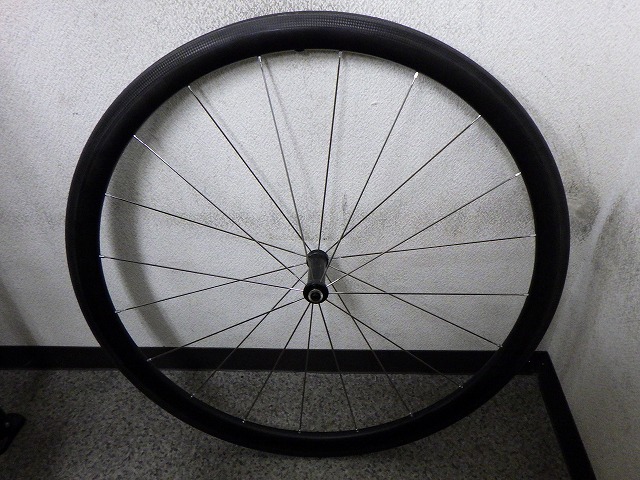
I accidentally deleted the before-rebuild photo due to a camera operation error,
so this time I'm jumping straight to the after-rebuild image.
A customer brought in a pair of front and rear wheels built on Prime 38mm-high
carbon tubular rims for rim brake use.
They had Dugast cyclocross tires taped on, and the customer felt some flex in the corners,
so they wanted both wheels rebuilt to feel more solid and responsive.
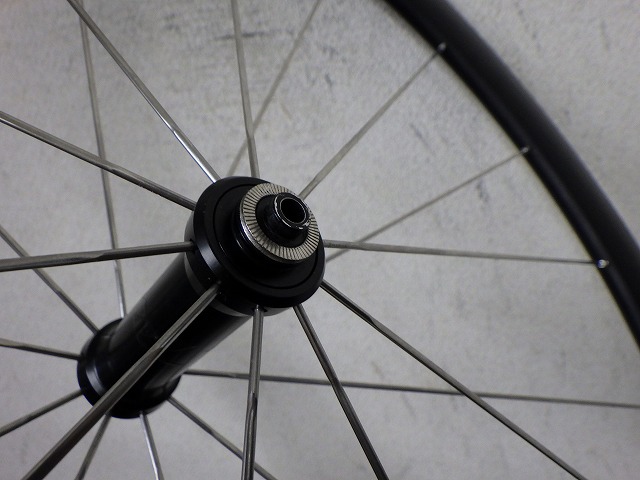
The hub is a Prime-brand 20H hub for straight spokes.
I changed the spokes from black Aero Lite straight to silver CX Sprint
and tensioned them as much as possible.
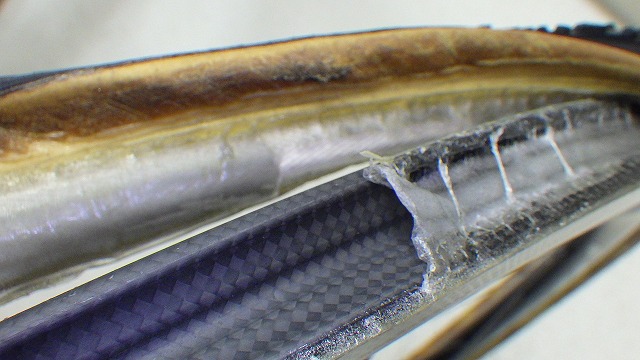
The tubular tape is Caroña (product name) by Effetto Mariposa (manufacturer).
Effetto Mariposa is well known for their Caffélatex sealant.
When you peel off tubular tape,
it can leave residue on the rim or on the tire,
but with this tire most of it stayed on the rim.
The reason I say "with this tire" is
because whether the tape residue ends up on the rim or tire
depends largely on the tire's specification.
In the case of Continental's German-made
tubular tires (other than Giro made by Lion Tire),
with black cotton base tape, when using Miyata rim tape,
almost all of it sticks to the tire side and is
virtually impossible to remove.
With tires like Vittoria or Veloflex that have waxed base tape,
the tape tends to come off cleanly.

On the rim side, once you peel back a certain length,
from that point on you can remove it cleanly as long as you pull carefully.
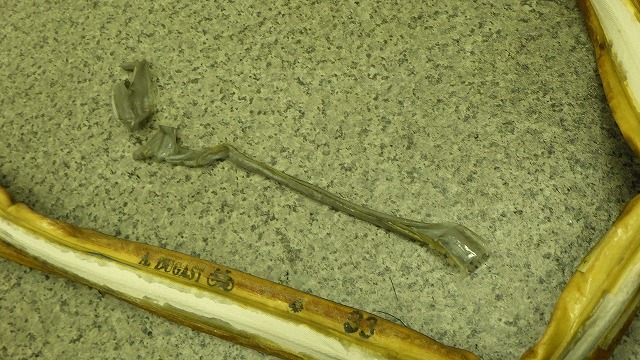
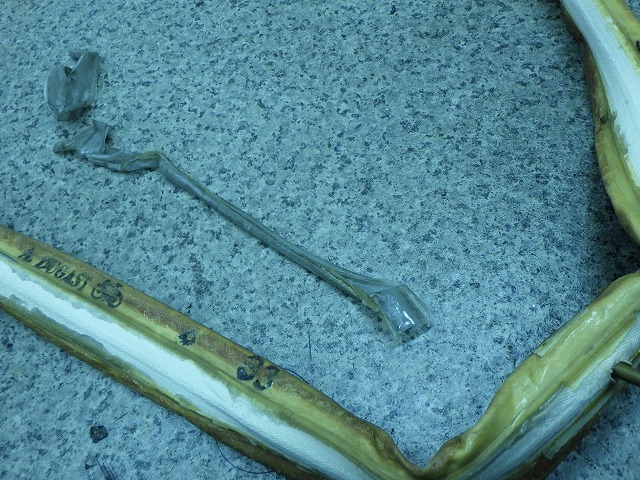
The tire side came off cleanly too.
Of the two images above, the upper one is 1920×1080 pixels, 16:9,
and when compressed, the long side is set to 640 pixels,
so it becomes 640×360.
The lower image is 2592×1944 pixels (4:3) before compression,
and 640×480 after compression.
I wasn't happy with the white balance on the lower image,
and when I changed the shooting mode, I later realized
that each mode had its own image size settings saved.
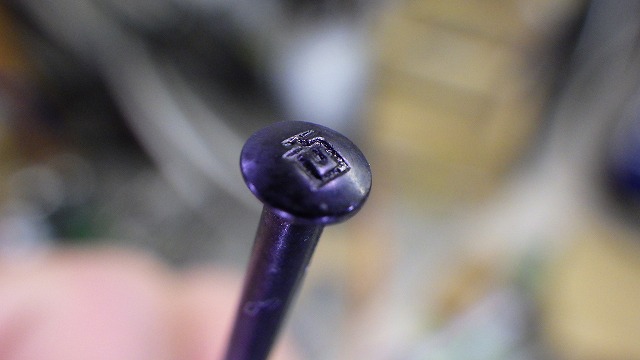
Also, there's a "Macro shooting mode" that does 1cm close-ups,
which is a type of automatic setting, but
you can only select image sizes from 16:9 formats. However,
from "Program mode" where you can set detailed parameters,
if you select the 1cm macro focus setting,
you can select 4:3 image sizes. I discovered this.
The subject photographed is a black DT Aero Lite straight with a "DT" marking.
I've been using Sony digital cameras all along, and
since I was familiar with how to use them and
could maintain compatibility with batteries and chargers,
I didn't switch from Sony (or rather, couldn't switch). But
since there are no successor models anymore and
current options in the same price range aren't great at close-ups,
I looked into various options and bought a Ricoh digital camera.
Effetto Mariposa's Caroña on the left, and
upper right in the image is Miyata tubular tape.
Miyata tubular tape is currently out of production. While they haven't explicitly said they've discontinued it,
enough time has passed that it's fair to interpret the situation as being similar to magazine hiatuses
(which in most cases are synonymous with closure).
The length of a 700C tubular rim from the outer edge minus the valve hole section
is about 1970mm (→here and further links). In other words, about 2 meters.
Miyata tubular tape comes in 16mm width / 20m rolls at a pre-tax list price of ¥3,500,
so the cost per application is ¥350.
Caroña comes in 2m and 16m rolls.
The 2m roll is for one application, but
the price varies by width, ranging from ¥2,400 to ¥3,000 pre-tax,
which feels extremely expensive by Miyata tubular tape standards.
The 16m roll is for eight applications at around ¥10,000 to ¥13,000 pre-tax,
so one application works out to roughly ¥1,500.
For Miyata tubular tape, our shop only has opened rolls that we use in work.
The one in the image has been used three or four times, but
even accounting for that, the core diameter is almost the same, yet
the overall diameter is larger with Caroña because
Caroña is thicker.
Miyata tubular tape causes tires to twist sideways or, in the worst case, come off in cyclocross,
but according to the customer, with Caroña they've never had it come off.
However, they have Aqua Seal applied to the tire sidewall, especially at the rim interface,
to prevent the base tape from getting wet or caked with mud,
so they said they don't know what would happen with Caroña alone.
We're aware that Caroña is expensive and
if the rim has a shallow curve, the white part of the tape
is visible from the side—it's that thick. Despite this,
we use it at our shop as backup option #1 for Miyata tubular tape.
Currently at our shop, we only use Miyata tubular tape for
re-tensioning tires that were originally built with it.
Backup option #2 is
TUFO's gluing tape.
This existed long before Miyata tubular tape went on hiatus.
The adhesion is so strong it won't come off even in cyclocross,
the tape is three layers with directional markings for rim and tire sides, but
when you go to change tires, the tape often stays stuck strongly to the rim, and
considering the hassle of removing it each time,
honestly, rim cement is easier.
So I don't recommend it.
The advantage of tape over rim cement is that you don't need to worry about drying time
and you can apply it and use it immediately, which is good, but that's about it.
Backup option #3 is ICAN (Eye Can), but
our shop doesn't carry it.
Apparently it's thin and cheap.
Products Mentioned in This Article
- 🛒 Prime 38mm carbon tubular rim
- 🛒 Dugast cyclocross tire
- 🛒 Effetto Mariposa Caronya tubular tape
- 🛒 DT CX sprint spoke
* Amazon affiliate links — prices may vary
Original Japanese post: のむラボ日記 #6428