Another wheel day (and so on).
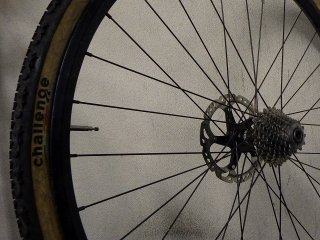
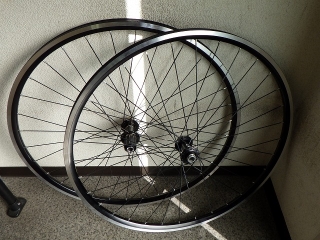
A customer brought me aluminum tubular rims for front and rear wheels.
The image is of the rear wheel, but there's a sticker at about 120° phase that has nothing to do with the rim,
so I took the photo at the maximum angle possible to avoid any personal identification.
The rims are probably Velocity Major Tom, but when I asked the customer,
they said they didn't know.
The customer wants me to completely rebuild these front and rear wheels
by discarding the rims and spokes, using Tni (Tni) CX22 tubular rims instead.
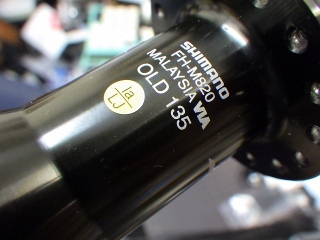
The timeline jumps around here, but this is the rear wheel after disassembly,
at the point where I cleaned the hub.
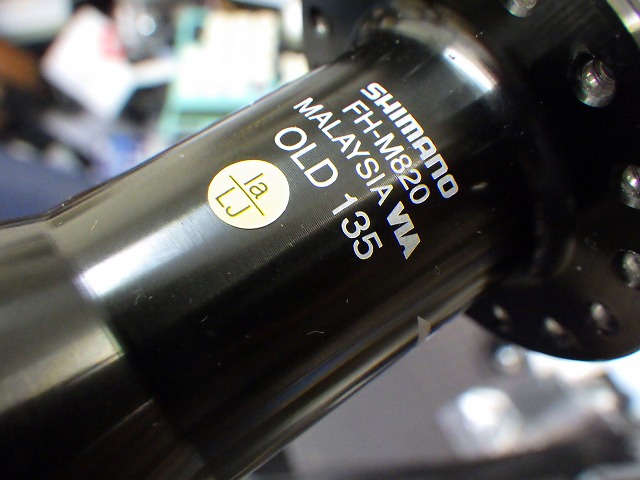
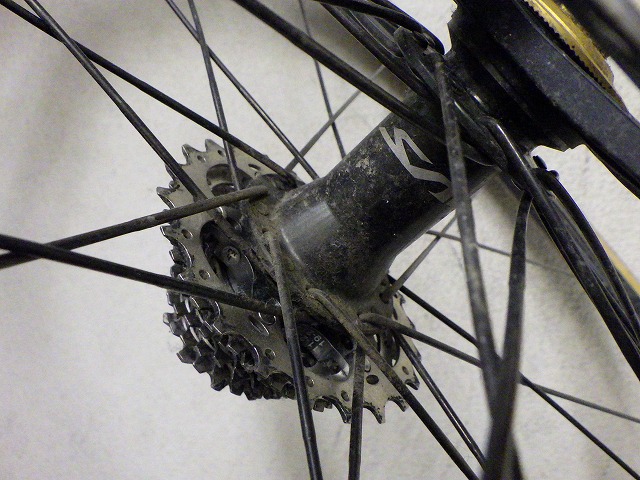
The rear hub is a Shimano Deore FH-M820,
and the "OLD 135" marked on the hub body doesn't mean
135 years old... rather
it means the over-locknut dimension is 135mm.
That alone wouldn't be remarkable, but this hub
uses a thru-axle instead of a quick-release.
A 135mm-width thru-axle hub rather than 142mm
is something that existed on certain-era MTBs,
and as you can see, Shimano made these hubs,
so it was a standard that saw deployment for a time period.
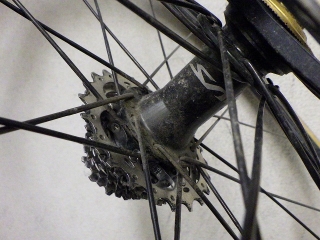
Going back in the timeline,
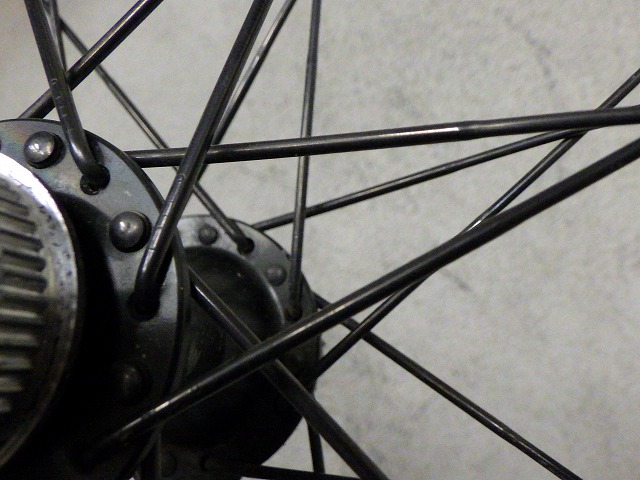
the original configuration was 32H in 6-cross JIS lacing,
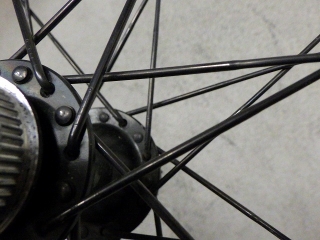
the spokes (on the front wheel as well)
are Sapim Strong on both sides.
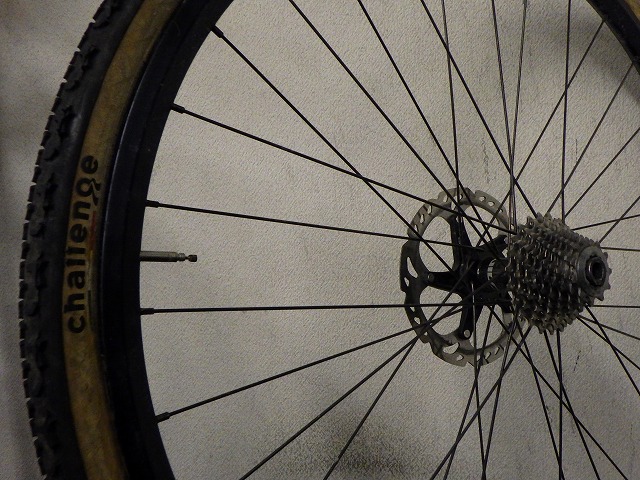
Looking closely at the image above, you can see
there's a butted section slightly inside the final cross.
The spoke neck is approximately gauge #13 (2.3mm),
and after the butted section it's gauge #14 (2.0mm)—single-butted spokes.
So the nipples are compatible with #14 gauge.
For sport bike spokes, #13 gauge nipples don't really exist in principle
(though there are some on older Cosmic Carbon and such),
which is why these are single-butted.
I said "approximately #13" because Sapim's nominal dimension is 2.3mm,
whereas #13 spokes are 2.35mm or 2.34mm.
Whether they were loose from the start or slackened over time I don't know,
but the spoke tension was quite low.
Though it did exceed the lower limit for the wheel to function.
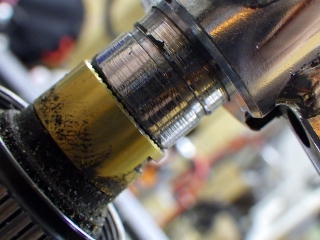
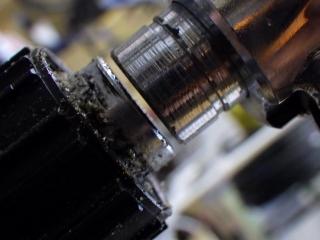
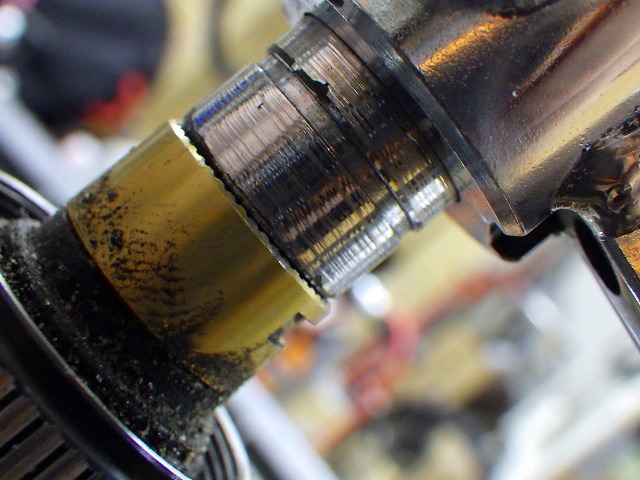
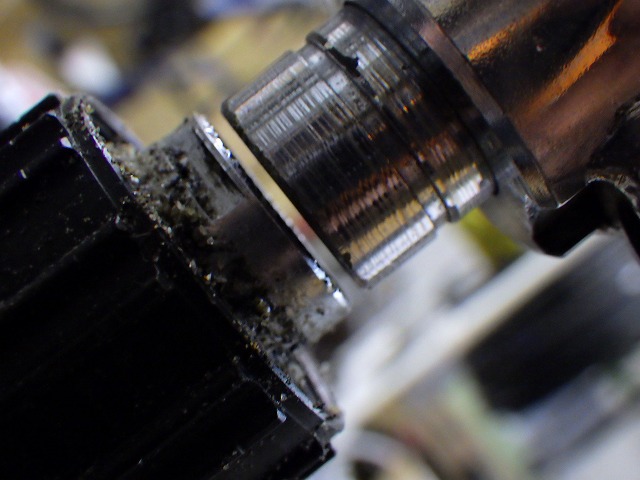
The rim was offset toward the freewheel side.
I happened to set a temporary center on a spot with a lot of runout,
so from the state shown in the lower image,
I tried gauging at various phases,
but the spacing from the hub was nearly the same everywhere.
There's no major runout—the rim is shifted overall
toward the freewheel side.
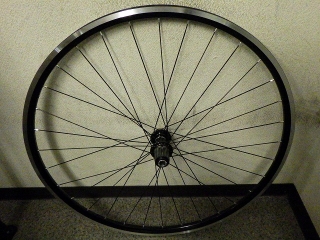
Built.
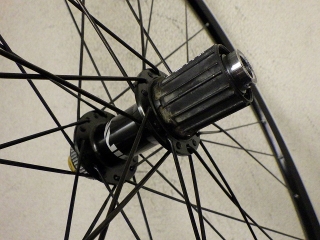
FH-M820, 32H, black half-comp, 4-cross lacing, no wire ties.
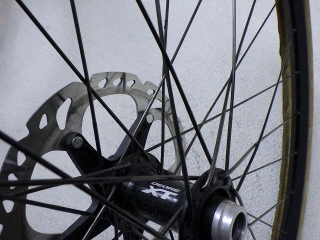
Next, the front wheel.
The hub is an XT-grade 100×15mm thru-axle.

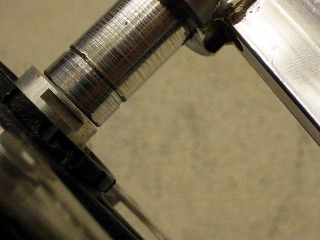
I thought I hadn't captured the paper-thin center offset,
but when I checked the images, I could make it out clearly enough.
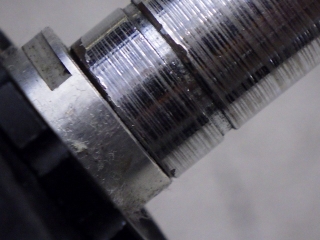
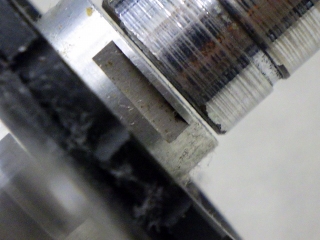
I made an effort to shoot these kinds of angles too,
so I'm posting them rather than discarding them.
Built.
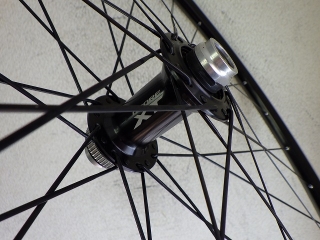
HB-M8010, 32H, half black CX sprint,
4-1 reverse Italian lacing, no wire ties.
By the way, I was curious what brand made a 135mm thru-axle cyclocross frame,
so I asked the customer. Turns out the frame is 135mm quick-release spec,
and the wheels are converted to quick-release by inserting a tube adapter
inside the hub shaft.
During that transitional cyclocross period, there were rear wheels with 135mm quick-release
and front wheels with 100×15 thru-axle (the standard on MTBs at the time),
and there are quite a few of these around.
So I thought maybe they'd keep the front wheel as-is,
but turns out they're using an adapter to fill the thru-axle hole
on the front wheel as well, converting it to quick-release.
A customer brought me aluminum tubular rims for front and rear wheels.
The image is of the rear wheel, but there's a sticker at about 120° phase that has nothing to do with the rim,
so I took the photo at the maximum angle possible to avoid any personal identification.
The rims are probably Velocity Major Tom, but when I asked the customer,
they said they didn't know.
The customer wants me to completely rebuild these front and rear wheels
by discarding the rims and spokes, using Tni (Tni) CX22 tubular rims instead.
The timeline jumps around here, but this is the rear wheel after disassembly,
at the point where I cleaned the hub.
The rear hub is a Shimano Deore FH-M820,
and the "OLD 135" marked on the hub body doesn't mean
135 years old... rather
it means the over-locknut dimension is 135mm.
That alone wouldn't be remarkable, but this hub
uses a thru-axle instead of a quick-release.
A 135mm-width thru-axle hub rather than 142mm
is something that existed on certain-era MTBs,
and as you can see, Shimano made these hubs,
so it was a standard that saw deployment for a time period.
Going back in the timeline,
the original configuration was 32H in 6-cross JIS lacing,
the spokes (on the front wheel as well)
are Sapim Strong on both sides.
Looking closely at the image above, you can see
there's a butted section slightly inside the final cross.
The spoke neck is approximately gauge #13 (2.3mm),
and after the butted section it's gauge #14 (2.0mm)—single-butted spokes.
So the nipples are compatible with #14 gauge.
For sport bike spokes, #13 gauge nipples don't really exist in principle
(though there are some on older Cosmic Carbon and such),
which is why these are single-butted.
I said "approximately #13" because Sapim's nominal dimension is 2.3mm,
whereas #13 spokes are 2.35mm or 2.34mm.
Whether they were loose from the start or slackened over time I don't know,
but the spoke tension was quite low.
Though it did exceed the lower limit for the wheel to function.
The rim was offset toward the freewheel side.
I happened to set a temporary center on a spot with a lot of runout,
so from the state shown in the lower image,
I tried gauging at various phases,
but the spacing from the hub was nearly the same everywhere.
There's no major runout—the rim is shifted overall
toward the freewheel side.
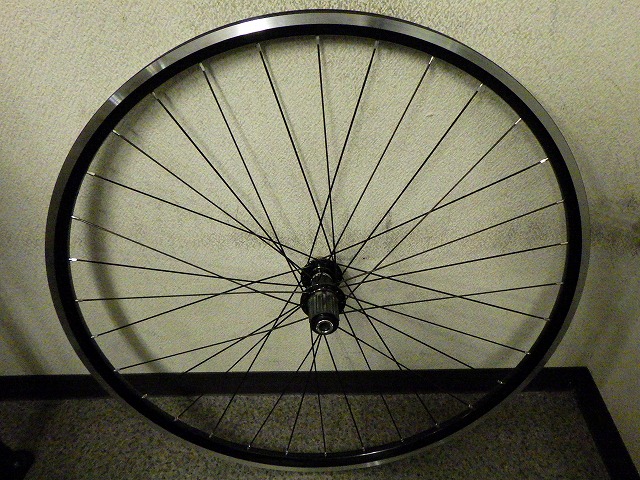
Built.
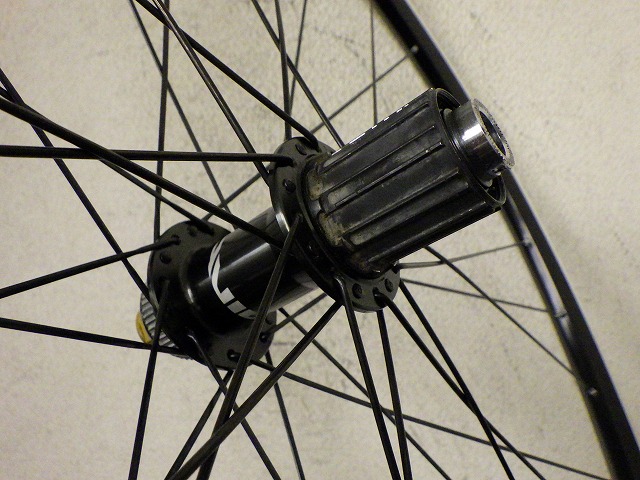
FH-M820, 32H, black half-comp, 4-cross lacing, no wire ties.

Next, the front wheel.
The hub is an XT-grade 100×15mm thru-axle.
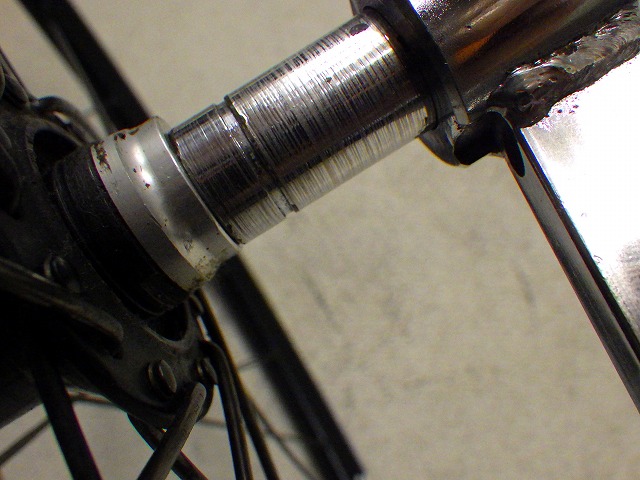
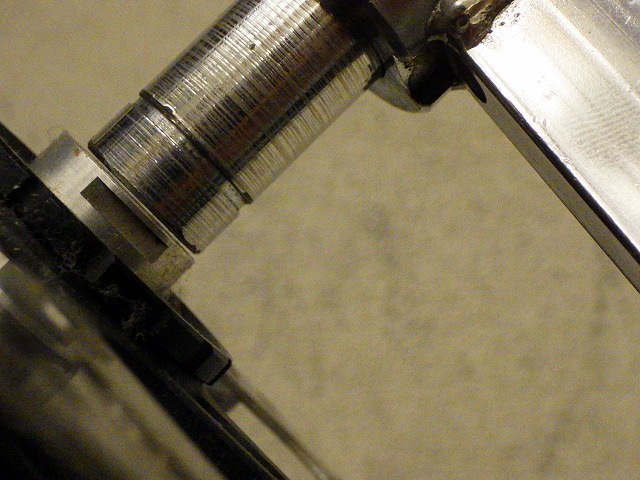
I thought I hadn't captured the paper-thin center offset,
but when I checked the images, I could make it out clearly enough.
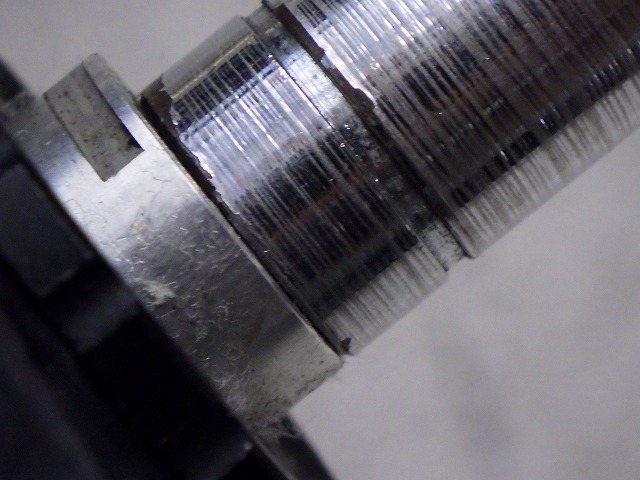
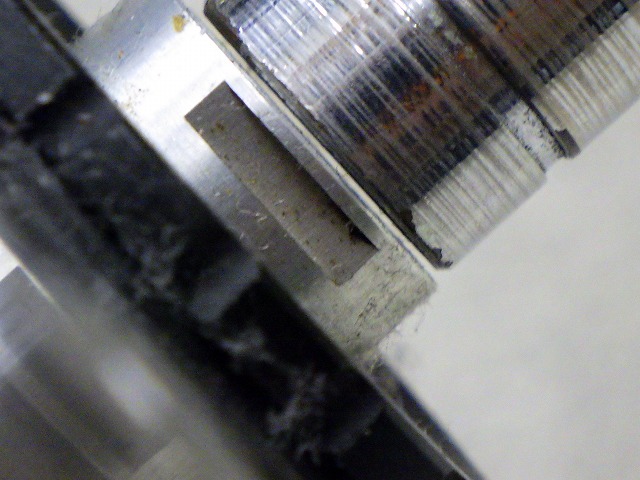
I made an effort to shoot these kinds of angles too,
so I'm posting them rather than discarding them.
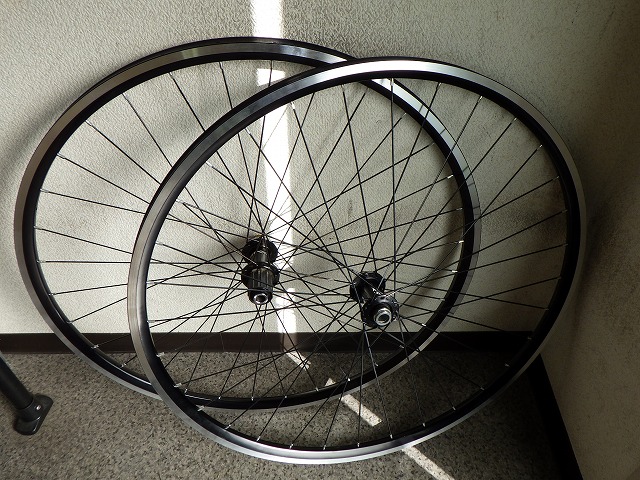
Built.
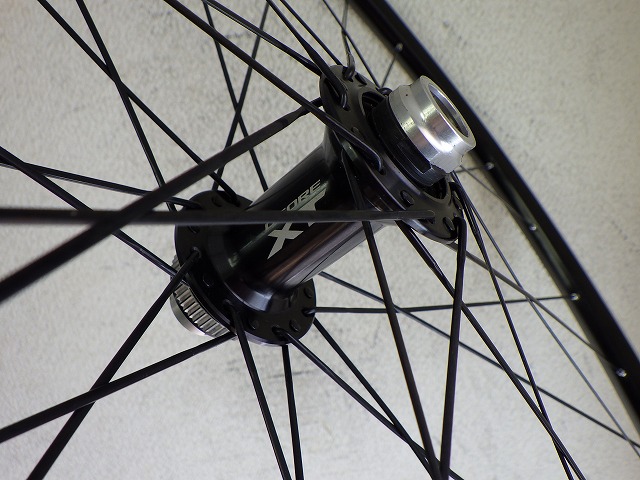
HB-M8010, 32H, half black CX sprint,
4-1 reverse Italian lacing, no wire ties.
By the way, I was curious what brand made a 135mm thru-axle cyclocross frame,
so I asked the customer. Turns out the frame is 135mm quick-release spec,
and the wheels are converted to quick-release by inserting a tube adapter
inside the hub shaft.
During that transitional cyclocross period, there were rear wheels with 135mm quick-release
and front wheels with 100×15 thru-axle (the standard on MTBs at the time),
and there are quite a few of these around.
So I thought maybe they'd keep the front wheel as-is,
but turns out they're using an adapter to fill the thru-axle hole
on the front wheel as well, converting it to quick-release.