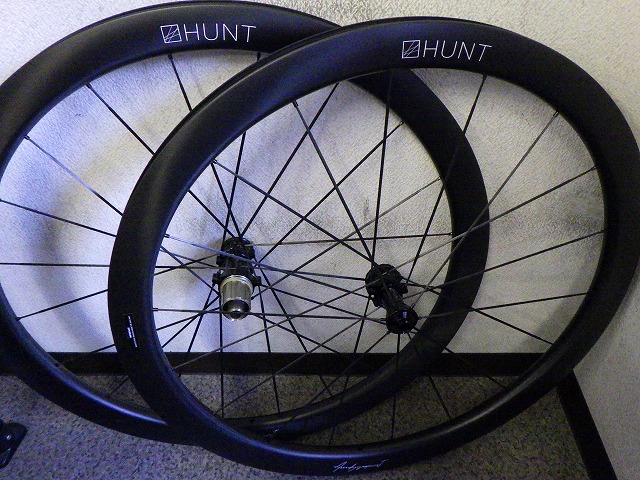
A customer brought in a wheel from HUNT (ハント)
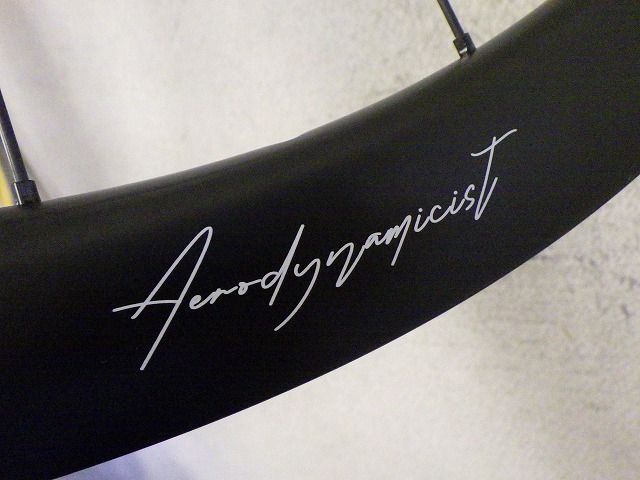
called the 44 Aerodynamicist Carbon Disc
for me to work on.


It's a complete wheel build with flat-section carbon spokes.
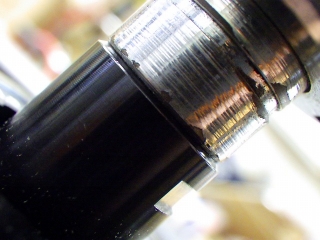
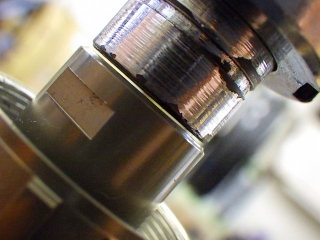
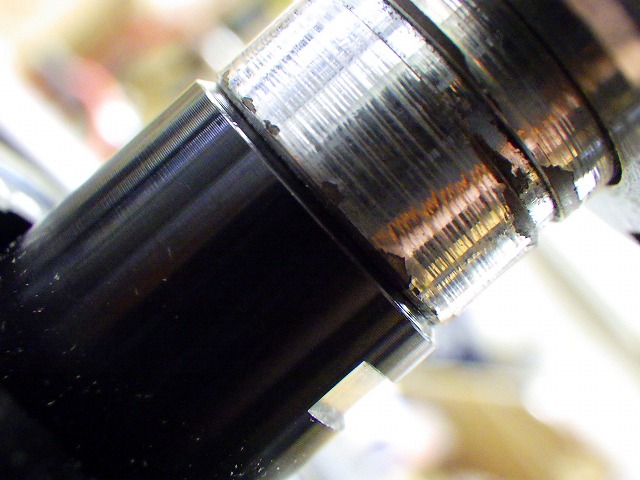
Starting with the rear wheel.
The rim is shifted toward the freewheel side,
but even before that, there was a substantial lateral runout
that the customer had mentioned.
Even though I knew from the initial centering that the rim tended to shift toward the freewheel side,
after I'd worked through the runout, the centering shift
remained in the same direction—actually
it got worse (roughly double the amount shown in the image above).
I showed the customer the situation before moving forward.
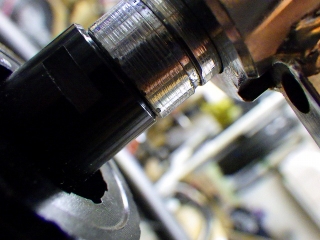

Then I centered it.
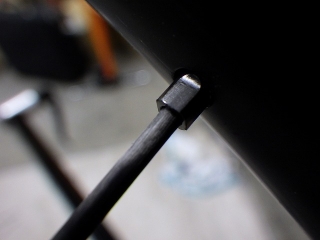
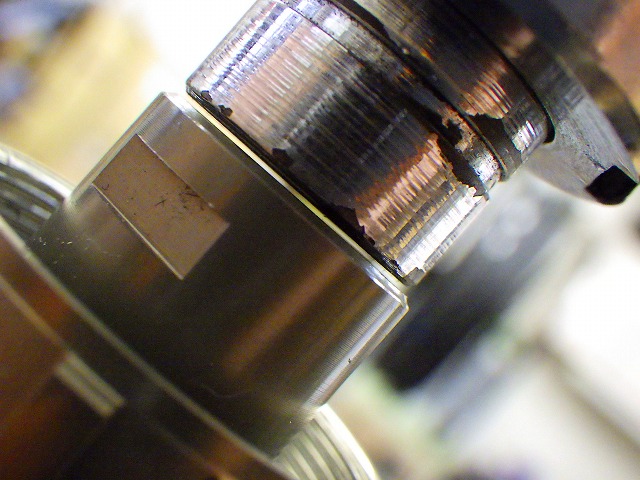
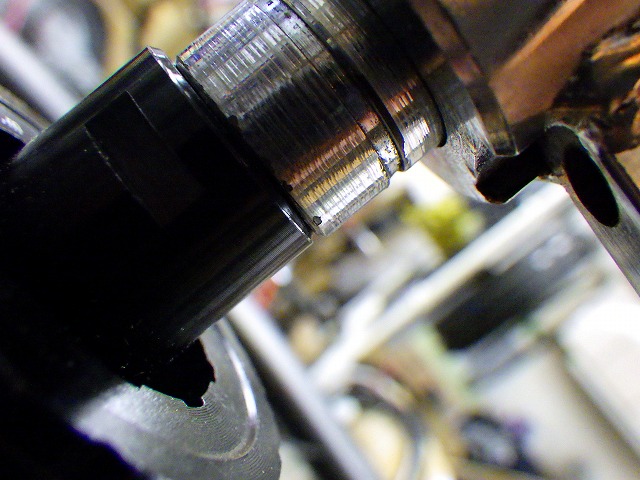
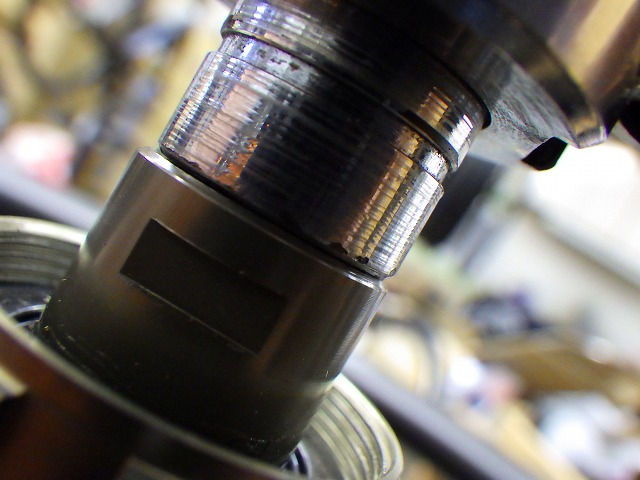
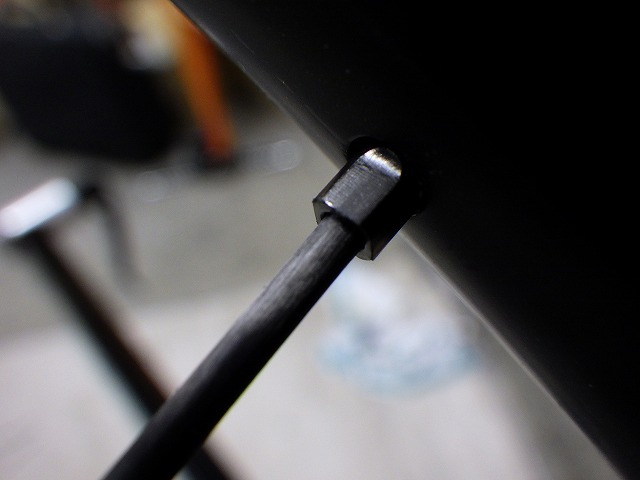
That aluminum part that looks like a nipple
is actually part of the spoke bonded to the carbon spoke.
It's a square wrench flat for preventing twisting and spoke rotation,
and it's 3.4mm across the flats, not 3.2mm.
If you try to turn it here, the spoke just twists—
you can't adjust the runout this way.
Like Sapim's Zyron spokes, you adjust by turning the hexagonal nut from the outside of the rim.
With Zyron spokes you need a special tool, but
on this wheel the hex is 6mm across the flats.
For detailed images of the individual spokes and such (→see here)
and also the links there.
Since the tool has to be inserted from the outside of the rim,
it's necessary that no rim tape be applied,
but HUNT wheels come from the factory already taped with
what's probably DT (ディーティー)-made tubeless tape with their own logo,
and every single one I've seen before
has been applied quite loosely to the rim
(with practically no pressure adhesion).

So I needed to remove the rim tape.
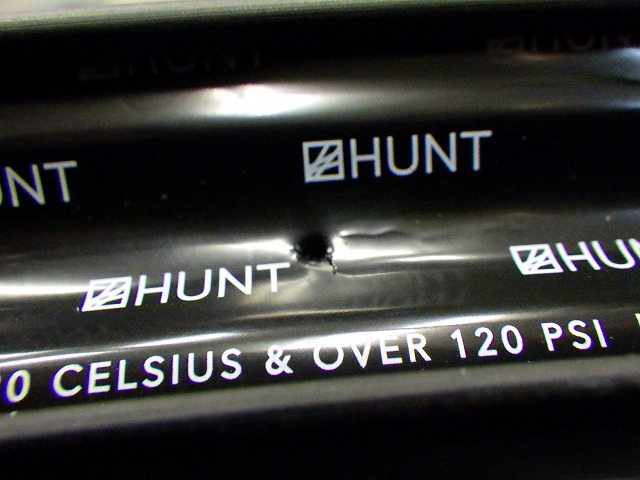
There's no clear hole at the valve area, but
there is a small guide hole—like an awl was pushed through—as a guide.
When I asked the customer, they said they'd be running it with a tube, not tubeless,
so I carefully peeled off the rim tape and would reuse it.
When re-applying the rim tape (about one length plus a bit) after the work,
I stuck it back down carefully with firm pressure adhesion to the rim,
so the position of the two guide holes where it overlaps shifted slightly.
I drilled out the lower guide hole for the valve,
and the upper guide hole remains, but what's underneath it
is the lower tape layer, so there's no problem.
If it were going to be used as tubeless tape, it might be iffy though.
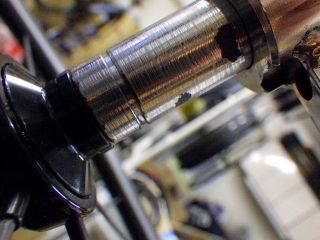
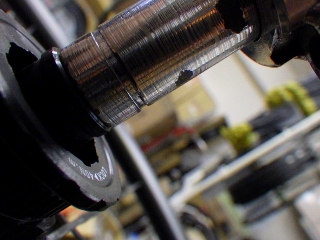
Next, the front wheel.
The image above is the initial centering.
The runout was minimal, so
I did just a touch of correction at a couple of points,
but after the work the centering was dead-on.
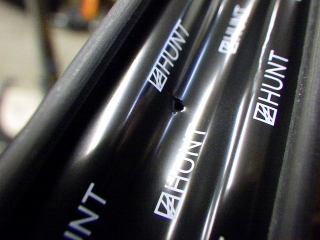
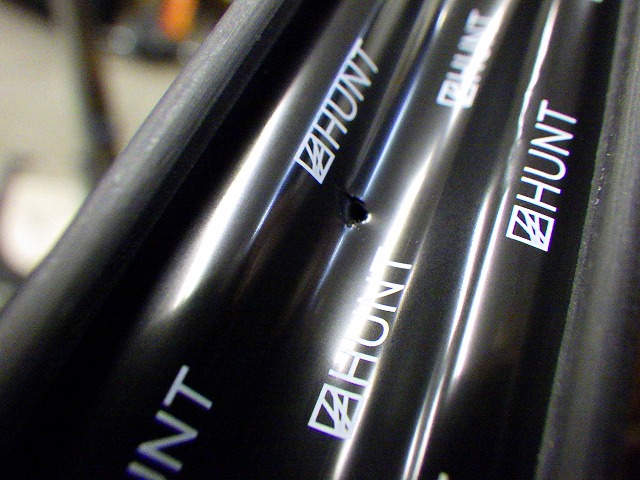
As for the front wheel tape, the guide hole at the valve area
was quite misaligned, but I managed to work it out.
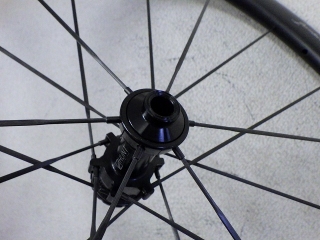
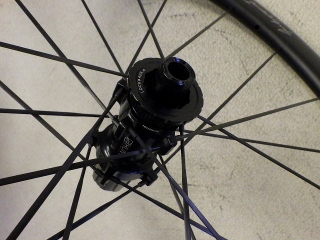
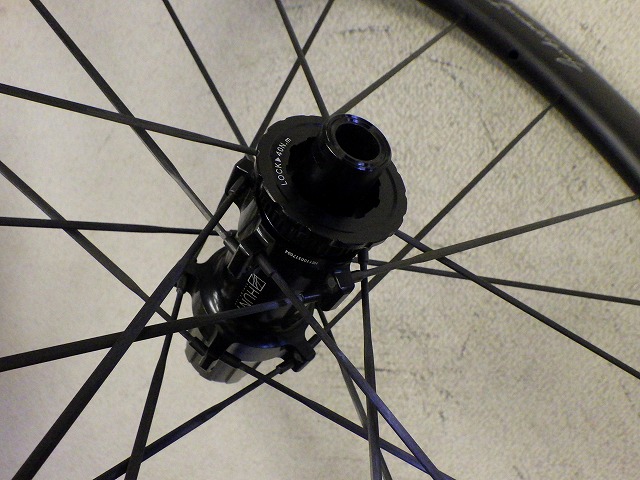
The front wheel is a 2:1 build with 18 spokes, and
the rear wheel is a symmetrical build with 20 spokes.
This choice to do a 2:1 front wheel on a disc brake complete wheel
is, when you factor in the dishing that a disc rotor requires on the front
and that the rear rotor side doesn't use a radial pattern,
actually a pretty good choice even with steel spokes, I think.
Though straight-pull spokes are necessary for this.
I'm planning to write a separate post about this topic.
The spoke count of 18 (12+6) for the front and 20 (10+10) for the rear
should be fine given the resistance to deformation that carbon spokes have.
With steel spokes I'd think the front should be 21 (14+7) or 24 (16+8),
and the rear should be 24 (12+12).
called the 44 Aerodynamicist Carbon Disc
for me to work on.
It's a complete wheel build with flat-section carbon spokes.
Starting with the rear wheel.
The rim is shifted toward the freewheel side,
but even before that, there was a substantial lateral runout
that the customer had mentioned.
Even though I knew from the initial centering that the rim tended to shift toward the freewheel side,
after I'd worked through the runout, the centering shift
remained in the same direction—actually
it got worse (roughly double the amount shown in the image above).
I showed the customer the situation before moving forward.
Then I centered it.
That aluminum part that looks like a nipple
is actually part of the spoke bonded to the carbon spoke.
It's a square wrench flat for preventing twisting and spoke rotation,
and it's 3.4mm across the flats, not 3.2mm.
If you try to turn it here, the spoke just twists—
you can't adjust the runout this way.
Like Sapim's Zyron spokes, you adjust by turning the hexagonal nut from the outside of the rim.
With Zyron spokes you need a special tool, but
on this wheel the hex is 6mm across the flats.
For detailed images of the individual spokes and such (→see here)
and also the links there.
Since the tool has to be inserted from the outside of the rim,
it's necessary that no rim tape be applied,
but HUNT wheels come from the factory already taped with
what's probably DT (ディーティー)-made tubeless tape with their own logo,
and every single one I've seen before
has been applied quite loosely to the rim
(with practically no pressure adhesion).
So I needed to remove the rim tape.
There's no clear hole at the valve area, but
there is a small guide hole—like an awl was pushed through—as a guide.
When I asked the customer, they said they'd be running it with a tube, not tubeless,
so I carefully peeled off the rim tape and would reuse it.
When re-applying the rim tape (about one length plus a bit) after the work,
I stuck it back down carefully with firm pressure adhesion to the rim,
so the position of the two guide holes where it overlaps shifted slightly.
I drilled out the lower guide hole for the valve,
and the upper guide hole remains, but what's underneath it
is the lower tape layer, so there's no problem.
If it were going to be used as tubeless tape, it might be iffy though.

Next, the front wheel.
The image above is the initial centering.
The runout was minimal, so
I did just a touch of correction at a couple of points,
but after the work the centering was dead-on.
As for the front wheel tape, the guide hole at the valve area
was quite misaligned, but I managed to work it out.

The front wheel is a 2:1 build with 18 spokes, and
the rear wheel is a symmetrical build with 20 spokes.
This choice to do a 2:1 front wheel on a disc brake complete wheel
is, when you factor in the dishing that a disc rotor requires on the front
and that the rear rotor side doesn't use a radial pattern,
actually a pretty good choice even with steel spokes, I think.
Though straight-pull spokes are necessary for this.
I'm planning to write a separate post about this topic.
The spoke count of 18 (12+6) for the front and 20 (10+10) for the rear
should be fine given the resistance to deformation that carbon spokes have.
With steel spokes I'd think the front should be 21 (14+7) or 24 (16+8),
and the rear should be 24 (12+12).