Another day with wheels (and so on).
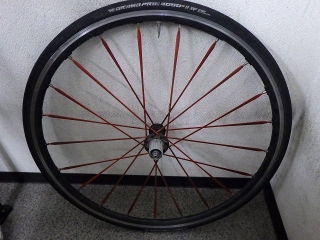
This is the rear wheel that pairs with yesterday's front wheel.
I'm replacing the rim on this one too.
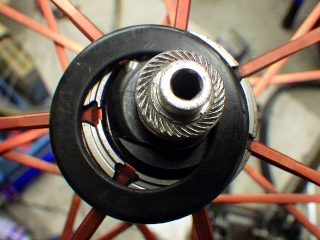
I won the dust cap challenge.
You install it after the wheel is built to a certain point,
but if someone told me to attach and remove it 10 times in a row,
I'm pretty sure it would crack before I finished.
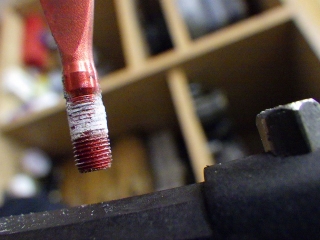
The threads are like this all over
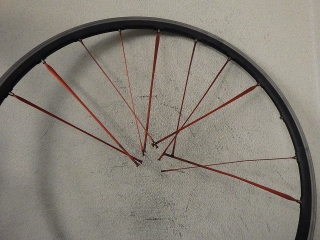
Since the freewheel side uses tangent lacing, I had to loosen half a turn plus skip slightly to one spoke before I could remove the hub.
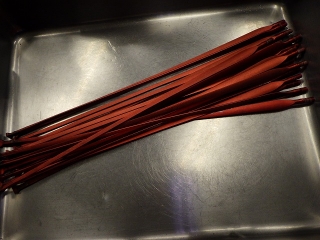
I successfully recovered all the spokes.
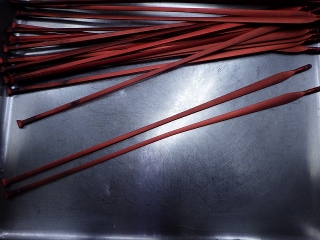
However, there was one spoke that needed replacement.
It's the spoke at the bottom of the image, and the one above it
is a straight one I laid out for comparison.
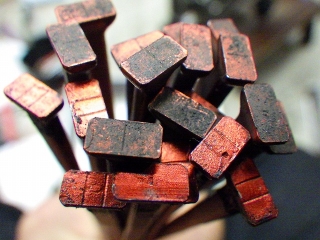
Before
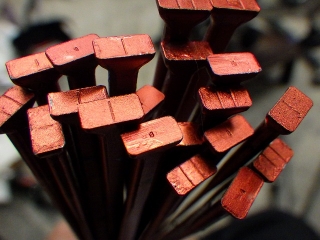
After (cleaned)
The marking showing two vertical lines is for the radial lacing anti-freewheel side, same as the front wheel, so the spokes are shared.
They must have designed the hub dimensions at the wheel design stage to make this work.
Shimano's first complete wheel, the WH-7700, also had two spoke lengths for front and rear, left and right,
but the WH-7701 made the freewheel side radial lacing, which ended up creating three spoke lengths total.
Racing Zero and later models also have three spoke lengths.
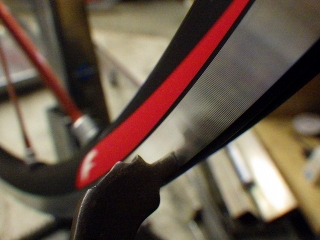
The rim in the image above is spinning, more or less.
The focus kept going to the background,
so this is the fourth shot I took.
I threaded all the spokes including one spare, overhaul the hub, put it on the truing stand,
and only corrected radial and lateral runout, but
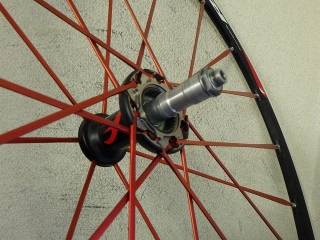
it's in the "front wheel state" without the freewheel body attached yet.
During the trial build, I over-tightened the anti-freewheel side nipples to prevent spoke hooks from slipping,
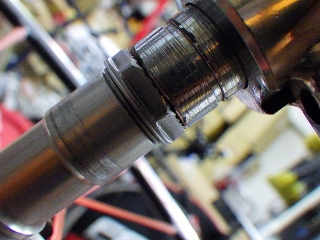
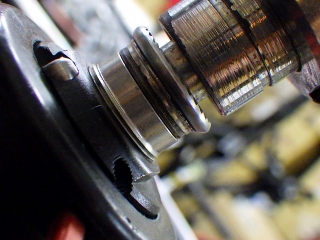
The rim was shifted to the anti-freewheel side—more than I thought actually.
However, I figured the right axle end nut position would be slightly inboard without the freewheel body,
so after installing the freewheel body, I checked with the centering gauge again to see if the center offset would reduce,
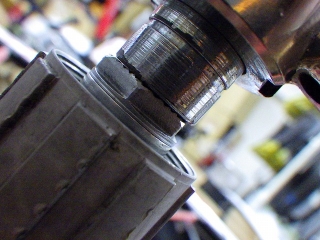
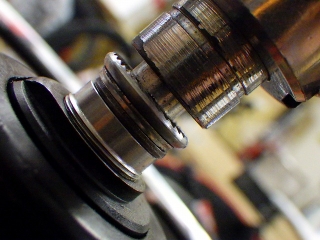
hardly any change.
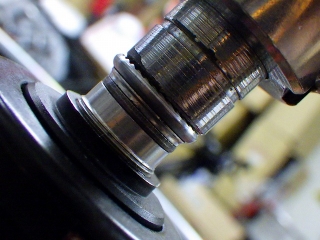
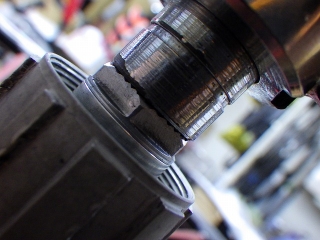
I centered it.
I loosened the anti-freewheel side and also tightened the freewheel side.
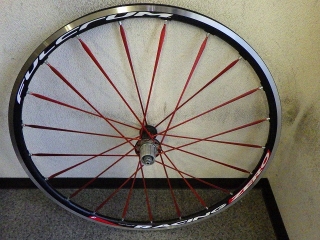
Built.
This rim is black, but not the same as the black rim on the original Racing 1.
The Racing 1 of that era used hexagonal brass nipples with a 5.5mm flats on the grip,
while this Racing Zero uses aluminum nipples with 6mm flats.
The diameter of the rim hole that the nipples pass through differs by less than 0.5mm,
but they're not the same diameter.
So this becomes a "unique specification rim," and
the rim sticker is affixed at the factory.
Examples of rims that aren't unique specification include
certain generations of Eurus and Shamal Ultra from a certain period onward.
The difference is the hub shell material and bearing specification,
but the rim itself is the same, so you're supposed to buy the sticker separately and apply it yourself.
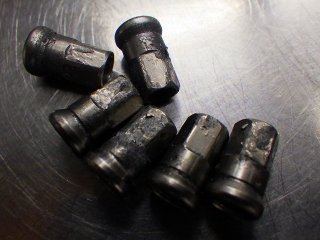
The aluminum nipples on the original Racing Zero have a brass-like plated surface finish,
but it flakes off in chunks.
Campagnolo Ultra-Torque BB cups before black anodizing had the same problem.
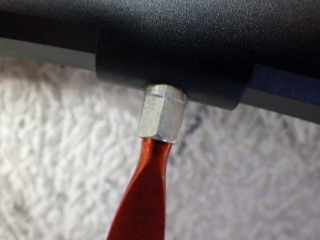
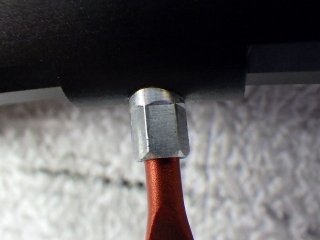
So I completely replaced the nipples on both wheels
with the aluminum-colored ones from a later era.
The difference in length of the round cross-section part protruding from the nipple
between the two images is because they're left and right of the rear wheel.
Top is anti-freewheel side, bottom is freewheel side.
Both are shot from the right side (freewheel side) of the wheel,
so you can just barely see the notable hole offset on the rim.
With the 2WAY-FIT models of Racing Zero and Shamal Ultra,
customers occasionally tell me "the tubeless valve on the rear is shorter and harder to pump air into."
The tubeless valve length included with the wheel is one size,
but the rim height differs about 3mm front to rear, and the valve length itself is already on the short side,
so the rear appears noticeably shorter.
From the second generation of Racing Zero onward, the rim height differs front to rear.
You can more easily see the height difference by looking at the vertical width of the printed sticker text
rather than the rim height itself.
Once the front and rear rim heights started differing,
naturally the rear rim became heavier,
with a difference of around 25–30g,
but the original Racing Zero rim had the same rim height front and rear.
The measured height of the uncut rim flange is 25.8mm for both front and rear.
So the measured weight was about the same too.
That means the rear rim is about 25g lighter than the successor models.
What? Specific weight?
What made you think I'd tell you that?
↑What is this guy, so unfriendly!

Sorry for the wait! Please look at these images!
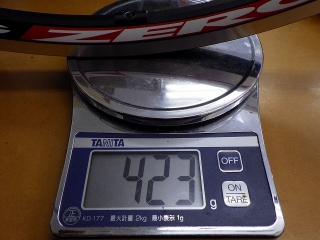
Front rim!
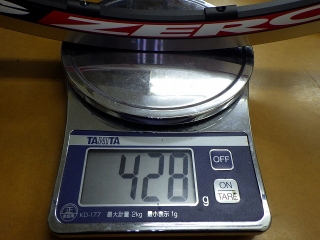
Rear rim!
↑Cut it out!

This is the rear wheel that pairs with yesterday's front wheel.
I'm replacing the rim on this one too.

I won the dust cap challenge.
You install it after the wheel is built to a certain point,
but if someone told me to attach and remove it 10 times in a row,
I'm pretty sure it would crack before I finished.

The threads are like this all over

Since the freewheel side uses tangent lacing, I had to loosen half a turn plus skip slightly to one spoke before I could remove the hub.

I successfully recovered all the spokes.

However, there was one spoke that needed replacement.
It's the spoke at the bottom of the image, and the one above it
is a straight one I laid out for comparison.

Before

After (cleaned)
The marking showing two vertical lines is for the radial lacing anti-freewheel side, same as the front wheel, so the spokes are shared.
They must have designed the hub dimensions at the wheel design stage to make this work.
Shimano's first complete wheel, the WH-7700, also had two spoke lengths for front and rear, left and right,
but the WH-7701 made the freewheel side radial lacing, which ended up creating three spoke lengths total.
Racing Zero and later models also have three spoke lengths.

The rim in the image above is spinning, more or less.
The focus kept going to the background,
so this is the fourth shot I took.
I threaded all the spokes including one spare, overhaul the hub, put it on the truing stand,
and only corrected radial and lateral runout, but

it's in the "front wheel state" without the freewheel body attached yet.
During the trial build, I over-tightened the anti-freewheel side nipples to prevent spoke hooks from slipping,


The rim was shifted to the anti-freewheel side—more than I thought actually.
However, I figured the right axle end nut position would be slightly inboard without the freewheel body,
so after installing the freewheel body, I checked with the centering gauge again to see if the center offset would reduce,


hardly any change.


I centered it.
I loosened the anti-freewheel side and also tightened the freewheel side.

Built.
This rim is black, but not the same as the black rim on the original Racing 1.
The Racing 1 of that era used hexagonal brass nipples with a 5.5mm flats on the grip,
while this Racing Zero uses aluminum nipples with 6mm flats.
The diameter of the rim hole that the nipples pass through differs by less than 0.5mm,
but they're not the same diameter.
So this becomes a "unique specification rim," and
the rim sticker is affixed at the factory.
Examples of rims that aren't unique specification include
certain generations of Eurus and Shamal Ultra from a certain period onward.
The difference is the hub shell material and bearing specification,
but the rim itself is the same, so you're supposed to buy the sticker separately and apply it yourself.

The aluminum nipples on the original Racing Zero have a brass-like plated surface finish,
but it flakes off in chunks.
Campagnolo Ultra-Torque BB cups before black anodizing had the same problem.


So I completely replaced the nipples on both wheels
with the aluminum-colored ones from a later era.
The difference in length of the round cross-section part protruding from the nipple
between the two images is because they're left and right of the rear wheel.
Top is anti-freewheel side, bottom is freewheel side.
Both are shot from the right side (freewheel side) of the wheel,
so you can just barely see the notable hole offset on the rim.
With the 2WAY-FIT models of Racing Zero and Shamal Ultra,
customers occasionally tell me "the tubeless valve on the rear is shorter and harder to pump air into."
The tubeless valve length included with the wheel is one size,
but the rim height differs about 3mm front to rear, and the valve length itself is already on the short side,
so the rear appears noticeably shorter.
From the second generation of Racing Zero onward, the rim height differs front to rear.
You can more easily see the height difference by looking at the vertical width of the printed sticker text
rather than the rim height itself.
Once the front and rear rim heights started differing,
naturally the rear rim became heavier,
with a difference of around 25–30g,
but the original Racing Zero rim had the same rim height front and rear.
The measured height of the uncut rim flange is 25.8mm for both front and rear.
So the measured weight was about the same too.
That means the rear rim is about 25g lighter than the successor models.
What? Specific weight?
What made you think I'd tell you that?
↑What is this guy, so unfriendly!

Sorry for the wait! Please look at these images!

Front rim!

Rear rim!
↑Cut it out!