Another wheel day (and so on).
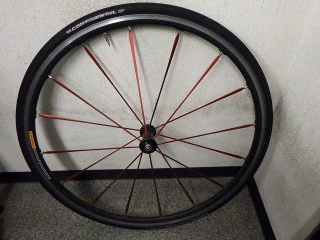
A customer left me the front wheel of an original Racing Zero.
The truly original Racing Zero has
rim/spoke/hub in red/red/red,
but this is a later color variant model
with black/red/black.
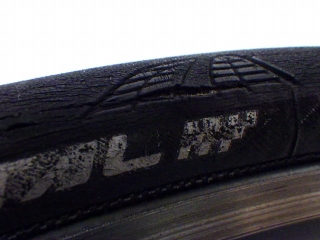
The tread on the Grand Prix 4000S II
is cracked to pieces—that's one thing—
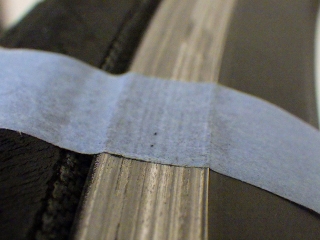
but the braking zone wear is severe,
so they want the rim replaced.
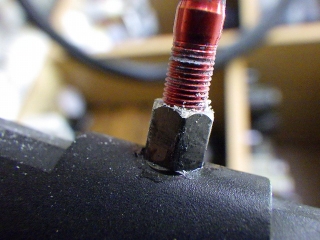
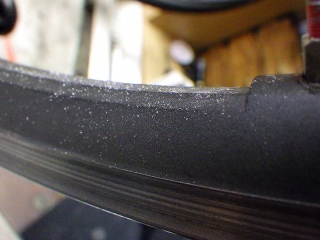
There are many nipples on the verge of seizing,
and white powder is crumbling out
from the gaps around the nipples.
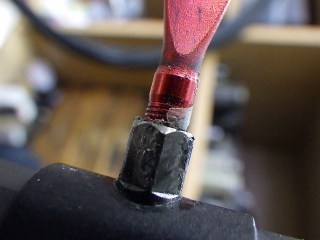
Some kind of brittle adhesive was also used.
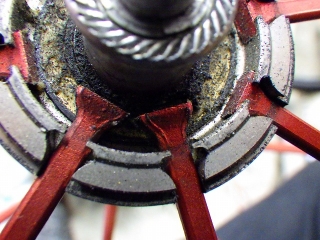
The original Racing Zero hub doesn't have
a spoke flange with puzzle-piece-like lateral insertion of spoke heads,
but rather a hook-style flange of a certain depth.
Still, if I completely loosen several consecutive nipples on both sides,
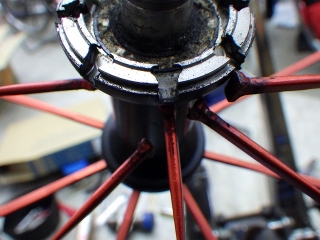
I can remove the spoke heads of the spokes
whose nipples remain tight from the hub flange.
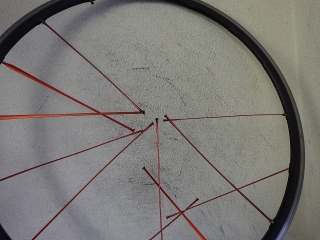
Out of 16 spokes, I loosened just 5 consecutive ones
plus a few more, and was able to pull the hub right out of the wheel.
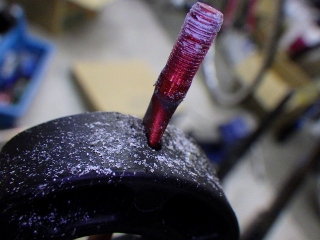
From that point on, with a wrench holding the nipple,
I can loosen the nipples by turning the spoke wrench the other way.
Since the spoke tension is released,
there's no additional resistance from thread binding.
Though man, all that white powder coming out—that's something.

The original Racing Zero spokes come in two types:
one vertical line and two vertical lines.
Since the front wheel has only one spoke length,
they're all two vertical lines "||".
There are ones with long lines and ones with lines like dots mixed together,
and the ones with long lines are the older spoke specification.
But the dot-like ones aren't replacement spokes from repairs—
they're just mixed in at the manufacturing stage itself.
The original Racing 1 spokes are black and come in one vertical line and two vertical lines,
but in very early batches there are also unmarked versions.
By the way, the original Shamal Ultra spokes aren't tied spokes,
but the markings come in three types: three vertical lines, four vertical lines, and five vertical lines.
The three and four vertical line versions—
which aren't tied spokes—became more common in the Racing Zero after it stopped being a tied spoke design.
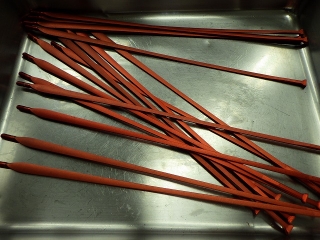
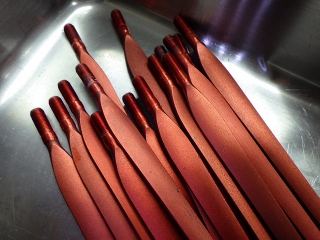
I cleaned the removed spokes.
Sometimes spokes with seized nipples can't be recovered,
but this time I managed to recover all of them.
I'll write this again (→here):
rim replacement on Racing Zeros and Shamal Ultras
doesn't require complete spoke replacement.
In fact, if it did, this rim replacement wouldn't be possible.
Tied spokes have already ceased production at Fulcrum—
they'll sell remaining stock,
but won't make new ones.
Our shop keeps some for repairs,
but not enough for complete spoke replacement on front or rear wheels.
The same applies to rims, though the manufacturer had rim stock available.
This Racing Zero appeared in the 2009 catalog,
and the 2010 Racing Zero uses non-tied spokes in black and white (→here),
so it's about 15 years old now.
You can sense the maker's willingness to meet users' requests
to keep using their wheels with repairs if needed.
Hey, are you listening, Shimano and Mavic?

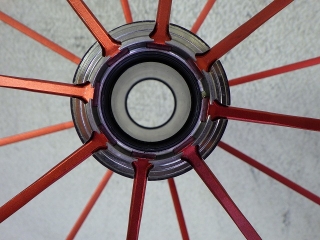

I threaded the spokes through the hub body for temporary assembly.
I'm also doing a hub overhaul while I'm at it.
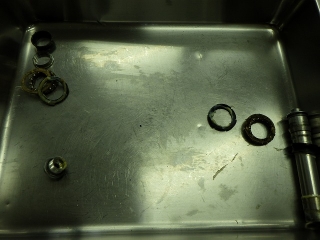
Hub bearings often wear differently on left and right,
so when reusing them, you have to be careful
to put each side back where it came from.
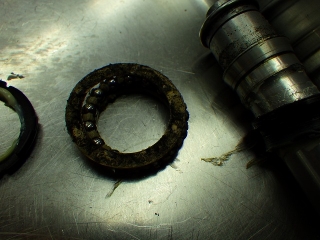
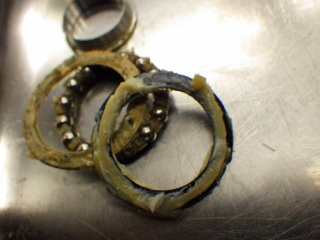
This time neither side was particularly worn.
During assembly, I cleaned and greased
these parts as well, just to be safe.

before
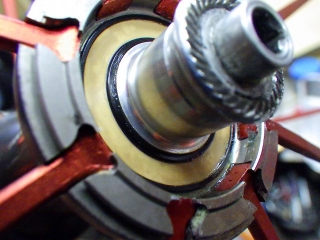
after
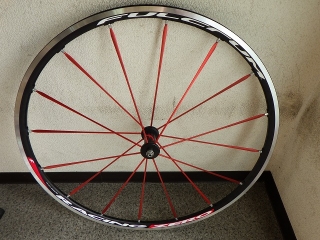
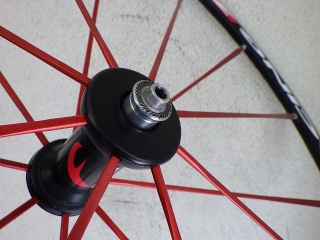
All assembled.
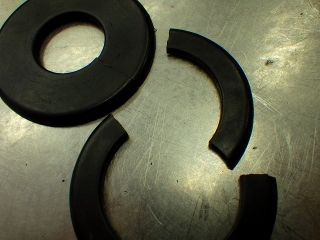
These hub dust caps must be removed for the work,
and on older wheels they become extremely fragile.
Knowing this, I tried to remove them with extreme care,
but they cracked anyway.
I'm not trying to deliberately break them
to charge more for replacement parts.
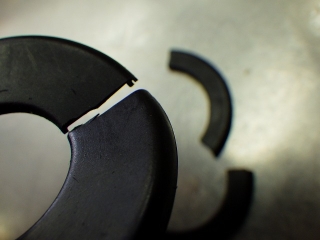
The right side didn't shatter everywhere, but it cracked too.
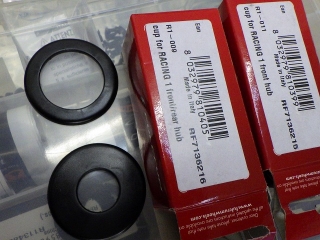
Well, it happens often enough
that I keep spares like these in stock anyway.

A customer left me the front wheel of an original Racing Zero.
The truly original Racing Zero has
rim/spoke/hub in red/red/red,
but this is a later color variant model
with black/red/black.

The tread on the Grand Prix 4000S II
is cracked to pieces—that's one thing—

but the braking zone wear is severe,
so they want the rim replaced.


There are many nipples on the verge of seizing,
and white powder is crumbling out
from the gaps around the nipples.

Some kind of brittle adhesive was also used.

The original Racing Zero hub doesn't have
a spoke flange with puzzle-piece-like lateral insertion of spoke heads,
but rather a hook-style flange of a certain depth.
Still, if I completely loosen several consecutive nipples on both sides,

I can remove the spoke heads of the spokes
whose nipples remain tight from the hub flange.

Out of 16 spokes, I loosened just 5 consecutive ones
plus a few more, and was able to pull the hub right out of the wheel.

From that point on, with a wrench holding the nipple,
I can loosen the nipples by turning the spoke wrench the other way.
Since the spoke tension is released,
there's no additional resistance from thread binding.
Though man, all that white powder coming out—that's something.

The original Racing Zero spokes come in two types:
one vertical line and two vertical lines.
Since the front wheel has only one spoke length,
they're all two vertical lines "||".
There are ones with long lines and ones with lines like dots mixed together,
and the ones with long lines are the older spoke specification.
But the dot-like ones aren't replacement spokes from repairs—
they're just mixed in at the manufacturing stage itself.
The original Racing 1 spokes are black and come in one vertical line and two vertical lines,
but in very early batches there are also unmarked versions.
By the way, the original Shamal Ultra spokes aren't tied spokes,
but the markings come in three types: three vertical lines, four vertical lines, and five vertical lines.
The three and four vertical line versions—
which aren't tied spokes—became more common in the Racing Zero after it stopped being a tied spoke design.


I cleaned the removed spokes.
Sometimes spokes with seized nipples can't be recovered,
but this time I managed to recover all of them.
I'll write this again (→here):
rim replacement on Racing Zeros and Shamal Ultras
doesn't require complete spoke replacement.
In fact, if it did, this rim replacement wouldn't be possible.
Tied spokes have already ceased production at Fulcrum—
they'll sell remaining stock,
but won't make new ones.
Our shop keeps some for repairs,
but not enough for complete spoke replacement on front or rear wheels.
The same applies to rims, though the manufacturer had rim stock available.
This Racing Zero appeared in the 2009 catalog,
and the 2010 Racing Zero uses non-tied spokes in black and white (→here),
so it's about 15 years old now.
You can sense the maker's willingness to meet users' requests
to keep using their wheels with repairs if needed.


I threaded the spokes through the hub body for temporary assembly.
I'm also doing a hub overhaul while I'm at it.

Hub bearings often wear differently on left and right,
so when reusing them, you have to be careful
to put each side back where it came from.


This time neither side was particularly worn.
During assembly, I cleaned and greased
these parts as well, just to be safe.

before

after


All assembled.

These hub dust caps must be removed for the work,
and on older wheels they become extremely fragile.
Knowing this, I tried to remove them with extreme care,
but they cracked anyway.
I'm not trying to deliberately break them
to charge more for replacement parts.

The right side didn't shatter everywhere, but it cracked too.

Well, it happens often enough
that I keep spares like these in stock anyway.