This is a continuation of my previous post.
First, let me add some supplementary information.
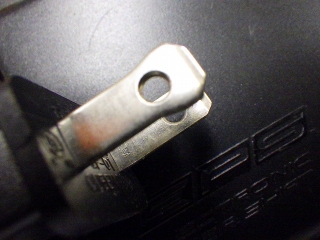
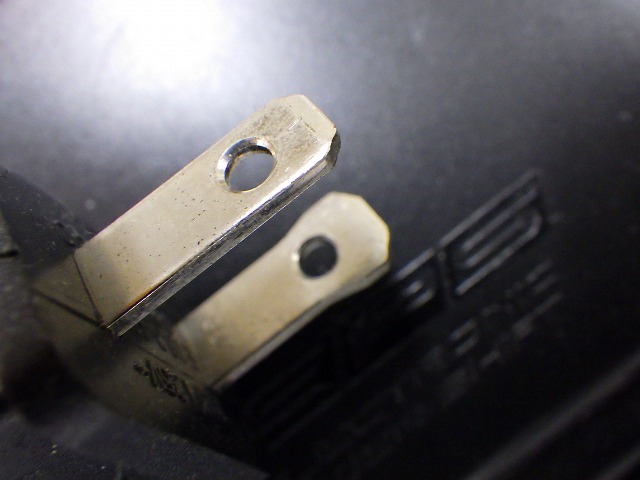
This is the power cord that came with the Campagnolo EPS charger,
with a plug portion that precisely matches
the different lengths of the left and right holes on the outlet.
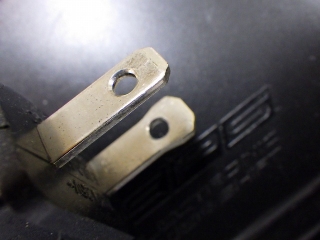
The other side looks like this
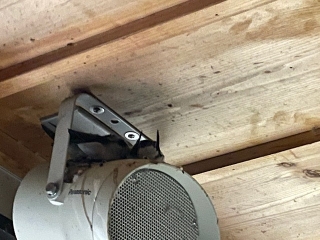
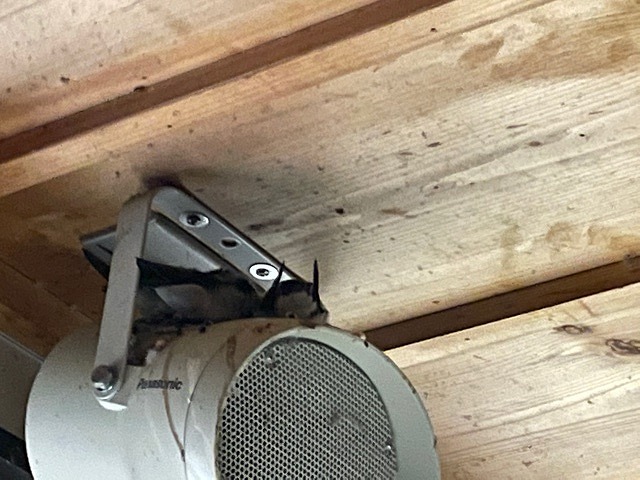
A photo taken at 00:03 on July 21, 2022 at
Michi-no-Eki Kaki-no-Sato Kudoyama (a roadside rest stop)
near the start of the climb on the Kudoyama side of Koyasan.
Depending on the route,
it takes about 3 hours from my house to get here.
A parent swallow was sleeping on top of the speaker
under the eaves of the rest stop building.
When I checked my Polar sports watch history later,
the temperature at this location at that time was 21°C.
There's no way I could do something this crazy during winter.

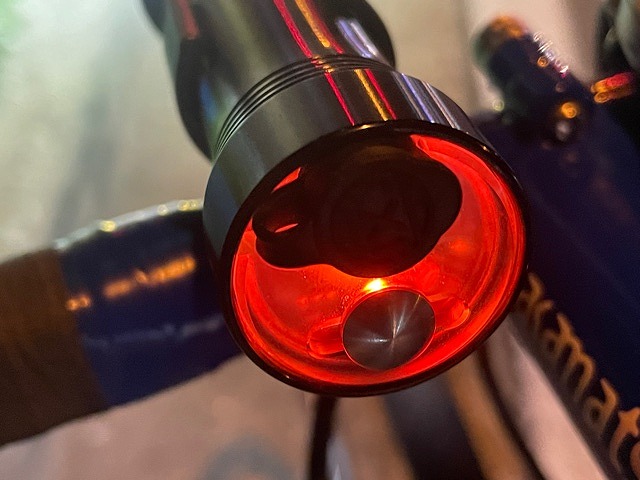
↑Amber (Orange)

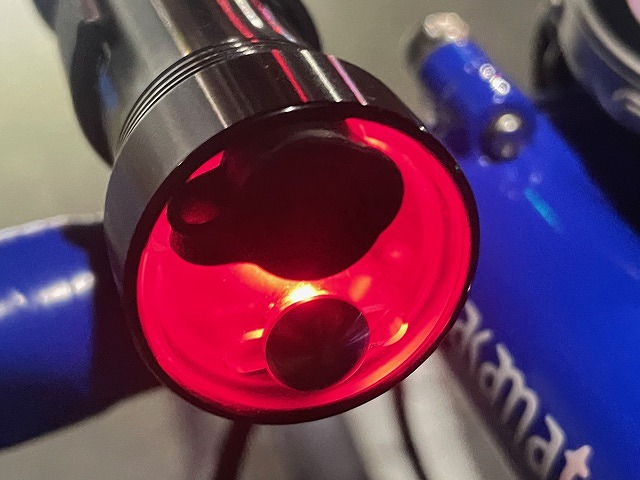
↑Red
The orange is roughly the same color as what my eye sees,
while the red is redder or more intense looking.
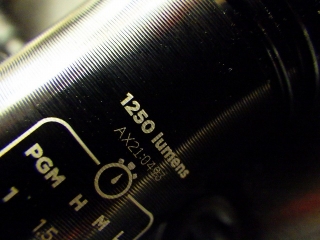
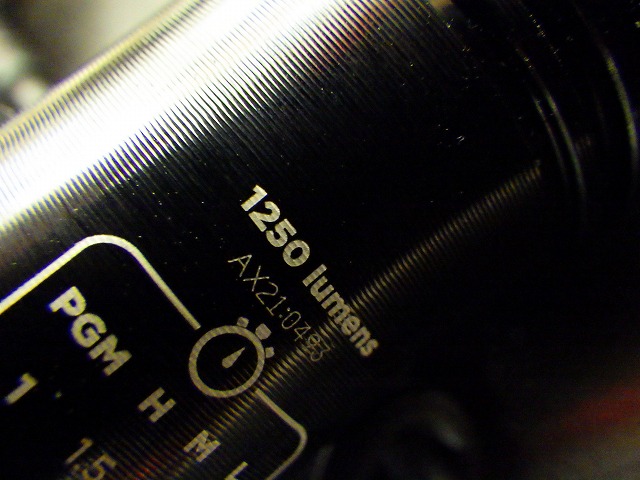
As for the brightness of the Axis MK8,
the distributor says 1250 lumens,
but the sticker on the box says 1300 lumens.
The successor model, the Axis MK9, is 1300 lumens,
but the marking on the body itself says 1250 lumens.
However, since the box specifically had a 1300 lumen sticker,
it's possible that later production batches of the Axis MK8
have 1300 lumens inside, but the body marking
couldn't be changed because it was pre-made inventory.
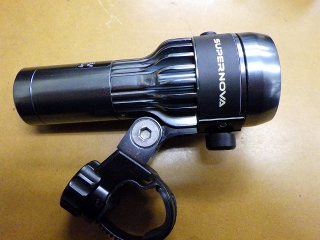
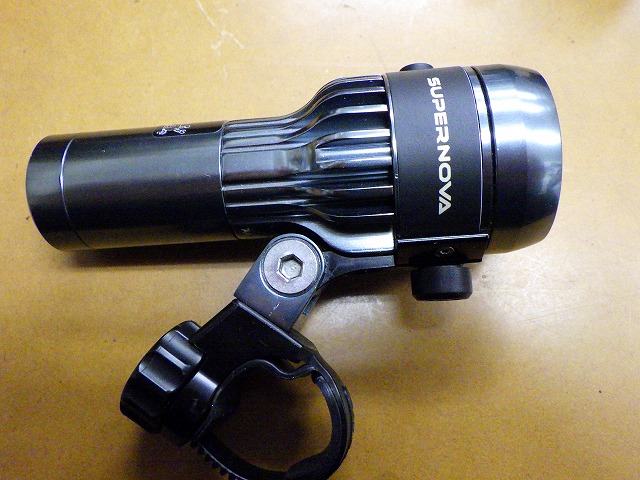
This is an Airstream 2 LED light made by Supernova (manufacturer name).
The handlebar attachment is originally done with a rubber band,
and the base can be twisted to mount directly above the stem,
but I've installed a Cateye H-34 bracket instead.
My previous article is (→here)

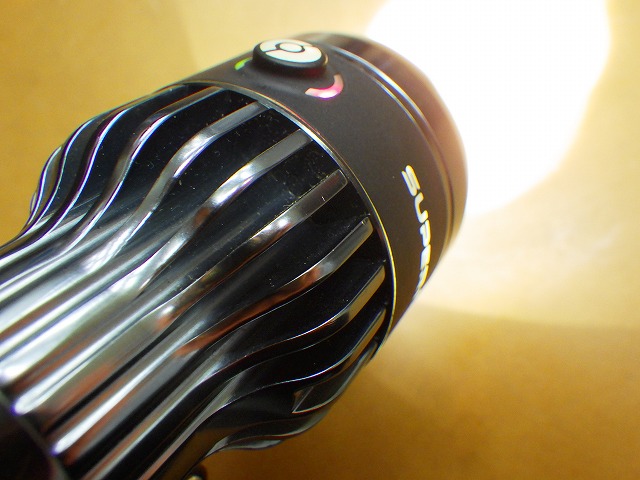
The body shape is very stylish and clearly designed with heat dissipation in mind,
but even at maximum brightness,
under actual use where I only stop for traffic lights,
it never gets hot, so it's more decorative than functional
(though it does get warm if left running while stationary).
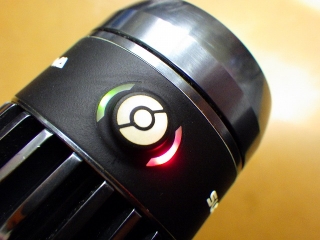
The battery remaining display shows
・Green light on the left only
・Green on the left and red on the right lit
・Red on the right only lit
・Red on the right flashing
in 4 stages,
with corresponding runtimes for brightness being
2.5 hours, 3.5 hours, 7 hours, and 24 hours respectively.
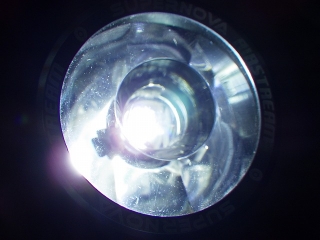
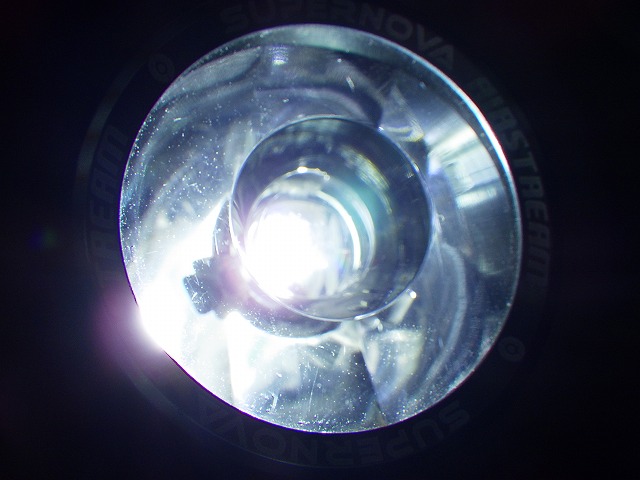
The brightest setting (2.5 hours) is listed
as 370 lumens in Japanese distributor materials,
but there's no way it's actually 370 lumens.
An older version of the manufacturer's website listed 205 lumens,
and the current version lists 230 lumens.
The Japanese distributor sells the cobalt-colored anodized version
that I own, but the current model comes in black anodize.
Also, the runtime for the 4th brightness setting is
14 hours rather than 24 hours.
However, according to the instruction manual for my language version,
it does say 24 hours, so it's not necessarily an error.
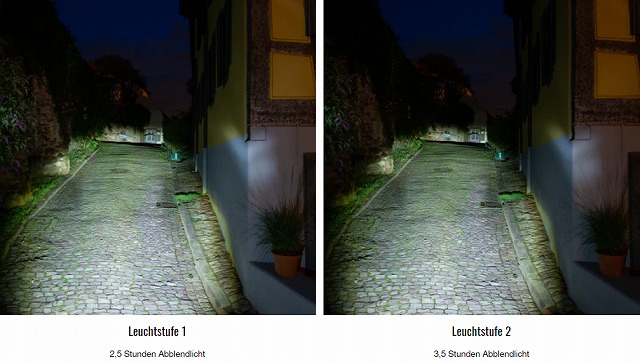
The difference between 2.5 hours and 3.5 hours brightness is hard to detect,
and when you press the button to switch, you only notice
a momentary flicker, so you can barely tell, if at all,
that the brightness has changed.
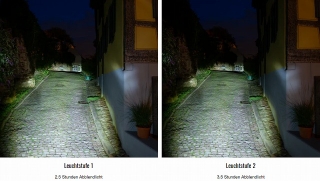
↑This is an image from the manufacturer's website,
with the left at 2.5 hours and the right at 3.5 hours brightness.
You can barely see any difference, as if it were a stereoscopic image.
With such a small difference, there's no reason to choose
the 2.5-hour setting with its shorter runtime.

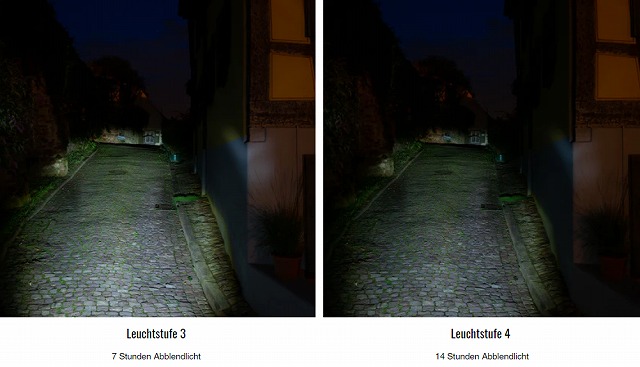
↑Next, this image shows
7 hours on the left and 14 hours on the right.
Admittedly, it's noticeably dimmer than before.
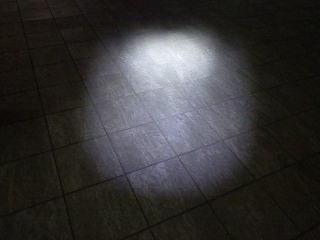
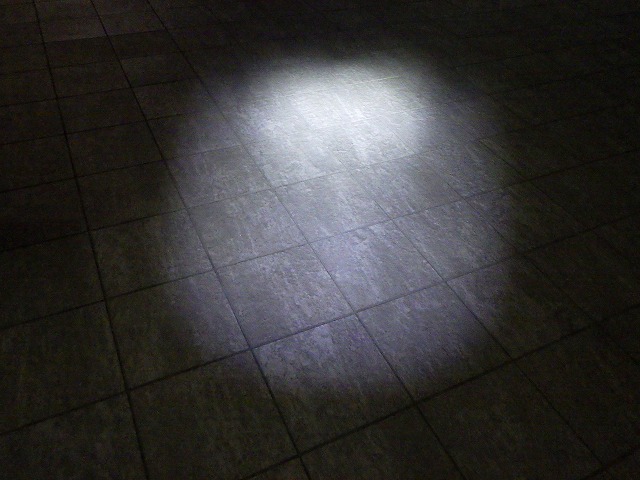
The Airstream 2 complies with German road traffic regulations
with an upper-cut beam pattern, where the light hits the ground
in a rectangular area with overlapping light ahead of you.
This light pattern is quite easy to see once you get used to it,
and in my opinion, among lights under 300 lumens,
it provides the clearest road contrast and appears the brightest.
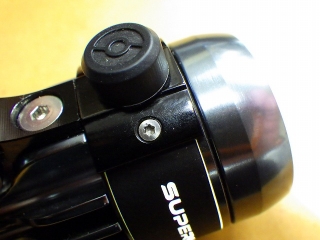
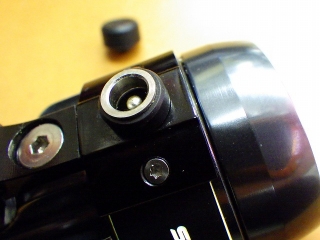
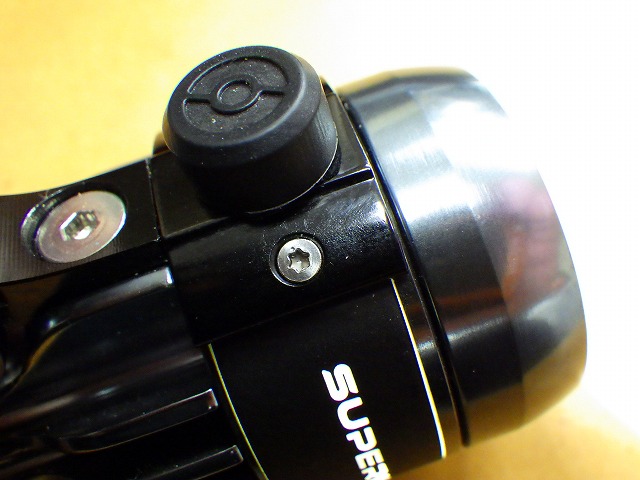
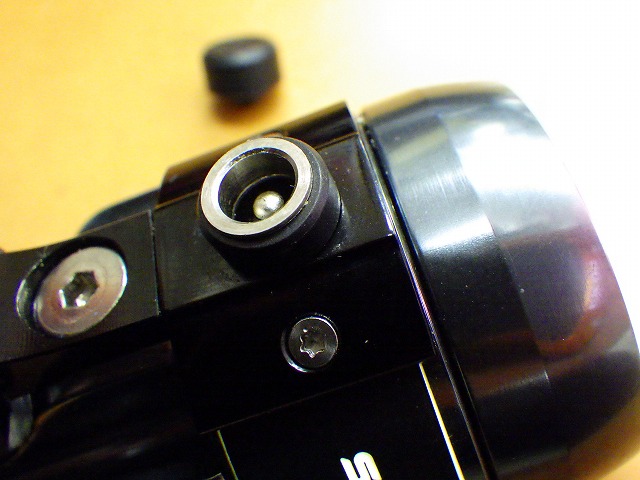
The charging port has a waterproof cap,
and uses the same DC female plug as the Exposure,
though the size is different.
The waterproof cap doesn't remain on the body when removed,
so be careful not to lose it.
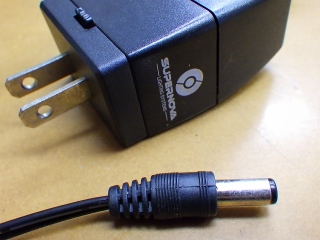
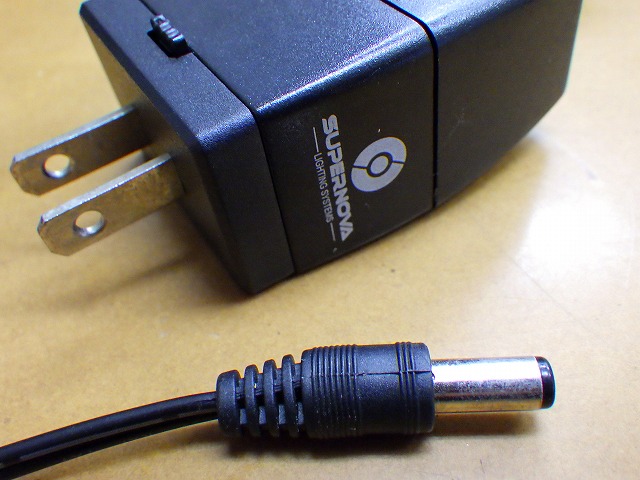
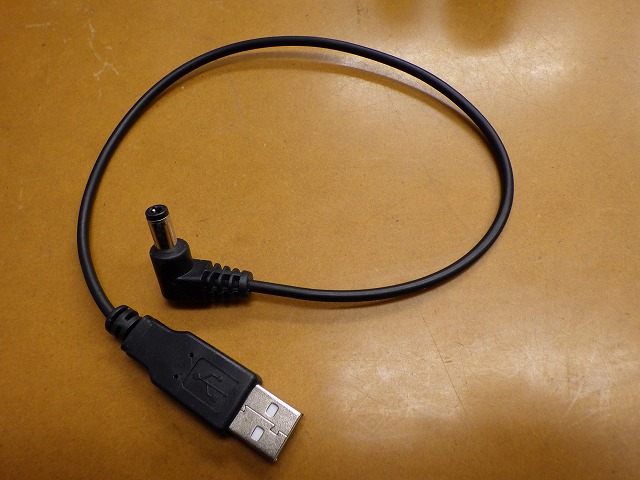
A dedicated charger is included, but
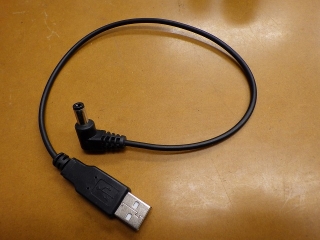
unlike the Exposure, which came with
a USB charging cable, here it's sold separately.

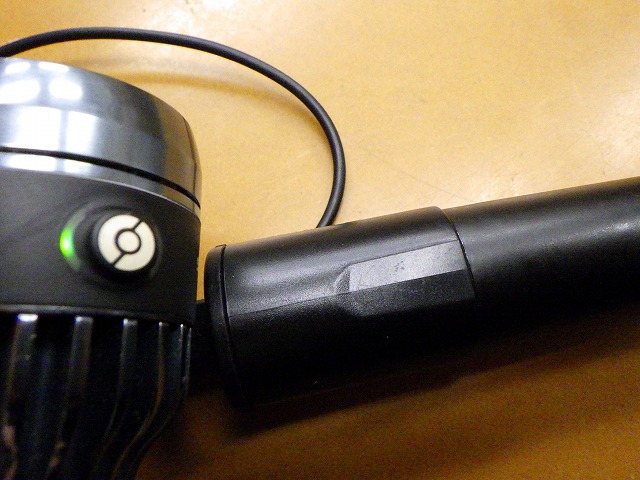
The light in the image above is off,
but it can be used while charging.
For that matter, it can even be powered by hub dynamo output.
I mentioned earlier that it doesn't get hot while air cooling is working,
but I wonder if it would get hot with hub dynamo power supply.
I've checked the runtime of this light from a full charge
not while charging, just from the battery alone,
and at the brightest mode, with a rated 2.5 hours,
it actually lasted about 2 hours 18 to 25 minutes.
As I wrote before, at the highest charge level,
only the green light is on, but at the next level,
both green and red lights are on.
About an hour into use at the brightest mode from a full charge,
when I switch modes, that triggers the transition
from green only to both green and red.
But if I hadn't pressed the brightness adjustment button myself,
would the remaining charge indicator have switched at the same time?
The answer is no.
It seems the design keeps the green indicator lit
as long as possible when using the brightest mode continuously
without changing brightness.
If I keep the light at maximum brightness from turn-on
and never touch the brightness change button,
it will maintain the green light until around 1 hour 20 minutes,
but if I switch brightness at around the 50-minute mark,
the light switches to green and red immediately.
Moreover, with this light, from about halfway through the green and red state,
it automatically dims itself for power saving.
This difference is very noticeable, so it's not switching
from 2.5-hour brightness to 3.5-hour brightness,
but rather to 7-hour brightness.
The rated runtime includes this dimmer latter mode.
Based on this experience, when testing the Exposure's runtime,
I decided not to make any brightness changes after setting it to
the brightest mode.
The Exposure light starts from the H (High) mode,
which is the brightest setting of the selected program.
In my previous article, I wrote that I use Program 5
with 2 hours / 6 hours, but for this test,
I selected Program 6 with 3 hours / 10 hours.
The H mode with the rated 3-hour runtime is what lights up at turn-on,
and since I don't make any changes after that,
it should last 3 hours from a full charge.

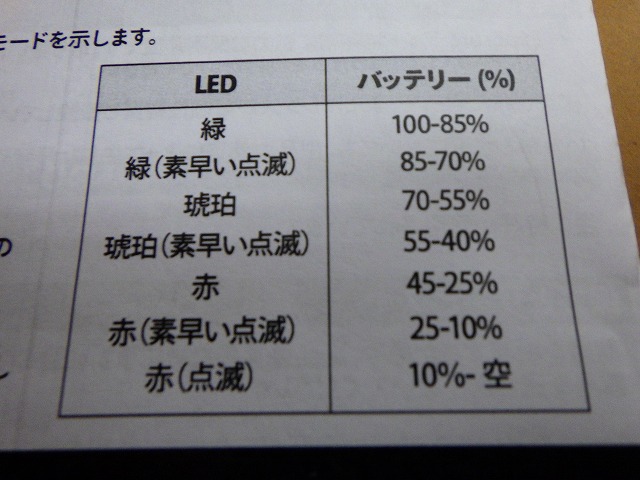
This is a Japanese translation of the table showing
the relationship between rear light color and battery remaining.
The "amber" mentioned here, same as in my previous article, I'll now call "orange".
I thought it might be 15% increments from the top, but there's
an odd situation where the lower and upper limits
overlap between orange flashing and red on.
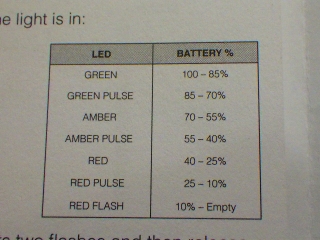
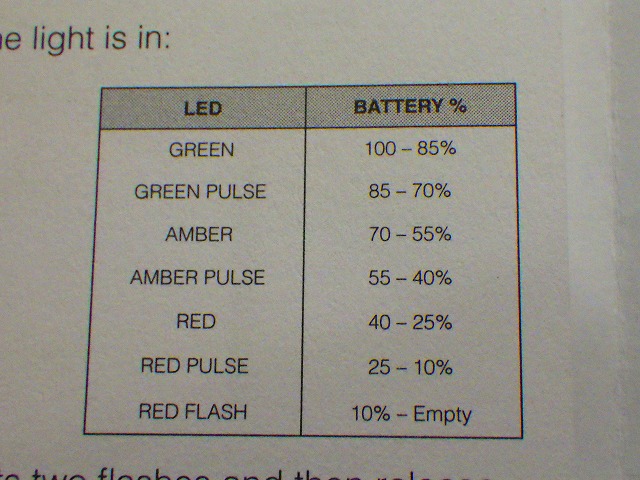
When I checked the original language version, sure enough,
red on is 40-25%, not 45-25%.
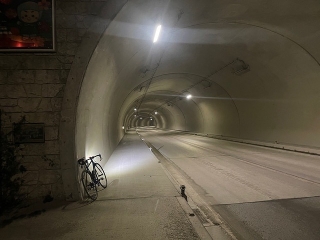
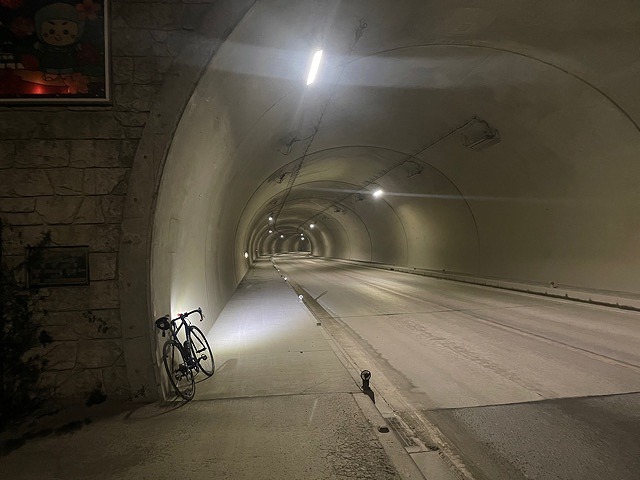
I went for a ride up to the summit of Kazehuki Pass.
Some might ask why I needed to actually ride when
I could have just done the test another way,
but it gives me motivation to ride under the pretense of "research."
According to the sports watch temperature data I checked later,
the temperature at the summit was around +0.6 to -0.2°C,
and on the descent on the Osaka side of the route,
it was around -1.5°C.
It was bearable, but with toe shoe covers,
cold air pierced through to my toes.
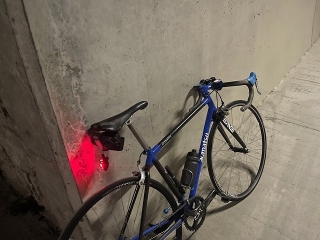
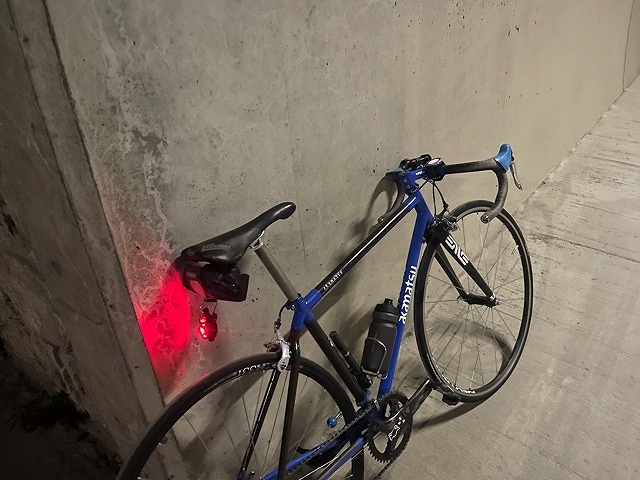
I saw the moment it turned off!
I basically run my sports watch continuously without stopping.
I don't use the auto-start/stop feature that pauses measurement
when speed drops to zero.
I do manually pause occasionally at vending machines or convenience stores,
but for this test, I kept both the sports watch and light running
the entire time until shutdown without pausing.
Whenever I noticed the light color at the rear changed,
I would press the lap button on the sports watch.
Though not at the exact moment the color changed,
I'm pretty sure I noticed within a minute.
My spare battery carrying setup changed, so
I switched to a slightly larger Ortlieb saddle bag,
but since the battery problem was solved in another way,
I've now gone back to the original setup.
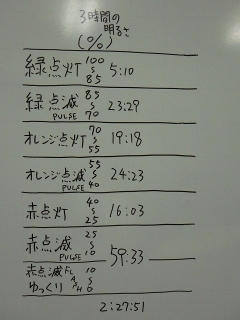
↑Here are the results.
At the rated 3-hour brightness, it ran until shutdown
in 2 hours 27 minutes 51 seconds.
The Exposure calls the rear flashing "pulse,"
and the slow final red flashing "flash,"
but so far I haven't been able to tell the difference.
Rather, pulse and flash seem to have the same flashing speed
at the rear (needs verification).
The moment the red on state transitions to red flashing,
the front light does a quick "flicker" once.
So the timing of red on to red flashing is particularly accurate.
After that, the light stays on while the rear flashes red,
but after a while—about once every minute—
the light goes into the same "flicker" mode as when it first entered
red flashing, cycling repeatedly.
So I think "flash" doesn't refer to the rear red flashing speed,
but rather the front light automatically flashing once every minute.
I wrote "about once per minute," but I synced the sports watch timer
with the light flashing, and the seconds gradually drifted,
so the more accurate interval is about 65-70 seconds.
This flashing is very annoying, but it says "Hey, your battery is almost gone!"
repeatedly and sufficiently as a warning, so it's quite effective.
From my impression of 20+ flashes, the last 59 minutes 33 seconds
probably breaks down to roughly 30 minutes of each dimmer mode.
I forgot to mention, but the Exposure light doesn't
automatically dim itself when battery is low,
nor does it prevent the highest brightness mode from activating
based on some stored program setting.
If the LED chip overheats,
there is a function that automatically adjusts brightness until it cools,
but that probably didn't activate during this test.
So I'm thinking,
isn't the initial green on time of 5 minutes 10 seconds
too short?

This is the Exposure SmartCharger, a charging device.
The status LED on the charger shows green on or
red on (orange to the naked eye, but I'll call it red)
in two states.
The image above is hard to see, but it's showing green on.
First, if you plug just the SmartCharger into an outlet, it glows green.
When you connect the light and the battery level is below 95%,
it turns red.
Once it reaches 95% charge, it turns green and continues
trickle charging up to 100%.
Even at 100%, the lamp doesn't turn off or start blinking green or anything.
There are only two states: green on and red on.
What impressed me as "smart," as the name suggests,
is that even if you connect a light that's already charged to at least green on,
or a backup battery (called a piggyback),
it never even briefly turns red.
Most manufacturer lights, when you try to charge
what should be a fully charged light,
will show charging mode engaged as a formality.
So the first test I did earlier actually
started with the charger in the red on state,
so it wasn't a true 100% full charge.
If the rear light green on state (100-85%) shown in the table
represents true full charge and also has about 20 minutes runtime
like the other modes, then the runtime would get much closer
to the rated value.
So for the second test, after the charger showed green on,
I charged it for over an hour more before testing.
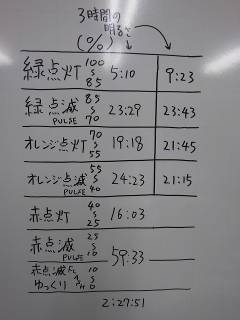
The results were nearly identical.
On the second attempt, I only checked until entering red on.
The green on time extended slightly,
but it's still extremely short compared to the other modes.
Since the orange flashing time in the first test was somewhat longer,
the time up to red on was 1 hour 12 minutes 20 seconds in the first test
and 1 hour 16 minutes 6 seconds in the second test,
so essentially the same result.
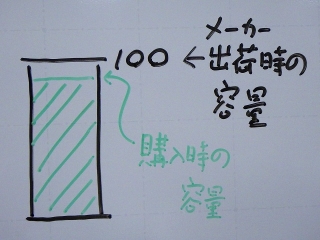
This short green on time suggests that
the battery capacity has degraded somewhat
between factory shipment and my purchase.
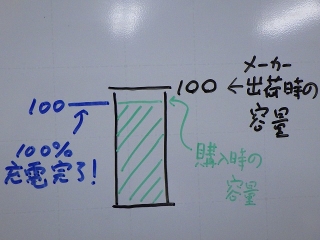
The "100%" capacity determined by the circuit
inside the light isn't the same thing as
the charger saying "I've charged to 100%,
so I'll change the indicator color!"
I suspect it's more like this currently.
I've fallen for the weight, design, and usability of the Axis MK8
(which is troublesome),
so I'll accept it as-is and
I'm thinking of ordering the Axis MK9 from my distributor.
For my actual use, I run
Program 5's H 2-hour / L 6-hour,
and that 6-hour setting is quite bright, so
only on pitch-black roads would I switch to the 2-hour brightness,
and excluding the final red flashing + light flashing death cry warning mode,
I figure I can actually get about 4 hours of use.
Worst case, I can charge on the road.
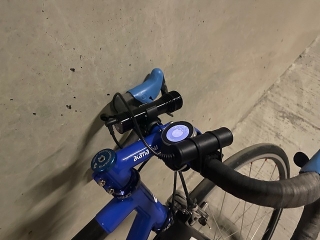
Let me go back to the ride home from the first test.
Well, from here on out, though prepared, it was
a blessing in disguise
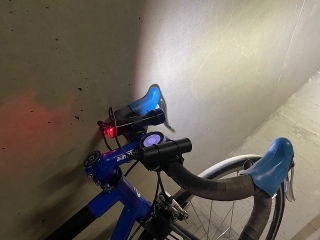
Piggybaaaaaaaack!!
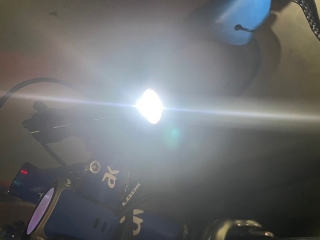
I noticed something:
during this test, I was definitely
running Program 6's H 3-hour / L 10-hour.
From here on out, H would consume more power than the hub provides,
so I tried switching to L... and for some reason there are three brightness modes.
With Program 6, when I switch to H, the rear turns green,
and when I switch to L, it turns red—those two should loop—
but there was an orange mode between green and red.
It seems when the battery completely dies,
it automatically switches to Program 1 H 1.5-hour / M 3-hour / L 6-hour.
The tap function setting (which I had set to off) remained unchanged.
On the way back, I started with the 6-hour brightness setting.
The rear showed red flashing (without light flashing) initially,
but about 20 minutes in, it went into the final red flashing mode
with the light flashing about once per minute.
6-hour brightness seems to draw more power than the hub provides.
After switching to Program 6's L 10-hour brightness setting,
it recovered to red flashing without light flashing,
and then about 40 minutes later, it even recovered to red on.
10-hour brightness seems to allow charging while the light stays on.

Continuing from the second test.
For the second test, the shop is north of my house,
but I took a detour and rode south for about an hour first.
After the 3-hour brightness entered red on,
I switched to 10-hour brightness, at which point
the rear switched to orange flashing.
This orange flashing doesn't represent the upper limit
of the 55-40% range.
If anything, it seems closer to the lower limit.
Then 28 minutes 43 seconds later, it entered red on,
and it stayed red on for another 48 minutes 37 seconds
until I arrived at the shop.
10-hour brightness probably lasts about an hour
on anything other than the green on state (100-85%).
First, let me add some supplementary information.
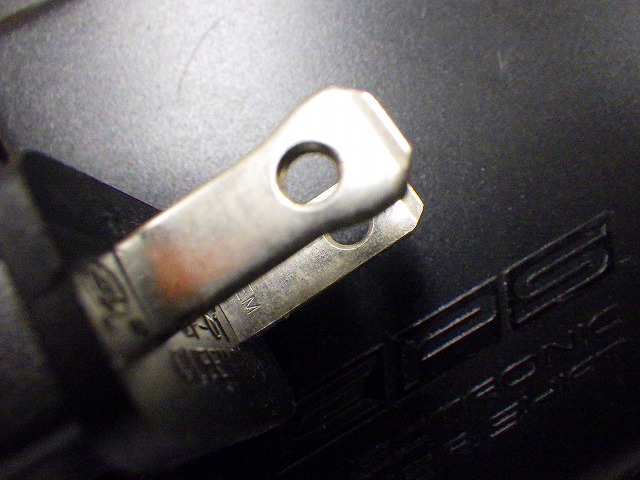
This is the power cord that came with the Campagnolo EPS charger,
with a plug portion that precisely matches
the different lengths of the left and right holes on the outlet.
The other side looks like this
A photo taken at 00:03 on July 21, 2022 at
Michi-no-Eki Kaki-no-Sato Kudoyama (a roadside rest stop)
near the start of the climb on the Kudoyama side of Koyasan.
Depending on the route,
it takes about 3 hours from my house to get here.
A parent swallow was sleeping on top of the speaker
under the eaves of the rest stop building.
When I checked my Polar sports watch history later,
the temperature at this location at that time was 21°C.
There's no way I could do something this crazy during winter.
↑Amber (Orange)
↑Red
The orange is roughly the same color as what my eye sees,
while the red is redder or more intense looking.
As for the brightness of the Axis MK8,
the distributor says 1250 lumens,
but the sticker on the box says 1300 lumens.
The successor model, the Axis MK9, is 1300 lumens,
but the marking on the body itself says 1250 lumens.
However, since the box specifically had a 1300 lumen sticker,
it's possible that later production batches of the Axis MK8
have 1300 lumens inside, but the body marking
couldn't be changed because it was pre-made inventory.
This is an Airstream 2 LED light made by Supernova (manufacturer name).
The handlebar attachment is originally done with a rubber band,
and the base can be twisted to mount directly above the stem,
but I've installed a Cateye H-34 bracket instead.
My previous article is (→here)
The body shape is very stylish and clearly designed with heat dissipation in mind,
but even at maximum brightness,
under actual use where I only stop for traffic lights,
it never gets hot, so it's more decorative than functional
(though it does get warm if left running while stationary).

The battery remaining display shows
・Green light on the left only
・Green on the left and red on the right lit
・Red on the right only lit
・Red on the right flashing
in 4 stages,
with corresponding runtimes for brightness being
2.5 hours, 3.5 hours, 7 hours, and 24 hours respectively.
The brightest setting (2.5 hours) is listed
as 370 lumens in Japanese distributor materials,
but there's no way it's actually 370 lumens.
An older version of the manufacturer's website listed 205 lumens,
and the current version lists 230 lumens.
The Japanese distributor sells the cobalt-colored anodized version
that I own, but the current model comes in black anodize.
Also, the runtime for the 4th brightness setting is
14 hours rather than 24 hours.
However, according to the instruction manual for my language version,
it does say 24 hours, so it's not necessarily an error.
The difference between 2.5 hours and 3.5 hours brightness is hard to detect,
and when you press the button to switch, you only notice
a momentary flicker, so you can barely tell, if at all,
that the brightness has changed.
↑This is an image from the manufacturer's website,
with the left at 2.5 hours and the right at 3.5 hours brightness.
You can barely see any difference, as if it were a stereoscopic image.
With such a small difference, there's no reason to choose
the 2.5-hour setting with its shorter runtime.
↑Next, this image shows
7 hours on the left and 14 hours on the right.
Admittedly, it's noticeably dimmer than before.
The Airstream 2 complies with German road traffic regulations
with an upper-cut beam pattern, where the light hits the ground
in a rectangular area with overlapping light ahead of you.
This light pattern is quite easy to see once you get used to it,
and in my opinion, among lights under 300 lumens,
it provides the clearest road contrast and appears the brightest.
The charging port has a waterproof cap,
and uses the same DC female plug as the Exposure,
though the size is different.
The waterproof cap doesn't remain on the body when removed,
so be careful not to lose it.
A dedicated charger is included, but
unlike the Exposure, which came with
a USB charging cable, here it's sold separately.
The light in the image above is off,
but it can be used while charging.
For that matter, it can even be powered by hub dynamo output.
I mentioned earlier that it doesn't get hot while air cooling is working,
but I wonder if it would get hot with hub dynamo power supply.
I've checked the runtime of this light from a full charge
not while charging, just from the battery alone,
and at the brightest mode, with a rated 2.5 hours,
it actually lasted about 2 hours 18 to 25 minutes.
As I wrote before, at the highest charge level,
only the green light is on, but at the next level,
both green and red lights are on.
About an hour into use at the brightest mode from a full charge,
when I switch modes, that triggers the transition
from green only to both green and red.
But if I hadn't pressed the brightness adjustment button myself,
would the remaining charge indicator have switched at the same time?
The answer is no.
It seems the design keeps the green indicator lit
as long as possible when using the brightest mode continuously
without changing brightness.
If I keep the light at maximum brightness from turn-on
and never touch the brightness change button,
it will maintain the green light until around 1 hour 20 minutes,
but if I switch brightness at around the 50-minute mark,
the light switches to green and red immediately.
Moreover, with this light, from about halfway through the green and red state,
it automatically dims itself for power saving.
This difference is very noticeable, so it's not switching
from 2.5-hour brightness to 3.5-hour brightness,
but rather to 7-hour brightness.
The rated runtime includes this dimmer latter mode.
Based on this experience, when testing the Exposure's runtime,
I decided not to make any brightness changes after setting it to
the brightest mode.
The Exposure light starts from the H (High) mode,
which is the brightest setting of the selected program.
In my previous article, I wrote that I use Program 5
with 2 hours / 6 hours, but for this test,
I selected Program 6 with 3 hours / 10 hours.
The H mode with the rated 3-hour runtime is what lights up at turn-on,
and since I don't make any changes after that,
it should last 3 hours from a full charge.
This is a Japanese translation of the table showing
the relationship between rear light color and battery remaining.
The "amber" mentioned here, same as in my previous article, I'll now call "orange".
I thought it might be 15% increments from the top, but there's
an odd situation where the lower and upper limits
overlap between orange flashing and red on.
When I checked the original language version, sure enough,
red on is 40-25%, not 45-25%.
I went for a ride up to the summit of Kazehuki Pass.
Some might ask why I needed to actually ride when
I could have just done the test another way,
but it gives me motivation to ride under the pretense of "research."
According to the sports watch temperature data I checked later,
the temperature at the summit was around +0.6 to -0.2°C,
and on the descent on the Osaka side of the route,
it was around -1.5°C.
It was bearable, but with toe shoe covers,
cold air pierced through to my toes.
I saw the moment it turned off!
I basically run my sports watch continuously without stopping.
I don't use the auto-start/stop feature that pauses measurement
when speed drops to zero.
I do manually pause occasionally at vending machines or convenience stores,
but for this test, I kept both the sports watch and light running
the entire time until shutdown without pausing.
Whenever I noticed the light color at the rear changed,
I would press the lap button on the sports watch.
Though not at the exact moment the color changed,
I'm pretty sure I noticed within a minute.
My spare battery carrying setup changed, so
I switched to a slightly larger Ortlieb saddle bag,
but since the battery problem was solved in another way,
I've now gone back to the original setup.
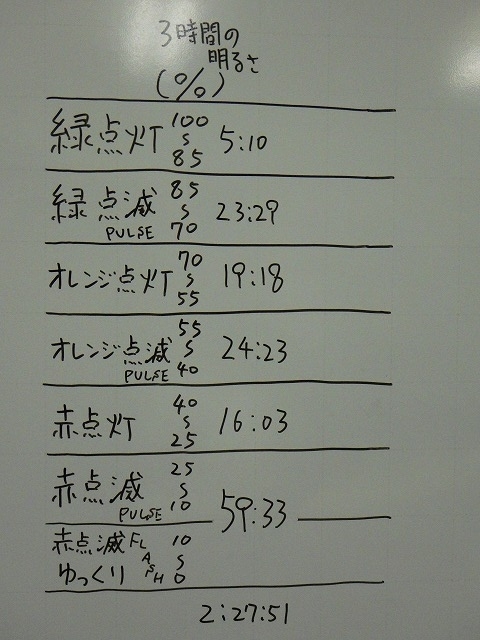
↑Here are the results.
At the rated 3-hour brightness, it ran until shutdown
in 2 hours 27 minutes 51 seconds.
The Exposure calls the rear flashing "pulse,"
and the slow final red flashing "flash,"
but so far I haven't been able to tell the difference.
Rather, pulse and flash seem to have the same flashing speed
at the rear (needs verification).
The moment the red on state transitions to red flashing,
the front light does a quick "flicker" once.
So the timing of red on to red flashing is particularly accurate.
After that, the light stays on while the rear flashes red,
but after a while—about once every minute—
the light goes into the same "flicker" mode as when it first entered
red flashing, cycling repeatedly.
So I think "flash" doesn't refer to the rear red flashing speed,
but rather the front light automatically flashing once every minute.
I wrote "about once per minute," but I synced the sports watch timer
with the light flashing, and the seconds gradually drifted,
so the more accurate interval is about 65-70 seconds.
This flashing is very annoying, but it says "Hey, your battery is almost gone!"
repeatedly and sufficiently as a warning, so it's quite effective.
From my impression of 20+ flashes, the last 59 minutes 33 seconds
probably breaks down to roughly 30 minutes of each dimmer mode.
I forgot to mention, but the Exposure light doesn't
automatically dim itself when battery is low,
nor does it prevent the highest brightness mode from activating
based on some stored program setting.
If the LED chip overheats,
there is a function that automatically adjusts brightness until it cools,
but that probably didn't activate during this test.
So I'm thinking,
isn't the initial green on time of 5 minutes 10 seconds
too short?
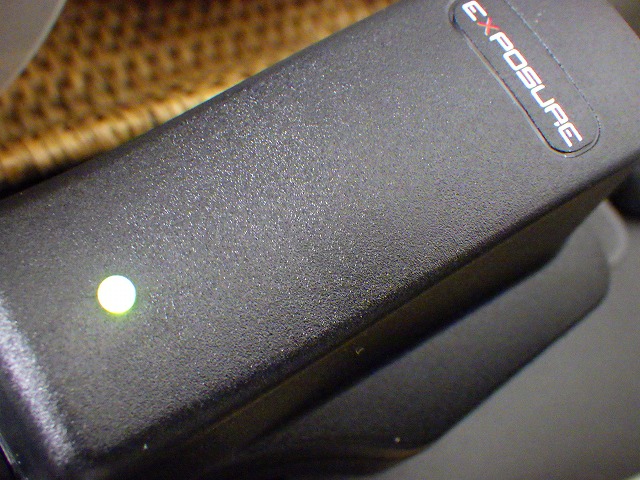
This is the Exposure SmartCharger, a charging device.
The status LED on the charger shows green on or
red on (orange to the naked eye, but I'll call it red)
in two states.
The image above is hard to see, but it's showing green on.
First, if you plug just the SmartCharger into an outlet, it glows green.
When you connect the light and the battery level is below 95%,
it turns red.
Once it reaches 95% charge, it turns green and continues
trickle charging up to 100%.
Even at 100%, the lamp doesn't turn off or start blinking green or anything.
There are only two states: green on and red on.
What impressed me as "smart," as the name suggests,
is that even if you connect a light that's already charged to at least green on,
or a backup battery (called a piggyback),
it never even briefly turns red.
Most manufacturer lights, when you try to charge
what should be a fully charged light,
will show charging mode engaged as a formality.
So the first test I did earlier actually
started with the charger in the red on state,
so it wasn't a true 100% full charge.
If the rear light green on state (100-85%) shown in the table
represents true full charge and also has about 20 minutes runtime
like the other modes, then the runtime would get much closer
to the rated value.
So for the second test, after the charger showed green on,
I charged it for over an hour more before testing.
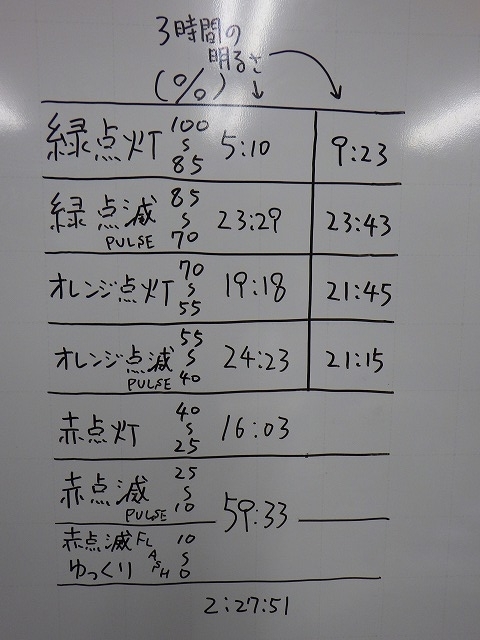
The results were nearly identical.
On the second attempt, I only checked until entering red on.
The green on time extended slightly,
but it's still extremely short compared to the other modes.
Since the orange flashing time in the first test was somewhat longer,
the time up to red on was 1 hour 12 minutes 20 seconds in the first test
and 1 hour 16 minutes 6 seconds in the second test,
so essentially the same result.
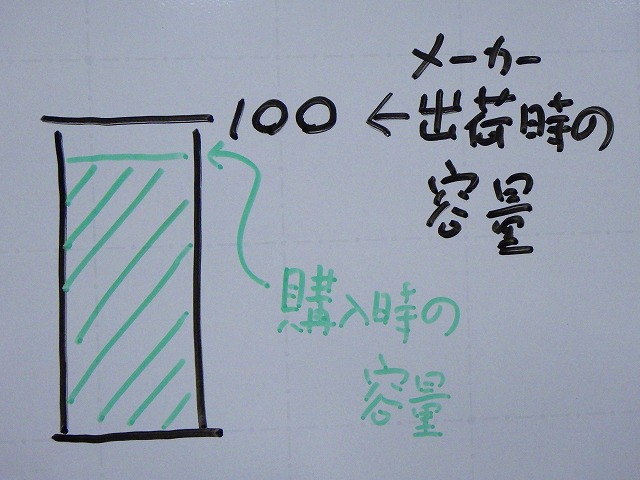
This short green on time suggests that
the battery capacity has degraded somewhat
between factory shipment and my purchase.
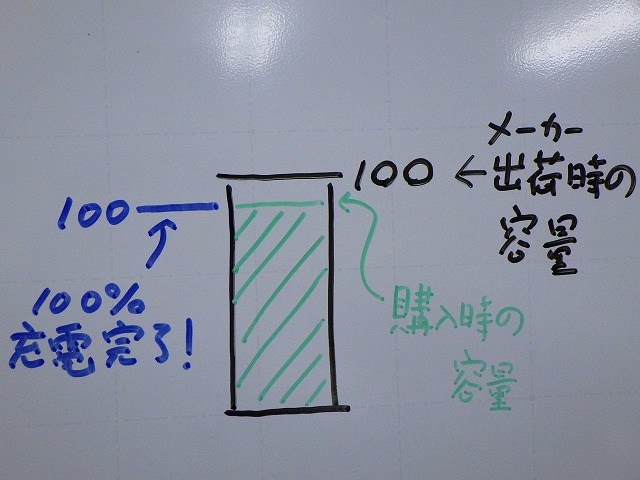
The "100%" capacity determined by the circuit
inside the light isn't the same thing as
the charger saying "I've charged to 100%,
so I'll change the indicator color!"
I suspect it's more like this currently.
I've fallen for the weight, design, and usability of the Axis MK8
(which is troublesome),
so I'll accept it as-is and
I'm thinking of ordering the Axis MK9 from my distributor.
For my actual use, I run
Program 5's H 2-hour / L 6-hour,
and that 6-hour setting is quite bright, so
only on pitch-black roads would I switch to the 2-hour brightness,
and excluding the final red flashing + light flashing death cry warning mode,
I figure I can actually get about 4 hours of use.
Worst case, I can charge on the road.

Let me go back to the ride home from the first test.
Well, from here on out, though prepared, it was
a blessing in disguise
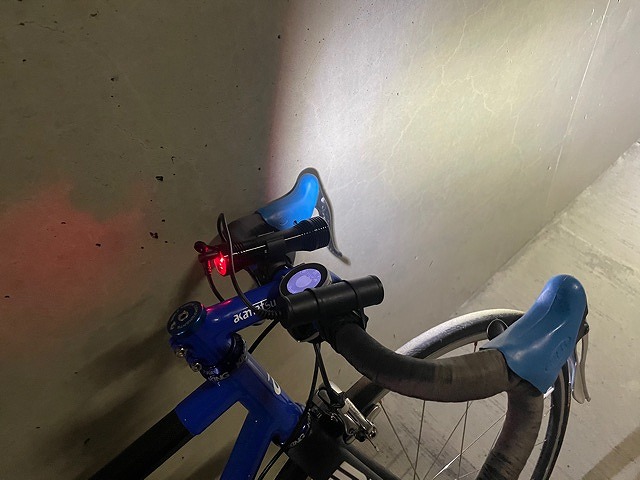
Piggybaaaaaaaack!!
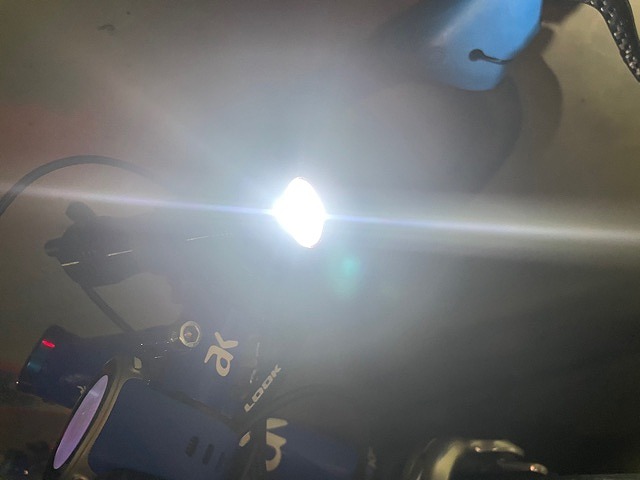
I noticed something:
during this test, I was definitely
running Program 6's H 3-hour / L 10-hour.
From here on out, H would consume more power than the hub provides,
so I tried switching to L... and for some reason there are three brightness modes.
With Program 6, when I switch to H, the rear turns green,
and when I switch to L, it turns red—those two should loop—
but there was an orange mode between green and red.
It seems when the battery completely dies,
it automatically switches to Program 1 H 1.5-hour / M 3-hour / L 6-hour.
The tap function setting (which I had set to off) remained unchanged.
On the way back, I started with the 6-hour brightness setting.
The rear showed red flashing (without light flashing) initially,
but about 20 minutes in, it went into the final red flashing mode
with the light flashing about once per minute.
6-hour brightness seems to draw more power than the hub provides.
After switching to Program 6's L 10-hour brightness setting,
it recovered to red flashing without light flashing,
and then about 40 minutes later, it even recovered to red on.
10-hour brightness seems to allow charging while the light stays on.

Continuing from the second test.
For the second test, the shop is north of my house,
but I took a detour and rode south for about an hour first.
After the 3-hour brightness entered red on,
I switched to 10-hour brightness, at which point
the rear switched to orange flashing.
This orange flashing doesn't represent the upper limit
of the 55-40% range.
If anything, it seems closer to the lower limit.
Then 28 minutes 43 seconds later, it entered red on,
and it stayed red on for another 48 minutes 37 seconds
until I arrived at the shop.
10-hour brightness probably lasts about an hour
on anything other than the green on state (100-85%).