Another day with wheels (and so on).
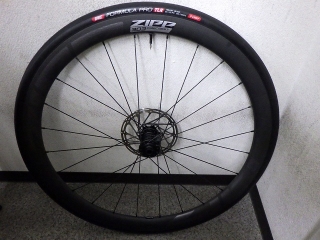
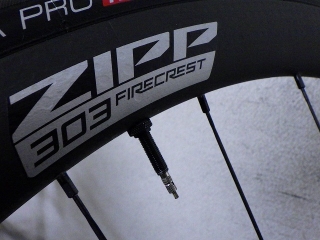
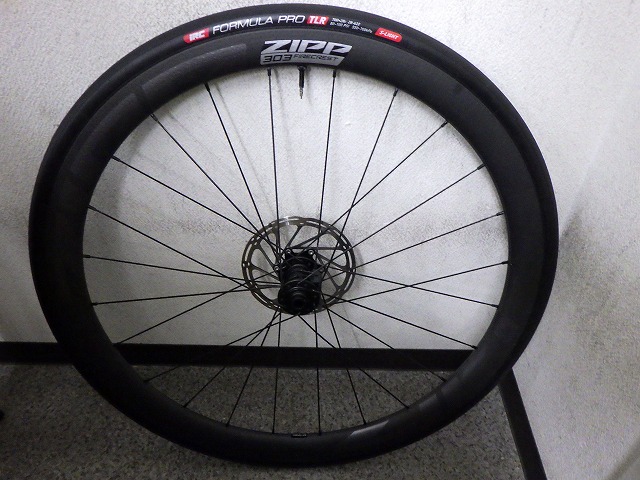
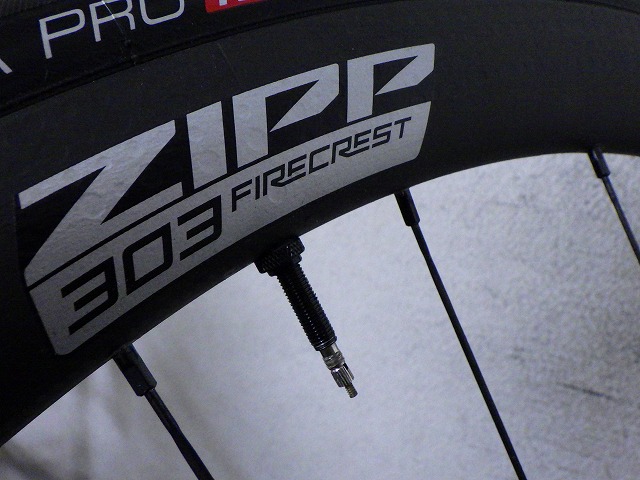
A customer entrusted me with the front and rear wheels of a ZIPP 303 Firecrest.
Today I'm working on the front wheel, but for both wheels they want the hubs
swapped out for ONYX Vesper hubs.
That's fine, but the thing is, ZIPP wheels have
an extremely generous written warranty. As long as you're the first owner
with user registration, even if you destroy the wheel through user error
and not product defect—say, cracking the rim by hitting a rock on the road—
they'll replace it with a brand new one free of charge, at least once.
The "first owner with user registration" I mentioned earlier
applies not just to purchases through official dealers but also
to international mail-order purchases. In fact, our shop
once did the initial inspection on a 404 bought overseas,
and months later did the initial inspection on a brand new 404
that came back under warranty after the customer trashed it.
Apparently they contacted ZIPP HQ directly and got it handled.
You can't own both wheels at the same time, but it's like you're buying
the ownership rights to two wheels from the start.
However, for modifications like hub swaps, I'm not 100% sure, but
I believe this warranty becomes void. So I did confirm with the customer
that they were okay with that.
Well, since I'm returning the original hub and spokes,
if it ever actually breaks, I could just
rebuild it as if it were still in the original hung state... oops,
probably shouldn't write that down.
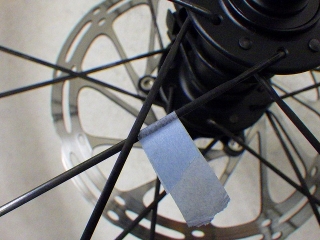
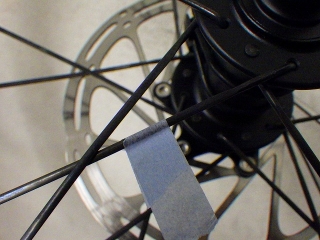
On the low-tension side, which is the non-rotor-mount side—the right side—
the spokes were tensioned reasonably well for these conditions.
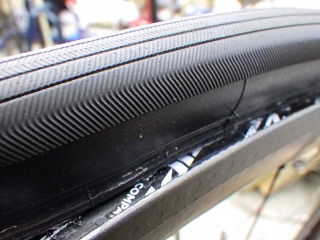
I let the air out of the tire to release the bead sealing.
By the way, all current 303 series wheels use hookless rims.
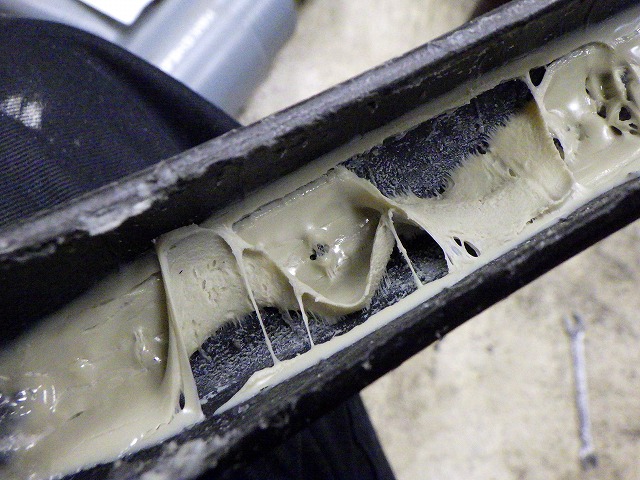
When you pinch the deflated tire, there's
a hard nodule on the outermost edge, like dried chewed gum.
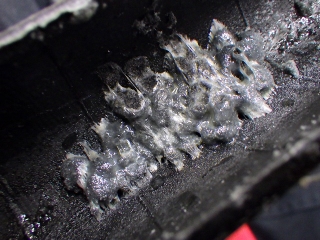
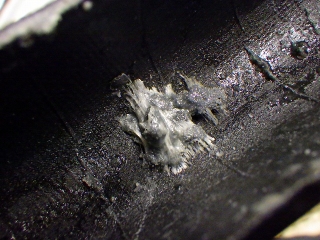
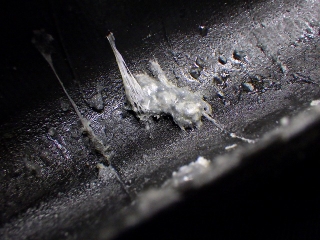
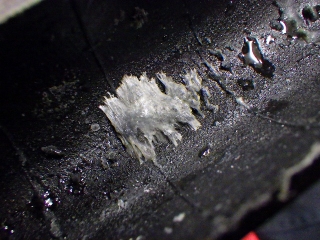
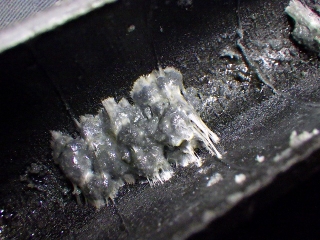
There was some kind of sealant I'm not familiar with,
hardened and stuck inside.
Interestingly, in terms of wheel phase,
it was scattered in various locations.
If you imagined cutting the tire into six sections at 60-degree intervals,
there would be a hardened sealant chunk in each section.
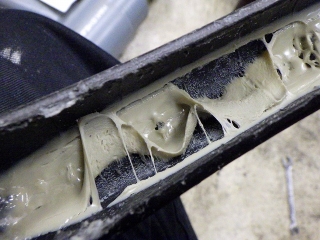
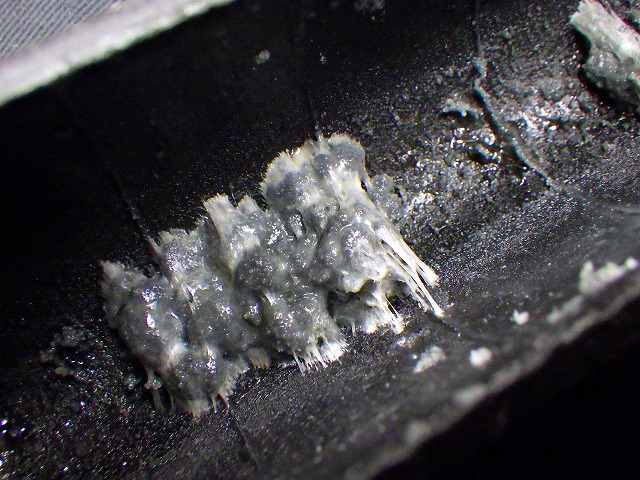
Separately, Stans sealant had also hardened.
In this image, it's all clumped in one location.
This phase must have been the bottom of the wheel for quite a while.
Actually, this wheel's been at the shop since last year!
Ha ha! ← Why am I even laughing?
I've been thinking for a while now—with tubeless wheels containing sealant,
isn't it impossible to do a truly precise
balance weight application?
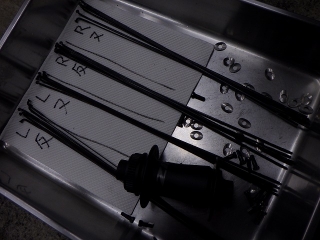
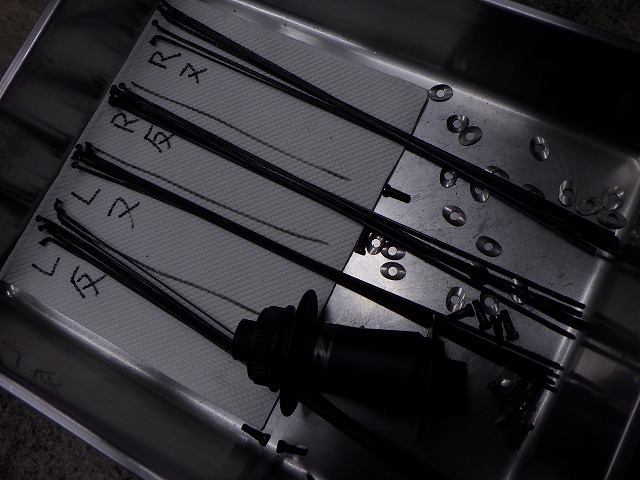
Disassembled.
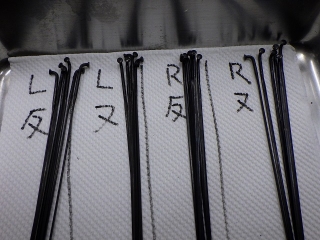
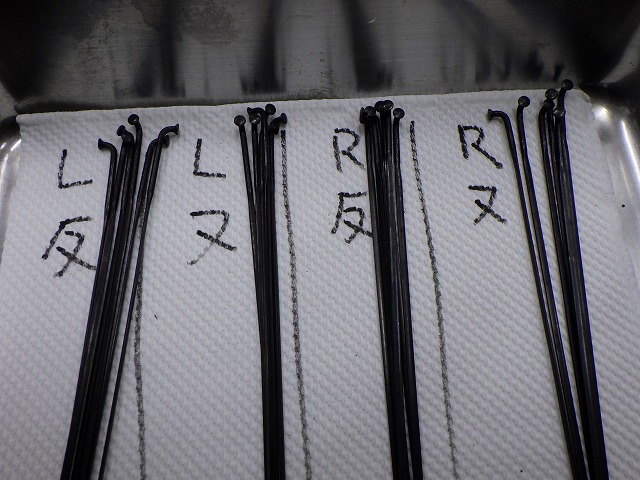
I sorted the spokes by left/right and inpoke/outpoke for presentation purposes—
not that I'd have written it on a paper towel otherwise.
In this case, none of the sorted spokes will be reused,
so the sorting doesn't matter much.
The rotor-mount side gets different-gauge spokes,
and the non-rotor-mount side gets different-length spokes,
so not a single spoke will be reused.
This wheel is a 303 Firecrest with all-black CX-RAY spokes,
but the cheaper 303S model uses
all-black CX Sprint spokes instead.
ZIPP is one of the few manufacturers using CX Sprint,
but it seems their logic is only to deliberately make it heavier
as a differentiator against higher-end models with CX-RAY,
not to achieve left-right different-gauge lacing.
In that respect, ZIPP's understanding of wheels is inferior
even to Reynolds during a certain period.
For me, even if CX Sprint cost the same as CX-RAY, there are situations
where I'd use it. Not only for left-right different-gauge builds,
but also when building 18H or 16H radial front wheels for rim brakes—
if it's an option, I'd choose CX Sprint over CX-RAY.
If this wheel had been a 303S, I would have kept and reused
the four black CX Sprint spokes on the rotor-mount side
during the rebuild without any changes.
Since it's not the side with the coupling, it'd be easy to return it to the hung state.
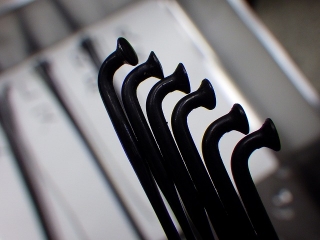
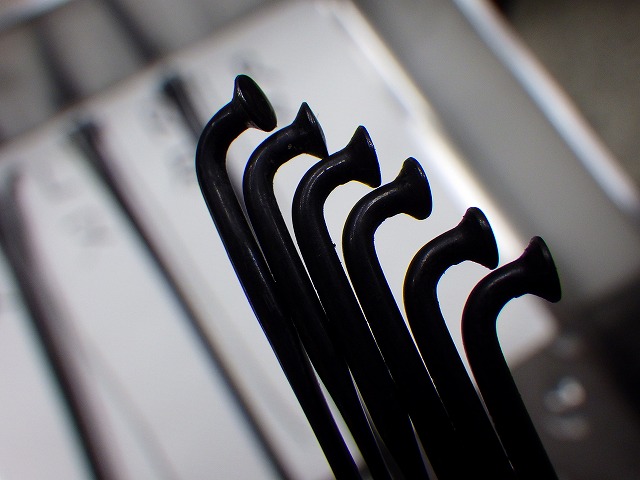
↑ Former inpoke
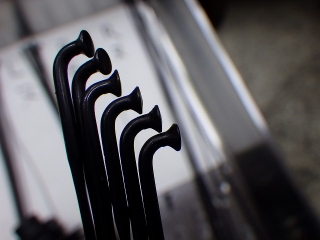
↑ Former outpoke
Since these are spokes from the right side, the low-tension side,
there isn't much difference in neck deformation,
but there is a noticeable difference.
The image doesn't capture it well, but the former inpoke
is curved like an umbrella handle.
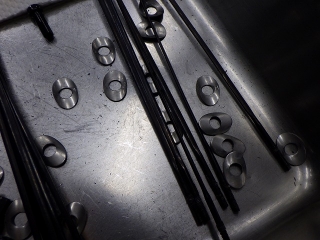
Sapim nipple washers, new type B, were
installed between the nipple and rim.
The difference from the old B is (→ here)
About the A/B/C differences (→ here)
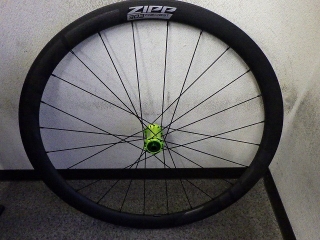
Built.
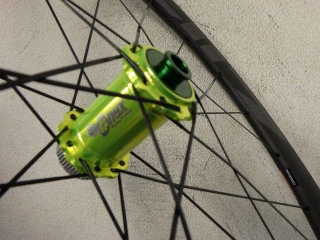
ONYX Vesper disc road hub, 24H,
black half CX Sprint, 64-spoke reverse Italian lacing.
I'll do the lacing later.
A customer entrusted me with the front and rear wheels of a ZIPP 303 Firecrest.
Today I'm working on the front wheel, but for both wheels they want the hubs
swapped out for ONYX Vesper hubs.
That's fine, but the thing is, ZIPP wheels have
an extremely generous written warranty. As long as you're the first owner
with user registration, even if you destroy the wheel through user error
and not product defect—say, cracking the rim by hitting a rock on the road—
they'll replace it with a brand new one free of charge, at least once.
applies not just to purchases through official dealers but also
to international mail-order purchases. In fact, our shop
once did the initial inspection on a 404 bought overseas,
and months later did the initial inspection on a brand new 404
that came back under warranty after the customer trashed it.
Apparently they contacted ZIPP HQ directly and got it handled.
You can't own both wheels at the same time, but it's like you're buying
the ownership rights to two wheels from the start.
However, for modifications like hub swaps, I'm not 100% sure, but
I believe this warranty becomes void. So I did confirm with the customer
that they were okay with that.
if it ever actually breaks, I could just
rebuild it as if it were still in the original hung state... oops,
probably shouldn't write that down.
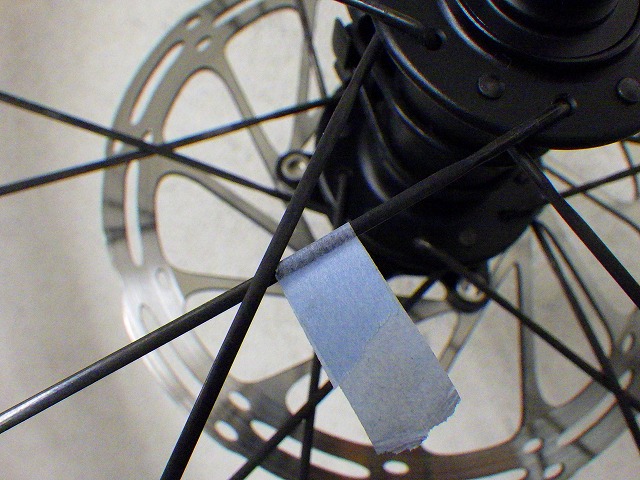
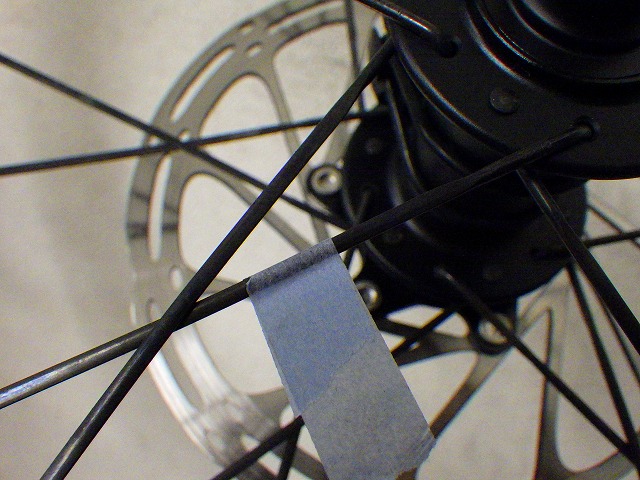
On the low-tension side, which is the non-rotor-mount side—the right side—
the spokes were tensioned reasonably well for these conditions.
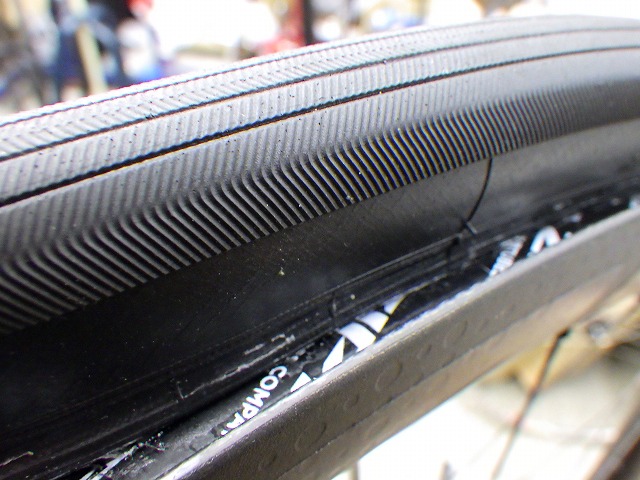
I let the air out of the tire to release the bead sealing.
By the way, all current 303 series wheels use hookless rims.
When you pinch the deflated tire, there's
a hard nodule on the outermost edge, like dried chewed gum.
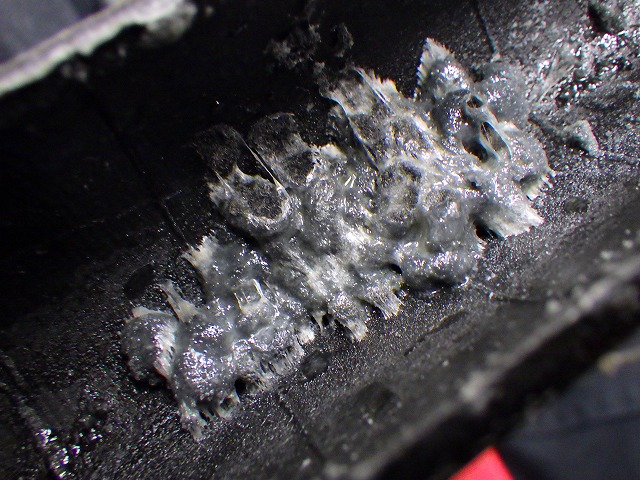
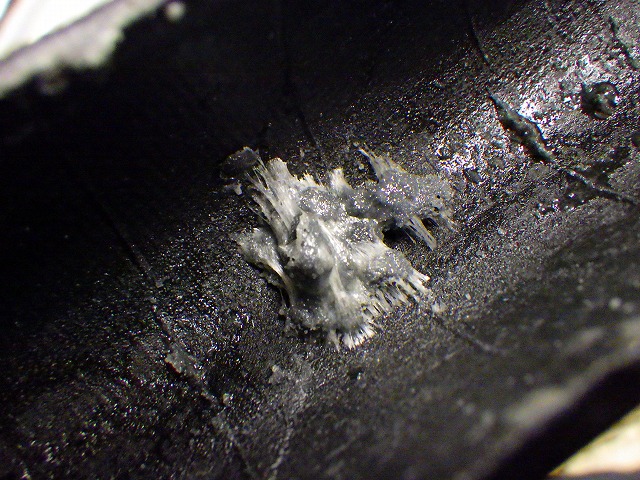
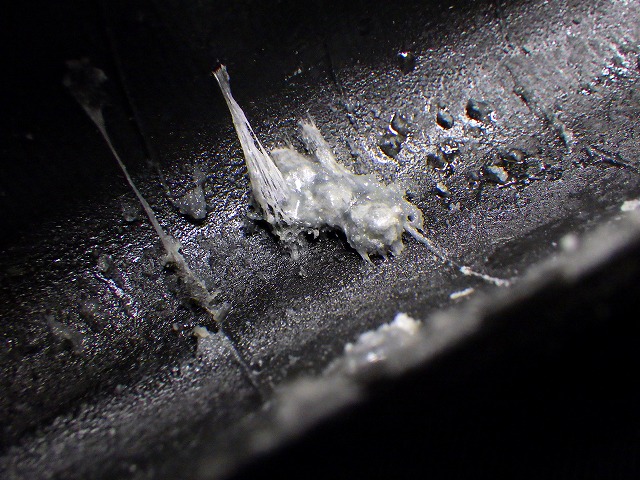
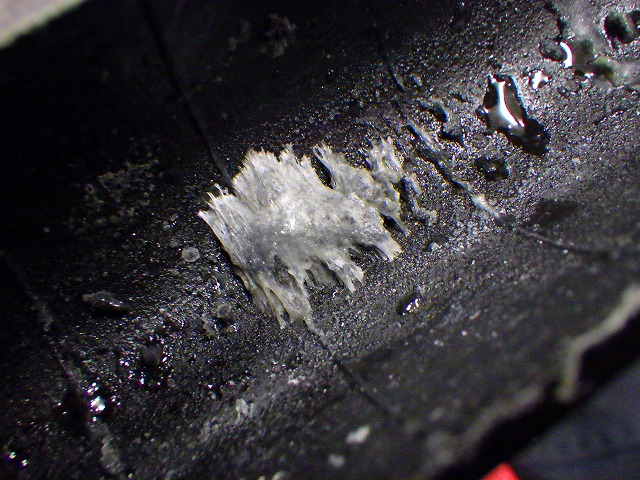
There was some kind of sealant I'm not familiar with,
hardened and stuck inside.
Interestingly, in terms of wheel phase,
it was scattered in various locations.
If you imagined cutting the tire into six sections at 60-degree intervals,
there would be a hardened sealant chunk in each section.
Separately, Stans sealant had also hardened.
In this image, it's all clumped in one location.
This phase must have been the bottom of the wheel for quite a while.
Actually, this wheel's been at the shop since last year!
Ha ha! ← Why am I even laughing?
I've been thinking for a while now—with tubeless wheels containing sealant,
isn't it impossible to do a truly precise
balance weight application?
Disassembled.
I sorted the spokes by left/right and inpoke/outpoke for presentation purposes—
not that I'd have written it on a paper towel otherwise.
In this case, none of the sorted spokes will be reused,
so the sorting doesn't matter much.
The rotor-mount side gets different-gauge spokes,
and the non-rotor-mount side gets different-length spokes,
so not a single spoke will be reused.
This wheel is a 303 Firecrest with all-black CX-RAY spokes,
but the cheaper 303S model uses
all-black CX Sprint spokes instead.
ZIPP is one of the few manufacturers using CX Sprint,
but it seems their logic is only to deliberately make it heavier
as a differentiator against higher-end models with CX-RAY,
not to achieve left-right different-gauge lacing.
In that respect, ZIPP's understanding of wheels is inferior
even to Reynolds during a certain period.
For me, even if CX Sprint cost the same as CX-RAY, there are situations
where I'd use it. Not only for left-right different-gauge builds,
but also when building 18H or 16H radial front wheels for rim brakes—
if it's an option, I'd choose CX Sprint over CX-RAY.
If this wheel had been a 303S, I would have kept and reused
the four black CX Sprint spokes on the rotor-mount side
during the rebuild without any changes.
↑ Former inpoke

↑ Former outpoke
Since these are spokes from the right side, the low-tension side,
there isn't much difference in neck deformation,
but there is a noticeable difference.
The image doesn't capture it well, but the former inpoke
is curved like an umbrella handle.

Sapim nipple washers, new type B, were
installed between the nipple and rim.
The difference from the old B is (→ here)
About the A/B/C differences (→ here)
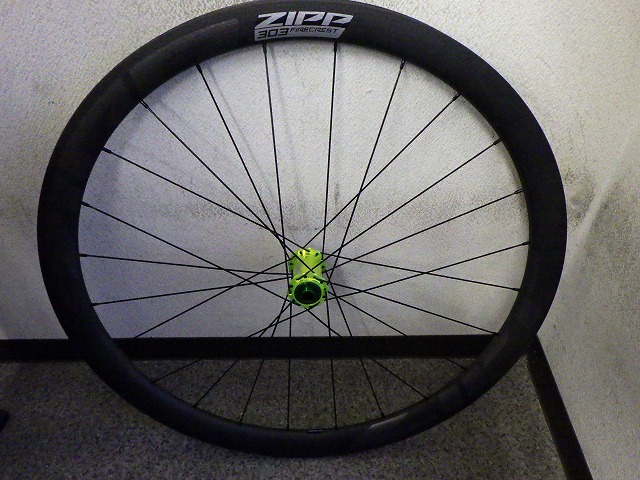
Built.
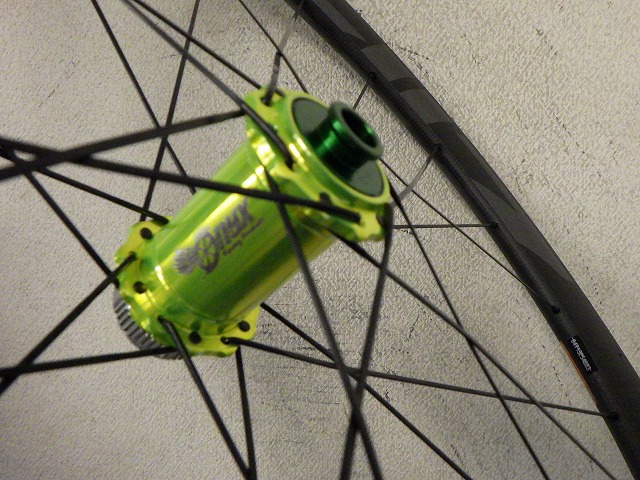
ONYX Vesper disc road hub, 24H,
black half CX Sprint, 64-spoke reverse Italian lacing.
I'll do the lacing later.