Another day, another wheel (you know the drill).
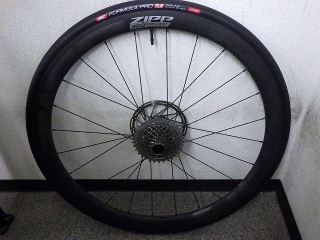
Continuing from yesterday.
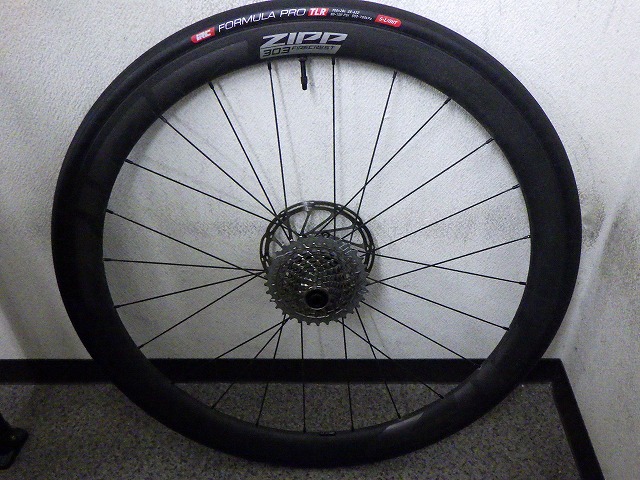
I'm rebuilding the rear wheel on the ZIPP 303 Firecrést.
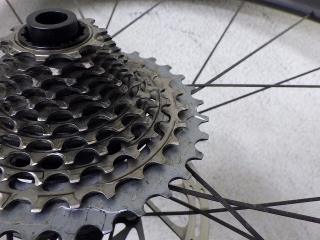
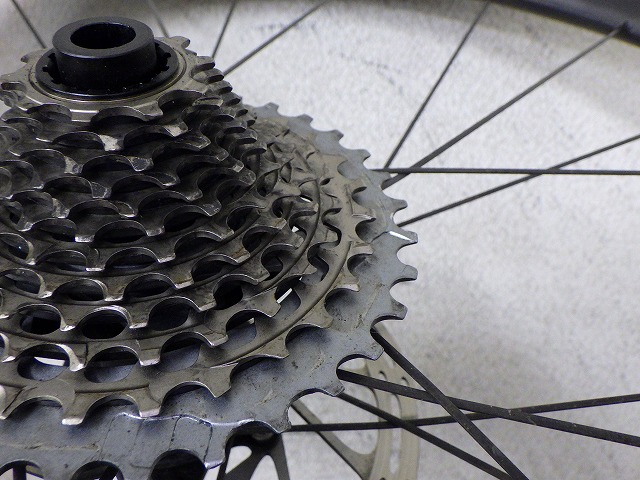
The hub freebody was SRAM XDR on both the original and rebuilt versions,
with a 12-speed sprocket set running 10–33T.
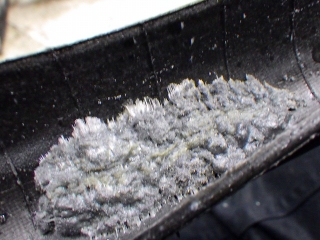
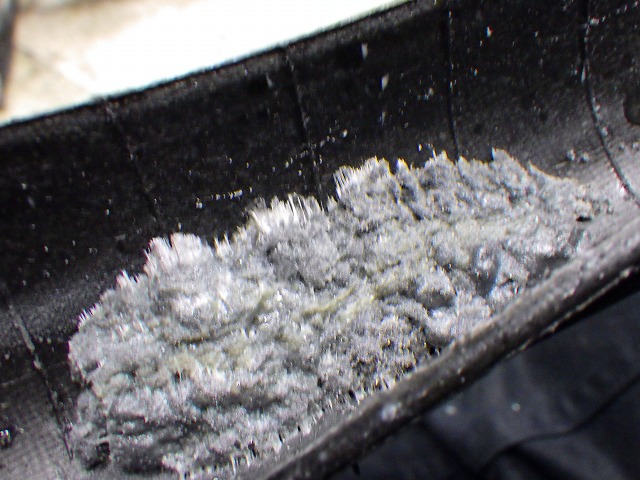
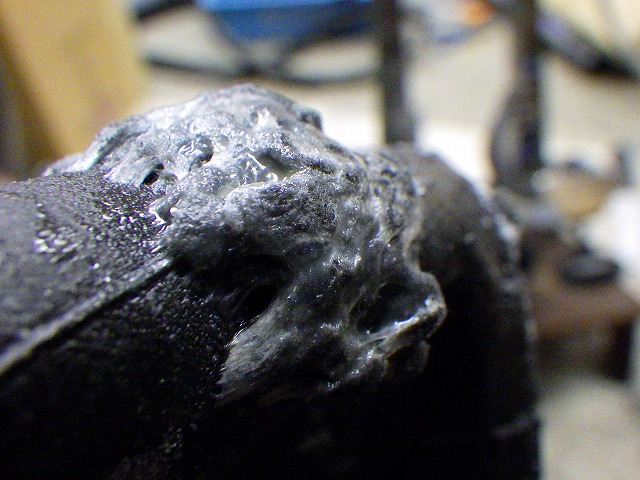
Mystery sealant chunks
were scattered around at random spoke positions, just like on the front wheel.
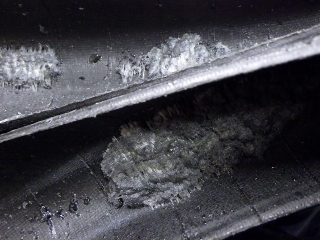
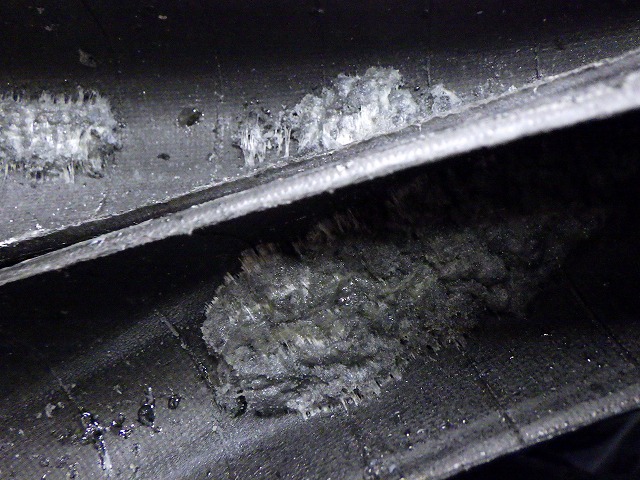
↑This is the tire folded back,
and you can see the lumps scattered throughout.

I flipped the tire inside-out to look at the rim.
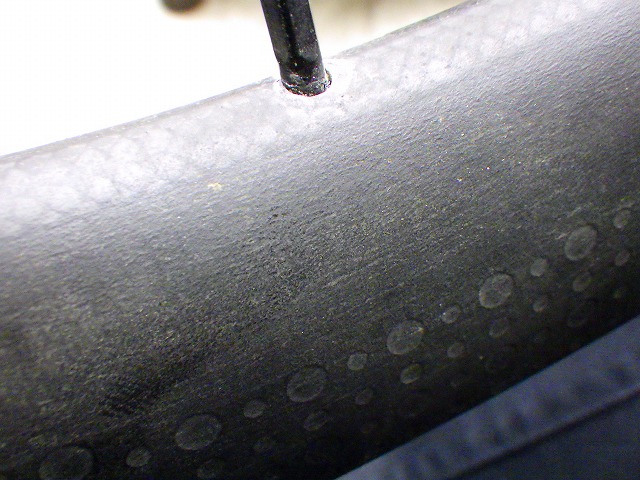
Unlike Stans, these chunks won't come off easily
even if you pick at them with your fingers. They're really solidly stuck.
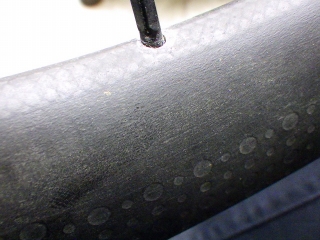
Unlike the front wheel, the entire rear rim was whitened with sand/grit.
I know this is common on gravel bikes,
but since the rim dirt isn't skewed to one side,
it doesn't look like chain oil splatter is the main culprit.
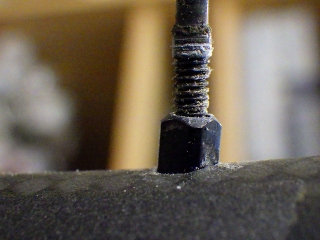
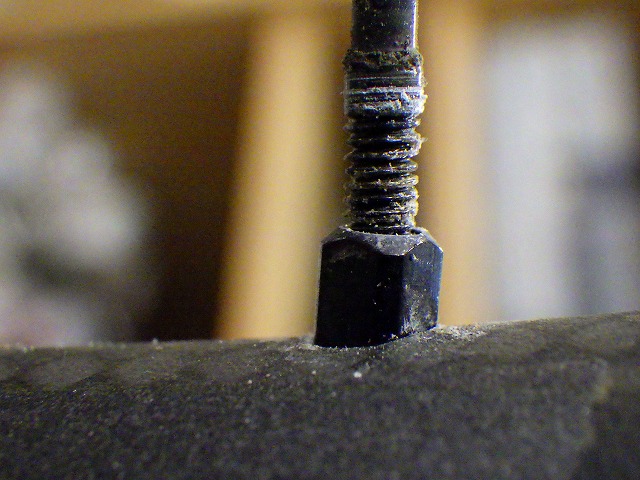
↑Sand has accumulated on top of some kind of peeling threadlocker around the spoke head holes.
The sliding resistance is significant, and the front wheel doesn't shed sand like this at all,
so the front and rear wheels clearly have different usage histories.
It seems unlikely the rear wheel alone was used more heavily,
so there's a possibility the front wheel was recently swapped out under warranty.
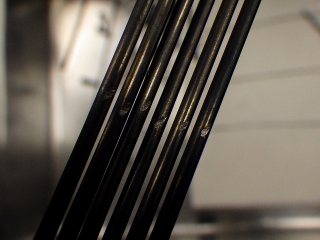
This shows the 6 inpokes on the freehub side,
but even the CX-RAY spokes on the high-tension side
had wear marks at the final crossing point.
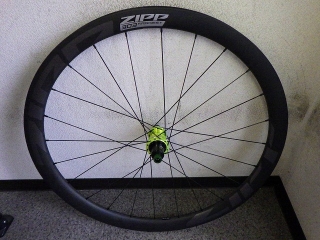
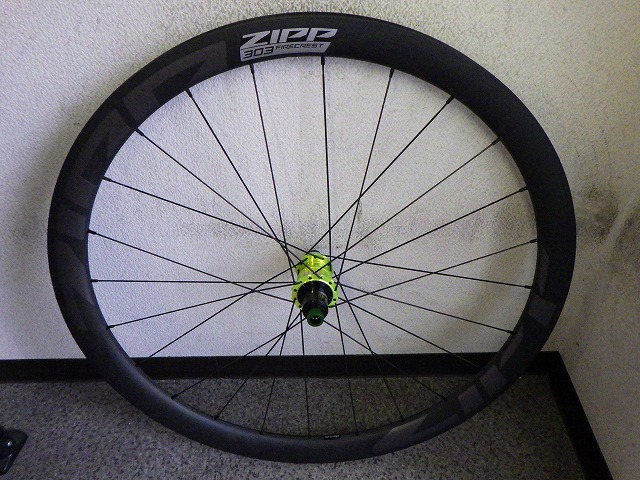
Built.
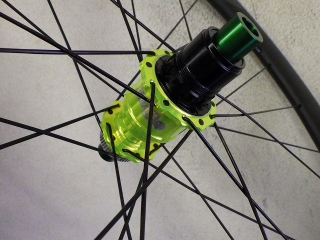
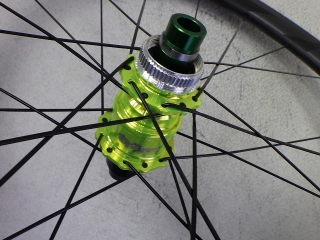
ONYX Vesper disc road hub, 24H
black half-comp Yonroku JIS lacing.
I'll tension the spokes later.
With this hub, I placed a custom color order:
hub shell color in Anti Freeze Green PC,
and both end caps in Green Anodized.
ONYX has an enormous selection of custom colors available,
and just in the greens alone there are four options—
the other two being Fluorescent Green PC
(the spec sheet has "fluoresescent" misspelled; it should be "fluorescent")
and Kawasaki Green PC, a shade that looks nearly identical to classic Kawasaki motorcycle green.
PC stands for powder coating,
and Anodized refers to anodizing (hard coat aluminum treatment).
The hub shell can be finished in either PC or Anodized colors,
while the end caps are available only in Anodized colors.
The original hub was a ZIPP ZR1,
and the rebuilt version uses an ONYX Vesper.
The Vesper has broader flanges—
just looking at the right flange width alone, there's not much difference,
which means it has greater "dish" (spoke offset),
so theoretically it should be at a disadvantage regarding asymmetry in spoke deformation.
Yet the rebuilt wheel came out so well that even before tensioning,
the spokes on the anti-freehub side aren't slack at all—I'd love to show every single owner
of an off-the-shelf 303 Firecrést what this looks like.
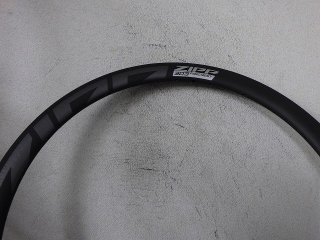
Jumping back in the timeline a bit—
this is the original wheel's rim as a standalone,
viewed from the right side.
From the valve hole's position relative to the "ZIPP 303 Firecrést" text,
there's a sticker with the upper half of the ZIPP logo enlarged
positioned just counterclockwise from the valve.
If I keep the valve hole positioned near the top
and flip the rim around, I get:
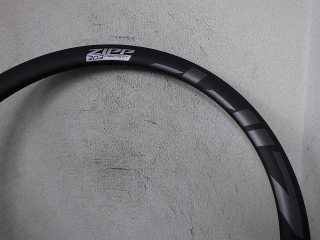
...the lower half of the ZIPP logo sticker positioned
just clockwise from the valve hole.
Both the front and rear wheels came with this relationship intact from the factory,
so I rebuilt them distinguishing left and right rim sides and preserving the original orientation.
If the front and rear had been opposite,
I would have rebuilt them in matching orientation.

↑This is the front and rear wheels viewed from the right side.
If I were to flip just the front wheel while keeping the valve hole
positioned at the top, I'd get:
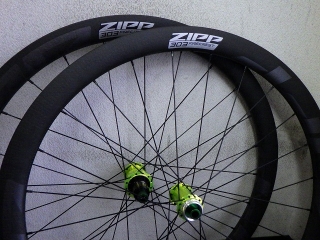
↑This.
According to ZIPP's website,
the correct orientation is to have the upper half of the ZIPP logo
positioned just counterclockwise from the valve hole on the right side.
But occasionally, off-the-shelf wheels ship assembled the opposite way,
meaning the logo positions can differ between front and rear.
I once rebuilt the rear wheel of a 303S for exactly this reason
(→here),
but back then I prioritized preserving the rim tape,
so I couldn't weigh the rim by itself.
Both the 303S and 303 Firecrést
use hookless tubeless rims.
Internal widths are 23mm for the 303S and 25mm for the 303 Firecrést.
The 303 Firecrést accepts tires from 28C minimum,
while the 303S can sometimes fit 25C depending on the tire maker—
ZIPP's website has detailed specs.
Either way, the maximum pressure is 5 bar,
and most people probably run around 3.6 bar in practice,
so 25C feels pretty marginal either way.
Now, regarding current ZIPP wheels:
they don't sell rims separately, and the warranty is generous enough
that hub swaps and rebuilds are pretty rare.
So the opportunity to measure rim weight is quite limited.
The manufacturer's specs only list the wheel as a unit and as a pair—
pretty useless information, really. And since ZIPP changes hubs between models
even within the same series
(plus the 303S comes with all CX Sprint spokes and brass nipples),
it's even harder to estimate rim weight.
Sure, I had the chance this time and I did measure it,
but you think I'm just gonna hand over that precious data? Hell no.
↑wow, this guy's kind of a jerk
SoRrY fOr ThE wAiT! HeRe ArE tHe ImAgEs YoU aSkEd FoR!
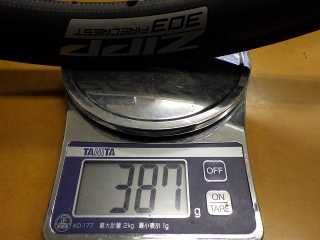
ThIs Is ThE fRoNt RiM!
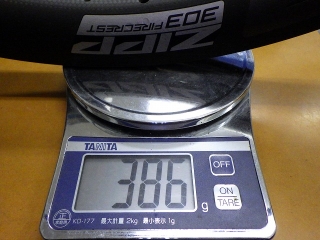
AnD tHiS iS tHe ReAr RiM!
↑OKAY OKAY KNOCK IT OFF!
Continuing from yesterday.
I'm rebuilding the rear wheel on the ZIPP 303 Firecrést.
The hub freebody was SRAM XDR on both the original and rebuilt versions,
with a 12-speed sprocket set running 10–33T.
Mystery sealant chunks
were scattered around at random spoke positions, just like on the front wheel.
↑This is the tire folded back,
and you can see the lumps scattered throughout.
I flipped the tire inside-out to look at the rim.
Unlike Stans, these chunks won't come off easily
even if you pick at them with your fingers. They're really solidly stuck.
Unlike the front wheel, the entire rear rim was whitened with sand/grit.
I know this is common on gravel bikes,
but since the rim dirt isn't skewed to one side,
it doesn't look like chain oil splatter is the main culprit.
↑Sand has accumulated on top of some kind of peeling threadlocker around the spoke head holes.
The sliding resistance is significant, and the front wheel doesn't shed sand like this at all,
so the front and rear wheels clearly have different usage histories.
It seems unlikely the rear wheel alone was used more heavily,
so there's a possibility the front wheel was recently swapped out under warranty.

This shows the 6 inpokes on the freehub side,
but even the CX-RAY spokes on the high-tension side
had wear marks at the final crossing point.
Built.

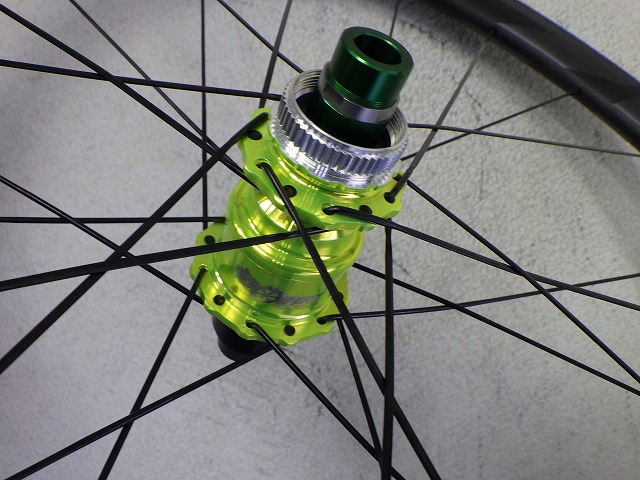
ONYX Vesper disc road hub, 24H
black half-comp Yonroku JIS lacing.
I'll tension the spokes later.
With this hub, I placed a custom color order:
hub shell color in Anti Freeze Green PC,
and both end caps in Green Anodized.
ONYX has an enormous selection of custom colors available,
and just in the greens alone there are four options—
the other two being Fluorescent Green PC
(the spec sheet has "fluoresescent" misspelled; it should be "fluorescent")
and Kawasaki Green PC, a shade that looks nearly identical to classic Kawasaki motorcycle green.
PC stands for powder coating,
and Anodized refers to anodizing (hard coat aluminum treatment).
The hub shell can be finished in either PC or Anodized colors,
while the end caps are available only in Anodized colors.
The original hub was a ZIPP ZR1,
and the rebuilt version uses an ONYX Vesper.
The Vesper has broader flanges—
just looking at the right flange width alone, there's not much difference,
which means it has greater "dish" (spoke offset),
so theoretically it should be at a disadvantage regarding asymmetry in spoke deformation.
Yet the rebuilt wheel came out so well that even before tensioning,
the spokes on the anti-freehub side aren't slack at all—I'd love to show every single owner
of an off-the-shelf 303 Firecrést what this looks like.
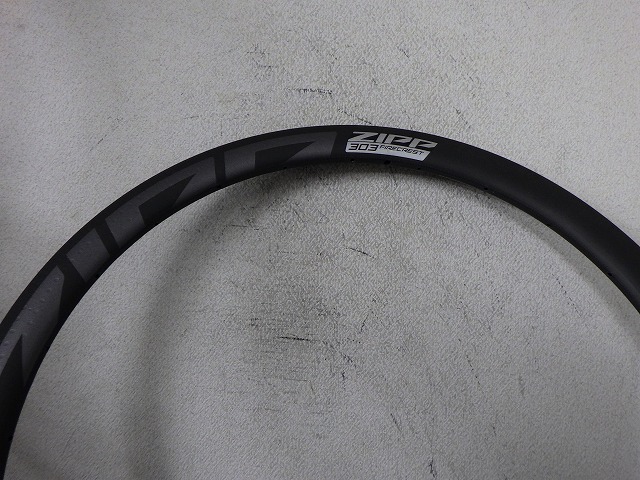
Jumping back in the timeline a bit—
this is the original wheel's rim as a standalone,
viewed from the right side.
From the valve hole's position relative to the "ZIPP 303 Firecrést" text,
there's a sticker with the upper half of the ZIPP logo enlarged
positioned just counterclockwise from the valve.
If I keep the valve hole positioned near the top
and flip the rim around, I get:
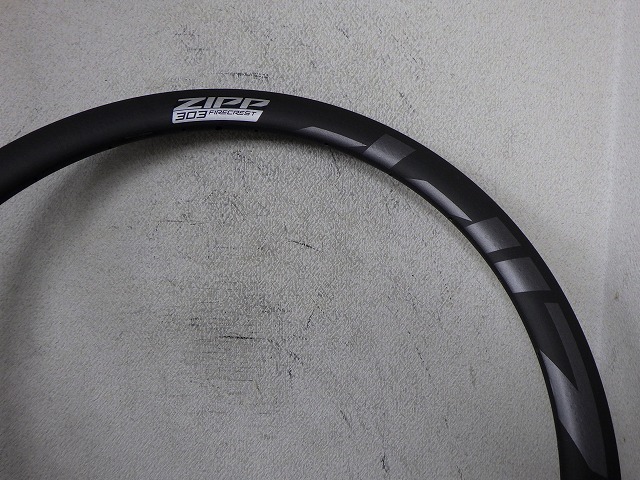
...the lower half of the ZIPP logo sticker positioned
just clockwise from the valve hole.
Both the front and rear wheels came with this relationship intact from the factory,
so I rebuilt them distinguishing left and right rim sides and preserving the original orientation.
If the front and rear had been opposite,
I would have rebuilt them in matching orientation.
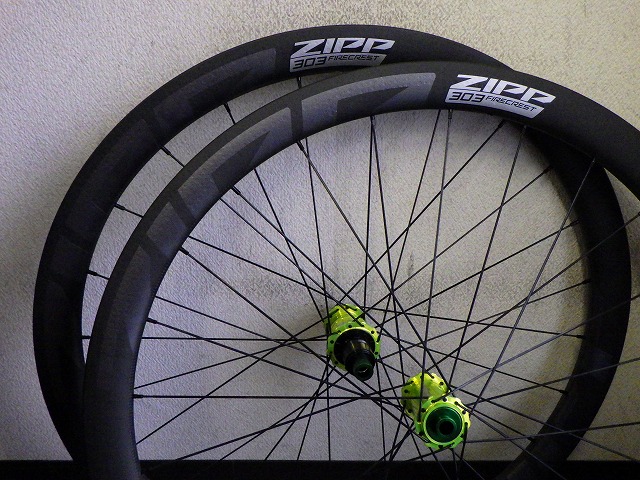
↑This is the front and rear wheels viewed from the right side.
If I were to flip just the front wheel while keeping the valve hole
positioned at the top, I'd get:
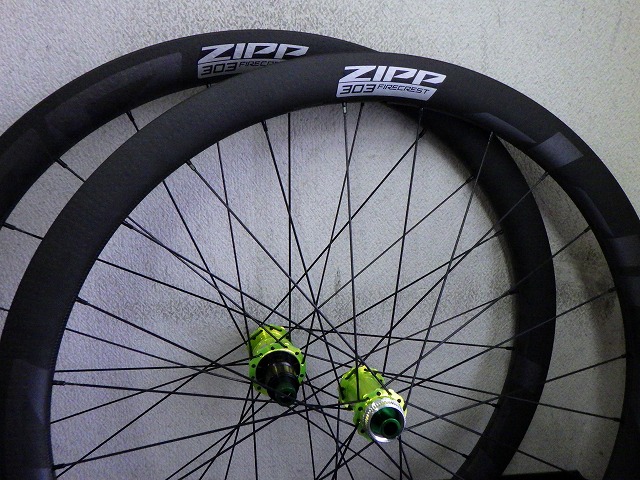
↑This.
According to ZIPP's website,
the correct orientation is to have the upper half of the ZIPP logo
positioned just counterclockwise from the valve hole on the right side.
But occasionally, off-the-shelf wheels ship assembled the opposite way,
meaning the logo positions can differ between front and rear.
I once rebuilt the rear wheel of a 303S for exactly this reason
(→here),
but back then I prioritized preserving the rim tape,
so I couldn't weigh the rim by itself.
Both the 303S and 303 Firecrést
use hookless tubeless rims.
Internal widths are 23mm for the 303S and 25mm for the 303 Firecrést.
The 303 Firecrést accepts tires from 28C minimum,
while the 303S can sometimes fit 25C depending on the tire maker—
ZIPP's website has detailed specs.
Either way, the maximum pressure is 5 bar,
and most people probably run around 3.6 bar in practice,
so 25C feels pretty marginal either way.
Now, regarding current ZIPP wheels:
they don't sell rims separately, and the warranty is generous enough
that hub swaps and rebuilds are pretty rare.
So the opportunity to measure rim weight is quite limited.
The manufacturer's specs only list the wheel as a unit and as a pair—
pretty useless information, really. And since ZIPP changes hubs between models
even within the same series
(plus the 303S comes with all CX Sprint spokes and brass nipples),
it's even harder to estimate rim weight.
Sure, I had the chance this time and I did measure it,
but you think I'm just gonna hand over that precious data? Hell no.
↑wow, this guy's kind of a jerk
SoRrY fOr ThE wAiT! HeRe ArE tHe ImAgEs YoU aSkEd FoR!

ThIs Is ThE fRoNt RiM!
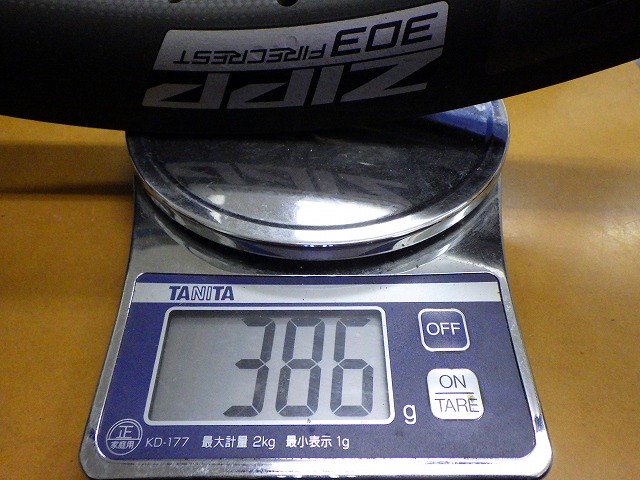
AnD tHiS iS tHe ReAr RiM!
↑OKAY OKAY KNOCK IT OFF!