Pre-sale preview part 1.
Anyway...
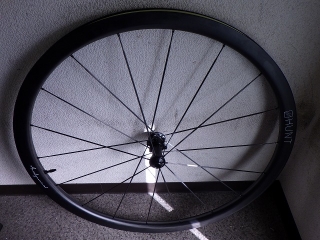
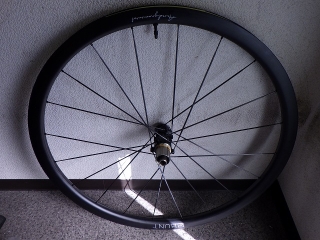
A customer brought in the front and rear wheels from HUNT wheels.
The image above is from after the work was done—
you can see the yellow tubeless tape from Stan's that we applied at the shop.
The wheels came in brand new and unused,
but when I spun the front wheel, there was enough radial runout that you could see the wobble,
so the customer requested an inspection that included correcting that.
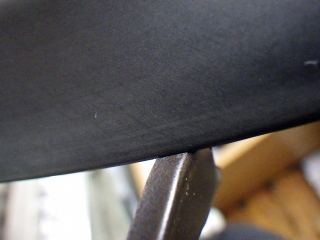
At just one spot on the front rim,
when the gauge on the truing stand barely touches it at that phase,

at all other phases it looks like this.
It might not come across in the photos,
but this is a seriously large amount of radial runout.
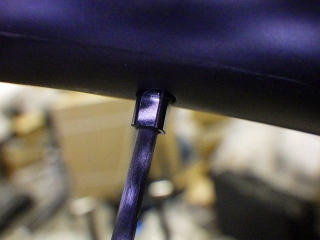
I've written about this many times before,
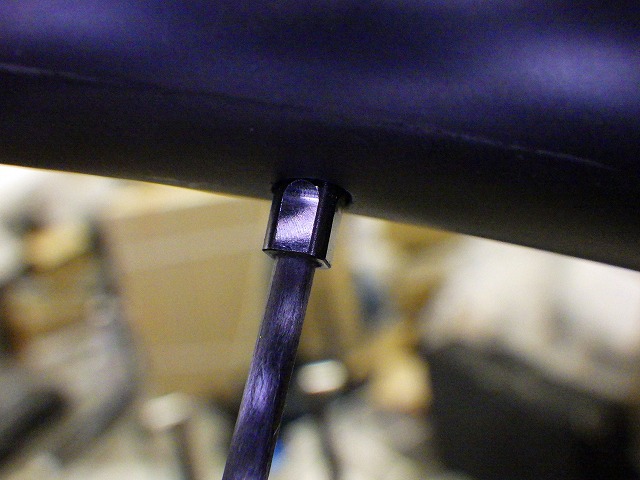
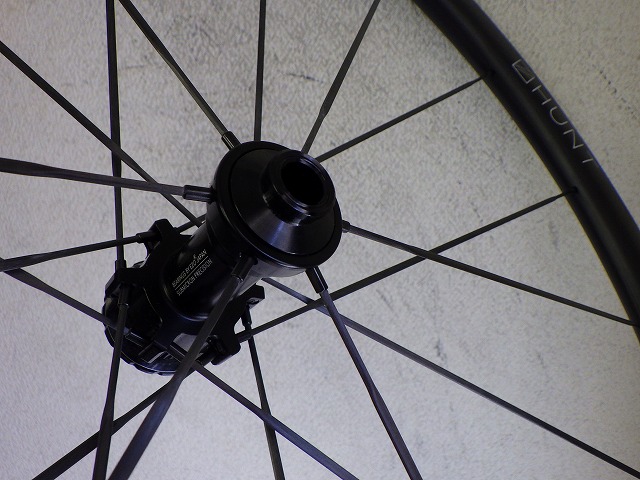
but this square feature on the rim side of the carbon spoke
is not an adjustment nipple—it's part of the spoke itself.
When turning the hexagonal nipple from the outside,
this square grip is there so you can place a spoke wrench on it
to prevent the spoke from spinning along with the nipple.
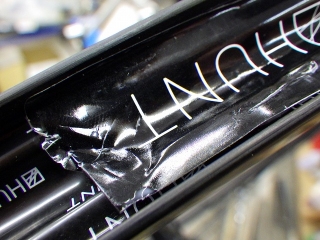
So during truing work,
you absolutely have to remove the rim tape.
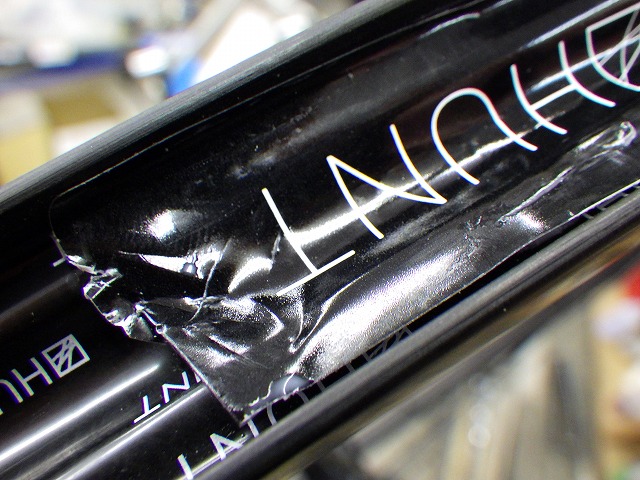
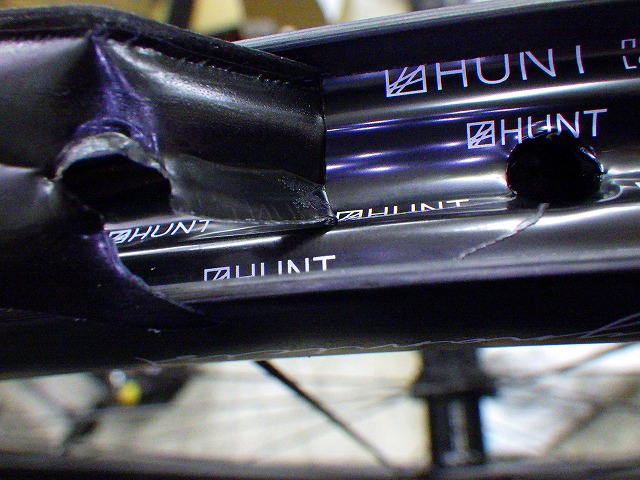
With HUNT wheels, there's an end tape applied separately after the main rim tape,
and this end tape often gets crushed and mangled,
losing its grip to the tire bead pressure.
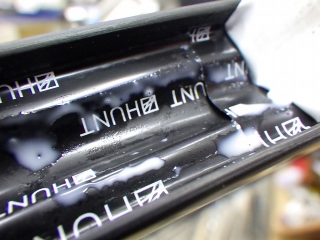
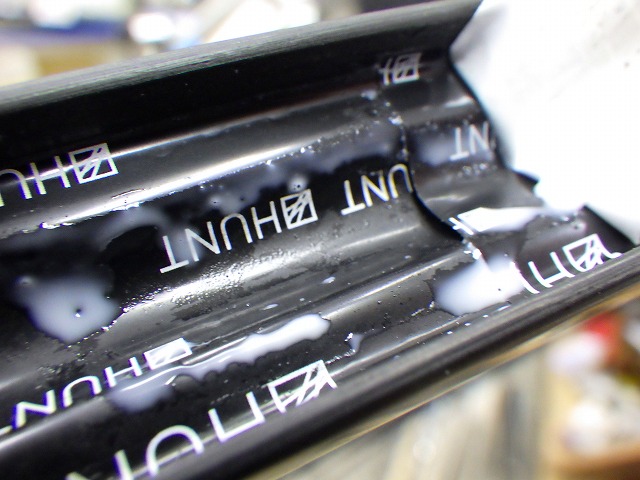
The tape's adhesion was poor, and sealant had seeped in.
You might wonder why an unused wheel has sealant on it—
apparently HUNT sells these wheels as complete units with tubeless tires already mounted.
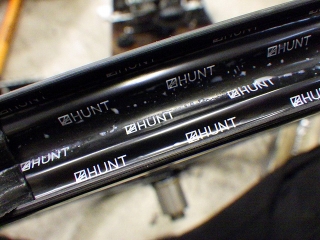
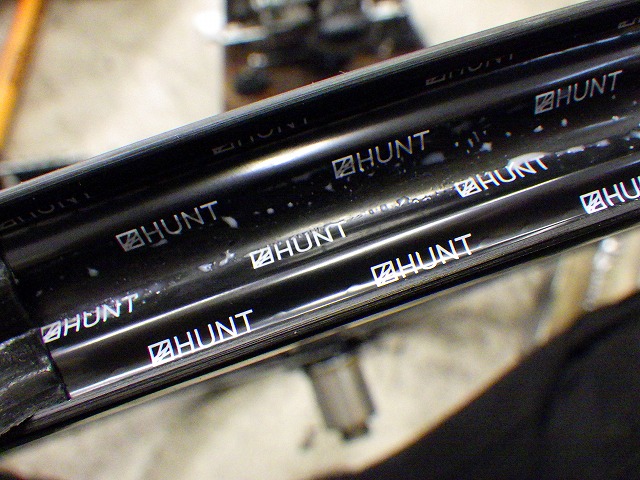
This is the rear wheel, and even with a considerable length peeled back,
sealant has seeped in.
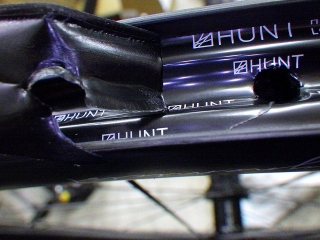
I try to peel it off carefully so it can be reused if possible,
but at the valve hole we cut it like you'd open a can,
and often the last piece we don't cut completely through
(the part like the can lid)falls into the rim through the valve hole,
so it ends up peeling like this.
Both wheels' rim tapes wouldn't come off cleanly,
so I applied Stan's tape instead.
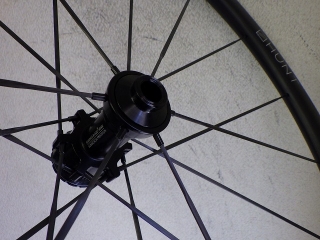
This next part is unrelated to checking these wheels,
but these HUNT wheels are for disc brakes
and the front wheel uses a 2:1 spoke lacing pattern.
That's 6 pairs of 2:1, totaling 18 spokes.
That would clearly be too few for steel spokes,
but with carbon spokes—
(and since there's a huge range in carbon spoke quality,
I'm not lumping them all together)
I can't really judge. Probably it's fine though.
The rear wheel is 20 holes with equal-sided lacing on both sides.
These are disc brake wheels, but on the front wheel
the spoke angle is shallow, so the fewer-spoke side isn't on the rotor mount side.
So the fewer-spoke side, which would ideally want radial lacing for a 2:1 pattern,
and the rotor mount side, which should preferably NOT be radially laced,
never end up on the same side.
With the rear wheel though, because the dish amount is greater on the freebody side
than the rotor mount side, the fewer-spoke side of the 2:1 pattern
coincides with the rotor mount side.
Even if a manufacturer or brand's wheel is marketed with 2:1 lacing as a feature
(or whether it is or not),
I believe disc brake rear wheels should NOT use 2:1 lacing.
Front wheel only 2:1 is what you see on these HUNT wheels,
Cannondale's Hologram,
and wheels in a couple posts further down.
Both front and rear 24 holes, but for some reason only the rear wheel
uses 2:1 lacing on Shimano wheels.
The anti-freebody side is technically 0-cross lacing, not radial,
but functionally it's essentially the same.
With these 2:1 rear wheels I've rebuilt myself,
so far 100% of customers have said things like
「you can feel how much better it is」and
「I never want to go back to how it was」.
Roval is the worst: 21 holes front, 24 holes rear,
using 2:1 lacing on BOTH wheels,
plus tangential lacing on the anti-freebody side of the rear
and XI lacing with evenly-spaced rim holes.
First, with the front wheel: if they'd done 2:1 with 8 pairs for 24 holes total,
maybe it wouldn't have gotten the reputation for being mushy
or flexing in corners that it has now.
In Roval's judgment of priorities,
apparently the weight savings and aerodynamic gain from eliminating 3 spokes
mattered more than the stiffness lost from those 3 spokes.
With the rear wheel: if 2:1 lacing has the fewer-spoke side in radial,
depending on hub dimensions, the left-right difference in spoke deformation
between left and right nearly disappears when spoke gauges are the same on both sides.
With 2:1 lacing, considering engagement quality,
the final cross angle on the freebody side should be as shallow as possible,
so you should choose Ж (zhe) lacing.
Yet Roval is virtually the only manufacturer to choose XI (X-I) lacing.
The freebody side is laced in a way close to radial,
and the anti-freebody side is tangentially laced,
so it has the characteristic—seen almost nowhere else but Roval—of
「the freebody side spokes clearly deform much more when you squeeze them」.
So my conclusion is:
for disc brake rear wheels:
・don't use 2:1 lacing
・if you absolutely must, use straight spokes with radial lacing
(you could argue that braking only happens during a fraction of total ride time,
so most of the time you're not braking anyway)
・use 2:1 AND tangential lacing on the anti-freebody side
—going down this list, each option shows progressively worse design thinking.
When I bring this up, someone always says 「but Fulcrum does XI lacing too!」
so let me address that:
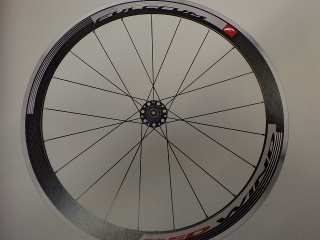
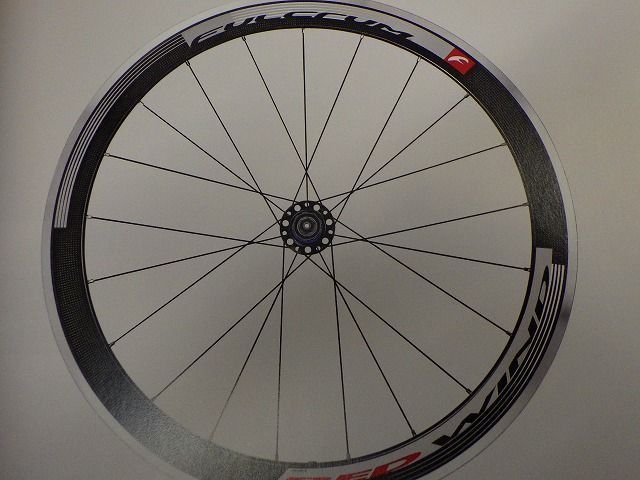
↑Red Wind 50
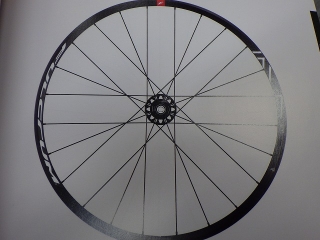
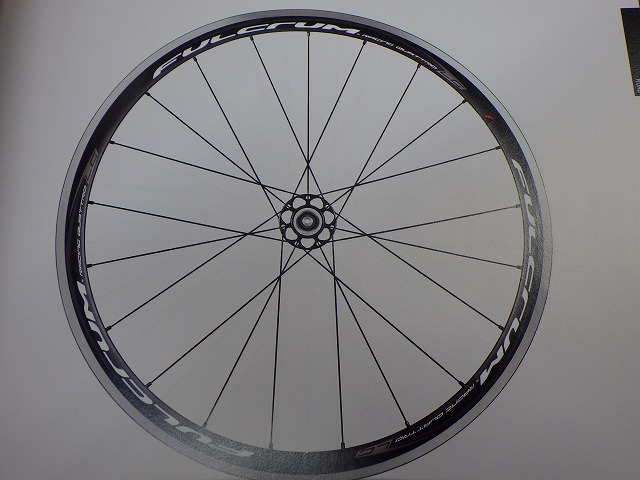
↑Racing 7 DB

↑Racing Quattro LG
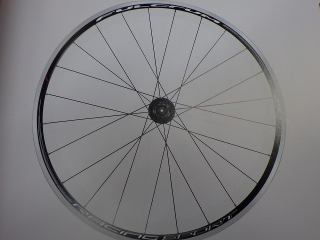
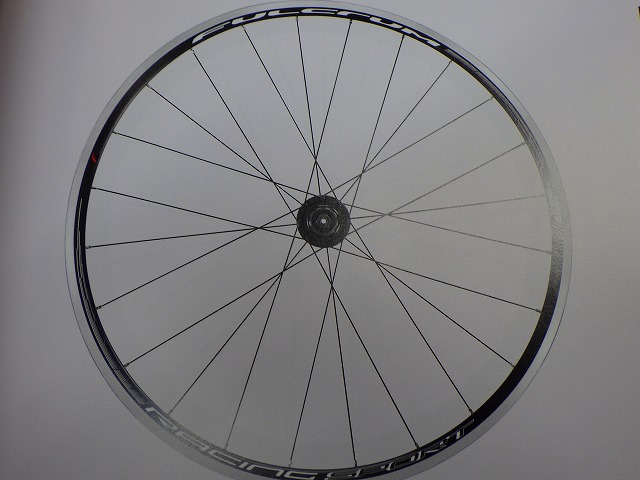
↑Racing Sport
(OEM wheels for bike manufacturers, no retail sales)
These are from the 2018 catalog, and they all have
the anti-freebody radial spokes passing through
the final cross on the freebody side when viewed from the side.
In other words, they're Ж lacing.
By the way, except for Racing 7 DB,
these are all rim brake wheels.
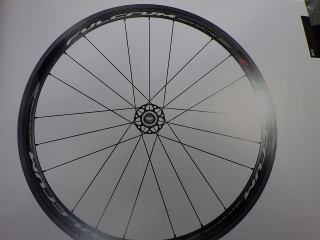
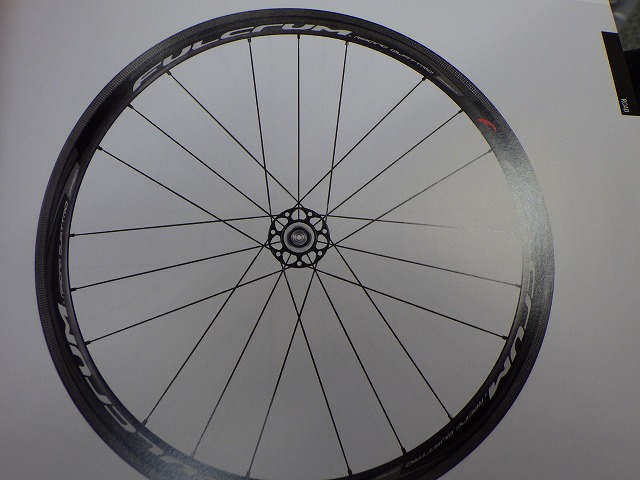
↑Racing Quattro Carbon
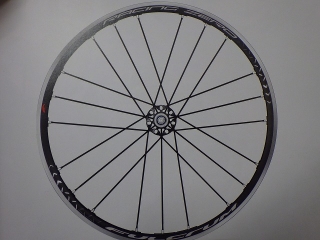
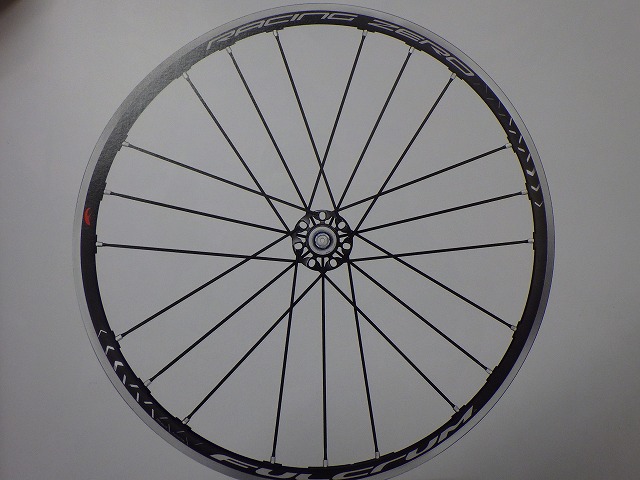
↑Racing Zero
On these wheels, the anti-freebody radial spokes do NOT pass through
the final cross on the freebody side when viewed from the side.
So it's too quick to call them XI lacing!
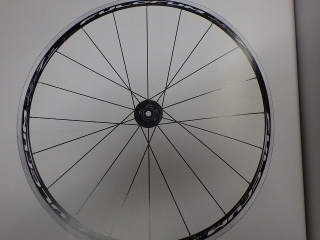
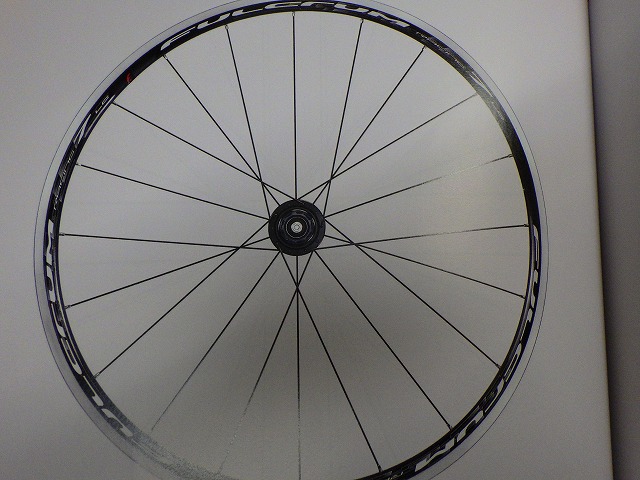
↑This is the Racing 7 LG for rim brakes,
and it's the only Fulcrum wheel shown so far
that doesn't use 2:1 lacing—it's equal-sided.
The wheels that appeared to have XI lacing earlier
don't have evenly-spaced rim holes—they have "rest phase" rim holes.
Fulcrum's rest phase pattern on rear wheels
takes the equal pattern of right-left-right-left... rim holes
and removes every other left side, giving right-left-right-rest...
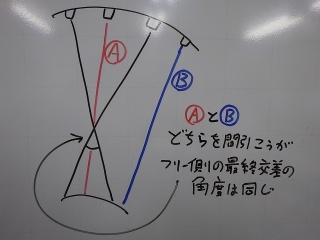
So for example, a 21-hole rear with rest phase
has the same structure as a normal 28-hole rear
with the anti-freebody spokes thinned out.
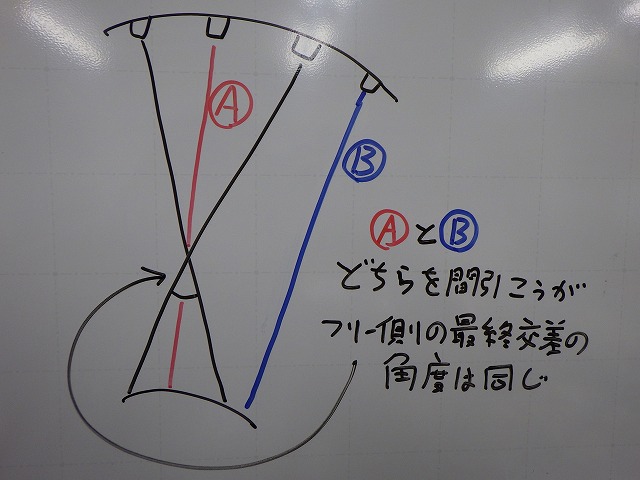
But as shown in the diagram above, whether you remove spoke A or spoke B
from the anti-freebody side,
the final cross angle on the freebody side doesn't change.
With Fulcrum's rest-phase rear wheels,
they're removing spoke A as shown in the diagram,
so it appears to be XI lacing at first glance, but
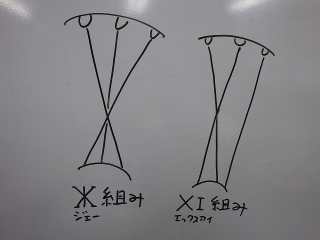
unlike evenly-spaced-hole XI lacing,
the final cross angle doesn't become acute.
Fulcrum's MegaHiLo flange, used on all their rear wheels in the catalog
(especially in straight-spoke versions), also has the effect
of dulling the final cross angle.
Finally: someone might pop up asking if dulling the final cross angle is so important,
shouldn't 4-cross be better than 6-cross? So I'll address that.
The final cross angle becomes a critical factor only because of 2:1 lacing.
Also, the larger the final cross triangle, the more effective the bracing becomes.
Even if you brace the first cross near the hub flange at 2-cross (1X),
it's practically meaningless.
I said larger triangles are better, but to be precise,
I should say closer to the midpoint between hub and rim.
But since normally the final cross is much closer to the hub than the midpoint,
I said larger is better.
Anyway...

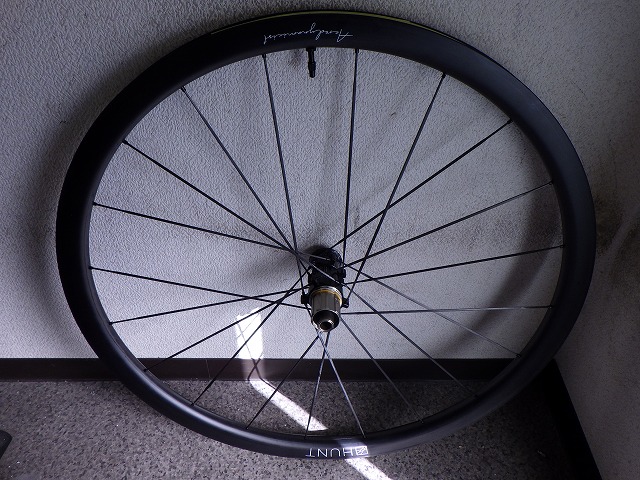
A customer brought in the front and rear wheels from HUNT wheels.
The image above is from after the work was done—
you can see the yellow tubeless tape from Stan's that we applied at the shop.
The wheels came in brand new and unused,
but when I spun the front wheel, there was enough radial runout that you could see the wobble,
so the customer requested an inspection that included correcting that.
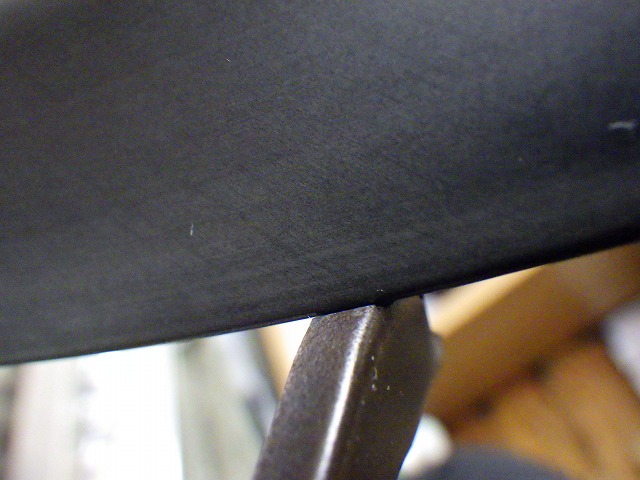
At just one spot on the front rim,
when the gauge on the truing stand barely touches it at that phase,
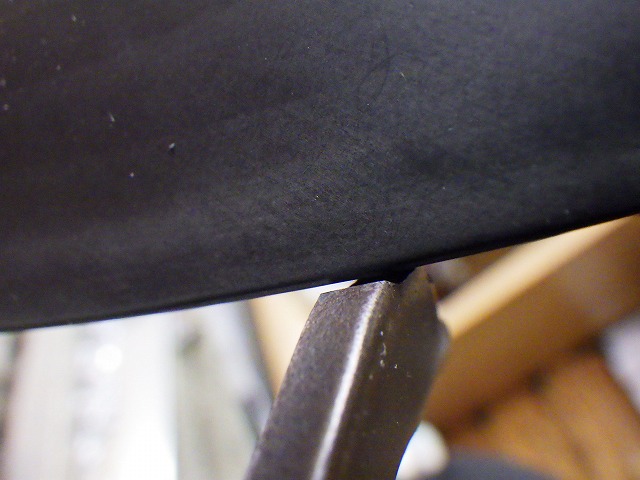
at all other phases it looks like this.
It might not come across in the photos,
but this is a seriously large amount of radial runout.
I've written about this many times before,
but this square feature on the rim side of the carbon spoke
is not an adjustment nipple—it's part of the spoke itself.
When turning the hexagonal nipple from the outside,
this square grip is there so you can place a spoke wrench on it
to prevent the spoke from spinning along with the nipple.
So during truing work,
you absolutely have to remove the rim tape.
With HUNT wheels, there's an end tape applied separately after the main rim tape,
and this end tape often gets crushed and mangled,
losing its grip to the tire bead pressure.
The tape's adhesion was poor, and sealant had seeped in.
You might wonder why an unused wheel has sealant on it—
apparently HUNT sells these wheels as complete units with tubeless tires already mounted.
This is the rear wheel, and even with a considerable length peeled back,
sealant has seeped in.
I try to peel it off carefully so it can be reused if possible,
but at the valve hole we cut it like you'd open a can,
and often the last piece we don't cut completely through
(the part like the can lid)falls into the rim through the valve hole,
so it ends up peeling like this.
Both wheels' rim tapes wouldn't come off cleanly,
so I applied Stan's tape instead.
This next part is unrelated to checking these wheels,
but these HUNT wheels are for disc brakes
and the front wheel uses a 2:1 spoke lacing pattern.
That's 6 pairs of 2:1, totaling 18 spokes.
That would clearly be too few for steel spokes,
but with carbon spokes—
(and since there's a huge range in carbon spoke quality,
I'm not lumping them all together)
I can't really judge. Probably it's fine though.
The rear wheel is 20 holes with equal-sided lacing on both sides.
These are disc brake wheels, but on the front wheel
the spoke angle is shallow, so the fewer-spoke side isn't on the rotor mount side.
So the fewer-spoke side, which would ideally want radial lacing for a 2:1 pattern,
and the rotor mount side, which should preferably NOT be radially laced,
never end up on the same side.
With the rear wheel though, because the dish amount is greater on the freebody side
than the rotor mount side, the fewer-spoke side of the 2:1 pattern
coincides with the rotor mount side.
Even if a manufacturer or brand's wheel is marketed with 2:1 lacing as a feature
(or whether it is or not),
I believe disc brake rear wheels should NOT use 2:1 lacing.
Front wheel only 2:1 is what you see on these HUNT wheels,
Cannondale's Hologram,
and wheels in a couple posts further down.
Both front and rear 24 holes, but for some reason only the rear wheel
uses 2:1 lacing on Shimano wheels.
The anti-freebody side is technically 0-cross lacing, not radial,
but functionally it's essentially the same.
With these 2:1 rear wheels I've rebuilt myself,
so far 100% of customers have said things like
「you can feel how much better it is」and
「I never want to go back to how it was」.
Roval is the worst: 21 holes front, 24 holes rear,
using 2:1 lacing on BOTH wheels,
plus tangential lacing on the anti-freebody side of the rear
and XI lacing with evenly-spaced rim holes.
First, with the front wheel: if they'd done 2:1 with 8 pairs for 24 holes total,
maybe it wouldn't have gotten the reputation for being mushy
or flexing in corners that it has now.
In Roval's judgment of priorities,
apparently the weight savings and aerodynamic gain from eliminating 3 spokes
mattered more than the stiffness lost from those 3 spokes.
With the rear wheel: if 2:1 lacing has the fewer-spoke side in radial,
depending on hub dimensions, the left-right difference in spoke deformation
between left and right nearly disappears when spoke gauges are the same on both sides.
With 2:1 lacing, considering engagement quality,
the final cross angle on the freebody side should be as shallow as possible,
so you should choose Ж (zhe) lacing.
Yet Roval is virtually the only manufacturer to choose XI (X-I) lacing.
The freebody side is laced in a way close to radial,
and the anti-freebody side is tangentially laced,
so it has the characteristic—seen almost nowhere else but Roval—of
「the freebody side spokes clearly deform much more when you squeeze them」.
So my conclusion is:
for disc brake rear wheels:
・don't use 2:1 lacing
・if you absolutely must, use straight spokes with radial lacing
(you could argue that braking only happens during a fraction of total ride time,
so most of the time you're not braking anyway)
・use 2:1 AND tangential lacing on the anti-freebody side
—going down this list, each option shows progressively worse design thinking.
When I bring this up, someone always says 「but Fulcrum does XI lacing too!」
so let me address that:
↑Red Wind 50

↑Racing 7 DB
↑Racing Quattro LG
↑Racing Sport
(OEM wheels for bike manufacturers, no retail sales)
These are from the 2018 catalog, and they all have
the anti-freebody radial spokes passing through
the final cross on the freebody side when viewed from the side.
In other words, they're Ж lacing.
By the way, except for Racing 7 DB,
these are all rim brake wheels.
↑Racing Quattro Carbon
↑Racing Zero
On these wheels, the anti-freebody radial spokes do NOT pass through
the final cross on the freebody side when viewed from the side.
So it's too quick to call them XI lacing!
↑This is the Racing 7 LG for rim brakes,
and it's the only Fulcrum wheel shown so far
that doesn't use 2:1 lacing—it's equal-sided.
The wheels that appeared to have XI lacing earlier
don't have evenly-spaced rim holes—they have "rest phase" rim holes.
Fulcrum's rest phase pattern on rear wheels
takes the equal pattern of right-left-right-left... rim holes
and removes every other left side, giving right-left-right-rest...
So for example, a 21-hole rear with rest phase
has the same structure as a normal 28-hole rear
with the anti-freebody spokes thinned out.
But as shown in the diagram above, whether you remove spoke A or spoke B
from the anti-freebody side,
the final cross angle on the freebody side doesn't change.
With Fulcrum's rest-phase rear wheels,
they're removing spoke A as shown in the diagram,
so it appears to be XI lacing at first glance, but

unlike evenly-spaced-hole XI lacing,
the final cross angle doesn't become acute.
Fulcrum's MegaHiLo flange, used on all their rear wheels in the catalog
(especially in straight-spoke versions), also has the effect
of dulling the final cross angle.
Finally: someone might pop up asking if dulling the final cross angle is so important,
shouldn't 4-cross be better than 6-cross? So I'll address that.
The final cross angle becomes a critical factor only because of 2:1 lacing.
Also, the larger the final cross triangle, the more effective the bracing becomes.
Even if you brace the first cross near the hub flange at 2-cross (1X),
it's practically meaningless.
I said larger triangles are better, but to be precise,
I should say closer to the midpoint between hub and rim.
But since normally the final cross is much closer to the hub than the midpoint,
I said larger is better.