Pre-sale preview part 2.
Anyway.
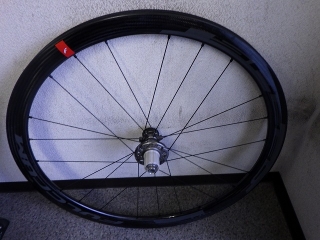
A customer brought in a Fulcrum Speed 40 DB for me to work on.
It's brand new, never used, and they want an inspection.
They said it "arrived" today, but I'm going to pretend I didn't hear that.
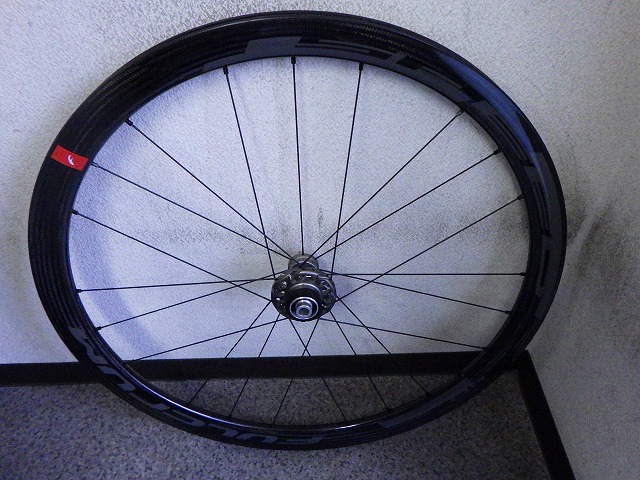
Let's start with the rear wheel.
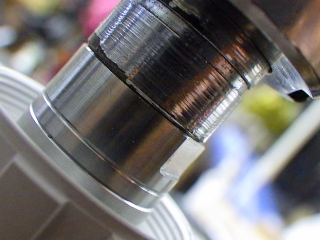
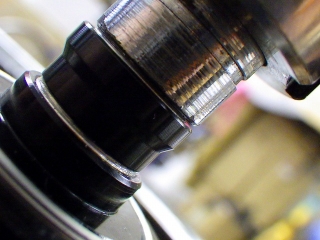
This is the temporary spoke tension reading before any work,
and it was spot on. There was virtually no wobble either.
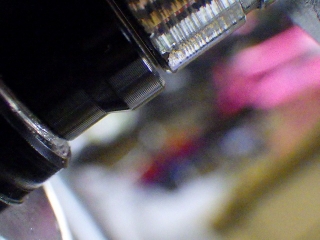
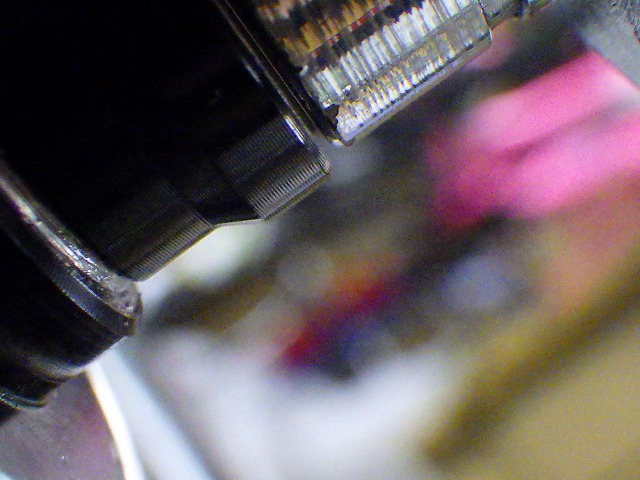
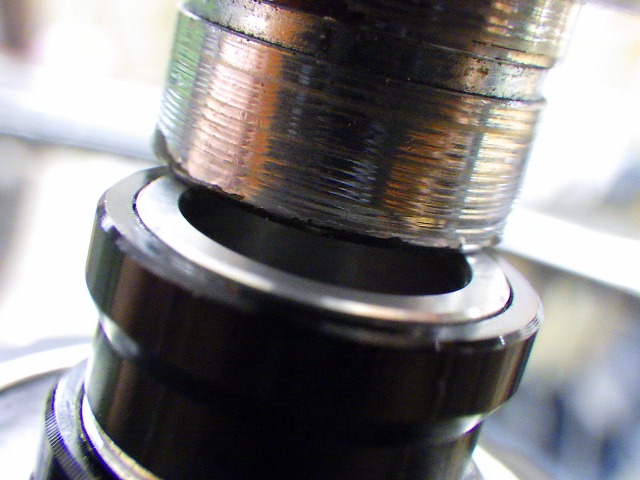
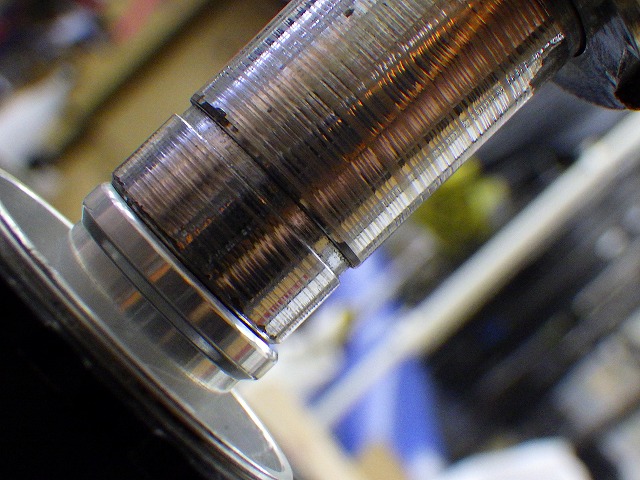
The gap that appears to be there is because
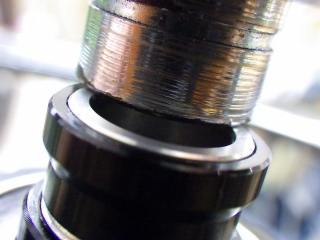
of the axle end caps—the parts with a split that snap onto the hub shaft—
their outer edge isn't flush with the hub shaft end face.
This always bugs me, that it's not flush here.
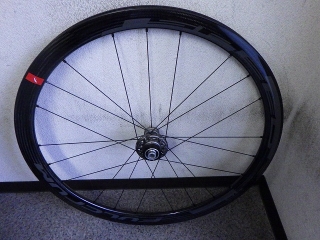
Next, the front wheel.

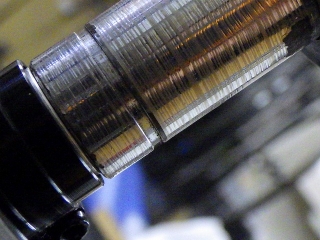
These are photos after work.
The spoke tension was off by about a sheet of paper,
and there was a bit more wobble than the rear wheel.
Slight wobble at about two points.
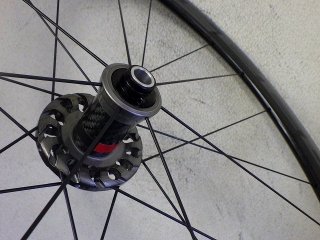
This next part isn't related to the wheel inspection itself, but
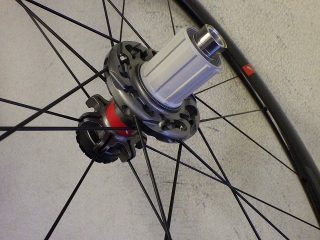
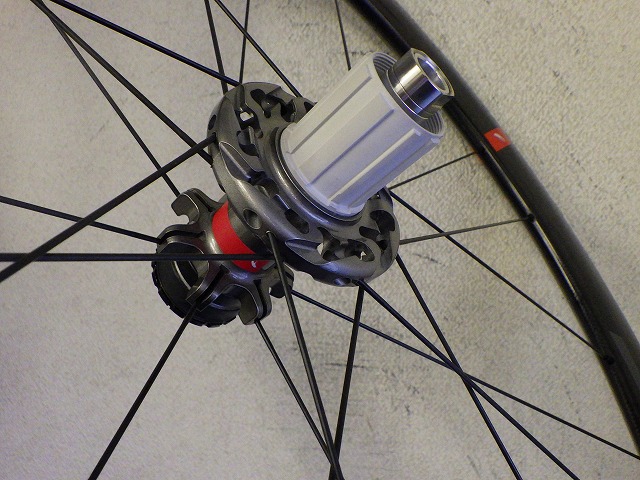
both front and rear hubs are mega high-flange designs.
They're built symmetrical (equal flange diameters), with a 40mm rim height,
and use 2.0-1.8-2.0mm butted spokes.
You could say they're competition-grade all around.
Since they're symmetrical builds, if the first-stage spoke tension is the same or nearly the same on both sides,
then the second-stage spoke tension will also be the same or nearly the same.
With asymmetrical builds, even if second-stage tension matches,
first-stage can differ, so you can't really compare.
Even with symmetrical builds though, if first-stage tension differs significantly between sides,
the ratio in second-stage won't necessarily be the same.
The relationship between first-stage and second-stage isn't a straight line—it's a curved line.
For example, if the freewheel side first-stage is 120
and the non-freewheel side is 100,
that doesn't necessarily mean the second-stage ratio will also be 120:100.
Actually, when I measured first-stage, setting the freewheel side at 100,
the non-freewheel side came in around 98.
At this level, you can say the second-stage is basically equal on both sides too.
It seems the hub dimensions were reverse-engineered to work out that way.
Even with Fulcrum complete wheels built with this hub but different rim heights,
the spoke tension difference between left and right remains pretty minimal
(theoretically it feels like it should increase with higher rim depth, but).
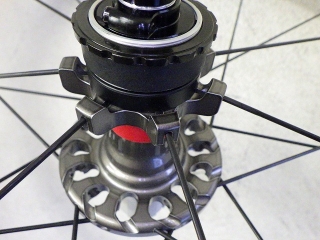
The rear wheel's low-spoke-side radial-laced flange is
designed pretty dished per spoke,
but on recent Bora WTO disc rear hubs and the like,
the flange shape looks almost the same as
the non-freewheel side radial lacing on rim brake versions.
Like the Shamal Ultra carbon hub example from the other day (→here),
it seems they've figured out empirically that
"even though we were worried at first,
it turns out a lighter, thinner design works just fine."
Anyway.
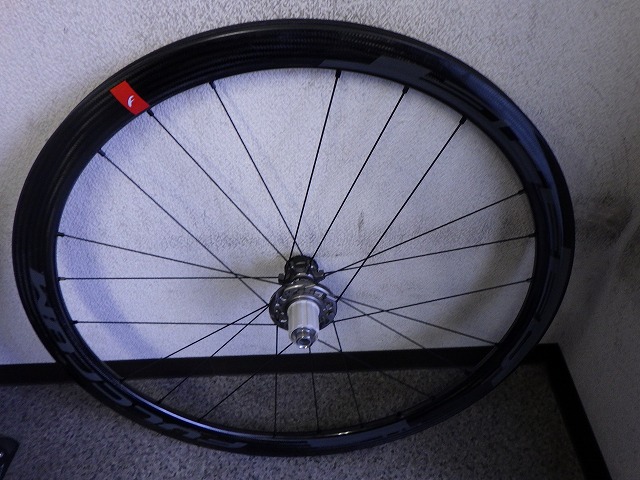
A customer brought in a Fulcrum Speed 40 DB for me to work on.
It's brand new, never used, and they want an inspection.
They said it "arrived" today, but I'm going to pretend I didn't hear that.
Let's start with the rear wheel.
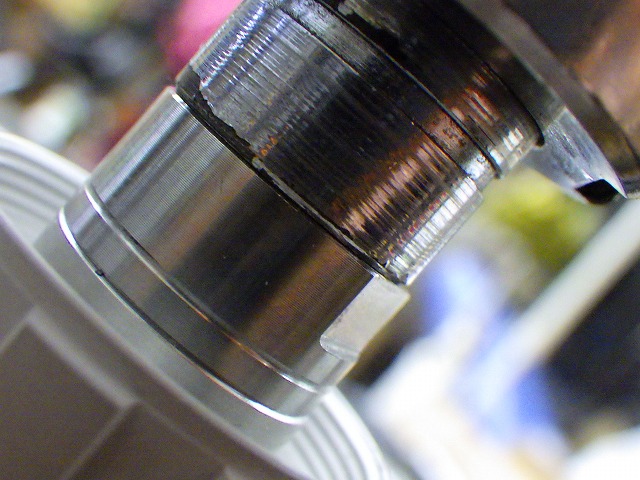

This is the temporary spoke tension reading before any work,
and it was spot on. There was virtually no wobble either.
The gap that appears to be there is because
of the axle end caps—the parts with a split that snap onto the hub shaft—
their outer edge isn't flush with the hub shaft end face.
This always bugs me, that it's not flush here.
Next, the front wheel.

These are photos after work.
The spoke tension was off by about a sheet of paper,
and there was a bit more wobble than the rear wheel.
Slight wobble at about two points.

This next part isn't related to the wheel inspection itself, but
both front and rear hubs are mega high-flange designs.
They're built symmetrical (equal flange diameters), with a 40mm rim height,
and use 2.0-1.8-2.0mm butted spokes.
You could say they're competition-grade all around.
Since they're symmetrical builds, if the first-stage spoke tension is the same or nearly the same on both sides,
then the second-stage spoke tension will also be the same or nearly the same.
With asymmetrical builds, even if second-stage tension matches,
first-stage can differ, so you can't really compare.
Even with symmetrical builds though, if first-stage tension differs significantly between sides,
the ratio in second-stage won't necessarily be the same.
The relationship between first-stage and second-stage isn't a straight line—it's a curved line.
For example, if the freewheel side first-stage is 120
and the non-freewheel side is 100,
that doesn't necessarily mean the second-stage ratio will also be 120:100.
Actually, when I measured first-stage, setting the freewheel side at 100,
the non-freewheel side came in around 98.
At this level, you can say the second-stage is basically equal on both sides too.
It seems the hub dimensions were reverse-engineered to work out that way.
Even with Fulcrum complete wheels built with this hub but different rim heights,
the spoke tension difference between left and right remains pretty minimal
(theoretically it feels like it should increase with higher rim depth, but).
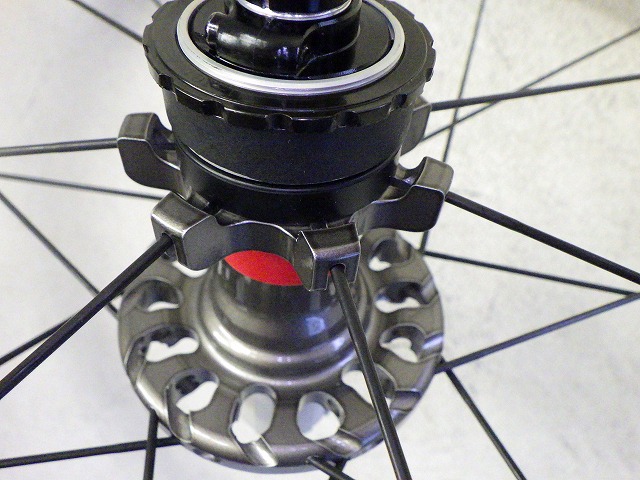
The rear wheel's low-spoke-side radial-laced flange is
designed pretty dished per spoke,
but on recent Bora WTO disc rear hubs and the like,
the flange shape looks almost the same as
the non-freewheel side radial lacing on rim brake versions.
Like the Shamal Ultra carbon hub example from the other day (→here),
it seems they've figured out empirically that
"even though we were worried at first,
it turns out a lighter, thinner design works just fine."