Another day of wheel building (and so on).
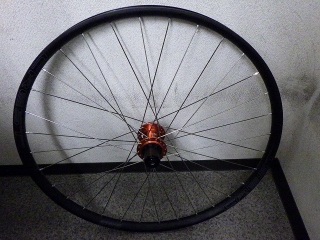
I built a rear wheel using Stan's Crest MK4
in 650B rim size.
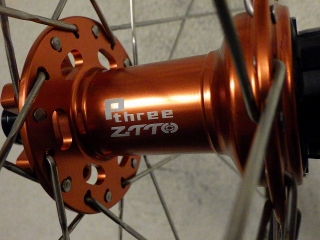
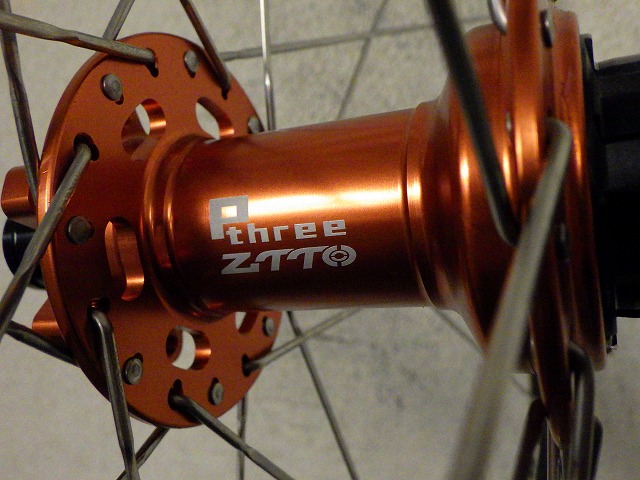
The hub is a Boost spec model called P3
from ZTTO, a Chinese brand.
For the past several years, for no particular reason—
well, actually there is a reason: it gave manufacturers another chance to extract more money from users—
XC race MTB frame sets have all switched to BOOST spec.
Road bikes might also adopt BOOST spec around the time they release
front double × 13-speed components,
wiping out old frame sets and components through planned obsolescence.
Anyway, this customer (nominally speaking)
had their MTB frame crack, so they bought a new one,
but their old wheels wouldn't fit—
so they reluctantly had to get a new wheel with a BOOST hub.
※ Some hubs can be converted to BOOST spec by changing the endcap,
converting 15×100mm to 110mm and 12×142mm to 148mm,
but in those cases the hub body dimensions (especially flange width) don't change,
so there's essentially no performance improvement to the wheel itself—
meaning the new standard doesn't actually deliver any performance gains.
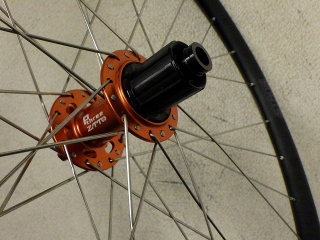
32H, semi-comp lacing, JIS standard.
I'll do the truing later.
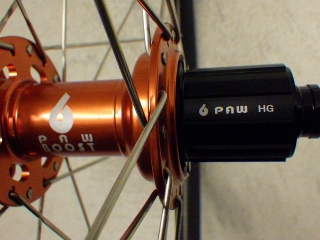
The "6PAW" marking on the opposite side of the hub body and the freebody
just means the freebody has 6 pawls.
Also, where it says "BOOST" on the hub body,
this hub has a hub body compatible with both 142mm and 148mm widths, but
it wasn't just shipped as 148mm spec by changing the endcap—
rather, the hub body dimensions actually require
BOOST (148mm width) to function properly.
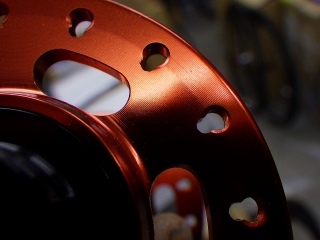
From here on the timeline gets jumbled up—
the photos are from before and after the wheel was built, so forgive the mess.
The spoke holes on the hub flange had flattened slots
so narrow they wouldn't let a 2.3mm round spoke hole through.
Even though this isn't where the spoke neck seats,
I feel like it allows too much dynamic play in the spokes during use,
so unless you're building the wheel with flat spokes,
it's better not to have these slots.
On road bike hubs, you sometimes get this spec
without even asking for it.
Even with Tni hubs or Phil Wood hubs,
the spec can change from batch to batch,
but for MTB hubs this is generally unnecessary.
Since this is 32H,
even if road bikes go BOOST spec,
you wouldn't normally build a wheel with this spoke count.
As for gravel bikes—well, gravel bike wheels
are almost never built with flat spokes anyway.
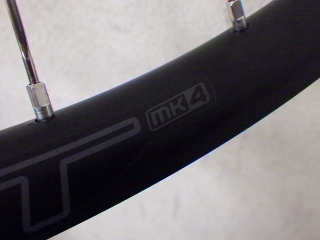
Stan's Crest changed from MK3 to MK4.
When I opened the packaging and saw the matte black rim,
I got nervous thinking I'd accidentally ordered
the Crest CB7 (the carbon rim version) by mistake.
The surface finish looks like it might offer good mud shedding—
well, hopefully it does.
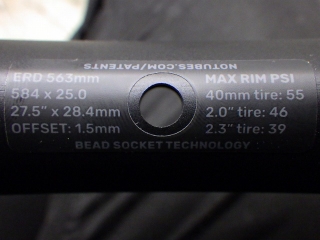
I considered whether the sticker by the valve hole
should be oriented so it reads correctly from the right side,
but that was close—almost made a mistake.
This rim has a much more decisive way to determine left and right.
For a rear wheel, it does end up readable from the right side.
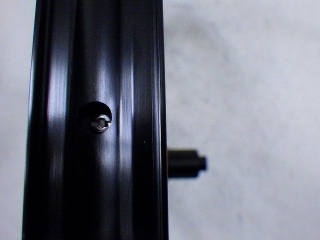
The Crest became an offset rim starting with the MK4.
The rim tape bed on the outer perimeter
is still glossy black as before.
Stan's tubeless tape has somewhat weak adhesion
to aluminum and carbon rims,
but good adhesion to subsequent layers of tape,
so you can wrap it twice if needed—
Stan's says once is sufficient and you don't need two wraps.
But for Stan's rims specifically, you shouldn't wrap twice.
The bead hook is very shallow, almost like a hookless rim,
and also very low, so wrapping the tape twice
makes the tire seat shallower, and there have been cases
where it came off with impact on landing.
A double wrap around the valve hole area is no problem though.

This is partway through wheel building,
with radial and lateral runout eliminated,
but intentionally shifted toward the freewheel side—
the non-freewheel side spoke tension is maxed out,
yet there's still room for tightening on the non-freewheel side
(which amounts to center drift). This is because it's an offset rim.
If this rear wheel were 24H, semi-comp would be ideal,
but with 32H, semi-CX sprint might have worked too.
Rather than loosen the freewheel side,
I tightened the non-freewheel side until center was achieved.
This doesn't mean the left-right difference is so small
you'd say "this thing doesn't need truing,"
but you can definitely feel the offset rim doing its job
while you're building.

I built a rear wheel using Stan's Crest MK4
in 650B rim size.
The hub is a Boost spec model called P3
from ZTTO, a Chinese brand.
For the past several years, for no particular reason—
XC race MTB frame sets have all switched to BOOST spec.
Road bikes might also adopt BOOST spec around the time they release
front double × 13-speed components,
wiping out old frame sets and components through planned obsolescence.
Anyway, this customer (nominally speaking)
had their MTB frame crack, so they bought a new one,
but their old wheels wouldn't fit—
so they reluctantly had to get a new wheel with a BOOST hub.
※ Some hubs can be converted to BOOST spec by changing the endcap,
converting 15×100mm to 110mm and 12×142mm to 148mm,
but in those cases the hub body dimensions (especially flange width) don't change,
so there's essentially no performance improvement to the wheel itself—
meaning the new standard doesn't actually deliver any performance gains.
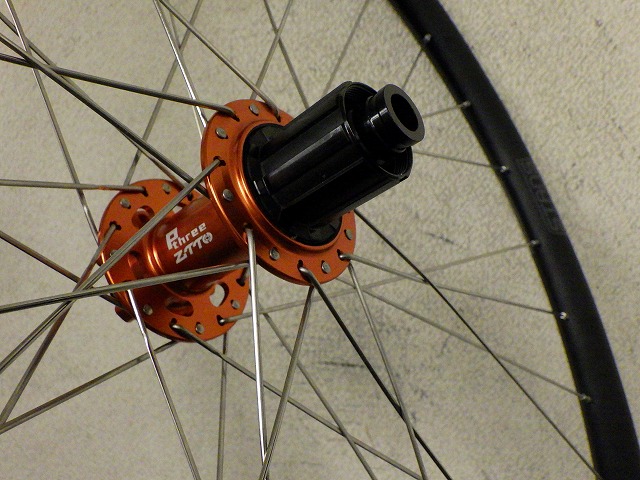
32H, semi-comp lacing, JIS standard.
I'll do the truing later.
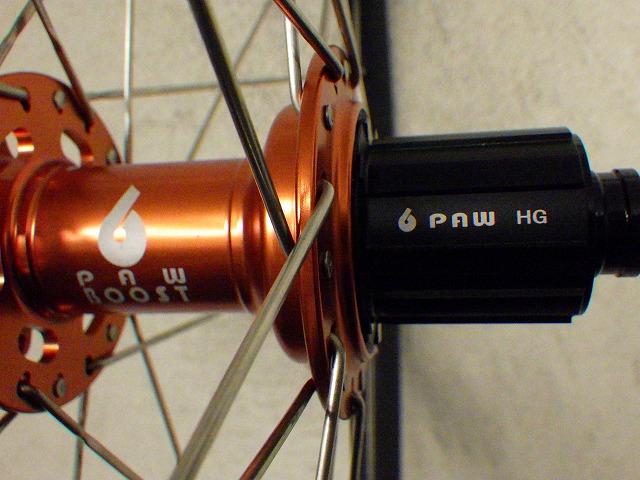
The "6PAW" marking on the opposite side of the hub body and the freebody
just means the freebody has 6 pawls.
Also, where it says "BOOST" on the hub body,
this hub has a hub body compatible with both 142mm and 148mm widths, but
it wasn't just shipped as 148mm spec by changing the endcap—
rather, the hub body dimensions actually require
BOOST (148mm width) to function properly.
From here on the timeline gets jumbled up—
the photos are from before and after the wheel was built, so forgive the mess.
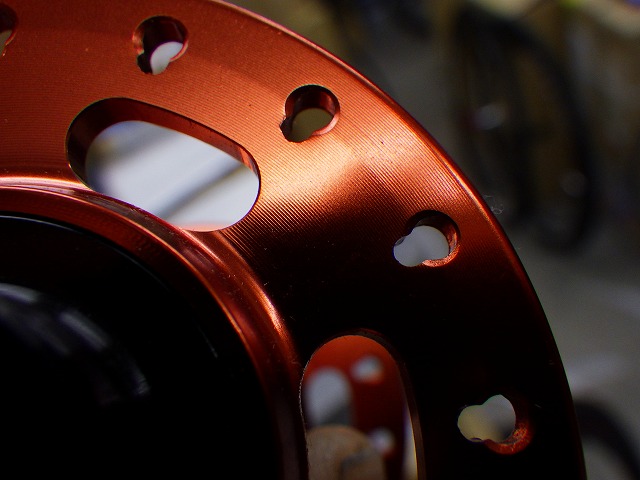
The spoke holes on the hub flange had flattened slots
so narrow they wouldn't let a 2.3mm round spoke hole through.
Even though this isn't where the spoke neck seats,
I feel like it allows too much dynamic play in the spokes during use,
so unless you're building the wheel with flat spokes,
it's better not to have these slots.
On road bike hubs, you sometimes get this spec
without even asking for it.
Even with Tni hubs or Phil Wood hubs,
the spec can change from batch to batch,
but for MTB hubs this is generally unnecessary.
Since this is 32H,
even if road bikes go BOOST spec,
you wouldn't normally build a wheel with this spoke count.
As for gravel bikes—well, gravel bike wheels
are almost never built with flat spokes anyway.
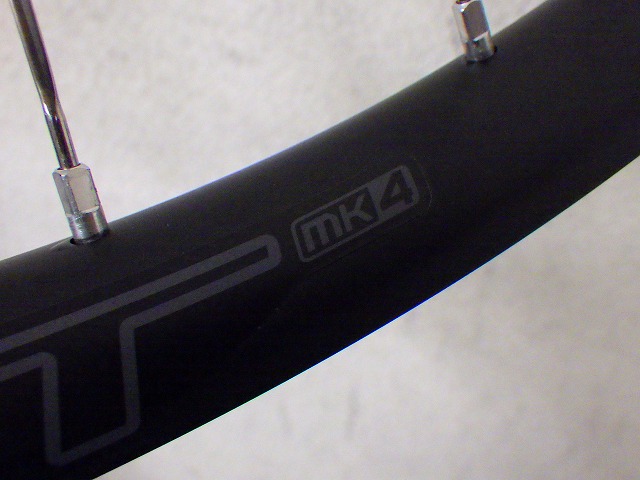
Stan's Crest changed from MK3 to MK4.
When I opened the packaging and saw the matte black rim,
I got nervous thinking I'd accidentally ordered
the Crest CB7 (the carbon rim version) by mistake.
The surface finish looks like it might offer good mud shedding—
well, hopefully it does.
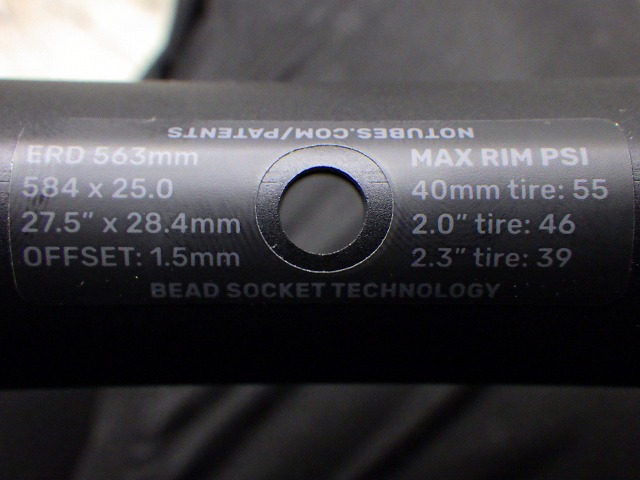
I considered whether the sticker by the valve hole
should be oriented so it reads correctly from the right side,
but that was close—almost made a mistake.
This rim has a much more decisive way to determine left and right.
For a rear wheel, it does end up readable from the right side.

The Crest became an offset rim starting with the MK4.
The rim tape bed on the outer perimeter
is still glossy black as before.
Stan's tubeless tape has somewhat weak adhesion
to aluminum and carbon rims,
but good adhesion to subsequent layers of tape,
so you can wrap it twice if needed—
Stan's says once is sufficient and you don't need two wraps.
But for Stan's rims specifically, you shouldn't wrap twice.
The bead hook is very shallow, almost like a hookless rim,
and also very low, so wrapping the tape twice
makes the tire seat shallower, and there have been cases
where it came off with impact on landing.
A double wrap around the valve hole area is no problem though.


This is partway through wheel building,
with radial and lateral runout eliminated,
but intentionally shifted toward the freewheel side—
the non-freewheel side spoke tension is maxed out,
yet there's still room for tightening on the non-freewheel side
(which amounts to center drift). This is because it's an offset rim.
If this rear wheel were 24H, semi-comp would be ideal,
but with 32H, semi-CX sprint might have worked too.
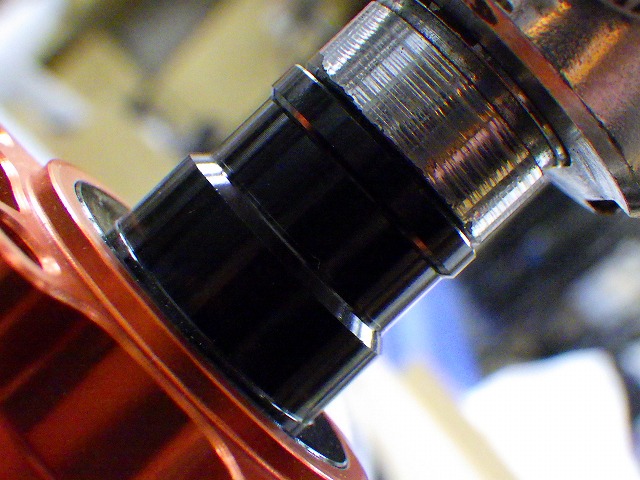
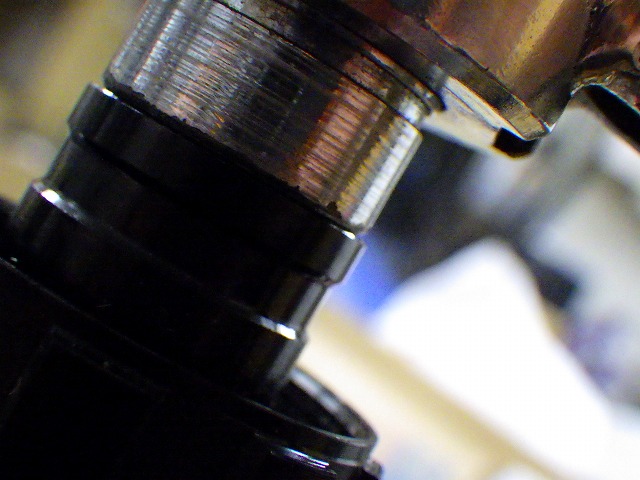
Rather than loosen the freewheel side,
I tightened the non-freewheel side until center was achieved.
This doesn't mean the left-right difference is so small
you'd say "this thing doesn't need truing,"
but you can definitely feel the offset rim doing its job
while you're building.