A customer brought in a pair of front and rear wheels
for a ZIPP 404 Firecrest in WO rim spec.

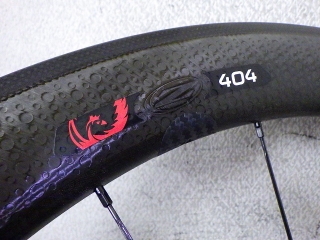
These are rim brake wheels from a while back.
Actually, disc brake wheels probably didn't even exist yet back then.
The customer wanted inspection and re-tensioning on the rear wheel.
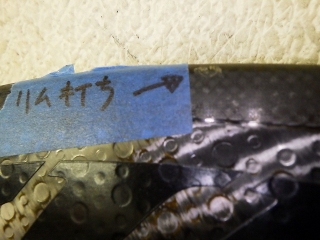
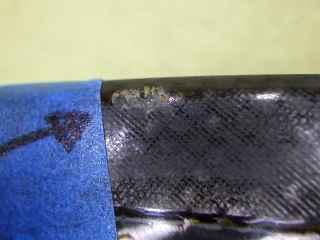
The customer was concerned about a slight peel in the outer surface
of the rim at one spot, but there's no real issue.
I just adjusted the brake shoe positioning
slightly inward from the rim edge.
This rim has a reverse-taper shape—the outer edge beyond the brake zone
gets progressively narrower as you go outward—so
the shoes would never contact the extreme outer edge anyway.
↑By the way, that Shamal Ultra DB rim from the other day—
it's also reverse-taper shaped.
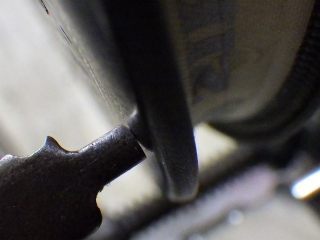
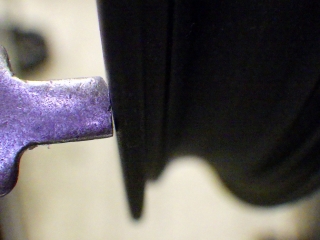
I captured a photo of the gap between the rim and the truing stand probe,
but I should note that because of how the truing stand is built,
perfect parallelism between the rim side and the probe face isn't guaranteed.

The front wheel was perfectly centered, and despite slight runout,
the tension was already quite high, so
deliberate additional tensioning wasn't really necessary—or even possible.
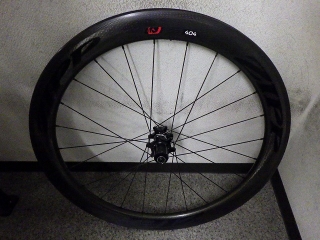
Now for the rear wheel.
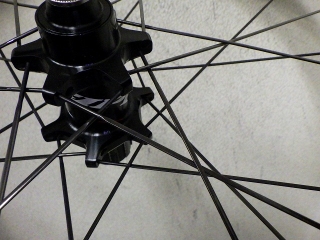
Like the front wheel, the spokes are all-black CX Sprints.
The rear wheel is laced with a left-right two-cross pattern,
where inpokes and outpokes alternate between coming from
the large and small flanges, repeating this alternating cross at the final intersection.
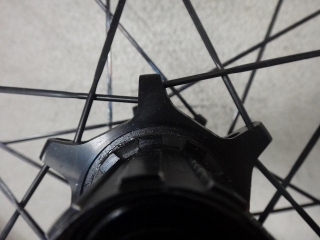
↑Freewheel side
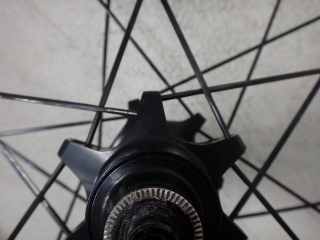
↑Non-freewheel side
These are from a past article—a different 404 tubular hub—but
looking at the first intersection, you can clearly see
how the large flanges cross with each other and the small flanges with each other.
Technically, spokes from the large flange and spokes from
the small flange have different tensions, but
that's considered acceptable.
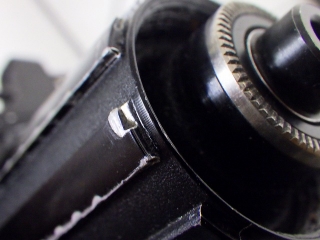
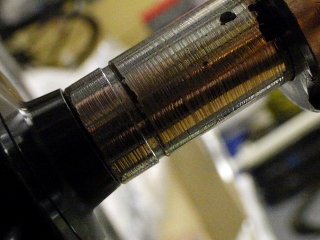
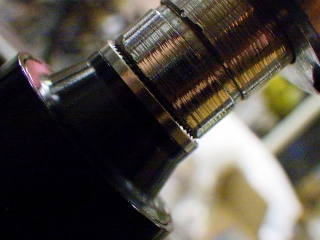
There are some gouged marks on the freewheel body splines—
the remnants of the top gear being installed with the wrong phase
and then the lockring being tightened down.
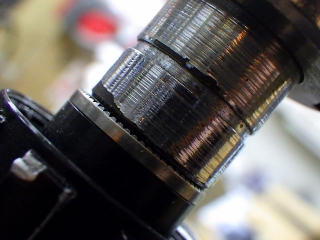
The rear wheel was also perfectly centered, and apart from
fine-tuning runout, it was tensioned so tightly that
I couldn't consciously add more tension. The customer also wanted
me to check the hub bearings, and both front and rear checked out fine.
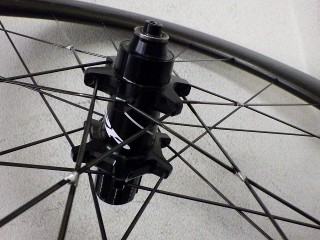
I re-tensioned only the non-freewheel side.
I didn't re-tension the freewheel side, as I determined it wasn't necessary.
for a ZIPP 404 Firecrest in WO rim spec.


These are rim brake wheels from a while back.
Actually, disc brake wheels probably didn't even exist yet back then.
The customer wanted inspection and re-tensioning on the rear wheel.


The customer was concerned about a slight peel in the outer surface
of the rim at one spot, but there's no real issue.
I just adjusted the brake shoe positioning
slightly inward from the rim edge.

This rim has a reverse-taper shape—the outer edge beyond the brake zone
gets progressively narrower as you go outward—so
the shoes would never contact the extreme outer edge anyway.

↑By the way, that Shamal Ultra DB rim from the other day—
it's also reverse-taper shaped.
I captured a photo of the gap between the rim and the truing stand probe,
but I should note that because of how the truing stand is built,
perfect parallelism between the rim side and the probe face isn't guaranteed.


The front wheel was perfectly centered, and despite slight runout,
the tension was already quite high, so
deliberate additional tensioning wasn't really necessary—or even possible.

Now for the rear wheel.

Like the front wheel, the spokes are all-black CX Sprints.
The rear wheel is laced with a left-right two-cross pattern,
where inpokes and outpokes alternate between coming from
the large and small flanges, repeating this alternating cross at the final intersection.
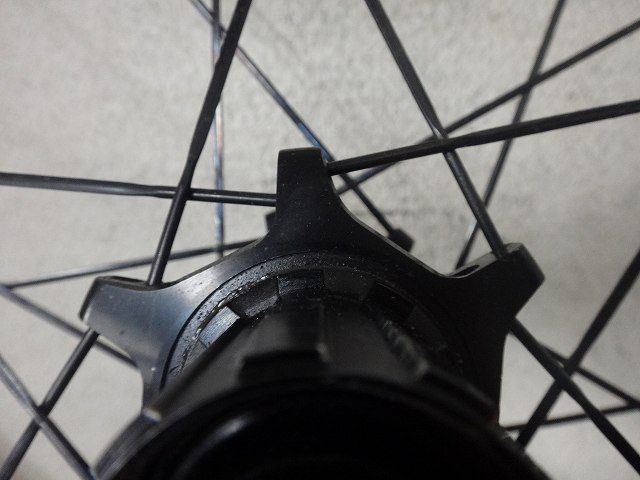
↑Freewheel side
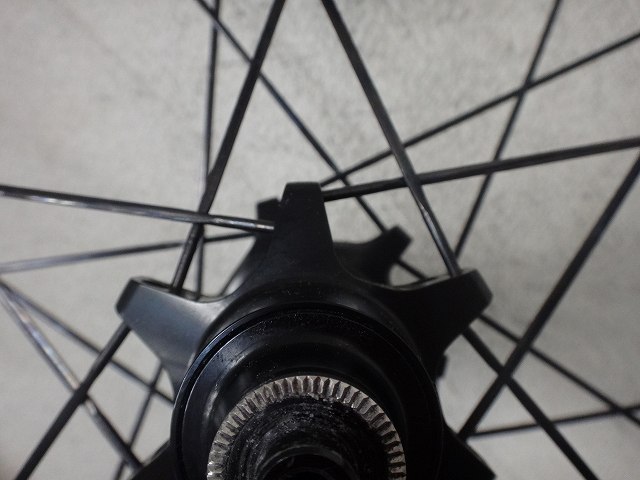
↑Non-freewheel side
These are from a past article—a different 404 tubular hub—but
looking at the first intersection, you can clearly see
how the large flanges cross with each other and the small flanges with each other.
Technically, spokes from the large flange and spokes from
the small flange have different tensions, but
that's considered acceptable.

There are some gouged marks on the freewheel body splines—
the remnants of the top gear being installed with the wrong phase
and then the lockring being tightened down.


The rear wheel was also perfectly centered, and apart from
fine-tuning runout, it was tensioned so tightly that
I couldn't consciously add more tension. The customer also wanted
me to check the hub bearings, and both front and rear checked out fine.

I re-tensioned only the non-freewheel side.
I didn't re-tension the freewheel side, as I determined it wasn't necessary.