Another day working on wheels (and so on).
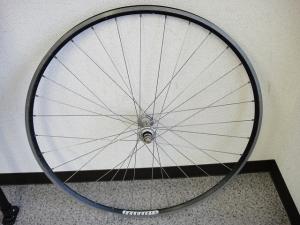
A fixed gear wheel came in for service.
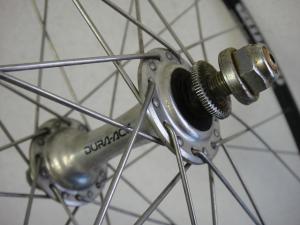
The hub is a Dura-Ace track small-flange hub,

and the rim is a Velocity Aero Head rim.
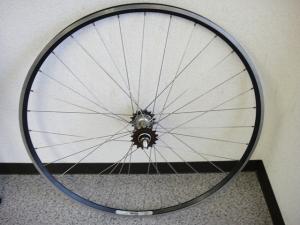
The rear wheel likewise has a Dura-Ace track small-flange hub with the same rim.
The front wheel had so much runout that I gave up on truing it at first glance,
so I'm replacing the rim and rebuilding it. I'll use the DT RR1.2 from yesterday.
I've been using the term "wheel rebuild," but I realized a while back that
"to change" (換える) means "to exchange A and B,"
while "to replace" (替える) means "to stop using A and switch to B,"
so technically "wheel replacement" (組み替え) would be more correct.
But fixing all my past posts would be a hassle,
so I'm just sticking with "rebuild" (投げやり).
"Genetically modified organisms" uses "kumikae" (組み換え) — that one's correct.
In most other cases, "kumikae" (組み替え) is the right term.
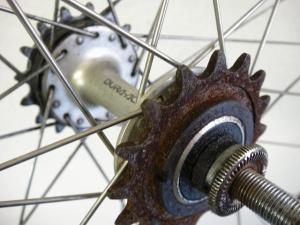
Based on the wear in the rim's braking surface and rust on the fixed gear,
it looks like this wheel was mostly ridden as a freewheel.
With freewheel hubs and track fixed gear setups, disassembling the wheel with the gear still attached
makes removing the gear incredibly difficult.
In those cases you'd need to clamp the hub body in a vise,
but you'll damage the hub 99% of the time.
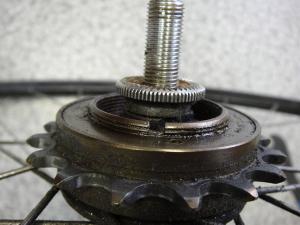
So I remove the gear before disassembling the wheel.

The axle nuts are in the way, so the removal tool won't fit.
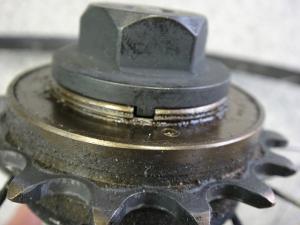
So I pulled the axle out.
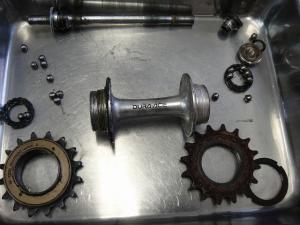
The hub had a gritty feeling when spinning, and I was going to disassemble it anyway, so no extra work.
The bearings and races weren't damaged,
but if they had been, there usually would have been uneven wear between sides,
so you have to keep the left and right bearings separate when disassembling the hub.

Cleaned and greased it back up.
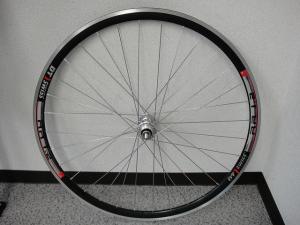
Got it assembled.

For a used rim, it's pretty clean... (said with no conviction)
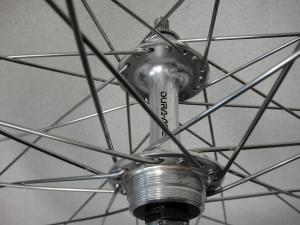
Both before and after the rebuild, both wheels are laced Rocheux (Rokuro) JIS pattern.
I used DT Champion 2.0mm plain spokes.
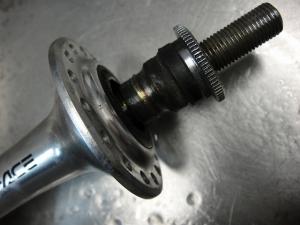
The front hub had a different kind of grittiness from the rear—
more of a dry, clicky feeling from the grease running out—so I disassembled that one too.
Dura-Ace track hubs prioritize smooth rotation,
so the sealing is just a plastic dust cover with minimal water and dirt protection.
But that's not a flaw—it's the result of cutting what's not essential
to achieve the necessary performance for a track hub.
The large-flange 7600 track front hub comes in both 8mm and 9mm axle specs,
but the small-flange 7710 only comes in 9mm.
Since a 9mm axle is the same diameter as road hubs,
you can swap it for a hollow axle with a quick-release.
If there's no problem with "28/32/36H only," "radial lacing forbidden," and "frequent maintenance required,"
you could tune it up sharp and use it as a road front hub,
but I don't recommend it since that's not how the manufacturer intended it to be used.
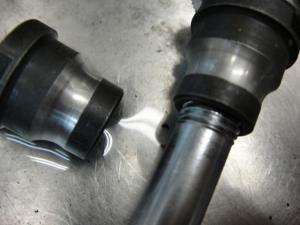
The bearing races had no pitting.
Just a greasing should do it.
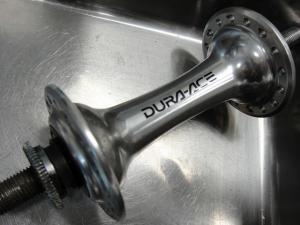
Like the rear hub, I set this one with just a hint of lateral play for now.
When you build a wheel, the flanges get pulled by the spokes,
which makes the hub spin smoother.
The lateral direction also loosens up, so if you set a bare hub with barely any play,
the finished wheel often develops lateral play.
If you compensate for that by setting it slightly tight on the bearings,
it might work out perfectly when built,
but I never want to set it that tight even for a second.
So I set it loose (with just barely perceptible play) and then completed most of the wheel build
before fine-tuning the bearing adjustment.
I'm doing this because the hub overhaul and wheel building are connected;
if I were just overhauling a bare hub, I wouldn't set it with any play.
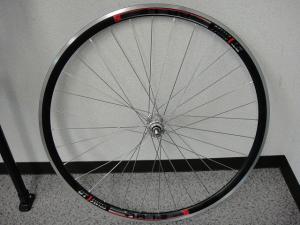
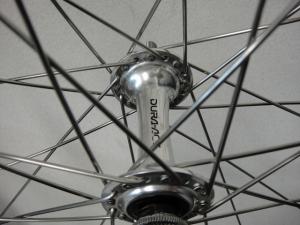
Got it built.
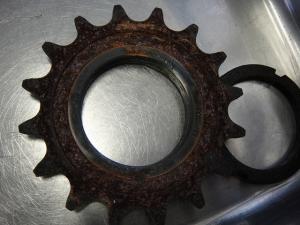
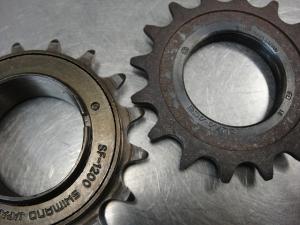
Cleaned the gear as much as possible of rust and grime.
As for the rust—if it's okay for it to be completely clean now and then rust instantly later,
there'd be more I could do, but I'll skip it.
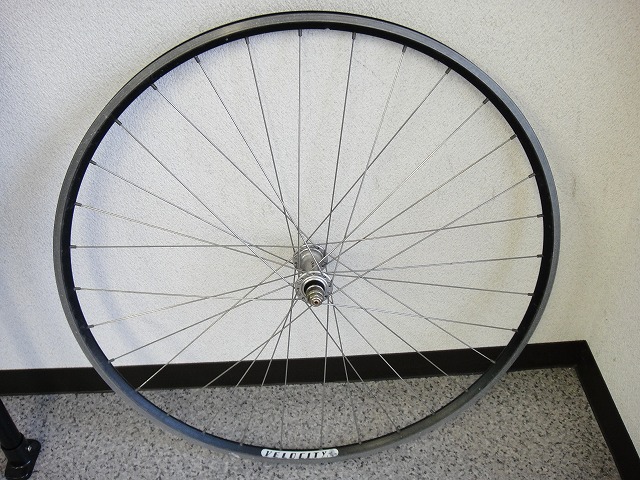
A fixed gear wheel came in for service.

The hub is a Dura-Ace track small-flange hub,
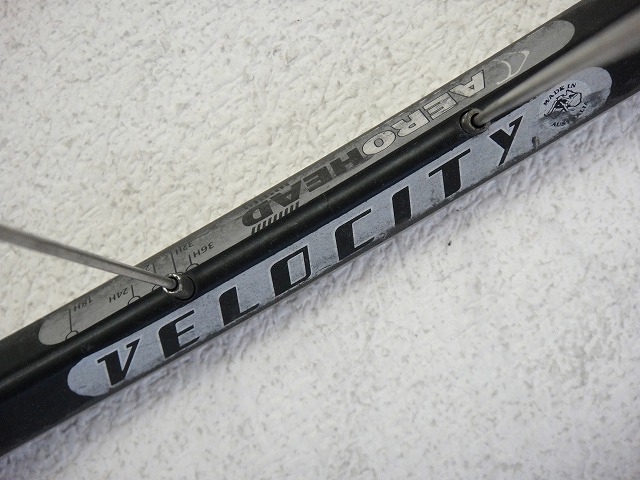
and the rim is a Velocity Aero Head rim.

The rear wheel likewise has a Dura-Ace track small-flange hub with the same rim.
The front wheel had so much runout that I gave up on truing it at first glance,
so I'm replacing the rim and rebuilding it. I'll use the DT RR1.2 from yesterday.
I've been using the term "wheel rebuild," but I realized a while back that
"to change" (換える) means "to exchange A and B,"
while "to replace" (替える) means "to stop using A and switch to B,"
so technically "wheel replacement" (組み替え) would be more correct.
But fixing all my past posts would be a hassle,
so I'm just sticking with "rebuild" (投げやり).
"Genetically modified organisms" uses "kumikae" (組み換え) — that one's correct.
In most other cases, "kumikae" (組み替え) is the right term.
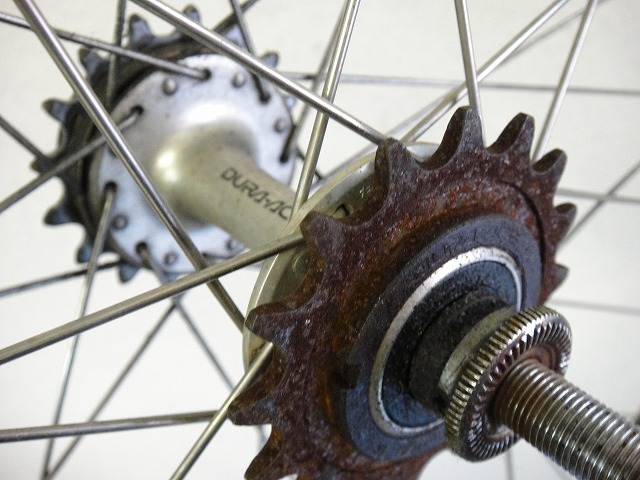
Based on the wear in the rim's braking surface and rust on the fixed gear,
it looks like this wheel was mostly ridden as a freewheel.
With freewheel hubs and track fixed gear setups, disassembling the wheel with the gear still attached
makes removing the gear incredibly difficult.
In those cases you'd need to clamp the hub body in a vise,
but you'll damage the hub 99% of the time.

So I remove the gear before disassembling the wheel.

The axle nuts are in the way, so the removal tool won't fit.
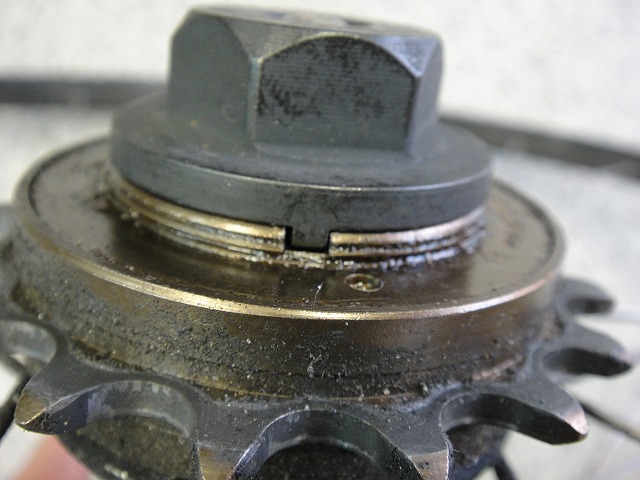
So I pulled the axle out.

The hub had a gritty feeling when spinning, and I was going to disassemble it anyway, so no extra work.
The bearings and races weren't damaged,
but if they had been, there usually would have been uneven wear between sides,
so you have to keep the left and right bearings separate when disassembling the hub.
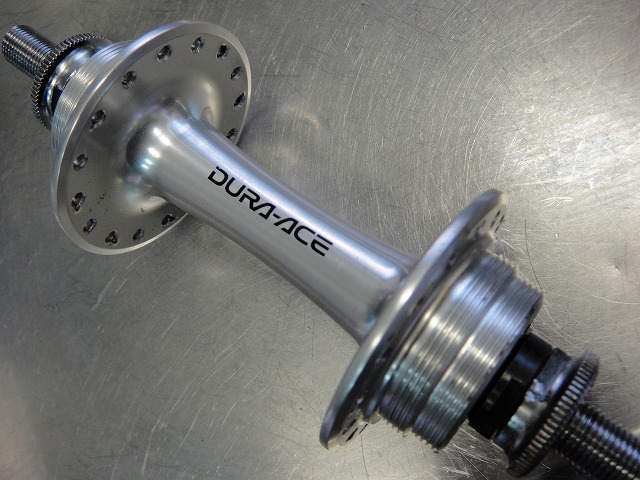
Cleaned and greased it back up.
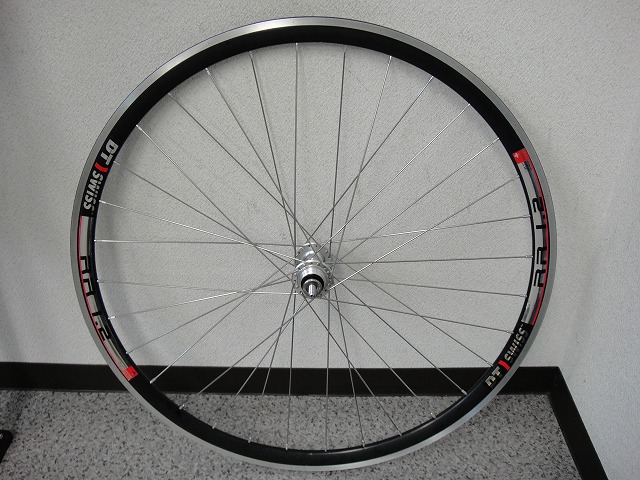
Got it assembled.
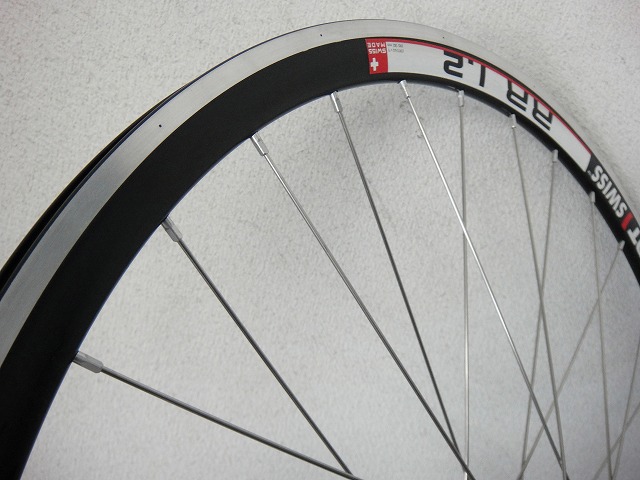
For a used rim, it's pretty clean... (said with no conviction)
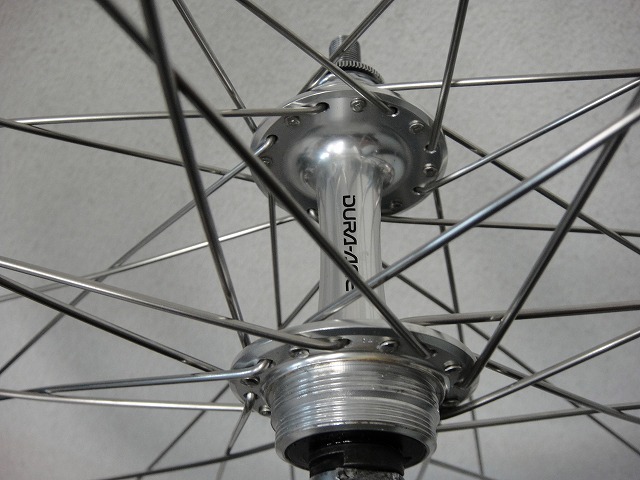
Both before and after the rebuild, both wheels are laced Rocheux (Rokuro) JIS pattern.
I used DT Champion 2.0mm plain spokes.
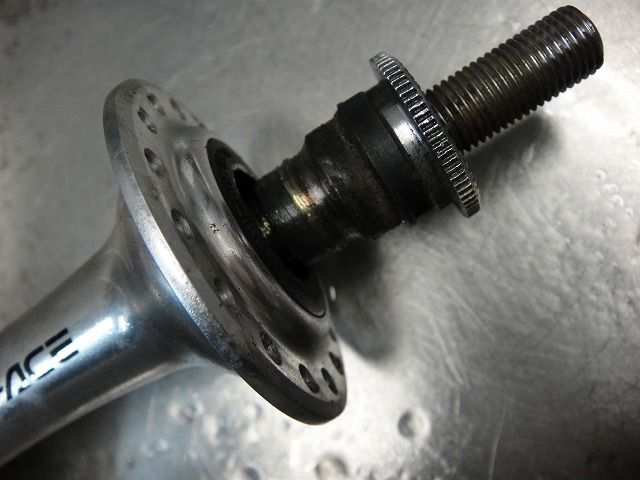
The front hub had a different kind of grittiness from the rear—
more of a dry, clicky feeling from the grease running out—so I disassembled that one too.
Dura-Ace track hubs prioritize smooth rotation,
so the sealing is just a plastic dust cover with minimal water and dirt protection.
But that's not a flaw—it's the result of cutting what's not essential
to achieve the necessary performance for a track hub.
The large-flange 7600 track front hub comes in both 8mm and 9mm axle specs,
but the small-flange 7710 only comes in 9mm.
Since a 9mm axle is the same diameter as road hubs,
you can swap it for a hollow axle with a quick-release.
If there's no problem with "28/32/36H only," "radial lacing forbidden," and "frequent maintenance required,"
you could tune it up sharp and use it as a road front hub,
but I don't recommend it since that's not how the manufacturer intended it to be used.
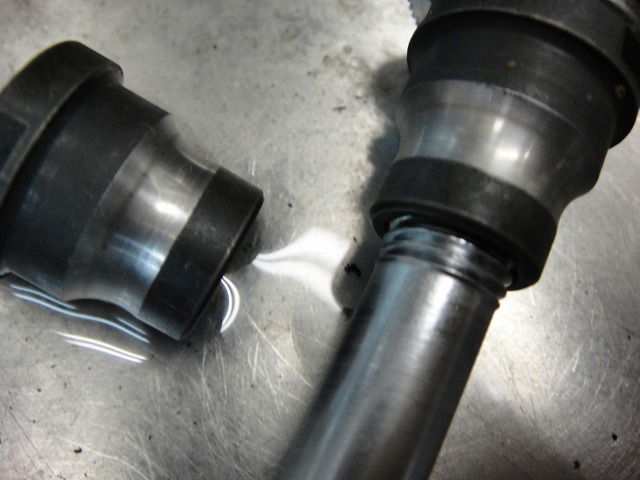
The bearing races had no pitting.
Just a greasing should do it.
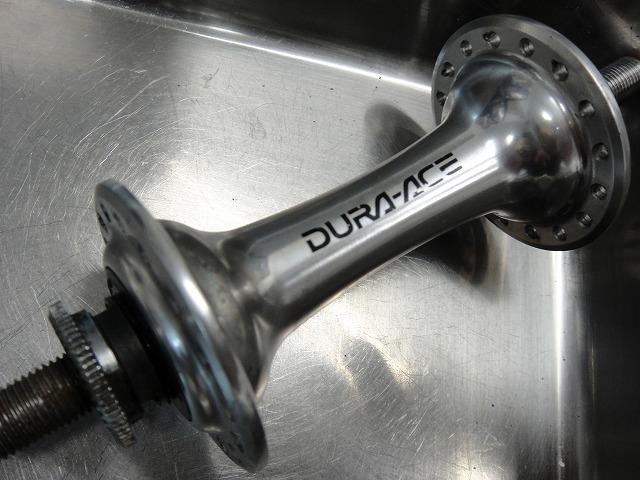
Like the rear hub, I set this one with just a hint of lateral play for now.
When you build a wheel, the flanges get pulled by the spokes,
which makes the hub spin smoother.
The lateral direction also loosens up, so if you set a bare hub with barely any play,
the finished wheel often develops lateral play.
If you compensate for that by setting it slightly tight on the bearings,
it might work out perfectly when built,
but I never want to set it that tight even for a second.
So I set it loose (with just barely perceptible play) and then completed most of the wheel build
before fine-tuning the bearing adjustment.
I'm doing this because the hub overhaul and wheel building are connected;
if I were just overhauling a bare hub, I wouldn't set it with any play.
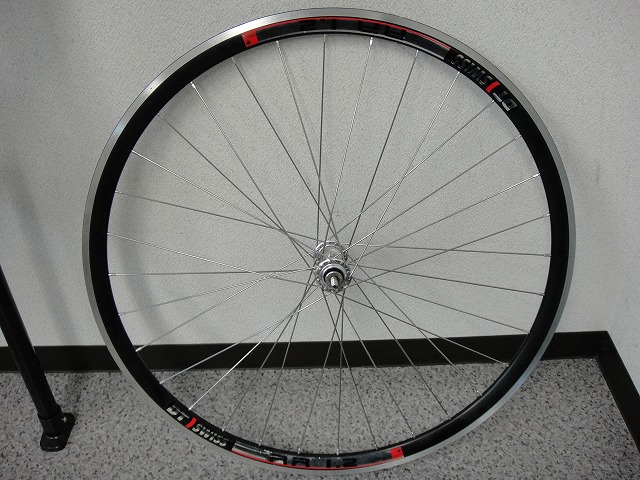

Got it built.
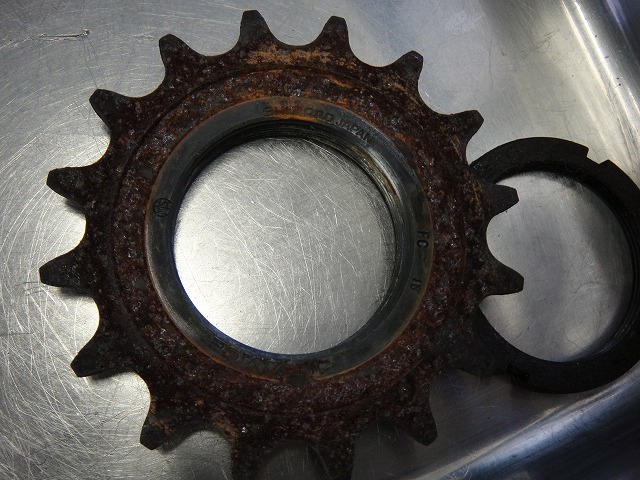
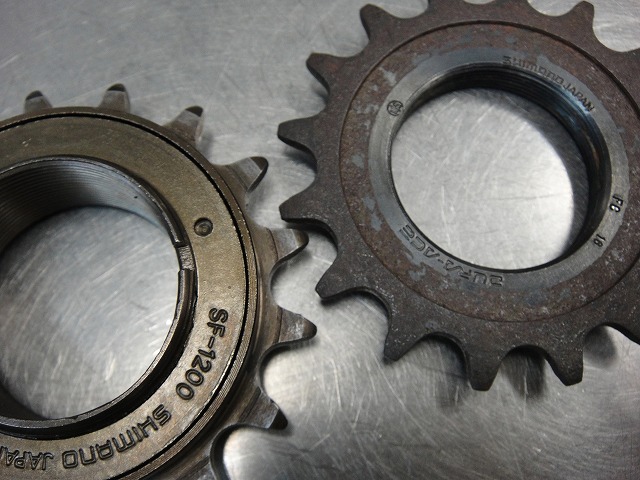
Cleaned the gear as much as possible of rust and grime.
As for the rust—if it's okay for it to be completely clean now and then rust instantly later,
there'd be more I could do, but I'll skip it.