Since the previous article about the Racing Zero freehub body damage got long, I've split it into a separate post.
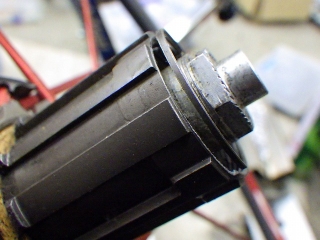
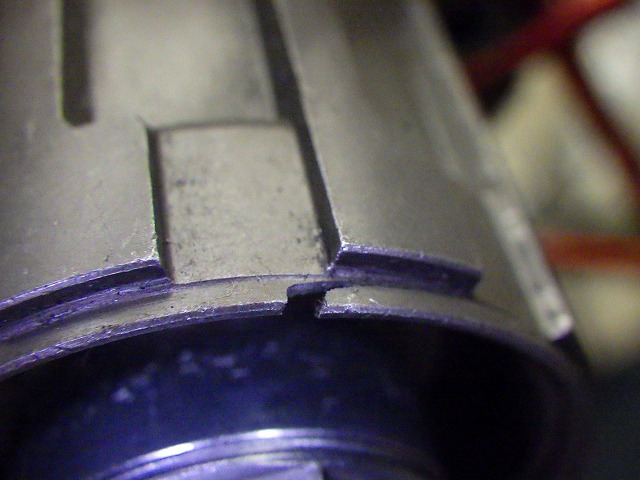
This is about why the edge of the freehub body got cut.
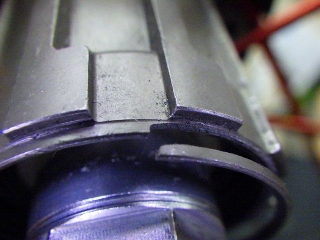
When you push the cut section with your finger to fit it into the crack,
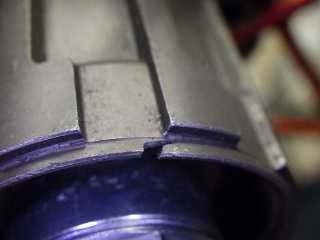
you can see there's a missing section.
As for this freehub body, the customer will handle the replacement or whatever, so we decided to just leave it for now.
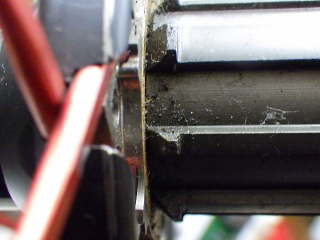
↑This is going back in time before the hub disassembly and cleaning, but
this hub had a Shimano 10-speed freehub body.
Shimano 10-speed sprockets require
a 1.0mm thick "low spacer" to be installed
deep inside the low gear, but
if you forget to install it, the sprocket components will be
1mm short in the freehub spline dimension.
This naturally causes left-right play in the sprocket, but
if you mistakenly think it's due to loose lockring tightening
and tighten the lockring excessively,
the thin edge section of the spline will cut and crack.
This has happened multiple times with Novatec freehub bodies as well.
When installing a 10-speed sprocket on an 11-speed freehub body,
you insert a 1.85mm spacer deep into the freehub
to fill the dimension difference between 11-speed and 10-speed, but
for some reason when that 1.85mm spacer goes in,
some people remove the 1.0mm low spacer, and
then over-tighten the lockring in that state,
cutting the freehub edge. That's the sequence of events.
Certainly if the 1.85mm spacer is forgotten,
the sprocket rattles around so much you notice it, but
with 1.0mm it seems some people don't notice.
With 11-speed freehub bodies, the 1.85mm is a hub-side part
and the 1.0mm is a sprocket-side part,
and both are necessary, so you end up installing 2 spacers total.
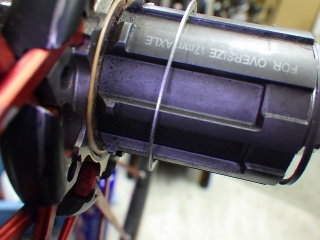
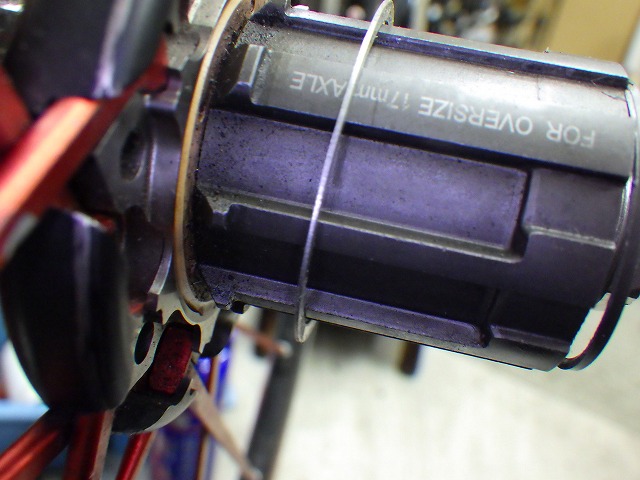
↑This is the 1.0mm low spacer.
As expected, it fits all the way into the freehub spline.
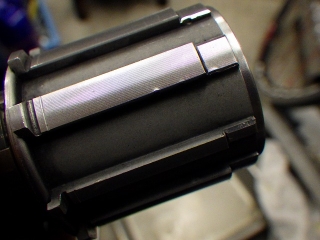
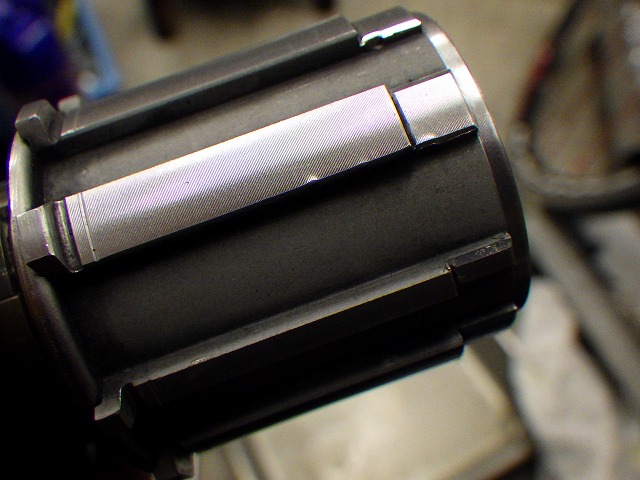
↑This is a Shimano 7800 hub freehub body, but
it's marked as "10-speed dedicated" so that
earlier 9-speed components' sprockets can't be installed on it—
the spline height is made higher partway through.
With this freehub body, you don't need a low spacer.
"On the new 10-speed Dura-Ace wheels (or hubs),
installation of previous 9-speed sprockets is not possible!
If you want to use this, switch your groupset to 10-speed!"
Due to this petty, short-lived harassment and
blatant planned obsolescence
they created, later on it left a messy legacy problem
of whether a low spacer is needed or not.
Incidentally, they haven't caused spacer-related problems, but
the current Dura-Ace-grade rear wheel is doing
exactly the same thing:
"On the new 12-speed Dura-Ace wheels,
installation of previous 11-speed sprockets is not possible!
If you want to use this, switch your groupset to 12-speed!"
You can see right through their sales strategy.
Oh, officially the story is "once we pursued weight reduction and such,
it just ended up this way"—just so you know.
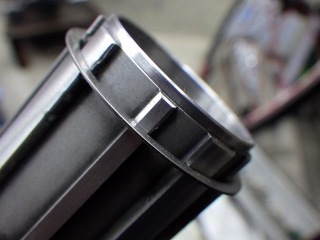
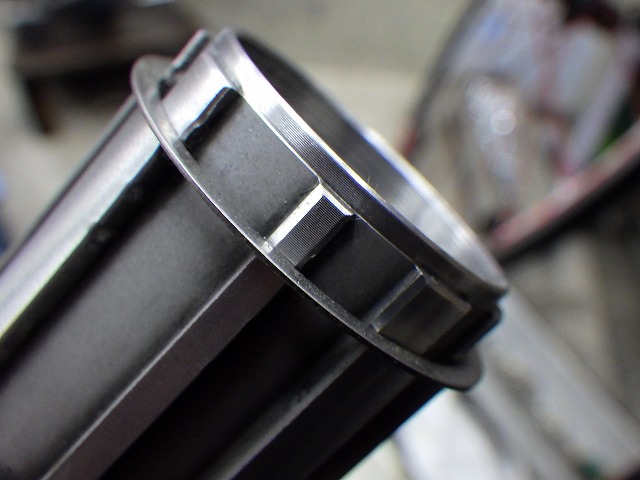
On a 10-speed-dedicated freehub body,
the 1.0mm low spacer won't go all the way in
(and by the way, 9-speed sprockets also get caught here).
So while you might forget to install the low spacer
on a freehub body that requires one,
you can't excessively install a low spacer
on a freehub body that doesn't need one.
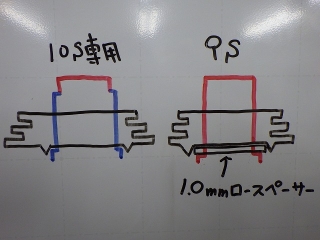
In diagram form, it looks like this.
On the back of 10-speed sprockets,
there's a dimension notch designed for the low spacer.
Based on everything up to here, if a low spacer isn't needed,
you couldn't install it in the first place, so
you might think "on freehub bodies where the low spacer can pass all the way through,
just always install it"—but there's an exception to this.
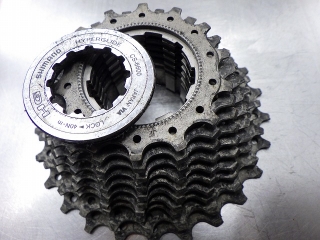
↑This is a 6600-series Ultegra
14-25T 10-speed sprocket.
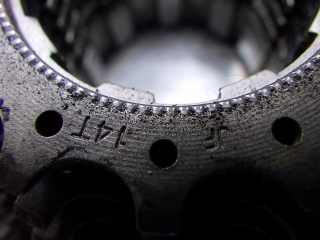
Sprockets with a top gear of 13T or higher were
back when there was UCI junior category regulation restricting
the gear ratio of outer×top combinations (now abolished),
and they were commonly used in high school cycling clubs,
so they're also called "high school club gears."
The CS-6600 has four types: 13-25T, 14-25T,
15-25T, and 16-27T, but
the 16-27T, with its 27T low gear (the largest low gear for road bikes at that time)
plus 18, 20, and 22T teeth,
had more of a hill-climbing purpose with teeth clustered on the low side, while
the 13-25T is a cross-ratio gear that you won't struggle with
unless you're hammering downhill at over 50 kph,
so it's quite versatile—they're not exclusively for high school students.
If there were an 11-25T 12-speed sprocket
with 11T and 12T added to the 13-25T 10-speed,
that would be extremely useful, but with current road bikes,
even if you choose the smallest low-gear combination,
you get a ridiculously wide 11-30T ratio.
Well, I suppose having a single-pivot rear derailleur
compatible with both 25T and 34T low gears is impossible,
so it can't be helped.
Anyway, getting off track here—
these high school club gears,
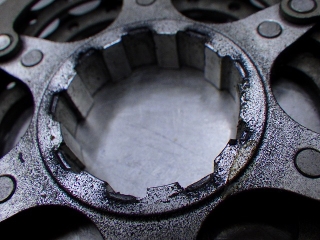
have a low-gear inner shape
that includes the dimension of the 1.0mm low spacer within it.
So even on freehub bodies that aren't 10-speed dedicated,
the high school club gears are an exception where a low spacer isn't needed. Complicated!
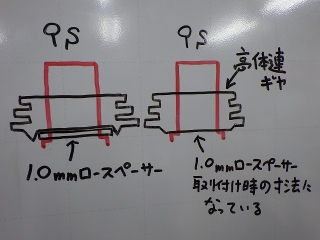
In diagram form, it looks like this.
Because the manufacturer wanted to push harder for an upgrade to the new 10-speed Dura-Ace
with their petty short-term agenda,
they added further confusing exceptions to the problem of whether
a low spacer is needed or not.
As I mentioned in the previous article, the Racing Zero
was in a high school cycling club room.
Based on the wheel's age, it's from when gear ratio restrictions were in place.
It's not against the rules to use
regular sprockets with 11T or 12T top gears for practice, so
switching back and forth between regular sprockets and high school club gears
in the club room is definitely possible,
and forgetting to install the low spacer is entirely plausible.
So as a result, the freehub body edge getting cut
by lockring tightening force is something that can happen,
and it's unavoidable in that sense.
Bonus
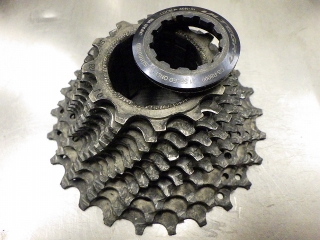
↑This is an 11-25T 11-speed sprocket, but
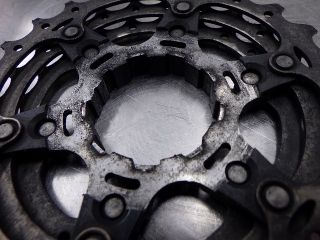
to install it on a 10-speed freehub body,
the inside of the low-gear spider arm has been shaved down.
This is completely unrelated to the point of this article,
so forget you saw it. ←Then why include it?
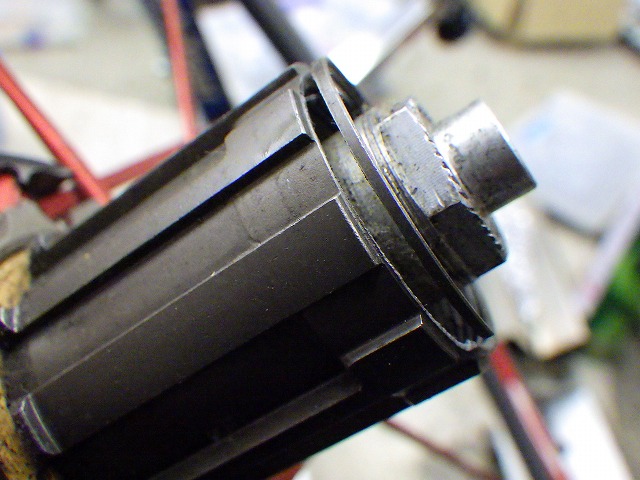
This is about why the edge of the freehub body got cut.
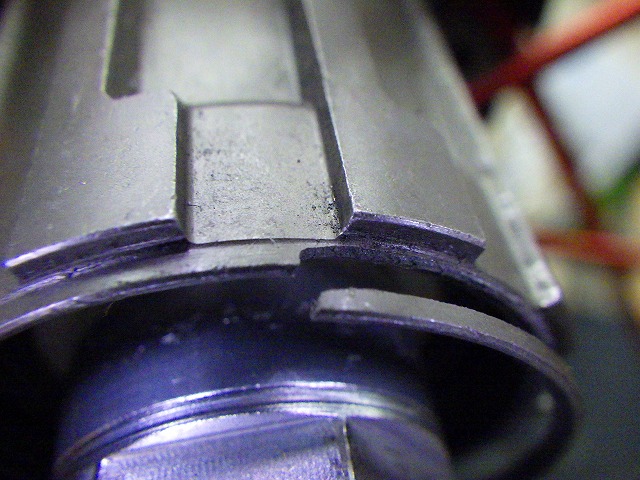
When you push the cut section with your finger to fit it into the crack,
you can see there's a missing section.
As for this freehub body, the customer will handle the replacement or whatever, so we decided to just leave it for now.

↑This is going back in time before the hub disassembly and cleaning, but
this hub had a Shimano 10-speed freehub body.
Shimano 10-speed sprockets require
a 1.0mm thick "low spacer" to be installed
deep inside the low gear, but
if you forget to install it, the sprocket components will be
1mm short in the freehub spline dimension.
This naturally causes left-right play in the sprocket, but
if you mistakenly think it's due to loose lockring tightening
and tighten the lockring excessively,
the thin edge section of the spline will cut and crack.
This has happened multiple times with Novatec freehub bodies as well.
When installing a 10-speed sprocket on an 11-speed freehub body,
you insert a 1.85mm spacer deep into the freehub
to fill the dimension difference between 11-speed and 10-speed, but
for some reason when that 1.85mm spacer goes in,
some people remove the 1.0mm low spacer, and
then over-tighten the lockring in that state,
cutting the freehub edge. That's the sequence of events.
Certainly if the 1.85mm spacer is forgotten,
the sprocket rattles around so much you notice it, but
with 1.0mm it seems some people don't notice.
With 11-speed freehub bodies, the 1.85mm is a hub-side part
and the 1.0mm is a sprocket-side part,
and both are necessary, so you end up installing 2 spacers total.
↑This is the 1.0mm low spacer.
As expected, it fits all the way into the freehub spline.
↑This is a Shimano 7800 hub freehub body, but
it's marked as "10-speed dedicated" so that
earlier 9-speed components' sprockets can't be installed on it—
the spline height is made higher partway through.
With this freehub body, you don't need a low spacer.
"On the new 10-speed Dura-Ace wheels (or hubs),
installation of previous 9-speed sprockets is not possible!
If you want to use this, switch your groupset to 10-speed!"
Due to this petty, short-lived harassment and
blatant planned obsolescence
they created, later on it left a messy legacy problem
of whether a low spacer is needed or not.
Incidentally, they haven't caused spacer-related problems, but
the current Dura-Ace-grade rear wheel is doing
exactly the same thing:
"On the new 12-speed Dura-Ace wheels,
installation of previous 11-speed sprockets is not possible!
If you want to use this, switch your groupset to 12-speed!"
You can see right through their sales strategy.
Oh, officially the story is "once we pursued weight reduction and such,
it just ended up this way"—just so you know.
On a 10-speed-dedicated freehub body,
the 1.0mm low spacer won't go all the way in
(and by the way, 9-speed sprockets also get caught here).
So while you might forget to install the low spacer
on a freehub body that requires one,
you can't excessively install a low spacer
on a freehub body that doesn't need one.
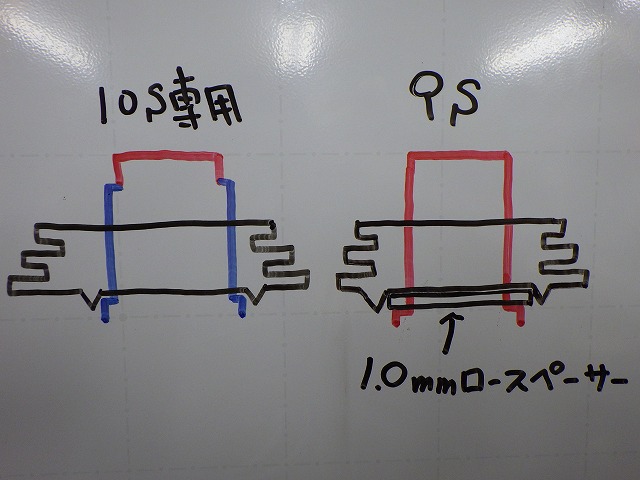
In diagram form, it looks like this.
On the back of 10-speed sprockets,
there's a dimension notch designed for the low spacer.
Based on everything up to here, if a low spacer isn't needed,
you couldn't install it in the first place, so
you might think "on freehub bodies where the low spacer can pass all the way through,
just always install it"—but there's an exception to this.
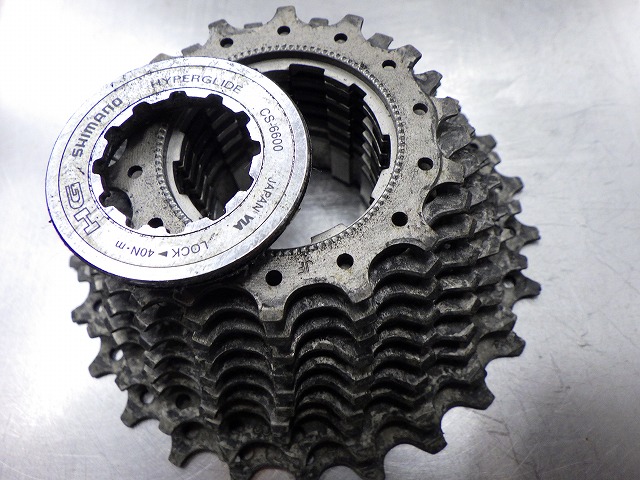
↑This is a 6600-series Ultegra
14-25T 10-speed sprocket.

Sprockets with a top gear of 13T or higher were
back when there was UCI junior category regulation restricting
the gear ratio of outer×top combinations (now abolished),
and they were commonly used in high school cycling clubs,
so they're also called "high school club gears."
The CS-6600 has four types: 13-25T, 14-25T,
15-25T, and 16-27T, but
the 16-27T, with its 27T low gear (the largest low gear for road bikes at that time)
plus 18, 20, and 22T teeth,
had more of a hill-climbing purpose with teeth clustered on the low side, while
the 13-25T is a cross-ratio gear that you won't struggle with
unless you're hammering downhill at over 50 kph,
so it's quite versatile—they're not exclusively for high school students.
If there were an 11-25T 12-speed sprocket
with 11T and 12T added to the 13-25T 10-speed,
that would be extremely useful, but with current road bikes,
even if you choose the smallest low-gear combination,
you get a ridiculously wide 11-30T ratio.
Well, I suppose having a single-pivot rear derailleur
compatible with both 25T and 34T low gears is impossible,
so it can't be helped.
Anyway, getting off track here—
these high school club gears,
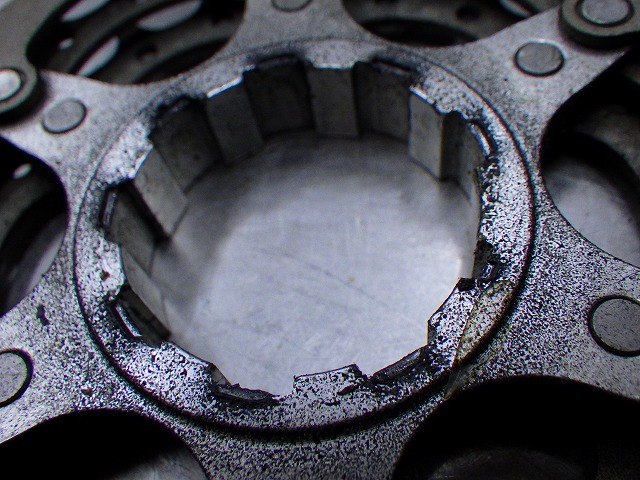
have a low-gear inner shape
that includes the dimension of the 1.0mm low spacer within it.
So even on freehub bodies that aren't 10-speed dedicated,
the high school club gears are an exception where a low spacer isn't needed. Complicated!
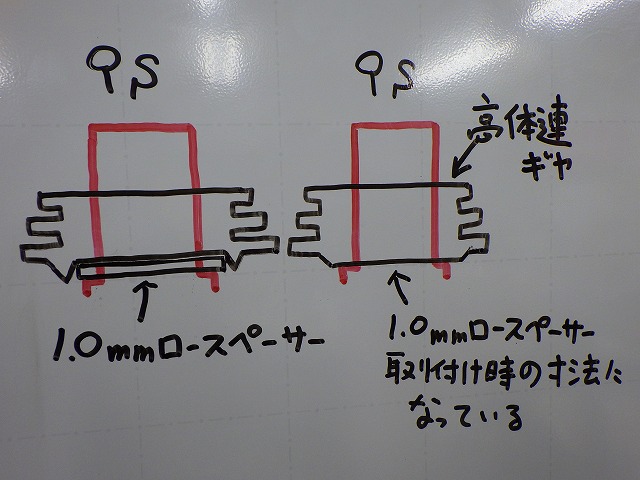
In diagram form, it looks like this.
Because the manufacturer wanted to push harder for an upgrade to the new 10-speed Dura-Ace
with their petty short-term agenda,
they added further confusing exceptions to the problem of whether
a low spacer is needed or not.
As I mentioned in the previous article, the Racing Zero
was in a high school cycling club room.
Based on the wheel's age, it's from when gear ratio restrictions were in place.
It's not against the rules to use
regular sprockets with 11T or 12T top gears for practice, so
switching back and forth between regular sprockets and high school club gears
in the club room is definitely possible,
and forgetting to install the low spacer is entirely plausible.
So as a result, the freehub body edge getting cut
by lockring tightening force is something that can happen,
and it's unavoidable in that sense.
Bonus
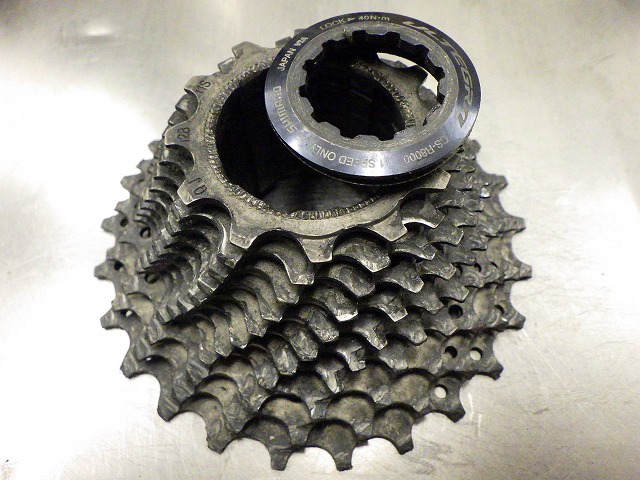
↑This is an 11-25T 11-speed sprocket, but
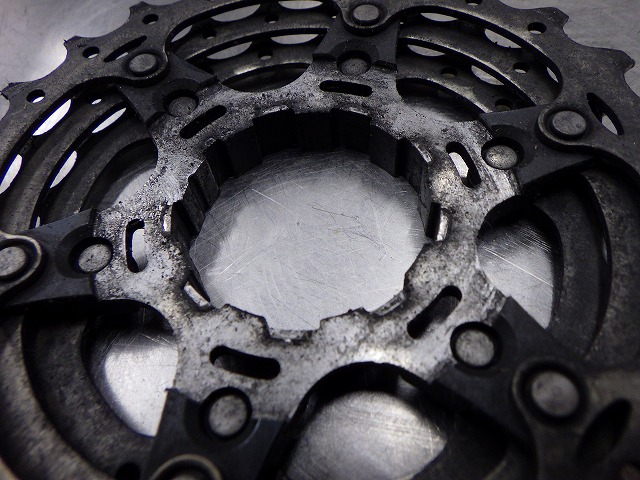
to install it on a 10-speed freehub body,
the inside of the low-gear spider arm has been shaved down.
This is completely unrelated to the point of this article,
so forget you saw it. ←Then why include it?