I was writing about the ratchet ring teeth on the rear wheel of the Racing Zero in my previous article,
but it got quite long, so I made it a separate post.
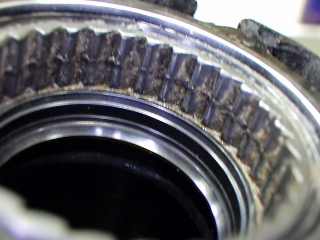
These ratchet ring teeth are actually replaceable.
They're not on there now, but
Campagnolo's spare parts catalog used to list
the part number and price for this part as a set of 3.
However, it had a note saying "Service Center Only,"
and since they don't sell the removal/installation tools to the general public,
replacement requires sending it to
Campagnolo Japan through a specialized distributor.
When these ratchet ring teeth wear down too much,
the pawls occasionally slip forward.
If slipping occurs even with new pawl springs, you should replace these teeth.
This part is priced as a set of 3,
but they sold me just one for one-third of that price
(though installation had to be done at a service center).
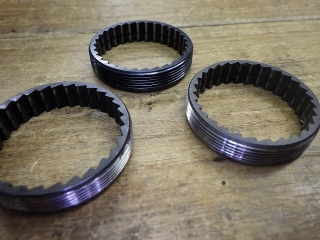
A ratchet ring that I had replaced in the past.
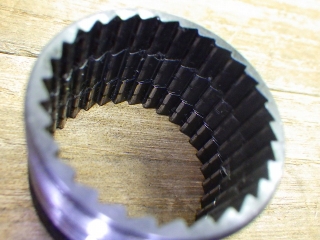
Arranging them with the most worn teeth on the bottom
looks like this

The most severely worn one.
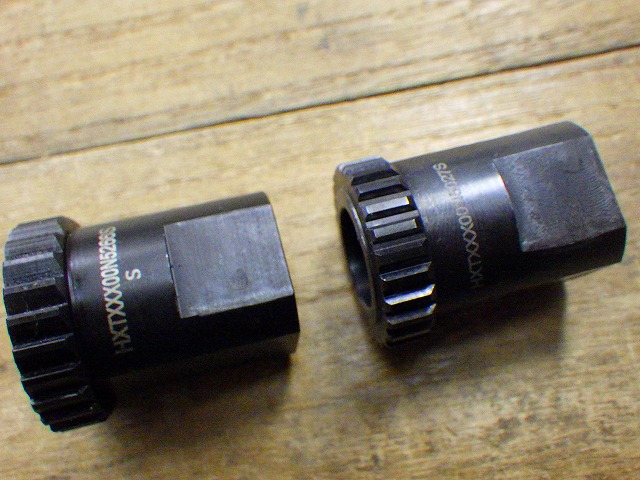
DT sells removal/installation tools for their hub ratchet rings.
The reason is that replacing the right-side bearing on the hub shell
requires removing and installing the ratchet ring.
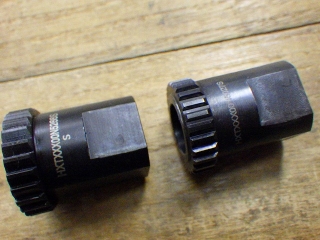
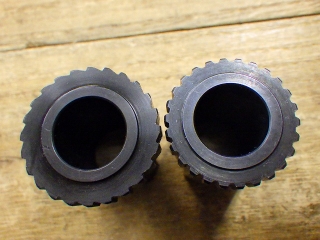
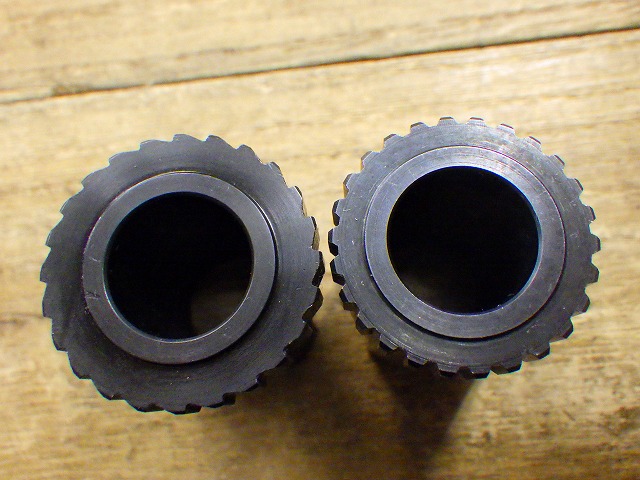
↑The tool on the left is for three-pawl springs,
and the one on the right is for star ratchets.
Both ratchet rings have the same thread dimensions on the hub shell, so
from a cost perspective, I don't think anyone would do it,
but it's possible to convert a three-pawl spring rear hub to a star ratchet.
Even more pointlessly, the reverse is also possible.
By the way, if you try to use the three-pawl spring tool
on a Campagnolo ratchet ring,
the tool diameter is too small and won't engage at all.
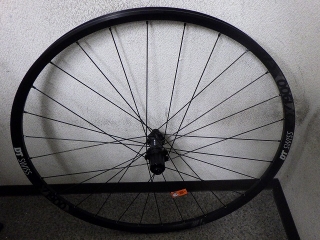
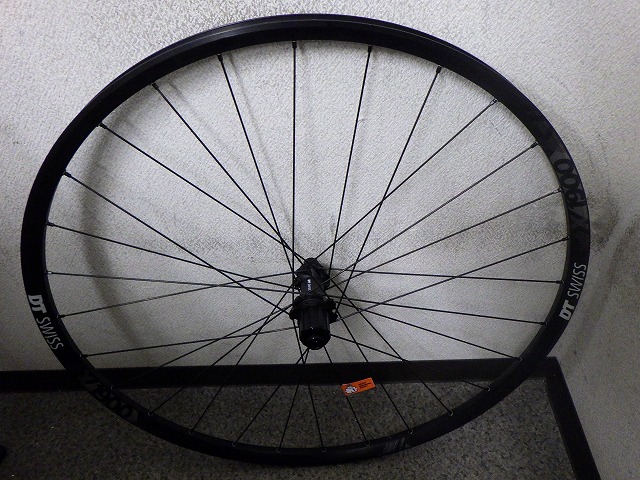
I bought just the rear wheel from a DT X1900 wheel for my personal use.
It's a 142mm through-axle,
but I don't own a frame that accommodates this rear wheel.
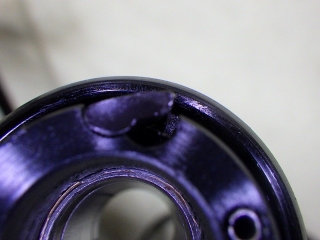
It's a three-pawl spring version, but
while not exactly the same shape, the pawl positions are
nearly mirror-symmetrical, so I tried flipping the pawls
to see if they would still function.
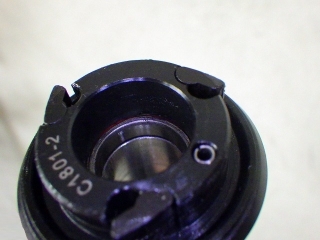
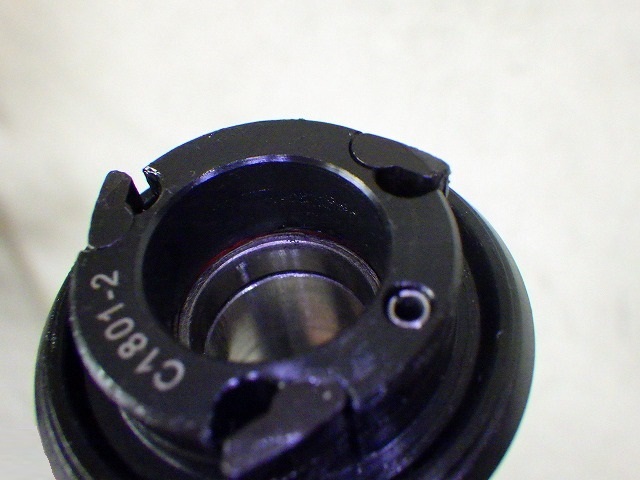
↑Like this
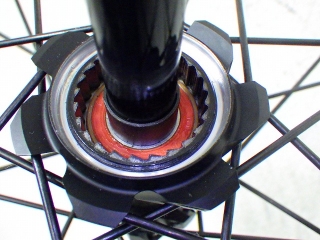
I removed the ratchet ring once and installed it upside down.
I was thinking about whether I could make a left-drive rear hub
with a freebody.
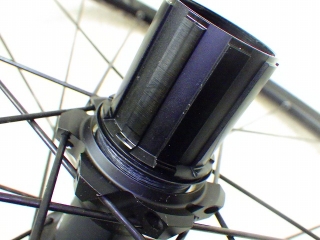
If the freebody is on the right side
and you rotate it in the pedaling direction, it freewheels.
The opposite of normal.
Next, if the freebody is on the left side
and you rotate it in the pedaling direction...
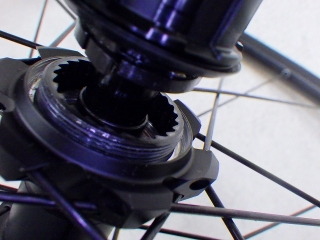
The ratchet ring loosens and comes out.
Since hand strength can cause this much movement,
it's impossible to prevent it from loosening under leg power.
With a fixed-gear left-drive, you could use a reverse-threaded lockring,
but with a freebody that's not possible.
Also, as the ratchet ring loosens and comes out,
the freebody itself also moves outward.
Though not installed in the image above,
the right-side end cap would also come off.
If it were mounted on the frame with a through-axle,
that might act as a stop,
but it's too dangerous to use.
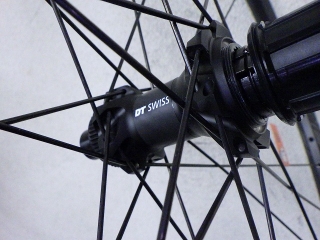
Since the dimensions aren't too bad,
I'll use it as a 28H straight-spoke hub instead.
As for freebody hubs that could support left-drive,
there's the previous generation ONYX hub.
You can flip the sprag pawls over,
and the part that receives the sprags is just a simple cylindrical bore—
unlike a ratchet, there are no teeth.
I say "previous generation" because I haven't disassembled
the current ONYX hub that far.
but it got quite long, so I made it a separate post.
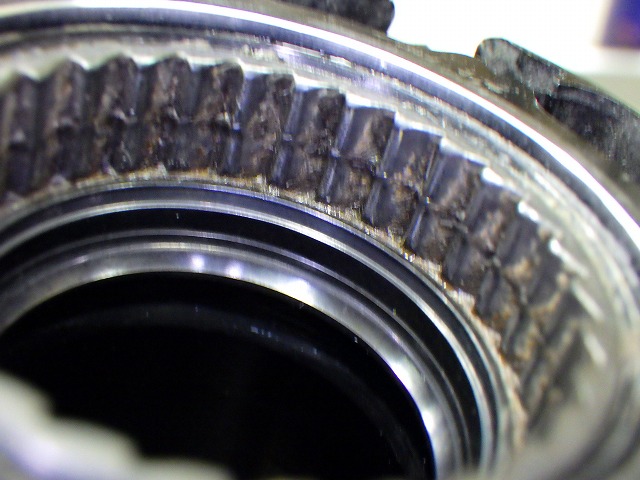
These ratchet ring teeth are actually replaceable.
They're not on there now, but
Campagnolo's spare parts catalog used to list
the part number and price for this part as a set of 3.
However, it had a note saying "Service Center Only,"
and since they don't sell the removal/installation tools to the general public,
replacement requires sending it to
Campagnolo Japan through a specialized distributor.
When these ratchet ring teeth wear down too much,
the pawls occasionally slip forward.
If slipping occurs even with new pawl springs, you should replace these teeth.
This part is priced as a set of 3,
but they sold me just one for one-third of that price
(though installation had to be done at a service center).
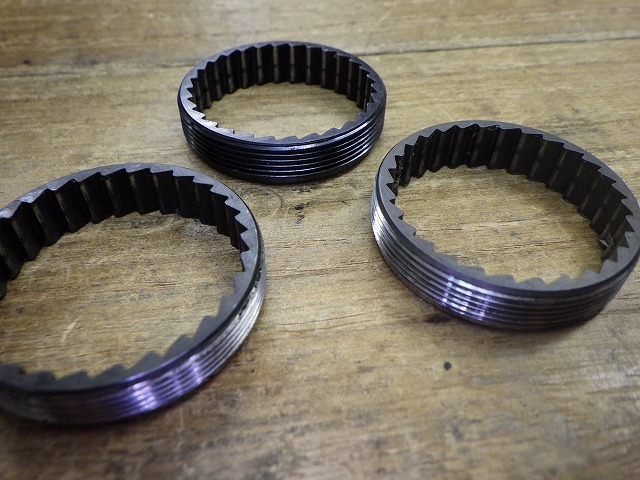
A ratchet ring that I had replaced in the past.
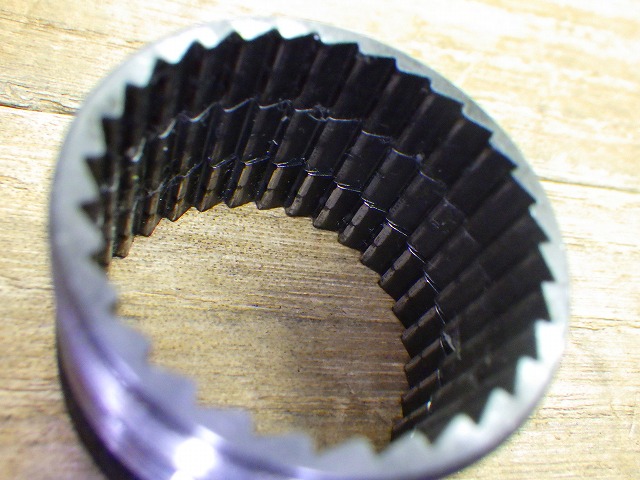
Arranging them with the most worn teeth on the bottom
looks like this
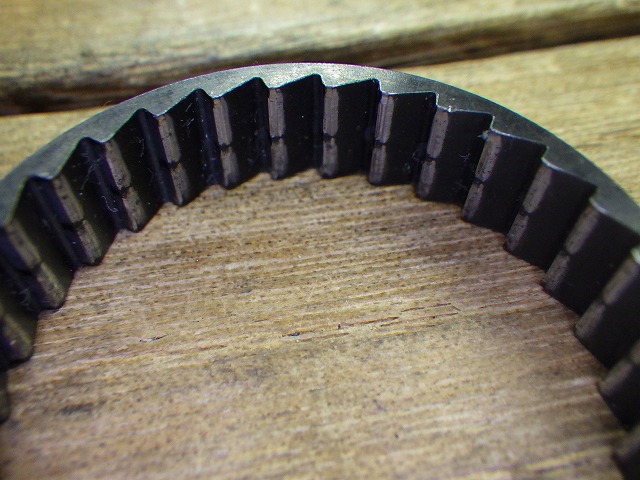
The most severely worn one.
DT sells removal/installation tools for their hub ratchet rings.
The reason is that replacing the right-side bearing on the hub shell
requires removing and installing the ratchet ring.
↑The tool on the left is for three-pawl springs,
and the one on the right is for star ratchets.
Both ratchet rings have the same thread dimensions on the hub shell, so
from a cost perspective, I don't think anyone would do it,
but it's possible to convert a three-pawl spring rear hub to a star ratchet.
Even more pointlessly, the reverse is also possible.
By the way, if you try to use the three-pawl spring tool
on a Campagnolo ratchet ring,
the tool diameter is too small and won't engage at all.
I bought just the rear wheel from a DT X1900 wheel for my personal use.
It's a 142mm through-axle,
but I don't own a frame that accommodates this rear wheel.

It's a three-pawl spring version, but
while not exactly the same shape, the pawl positions are
nearly mirror-symmetrical, so I tried flipping the pawls
to see if they would still function.
↑Like this

I removed the ratchet ring once and installed it upside down.
I was thinking about whether I could make a left-drive rear hub
with a freebody.
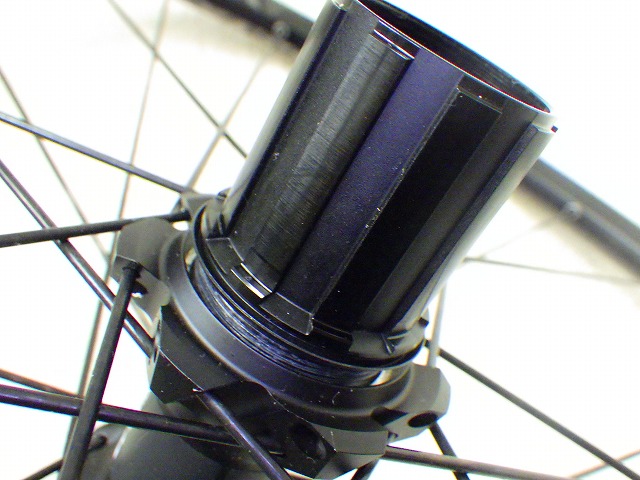
If the freebody is on the right side
and you rotate it in the pedaling direction, it freewheels.
The opposite of normal.
Next, if the freebody is on the left side
and you rotate it in the pedaling direction...
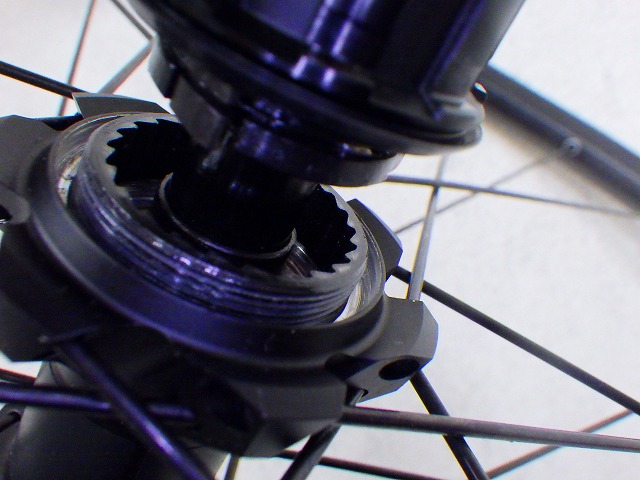
The ratchet ring loosens and comes out.
Since hand strength can cause this much movement,
it's impossible to prevent it from loosening under leg power.
With a fixed-gear left-drive, you could use a reverse-threaded lockring,
but with a freebody that's not possible.
Also, as the ratchet ring loosens and comes out,
the freebody itself also moves outward.
Though not installed in the image above,
the right-side end cap would also come off.
If it were mounted on the frame with a through-axle,
that might act as a stop,
but it's too dangerous to use.
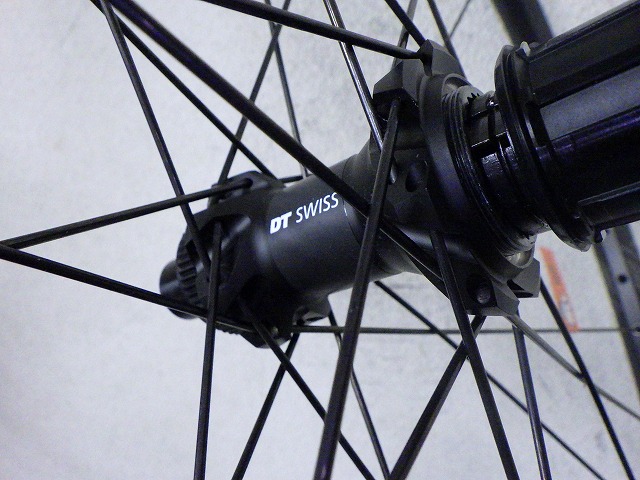
Since the dimensions aren't too bad,
I'll use it as a 28H straight-spoke hub instead.
As for freebody hubs that could support left-drive,
there's the previous generation ONYX hub.
You can flip the sprag pawls over,
and the part that receives the sprags is just a simple cylindrical bore—
unlike a ratchet, there are no teeth.
I say "previous generation" because I haven't disassembled
the current ONYX hub that far.