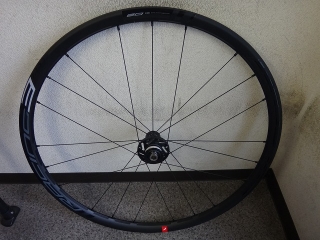
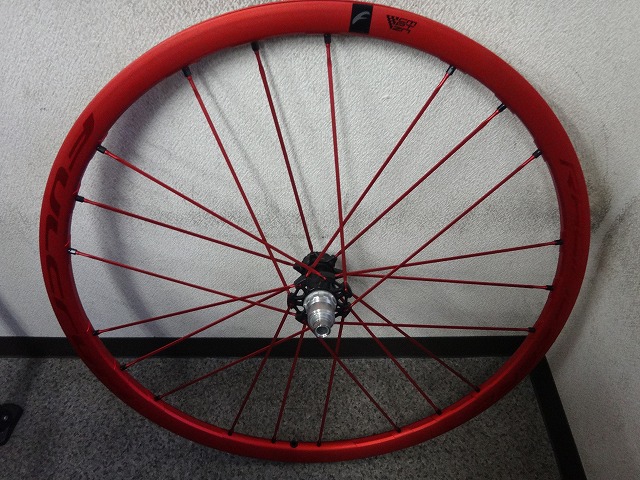
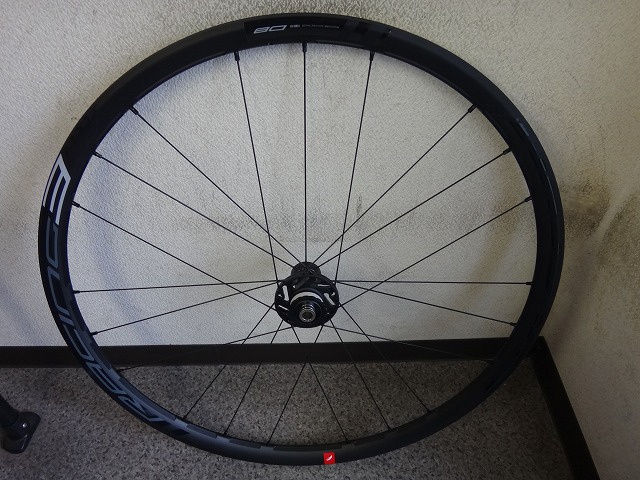
The other day, I inspected a Campagnolo Racing Zero Competizione DB in its Japan-limited color.
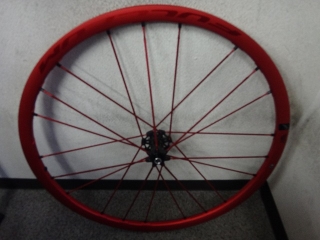
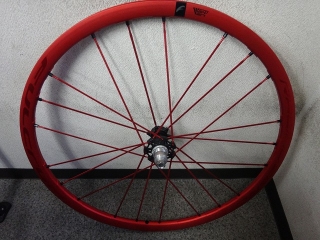
↑This little beauty
When I checked the rear wheel's temporary centerline, there was about a sheet of paper's worth of deviation, but when I checked it again for photography purposes, it was dead centered just like in the image above (before work). Apparently it just has a very slight wobble, and that initial temporary centerline I saw must have been near the most bent phase by chance.
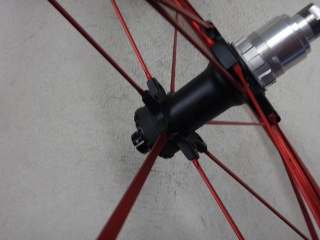
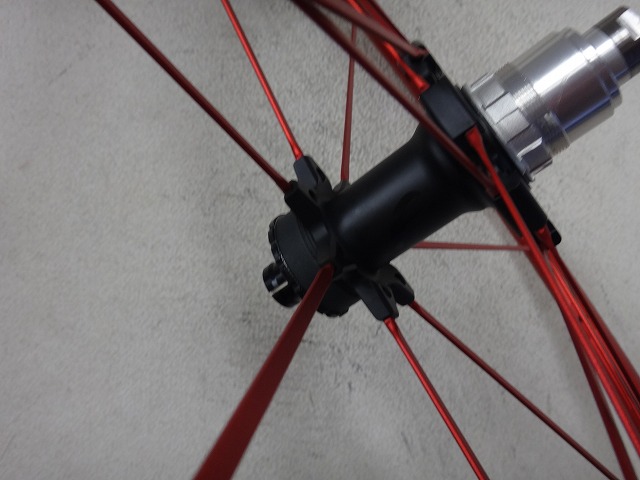
Anyway, with this wheel, on both front and rear, the side with fewer spokes in the 2:1 build is using thicker spokes. After the original Racing 1 and Racing Zero's necktie aluminum spokes were discontinued, the square aluminum spokes have all used the same dimensions across every wheel, and even including the Shamal Ultra and Eurus, the only differences were color and length. But this wheel's spokes are the first to break that rule.
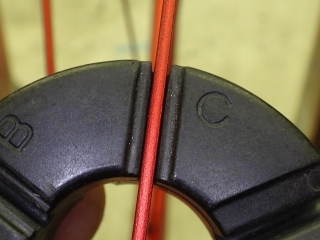
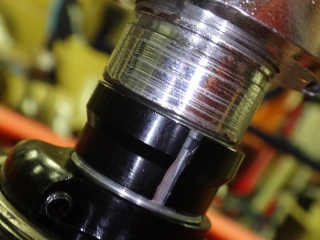
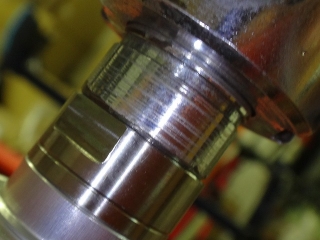
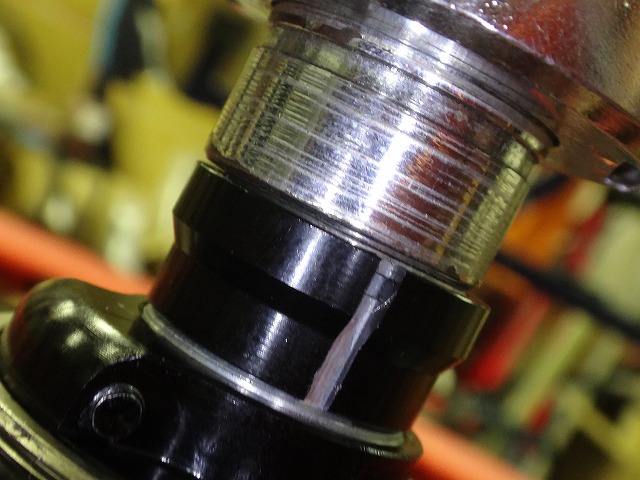
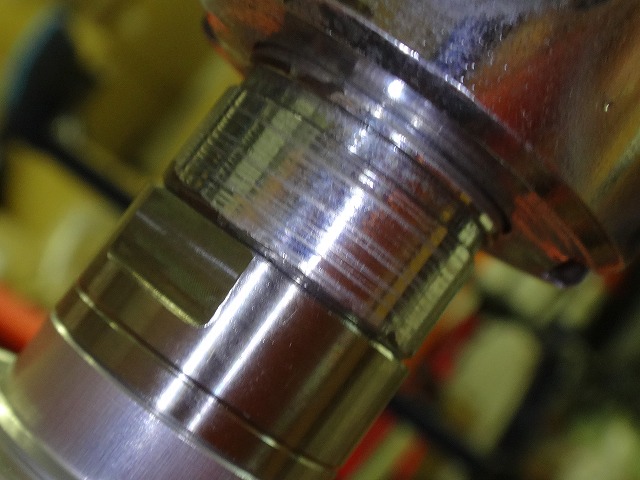
The spoke on the side with more spokes has a thickness that fits precisely into the C-slot groove of the OEM tool for securing spoke rotation,
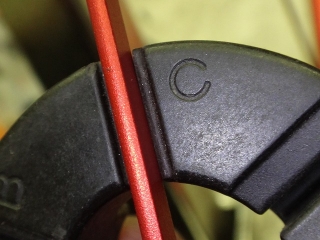
But on the side with fewer spokes, the spoke width is the same when viewed from the side, but the thickness is slightly larger, so it doesn't fit into the C-slot.
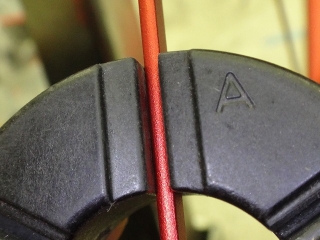
It's held by the A-slot groove, so there's no operational problem. But preparing different aluminum spokes with different specific gravity, unlike steel spokes, is a pain. Mavic used to do this with their all-aluminum spoke Ksyrium rear wheel with equal numbers on both sides at 20H, using left-right different diameters (the freewheel side had higher spoke specific gravity).

This is a separate case—a Racing 3 DB that we sold at our shop. This one also uses left-right reversed different-diameter builds on both front and rear wheels,
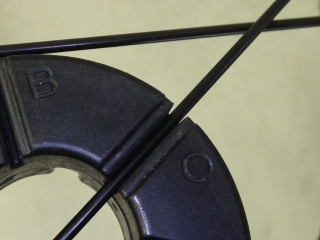
where the spoke on the side with more spokes in the tangent build fits into the C-groove of the OEM tool,
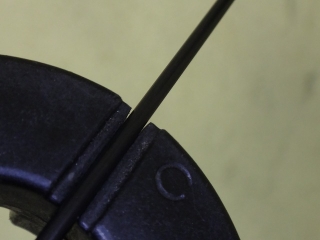
but on the side with fewer spokes in the radial build, the spoke is thicker so it doesn't fit. In this case, since both are round-section spokes, it doesn't serve as a spoke rotation preventer, only as a ruler for comparing spoke diameter.
Colima has a complete rim-brake wheel with a 12+8H/20H rear wheel (a 3:2 ratio in terms of spoke count), and among the 32mm, 47mm, and 58mm rim heights, only the 32mm height model adopted the reversed different-diameter build.
With Roval's rim-brake rear wheels too, only the CLX32 adopted the left-right reversed different-diameter build.
The rim height of the Racing Zero DB in this article is 30mm, and the Racing 3 DB is 28.5mm. Fulcrum doesn't use left-right reversed different-diameter builds even with the Speed 40 DB, and while I have a hunch about the reason, I won't speculate here. But there's a tendency among complete wheel manufacturers to not incorporate left-right reversed different-diameter builds into asymmetrical spoke count builds when rim height gets higher. For Fulcrum, 30mm height is a rim height where they judge it worth "specially manufacturing new aluminum spokes just to incorporate reversed different-diameter builds."
By contrast, Campagnolo's Bora WTO uses equal-diameter builds on both sides across all rim heights, including 33mm. The WTO spoke shape (optimized through wind tunnel testing) is a specialized aerodynamic design, so they probably didn't want to change it. A dedicated spoke rotation prevention tool for the Bora WTO is also prepared separately from the ones mentioned earlier in this article.
In my Roval rebuilds, I incorporate left-right reversed different-diameter builds even when rim height is 32mm or higher. But since Roval has poor tangent build angles and tends to unnecessarily reduce front wheel spoke count (the 18H on Rapide is out of the question, but even the 21H on other models is low), I think it's better to do reversed different-diameter builds even on 50mm rim height wheels.
As for why complete wheel manufacturers stop using reversed different-diameter builds in asymmetrical spoke count builds when rim height gets higher, I won't write my own thoughts here. But as for what rim height I think doesn't require reversed different-diameter builds, that would be around 80mm height. In other words, "most rim heights benefit from it." Or if a 24+12H/36H wheel ever existed, I'd think equal-diameter builds would be safer even with lower rim height.
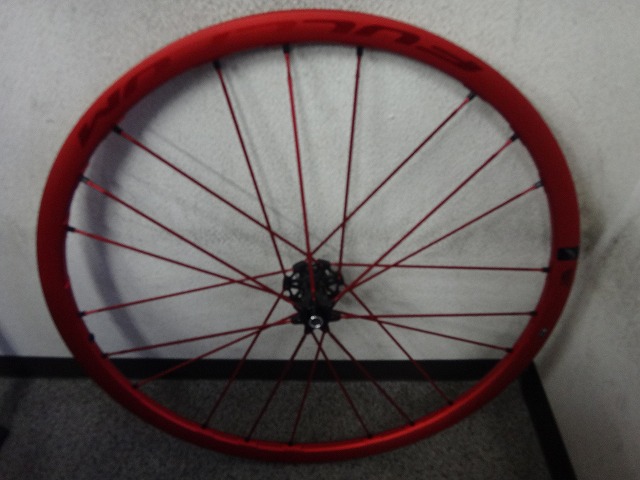
↑This little beauty
When I checked the rear wheel's temporary centerline, there was about a sheet of paper's worth of deviation, but when I checked it again for photography purposes, it was dead centered just like in the image above (before work). Apparently it just has a very slight wobble, and that initial temporary centerline I saw must have been near the most bent phase by chance.
Anyway, with this wheel, on both front and rear, the side with fewer spokes in the 2:1 build is using thicker spokes. After the original Racing 1 and Racing Zero's necktie aluminum spokes were discontinued, the square aluminum spokes have all used the same dimensions across every wheel, and even including the Shamal Ultra and Eurus, the only differences were color and length. But this wheel's spokes are the first to break that rule.
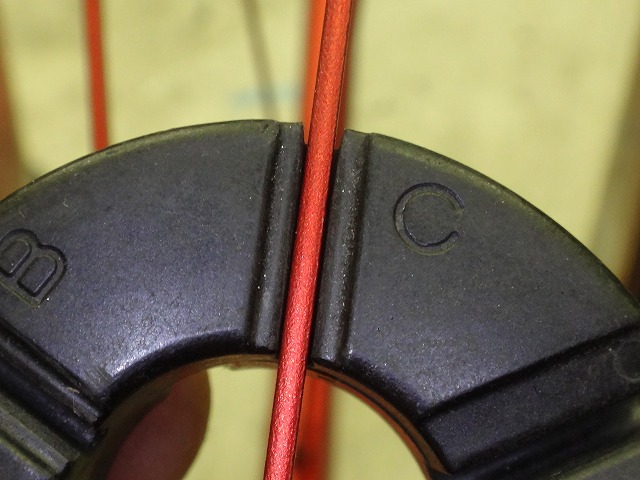
The spoke on the side with more spokes has a thickness that fits precisely into the C-slot groove of the OEM tool for securing spoke rotation,
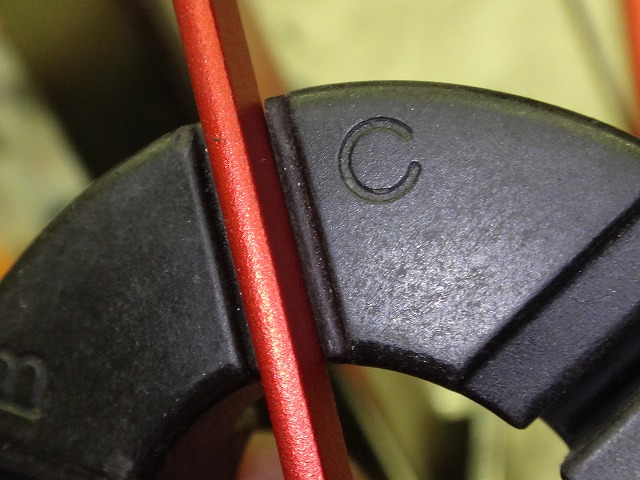
But on the side with fewer spokes, the spoke width is the same when viewed from the side, but the thickness is slightly larger, so it doesn't fit into the C-slot.
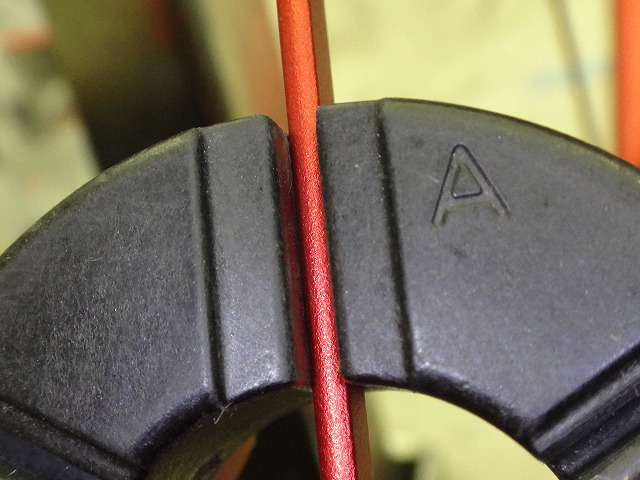
It's held by the A-slot groove, so there's no operational problem. But preparing different aluminum spokes with different specific gravity, unlike steel spokes, is a pain. Mavic used to do this with their all-aluminum spoke Ksyrium rear wheel with equal numbers on both sides at 20H, using left-right different diameters (the freewheel side had higher spoke specific gravity).
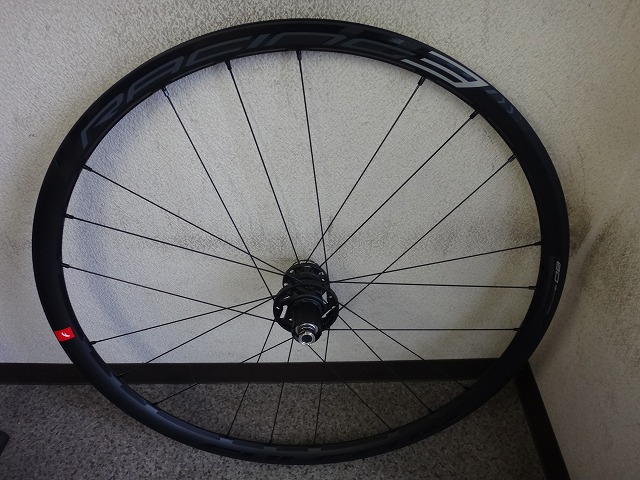
This is a separate case—a Racing 3 DB that we sold at our shop. This one also uses left-right reversed different-diameter builds on both front and rear wheels,
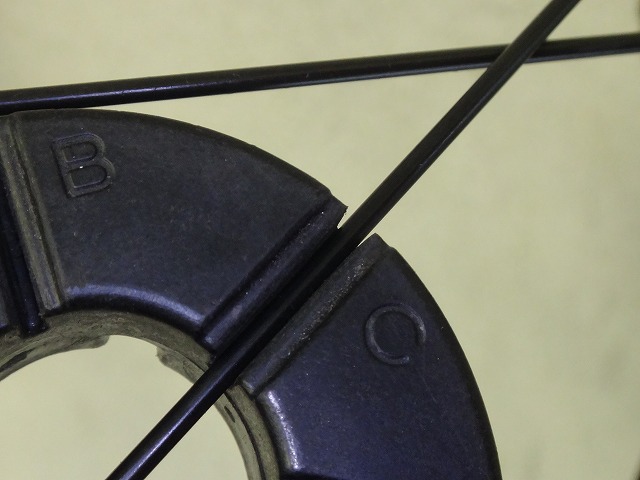
where the spoke on the side with more spokes in the tangent build fits into the C-groove of the OEM tool,
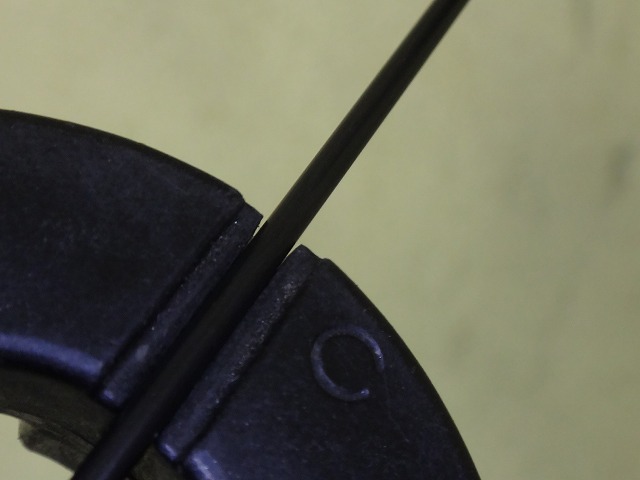
but on the side with fewer spokes in the radial build, the spoke is thicker so it doesn't fit. In this case, since both are round-section spokes, it doesn't serve as a spoke rotation preventer, only as a ruler for comparing spoke diameter.
Colima has a complete rim-brake wheel with a 12+8H/20H rear wheel (a 3:2 ratio in terms of spoke count), and among the 32mm, 47mm, and 58mm rim heights, only the 32mm height model adopted the reversed different-diameter build.
With Roval's rim-brake rear wheels too, only the CLX32 adopted the left-right reversed different-diameter build.
The rim height of the Racing Zero DB in this article is 30mm, and the Racing 3 DB is 28.5mm. Fulcrum doesn't use left-right reversed different-diameter builds even with the Speed 40 DB, and while I have a hunch about the reason, I won't speculate here. But there's a tendency among complete wheel manufacturers to not incorporate left-right reversed different-diameter builds into asymmetrical spoke count builds when rim height gets higher. For Fulcrum, 30mm height is a rim height where they judge it worth "specially manufacturing new aluminum spokes just to incorporate reversed different-diameter builds."
By contrast, Campagnolo's Bora WTO uses equal-diameter builds on both sides across all rim heights, including 33mm. The WTO spoke shape (optimized through wind tunnel testing) is a specialized aerodynamic design, so they probably didn't want to change it. A dedicated spoke rotation prevention tool for the Bora WTO is also prepared separately from the ones mentioned earlier in this article.
In my Roval rebuilds, I incorporate left-right reversed different-diameter builds even when rim height is 32mm or higher. But since Roval has poor tangent build angles and tends to unnecessarily reduce front wheel spoke count (the 18H on Rapide is out of the question, but even the 21H on other models is low), I think it's better to do reversed different-diameter builds even on 50mm rim height wheels.
As for why complete wheel manufacturers stop using reversed different-diameter builds in asymmetrical spoke count builds when rim height gets higher, I won't write my own thoughts here. But as for what rim height I think doesn't require reversed different-diameter builds, that would be around 80mm height. In other words, "most rim heights benefit from it." Or if a 24+12H/36H wheel ever existed, I'd think equal-diameter builds would be safer even with lower rim height.