Another wheel day (and so on).
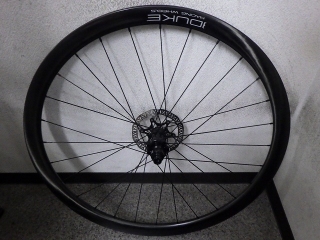
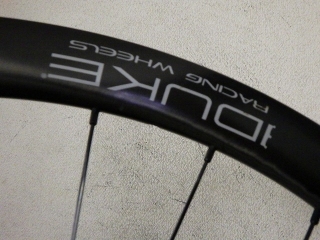
A customer brought in a rear wheel assembled with a Duke disc road rim.
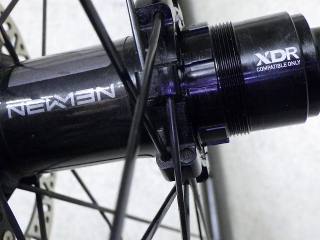
The hub is a Neumann (unrelated to the warm noodle dish "nyūmen") straight spoke XDR freebody spec,
28H with forced left/right 3-cross lacing.
This Neumann brand is headquartered in Germany, so
their parts are sometimes adopted on complete bikes from German frame brands.
When Shimano announced their proprietary Microspline freebody spec for 12-speed MTB components,
in contrast to SRAM's XD approach of "we're publishing the specs, so go ahead and have third parties jump in!"
Shimano initially took the stance of
「You can only use Shimano 12-speed components if you buy XT or XTR hubs or complete wheelsets!
We don't allow anyone else to make Microspline hubs!」
and their complete wheelsets are still topped out at the XT M8100 series—they haven't even released XTR wheels.
And since those M8100 wheels have rims that aren't light at all,
hardly anyone chooses them as race equipment.
It raised questions about whether they even wanted this new component to catch on.
In the past, Fulcrum's MTB wheels had models equivalent to
the road bike wheel specs of Racing Lite (carbon rim + steel spokes) and
Racing Zero (aluminum rim + aluminum spokes),
but apparently fed up with Shimano's policy against making Microspline-spec wheels,
even though they had market share in Japan's racing scene that nearly split with DT,
they suddenly discontinued their top models and scaled back to
Racing 5, 6, 7 tier lineups equivalent to road bike wheels.
These days they've shifted their focus to e-MTB wheels and don't make aluminum spoke wheels,
but the Racing 3 equivalent model and carbon rim models have made a comeback.
Now Shimano permits other companies including Fulcrum to make Microspline-spec hubs and wheels, with conditions.
I've noticed some stockouts of HG and XD freebody spec wheels at the one distributor handling Fulcrum in Japan, but the Microspline-spec wheels currently have no stockouts—but we shouldn't dwell on that.
Anyway, getting back on track—when third-party Microspline wasn't yet permitted,
hub maker Hope criticized Shimano for their unclear stance on manufacturing licenses,
but ahead of Hope and Chris King,
Neumann was one of the first granted licenses at the same time as DT.
That's the story I wanted to write about.
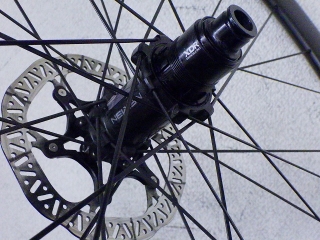
The spokes are DT black aero comp straight on the freewheel side (sourced from who knows where),
and Sapim black CX-RAY straight on the non-freewheel side.
Since this hub's lacing pattern can't be changed and it's already using left/right different-sized spoke routing,
on the surface there shouldn't be any need to rebuild it... but.
By the way, this wheel was assembled by an amateur acquaintance of the customer.
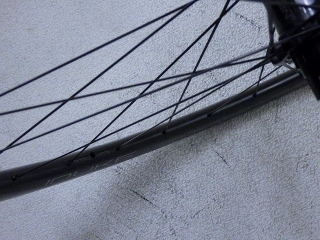
↑The bottom of the rim in the image is the freewheel side.
This rim is an offset rim, but
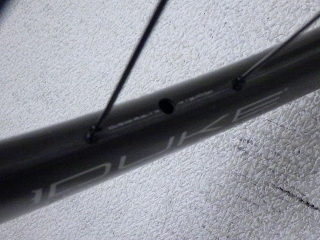
they've assembled it with the rim offset direction opposite to the hub's flange offset.

↑This is what the non-freewheel side looks like when photographed the same way
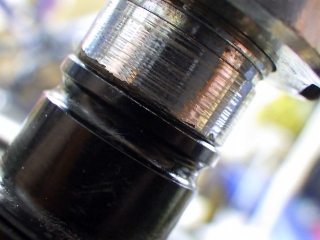

There was a centering deviation of about two sheets of paper, and some radial and lateral runout,
but I've seen plenty of pro shops building wheels with lower precision than this
while charging full price (speaking from a high horse).
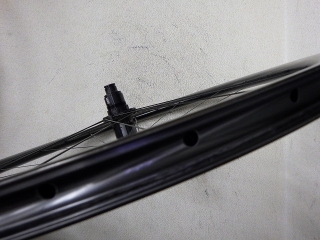
When I removed the installed rim tape,
the outer perimeter holes were also offset to match the rim offset.
Wrong direction, as expected.
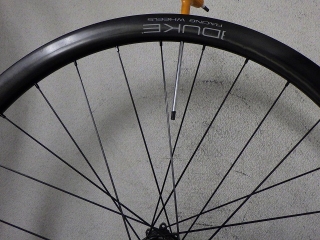
Also, the valve hole isn't positioned in the gap between the final crossing spoke pair bundles,
but in the middle of them.
And the spoke length is concerning—especially on the freewheel side.
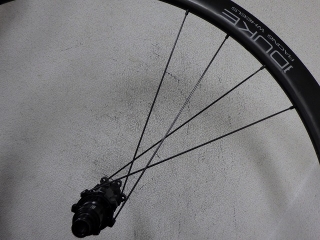
I carefully disassembled everything except the four spokes around the valve hole
without loosening their nipples at all.
This lets me pull the spokes outside the rim and
observe the original spoke-to-nipple relationship from outside the rim.
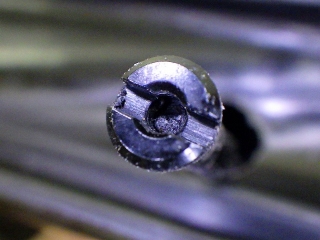
↑Non-freewheel side CX-RAY
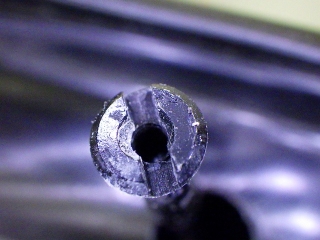
↑Freewheel side aero comp
Both are short, but on the non-freewheel side,
if the rim offset direction is correct,
the threads will advance more than before and
the tension should be slightly higher than the original state,
so reusing them is marginally possible.
Still, the spoke probably won't reach the nipple end face, only past the slot.
The freewheel side spokes—I'm not reusing those. Too short.

Rebuilt.
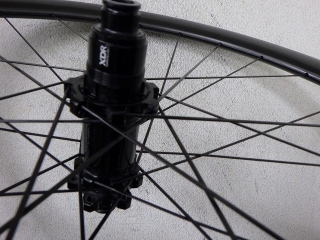
I've switched the freewheel side to black CX sprint straight spokes.
Also, the original build didn't have final crossing lacing on either side,
so I added it on the non-freewheel side for later truing.
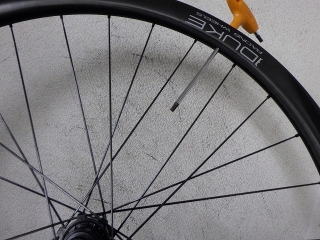
The valve hole is now positioned in the gap between the final crossing spoke bundles.


A customer brought in a rear wheel assembled with a Duke disc road rim.

The hub is a Neumann (unrelated to the warm noodle dish "nyūmen") straight spoke XDR freebody spec,
28H with forced left/right 3-cross lacing.
This Neumann brand is headquartered in Germany, so
their parts are sometimes adopted on complete bikes from German frame brands.
When Shimano announced their proprietary Microspline freebody spec for 12-speed MTB components,
in contrast to SRAM's XD approach of "we're publishing the specs, so go ahead and have third parties jump in!"
Shimano initially took the stance of
「You can only use Shimano 12-speed components if you buy XT or XTR hubs or complete wheelsets!
We don't allow anyone else to make Microspline hubs!」
and their complete wheelsets are still topped out at the XT M8100 series—they haven't even released XTR wheels.
And since those M8100 wheels have rims that aren't light at all,
hardly anyone chooses them as race equipment.
It raised questions about whether they even wanted this new component to catch on.
In the past, Fulcrum's MTB wheels had models equivalent to
the road bike wheel specs of Racing Lite (carbon rim + steel spokes) and
Racing Zero (aluminum rim + aluminum spokes),
but apparently fed up with Shimano's policy against making Microspline-spec wheels,
even though they had market share in Japan's racing scene that nearly split with DT,
they suddenly discontinued their top models and scaled back to
Racing 5, 6, 7 tier lineups equivalent to road bike wheels.
These days they've shifted their focus to e-MTB wheels and don't make aluminum spoke wheels,
but the Racing 3 equivalent model and carbon rim models have made a comeback.
Now Shimano permits other companies including Fulcrum to make Microspline-spec hubs and wheels, with conditions.
Anyway, getting back on track—when third-party Microspline wasn't yet permitted,
hub maker Hope criticized Shimano for their unclear stance on manufacturing licenses,
but ahead of Hope and Chris King,
Neumann was one of the first granted licenses at the same time as DT.
That's the story I wanted to write about.

The spokes are DT black aero comp straight on the freewheel side (sourced from who knows where),
and Sapim black CX-RAY straight on the non-freewheel side.
Since this hub's lacing pattern can't be changed and it's already using left/right different-sized spoke routing,
on the surface there shouldn't be any need to rebuild it... but.
By the way, this wheel was assembled by an amateur acquaintance of the customer.

↑The bottom of the rim in the image is the freewheel side.
This rim is an offset rim, but

they've assembled it with the rim offset direction opposite to the hub's flange offset.

↑This is what the non-freewheel side looks like when photographed the same way


There was a centering deviation of about two sheets of paper, and some radial and lateral runout,
but I've seen plenty of pro shops building wheels with lower precision than this
while charging full price (speaking from a high horse).

When I removed the installed rim tape,
the outer perimeter holes were also offset to match the rim offset.
Wrong direction, as expected.
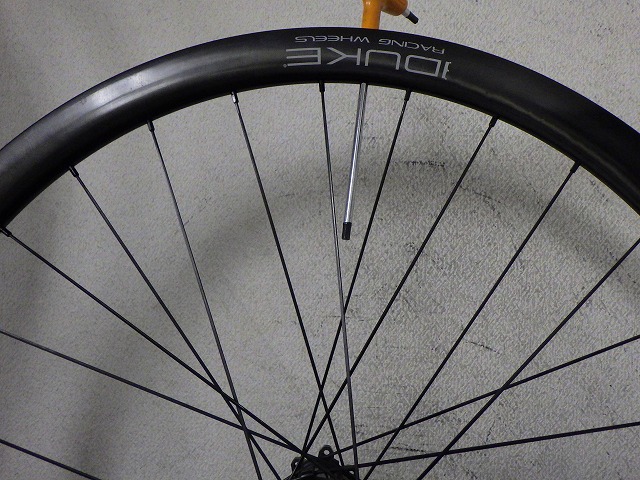
Also, the valve hole isn't positioned in the gap between the final crossing spoke pair bundles,
but in the middle of them.
And the spoke length is concerning—especially on the freewheel side.

I carefully disassembled everything except the four spokes around the valve hole
without loosening their nipples at all.
This lets me pull the spokes outside the rim and
observe the original spoke-to-nipple relationship from outside the rim.

↑Non-freewheel side CX-RAY

↑Freewheel side aero comp
Both are short, but on the non-freewheel side,
if the rim offset direction is correct,
the threads will advance more than before and
the tension should be slightly higher than the original state,
so reusing them is marginally possible.
Still, the spoke probably won't reach the nipple end face, only past the slot.
The freewheel side spokes—I'm not reusing those. Too short.

Rebuilt.

I've switched the freewheel side to black CX sprint straight spokes.
Also, the original build didn't have final crossing lacing on either side,
so I added it on the non-freewheel side for later truing.
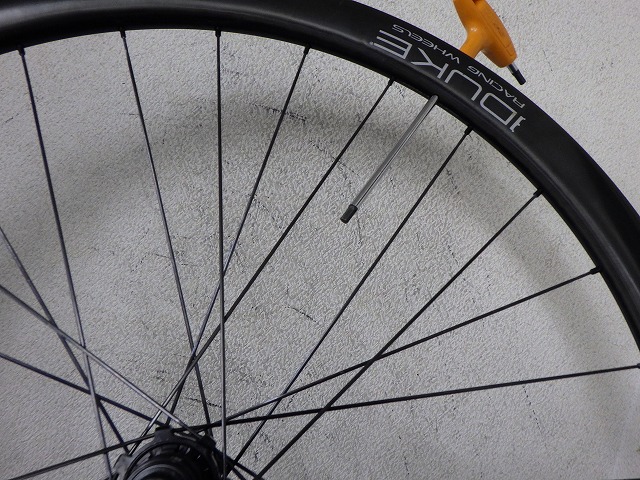
The valve hole is now positioned in the gap between the final crossing spoke bundles.