Wheels again today (and so on).
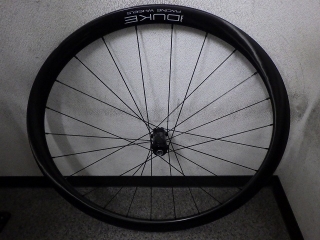
I rebuilt the front wheel that was built with a Duke disc road rim.
It's the counterpart to the rear wheel from the other day.
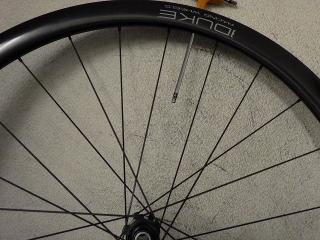
Unlike the rear wheel, the valve hole phase is in a sensible position.
Which means that whatever was done with the rear wheel
wasn't done based on any solid reasoning.
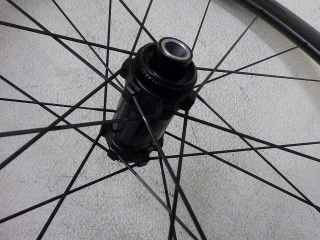
The hub is a Neumeun (German hub brand) straight-pull hub,
whereas the rear wheel was 28H with 3-cross lacing left and right,
this front wheel is 24H with 2-cross lacing left and right.
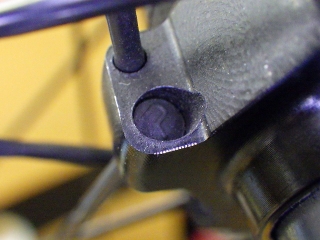
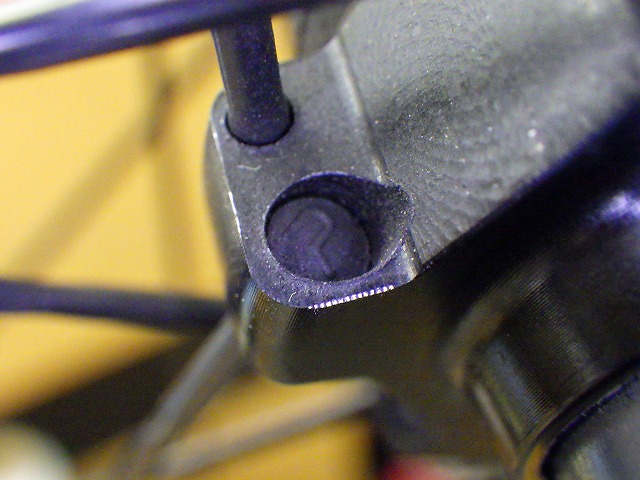
The spokes are the same diameter on both sides,
Pillar square aero spokes.
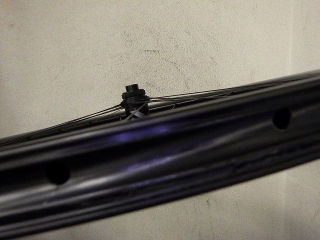
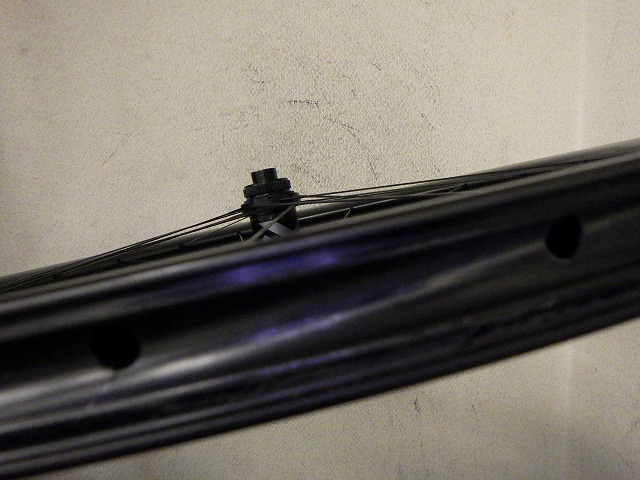
↑The top of the image is the disc hub side,
but like the rear wheel, the offset rim orientation is backwards.
So rebuilding is essential.
Also, before loosening the wheel nipples,
I shined a light inside the rim to take a look,
and this wheel has taken a certain shortcut.
In this case it turned out to work in a good way, but...

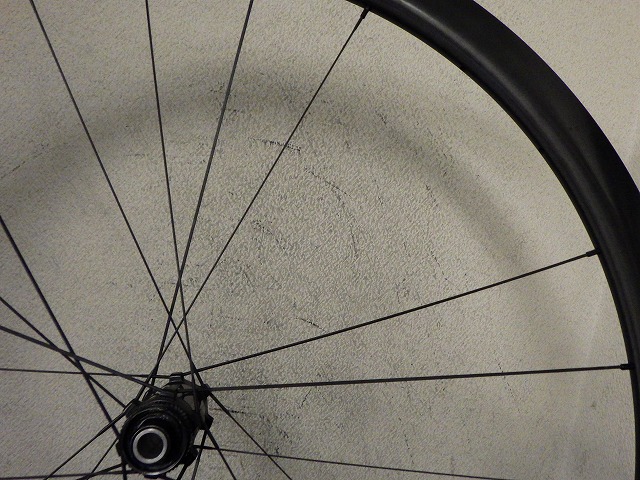
I completely loosened and removed one spoke from each adjacent rim hole.
That is, I removed one spoke from each of the left and right flanges.

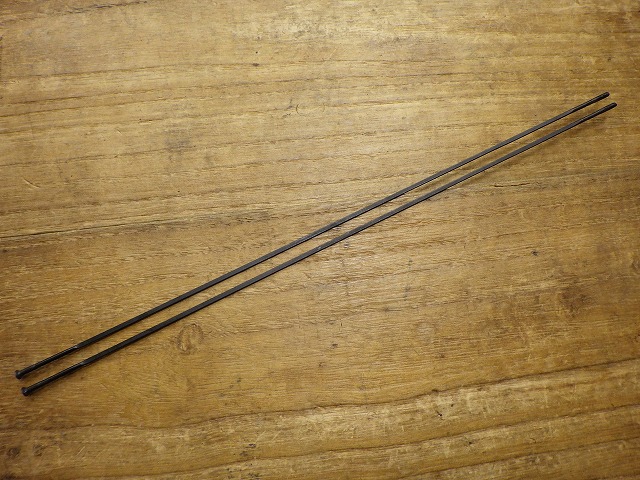
↑This one here
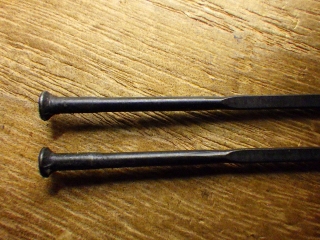
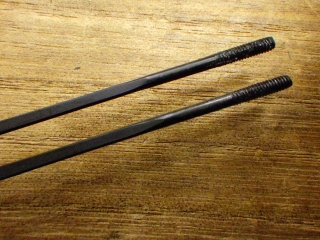
Sure enough, they had taken the shortcut of making the spoke lengths
the same on both sides.
The spoke length was biased toward the longer side (non-rotor hub side),
but since I'm rebuilding the rotor hub side with CX Sprint spokes
with larger cross-sectional weight in left-right different diameter lacing,
12 of the original 24 spokes can be used as spare spokes.
If the lengths had been changed by 1mm left and right,
or if they'd matched the length on the shorter side,
this approach wouldn't have been possible.
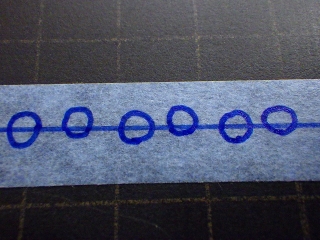
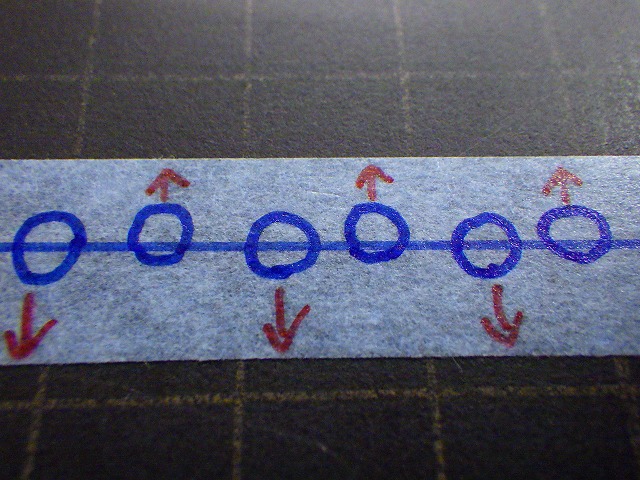
With Duke's ITLAB rim,
with a non-offset rim where there were slight protrusions alternating left and right
from the centerline in the middle of the rim,
with this offset rim, holes centered on the line and
holes offset from the line's center alternate repeatedly.

The hole offset direction of the offset holes is definitely
in the direction of the red arrow in the image above, so
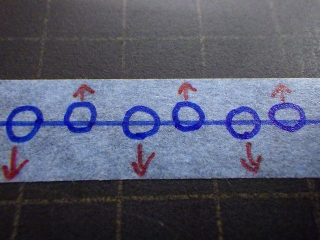
the holes centered on the line
would be offset in this direction.
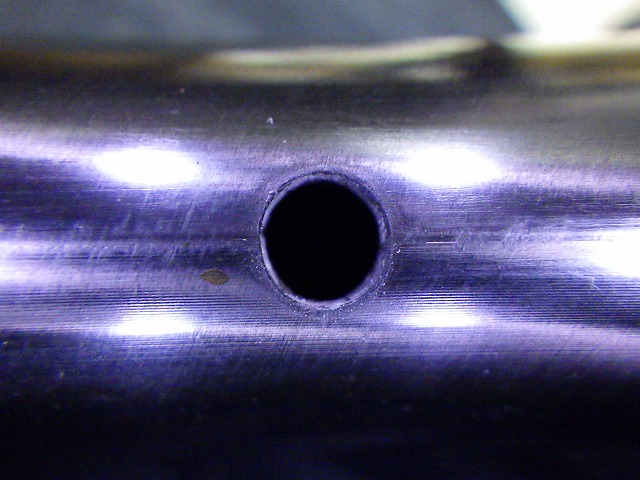
Looking at this on the actual rim...
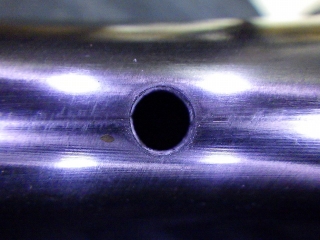
Rim hole centered on the line
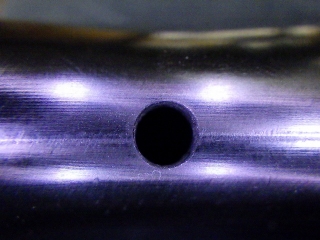
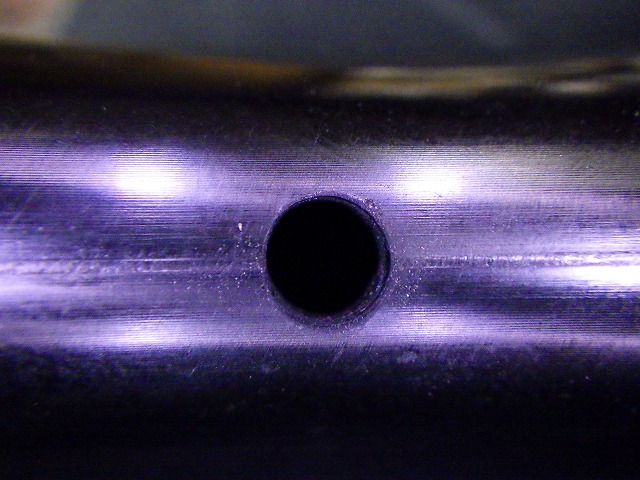
the adjacent hole is
offset upward from the line in the image
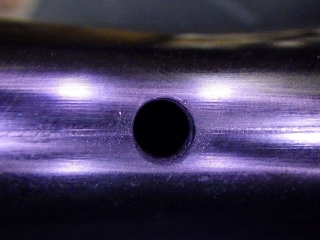
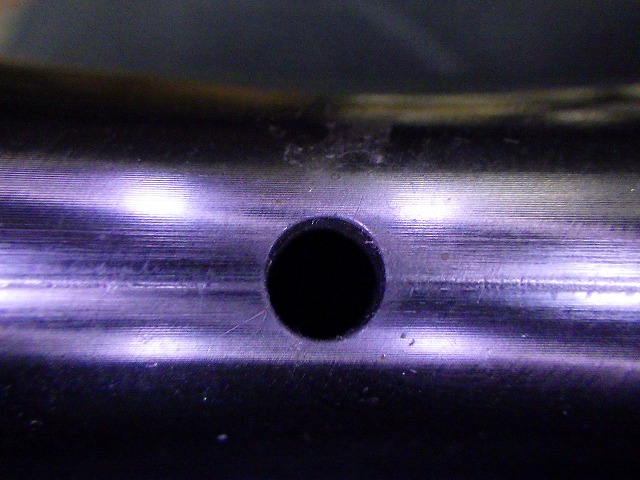
the adjacent hole is
a rim hole centered on the line
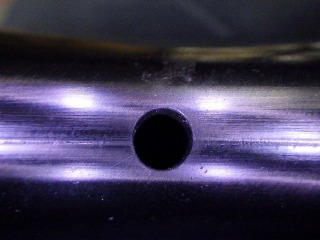
the adjacent hole is
offset upward from the line in the image
—repeating this alternately—
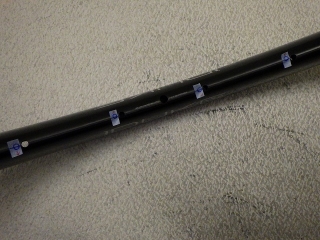
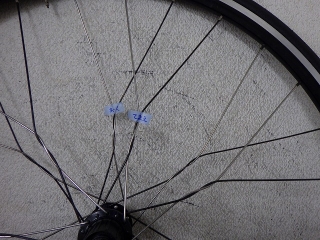
when I apply the tape I cut earlier
to the corresponding rim holes
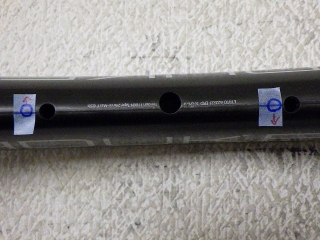
from the hole offset of the holes on both sides of this valve hole
I can tell this rim is a normal rim.
By the way, the upper side of the image is the rotor hub side
(or the freewheel side if this were a rear wheel), and
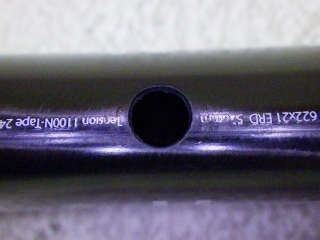
↑the valve hole and the rim line are offset like this.
On a normal rim (or a rim treated as a normal rim with no hole offset)
built with equal spoke counts left and right, both sides tangent laced,
if you look from the side at a certain final crossing and
the nearest final crossing on the opposite flange
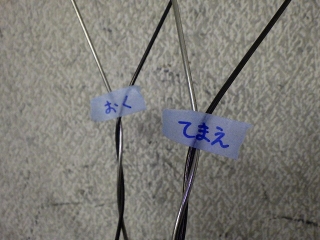
the final crossing nearest to me
is offset clockwise in phase.
The wheel in the image is my personal one, but
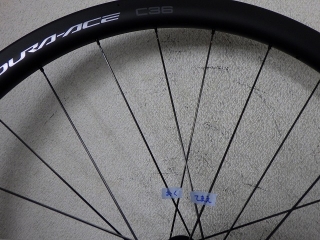
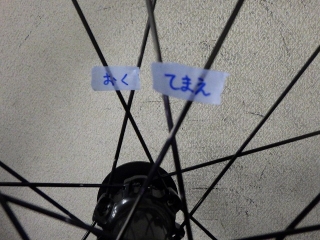
for example, even current Dura-Ace wheels
work the same way, and most wheels in the world are like this.
The mirror image opposite of this is what I call on this blog
the "reverse rim" as opposed to the "normal rim."
With a reverse rim, the "near" side that was "far" in the image above
is offset counter-clockwise in phase. When building a wheel against a reverse rim,
if you have a universal hooked-spoke flange hub,
you can adapt by reversing the initial right-drop/left-drop
when threading spokes through the flange.
But with a straight-pull spoke hub, that doesn't work.
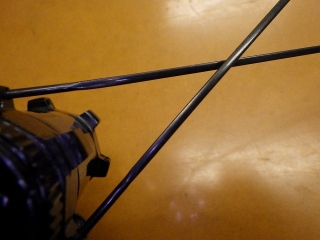
I tried threading through this Neumeun hub
a pair of spokes (2 spokes) with 2-cross final crossing.
Since this hub has the same spoke head position
(radius from hub center) for the 2 final crossing spokes,
if you draw a line from the hub center through the center of the flange tooth,
it passes over the final crossing of the spoke not threaded through that flange.
An example where this doesn't happen is (→here)
Now, if you look at how the flange tooth phase of this hub is offset,
you can see that this straight-pull spoke hub
is designed with a normal rim in mind.
This isn't unique to this hub—practically all straight-pull spokes
for left-right tangent lacing sold as standalone hubs
are like this.
The Duke-made ITLAB rim I rebuilt before,
for some reason it's a reverse rim, yet the hub is straight-pull
and whoever was building it was so incompetent that they ignored
the hole offset and forcibly proceeded with wheel building,
causing the rim holes to deform into slots.
Front wheel is (→here) rear wheel is (→here)
That's a wheel with many mysteries:
• Was it a reverse rim in the first place due to a customer order?
• Did the builder not notice it was a reverse rim and build it? ←Idiot
• Did the builder know the hole offset opposed the lacing but proceed anyway? ←Scum
• If the builder were given a hooked-spoke hub and
that rim, would they notice it's a reverse rim and
build a reverse-rim style wheel (essentially treating it as reverse)?
I'd like to know about these things.
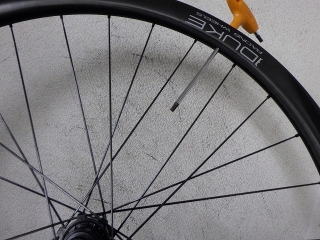
By the way, if you build it correctly without mistaking
the hole offset of a normal rim, positioning the valve hole
between the spokes of a pair of final crossing spokes (the normal way),
it looks like this. But if you get the hole offset right
yet mistaken the valve hole position,
from the position in the image above, you can only mistake it
by 2 rim holes.
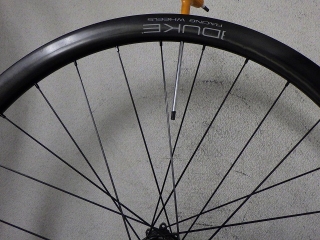
↑Meaning this position.
If there's an odd offset of 1 or 3,
then the hole offset is wrong.
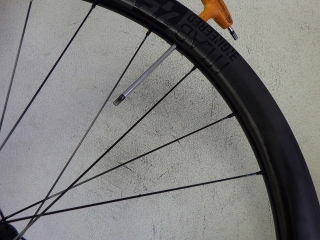
↑This is an image from the linked article I mentioned earlier, after I rebuilt it.
If you build a wheel on a reverse rim using a normal-rim straight-pull hub
while respecting the hole offset,
the valve hole position ends up 1 or 3 rim holes off
from the normal case.
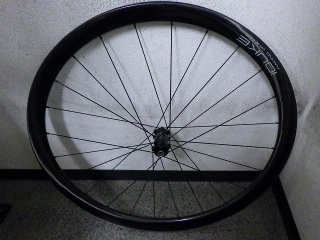
Anyway, it assembled. The valve hole position is in a sensible spot, just for the record.
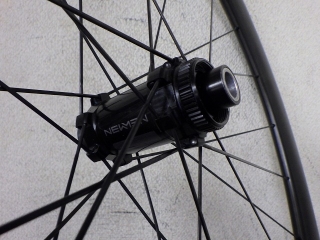
I made the rotor hub side black CX Sprint,
and whereas originally neither side had the final crossing woven,
on the non-rotor hub side there's a possibility of a direct connection, so I wove it.
Once the wheel was actually built, the different-diameter lacing
seems to be taking effect against the small amount of dish,
and when I grab the final crossings on both sides without looking,
I can't tell left from right based on the deformation alone.
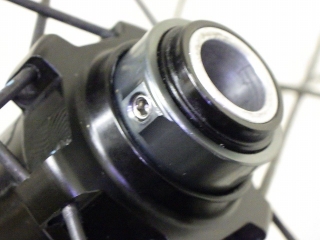
The set screw on the bearing adjustment nut at the hub wasn't tightened
and came loose by hand, so I adjusted the bearing and
fixed it with the set screw. There was a grinding sensation
like the bearings were dead.
But once spoke tension was applied to the flanges, rotation became loose
and the grinding sensation nearly disappeared.
This is something you can clearly feel with cup-and-cone hubs,
but it's rare for a cartridge bearing hub to change feel this much.
I almost jumped the gun and told the customer "Your bearings are shot."
Speaking of Duke rims, their MTB rims are
incredibly light, but their road rims,
as you can see in the images around the valve hole in this article
where the limit tension reads 1100N, you can tension them without chatter
and they feel good to build, but they were actually heavier
than Duke's MTB rims. Since the rim has a deep profile, the weight gain
is unavoidable, but I suppose that's for aerodynamic performance.
On height/weight ratio, they're only slightly behind
Roval's old Alpinist CLX.
As a wheel from a major manufacturer that isn't a specialized aero weapon—
not excessively narrow in target user (body weight) or use
(not saying don't use them daily)—
so they won't have to flee in the middle of the night if someone dies—
the old Alpinist CLX really is exceptionally light.
It's also true that Duke's limit tension is higher,
and the Alpinist also forces you into 2:1 lacing if you rebuild,
so if you ask which rim could end up as the better wheel,
I'd say Duke. But even with Duke's rim,
if you're going to have an incompetent shop build it,
the off-the-shelf Alpinist might still handle better.
Huh? Specific weight?
If you scroll down, there's no way some guy's gonna
tell you that—think about it yourself
↑Wow this guy's got a bad attitude
Sorry For The Wait! Please View The Image Below!
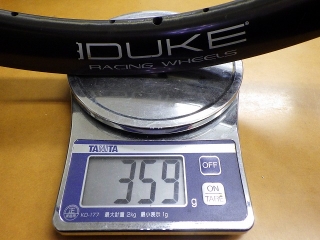
It's A 28H Rear Rim!
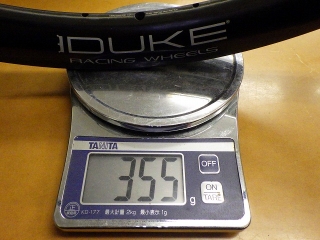
It's A 24H Front Rim!
And Here's A Link To The Super Lightweight MTB Rim Too!(→Here)
↑Stop That!
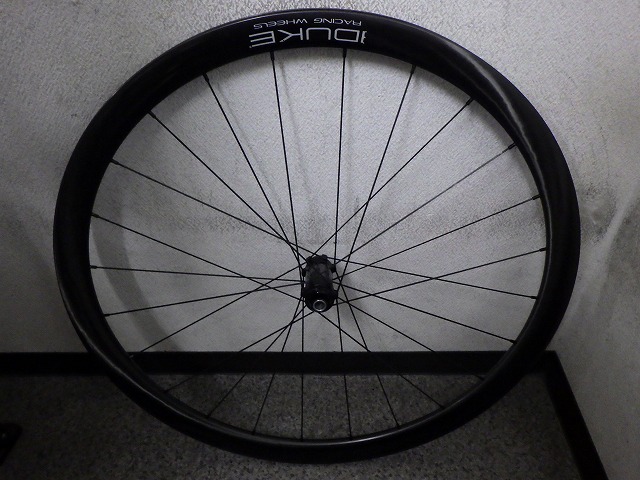
I rebuilt the front wheel that was built with a Duke disc road rim.
It's the counterpart to the rear wheel from the other day.
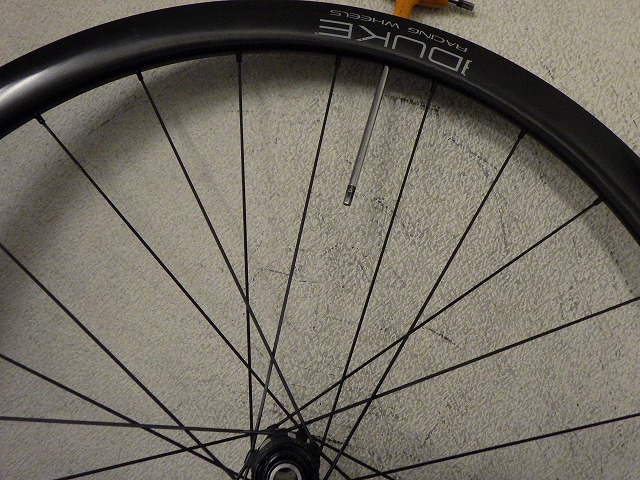
Unlike the rear wheel, the valve hole phase is in a sensible position.
Which means that whatever was done with the rear wheel
wasn't done based on any solid reasoning.

The hub is a Neumeun (German hub brand) straight-pull hub,
whereas the rear wheel was 28H with 3-cross lacing left and right,
this front wheel is 24H with 2-cross lacing left and right.
The spokes are the same diameter on both sides,
Pillar square aero spokes.
↑The top of the image is the disc hub side,
but like the rear wheel, the offset rim orientation is backwards.
So rebuilding is essential.
Also, before loosening the wheel nipples,
I shined a light inside the rim to take a look,
and this wheel has taken a certain shortcut.
In this case it turned out to work in a good way, but...
I completely loosened and removed one spoke from each adjacent rim hole.
That is, I removed one spoke from each of the left and right flanges.
↑This one here
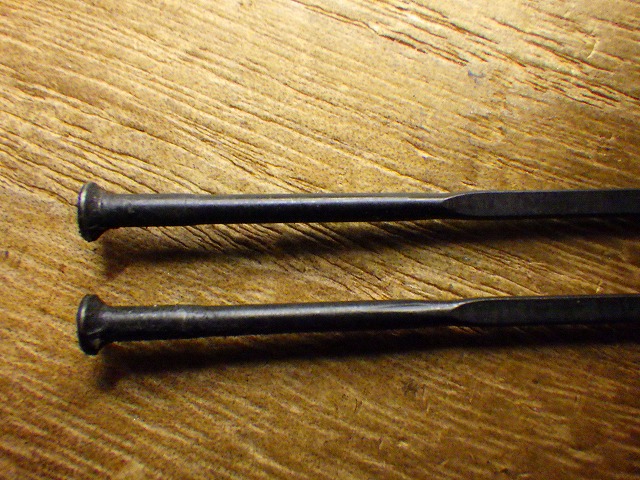
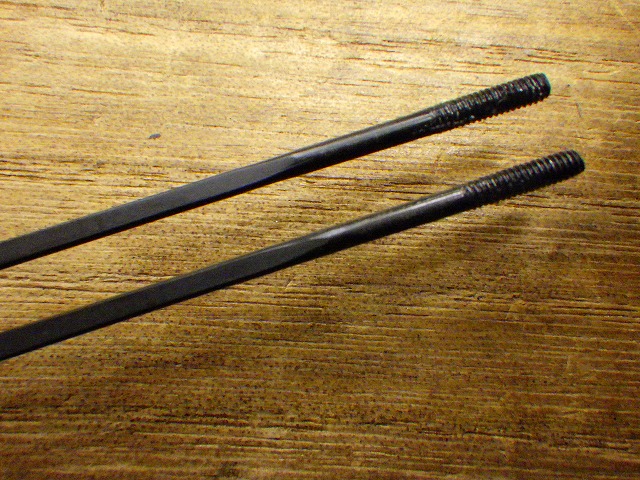
Sure enough, they had taken the shortcut of making the spoke lengths
the same on both sides.
The spoke length was biased toward the longer side (non-rotor hub side),
but since I'm rebuilding the rotor hub side with CX Sprint spokes
with larger cross-sectional weight in left-right different diameter lacing,
12 of the original 24 spokes can be used as spare spokes.
If the lengths had been changed by 1mm left and right,
or if they'd matched the length on the shorter side,
this approach wouldn't have been possible.
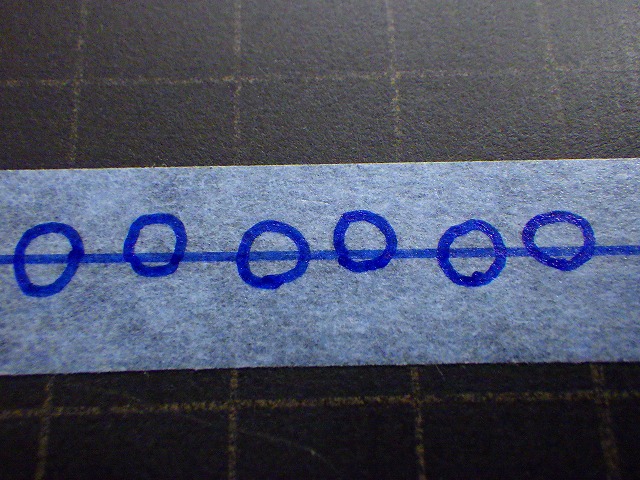
With Duke's ITLAB rim,
with a non-offset rim where there were slight protrusions alternating left and right
from the centerline in the middle of the rim,
with this offset rim, holes centered on the line and
holes offset from the line's center alternate repeatedly.
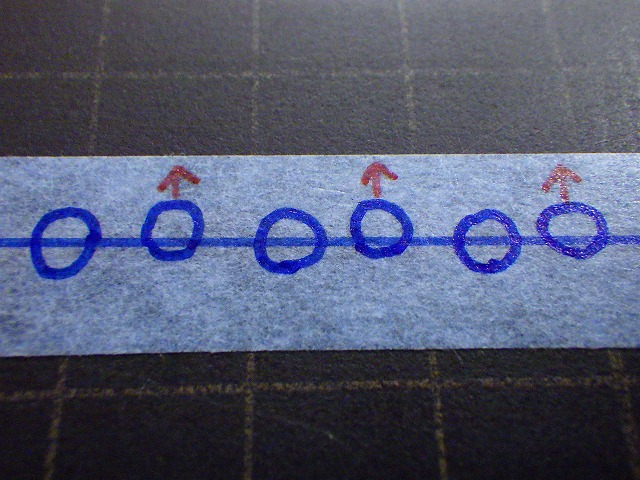
The hole offset direction of the offset holes is definitely
in the direction of the red arrow in the image above, so
the holes centered on the line
would be offset in this direction.
Looking at this on the actual rim...
Rim hole centered on the line

the adjacent hole is
offset upward from the line in the image
the adjacent hole is
a rim hole centered on the line
the adjacent hole is
offset upward from the line in the image
—repeating this alternately—

when I apply the tape I cut earlier
to the corresponding rim holes
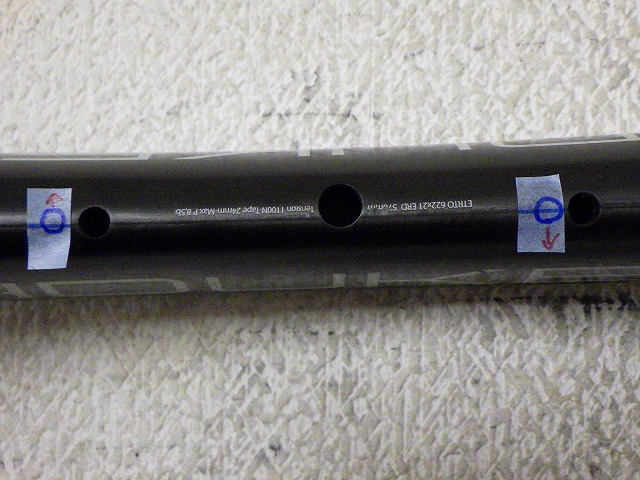
from the hole offset of the holes on both sides of this valve hole
I can tell this rim is a normal rim.
By the way, the upper side of the image is the rotor hub side
(or the freewheel side if this were a rear wheel), and
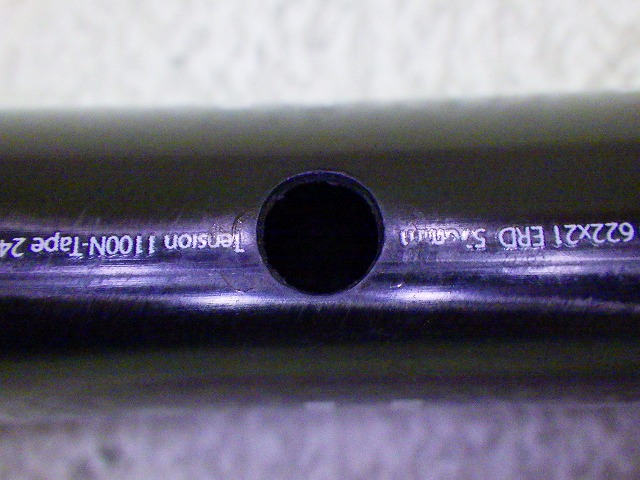
↑the valve hole and the rim line are offset like this.
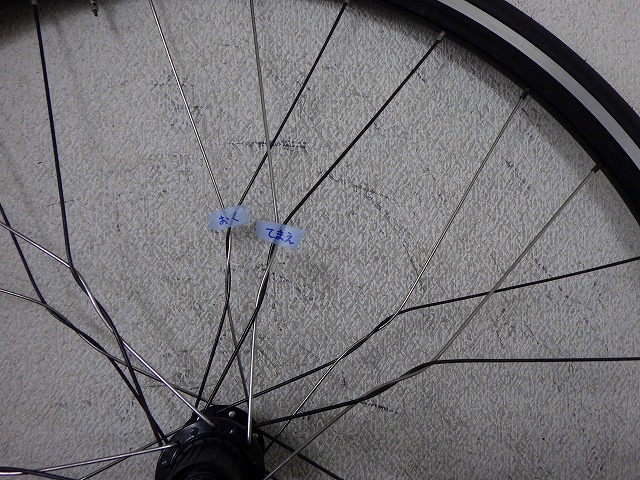
On a normal rim (or a rim treated as a normal rim with no hole offset)
built with equal spoke counts left and right, both sides tangent laced,
if you look from the side at a certain final crossing and
the nearest final crossing on the opposite flange
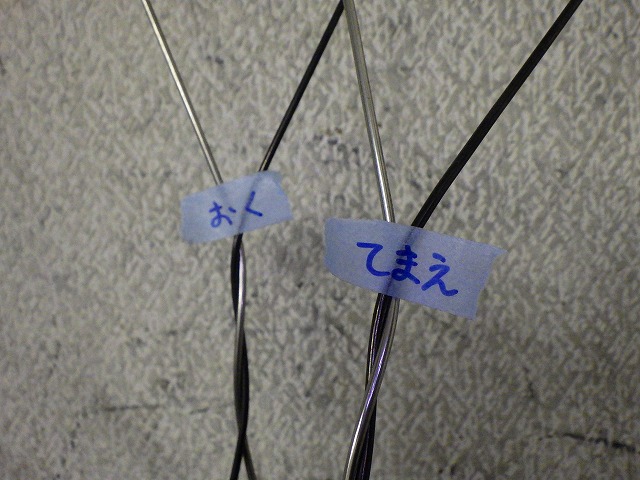
the final crossing nearest to me
is offset clockwise in phase.
The wheel in the image is my personal one, but
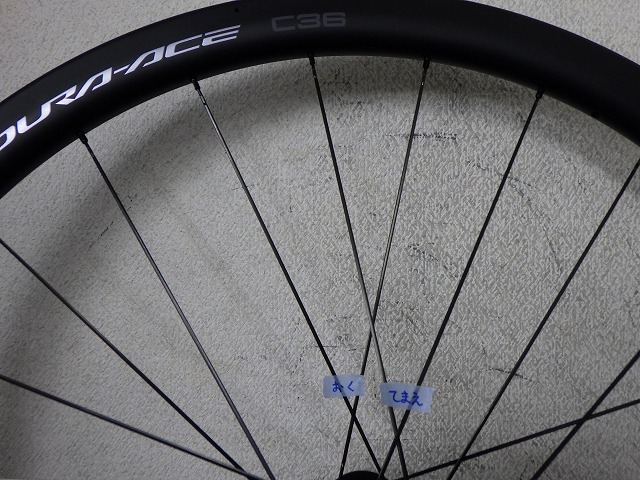
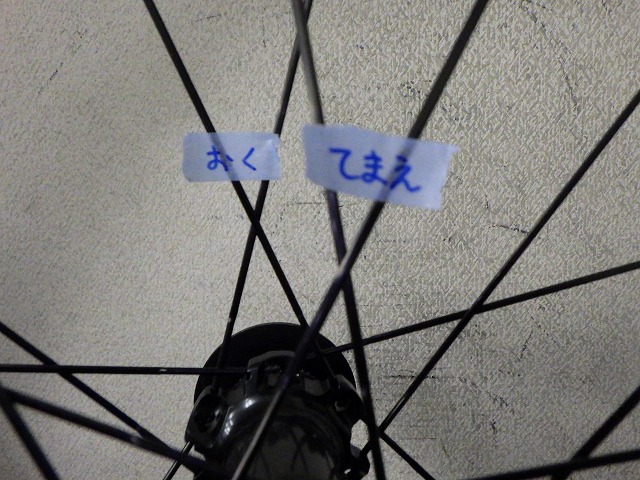
for example, even current Dura-Ace wheels
work the same way, and most wheels in the world are like this.
The mirror image opposite of this is what I call on this blog
the "reverse rim" as opposed to the "normal rim."
With a reverse rim, the "near" side that was "far" in the image above
is offset counter-clockwise in phase. When building a wheel against a reverse rim,
if you have a universal hooked-spoke flange hub,
you can adapt by reversing the initial right-drop/left-drop
when threading spokes through the flange.
But with a straight-pull spoke hub, that doesn't work.

I tried threading through this Neumeun hub
a pair of spokes (2 spokes) with 2-cross final crossing.
Since this hub has the same spoke head position
(radius from hub center) for the 2 final crossing spokes,
if you draw a line from the hub center through the center of the flange tooth,
it passes over the final crossing of the spoke not threaded through that flange.
An example where this doesn't happen is (→here)
Now, if you look at how the flange tooth phase of this hub is offset,
you can see that this straight-pull spoke hub
is designed with a normal rim in mind.
This isn't unique to this hub—practically all straight-pull spokes
for left-right tangent lacing sold as standalone hubs
are like this.
The Duke-made ITLAB rim I rebuilt before,
for some reason it's a reverse rim, yet the hub is straight-pull
and whoever was building it was so incompetent that they ignored
the hole offset and forcibly proceeded with wheel building,
causing the rim holes to deform into slots.
Front wheel is (→here) rear wheel is (→here)
That's a wheel with many mysteries:
• Was it a reverse rim in the first place due to a customer order?
• Did the builder not notice it was a reverse rim and build it? ←Idiot
• Did the builder know the hole offset opposed the lacing but proceed anyway? ←Scum
• If the builder were given a hooked-spoke hub and
that rim, would they notice it's a reverse rim and
build a reverse-rim style wheel (essentially treating it as reverse)?
I'd like to know about these things.
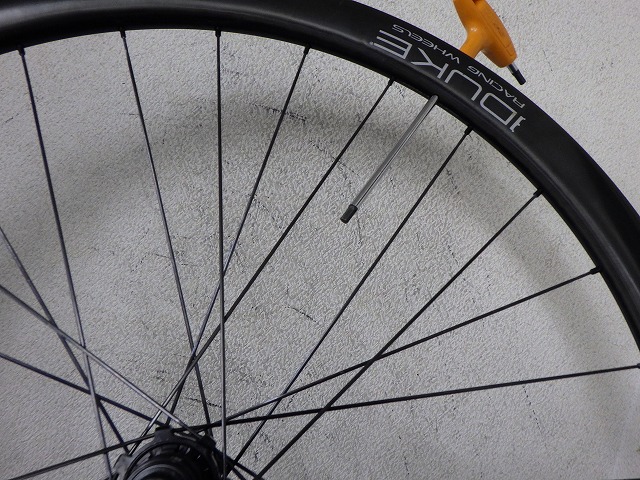
By the way, if you build it correctly without mistaking
the hole offset of a normal rim, positioning the valve hole
between the spokes of a pair of final crossing spokes (the normal way),
it looks like this. But if you get the hole offset right
yet mistaken the valve hole position,
from the position in the image above, you can only mistake it
by 2 rim holes.
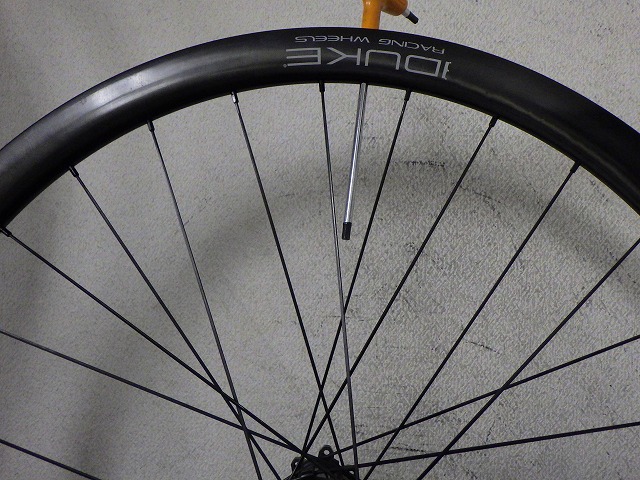
↑Meaning this position.
If there's an odd offset of 1 or 3,
then the hole offset is wrong.
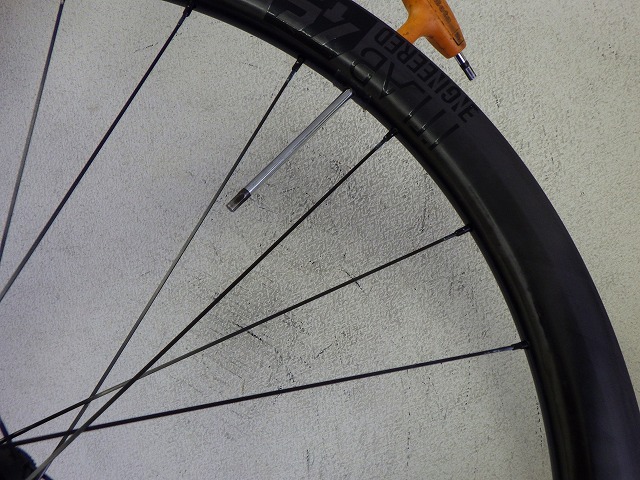
↑This is an image from the linked article I mentioned earlier, after I rebuilt it.
If you build a wheel on a reverse rim using a normal-rim straight-pull hub
while respecting the hole offset,
the valve hole position ends up 1 or 3 rim holes off
from the normal case.
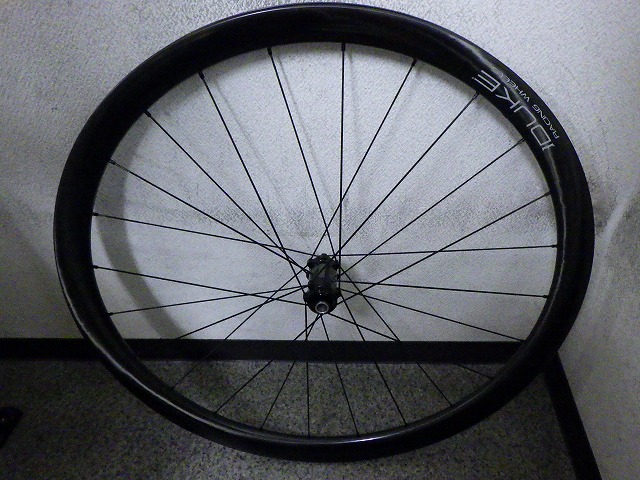
Anyway, it assembled. The valve hole position is in a sensible spot, just for the record.
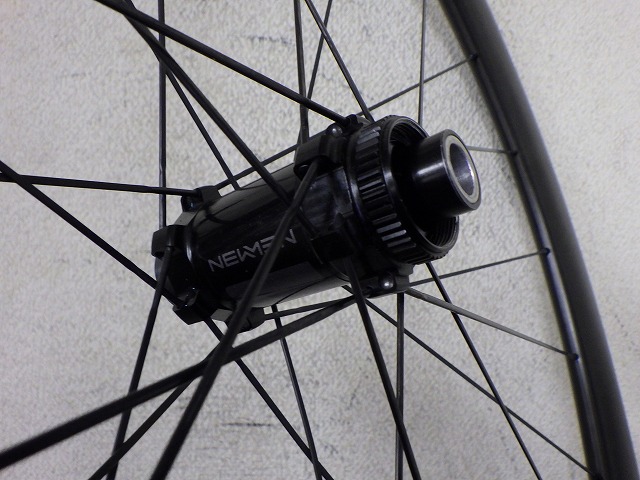
I made the rotor hub side black CX Sprint,
and whereas originally neither side had the final crossing woven,
on the non-rotor hub side there's a possibility of a direct connection, so I wove it.
Once the wheel was actually built, the different-diameter lacing
seems to be taking effect against the small amount of dish,
and when I grab the final crossings on both sides without looking,
I can't tell left from right based on the deformation alone.
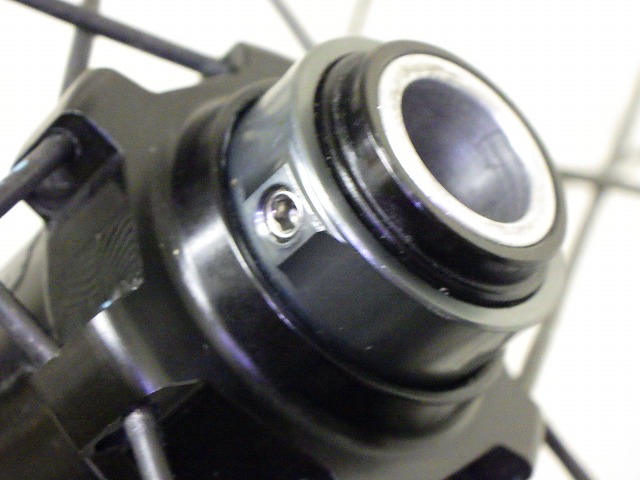
The set screw on the bearing adjustment nut at the hub wasn't tightened
and came loose by hand, so I adjusted the bearing and
fixed it with the set screw. There was a grinding sensation
like the bearings were dead.
But once spoke tension was applied to the flanges, rotation became loose
and the grinding sensation nearly disappeared.
This is something you can clearly feel with cup-and-cone hubs,
but it's rare for a cartridge bearing hub to change feel this much.
I almost jumped the gun and told the customer "Your bearings are shot."
Speaking of Duke rims, their MTB rims are
incredibly light, but their road rims,
as you can see in the images around the valve hole in this article
where the limit tension reads 1100N, you can tension them without chatter
and they feel good to build, but they were actually heavier
than Duke's MTB rims. Since the rim has a deep profile, the weight gain
is unavoidable, but I suppose that's for aerodynamic performance.
On height/weight ratio, they're only slightly behind
Roval's old Alpinist CLX.
As a wheel from a major manufacturer that isn't a specialized aero weapon—
not excessively narrow in target user (body weight) or use
(not saying don't use them daily)—
the old Alpinist CLX really is exceptionally light.
It's also true that Duke's limit tension is higher,
and the Alpinist also forces you into 2:1 lacing if you rebuild,
so if you ask which rim could end up as the better wheel,
I'd say Duke. But even with Duke's rim,
if you're going to have an incompetent shop build it,
the off-the-shelf Alpinist might still handle better.
Huh? Specific weight?
If you scroll down, there's no way some guy's gonna
tell you that—think about it yourself
↑Wow this guy's got a bad attitude
Sorry For The Wait! Please View The Image Below!
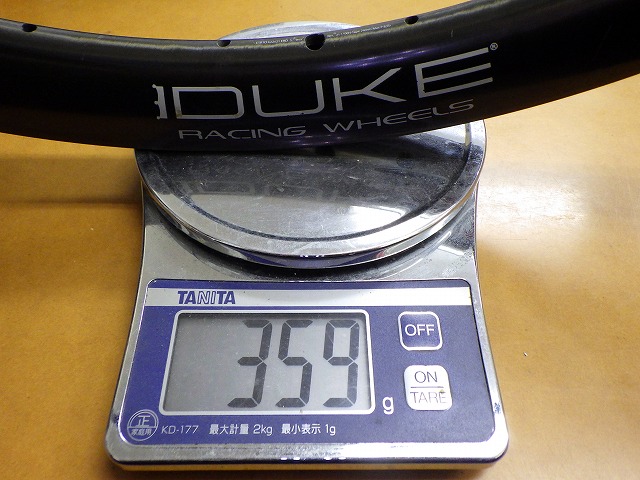
It's A 28H Rear Rim!
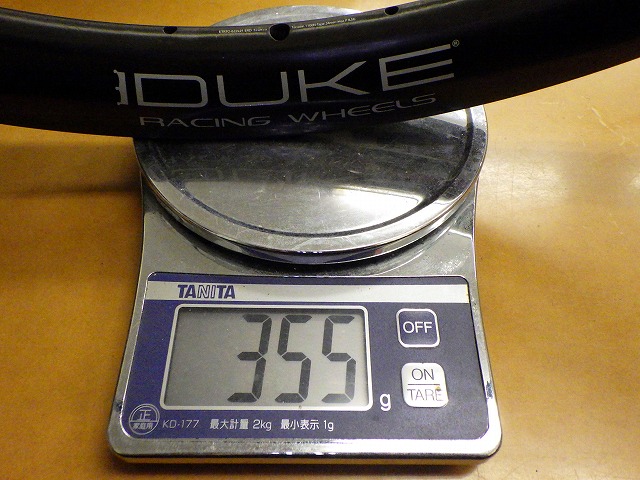
It's A 24H Front Rim!
And Here's A Link To The Super Lightweight MTB Rim Too!(→Here)
↑Stop That!