Another wheel day (and so on).
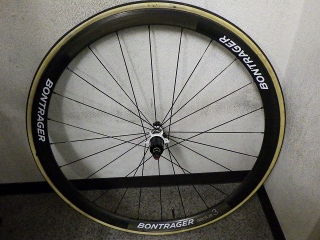
I received a Bontrager Aeolus 3 rear wheel from a customer.
The rim is tubular specification.
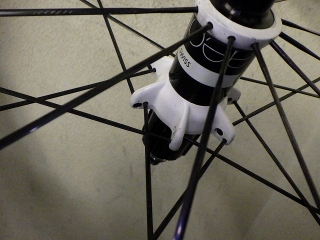
The customer wanted it rebuilt because it was running so poorly.
Theoretically, this hub design is almost at the bare minimum level, but
the thinking is "if we radial-lace all spokes front and back, left and right,
spoke length becomes shortest so weight becomes lightest,
and it's aerodynamically advantageous, but
only the freewheel side is vibrating under pedaling stress, so
let's add tangential lacing." If you think the weighting of elements isn't mixed up,
it's a plausible design choice.
When I see things like this, what concerns me is whether
the person who got the understanding of wheels wrong
and misweighted the importance of various elements
might also be involved in developing
other products from the same company (like frames).
Speaking of other manufacturers,
I know that certain companies can come up with crankset structures
and make shoes with that level of finish,
yet suddenly the completeness drops when it comes to wheels.
I do know their departments and personnel are completely separate.
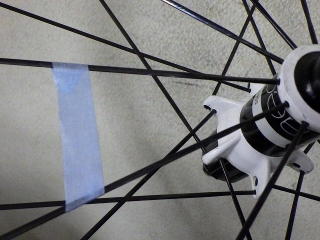
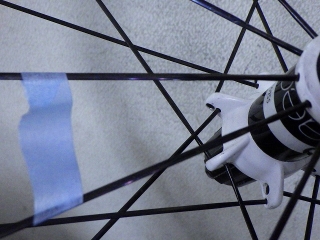
When you squeeze the non-freewheel side spokes,
they deflect an unbelievable amount,
which is partly related to the tension being lower
than in the trued state.
Tensioning them doesn't make them dramatically better though.
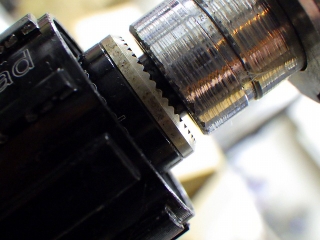
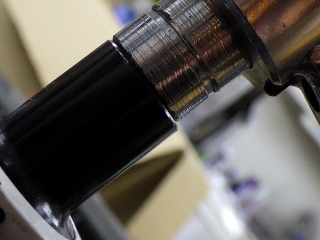
Age-related use is probably part of it,
but the rim had shifted toward the freewheel side.
Since the freewheel side tension is a bit of a dead end,
the state of tensioning from here until the non-freewheel side centers
is about the upper limit among individual variations in the trued state
on the high-tension end,
and it's also the limit of what truing adjustments can cover.
It still doesn't come close to properly designed complete wheels from other manufacturers.
Just like with Roval, I worry that when a frame manufacturer's owned wheel brand is mediocre,
it reflects badly on their complete bike's reputation.

This hub is DT-made, and the freebody is also a star-ratchet style Shimano 11-speed,
but if it were a Shimano 10-speed freebody instead,
the right lock-nut end would be shorter on the 10-speed,
so the gap with the center gauge in the image above would be even larger,
which is also known as "tensioning allowance," so
the non-freewheel side could be tensioned more,
but with the Shimano 11-speed freebody that's reduced.
The right lock-nut end length is longer for Shimano 11-speed than for Shimano 10-speed,
but Campagnolo freebodies are even longer than that.
However, with DT-family hubs,
the ochocho amount (asymmetry) when a Campagnolo freebody is installed
isn't that bad.
The reason is that the depth at which the lock-nut end makes contact differs.
For details, see (→here)
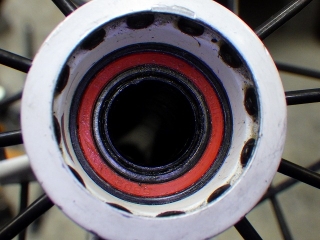
I removed the left lock-nut end.
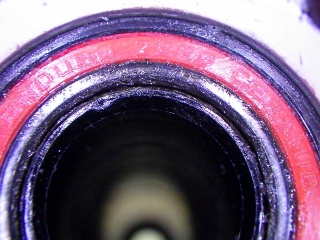
Current DT ceramic bearing hubs have their own-brand ceramic bearings with yellow-colored seals on the outward-facing surface,
but this hub had Enduro Zero ceramics.
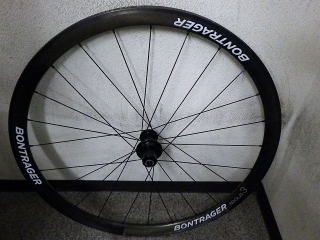
I rebuilt it.

660 hub, 24-hole, black semi-CX sprint 46-laced.
Whipping comes later.
The AL22W rim and Evo lite hub rear wheel I built yesterday
I also did in semi-CX sprint instead of semi-competition,
but that's because the rider's body weight is light.
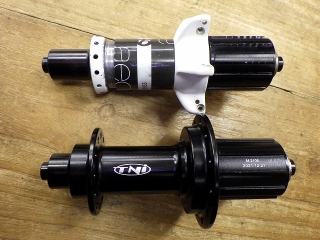
The 660 hub has wide flanges,
but a large amount of asymmetry, so if you do equal-spoke-count, equal-diameter lacing,
the non-freewheel side becomes extremely loose, so
you could call it a hub that works as a problem for testing whether
"can you actually build a decent wheel with this hub?"
(#1 being the reversed high-low flange Evo disc rear hub)
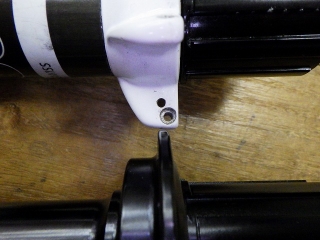
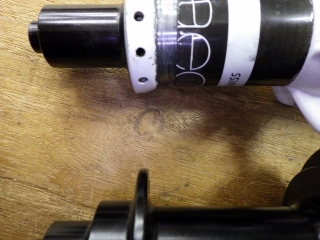
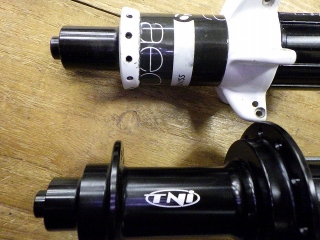
The original hub doesn't have flanges matching that...
Look at the image above—the left flange is protruding from the hub shell.
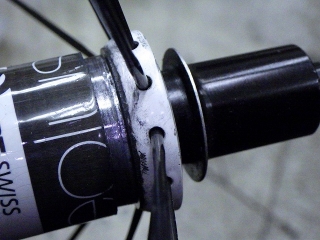
↑When the left flange is inserted, it looks like this.
By narrowing the left flange, they must have weighed the aerodynamic merit
against the lateral stiffness loss demerit,
and judged aerodynamics as more important.
But if you think about "which is more likely for riders to feel the difference,"
you'd understand that's wrong.
Going back in the timeline,
after releasing spoke tension to disassemble the wheel,
I was startled when I tried to remove the left lock-nut end
and the hub shell came out with it.
When I'd seen just this hub before (→here),
I hadn't noticed.
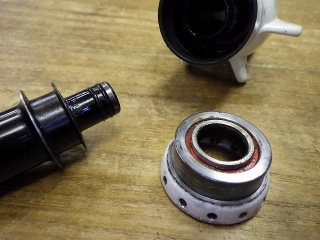
This time's hub shell by itself.
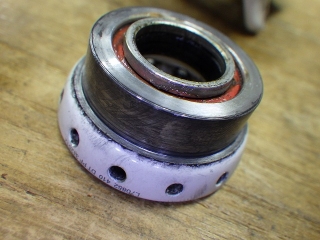
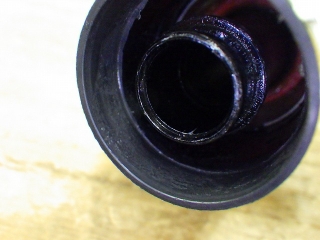
There are no traces of epoxy adhesive or anything,
so it seems it was just a simple press-fit construction from the start.
Why do I think that? There's another piece of evidence:
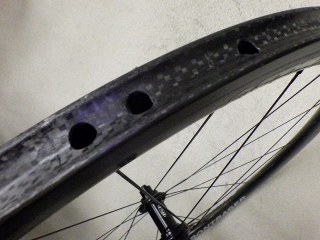
The rim has holes on the outer circumference side for pair-spoke lacing.
These holes are sometimes plugged.
The guide for the outer circumference hole exists from rim molding,
while the inner circumference hole is drilled afterward,
creating different versions for pair-spoke phasing.
With this rim, the left flange of the rear hub rotating
allows it to accommodate both evenly-spaced rim holes and pair-spoke-phased rim holes.
As for hubs where the shell and left/right flanges aren't glued together,
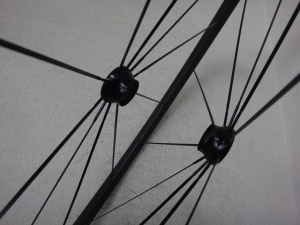
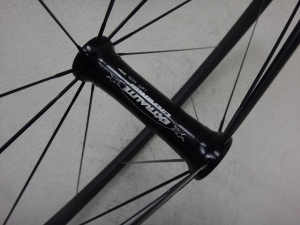
There's this Extra Lite hub, and
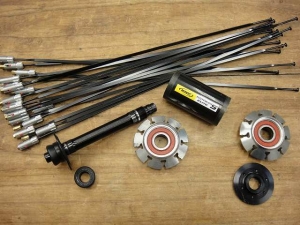
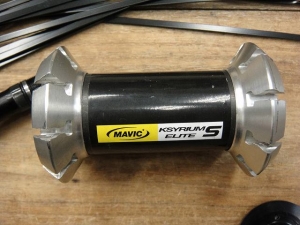
Some of the Ksilium-family hubs from a certain period,
but all of those are front hubs only.
The matching rear hubs
have the shell and flanges integrated as one.
Even though it's only the non-freewheel side,
not gluing the flanges on a rear hub that's the drive wheel
seems like underestimating pedaling stress...

By the way, the titanium hub shell on this TNT rear hub
also isn't glued, so there is precedent.
Anyway, the customer intends to use this wheel
as a decisive climbing wheel,
but is actually considering buying another wheel
with slightly better spoke structure than this Aeolus,
but that wheel's rim weight is heavier than this Aeolus 3,
so if I rebuild this wheel,
it becomes a superior option in both outer circumference weight and wheel stiffness,
so that other wheel shouldn't be necessary—or so I said,
but they got talked into it by someone trying to make a sale,
and ended up buying that wheel used anyway.
Well, I'll respect that choice—or rather, whatever—but
I did measure this wheel's rim weight.
No matter how you think about it, this one is lighter.
I'm not telling anyone the specific weight.
↑this guy has bad vibes
Sooorry for the wait!
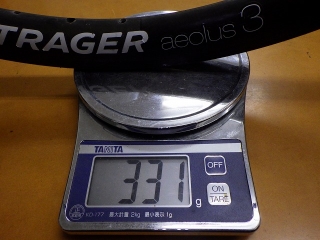
Pleeeease look at this image!
↑Stooooop!

I received a Bontrager Aeolus 3 rear wheel from a customer.
The rim is tubular specification.

The customer wanted it rebuilt because it was running so poorly.
Theoretically, this hub design is almost at the bare minimum level, but
the thinking is "if we radial-lace all spokes front and back, left and right,
spoke length becomes shortest so weight becomes lightest,
and it's aerodynamically advantageous, but
only the freewheel side is vibrating under pedaling stress, so
let's add tangential lacing." If you think the weighting of elements isn't mixed up,
it's a plausible design choice.
When I see things like this, what concerns me is whether
the person who got the understanding of wheels wrong
and misweighted the importance of various elements
might also be involved in developing
other products from the same company (like frames).
Speaking of other manufacturers,
I know that certain companies can come up with crankset structures
and make shoes with that level of finish,
yet suddenly the completeness drops when it comes to wheels.
I do know their departments and personnel are completely separate.


When you squeeze the non-freewheel side spokes,
they deflect an unbelievable amount,
which is partly related to the tension being lower
than in the trued state.
Tensioning them doesn't make them dramatically better though.


Age-related use is probably part of it,
but the rim had shifted toward the freewheel side.
Since the freewheel side tension is a bit of a dead end,
the state of tensioning from here until the non-freewheel side centers
is about the upper limit among individual variations in the trued state
on the high-tension end,
and it's also the limit of what truing adjustments can cover.
It still doesn't come close to properly designed complete wheels from other manufacturers.
Just like with Roval, I worry that when a frame manufacturer's owned wheel brand is mediocre,
it reflects badly on their complete bike's reputation.

This hub is DT-made, and the freebody is also a star-ratchet style Shimano 11-speed,
but if it were a Shimano 10-speed freebody instead,
the right lock-nut end would be shorter on the 10-speed,
so the gap with the center gauge in the image above would be even larger,
which is also known as "tensioning allowance," so
the non-freewheel side could be tensioned more,
but with the Shimano 11-speed freebody that's reduced.
The right lock-nut end length is longer for Shimano 11-speed than for Shimano 10-speed,
but Campagnolo freebodies are even longer than that.
However, with DT-family hubs,
the ochocho amount (asymmetry) when a Campagnolo freebody is installed
isn't that bad.
The reason is that the depth at which the lock-nut end makes contact differs.
For details, see (→here)

I removed the left lock-nut end.

Current DT ceramic bearing hubs have their own-brand ceramic bearings with yellow-colored seals on the outward-facing surface,
but this hub had Enduro Zero ceramics.

I rebuilt it.

660 hub, 24-hole, black semi-CX sprint 46-laced.
Whipping comes later.
The AL22W rim and Evo lite hub rear wheel I built yesterday
I also did in semi-CX sprint instead of semi-competition,
but that's because the rider's body weight is light.

The 660 hub has wide flanges,
but a large amount of asymmetry, so if you do equal-spoke-count, equal-diameter lacing,
the non-freewheel side becomes extremely loose, so
you could call it a hub that works as a problem for testing whether
"can you actually build a decent wheel with this hub?"
(#1 being the reversed high-low flange Evo disc rear hub)


The original hub doesn't have flanges matching that...
Look at the image above—the left flange is protruding from the hub shell.

↑When the left flange is inserted, it looks like this.
By narrowing the left flange, they must have weighed the aerodynamic merit
against the lateral stiffness loss demerit,
and judged aerodynamics as more important.
But if you think about "which is more likely for riders to feel the difference,"
you'd understand that's wrong.

Going back in the timeline,
after releasing spoke tension to disassemble the wheel,
I was startled when I tried to remove the left lock-nut end
and the hub shell came out with it.
When I'd seen just this hub before (→here),
I hadn't noticed.

This time's hub shell by itself.


There are no traces of epoxy adhesive or anything,
so it seems it was just a simple press-fit construction from the start.
Why do I think that? There's another piece of evidence:

The rim has holes on the outer circumference side for pair-spoke lacing.
These holes are sometimes plugged.
The guide for the outer circumference hole exists from rim molding,
while the inner circumference hole is drilled afterward,
creating different versions for pair-spoke phasing.
With this rim, the left flange of the rear hub rotating
allows it to accommodate both evenly-spaced rim holes and pair-spoke-phased rim holes.
As for hubs where the shell and left/right flanges aren't glued together,
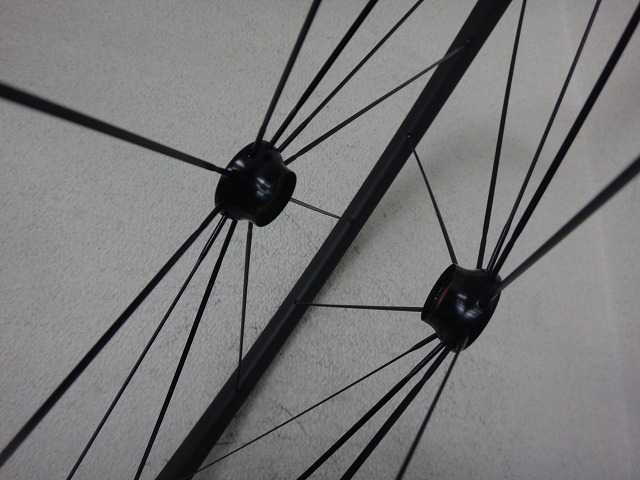
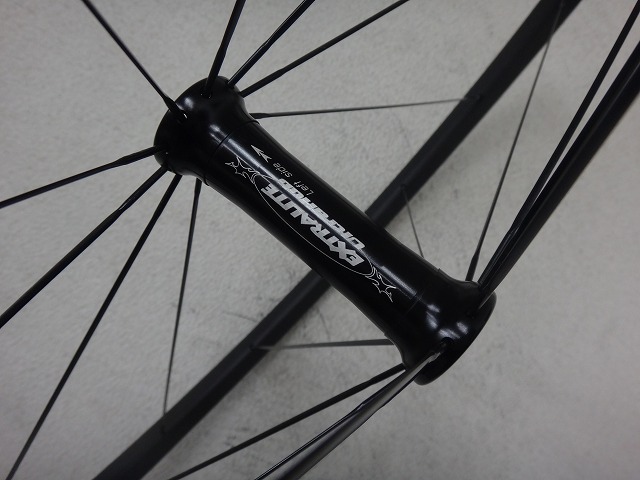
There's this Extra Lite hub, and


Some of the Ksilium-family hubs from a certain period,
but all of those are front hubs only.
The matching rear hubs
have the shell and flanges integrated as one.
Even though it's only the non-freewheel side,
not gluing the flanges on a rear hub that's the drive wheel
seems like underestimating pedaling stress...
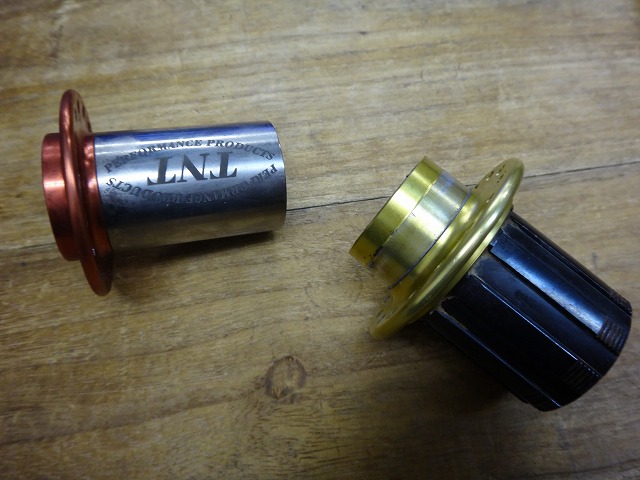
By the way, the titanium hub shell on this TNT rear hub
also isn't glued, so there is precedent.
Anyway, the customer intends to use this wheel
as a decisive climbing wheel,
but is actually considering buying another wheel
with slightly better spoke structure than this Aeolus,
but that wheel's rim weight is heavier than this Aeolus 3,
so if I rebuild this wheel,
it becomes a superior option in both outer circumference weight and wheel stiffness,
so that other wheel shouldn't be necessary—or so I said,
but they got talked into it by someone trying to make a sale,
and ended up buying that wheel used anyway.
Well, I'll respect that choice—or rather, whatever—but
I did measure this wheel's rim weight.
No matter how you think about it, this one is lighter.
I'm not telling anyone the specific weight.
↑this guy has bad vibes

Sooorry for the wait!

Pleeeease look at this image!
↑Stooooop!