A customer dropped off the front and rear wheels of an Eurus for me.

They wanted an inspection.
Starting with the front wheel, but before that.
About this EURUS wheel—
Since the early model days with translation materials from Japanese distributors back then,
it's been written as "Yūrasu," but
for the steel spoke era models,
I distinguish them by calling it "Eurus."
By the way, those translation materials
weren't from the distributor most knowledgeable about Campagnolo in Japan,
but rather from someone at the import distributor at the time,
and BORA is consistently written as "Bora."
NUCLEON is "Nucleon," but
in magazines back then it was sometimes written as "Nukuoreon,"
and people who say Nukuoreon tend to also call it Eurus.
In the letter from the customer about this wheel,
it was written as "Eurus,"
so I figured they must have read my past post about the same thing
and matched it accordingly.

The hubs from this era have a "hook-type" flange design for straight spokes.
The holes cut right to the edge of the flange
serve as a grip point for removing the dust cap, so

the risk of breaking the dust cap, which cracks easily,
is very low—really helpful.
The side shown in the image has a cone locknut,
so it doesn't affect wheel performance,
but by attribute it's the right side.

Once the dust cap is installed, we lose the clue for
determining the wheel's left and right attributes at that point,
but the C-ring that serves as a cap for the grease hole
in the center of the hub body has Campagnolo lettering printed on it
positioned so it reads correctly from the right side.
Or rather, it was that way from the start.
The evenly-spaced black lines on the C-ring
are just spokes reflecting in it.
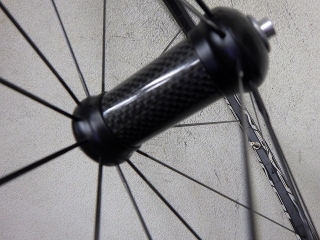
↑This is from a past post—
the front wheel of a Neutron Ultra,
and because the hub flange is "through-type,"
there's no initial grip point to gently lift the dust cap,
so the risk of breaking it is slightly higher.
Well, I always keep spares on hand just in case I mess up.
Since the hub body has no grease hole either, unless you install a quick release
or fit tires with directional markings or something,
there's hardly any way to tell left and right attributes
except maybe if there's lettering printed on the rim tape, so
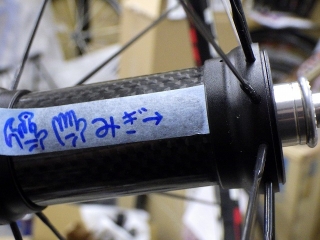
I put on "this side is the right side tape,"
and there was a comment at the time pointing out the right-side marking.
Paying close attention there.


The front wheel rotation felt rough, so
I removed the hub axle and checked the ball races for pitting.
Everything looked good, so I regreased and reassembled.


The rim appeared to be slightly offset to the right,
but when I did a truing check afterward, there was one noticeable runout in one spot, so
I must have just happened to place the centering gauge near that spot,
and everywhere else was probably dead-center.


When centering, if I just do the truing without thinking,
working only in the tightening direction,
by the time the runout disappeared, the center automatically came out perfect.
If you know that tightening the left nipple is the direction for tightening,
the chance of having to do the work twice becomes almost zero,
so taking that preliminary center reading had a point.

Now for the rear wheel.

Compared to later models, the small flange
means the rest phase takes up a very large proportion.
G3 lacing is a type of left-right mixed spoke pattern, so
it's incredibly effective at reducing spoke tension differences between sides,
but according to the translation materials from that distributor I mentioned earlier,
it says something like "by lowering the freewheel-side spoke tension,
the burden on the rim becomes smaller"—
which suggests the intent was to bring the non-freewheel side tension down toward the freewheel side,
rather than adjusting the freewheel-side tension up to match the non-freewheel side.
But comparing it even to Nucleon from that era,
which was a left-right same-number laced rear wheel
(Nucleon does use quite extreme left-right diameter differences, but
even accounting for that) this Eurus's freewheel-side tension
isn't particularly low—any way you look at it,
the wheel is laced in the direction of pulling up the non-freewheel side.


Unlike the front wheel, the hub rotation was smooth,
so I just confirmed that the freewheel pawl spring had no deformation
without disassembling it enough to remove the hub axle.
The preliminary center was dead-on, and I cleaned up a few small runouts
in various spots.

The Eurus rim height is higher than Nucleon, so
naturally the rim weight is heavier than Nucleon.
...At least for the front rim.

↑This is looking into the Neutron Ultra rear rim through the valve hole,
and whether because it's a low-height, offset rim
there's a reinforcement wall inside the rim.
By the way, the left side of the image is the right side of the wheel (freewheel side).
Because of this, the Nucleon rear rim
is heavier than the Eurus rear rim, and by my thinking,
within the aluminum rim model range, the strongest combination for the time
would be a Nucleon front wheel with an Eurus rear wheel,
but neither then nor now does Campagnolo
sell wheels separately by side, so
to do that you'd have to buy both front and rear wheels of each.
There was once an online retailer from a certain permanently neutral country
that sold a set with a Fulcrum Speed 40 front wheel and
a Speed 55 rear wheel,
and if they were pulling these from sets that came with both wheels,
it would be hard to imagine the leftover wheels (especially the 55 front) selling,
so they must have been ordering that specific combination from Fulcrum from the start.
For that to be possible, they were likely ordering under the premise of
"that's how we assemble it on complete bikes,"
(otherwise Japanese distributors should also be able to order with different rim heights front and rear,
and nowadays a Bora WTO 45/60 set should sell),
and it might be a case of diversion from complete bike manufacturers...

"Where'd the 55 front wheel and 40 rear wheel go?"
"...I don't like crabs with such keen intuition."

They wanted an inspection.
Starting with the front wheel, but before that.
About this EURUS wheel—
Since the early model days with translation materials from Japanese distributors back then,
it's been written as "Yūrasu," but
for the steel spoke era models,
I distinguish them by calling it "Eurus."
By the way, those translation materials
weren't from the distributor most knowledgeable about Campagnolo in Japan,
but rather from someone at the import distributor at the time,
and BORA is consistently written as "Bora."
NUCLEON is "Nucleon," but
in magazines back then it was sometimes written as "Nukuoreon,"
and people who say Nukuoreon tend to also call it Eurus.
In the letter from the customer about this wheel,
it was written as "Eurus,"
so I figured they must have read my past post about the same thing
and matched it accordingly.

The hubs from this era have a "hook-type" flange design for straight spokes.
The holes cut right to the edge of the flange
serve as a grip point for removing the dust cap, so

the risk of breaking the dust cap, which cracks easily,
is very low—really helpful.
The side shown in the image has a cone locknut,
so it doesn't affect wheel performance,
but by attribute it's the right side.

Once the dust cap is installed, we lose the clue for
determining the wheel's left and right attributes at that point,
but the C-ring that serves as a cap for the grease hole
in the center of the hub body has Campagnolo lettering printed on it
positioned so it reads correctly from the right side.
Or rather, it was that way from the start.
The evenly-spaced black lines on the C-ring
are just spokes reflecting in it.
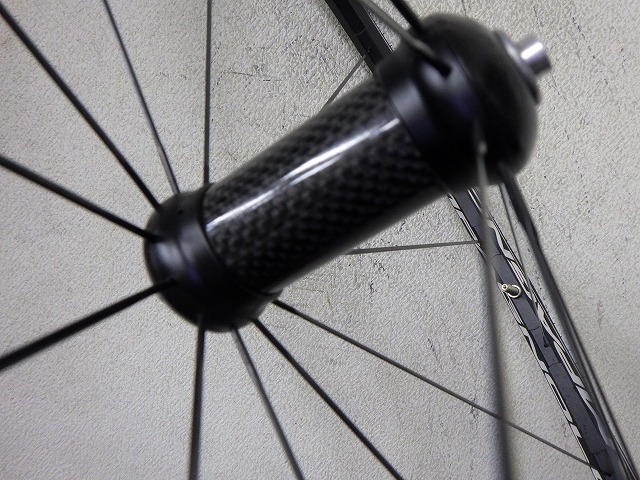
↑This is from a past post—
the front wheel of a Neutron Ultra,
and because the hub flange is "through-type,"
there's no initial grip point to gently lift the dust cap,
so the risk of breaking it is slightly higher.
Well, I always keep spares on hand just in case I mess up.
Since the hub body has no grease hole either, unless you install a quick release
or fit tires with directional markings or something,
there's hardly any way to tell left and right attributes
except maybe if there's lettering printed on the rim tape, so
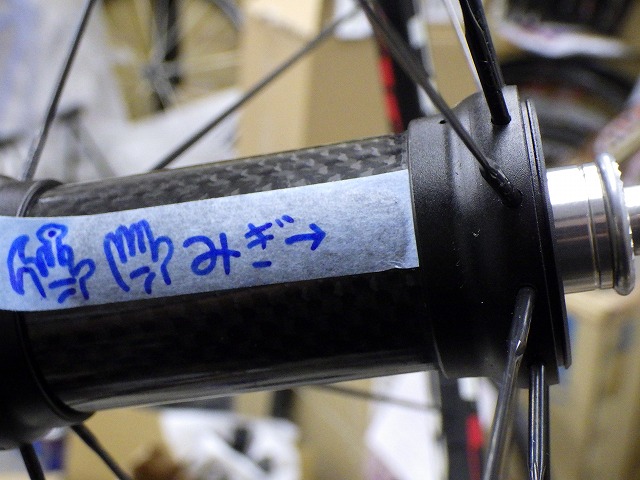
I put on "this side is the right side tape,"
and there was a comment at the time pointing out the right-side marking.
Paying close attention there.


The front wheel rotation felt rough, so
I removed the hub axle and checked the ball races for pitting.
Everything looked good, so I regreased and reassembled.


The rim appeared to be slightly offset to the right,
but when I did a truing check afterward, there was one noticeable runout in one spot, so
I must have just happened to place the centering gauge near that spot,
and everywhere else was probably dead-center.


When centering, if I just do the truing without thinking,
working only in the tightening direction,
by the time the runout disappeared, the center automatically came out perfect.
If you know that tightening the left nipple is the direction for tightening,
the chance of having to do the work twice becomes almost zero,
so taking that preliminary center reading had a point.

Now for the rear wheel.

Compared to later models, the small flange
means the rest phase takes up a very large proportion.
G3 lacing is a type of left-right mixed spoke pattern, so
it's incredibly effective at reducing spoke tension differences between sides,
but according to the translation materials from that distributor I mentioned earlier,
it says something like "by lowering the freewheel-side spoke tension,
the burden on the rim becomes smaller"—
which suggests the intent was to bring the non-freewheel side tension down toward the freewheel side,
rather than adjusting the freewheel-side tension up to match the non-freewheel side.
But comparing it even to Nucleon from that era,
which was a left-right same-number laced rear wheel
(Nucleon does use quite extreme left-right diameter differences, but
even accounting for that) this Eurus's freewheel-side tension
isn't particularly low—any way you look at it,
the wheel is laced in the direction of pulling up the non-freewheel side.


Unlike the front wheel, the hub rotation was smooth,
so I just confirmed that the freewheel pawl spring had no deformation
without disassembling it enough to remove the hub axle.
The preliminary center was dead-on, and I cleaned up a few small runouts
in various spots.

The Eurus rim height is higher than Nucleon, so
naturally the rim weight is heavier than Nucleon.
...At least for the front rim.

↑This is looking into the Neutron Ultra rear rim through the valve hole,
and whether because it's a low-height, offset rim
there's a reinforcement wall inside the rim.
By the way, the left side of the image is the right side of the wheel (freewheel side).
Because of this, the Nucleon rear rim
is heavier than the Eurus rear rim, and by my thinking,
within the aluminum rim model range, the strongest combination for the time
would be a Nucleon front wheel with an Eurus rear wheel,
but neither then nor now does Campagnolo
sell wheels separately by side, so
to do that you'd have to buy both front and rear wheels of each.
There was once an online retailer from a certain permanently neutral country
that sold a set with a Fulcrum Speed 40 front wheel and
a Speed 55 rear wheel,
and if they were pulling these from sets that came with both wheels,
it would be hard to imagine the leftover wheels (especially the 55 front) selling,
so they must have been ordering that specific combination from Fulcrum from the start.
For that to be possible, they were likely ordering under the premise of
"that's how we assemble it on complete bikes,"
(otherwise Japanese distributors should also be able to order with different rim heights front and rear,
and nowadays a Bora WTO 45/60 set should sell),
and it might be a case of diversion from complete bike manufacturers...

"Where'd the 55 front wheel and 40 rear wheel go?"
"...I don't like crabs with such keen intuition."