This is a follow-up to my previous post about SRAM brake pads.
After swapping to sintered (metallic) pads
and installing a new rotor, I took it out in the rain
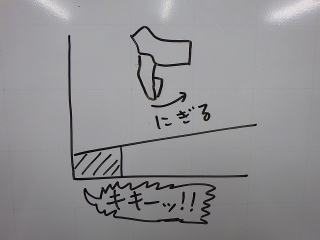
During the initial contact phase between the brake pads and rotor,
it made a noise identical to a worn-out coaster brake on some old mama-chari,
SCREEEECH!! echoing through the air.
Since I was in town hitting red lights regularly,
that horrific screech went off
every time I braked, and people around me
would visibly jump.
It was so embarrassing and loud,
like some kind of punishment game.
At that point, I was grateful
I'd also replaced the disc rotor.
I didn't have to second-guess myself thinking,
"Maybe it's squealing because organic pad residue is stuck to the rotor
and the compatibility is off?"
What I discovered was that after the initial loud moment,
once I gripped the lever harder, the noise stopped.
It didn't screech continuously all the way to a complete stop.
SRAM's bedding-in procedure states:
"Apply the brake 20 times from moderate speed down to walking pace,
then do 10 more from faster speed back down to walking pace."
They have a manual and also posted videos on YouTube, but
first I thought, "What the heck is 'moderate speed'?"
so I checked the original English text and it said "moderate speed."
Beyond the meaning "medium level," moderate can also mean
"appropriate" or "adequate."
The "faster speed" part was just "faster speed."
Basically, use common sense, you know?
The reason it specifies down to walking pace
is to avoid hard stops that could flatspot the tire.
With this routine, I could probably get the bedding done
at the race venue on a clear stretch while warming up.
If they were organic pads, that is.
Since SRAM itself acknowledges that sintered pads take longer to bed in,
that approach wasn't going to cut it.
So the next day, even though it was raining,
I figured running one descent would finish the job,
so I headed out to Inunaki Pass.
During the flat sections that day, I noticed
that after braking hard repeatedly the day before
(making sure no cars were behind me),
the initial noise on day two was significantly quieter.
Though still, it was a volume you'd absolutely never hear with organic pads.
And while the brake screech happened every time on the initial grab on day one,
on day two if I'd just braked recently,
the initial noise barely happened at all.
Both days were rainy, and on day two I can't say for certain,
but it's possible the noise happens when you brake
while there's a film of water on the rotor surface.
In the city with short intervals between lights,
the initial noise would squeal at one red light,
but the next one wouldn't make a sound, yet
if I went a while without hitting a light,
the initial squeal would come back.
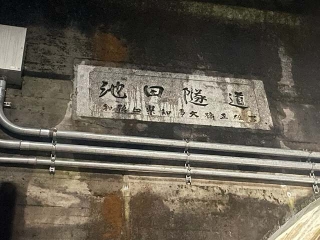
So I made my way to the Ikeda Tunnel on Inunaki Pass,
which marks the border with Wakayama.
Technically the prefectural line doesn't run exactly there—
it actually crosses about 2km before the tunnel.
The two closest passes to my place are
Nabeya Pass and Kazahuki Pass, but
the former is closed again,
and the latter has almost no steep sections,
so I went with Inunaki.
The weather was intermittent light rain,
and except for areas directly under the highway,
I didn't ride on a single dry surface.
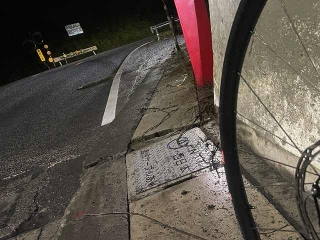
↑Looking back toward Osaka from the tunnel.
Q: Why do you stubbornly refuse to post pictures of your frame?
A: Because the only words that come to mind are curses.
Anyway, I'll eventually make a category called "Gravel Bike Newbie"
and write all kinds of stuff.
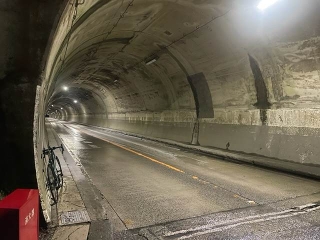
↑Here it is.
From here, along with holding the brake lever hard
with my clumsy braking technique, I'm also pedaling.
I'm not just braking as needed—
I'm braking more than necessary.
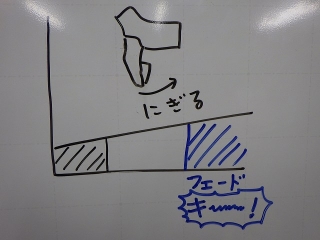
Right after starting the descent, aside from the initial noise,
all I heard was a scrubbing sound
of the pad rubbing the rotor, but
about 1.4km down from the tunnel,
around the Shintsu Hot Spring area (also in Wakayama),
I finally felt the edge of fade setting in, and
KEEEEE made an intermittent sound.
I'd never heard squealing this deep into the brake lever pull before.
Also, this sound was different from the initial SCREEEECH!
The Shintsu Hot Spring parking area is spacious with vending machines,
and street racers often hang out there,
but with the rain nobody was around.
However, partway down I was passed by an AE86
with a license plate ending in "・・ 86"
(near my shop I've seen an Abarth with "・5 95"
and a Skyline GT-R (R32) with "・・ 32").
After that point (roughly 3km from the top)
the intermittent noise stopped.
After that I wasn't holding the brake constantly—
I was doing hard braking on straightaways away from corners,
watching for traffic behind me, several times over—
but the brake feel was distinctly different from before fade.
The melted pad material from the brake heat had transferred
onto the rotor, but
the way it looked, temperature seemed to be the key factor, so
with sintered pads you might never finish bedding-in if you only
"make an effort to brake hard at every red light in town."
Edit: Regarding car license plates,
I received a comment noting that the hyphen only appears
when there are 4 digits,
and I've corrected it.
Examples would be:
「・・ 12」
「・3 45」
「67 ‐ 89」
Thank you for the comment.
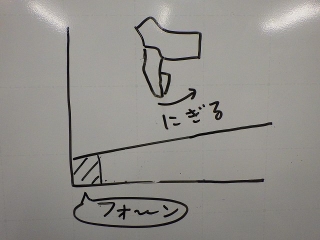
After the descent, from a standstill the initial grab made
a faint high-pitched sound, but
it wasn't annoyingly loud anymore.
And at this point, I finally understood what SRAM meant
when they said "initial bite isn't that strong."
Sintered pads don't have that snappy immediate power of organic pads,
but instead they bite proportionally to how hard you pull the lever,
like a vise that keeps tightening as you grip harder.
I'm not sure if the graph above is accurate, but
the relationship between lever pull and braking power felt like
a straight line of proportionality to me.
The absolute braking force is stronger with sintered once bedded in.
Once you grip all the way, the power exceeds tire grip
(though that's true of organic pads too),
so I haven't tested that.
Also, disc brakes get a deeper lever pull after a little riding
from when they're new
(aside from immediately after setup), but
after that the lever only gets deeper as the pads wear,
so it doesn't change much—it's like how a new eraser's sharp corners
wear round right away,
then it seems to barely wear after that.
With sintered pads, I've ridden maybe 100km total to the pass top
and the day before,
but the lever pull distance before the pads contact the rotor is very shallow,
and it wasn't until I'd finished the descent
that I had a nice comfortable lever throw.
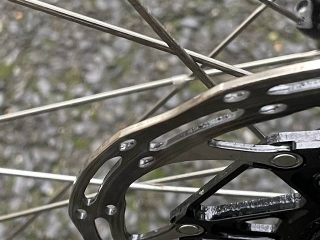
↑Day two, basically at the point of heading home.
There are wear marks on the rotor's pad contact surface.
I expected the outer edge of the rotor to have more color change,
but it wasn't that dramatic (though the color has changed a bit).
Since I only use the front brake on disc brakes,
everything up to here has been about the front brake.
As for the rear brake, when I spin the wheel with no load,
the pads don't scrub the rotor at all, and
even with weight on it, it doesn't squeal in most situations, but
sometimes away from home I get a faint rubbing noise,
and since it's not from brake heat
I figure it picked up some road grit,
which was annoying. So
I moved my well-used front organic pads to the rear brake,
which opened up the rotor clearance, and
now there's not even a trace of rubbing noise.
I was worried the rear brake lever would feel spongy with that gap,
so I pulled the rear lever several times while stopped, but
the caliper pistons barely extend and return correctly—
the lever pull depth matches the pad wear,
and the pistons don't extend to close the gap back to where it was.
After swapping to sintered (metallic) pads
and installing a new rotor, I took it out in the rain

During the initial contact phase between the brake pads and rotor,
it made a noise identical to a worn-out coaster brake on some old mama-chari,
SCREEEECH!! echoing through the air.
Since I was in town hitting red lights regularly,
that horrific screech went off
every time I braked, and people around me
would visibly jump.
It was so embarrassing and loud,
like some kind of punishment game.
At that point, I was grateful
I'd also replaced the disc rotor.
I didn't have to second-guess myself thinking,
"Maybe it's squealing because organic pad residue is stuck to the rotor
and the compatibility is off?"
What I discovered was that after the initial loud moment,
once I gripped the lever harder, the noise stopped.
It didn't screech continuously all the way to a complete stop.
SRAM's bedding-in procedure states:
"Apply the brake 20 times from moderate speed down to walking pace,
then do 10 more from faster speed back down to walking pace."
They have a manual and also posted videos on YouTube, but
first I thought, "What the heck is 'moderate speed'?"
so I checked the original English text and it said "moderate speed."
Beyond the meaning "medium level," moderate can also mean
"appropriate" or "adequate."
The "faster speed" part was just "faster speed."
Basically, use common sense, you know?
The reason it specifies down to walking pace
is to avoid hard stops that could flatspot the tire.
With this routine, I could probably get the bedding done
at the race venue on a clear stretch while warming up.
If they were organic pads, that is.
Since SRAM itself acknowledges that sintered pads take longer to bed in,
that approach wasn't going to cut it.
So the next day, even though it was raining,
I figured running one descent would finish the job,
so I headed out to Inunaki Pass.
During the flat sections that day, I noticed
that after braking hard repeatedly the day before
(making sure no cars were behind me),
the initial noise on day two was significantly quieter.
Though still, it was a volume you'd absolutely never hear with organic pads.
And while the brake screech happened every time on the initial grab on day one,
on day two if I'd just braked recently,
the initial noise barely happened at all.
Both days were rainy, and on day two I can't say for certain,
but it's possible the noise happens when you brake
while there's a film of water on the rotor surface.
In the city with short intervals between lights,
the initial noise would squeal at one red light,
but the next one wouldn't make a sound, yet
if I went a while without hitting a light,
the initial squeal would come back.

So I made my way to the Ikeda Tunnel on Inunaki Pass,
which marks the border with Wakayama.
Technically the prefectural line doesn't run exactly there—
it actually crosses about 2km before the tunnel.
The two closest passes to my place are
Nabeya Pass and Kazahuki Pass, but
the former is closed again,
and the latter has almost no steep sections,
so I went with Inunaki.
The weather was intermittent light rain,
and except for areas directly under the highway,
I didn't ride on a single dry surface.

↑Looking back toward Osaka from the tunnel.
Q: Why do you stubbornly refuse to post pictures of your frame?
A: Because the only words that come to mind are curses.
Anyway, I'll eventually make a category called "Gravel Bike Newbie"
and write all kinds of stuff.

↑Here it is.
From here, along with holding the brake lever hard
with my clumsy braking technique, I'm also pedaling.
I'm not just braking as needed—
I'm braking more than necessary.

Right after starting the descent, aside from the initial noise,
all I heard was a scrubbing sound
of the pad rubbing the rotor, but
about 1.4km down from the tunnel,
around the Shintsu Hot Spring area (also in Wakayama),
I finally felt the edge of fade setting in, and
KEEEEE made an intermittent sound.
I'd never heard squealing this deep into the brake lever pull before.
Also, this sound was different from the initial SCREEEECH!
The Shintsu Hot Spring parking area is spacious with vending machines,
and street racers often hang out there,
but with the rain nobody was around.
However, partway down I was passed by an AE86
with a license plate ending in "・・ 86"
(near my shop I've seen an Abarth with "・5 95"
and a Skyline GT-R (R32) with "・・ 32").
After that point (roughly 3km from the top)
the intermittent noise stopped.
After that I wasn't holding the brake constantly—
I was doing hard braking on straightaways away from corners,
watching for traffic behind me, several times over—
but the brake feel was distinctly different from before fade.
The melted pad material from the brake heat had transferred
onto the rotor, but
the way it looked, temperature seemed to be the key factor, so
with sintered pads you might never finish bedding-in if you only
"make an effort to brake hard at every red light in town."
Edit: Regarding car license plates,
I received a comment noting that the hyphen only appears
when there are 4 digits,
and I've corrected it.
Examples would be:
「・・ 12」
「・3 45」
「67 ‐ 89」
Thank you for the comment.

After the descent, from a standstill the initial grab made
a faint high-pitched sound, but
it wasn't annoyingly loud anymore.
And at this point, I finally understood what SRAM meant
when they said "initial bite isn't that strong."
Sintered pads don't have that snappy immediate power of organic pads,
but instead they bite proportionally to how hard you pull the lever,
like a vise that keeps tightening as you grip harder.
I'm not sure if the graph above is accurate, but
the relationship between lever pull and braking power felt like
a straight line of proportionality to me.
The absolute braking force is stronger with sintered once bedded in.
Once you grip all the way, the power exceeds tire grip
(though that's true of organic pads too),
so I haven't tested that.
Also, disc brakes get a deeper lever pull after a little riding
from when they're new
(aside from immediately after setup), but
after that the lever only gets deeper as the pads wear,
so it doesn't change much—it's like how a new eraser's sharp corners
wear round right away,
then it seems to barely wear after that.
With sintered pads, I've ridden maybe 100km total to the pass top
and the day before,
but the lever pull distance before the pads contact the rotor is very shallow,
and it wasn't until I'd finished the descent
that I had a nice comfortable lever throw.

↑Day two, basically at the point of heading home.
There are wear marks on the rotor's pad contact surface.
I expected the outer edge of the rotor to have more color change,
but it wasn't that dramatic (though the color has changed a bit).
Since I only use the front brake on disc brakes,
everything up to here has been about the front brake.
As for the rear brake, when I spin the wheel with no load,
the pads don't scrub the rotor at all, and
even with weight on it, it doesn't squeal in most situations, but
sometimes away from home I get a faint rubbing noise,
and since it's not from brake heat
I figure it picked up some road grit,
which was annoying. So
I moved my well-used front organic pads to the rear brake,
which opened up the rotor clearance, and
now there's not even a trace of rubbing noise.
I was worried the rear brake lever would feel spongy with that gap,
so I pulled the rear lever several times while stopped, but
the caliper pistons barely extend and return correctly—
the lever pull depth matches the pad wear,
and the pistons don't extend to close the gap back to where it was.