Another day with wheels (details omitted).
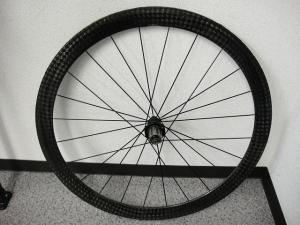
I rebuilt the rear wheel on a Koima "Aero" (aero rim).
The rim, spokes, and hub are unmistakably Koima,
but there was originally a sticker from a complete bike brand
(not a wheel manufacturer—the maker itself applied it).
As-is, that would require special attention, but since we were given the okay to remove it,
I cleaned off even the stubborn adhesive residue.
Compared to Nomu Lab Wheel No. 2, this was nothing.
So from now on, this is "the Koima Aero."
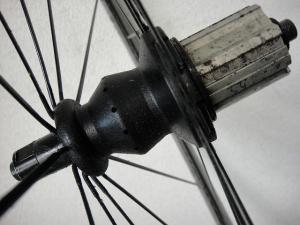
The reason it was brought in: "it feels mushy when riding."
It's not just because the freewheel side is laced radial,
but looking at the spokes, the freewheel side tension is loose too.
I can say with certainty this is below Koima's factory tension spec.
The current owner wasn't the original—
it was originally beaten hard by a pro rider (or rather, a pro team),
so it degraded over years of use.
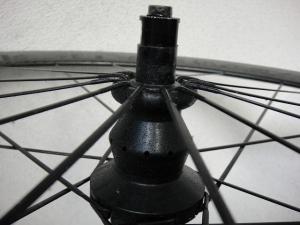
The flange width looks narrow, but it's actually not that narrow.
It just appears that way because the left-side shaft is thin relative to the hub body.
It's a high-low flange, but the low side on the non-freewheel end is incredibly small-diameter,
making it more of an extreme high-low than it looks.
Apart from the non-freewheel side being radial-laced, the hub has decent proportions.
Since spoke tension is completely below initial spec, I could've tried tightening,
but we ended up rebuilding it with a Tni evo hub.
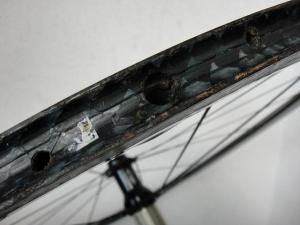
This Koima rim has incredibly pronounced drilling (radial runout).
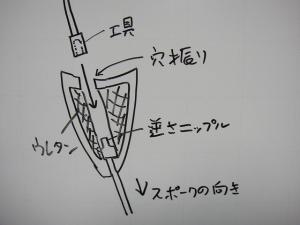
Moreover, the rim interior is filled with something like urethane,
and the nipple and spoke orientation are highly constrained,
so you literally can't assemble it with the drilling reversed (mirrored).
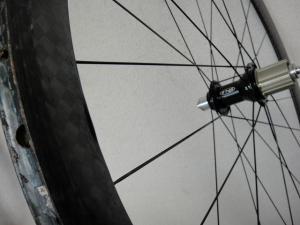
The spoke in the rim hole next to the valve hole comes from the opposite flange
compared to a standard rim—the left-right drilling is reversed.
In this blog's terminology, it's a reverse rim.
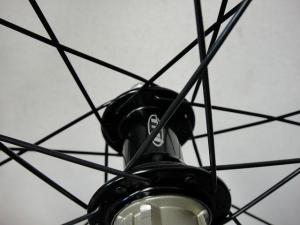
Since it was reverse-Italian laced before, I wanted to do Italian lacing,
but the 24H 4-cross lacing means spokes pull "right drop."
Normal Italian (same-count left-right) is left drop.
With a reverse rim, these drops flip, so
4-cross on a reverse rim is
"left drop reversed to right drop reversed to left drop"—that's correct.
Spokes: freewheel side DT Competition (half-comp), non-freewheel side CX-RAY.
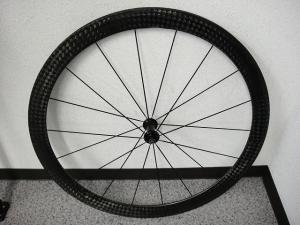
I went with black spokes on the rear wheel to avoid a front-rear spoke color mismatch,
since the front wheel originally had black spokes and we're just tightening it.
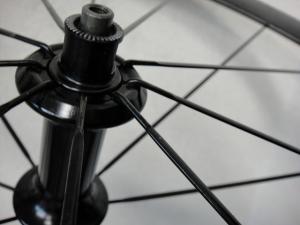
This hub is all-inpoke. That's natural with hook-type nipples.

So why does the drilling differ front and rear...?
(They're mirror images.)
With radial lacing on both sides, there's no special technique to threading them.
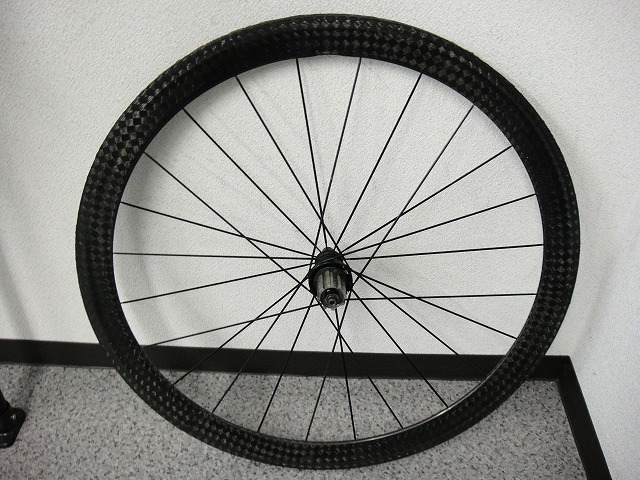
I rebuilt the rear wheel on a Koima "Aero" (aero rim).
The rim, spokes, and hub are unmistakably Koima,
but there was originally a sticker from a complete bike brand
(not a wheel manufacturer—the maker itself applied it).
As-is, that would require special attention, but since we were given the okay to remove it,
I cleaned off even the stubborn adhesive residue.
Compared to Nomu Lab Wheel No. 2, this was nothing.
So from now on, this is "the Koima Aero."
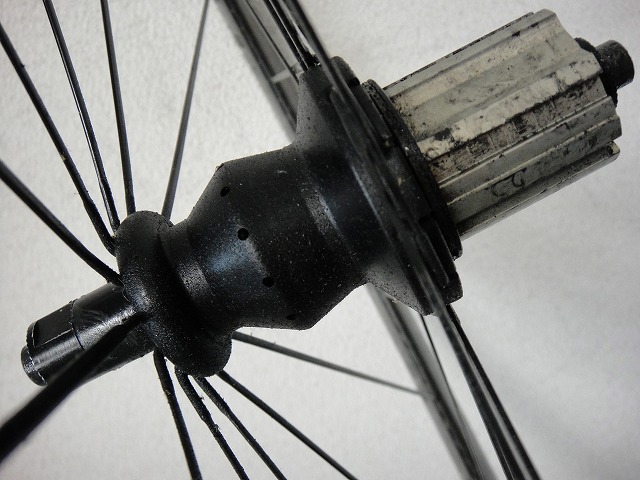
The reason it was brought in: "it feels mushy when riding."
It's not just because the freewheel side is laced radial,
but looking at the spokes, the freewheel side tension is loose too.
I can say with certainty this is below Koima's factory tension spec.
The current owner wasn't the original—
it was originally beaten hard by a pro rider (or rather, a pro team),
so it degraded over years of use.
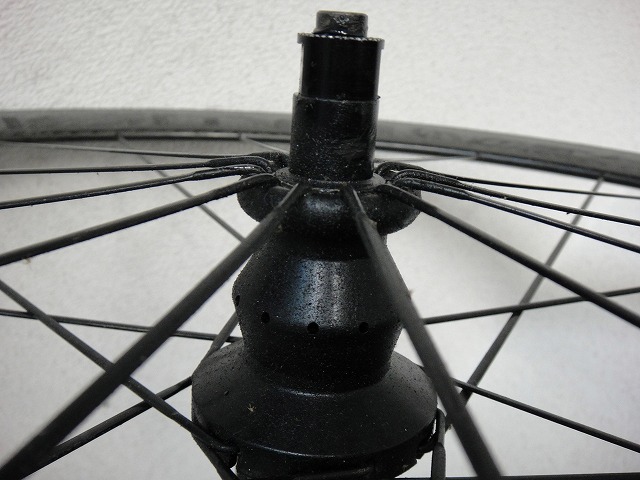
The flange width looks narrow, but it's actually not that narrow.
It just appears that way because the left-side shaft is thin relative to the hub body.
It's a high-low flange, but the low side on the non-freewheel end is incredibly small-diameter,
making it more of an extreme high-low than it looks.
Apart from the non-freewheel side being radial-laced, the hub has decent proportions.
Since spoke tension is completely below initial spec, I could've tried tightening,
but we ended up rebuilding it with a Tni evo hub.
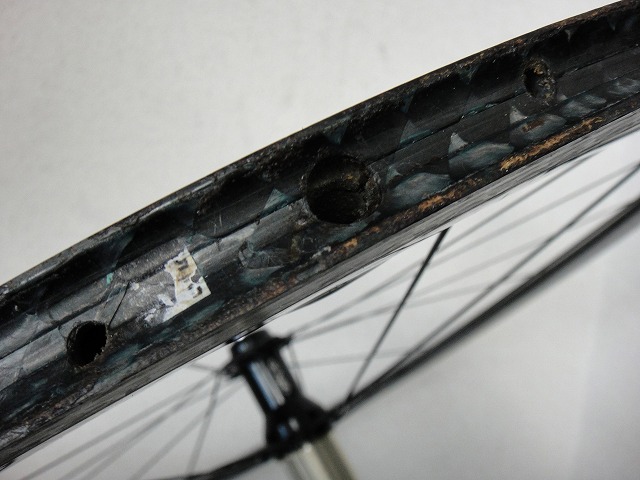
This Koima rim has incredibly pronounced drilling (radial runout).
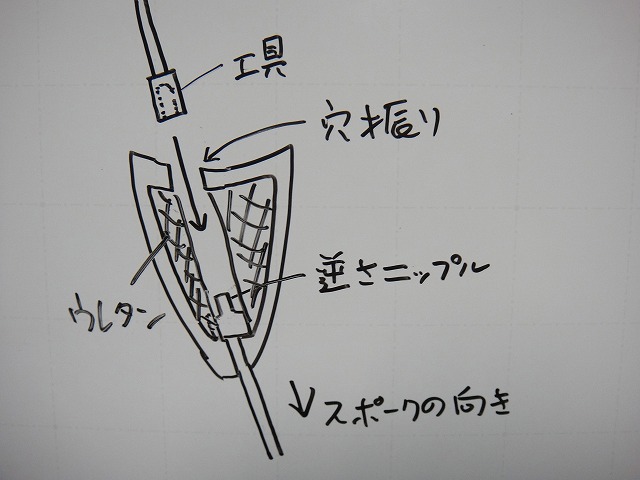
Moreover, the rim interior is filled with something like urethane,
and the nipple and spoke orientation are highly constrained,
so you literally can't assemble it with the drilling reversed (mirrored).
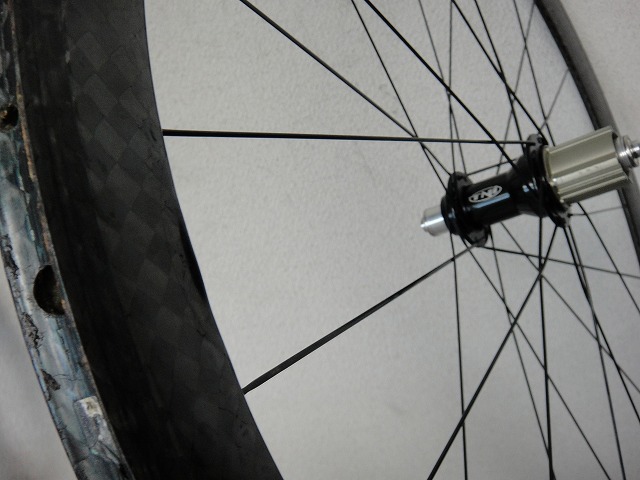
The spoke in the rim hole next to the valve hole comes from the opposite flange
compared to a standard rim—the left-right drilling is reversed.
In this blog's terminology, it's a reverse rim.
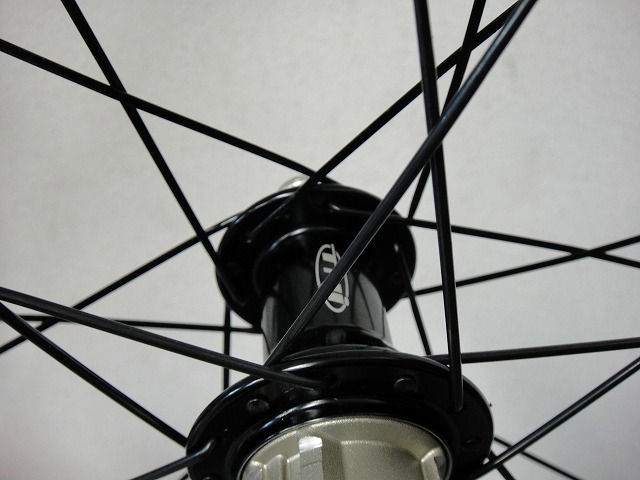
Since it was reverse-Italian laced before, I wanted to do Italian lacing,
but the 24H 4-cross lacing means spokes pull "right drop."
Normal Italian (same-count left-right) is left drop.
With a reverse rim, these drops flip, so
4-cross on a reverse rim is
"left drop reversed to right drop reversed to left drop"—that's correct.
Spokes: freewheel side DT Competition (half-comp), non-freewheel side CX-RAY.
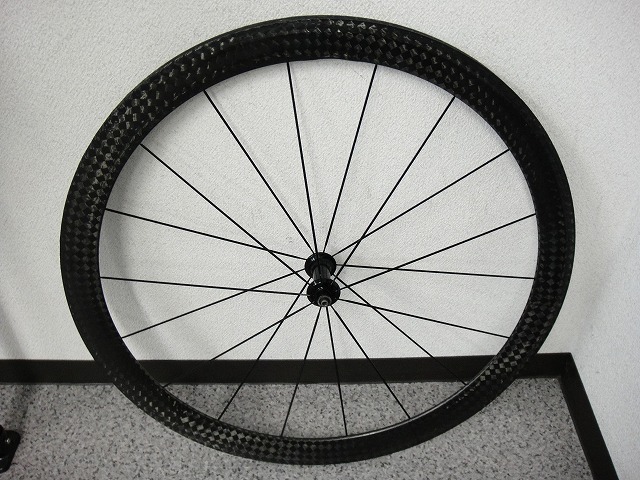
I went with black spokes on the rear wheel to avoid a front-rear spoke color mismatch,
since the front wheel originally had black spokes and we're just tightening it.
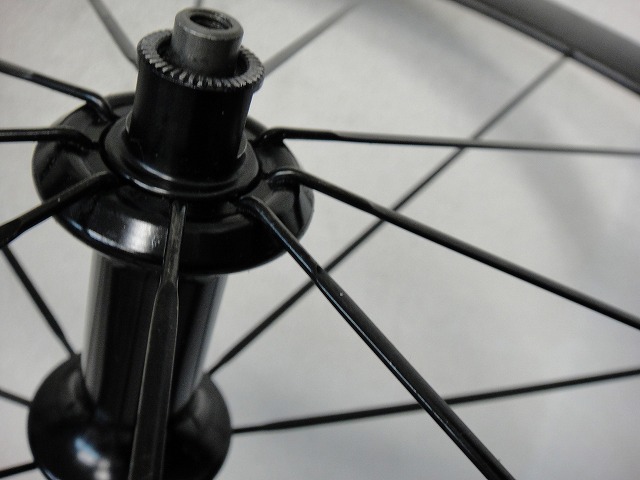
This hub is all-inpoke. That's natural with hook-type nipples.
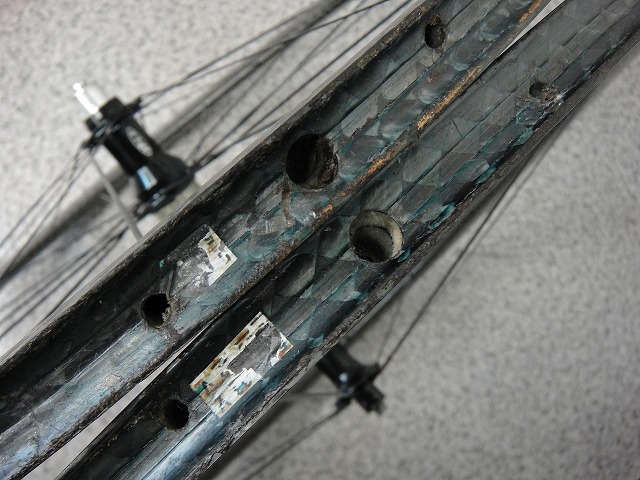
So why does the drilling differ front and rear...?
(They're mirror images.)
With radial lacing on both sides, there's no special technique to threading them.