Damn it! That's a sharp point you made there!
Thank you as always for your comments.
I think this will get the message across.
This response is less of a general comment reply and more of a personal note to a particular person.
Regarding "the size of the triangle formed by a pair of spokes,"
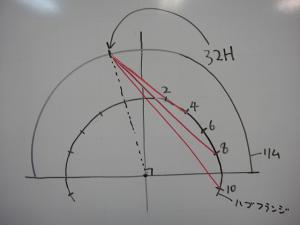
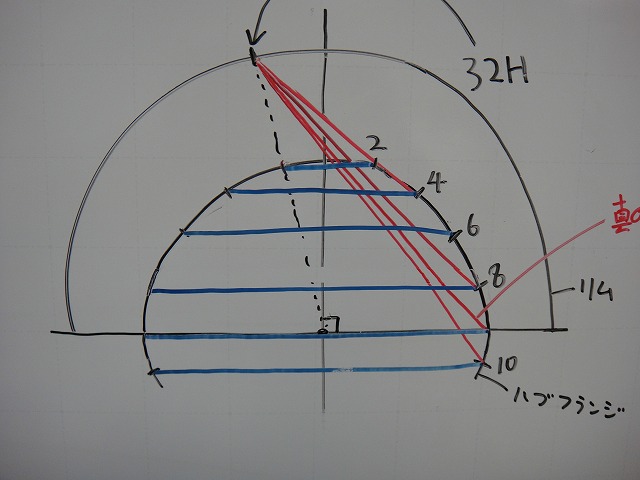
I've drawn the spoke line segments for 2, 4, 6, and 8-cross patterns on a 32H hub, and 10-cross that crosses the hub's bisector line.
The lines get cluttered, so I've left out the 2-cross and 6-cross patterns.
In this diagram, the 4-cross pattern is closest to being tangent to the hub flange circle.
It's also clear from the fact that the spokes in 2, 6, 8, and 10-cross patterns pass inside the circle compared to the 4-cross spokes.
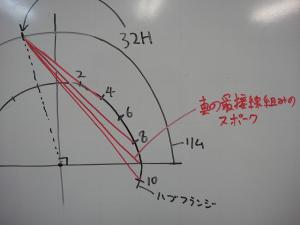
I've added the spoke line for what this blog calls true tangential lacing.
In the case of true tangential lacing, it would be 28H or 36H, so
the spoke endpoint position on the rim side isn't the same as 32H as shown in the diagram,
but since the difference is negligible, I've drawn them as the same.
What I'm focusing on isn't whether the spoke line segment is close to tangential, but rather
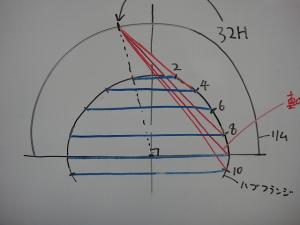
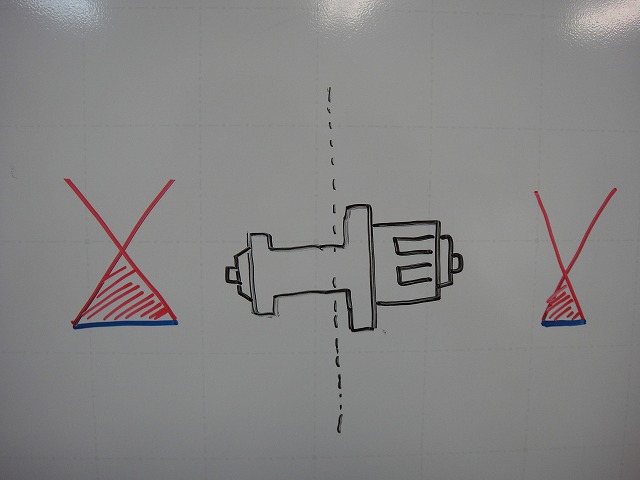
the length of the base of this "triangle formed by a pair of spokes."
In radial lacing, it's zero (I'm saying this matter-of-factly, but it's important).
This becomes maximum when you cross spokes from hub flange holes on the hub's bisector line (= true tangential lacing), and
when you cross the hub's bisector line, the base of the triangle gets shorter.
In 32H, the 8-cross and 10-cross patterns have the same base length, but
the gap between the spoke line segment and its tangent line is different.
This is the reason why "larger n in n-cross lacing isn't always better."
I apologize for being evasive about various things, but I think my point is getting across.
P.S. (Personal note to a particular person):
When commenting on this blog, you can attach an email address.
That way I can reply to you individually.
(Though I have to admit, even that's been piling up lately)
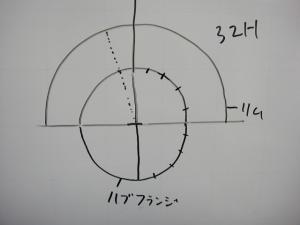
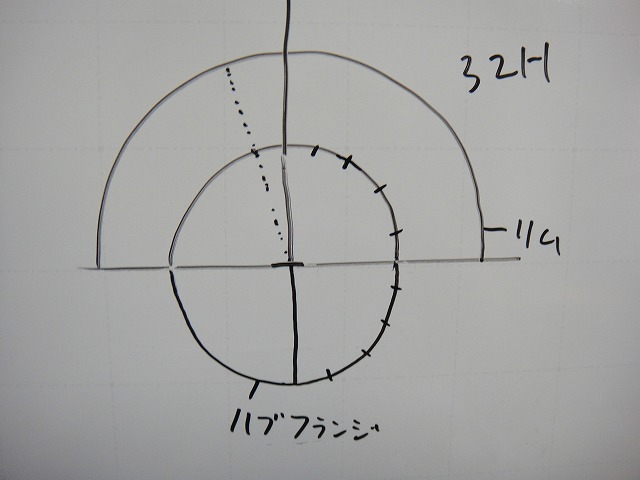
On 32H
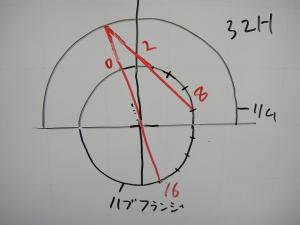
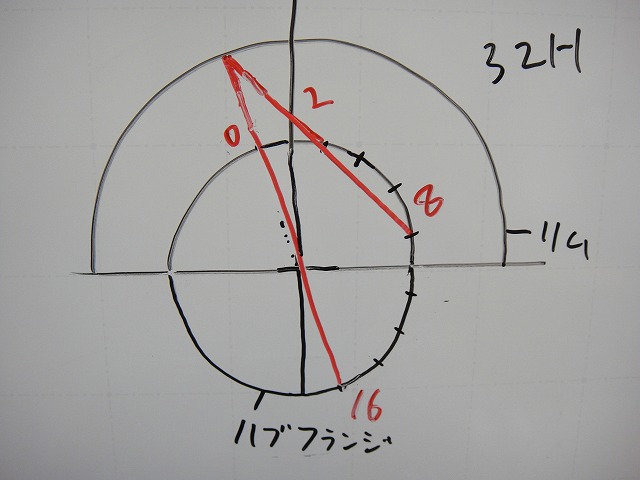
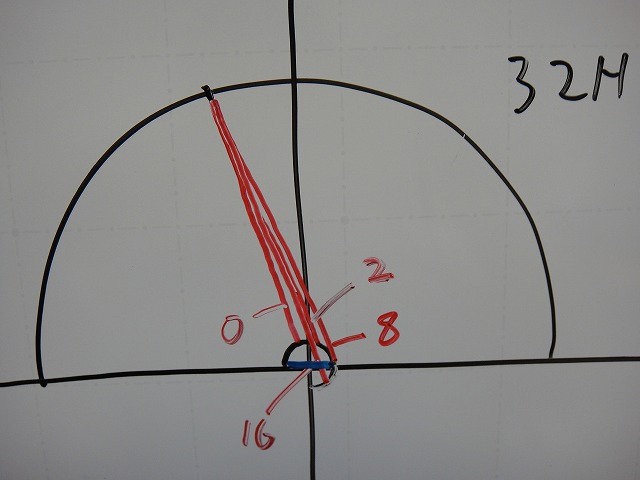
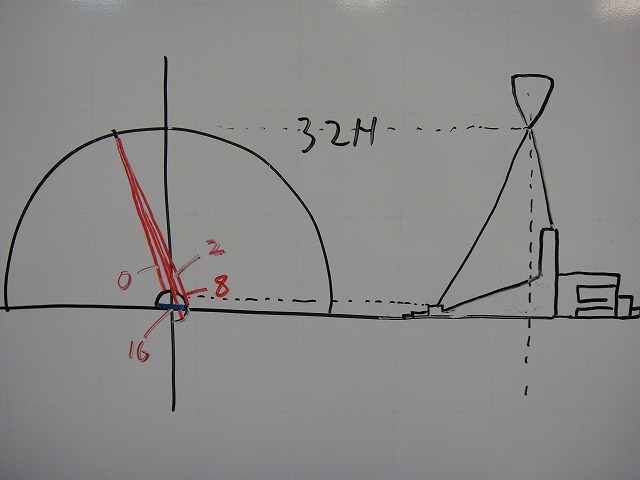
Let's consider 0, 2, 8, and 16-cross patterns.
16-cross is practically impossible because it interferes with the hub shell.
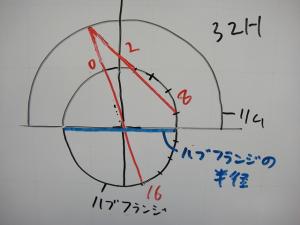
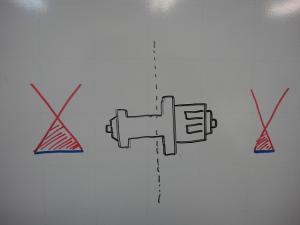
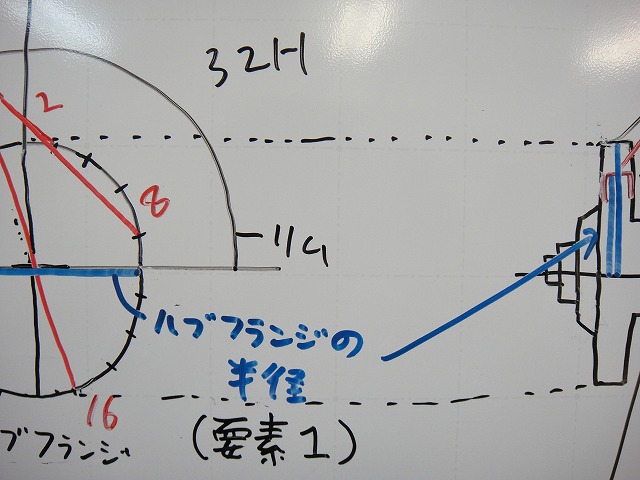
If a larger hub flange radius (the base of the intersecting triangle) is better, then wouldn't a low-high flange rather than high-low be good? (Let's call this factor 1)
This idea would make sense if you only look at that factor in isolation, but
for correcting the left-right spoke tension difference in a wheel,

reducing the dish through high-low flange design or offset rim (let's call this factor 2)
is a far greater factor than factor 1, so
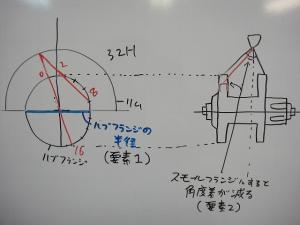
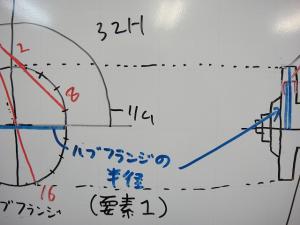
rather than "making the triangle base larger," the approach is
"making it as large as possible within a certain limited range of the base."
High-low flanges correct the left-right balance better than asymmetric cross patterns
In other words, this also means
"With a sufficiently high-low flange, radial lacing on the non-drive side is fine too."

So with an extremely high-low flange, or rather an extremely low flange on the non-drive side,
the spoke line trajectories from different lacing patterns become quite similar to each other.
In theory, when the flange becomes a "point," it becomes the same as radial lacing.
That high-low flanges reduce the correction degree of asymmetric cross patterns
is something I've written about before, and this is why.
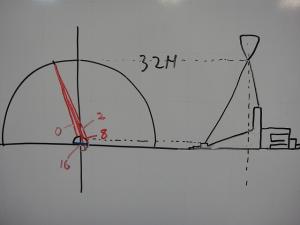
Looking at one flange alone with radian sense, a larger radius flange is better,
but from the perspective of balance line when viewing the wheel from front and back, it's not a major factor.
Just as flange width almost entirely determines lateral stiffness,
hub selection determines a considerable portion of the wheel's characteristics.
The hub is the foundation of the wheel, and
things like asymmetric cross patterns or different diameter patterns
make a huge difference whether you use them or not,
but they're ultimately just a workaround tactic on top of a fixed foundation.
I can't write about the relationship between the triangle's base and spoke tension because it touches on proprietary information.
If I were to write about it,
I'd have to get into the detailed relationship between spoke tension, spoke cross-section, and
RK (the force the nipple exerts trying to bite into the rim),
which also touches on the secrets of asymmetric diameter lacing.
Whoa, that's dangerous.
Thank you as always for your comments.
I think this will get the message across.
This response is less of a general comment reply and more of a personal note to a particular person.
Regarding "the size of the triangle formed by a pair of spokes,"
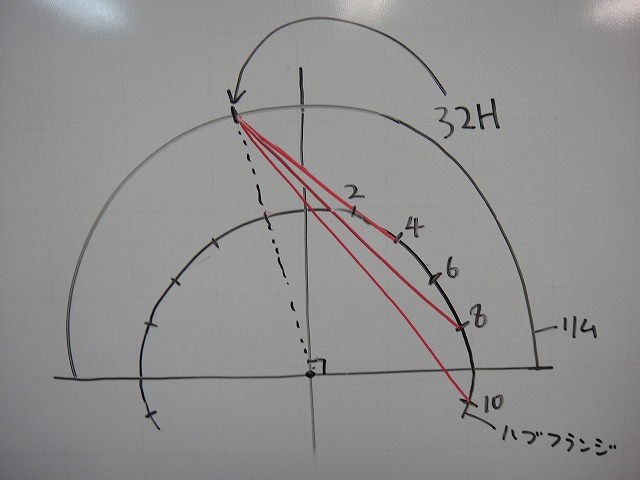
I've drawn the spoke line segments for 2, 4, 6, and 8-cross patterns on a 32H hub, and 10-cross that crosses the hub's bisector line.
The lines get cluttered, so I've left out the 2-cross and 6-cross patterns.
In this diagram, the 4-cross pattern is closest to being tangent to the hub flange circle.
It's also clear from the fact that the spokes in 2, 6, 8, and 10-cross patterns pass inside the circle compared to the 4-cross spokes.
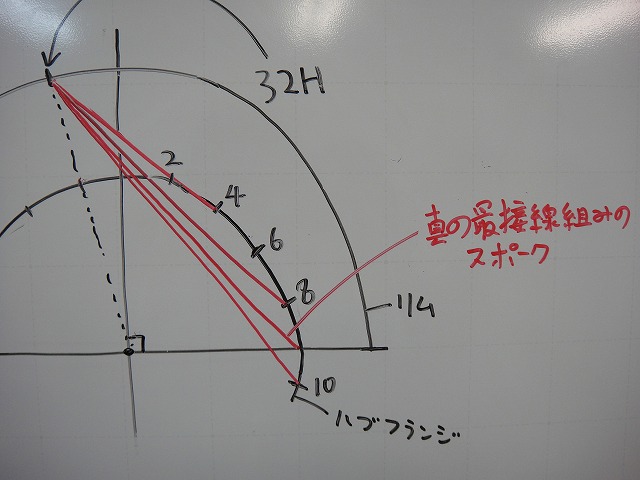
I've added the spoke line for what this blog calls true tangential lacing.
In the case of true tangential lacing, it would be 28H or 36H, so
the spoke endpoint position on the rim side isn't the same as 32H as shown in the diagram,
but since the difference is negligible, I've drawn them as the same.
What I'm focusing on isn't whether the spoke line segment is close to tangential, but rather
the length of the base of this "triangle formed by a pair of spokes."
In radial lacing, it's zero (I'm saying this matter-of-factly, but it's important).
This becomes maximum when you cross spokes from hub flange holes on the hub's bisector line (= true tangential lacing), and
when you cross the hub's bisector line, the base of the triangle gets shorter.
In 32H, the 8-cross and 10-cross patterns have the same base length, but
the gap between the spoke line segment and its tangent line is different.
This is the reason why "larger n in n-cross lacing isn't always better."
I apologize for being evasive about various things, but I think my point is getting across.
P.S. (Personal note to a particular person):
When commenting on this blog, you can attach an email address.
That way I can reply to you individually.
(Though I have to admit, even that's been piling up lately)
On 32H
Let's consider 0, 2, 8, and 16-cross patterns.
16-cross is practically impossible because it interferes with the hub shell.
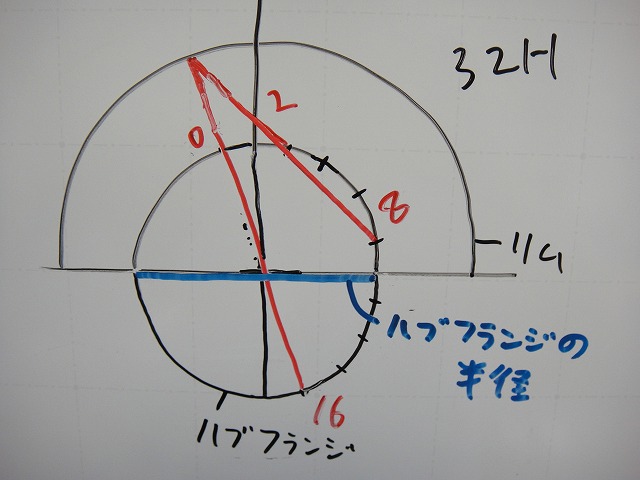
If a larger hub flange radius (the base of the intersecting triangle) is better, then wouldn't a low-high flange rather than high-low be good? (Let's call this factor 1)
This idea would make sense if you only look at that factor in isolation, but
for correcting the left-right spoke tension difference in a wheel,
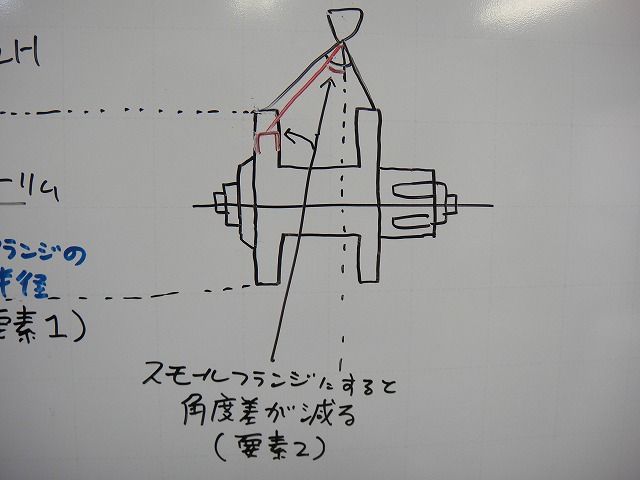
reducing the dish through high-low flange design or offset rim (let's call this factor 2)
is a far greater factor than factor 1, so
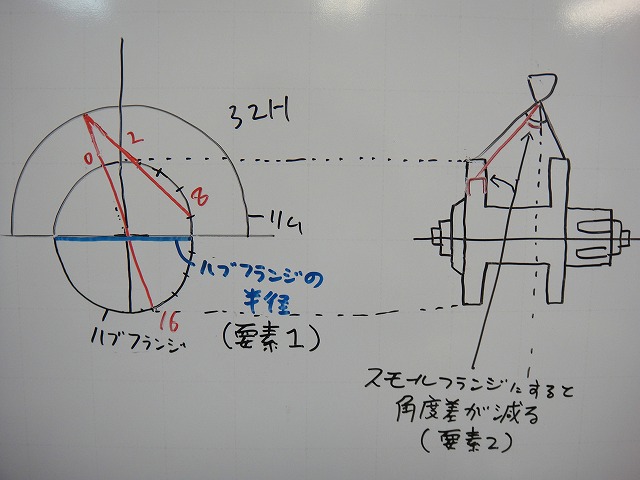
rather than "making the triangle base larger," the approach is
"making it as large as possible within a certain limited range of the base."
High-low flanges correct the left-right balance better than asymmetric cross patterns
In other words, this also means
"With a sufficiently high-low flange, radial lacing on the non-drive side is fine too."
So with an extremely high-low flange, or rather an extremely low flange on the non-drive side,
the spoke line trajectories from different lacing patterns become quite similar to each other.
In theory, when the flange becomes a "point," it becomes the same as radial lacing.
That high-low flanges reduce the correction degree of asymmetric cross patterns
is something I've written about before, and this is why.
Looking at one flange alone with radian sense, a larger radius flange is better,
but from the perspective of balance line when viewing the wheel from front and back, it's not a major factor.
Just as flange width almost entirely determines lateral stiffness,
hub selection determines a considerable portion of the wheel's characteristics.
The hub is the foundation of the wheel, and
things like asymmetric cross patterns or different diameter patterns
make a huge difference whether you use them or not,
but they're ultimately just a workaround tactic on top of a fixed foundation.
I can't write about the relationship between the triangle's base and spoke tension because it touches on proprietary information.
If I were to write about it,
I'd have to get into the detailed relationship between spoke tension, spoke cross-section, and
RK (the force the nipple exerts trying to bite into the rim),
which also touches on the secrets of asymmetric diameter lacing.
Whoa, that's dangerous.