This is no good.

In the end, I went ahead and bought the Audio-Technica open-back flagship model,
the ATH-AD2000X.
Between the 1000X and 2000X, the soundstage width feels about the same.
Even when I auditioned them, I could barely detect any difference in sound quality.
(This might be due to the listening environment though)
So why did I decide to pay the extra ¥31,500 between the 2000X at ¥81,900 and the 1000X at ¥50,400?
It's because if I had bought the 1000X, there's a chance I might think "I should have gone with the 2000X after all,"
but the opposite wouldn't happen.
This is a sales pitch that only works when you're torn between a flagship and the model just below it,
and bicycle shops use it too when recommending Dura-Ace instead of Ultegra
topush off on customers.
The price difference is outrageous for such a minor gap,
but when you think about how the cost per gram increases the lighter a bicycle becomes,
it might be the same kind of thing.
↑This is also a tired old line.
It's that area around Sekime, Seikuiku, Imafuku, Hotarishi-nishi, and Morinosomiya.
↑That's Joto Ward(Only Osaka residents would get this).
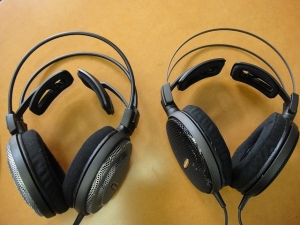
The difference in sound between the 700X is obvious.
The bass response might even be better on the 700X,
but the amount of information in the overall sound is so different that comparison is meaningless.

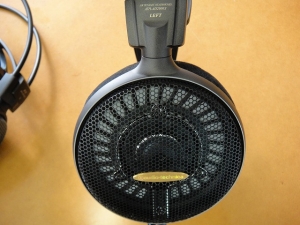
The fact that they look so similar is, in a way, sinful.
The 700X does deliver more than its price would suggest, but the 2000X is something else entirely.
Though when compared to other manufacturers, that "something else" is different—
basically it's just a matter of degree within the same tendency.

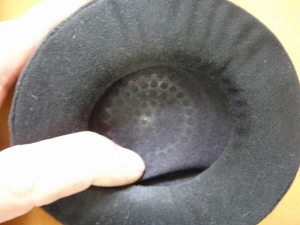
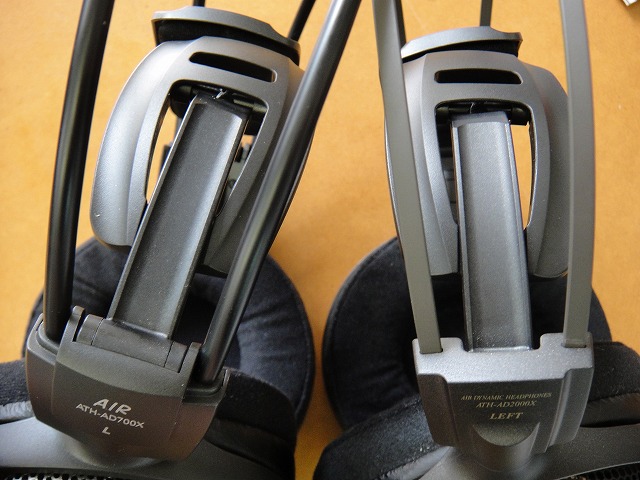
The ear pad material is different, so the fit feels slightly different too.
The driver unit on the 2000X is parallel to the housing, but

the 700X angles forward in a "V" shape.
How this manifests in the sound difference... I'm not sure.
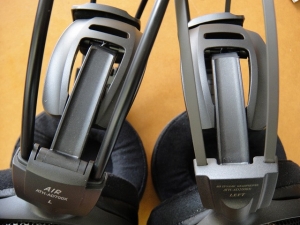
The "Wing Support" portion, a characteristic of the company, is the same,
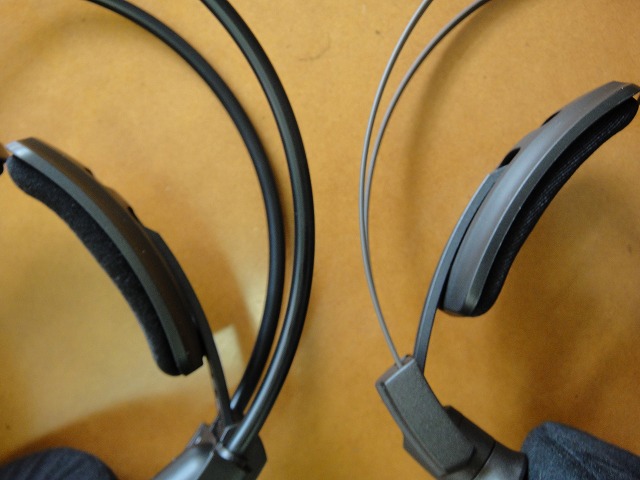
but the material of the arch connecting the left and right housings differs.
The 2000X uses magnesium, while the 1000X and below probably use
steel with a coating applied to the metal.

This coating is lifted from the core and feels mushy when you touch it, which bothers me somewhat,
but since you don't touch it while using the headphones, I shouldn't worry about it.
The magnesium arch produces incredible touch noise when you handle it. But again,
since you don't touch it while using the headphones, I shouldn't worry about it.
So I keep switching back and forth between the 700X and 2000X, comparing all sorts of sounds,
and the high frequencies and string instrument tones in particular show such dramatic differences
that I've been hunting for "songs that reveal headphone performance" and listening to all kinds of music.
Pachelbel's Canon is a completely different experience.
The amount of information is so different it's like a different number of musicians are performing.
This has led to me listening to classical music more often.
But in this case, I'm not really listening to "music"—I'm listening to "sound."
I'm just deliberately pulling out easy-to-recognize tracks as sources for comparing
which frequencies are well-reproduced and which aren't on different headphones.
In a way, it might be a desecration of art.
It's like evaluating the color and composition of paint in a single section cut out from a painting—
that's not really appreciating the artwork as a whole.
But as I've been listening to various pieces, I've come to appreciate classical music.
The same piece sounds completely different depending on the conductor. It's fascinating!
That music from hundreds of years ago hasn't disappeared but has survived
means there must be good reason for it.
Through events, parades, sports days, and parodies,
there are a lot of familiar melodies, and with the famous pieces,
I'd say there's probably not a single piece of classical music
that I've never encountered before.
When I mentioned this to a customer who works with classical music,
they told me something like "it doesn't matter what sparks your interest."
Sorry for such an unorthodox entry point(laughs).
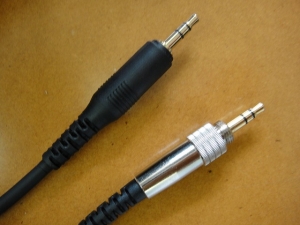
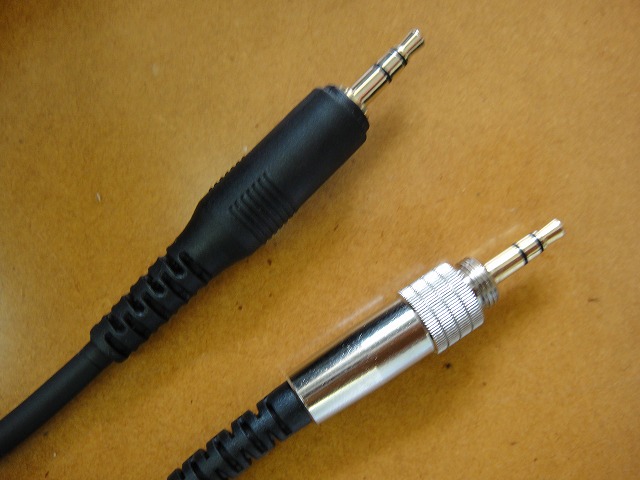
For a high-end model at this price point,
I would think it's only designed for indoor audio use, yet it inexplicably has a mini plug.
Standard plugs are handled via adapter, and one is included,
but nobody would probably plug these directly into a portable player.
(And besides, since they're open-back, the sound leaks everywhere)

But for me it's actually convenient.
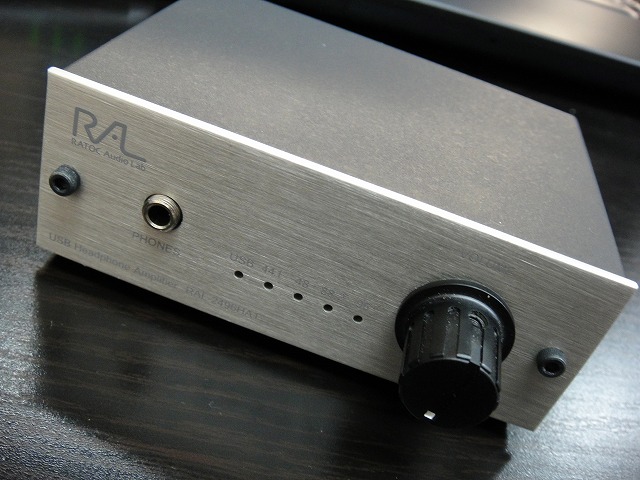
My USB amplifier is the Ratoc Systems RAL-2496HA1,
which only supports mini plugs, whether that's because it's a budget model or not.
This thing sounds better than you'd expect for the price. Audio-Technica has
the AT-HA40USB(also for mini plugs),
but the cable on the unit side uses a USB mini-B plug(fewer high-end cable options), and
the unit itself is too compact(the knob is hard to turn, and because it's so light it gets dragged by the cable).
The Ratoc USB amplifier looks simple too,
and unlike many high-end models, it doesn't need driver installation,
so you can just plug the USB into your computer and start using it right away.
(Though some of Ratoc's higher-end models do require
driver installation and configuration)
The knob had some play in it, so I tightened the set screw,
but I removed the knob once to check.
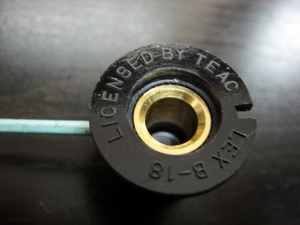
It says Tascam, which is the amplifier manufacturer.
Is Tascam making the amplifiers for Ratoc...?
(There's a possibility they differ in some details)
Update: Based on comments I received, it appears they supply just the knob portion.
Thank you for the comments.
○○○Go bicycles that turn out to actually be○Ya○○○○ brand—it's that kind of shock.
↑Not that there's anything wrong with that, mind you.
Even with this much censoring I'm sure everyone knows what I mean, but I don't need
comments pointing out "Oh, you mean that one and that one."
Hey! You there, the loose-tongued one! Don't go saying○Ya○○Go!

In the end, I went ahead and bought the Audio-Technica open-back flagship model,
the ATH-AD2000X.
Between the 1000X and 2000X, the soundstage width feels about the same.
Even when I auditioned them, I could barely detect any difference in sound quality.
(This might be due to the listening environment though)
So why did I decide to pay the extra ¥31,500 between the 2000X at ¥81,900 and the 1000X at ¥50,400?
It's because if I had bought the 1000X, there's a chance I might think "I should have gone with the 2000X after all,"
but the opposite wouldn't happen.
This is a sales pitch that only works when you're torn between a flagship and the model just below it,
and bicycle shops use it too when recommending Dura-Ace instead of Ultegra
to
The price difference is outrageous for such a minor gap,
but when you think about how the cost per gram increases the lighter a bicycle becomes,
it might be the same kind of thing.
↑This is also a tired old line.
It's that area around Sekime, Seikuiku, Imafuku, Hotarishi-nishi, and Morinosomiya.
↑That's Joto Ward(Only Osaka residents would get this).
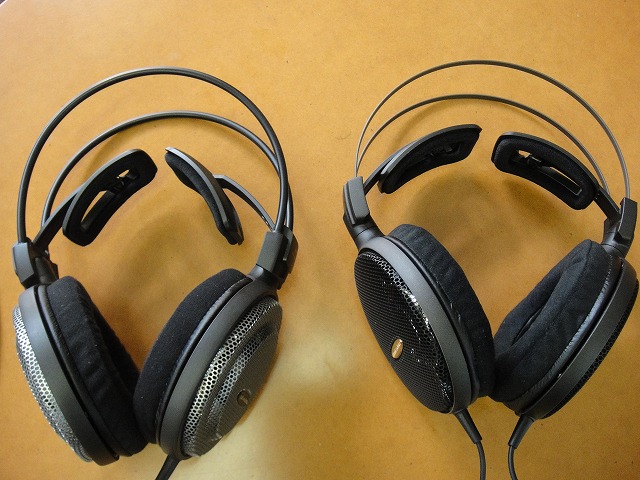
The difference in sound between the 700X is obvious.
The bass response might even be better on the 700X,
but the amount of information in the overall sound is so different that comparison is meaningless.
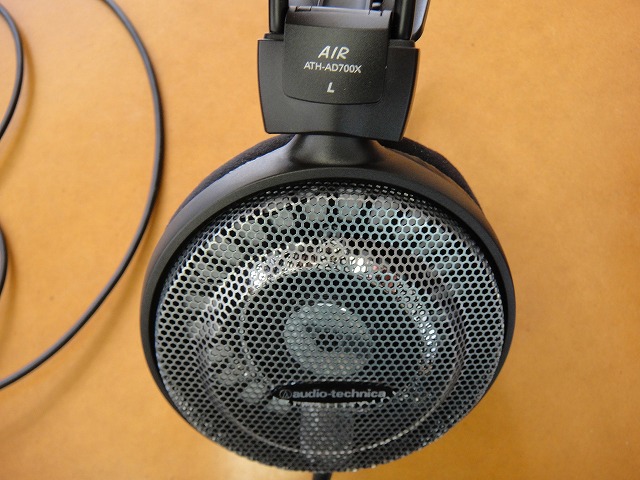
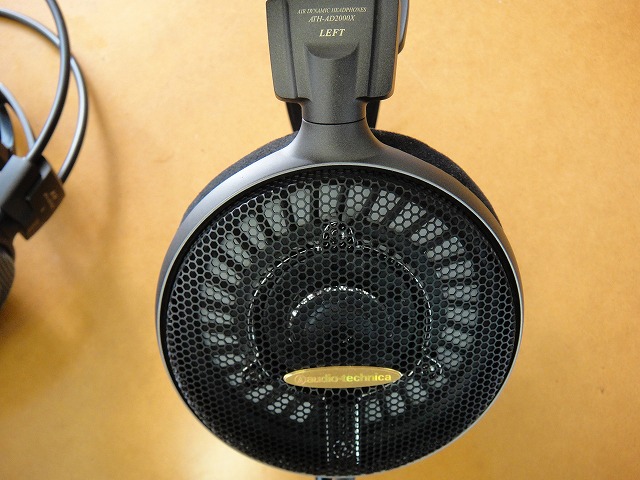
The fact that they look so similar is, in a way, sinful.
The 700X does deliver more than its price would suggest, but the 2000X is something else entirely.
Though when compared to other manufacturers, that "something else" is different—
basically it's just a matter of degree within the same tendency.
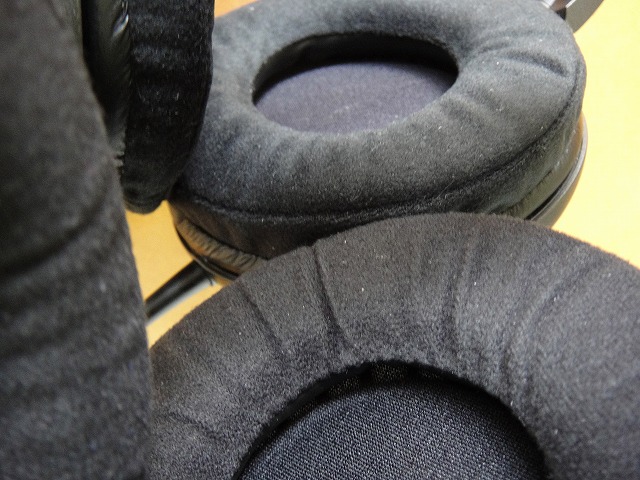
The ear pad material is different, so the fit feels slightly different too.
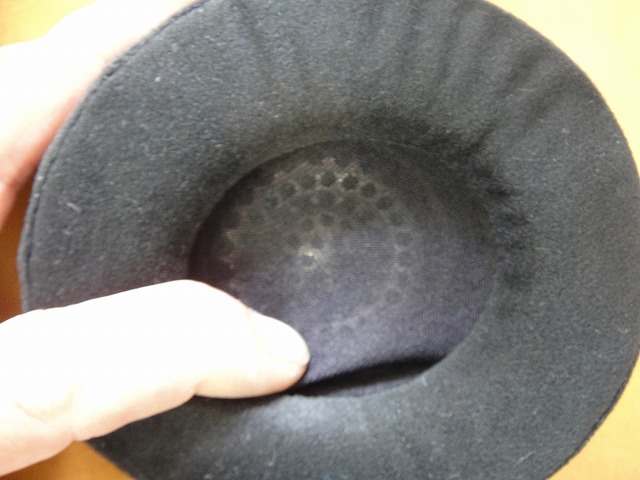
The driver unit on the 2000X is parallel to the housing, but
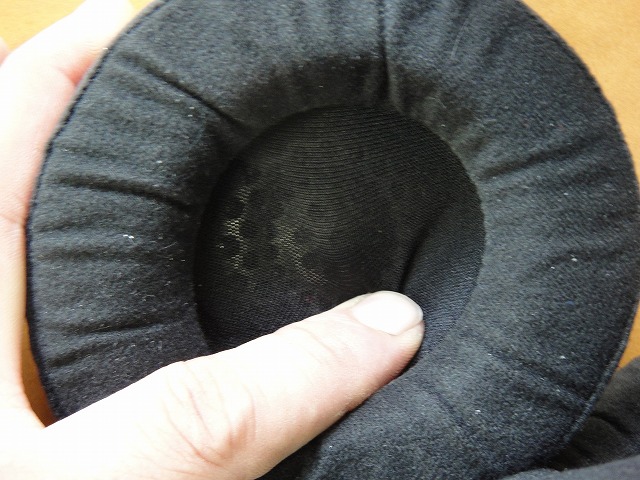
the 700X angles forward in a "V" shape.
How this manifests in the sound difference... I'm not sure.
The "Wing Support" portion, a characteristic of the company, is the same,
but the material of the arch connecting the left and right housings differs.
The 2000X uses magnesium, while the 1000X and below probably use
steel with a coating applied to the metal.
This coating is lifted from the core and feels mushy when you touch it, which bothers me somewhat,
but since you don't touch it while using the headphones, I shouldn't worry about it.
The magnesium arch produces incredible touch noise when you handle it. But again,
since you don't touch it while using the headphones, I shouldn't worry about it.
So I keep switching back and forth between the 700X and 2000X, comparing all sorts of sounds,
and the high frequencies and string instrument tones in particular show such dramatic differences
that I've been hunting for "songs that reveal headphone performance" and listening to all kinds of music.
Pachelbel's Canon is a completely different experience.
The amount of information is so different it's like a different number of musicians are performing.
This has led to me listening to classical music more often.
But in this case, I'm not really listening to "music"—I'm listening to "sound."
I'm just deliberately pulling out easy-to-recognize tracks as sources for comparing
which frequencies are well-reproduced and which aren't on different headphones.
In a way, it might be a desecration of art.
It's like evaluating the color and composition of paint in a single section cut out from a painting—
that's not really appreciating the artwork as a whole.
But as I've been listening to various pieces, I've come to appreciate classical music.
The same piece sounds completely different depending on the conductor. It's fascinating!
That music from hundreds of years ago hasn't disappeared but has survived
means there must be good reason for it.
Through events, parades, sports days, and parodies,
there are a lot of familiar melodies, and with the famous pieces,
I'd say there's probably not a single piece of classical music
that I've never encountered before.
When I mentioned this to a customer who works with classical music,
they told me something like "it doesn't matter what sparks your interest."
Sorry for such an unorthodox entry point(laughs).
For a high-end model at this price point,
I would think it's only designed for indoor audio use, yet it inexplicably has a mini plug.
Standard plugs are handled via adapter, and one is included,
but nobody would probably plug these directly into a portable player.
(And besides, since they're open-back, the sound leaks everywhere)
But for me it's actually convenient.
My USB amplifier is the Ratoc Systems RAL-2496HA1,
which only supports mini plugs, whether that's because it's a budget model or not.
This thing sounds better than you'd expect for the price. Audio-Technica has
the AT-HA40USB(also for mini plugs),
but the cable on the unit side uses a USB mini-B plug(fewer high-end cable options), and
the unit itself is too compact(the knob is hard to turn, and because it's so light it gets dragged by the cable).
The Ratoc USB amplifier looks simple too,
and unlike many high-end models, it doesn't need driver installation,
so you can just plug the USB into your computer and start using it right away.
(Though some of Ratoc's higher-end models do require
driver installation and configuration)
The knob had some play in it, so I tightened the set screw,
but I removed the knob once to check.
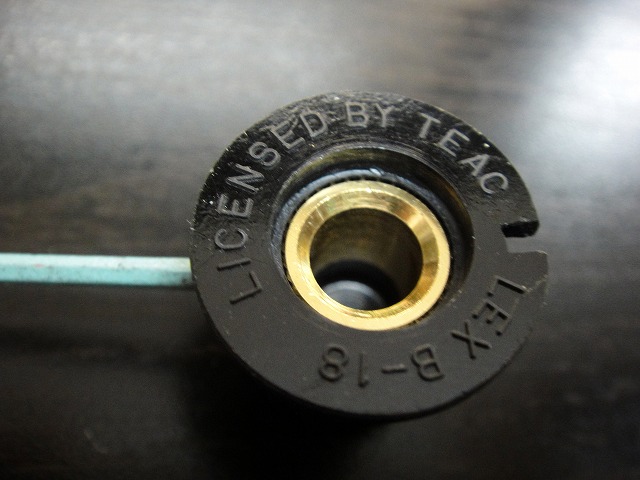
It says Tascam, which is the amplifier manufacturer.
Is Tascam making the amplifiers for Ratoc...?
(There's a possibility they differ in some details)
Update: Based on comments I received, it appears they supply just the knob portion.
Thank you for the comments.
○○○Go bicycles that turn out to actually be○Ya○○○○ brand—it's that kind of shock.
↑Not that there's anything wrong with that, mind you.
Even with this much censoring I'm sure everyone knows what I mean, but I don't need
comments pointing out "Oh, you mean that one and that one."
Hey! You there, the loose-tongued one! Don't go saying○Ya○○Go!