Another day of wheel building (and so on).
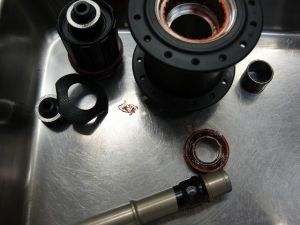
I've received a Powertap G3 hub for work.
It's new, but it didn't arrive completely disassembled.
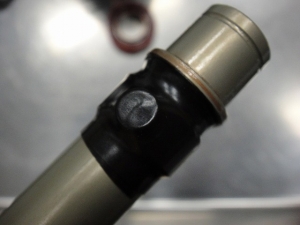
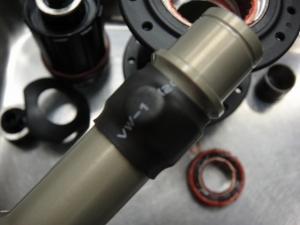
Yeah, I could sense some motivation there,
but that's not really relevant.
This hub is 28 holes, but the customer wants a 48-spoke build.Hehe.
We're using an XR200 rim, so this will be what I call Nomulabo Wheel #5.
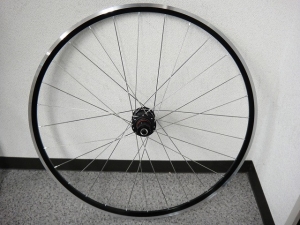
It's done.
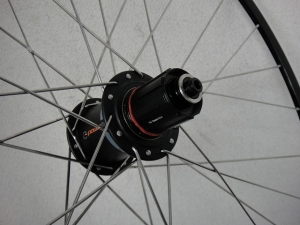
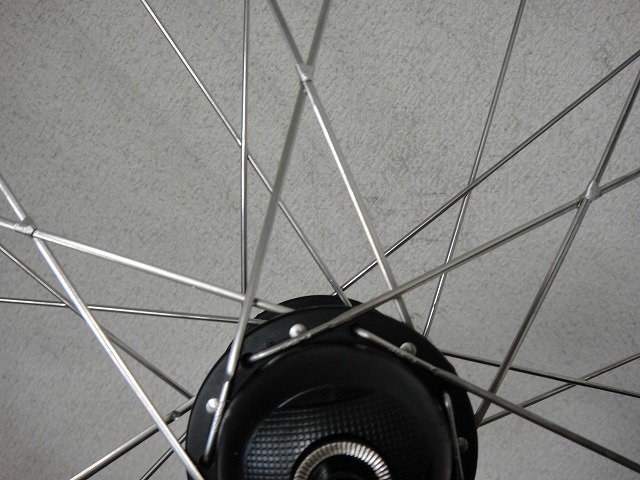
It's a semi-comp 48-spoke build with wiring on the non-drive side.
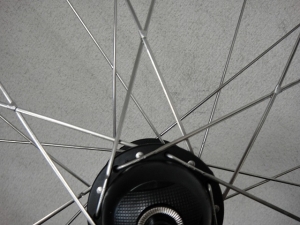
My policy is "don't make something a standard offering just because I thought of it yesterday or today."
Before opening this shop, I'd tried out pretty much every hand-lacing pattern that was theoretically possible,
but 28-hole 48-spoke builds were something I only thought of recently, so there's still an experimental element.
Thankfully, thanks to many customers who specifically requested this pattern,
I've gathered enough data now.In the beginning there was some pretty forceful persuasion involved, I think,
but thanks to that it's become a standard option.
This time we had a fairly large-flange hub with a low-height rim,
so the non-drive side spoke length was right at the limit of the longest CX-RAY length available domestically.
This relates to how it was laced using what I call "true tangential lacing" on this blog.
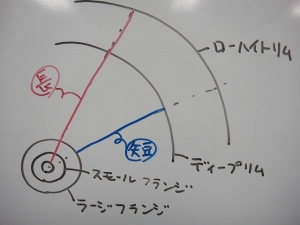
With radial lacing, spoke length is determined pretty simply by addition and subtraction—it's basically just the combination of hub flange diameter size and rim height.
If we have one type each of large-flange and small-flange hubs, and low-height and deep rims,
then "large-flange / deep rim" produces the shortest spokes,
while "small-flange / low-height rim" produces the longest spokes.
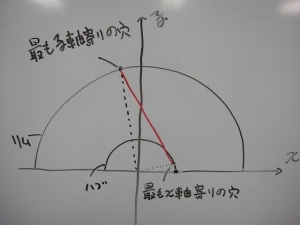
Let me think through how this changes with "tangential lacing taking n as large as possible," or what I call true tangential lacing on this blog, using a radian sense of things.
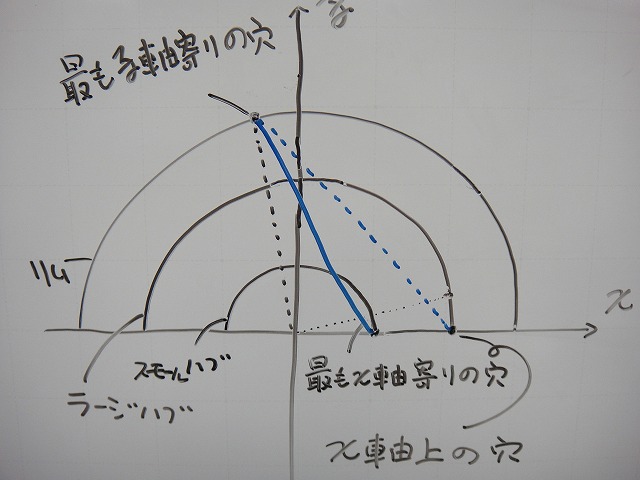
The rim-side hole is the one most toward the Y-axis in the negative X-axis region.
The next hole clockwise from this one is positioned at the same distance and angle after crossing the Y-axis—I consider them at the same phase.
Essentially, the Y-axis passes right through the middle of these two rim holes.
In the case of hole numbers where dividing by 4 gives an even number, the hub hole in true tangential lacing sits in the same position relative to the Y-axis as the rim side—it's the hole closest to the X-axis in the positive Y-axis region.
The line connecting these two points is the red solid line in the diagram above,
which represents the spoke's path and its length.
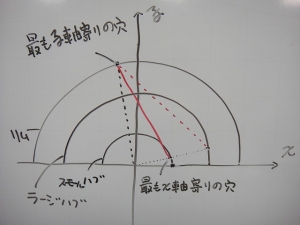
Now let's consider what happens if we keep this rim but swap it to a larger-flange hub.
The hub-side hole position is where the radial line from the hub center through the small-flange hole intersects the larger flange.
Connecting these gives the spoke path and length when laced with a large flange, shown as the red dashed line in the diagram.
With the large-flange hub hole, the hole shifts more in the positive Y-axis direction,
so actually spoke length doesn't change that much with modest flange diameter differences.
The old Powertap hub model's large-flange radius—the distance from the hub center to the hole center—is 35mm.
The current G3 is 28.5mm.
If I calculate a 24-hole XR200 rim 6-spoke non-drive side build with these two hubs, the spoke length difference is less than 1mm.
Actually the G3 came out to X-mm minus 0.4mm,
and the old hub came out to X-mm plus 0.4mm,
so when rounding to the nearest mm they're the same.
The point I'm trying to make is that the red solid line and dashed line in the diagram above are almost the same length.
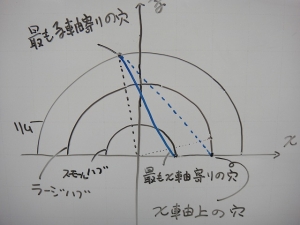
Next, consider hole numbers where dividing by 4 gives an odd number, and we're building with the hole closest to the X-axis rather than the X-axis hole itself.
The rim hole phase is the same as before.
With the hub hole sitting on (not crossing!) the X-axis, the maximum n-spoke build is what I call true tangential lacing on this blog.
The spoke paths for the small-flange and large-flange versions are shown as blue solid and dashed lines in the diagram above, and unlike before,
you can see that flange diameter has a much bigger effect on spoke length.
With a G3 hub and old hub building 28-hole 8-spoke XR200, the estimated spoke length difference is as much as 2mm.
The wheel I built today used a G3 hub, so it just barely worked.
If this had been the old hub, I couldn't have done the non-drive side 8-spoke build.
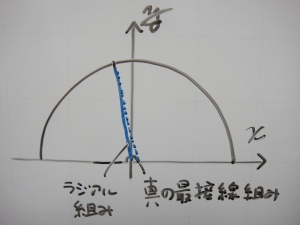
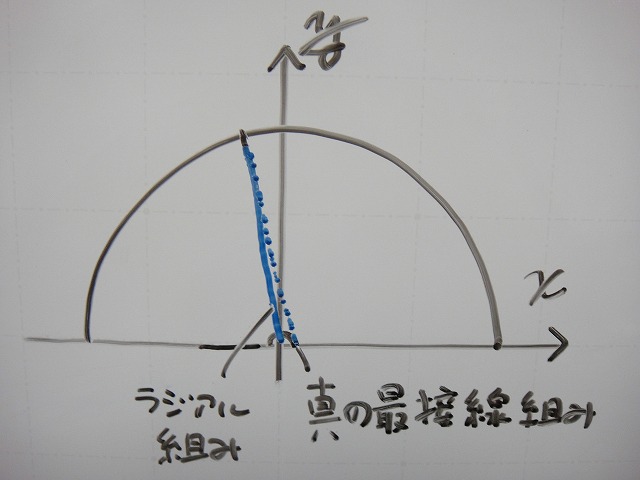
If you take this concept to its extreme, with ultra-small-flange hubs,
the spoke length difference between radial and true tangential lacing shrinks,
and as the flange approaches a point, it converges on the radial lacing path.
So the smaller the flange on the non-drive side, the less effective asymmetric lacing becomes for wheel balance correction.
When you build with decent high-low-flange hubs,
you can tell that asymmetric lacing isn't doing much in hand-built wheels.
There's a difference between doing it and not doing it, so I do it anyway.
"With super high-low-flange hubs like Campagnolo or Fulcrum wheels,
it doesn't really matter if the non-drive side is radial lacing," is what I think,
but those wheels have 2:1 asymmetric spoke counts from the start,
so that side-to-side tension difference reduction effect dominates instead,
making the benefits of super high-low-flange geometry less noticeable.
The Powertap G3 hub has equal-diameter large flanges on both sides, so
when you build it 48-spoke, you get "hehe, this is interesting," kind of moment—that's what I'm saying.
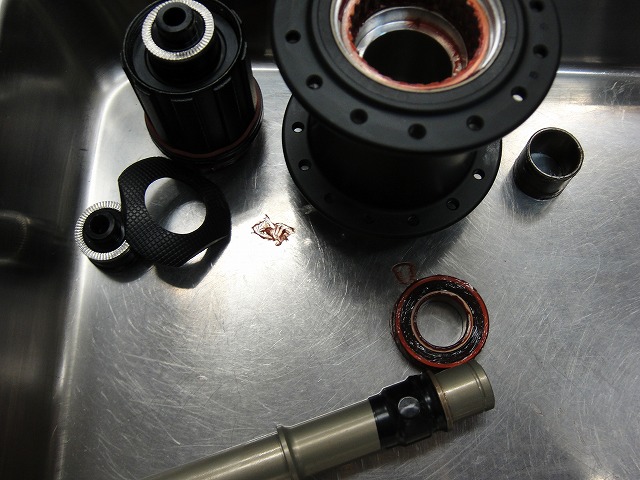
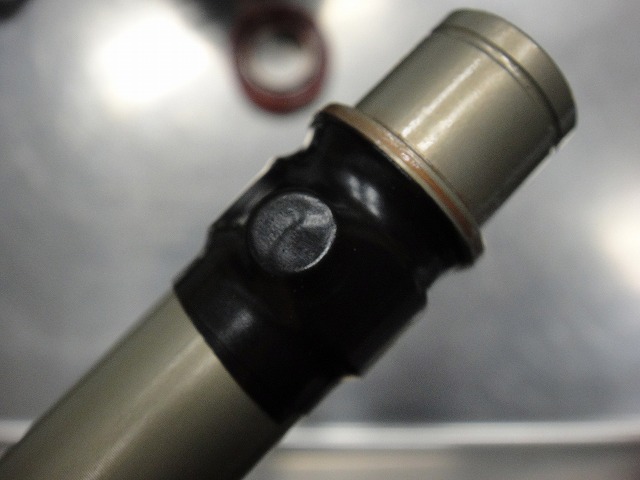
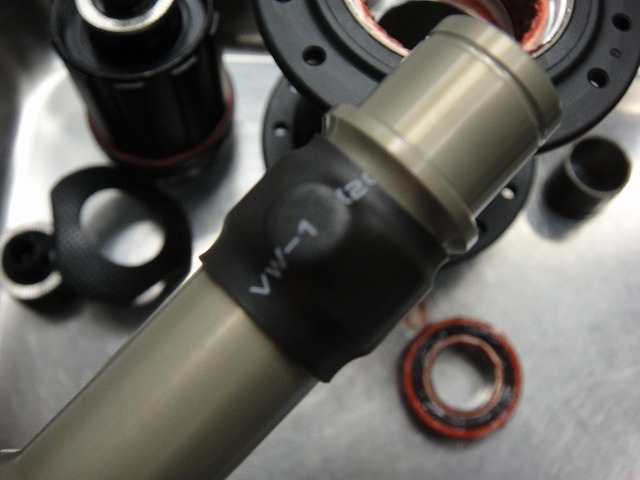
I've received a Powertap G3 hub for work.
It's new, but it didn't arrive completely disassembled.
Yeah, I could sense some motivation there,
but that's not really relevant.
This hub is 28 holes, but the customer wants a 48-spoke build.
We're using an XR200 rim, so this will be what I call Nomulabo Wheel #5.
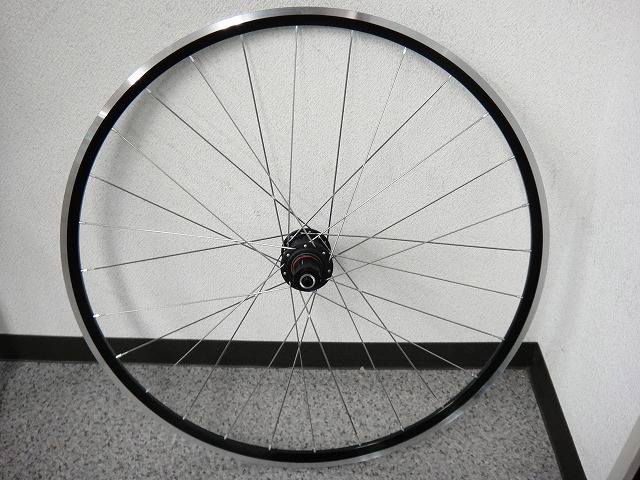
It's done.
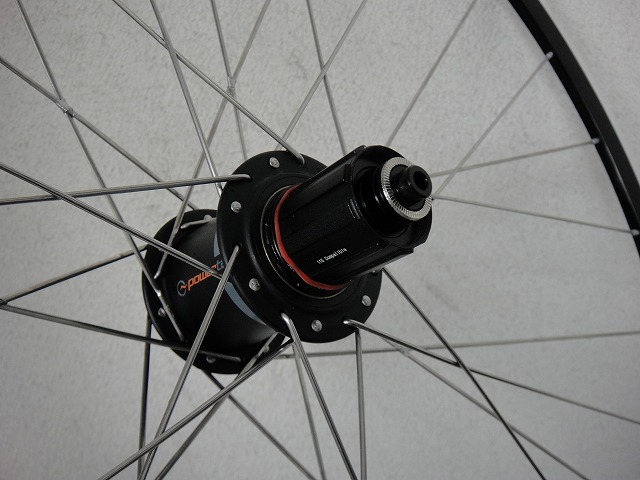
It's a semi-comp 48-spoke build with wiring on the non-drive side.
My policy is "don't make something a standard offering just because I thought of it yesterday or today."
Before opening this shop, I'd tried out pretty much every hand-lacing pattern that was theoretically possible,
but 28-hole 48-spoke builds were something I only thought of recently, so there's still an experimental element.
Thankfully, thanks to many customers who specifically requested this pattern,
I've gathered enough data now.
but thanks to that it's become a standard option.
This time we had a fairly large-flange hub with a low-height rim,
so the non-drive side spoke length was right at the limit of the longest CX-RAY length available domestically.
This relates to how it was laced using what I call "true tangential lacing" on this blog.
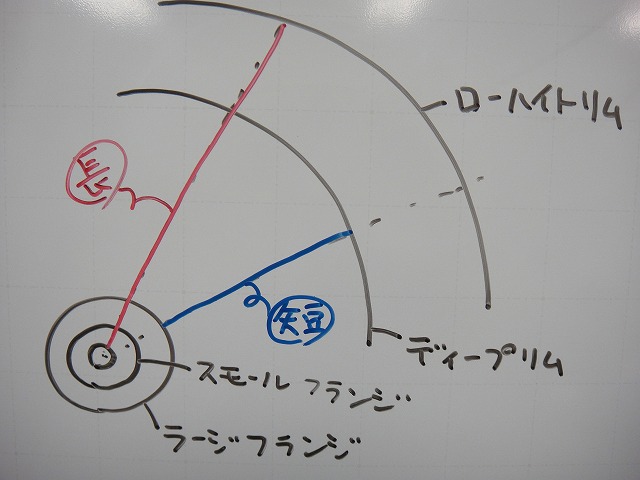
With radial lacing, spoke length is determined pretty simply by addition and subtraction—it's basically just the combination of hub flange diameter size and rim height.
If we have one type each of large-flange and small-flange hubs, and low-height and deep rims,
then "large-flange / deep rim" produces the shortest spokes,
while "small-flange / low-height rim" produces the longest spokes.
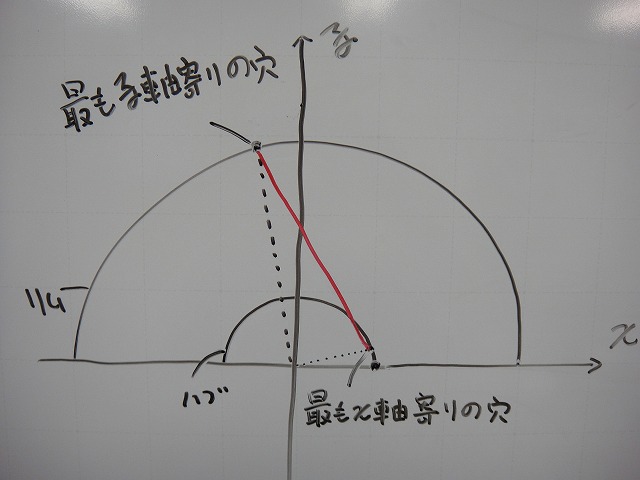
Let me think through how this changes with "tangential lacing taking n as large as possible," or what I call true tangential lacing on this blog, using a radian sense of things.
The rim-side hole is the one most toward the Y-axis in the negative X-axis region.
The next hole clockwise from this one is positioned at the same distance and angle after crossing the Y-axis—I consider them at the same phase.
Essentially, the Y-axis passes right through the middle of these two rim holes.
In the case of hole numbers where dividing by 4 gives an even number, the hub hole in true tangential lacing sits in the same position relative to the Y-axis as the rim side—it's the hole closest to the X-axis in the positive Y-axis region.
The line connecting these two points is the red solid line in the diagram above,
which represents the spoke's path and its length.
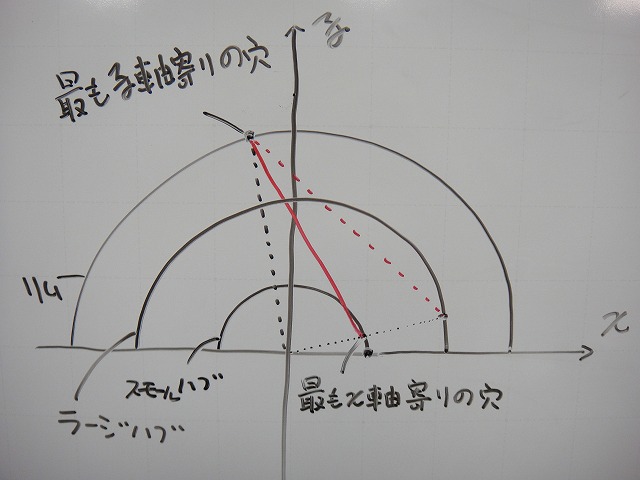
Now let's consider what happens if we keep this rim but swap it to a larger-flange hub.
The hub-side hole position is where the radial line from the hub center through the small-flange hole intersects the larger flange.
Connecting these gives the spoke path and length when laced with a large flange, shown as the red dashed line in the diagram.
With the large-flange hub hole, the hole shifts more in the positive Y-axis direction,
so actually spoke length doesn't change that much with modest flange diameter differences.
The old Powertap hub model's large-flange radius—the distance from the hub center to the hole center—is 35mm.
The current G3 is 28.5mm.
If I calculate a 24-hole XR200 rim 6-spoke non-drive side build with these two hubs, the spoke length difference is less than 1mm.
Actually the G3 came out to X-mm minus 0.4mm,
and the old hub came out to X-mm plus 0.4mm,
so when rounding to the nearest mm they're the same.
The point I'm trying to make is that the red solid line and dashed line in the diagram above are almost the same length.
Next, consider hole numbers where dividing by 4 gives an odd number, and we're building with the hole closest to the X-axis rather than the X-axis hole itself.
The rim hole phase is the same as before.
With the hub hole sitting on (not crossing!) the X-axis, the maximum n-spoke build is what I call true tangential lacing on this blog.
The spoke paths for the small-flange and large-flange versions are shown as blue solid and dashed lines in the diagram above, and unlike before,
you can see that flange diameter has a much bigger effect on spoke length.
With a G3 hub and old hub building 28-hole 8-spoke XR200, the estimated spoke length difference is as much as 2mm.
The wheel I built today used a G3 hub, so it just barely worked.
If this had been the old hub, I couldn't have done the non-drive side 8-spoke build.
If you take this concept to its extreme, with ultra-small-flange hubs,
the spoke length difference between radial and true tangential lacing shrinks,
and as the flange approaches a point, it converges on the radial lacing path.
So the smaller the flange on the non-drive side, the less effective asymmetric lacing becomes for wheel balance correction.
When you build with decent high-low-flange hubs,
you can tell that asymmetric lacing isn't doing much in hand-built wheels.
There's a difference between doing it and not doing it, so I do it anyway.
"With super high-low-flange hubs like Campagnolo or Fulcrum wheels,
it doesn't really matter if the non-drive side is radial lacing," is what I think,
but those wheels have 2:1 asymmetric spoke counts from the start,
so that side-to-side tension difference reduction effect dominates instead,
making the benefits of super high-low-flange geometry less noticeable.
The Powertap G3 hub has equal-diameter large flanges on both sides, so
when you build it 48-spoke, you get "hehe, this is interesting," kind of moment—that's what I'm saying.