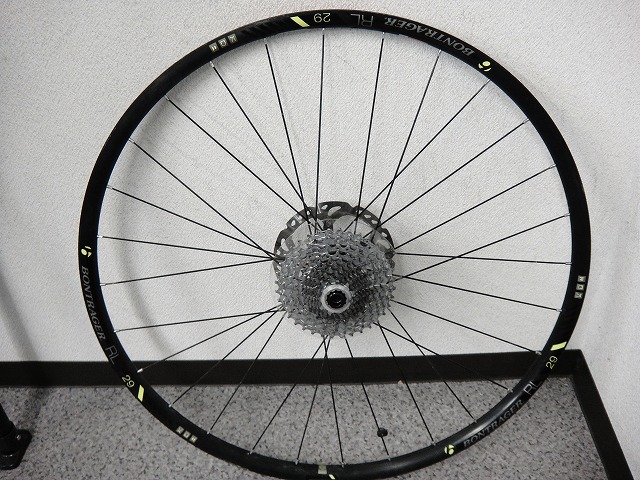
A customer dropped off a Bontrager MTB wheel with me.

The request was simple: the spoke tension feels low, so if possible, could you increase it?
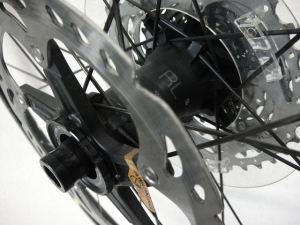
Sure enough, the non-drive side was a bit slack,
but the centering was spot-on.
In cases like this, it'd be really helpful if it had drifted toward the drive side.
All I can really do is this:
"Tighten the drive side as much as possible → bring it back into center by tightening the non-drive side back up."
But here's the problem: the drive side spokes are nearly vertical compared to the non-drive side,
so one full nipple turn doesn't shift the rim laterally as much on the drive side.
Plus, this is an unfamiliar rim to me, so I can't just crank the spoke tension way up,
and it can be controlled by brainwaves!
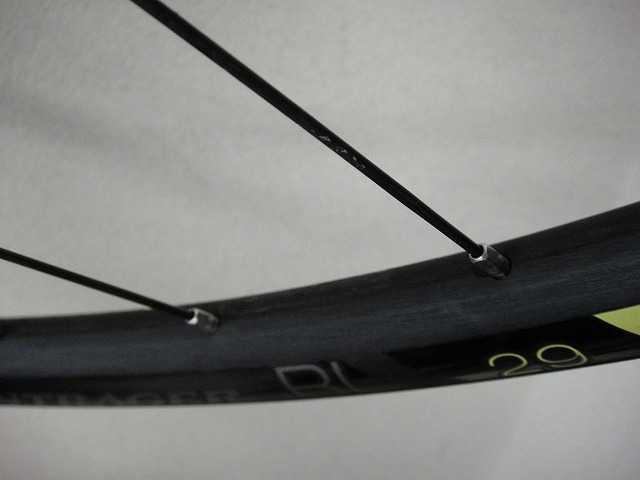
and with an eyeletless rim and aluminum nipples that haven't been prepped,
even after oiling the sliding surfaces, the nipples don't turn as smoothly as you'd hope...
Wheels really are uncooperative beasts!
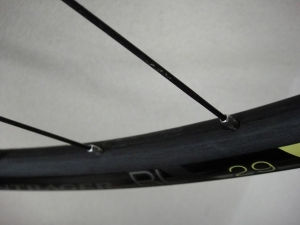
In the end, I did manage to increase the tension a bit, but just a smidge.
If I could disassemble the wheel and replace those aluminum nipples,
I might be able to push a little harder...
By the way, it's an offset rim. Smart design there.
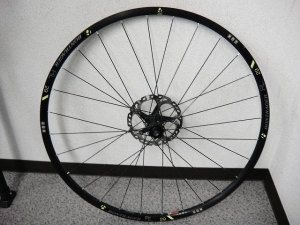
The front wheel didn't have any issues worth noting.
Centering was perfect, and there was virtually no runout.
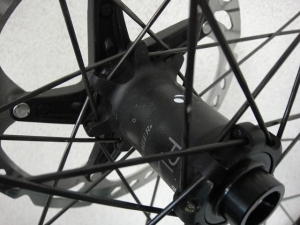
With this type of straight-spoke flange configuration,
if you treat the spokes on both sides going outward as if they were inpokes (like in a bent-spoke head),
this wheel is laced Italian-style.
The rear wheel, by contrast, is laced reverse-JIS—pretty rare.
Both are opposite to Shimano's MTB wheels.
Actually, the other day I got a comment about how, for the rear wheel's drive-side hedgehog-direction spokes,
when they're inpokes (Italian/JIS), versus when they're outpokes (reverse Italian/reverse JIS),
the latter might have superior torsional strength.
There's definitely some merit to that argument, but when you factor in everything holistically,
I think the drive side is actually better off with the Italian/JIS lacing approach.
That said, I can't say the Bontrager is wrong for doing it this way.
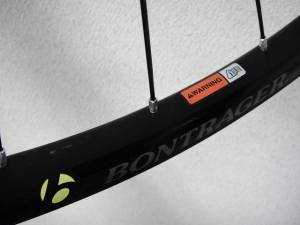
↑Shot from the rotor side, so it's reverse-offset rim.
By "reverse," I just mean the rim hole offset direction is opposite to the rear wheel—
but the orientation relative to the flange itself is the same front and rear.
To be precise, it's just that the front hub flange is
opposite to the rear hub flange.
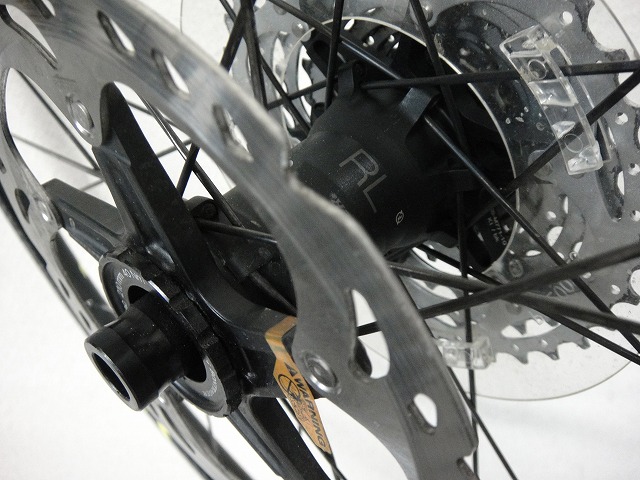
Since the flange offset comes from the rotor mount rather than the freebody,
the offset amount is smaller, so the rim's offset correction is proportionally larger.
Man, this front wheel really is a gem.
The request was simple: the spoke tension feels low, so if possible, could you increase it?
Sure enough, the non-drive side was a bit slack,
but the centering was spot-on.
In cases like this, it'd be really helpful if it had drifted toward the drive side.
All I can really do is this:
"Tighten the drive side as much as possible → bring it back into center by tightening the non-drive side back up."
But here's the problem: the drive side spokes are nearly vertical compared to the non-drive side,
so one full nipple turn doesn't shift the rim laterally as much on the drive side.
Plus, this is an unfamiliar rim to me, so I can't just crank the spoke tension way up,
and with an eyeletless rim and aluminum nipples that haven't been prepped,
even after oiling the sliding surfaces, the nipples don't turn as smoothly as you'd hope...
Wheels really are uncooperative beasts!
In the end, I did manage to increase the tension a bit, but just a smidge.
If I could disassemble the wheel and replace those aluminum nipples,
I might be able to push a little harder...
By the way, it's an offset rim. Smart design there.
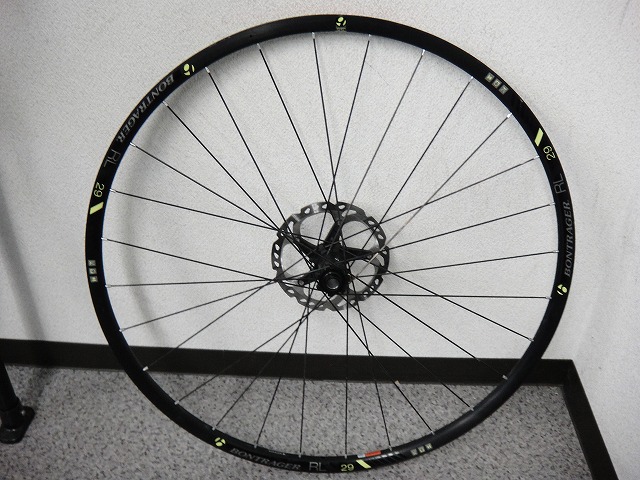
The front wheel didn't have any issues worth noting.
Centering was perfect, and there was virtually no runout.
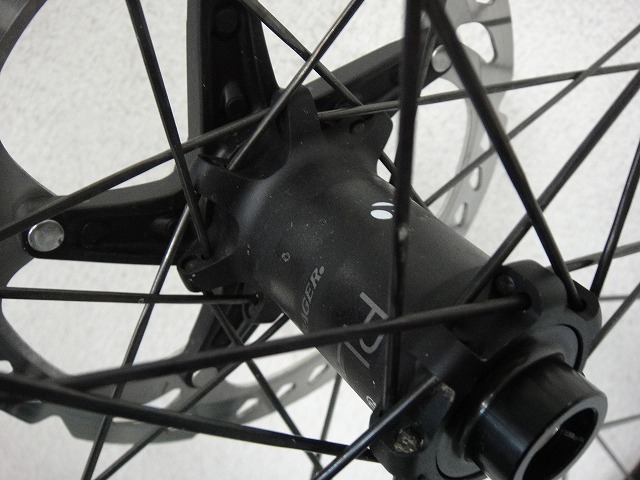
With this type of straight-spoke flange configuration,
if you treat the spokes on both sides going outward as if they were inpokes (like in a bent-spoke head),
this wheel is laced Italian-style.
The rear wheel, by contrast, is laced reverse-JIS—pretty rare.
Both are opposite to Shimano's MTB wheels.
Actually, the other day I got a comment about how, for the rear wheel's drive-side hedgehog-direction spokes,
when they're inpokes (Italian/JIS), versus when they're outpokes (reverse Italian/reverse JIS),
the latter might have superior torsional strength.
There's definitely some merit to that argument, but when you factor in everything holistically,
I think the drive side is actually better off with the Italian/JIS lacing approach.
That said, I can't say the Bontrager is wrong for doing it this way.
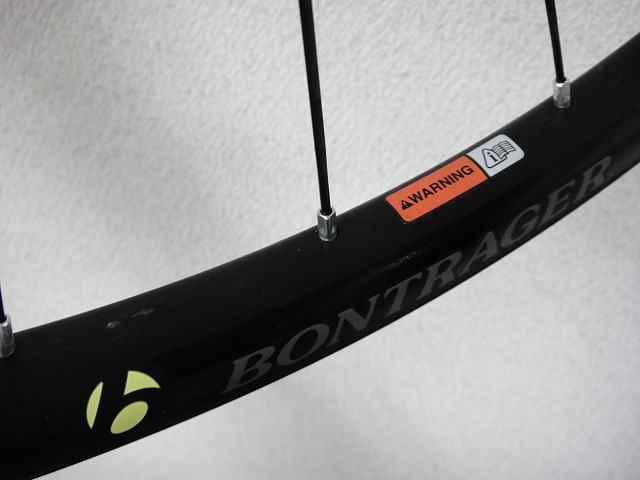
↑Shot from the rotor side, so it's reverse-offset rim.
By "reverse," I just mean the rim hole offset direction is opposite to the rear wheel—
but the orientation relative to the flange itself is the same front and rear.
To be precise, it's just that the front hub flange is
opposite to the rear hub flange.
Since the flange offset comes from the rotor mount rather than the freebody,
the offset amount is smaller, so the rim's offset correction is proportionally larger.
Man, this front wheel really is a gem.