Another day on wheels (you know the drill).
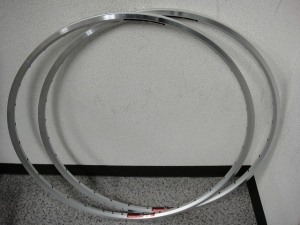
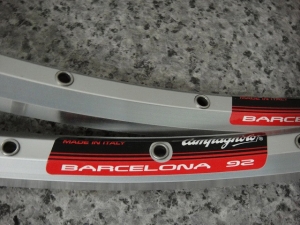
Got a Campagnolo Barcelona 92 in for service.
This is one of the last two hand-built rims that Campagnolo ever sold.
There's a Greek letter series among Campagnolo's older rims.
I think the final flagship model was the Sigma,
but there were various others like Lambda, Omicron, and Omega.
Then came the Olympic series after that.
While the original Omega had a flat profile,
there was the Omega V—a triangular-section aero rim for the time—
and while the Omega V came in both tubular and clincher versions,
the Omega V clincher and Moscow 80 are identical except for the stickers.
That's the only connection between the Greek letter and Olympic series.
The Olympic series goes:
Rome 60, Mexico 68, Munich 72, Montreal 76,
Moscow 80, Los Angeles 84, Seoul 88, Barcelona 92,
Atlanta 96 (some have the label "Atlanta 1996"),
and Sydney 2000—
but I've never actually seen a Tokyo 64.
And I've never seen an original Rome 60 either.
(You can find photos online if you search, though.)
These rims were sold continuously without spec changes,
but eventually Campagnolo standardized the specs to just
"a clincher rim made by taking a Campagnolo Nucleon front rim (originally 22H without eyelets)
and converting it to a half-eyelet 32H format."
They released the clincher version as Montreal 76 and the tubular as Barcelona 92.
That's this rim right here.
Since Montreal 76 and Barcelona 92 have completely different profiles from the original rims of the same name,
in my spoke length calculation formulas I refer to them as
New Montreal 76 and New Barcelona 92 for convenience.

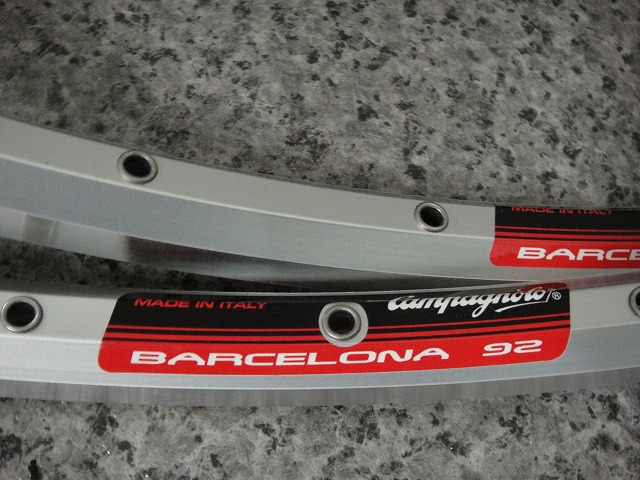
↑Labels like this,
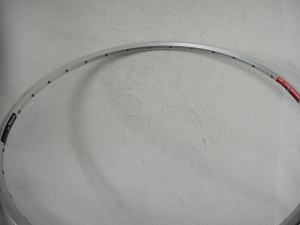
are applied in alternating directions on nearly opposite sides.
This isn't a mistake—all of them are done this way.
With Campagnolo's Greek letter series,
the Campagnolo logo label and the rim name label were applied in alternating directions,
so they were following that tradition.
At first glance there seems to be no front or back,
but these two labels are positioned near the valve hole and near the rim seam,
so there's a distinction there.
So...
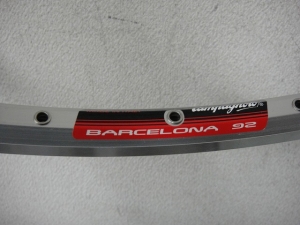
When the rim seam is positioned at the bottom,
the rim name reads correctly, and
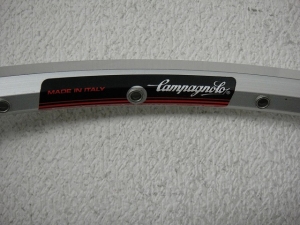
looking up at the valve hole from there,
the Campagnolo logo also reads correctly.
I decided to build both front and rear wheels
so that both labels are on the right side when moving forward.
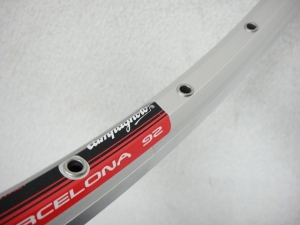
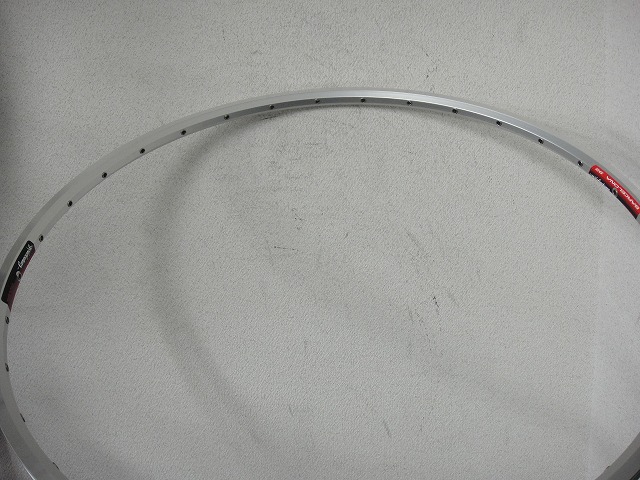
It has a trapezoid profile that looks very similar to Mavic's Reflexknockoff,
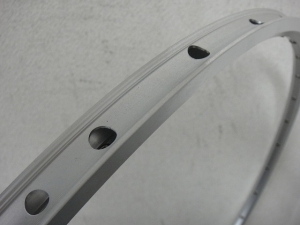
but whereas the Reflex has double eyelets, this one has single eyelets.
(The double eyelet is actually based on Mavic's original patent, by the way.)
Because of that among other reasons, it actually came out quite light at around 380g as measured.
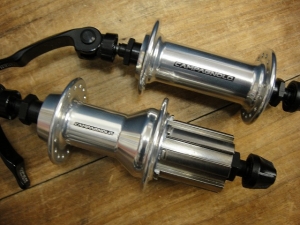
The hub is a Campagnolo that I have on hand.
This is "probably" a Centaur.
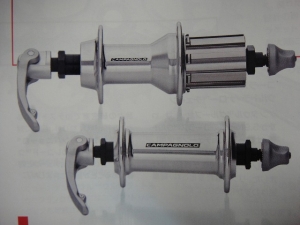
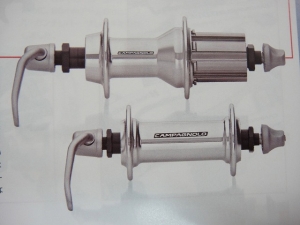
↑The top photo is a 2007 Centaur, the bottom is a 2007 Veloce.
According to the catalog, these two are identical except for the quick release lever.
This follows what Campagnolo used to do—if it says Mirage it's a Mirage,
if it says Veloce it's a Veloce—basically
differentiation by dust cap engraving alone, nothing else.
Earlier Centaur models used the same cup-and-cone bearing design as Record and Chorus,
and were compatible with the CULT cartridge bearing conversion that came later.
But from 2007 on, Centaur switched to a cartridge bearing hub shared with lower-tier models,
and most of its specs became common with Veloce.
That's why I wrote "probably" Centaur earlier.
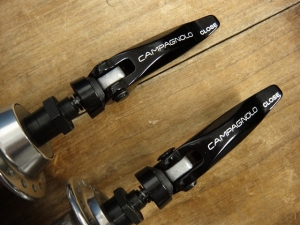
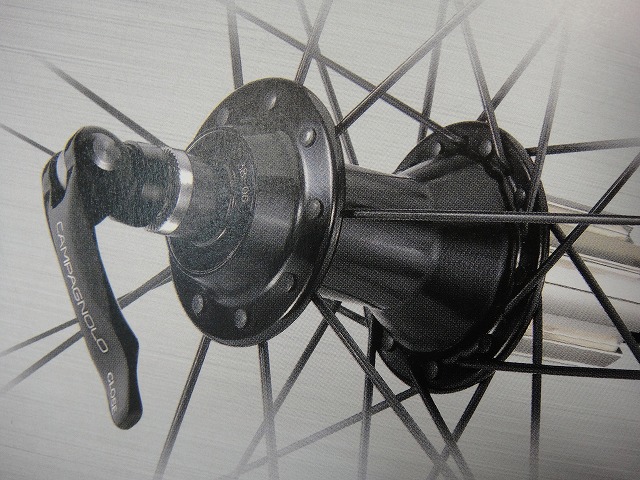
What's unclear is the quick release.
This probably wasn't originally packaged with this hub.
It's basically a lower-tier Fulcrum quick release
with just the Campagnolo logo swapped on,
but it's a bit of a rare find because it only came with
2007 Vento or Camin models.
And like Shimano does too,
it breaks the rule of "silver hub gets silver quick release, black hub gets black quick release."
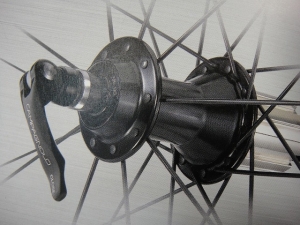
↑2007 Camin
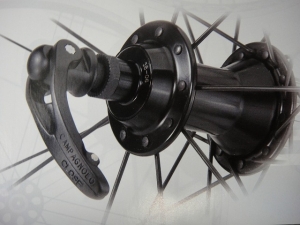
↑2008 Camin
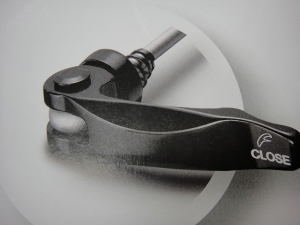
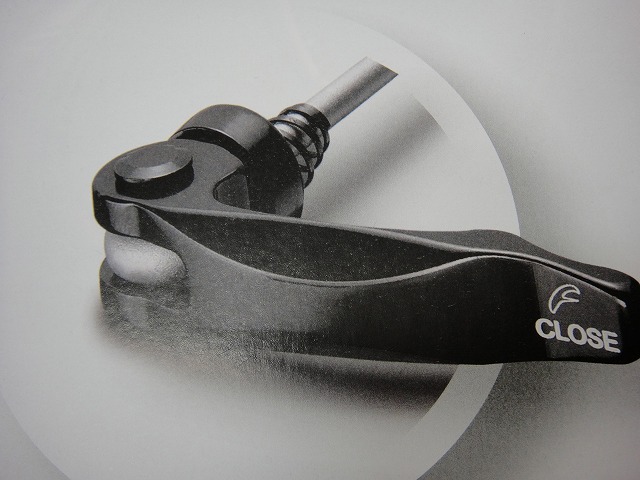
↑This is the quick release that came with a 2009 Racing 5,
and Fulcrum had a pretty long run with this particular quick release design.
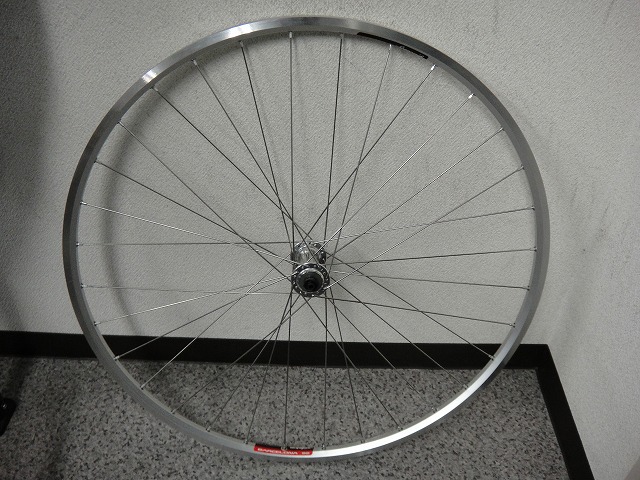
Alright, enough talking—time to build this wheel already.
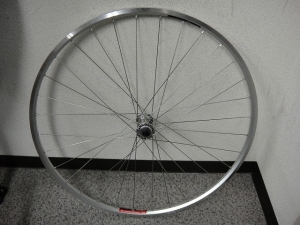
Done.
Front wheel first.
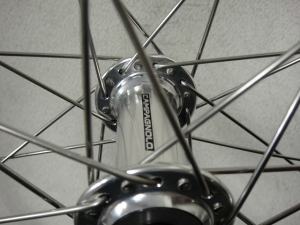
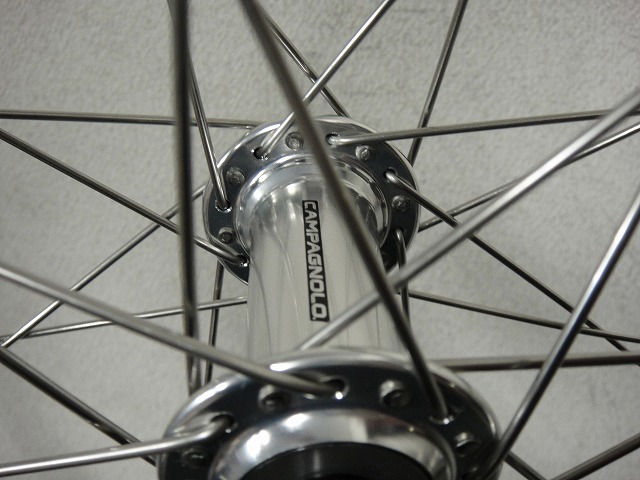
32H full comp, 2-cross Italian lacing.
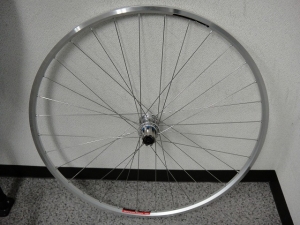
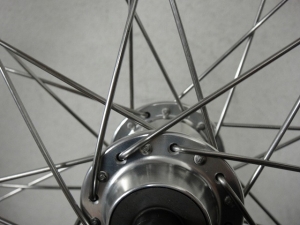
Rear wheel is 32H full comp, 4-cross lacing with no bracing.
It's semi-tangent lacing, not true tangent,
so the interference between inpoke and outpoke spoke heads is minimal.
As I mentioned before, there's no hub grade name on the dust cap.
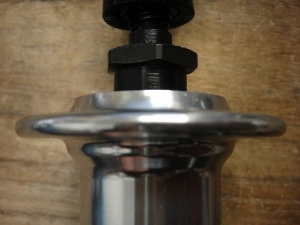

The front hub flanges had virtually zero deflection toward the rim.
That's a little unusual.
Setting aside the whole Campagnolo radial-lacing prohibition thing,
if you think minimizing hub flange and spoke interference is a major consideration,
then outpoke radial lacing would be the optimal solution.
(Though of course you wouldn't actually make that your major design consideration.)

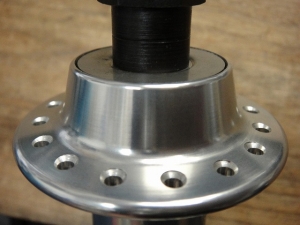
↑The rear hub's non-freewheel side had a considerable flange deflection.
The freewheel side isn't as pronounced, so they're clearly accounting for dish
by deflecting the flange toward the rim on the freewheel side.
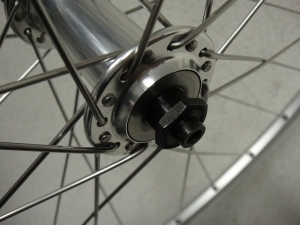
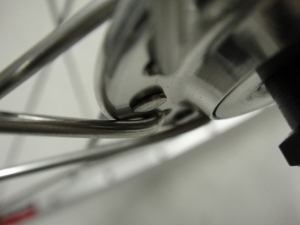
So on the front hub, the inpoke spokes do contact the hub flange,
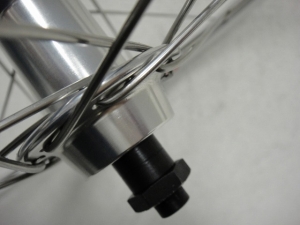
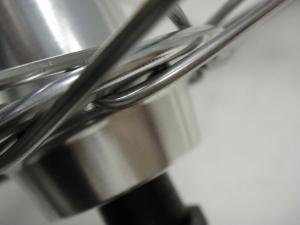
but on the rear hub, they're just barely not touching.
The spoke head interference mentioned earlier probably plays a part in that too.
This contact isn't inherently bad or anything,
but straight hub flanges are just rare enough that I noticed it.
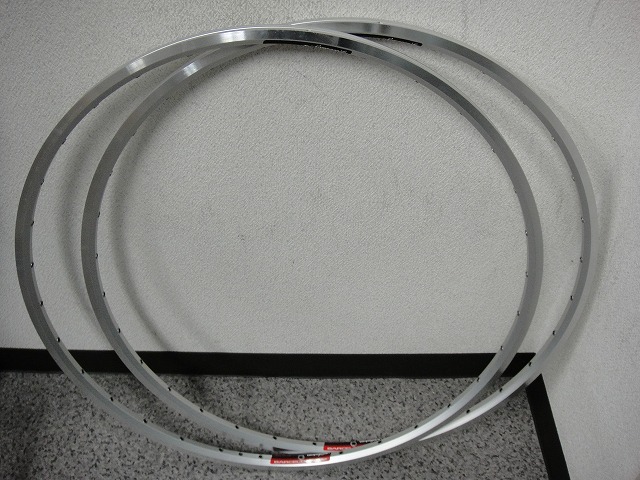
Got a Campagnolo Barcelona 92 in for service.
This is one of the last two hand-built rims that Campagnolo ever sold.
There's a Greek letter series among Campagnolo's older rims.
I think the final flagship model was the Sigma,
but there were various others like Lambda, Omicron, and Omega.
Then came the Olympic series after that.
While the original Omega had a flat profile,
there was the Omega V—a triangular-section aero rim for the time—
and while the Omega V came in both tubular and clincher versions,
the Omega V clincher and Moscow 80 are identical except for the stickers.
That's the only connection between the Greek letter and Olympic series.
The Olympic series goes:
Rome 60, Mexico 68, Munich 72, Montreal 76,
Moscow 80, Los Angeles 84, Seoul 88, Barcelona 92,
Atlanta 96 (some have the label "Atlanta 1996"),
and Sydney 2000—
but I've never actually seen a Tokyo 64.
And I've never seen an original Rome 60 either.
(You can find photos online if you search, though.)
These rims were sold continuously without spec changes,
but eventually Campagnolo standardized the specs to just
"a clincher rim made by taking a Campagnolo Nucleon front rim (originally 22H without eyelets)
and converting it to a half-eyelet 32H format."
They released the clincher version as Montreal 76 and the tubular as Barcelona 92.
That's this rim right here.
Since Montreal 76 and Barcelona 92 have completely different profiles from the original rims of the same name,
in my spoke length calculation formulas I refer to them as
New Montreal 76 and New Barcelona 92 for convenience.
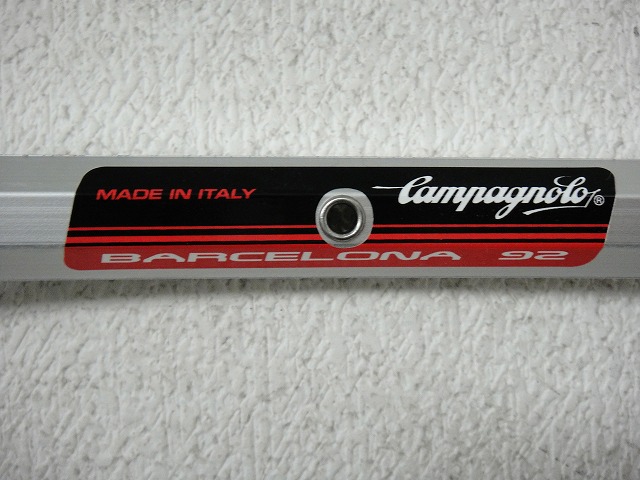
↑Labels like this,
are applied in alternating directions on nearly opposite sides.
This isn't a mistake—all of them are done this way.
With Campagnolo's Greek letter series,
the Campagnolo logo label and the rim name label were applied in alternating directions,
so they were following that tradition.
At first glance there seems to be no front or back,
but these two labels are positioned near the valve hole and near the rim seam,
so there's a distinction there.
So...
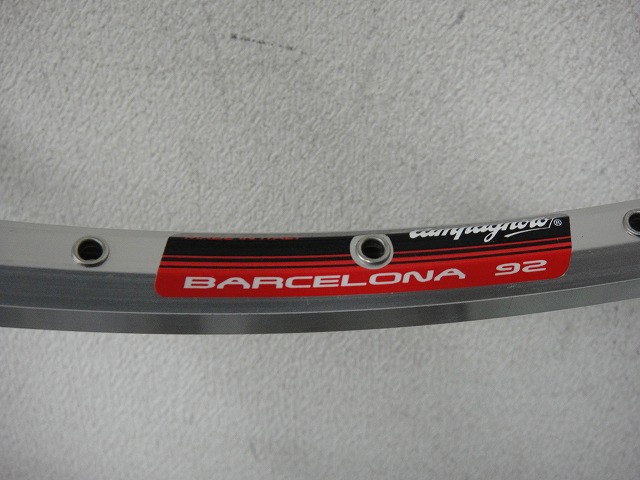
When the rim seam is positioned at the bottom,
the rim name reads correctly, and
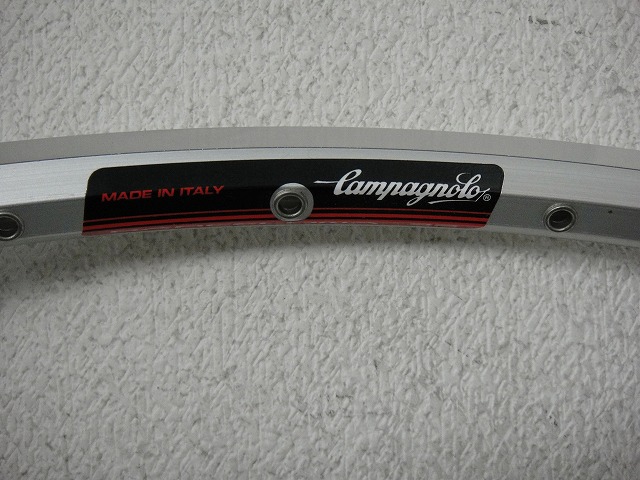
looking up at the valve hole from there,
the Campagnolo logo also reads correctly.
I decided to build both front and rear wheels
so that both labels are on the right side when moving forward.
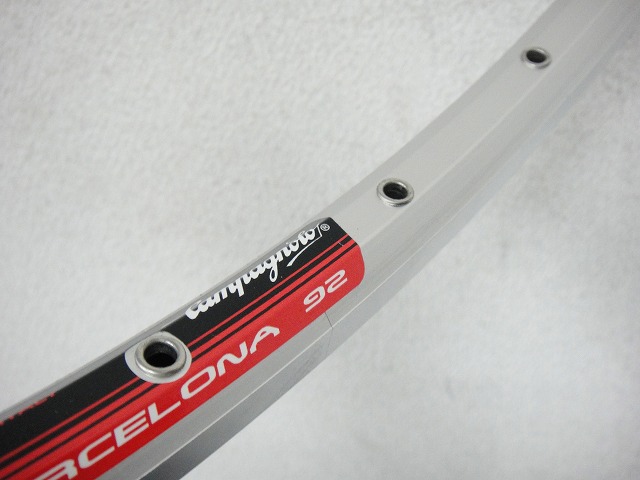
It has a trapezoid profile that looks very similar to Mavic's Reflex
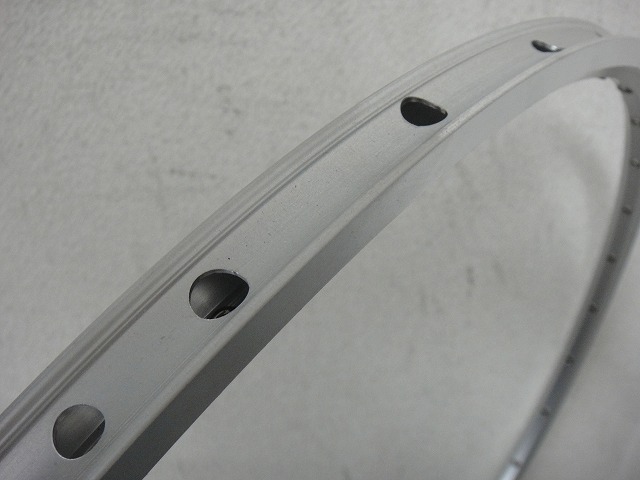
but whereas the Reflex has double eyelets, this one has single eyelets.
(The double eyelet is actually based on Mavic's original patent, by the way.)
Because of that among other reasons, it actually came out quite light at around 380g as measured.
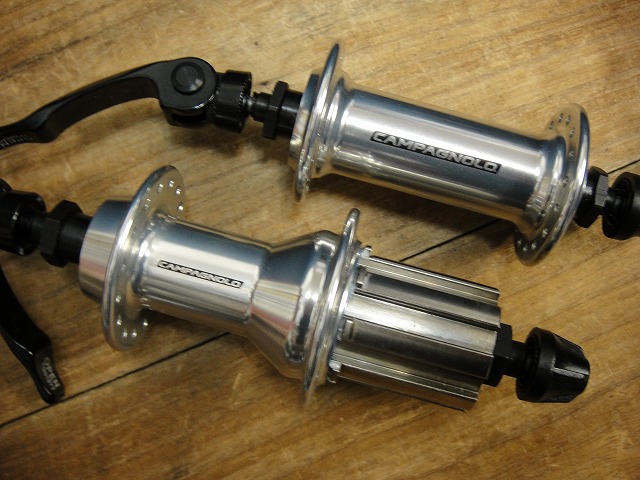
The hub is a Campagnolo that I have on hand.
This is "probably" a Centaur.
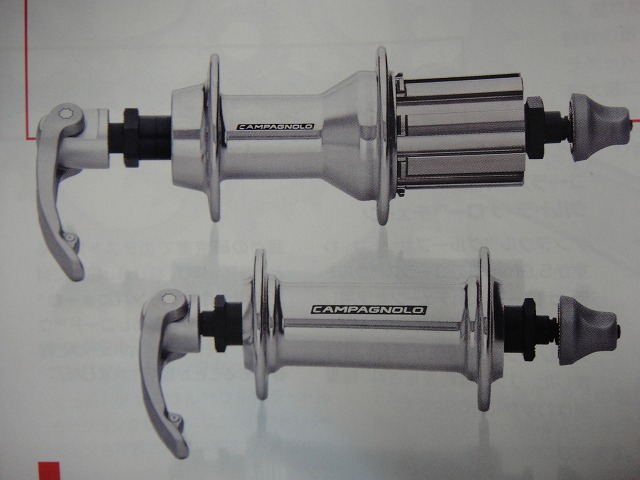
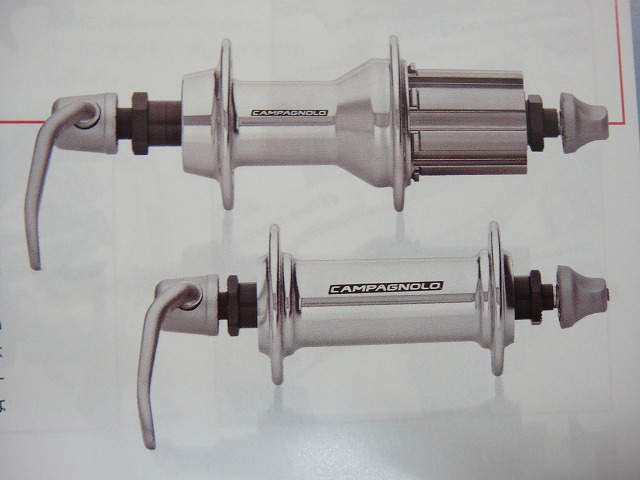
↑The top photo is a 2007 Centaur, the bottom is a 2007 Veloce.
According to the catalog, these two are identical except for the quick release lever.
This follows what Campagnolo used to do—if it says Mirage it's a Mirage,
if it says Veloce it's a Veloce—basically
differentiation by dust cap engraving alone, nothing else.
Earlier Centaur models used the same cup-and-cone bearing design as Record and Chorus,
and were compatible with the CULT cartridge bearing conversion that came later.
But from 2007 on, Centaur switched to a cartridge bearing hub shared with lower-tier models,
and most of its specs became common with Veloce.
That's why I wrote "probably" Centaur earlier.
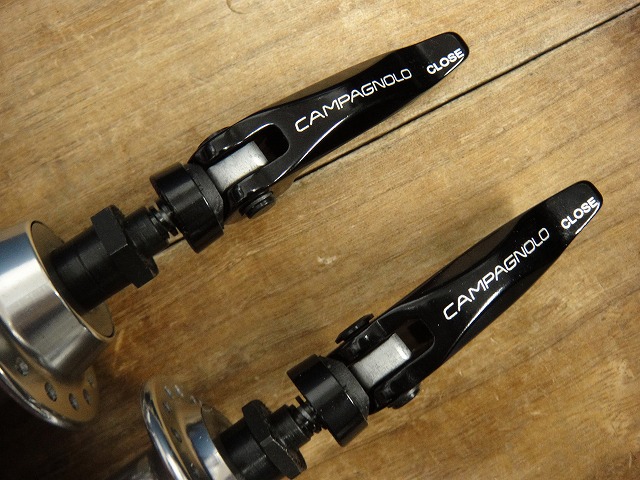
What's unclear is the quick release.
This probably wasn't originally packaged with this hub.
It's basically a lower-tier Fulcrum quick release
with just the Campagnolo logo swapped on,
but it's a bit of a rare find because it only came with
2007 Vento or Camin models.
And like Shimano does too,
it breaks the rule of "silver hub gets silver quick release, black hub gets black quick release."
↑2007 Camin

↑2008 Camin
↑This is the quick release that came with a 2009 Racing 5,
and Fulcrum had a pretty long run with this particular quick release design.
Alright, enough talking—time to build this wheel already.
Done.
Front wheel first.
32H full comp, 2-cross Italian lacing.
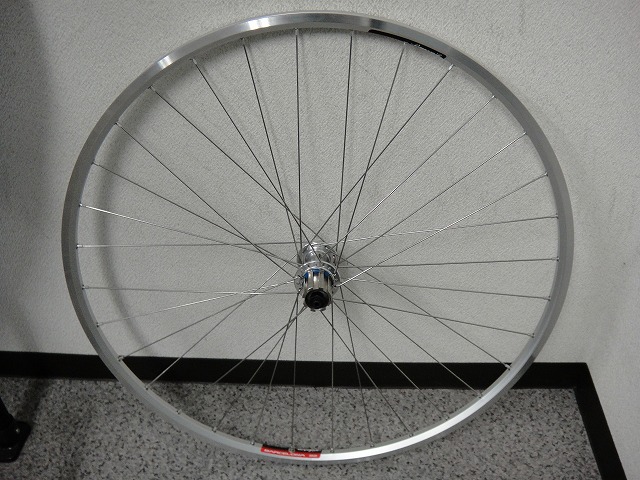
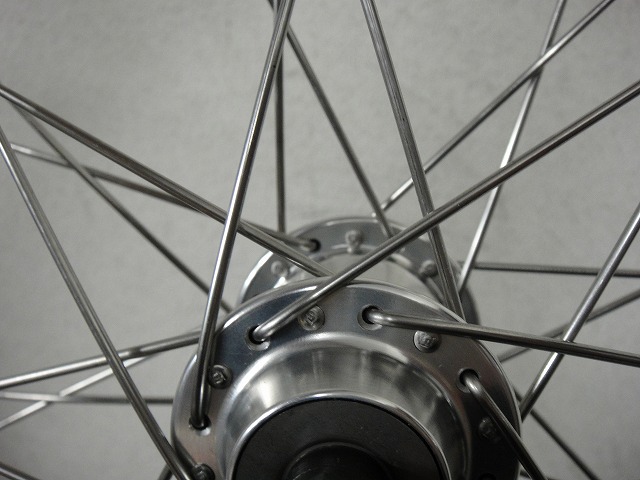
Rear wheel is 32H full comp, 4-cross lacing with no bracing.
It's semi-tangent lacing, not true tangent,
so the interference between inpoke and outpoke spoke heads is minimal.
As I mentioned before, there's no hub grade name on the dust cap.
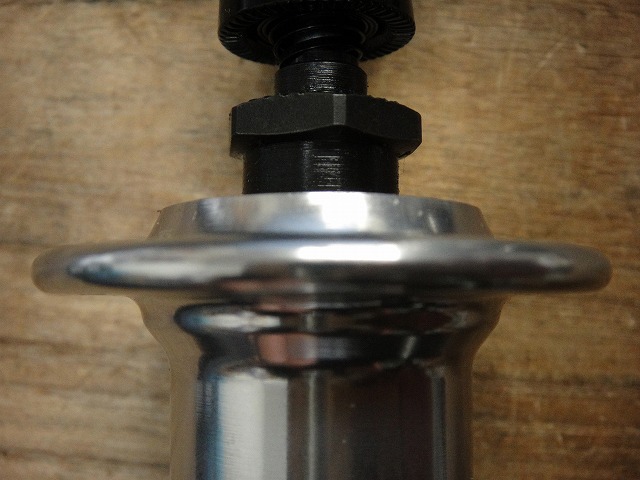

The front hub flanges had virtually zero deflection toward the rim.
That's a little unusual.
Setting aside the whole Campagnolo radial-lacing prohibition thing,
if you think minimizing hub flange and spoke interference is a major consideration,
then outpoke radial lacing would be the optimal solution.
(Though of course you wouldn't actually make that your major design consideration.)


↑The rear hub's non-freewheel side had a considerable flange deflection.
The freewheel side isn't as pronounced, so they're clearly accounting for dish
by deflecting the flange toward the rim on the freewheel side.
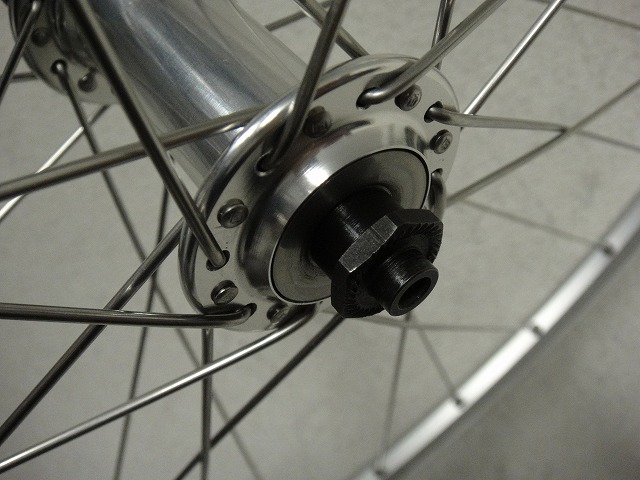
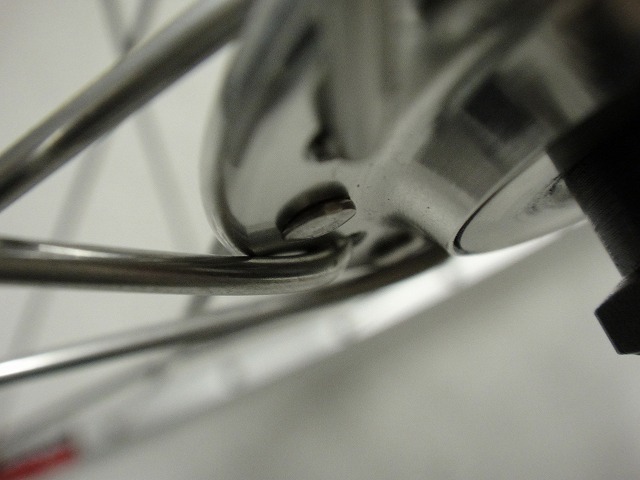
So on the front hub, the inpoke spokes do contact the hub flange,
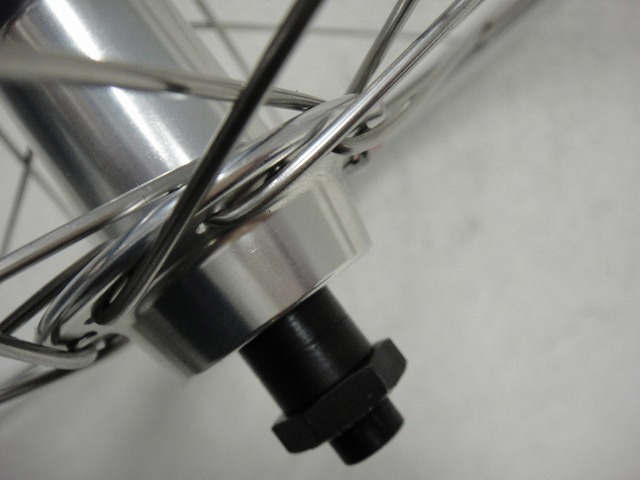
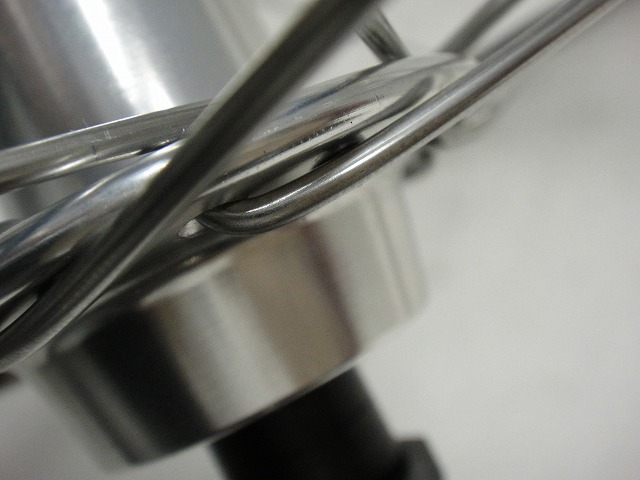
but on the rear hub, they're just barely not touching.
The spoke head interference mentioned earlier probably plays a part in that too.
This contact isn't inherently bad or anything,
but straight hub flanges are just rare enough that I noticed it.