Another day of wheel work (and so on).
But before that.
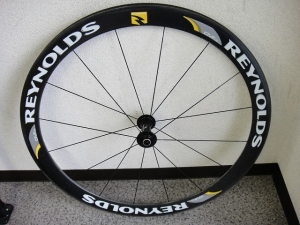
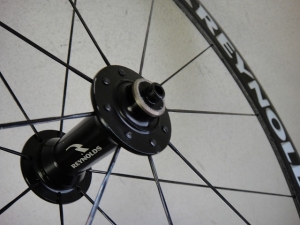
A customer brought in a Reynolds DV46UL front wheel for me to work on.
I checked it for runout and centering.
There were no particular issues.
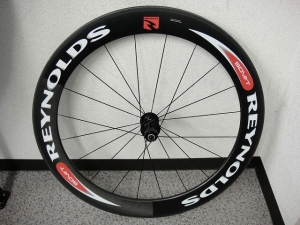
Next is the rear wheel, its counterpart.
This one is a model called SDV66T with a rim height of 66mm.
Rim height, in most cases,
refers to the height of the rim as seen from the side, ignoring the tire bed depression.
This is also the measurement you get when you clamp the rim between calipers on the inner and outer circumference sides.
(When someone asks about segmented machined aluminum rims, I must admit I'm at a loss for an answer)
When I measured it, it came out to exactly 66mm.
By the way, the "65" EDGE or ENVE rims
used to claim a height of "1-68," as in 68mm high.
So when I compared my 1-68 with this SDV66T, the rim heights were nearly identical.
And when I shone a light inside the rim, the nipples used were Pillar (internal nipple type), which is the same as what I call the second-generation nipples for EDGE and ENVE in this blog.
The customer wants the rear wheel rebuilt,
so I can infer the necessary spoke length from the EDGE 1-68.
The one variable is the thickness of the inner rim wall.
Since I wanted to order spokes without disassembling the wheel,
I ordered them slightly longer than the EDGE 1-68 specs.
If they're too long, I can adjust them with a spoke cutter.
After I disassembled it and measured the inner rim diameter again,
there was only a 0.2mm difference in diameter.
This 0.2mm is basically measurement error from hand-measuring with the diameter jig I made,
and the rim's mold and design dimensions are probably identical.
I'm making it sound like this Reynolds and my EDGE are "the same manufacturer in the LEW-type rim family," but when you look closely, the manufacturing method is different.
This rim still has the balloon inside, and naturally there's no cap covering the balloon extraction hole on the opposite side of the valve hole.
Rims where the balloon has been removed and have a cap opposite the valve hole are ENVE, Shimano, Easton, and so on.
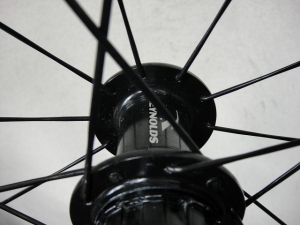
The reason for the rebuild request is "it feels a bit mushy."
The spokes aren't Reynolds' preferred left-right different diameters—they're DT Aerolites, both sides the same.
The spokes are DT, but where exactly is the hub from? (—standard question)
The drive side uses four-cross lacing equivalent to reverse Italian, and
while the non-drive side is radial, the tension is pretty decent for that.
This is probably because the rim height is high (meaning shorter spokes).
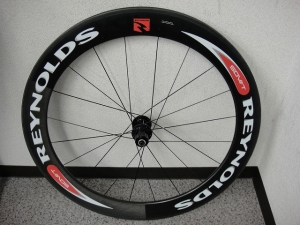
Done.

20H black half Competizione, four-cross lacing with black pinstripe.
Using Competizione on the drive side means a weight increase compared to Aerolite,
but in terms of how well it engages, I think it's superior.
To take it to extremes, it becomes "if you want the drive side thicker with left-right differences, Champion or Strongest would be better,"
but there's a balance, a compromise point
where you weigh the weight and the wheel's characteristics against each other.
Shimano's 7900-C24 uses Sapim straight spokes with a 85% spoke specific gravity,
and if we say "flattening Laser gives you CX-RAY,"
then these spokes are "flattening Race."
If there were butted spokes at this specific gravity with
a width under 2.3mm (to fit through the hub flange's round holes),
it could serve as a Competizione alternative.
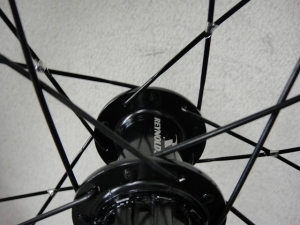
And as usual, I sneakily changed the drive side to something equivalent to Italian lacing.
But before that.
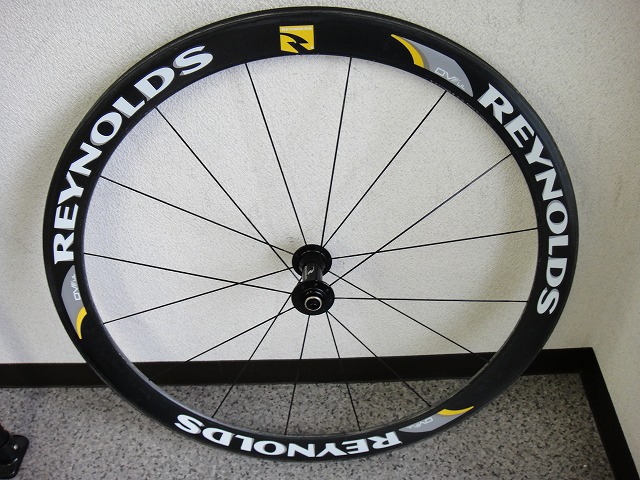
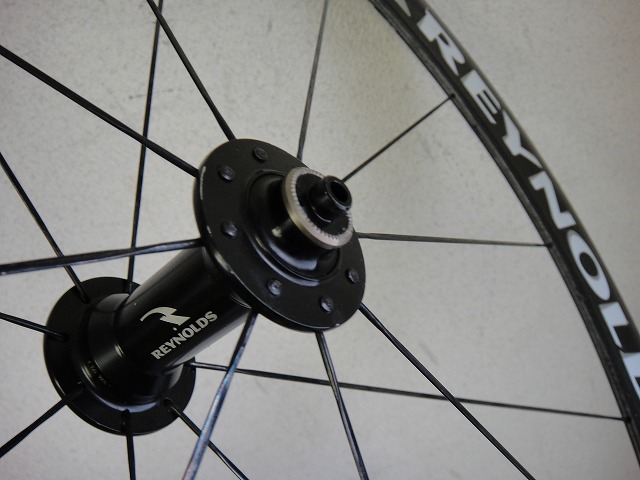
A customer brought in a Reynolds DV46UL front wheel for me to work on.
I checked it for runout and centering.
There were no particular issues.

Next is the rear wheel, its counterpart.
This one is a model called SDV66T with a rim height of 66mm.
Rim height, in most cases,
refers to the height of the rim as seen from the side, ignoring the tire bed depression.
This is also the measurement you get when you clamp the rim between calipers on the inner and outer circumference sides.
(When someone asks about segmented machined aluminum rims, I must admit I'm at a loss for an answer)
When I measured it, it came out to exactly 66mm.
By the way, the "65" EDGE or ENVE rims
used to claim a height of "1-68," as in 68mm high.
So when I compared my 1-68 with this SDV66T, the rim heights were nearly identical.
And when I shone a light inside the rim, the nipples used were Pillar (internal nipple type), which is the same as what I call the second-generation nipples for EDGE and ENVE in this blog.
The customer wants the rear wheel rebuilt,
so I can infer the necessary spoke length from the EDGE 1-68.
The one variable is the thickness of the inner rim wall.
Since I wanted to order spokes without disassembling the wheel,
I ordered them slightly longer than the EDGE 1-68 specs.
If they're too long, I can adjust them with a spoke cutter.
After I disassembled it and measured the inner rim diameter again,
there was only a 0.2mm difference in diameter.
This 0.2mm is basically measurement error from hand-measuring with the diameter jig I made,
and the rim's mold and design dimensions are probably identical.
I'm making it sound like this Reynolds and my EDGE are "the same manufacturer in the LEW-type rim family," but when you look closely, the manufacturing method is different.
This rim still has the balloon inside, and naturally there's no cap covering the balloon extraction hole on the opposite side of the valve hole.
Rims where the balloon has been removed and have a cap opposite the valve hole are ENVE, Shimano, Easton, and so on.

The reason for the rebuild request is "it feels a bit mushy."
The spokes aren't Reynolds' preferred left-right different diameters—they're DT Aerolites, both sides the same.
The spokes are DT, but where exactly is the hub from? (—standard question)
The drive side uses four-cross lacing equivalent to reverse Italian, and
while the non-drive side is radial, the tension is pretty decent for that.
This is probably because the rim height is high (meaning shorter spokes).
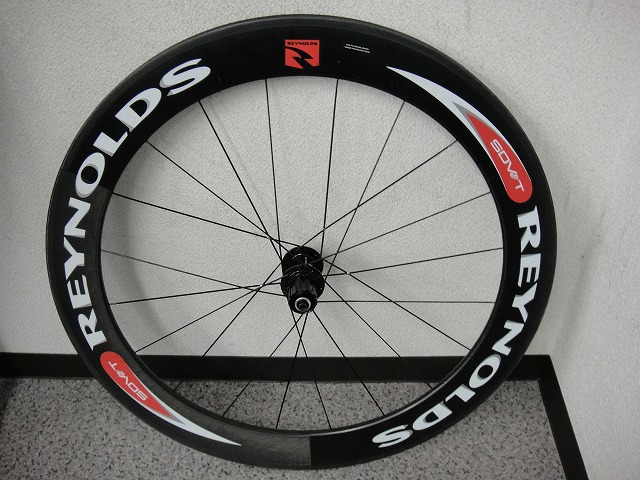
Done.
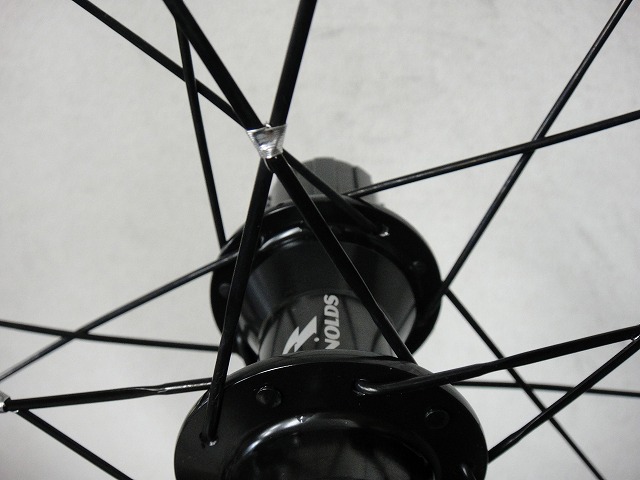
20H black half Competizione, four-cross lacing with black pinstripe.
Using Competizione on the drive side means a weight increase compared to Aerolite,
but in terms of how well it engages, I think it's superior.
To take it to extremes, it becomes "if you want the drive side thicker with left-right differences, Champion or Strongest would be better,"
but there's a balance, a compromise point
where you weigh the weight and the wheel's characteristics against each other.
Shimano's 7900-C24 uses Sapim straight spokes with a 85% spoke specific gravity,
and if we say "flattening Laser gives you CX-RAY,"
then these spokes are "flattening Race."
If there were butted spokes at this specific gravity with
a width under 2.3mm (to fit through the hub flange's round holes),
it could serve as a Competizione alternative.

And as usual, I sneakily changed the drive side to something equivalent to Italian lacing.