The drill whines!
I've done this kind of work before—creating new bottle cage holes—
but today I'm talking about the rivet nuts used for this.
It's not related, but since I happened to do similar work on two bikes in a row,
I'll write about both together.
But first.
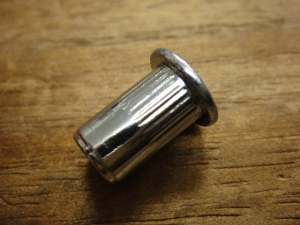
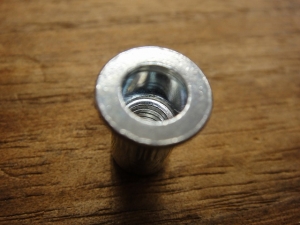

These are the threads I'm installing in the bottle cage holes.
They're called rivet nuts.
These are M5 size for bottle cage screws,
but recently I've been using M4 more often too—for Shimano electric groupset short battery mounting brackets.
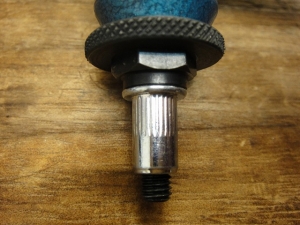
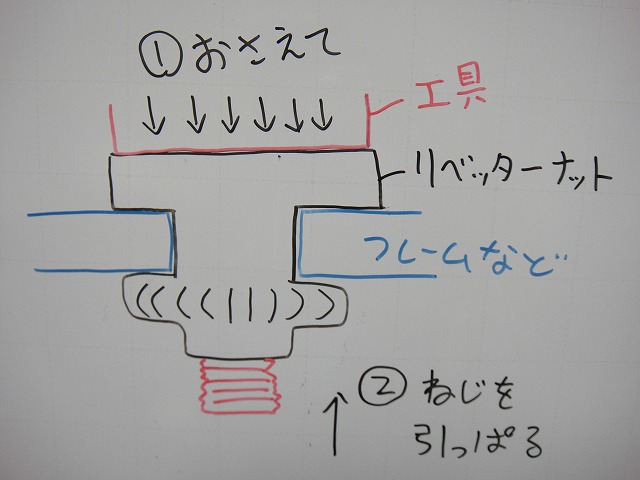
You attach this to a special tool and pull the threaded part,
and the grooved section collapses with a pop,
creating a press-fit around the back of the hole.
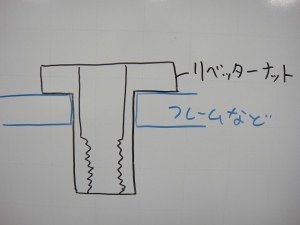
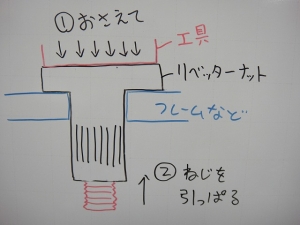
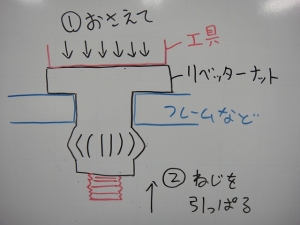
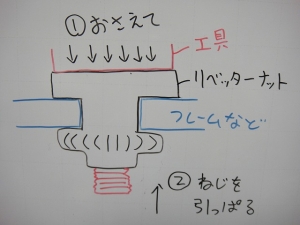
Like this.
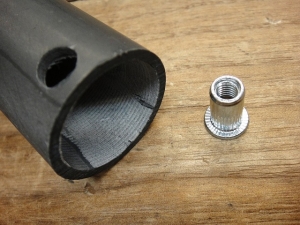
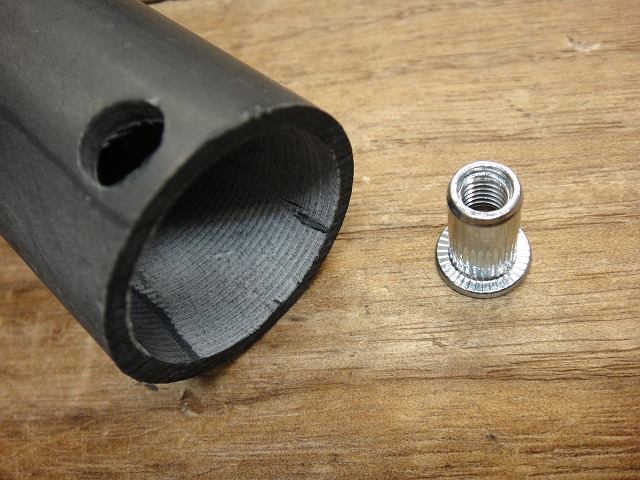
I prepared a carbon tube with a pilot hole drilled in it.
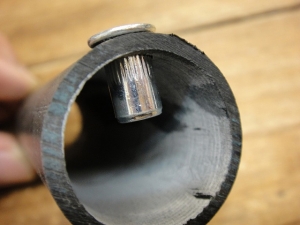
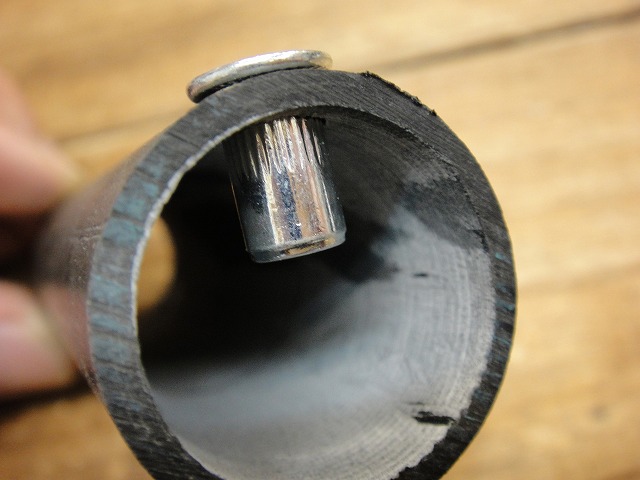
I put the rivet nut in . . .
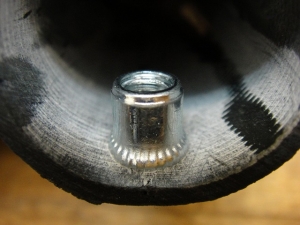
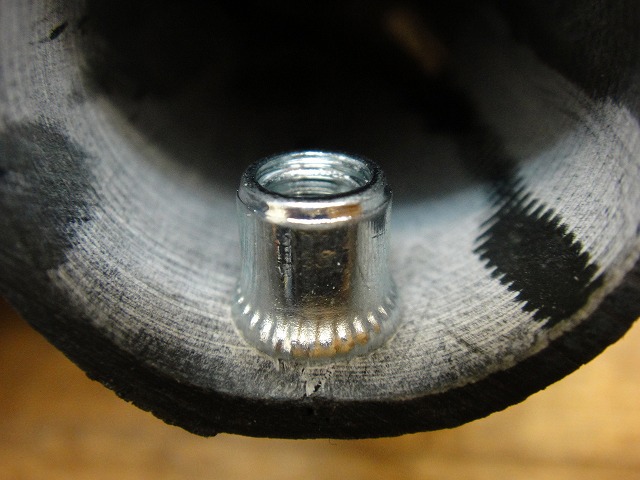
And set it.
Because the tube is round and thick-walled, it didn't collapse as flat as on a frame,
but on an actual frame it flattens much more nicely.
That's the introduction done.
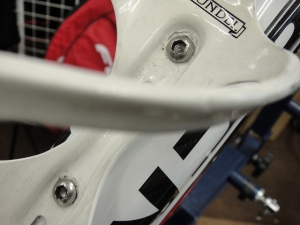
First job.
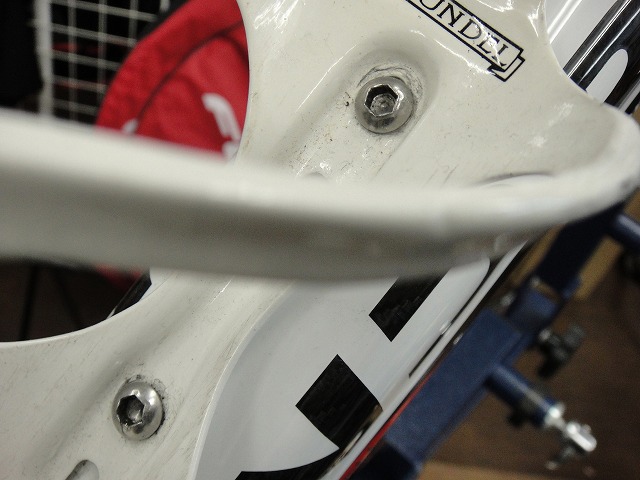
The rivet nut on the bottle cage had completely started spinning.
That would be bad enough on its own, but some shop
tried to stop the nut from spinning by dropping cyanoacrylate on it,
and it got on the bolt threads too. Then when they tried to force it off
they stripped the hex socket.
That's the worst.
If it was just the nut spinning, it would be a much simpler fix,
but because someone made extra mistakes on top of that,
it's become a harder problem to solve.

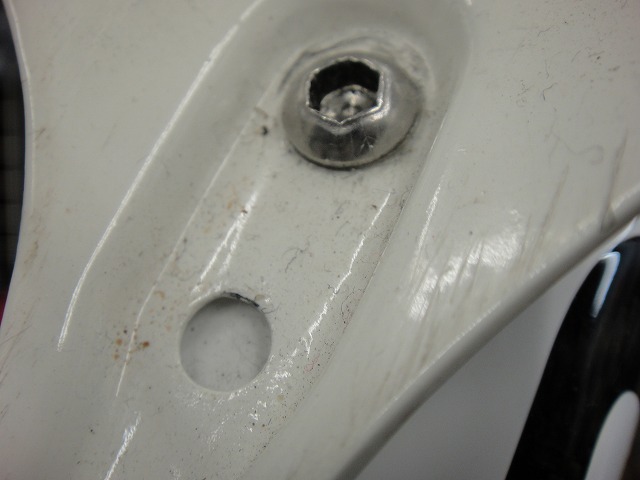
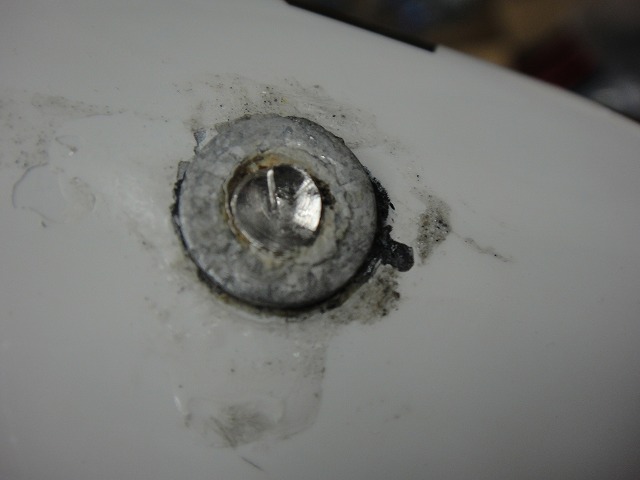
As you can see, the hex socket is completely stripped.
Even a nearly new PB Allen key won't grip it properly.
It just slips.

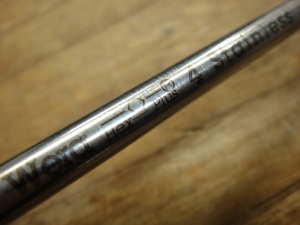
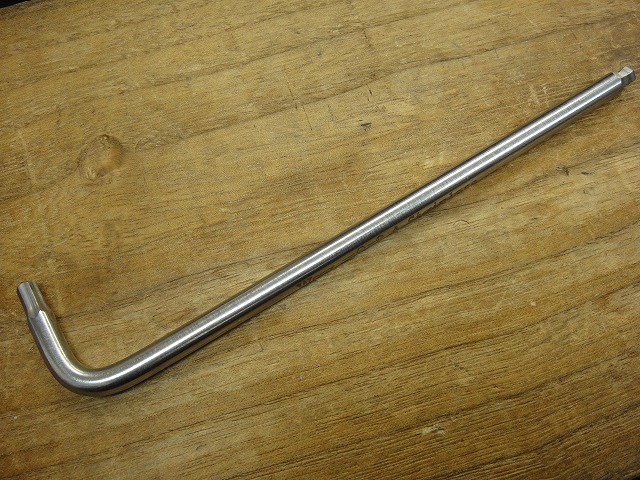
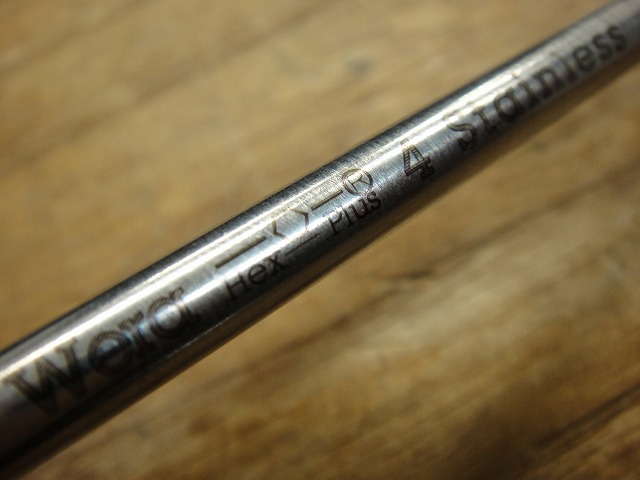
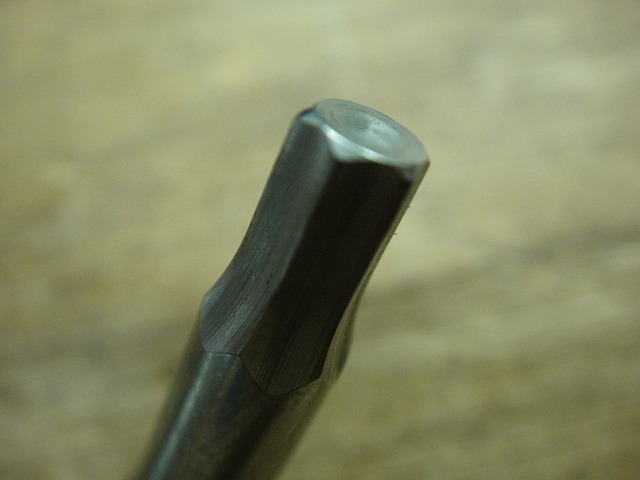
So I tried a Hex Plus Allen key from Wera (a specialty tool maker).
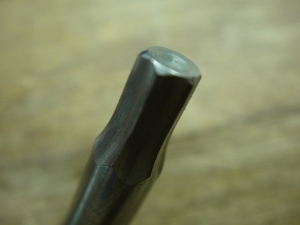
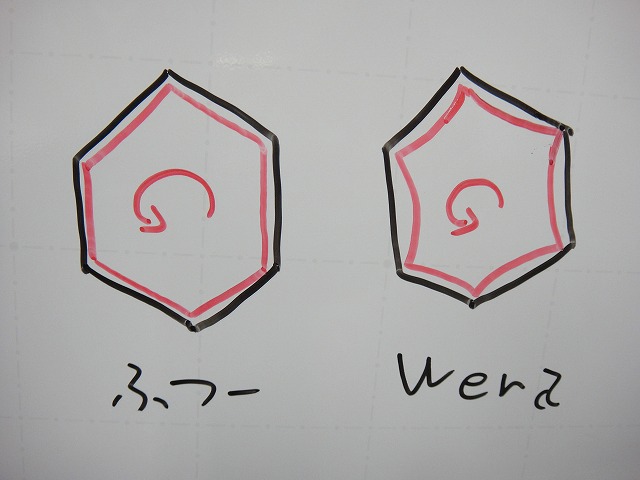
↑The tip shape is different from a standard Allen key
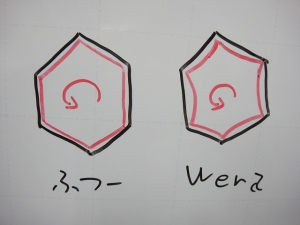
—it grabs the corners rather than the faces (it's different from Torx).
In early stages of stripping, a hex socket that won't turn with a regular Allen key
sometimes can be turned with Wera's Hex Plus.
I don't use this regularly. I only use it in emergencies.
It has a unique grip feel and turns quite firmly,
but I worry it's not good for the hex socket.
And after all this explanation,
it still didn't work.
Edit:
A reader told me they use the same method—regular PB for everyday, Wera for emergencies.
Thank you.
Using their words, there's a feeling of it "biting in."
Yes, exactly that.
You definitely get the sense that the socket is being damaged somehow.

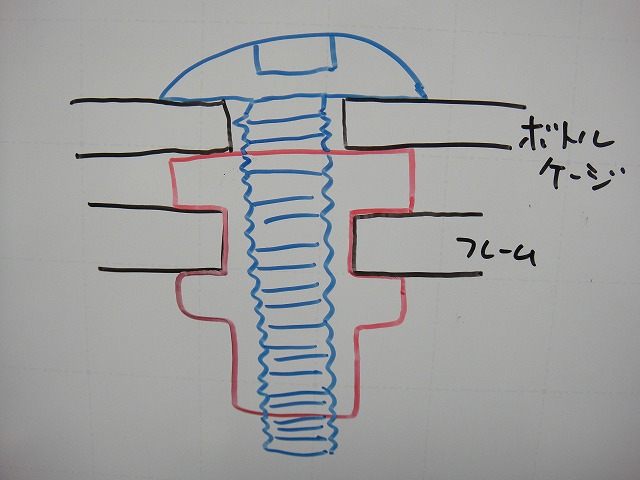
To make matters worse, the bolt head is round with low profile (truss head style),
so I can't grab it with pliers-type tools.
(If I could, I wouldn't need the Wera)
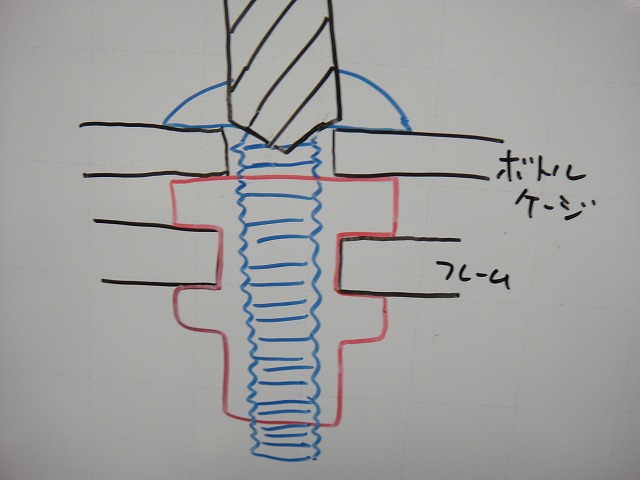
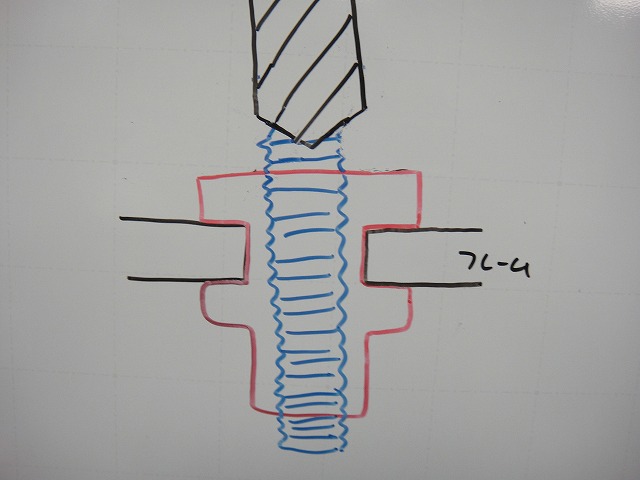
So I decided to destroy it with a drill.
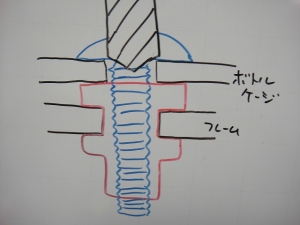
Once I drill to about this point
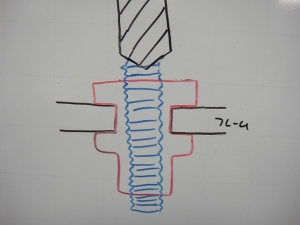
the bottle cage comes off.
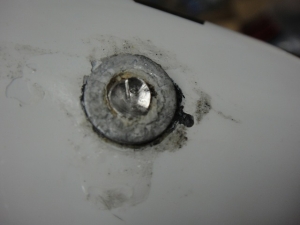
↑It came off.

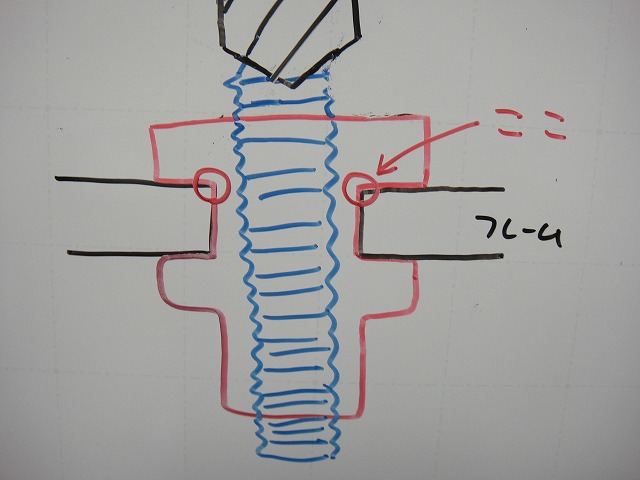
If I keep drilling,
the rest should fall inside the frame, but
the bonded bolt was steel, so it's hard to drill through.
Plus the friction heat from the drill is making smoke that smells like cyanoacrylate,
and I'm starting to feel sick from it.
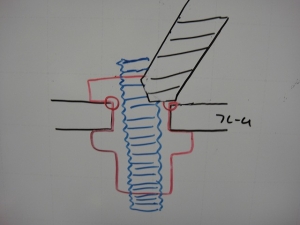
So I angled the drill and
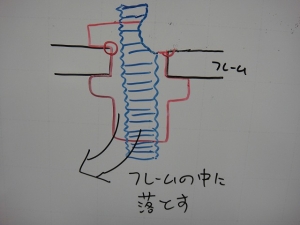
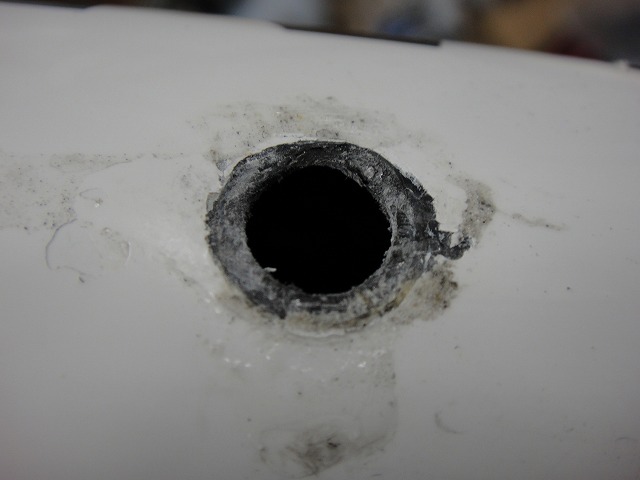
knocked it down like this.
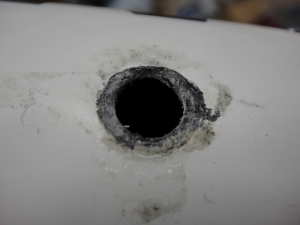
↑Down it went.
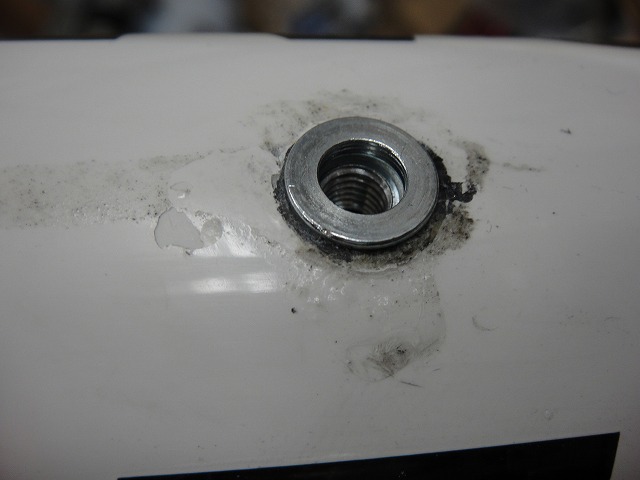
Those crusty bits around the hole are cyanoacrylate residue.
Definitely not professional work.
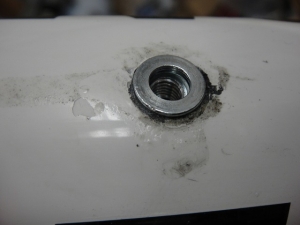
I installed a new rivet nut and
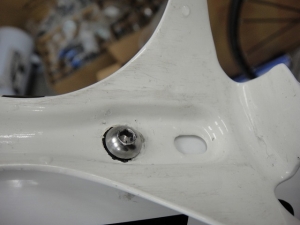
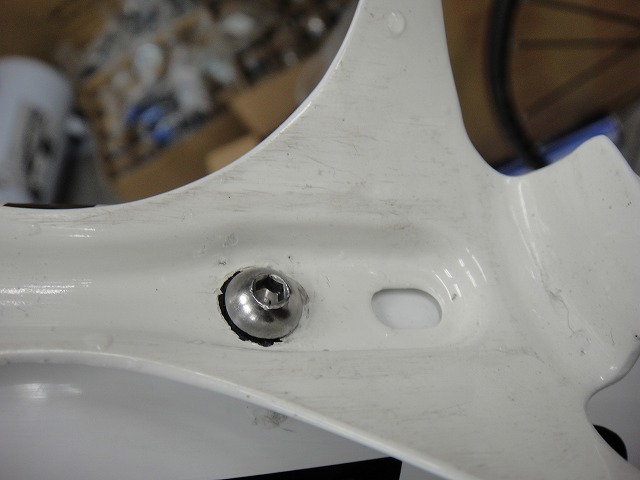
replaced the bottle cage bolt as well.
I stuck with truss head style again because of the shape of the bottle cage—
there wasn't much choice.
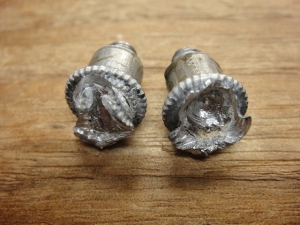
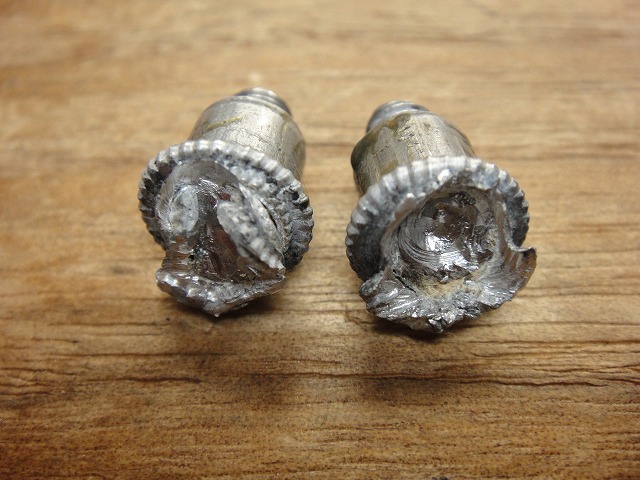
I recovered the rivet nut that had fallen inside the frame.
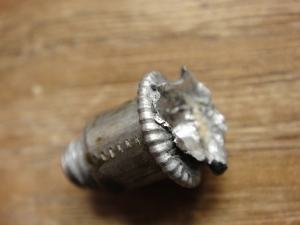
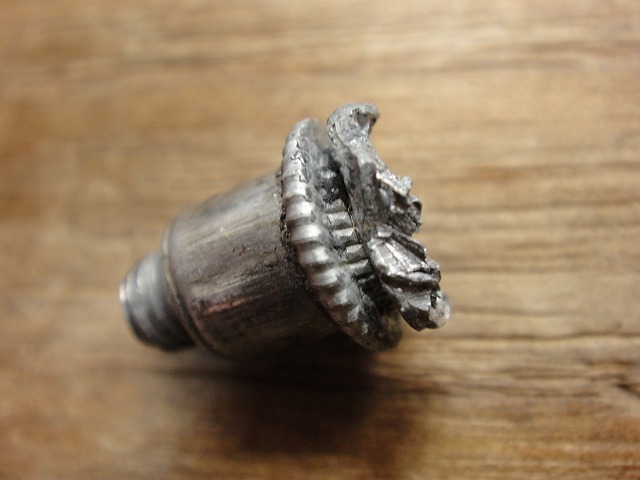
↑This side had the drill at an angle,
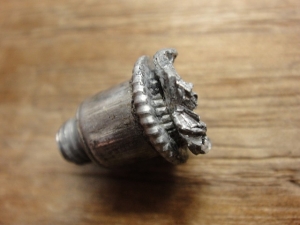
and this is the opposite side.
You can see the wall thickness of the frame.
Now for the second job.
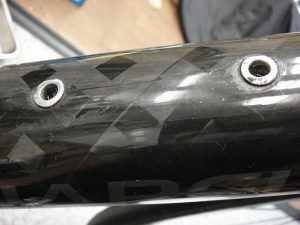
This one also came in with a spinning rivet nut.
Some shop (different from the first one) tried using Loctite on it,
but it didn't stop the spinning, supposedly.
I'll explain the cause later, but there's no way that would work.
I don't know this frame's history, but
in these cases, the authorized distributor almost always
handles it as a warranty repair.
If the shop that applied the Loctite is the one that sold it,
that's what they should do first . . .
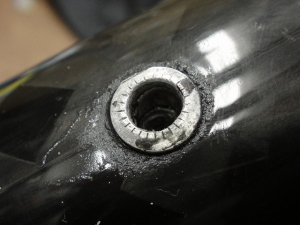
Fortunately the bolt came out, so I told the customer
there was a chance we could just re-set the rivet nut as-is,
but they decided to get a new one anyway.
The trick is to drill straight and stop the second the collar breaks off. OK?
Easy to say, but hard to do, I'm telling you.
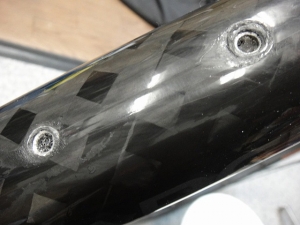
Done.
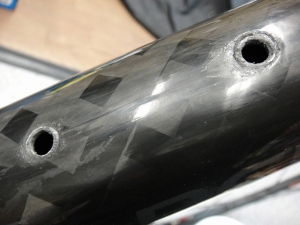
Tapped it.
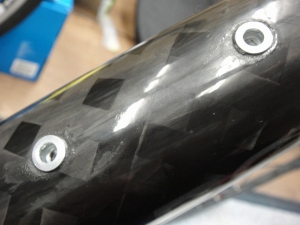
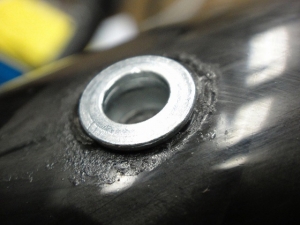
Reset it.
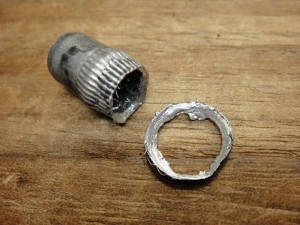
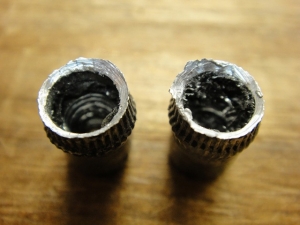
I recovered the rivet nut.
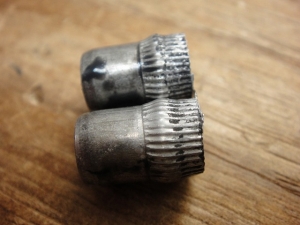
It barely deformed at all. The original setting was definitely weak.
I don't know what shop was thinking,
but both of these came in pretty much as walk-ins.
Why is that?
I've done this kind of work before—creating new bottle cage holes—
but today I'm talking about the rivet nuts used for this.
It's not related, but since I happened to do similar work on two bikes in a row,
I'll write about both together.
But first.
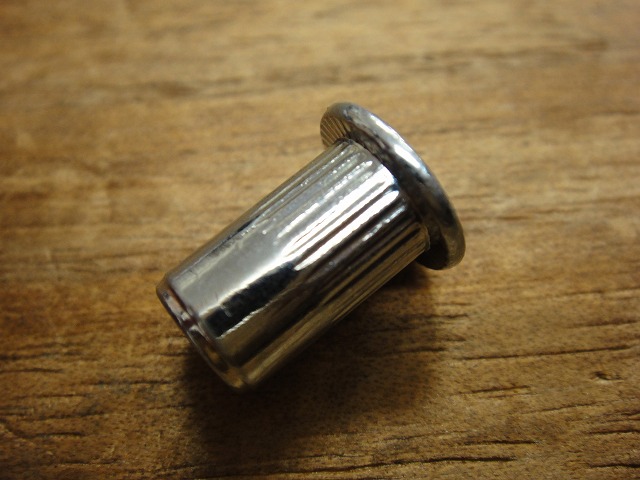

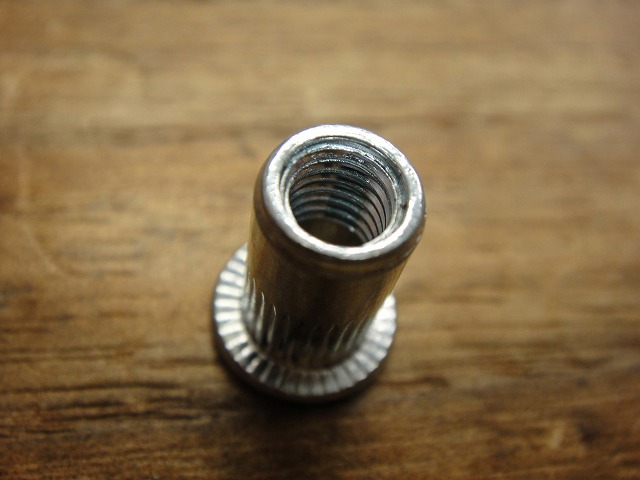
These are the threads I'm installing in the bottle cage holes.
They're called rivet nuts.
These are M5 size for bottle cage screws,
but recently I've been using M4 more often too—for Shimano electric groupset short battery mounting brackets.
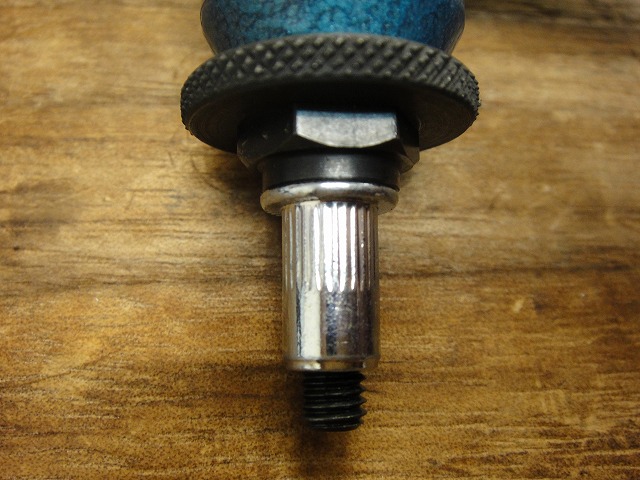
You attach this to a special tool and pull the threaded part,
and the grooved section collapses with a pop,
creating a press-fit around the back of the hole.
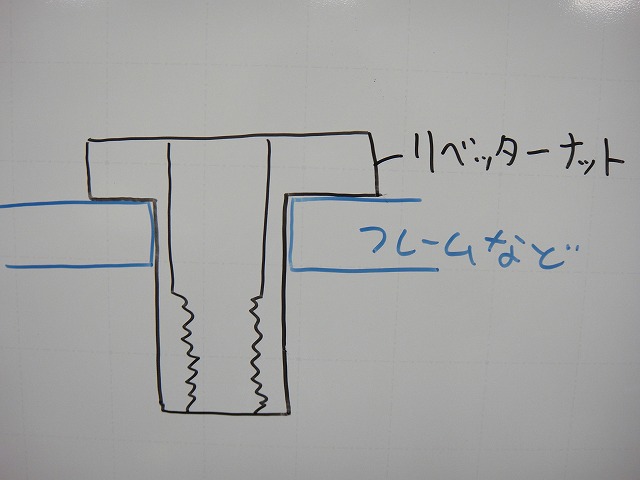
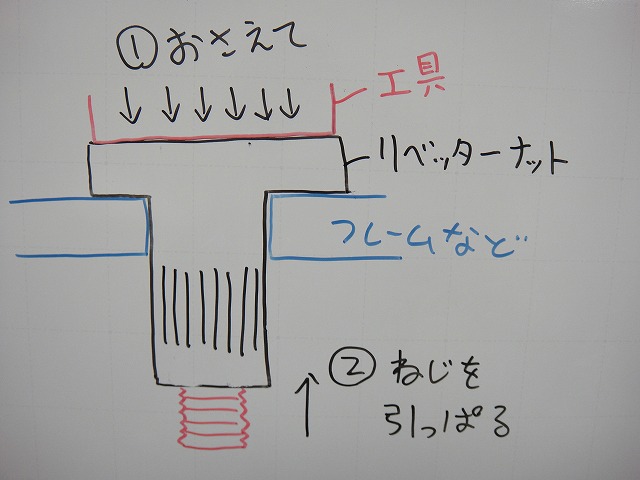
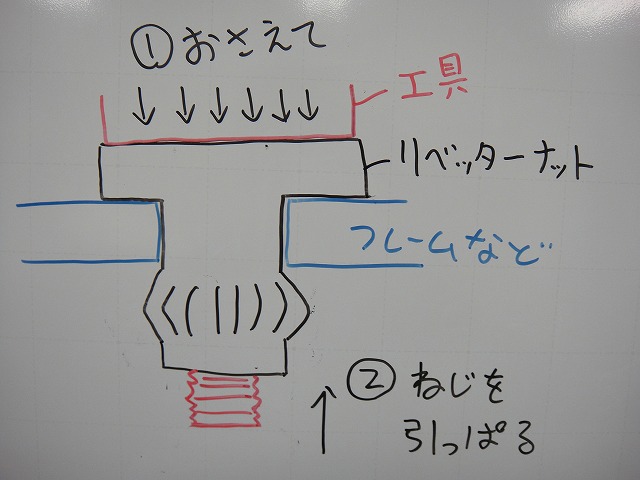
Like this.
I prepared a carbon tube with a pilot hole drilled in it.
I put the rivet nut in . . .
And set it.
Because the tube is round and thick-walled, it didn't collapse as flat as on a frame,
but on an actual frame it flattens much more nicely.
That's the introduction done.
First job.
The rivet nut on the bottle cage had completely started spinning.
That would be bad enough on its own, but some shop
tried to stop the nut from spinning by dropping cyanoacrylate on it,
and it got on the bolt threads too. Then when they tried to force it off
they stripped the hex socket.
That's the worst.
If it was just the nut spinning, it would be a much simpler fix,
but because someone made extra mistakes on top of that,
it's become a harder problem to solve.
As you can see, the hex socket is completely stripped.
Even a nearly new PB Allen key won't grip it properly.
It just slips.
So I tried a Hex Plus Allen key from Wera (a specialty tool maker).
↑The tip shape is different from a standard Allen key
—it grabs the corners rather than the faces (it's different from Torx).
In early stages of stripping, a hex socket that won't turn with a regular Allen key
sometimes can be turned with Wera's Hex Plus.
I don't use this regularly. I only use it in emergencies.
It has a unique grip feel and turns quite firmly,
but I worry it's not good for the hex socket.
And after all this explanation,
it still didn't work.
Edit:
A reader told me they use the same method—regular PB for everyday, Wera for emergencies.
Thank you.
Using their words, there's a feeling of it "biting in."
Yes, exactly that.
You definitely get the sense that the socket is being damaged somehow.
To make matters worse, the bolt head is round with low profile (truss head style),
so I can't grab it with pliers-type tools.
(If I could, I wouldn't need the Wera)
So I decided to destroy it with a drill.
Once I drill to about this point
the bottle cage comes off.
↑It came off.
If I keep drilling,
the rest should fall inside the frame, but
the bonded bolt was steel, so it's hard to drill through.
Plus the friction heat from the drill is making smoke that smells like cyanoacrylate,
and I'm starting to feel sick from it.

So I angled the drill and

knocked it down like this.
↑Down it went.
Those crusty bits around the hole are cyanoacrylate residue.
Definitely not professional work.
I installed a new rivet nut and
replaced the bottle cage bolt as well.
I stuck with truss head style again because of the shape of the bottle cage—
there wasn't much choice.
I recovered the rivet nut that had fallen inside the frame.

↑This side had the drill at an angle,
and this is the opposite side.
You can see the wall thickness of the frame.
Now for the second job.

This one also came in with a spinning rivet nut.
Some shop (different from the first one) tried using Loctite on it,
but it didn't stop the spinning, supposedly.
I'll explain the cause later, but there's no way that would work.
I don't know this frame's history, but
in these cases, the authorized distributor almost always
handles it as a warranty repair.
If the shop that applied the Loctite is the one that sold it,
that's what they should do first . . .

Fortunately the bolt came out, so I told the customer
there was a chance we could just re-set the rivet nut as-is,
but they decided to get a new one anyway.
The trick is to drill straight and stop the second the collar breaks off. OK?
Easy to say, but hard to do, I'm telling you.
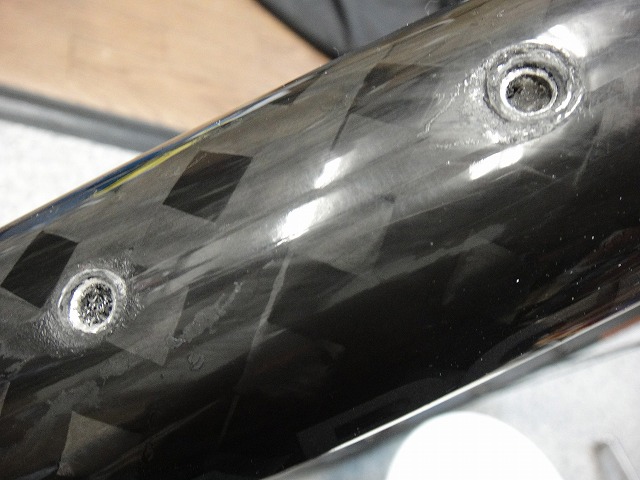
Done.
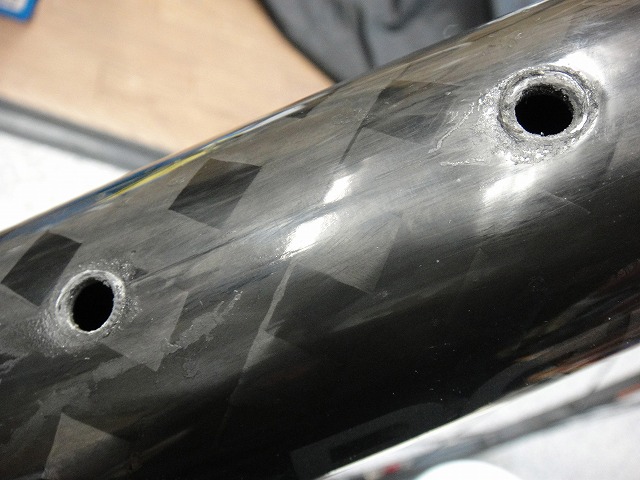
Tapped it.
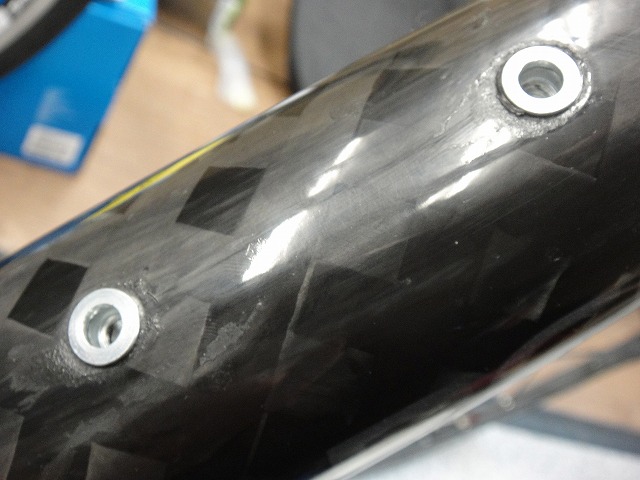

Reset it.

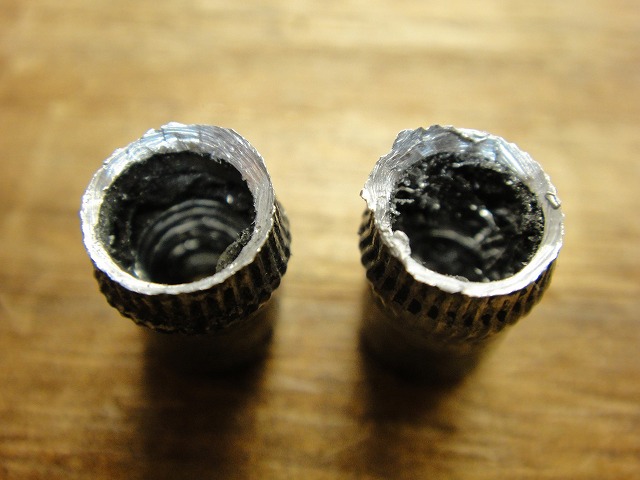
I recovered the rivet nut.
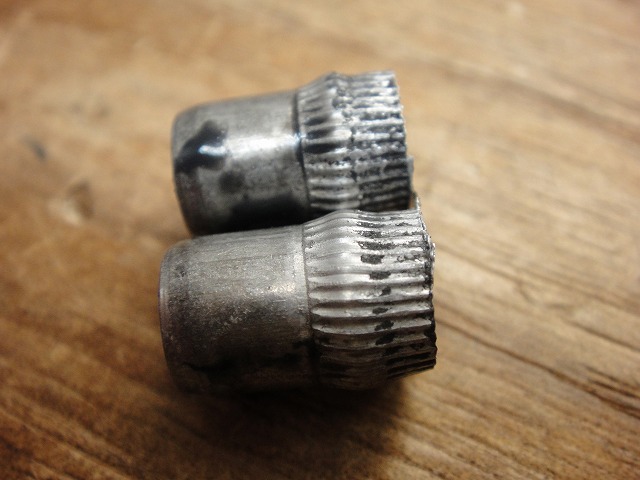
It barely deformed at all. The original setting was definitely weak.
I don't know what shop was thinking,
but both of these came in pretty much as walk-ins.
Why is that?