When I had a day off recently

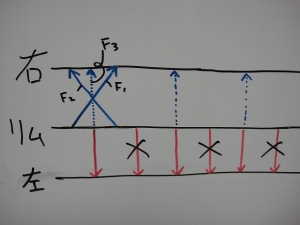
↑I posted a sketch like this,
and I meant to write about it in detail, but work kept me too busy.
I received a comment asking "Is this a comparison of 2:1 lacing patterns?"
and that's exactly right.
In my view, for example, with a rear wheel like 16:8 24H,
you're supporting the non-drive side with only 8 spokes,
and it's unthinkable to lace something like that with J-bend spokes.
It might not break right away,
but the risk of spoke failure is far too great.
Second, if you use 2:1 lacing, the spoke tension on left and right becomes roughly equal,
but since the number of spokes supporting each side of the wheel differs,
I believe the deformation under input from left and right wouldn't be the same either.
These are the "major factors" from a negative perspective,
but today I want to discuss the "minor factors" in the negative view of 2:1 lacing.
The point is that there are basically two types of 2:1 lacing.
And what I thought was a minor factor turned out not to be,
so the F3 spoke unbalanced-type 2:1 lacing really is no good!
which is where we're headed, but...
Right now at the shop we're holding
one hand-built 2:1 laced wheel and
one factory-built 2:1 laced wheel,
and the next article and the article after that will use those as real examples.
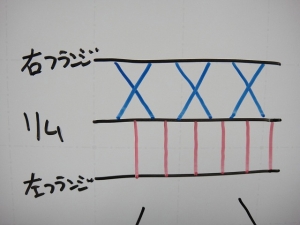
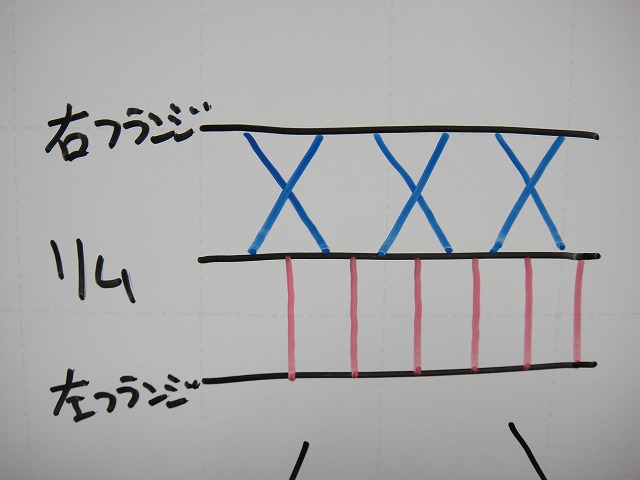
I'll draw a rear wheel with equal spokes on both sides and radial lacing on the non-drive side
in a hub-rim-hub wheel flat pattern diagram.
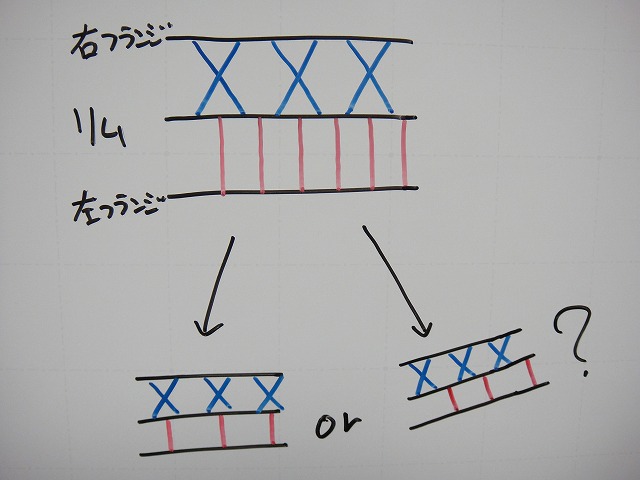
From here, if you simply thin out the non-drive side spokes alternately,
(balance aside) you get a 2:1 laced wheel.
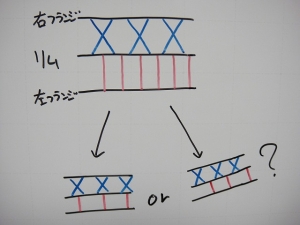
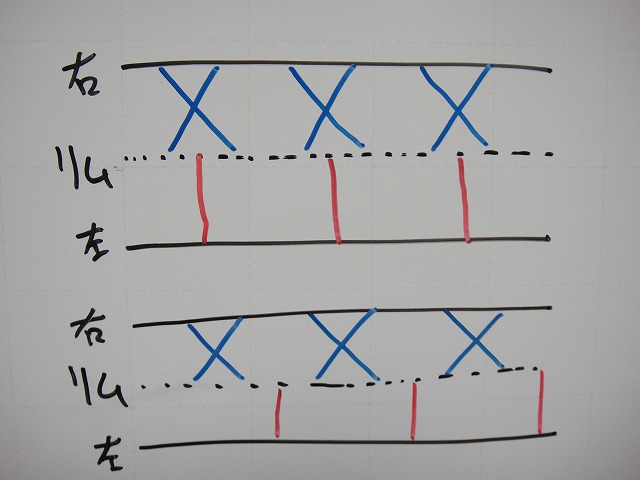
In that case, there are two patterns.
One where you keep the spoke on the far side of the final cross of the drive-side tangential lacing
(top diagram, bottom left),
and the opposite (same, right side).
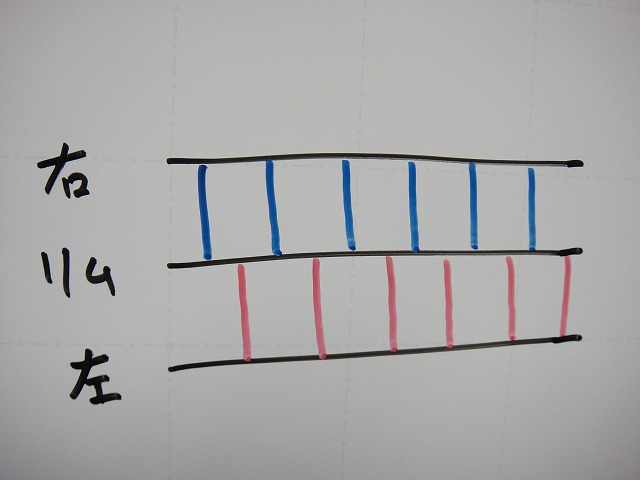
Are these really the same from a balance perspective?

They would be the same if it were a radial-radial rear wheel, but...

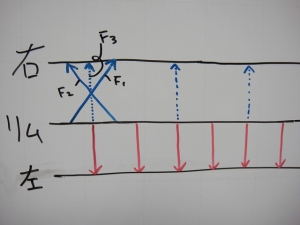
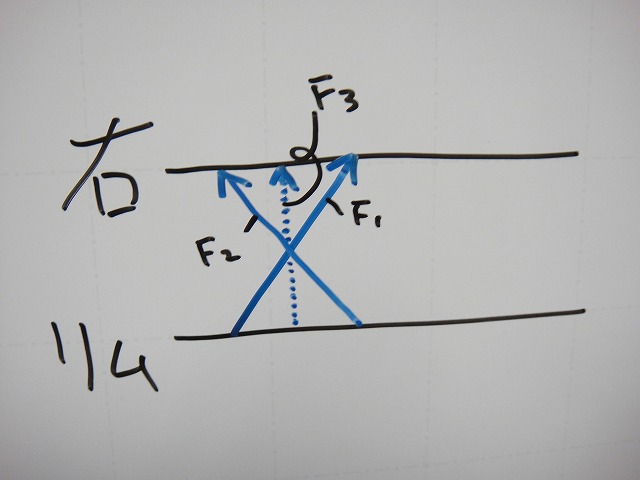
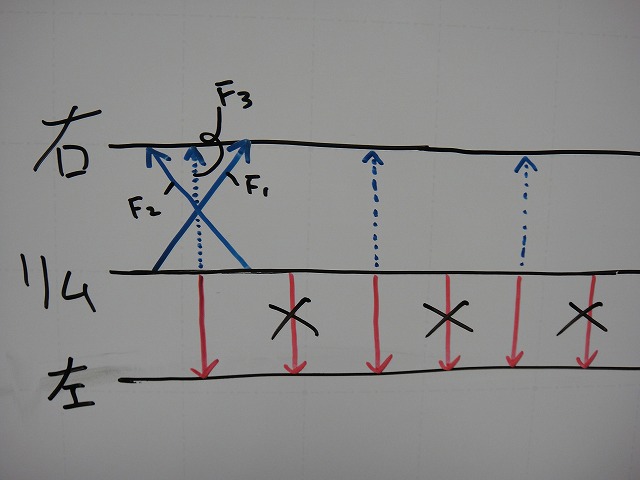
With tangential lacing, the radial direction passing through the cross of the two final-crossing spokes
becomes the resultant of the pulling direction.
↑This holds true when spoke thickness is the same.
In cases of "single-flange different-diameter lacing"—where you think
"when the freewheel body is strongly squeezed forward by pedaling,
only spokes in the porcupine direction really exist,
so let's make only those spokes thicker"—
this doesn't hold.
Single-flange different-diameter lacing is also a bad method (I've actually done it in the past),
but writing about that would get extremely long, so I'll cover it another time.
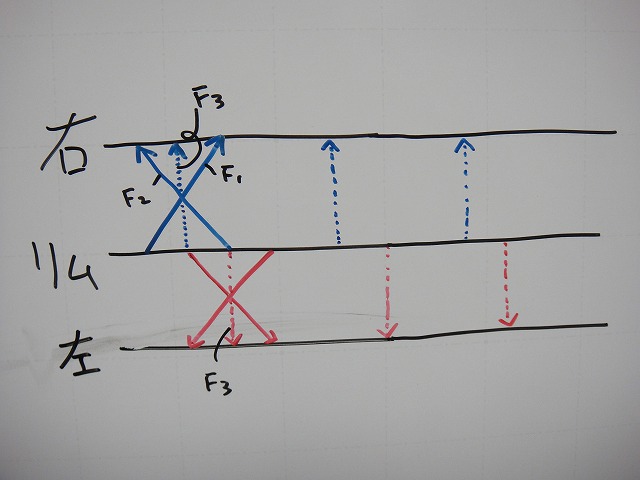
So I'll call the spokes in the final cross F1 and F2 respectively.
F3, the resultant of F1 and F2, doesn't exist as an actual spoke,
but I'll treat it as a real spoke by calling it the "F3 spoke."
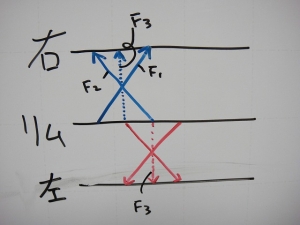
If the non-drive side is also tangentially laced,
you can also define an F3 spoke for the non-drive side.
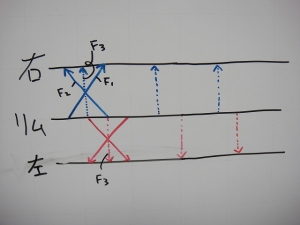
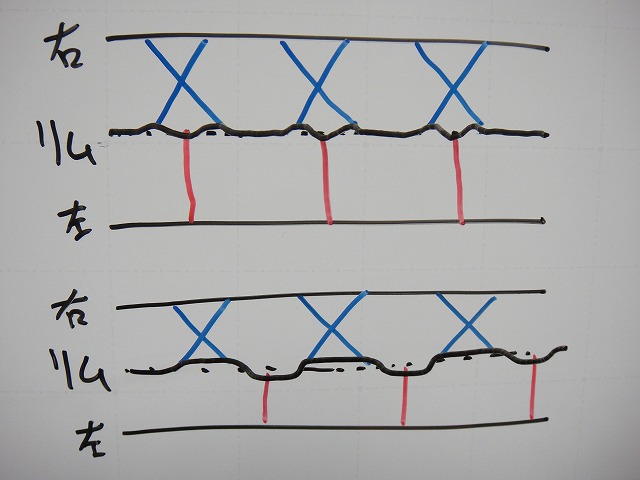
Slightly off topic, but the virtual rim hole position of the F3 spoke
is not evenly spaced. It looks something like the diagram above.
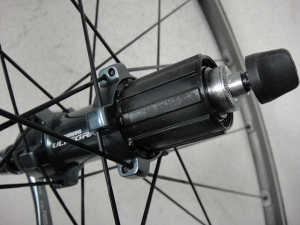
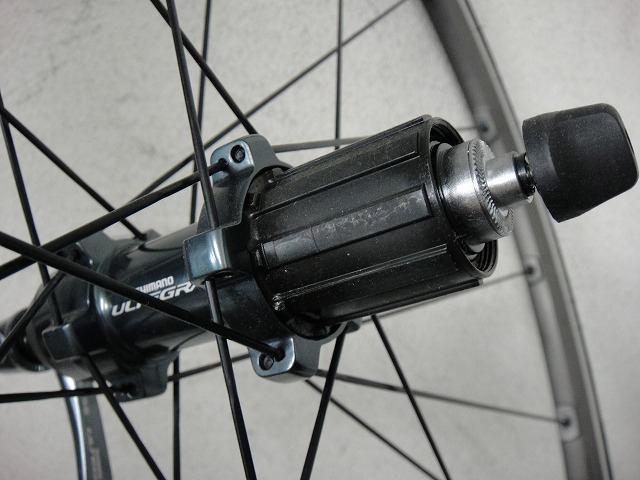
↑This is my personal WH-6800.
My definition of a hub's hole count is "the number of locations where spokes emerge."
This rear wheel has 20 spokes total on both sides,
but spokes emerge from 10 locations,
so I call this hub a "10-hole 20-spoke" hub.
(I need this definition for spoke length calculations.)
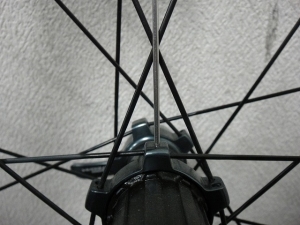
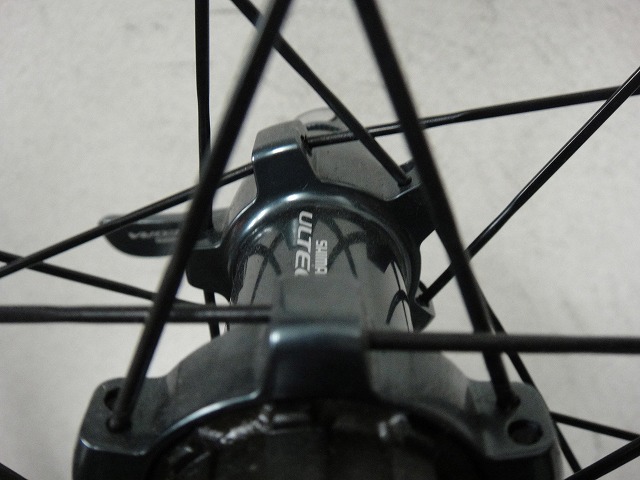
I placed silver spokes from the final cross on a radial line.
This is the visualized F3 spoke.
So in this case, the F3 spoke
is radial-laced spokes emerging from one side's 5 holes.
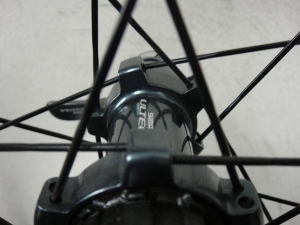
↑And looking at the base of the opposite-side F3 spoke,
phase-wise it's not at exactly half the angle, but slightly offset.
So a left-right tangentially-laced wheel,
when viewed by F3 spokes, becomes pair-spoke phase radial lacing.
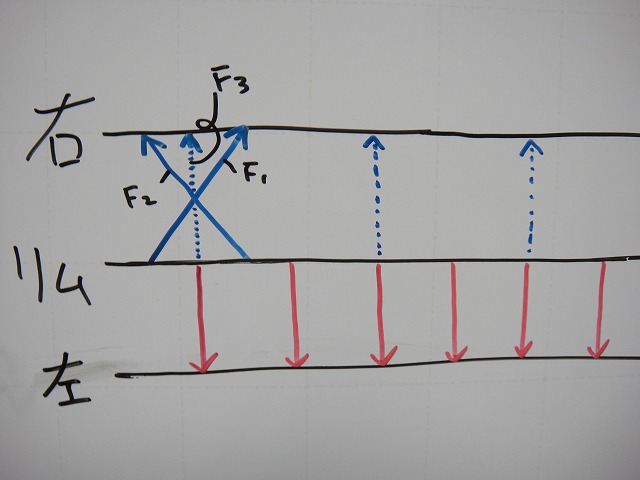
Getting back to the main point, to sum it up:
if you're going to thin out half the spokes from a rear wheel with
drive-side tangential lacing and non-drive-side radial lacing with equal spoke counts,
keeping the spoke that's phase-balanced with the drive-side F3 spoke
gives better lateral true-up balance.
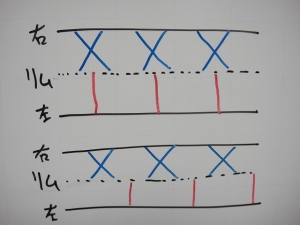
↑I'll call the top of the diagram "F3 spoke balanced-type 2:1 lacing"
and the bottom "F3 spoke unbalanced-type 2:1 lacing."
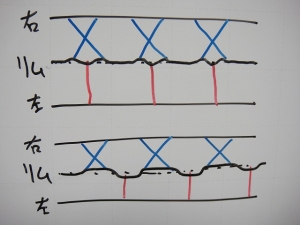
From experience, the F3 spoke balanced-type definitely
allows for finer lateral true-ups.
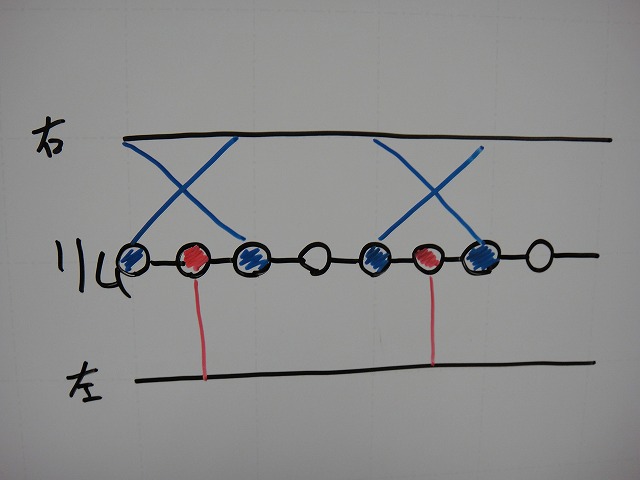
However, in this case you're only thinning out half of the non-drive side
from a rear wheel with equal spoke counts (for example, 16:16 32H),
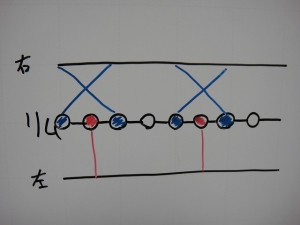
↑so you end up with unused holes on the rim side.
If hub flange holes go unused, there's no water infiltration problem,
but on the rim side it's a nuisance.
Considering phase offset and other factors, the most practically sound
hand-built 2:1 laced wheel combination appears to be
a 24H rim / 32H hub.
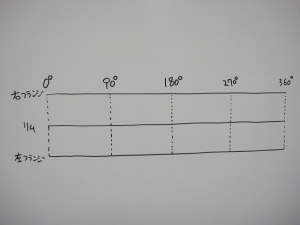
I decided to draw that properly in a flat diagram for the first time in a while.
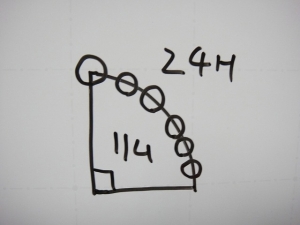
I'll prepare a 24H rim with no hole offset.
Since it's 24H, there are 6 rim holes in a 90° section.
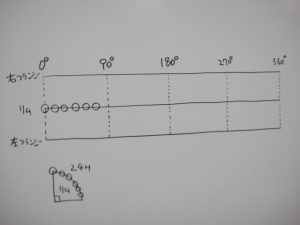
Done.
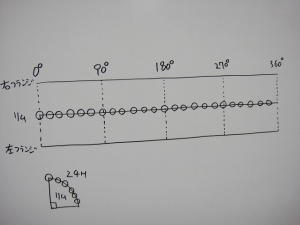
I repeated it 4 times with rotation.
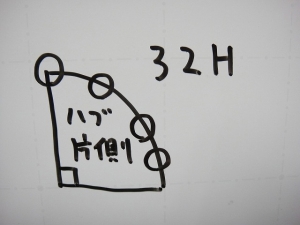
Next I'll draw in the hub-side holes and spokes.
I want 0-cross on the non-drive side as radial, so I'll draw from the non-drive side.
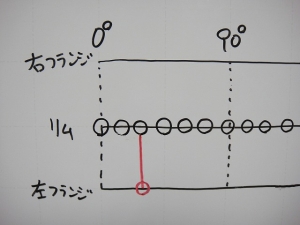
↑Since I know the answer, it's here.
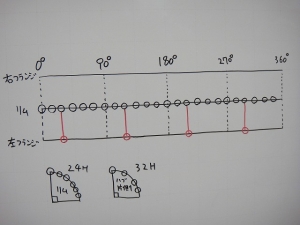
I repeated it every 90°. At this point it's still only 4H.
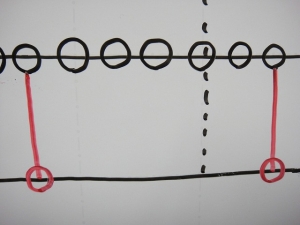
The remaining 4H would be exactly halfway between the 4H already drawn,
and at that phase there are exactly rim-side holes.
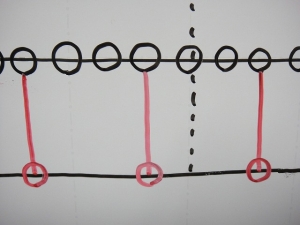
Right here.
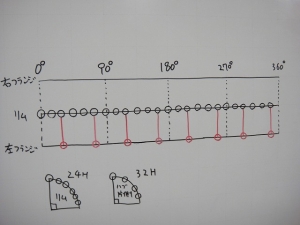
The non-drive side 8H radial lacing is now drawn.
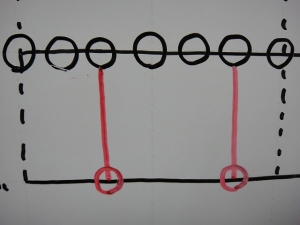
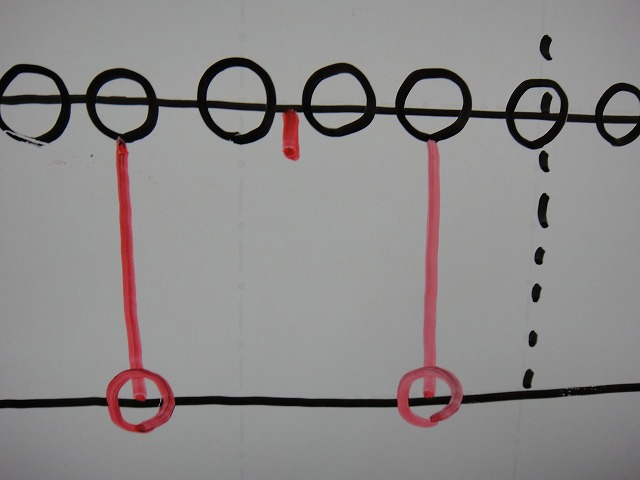
If I draw the midpoint phase of the non-drive side 8H I just drew (on the hub side),
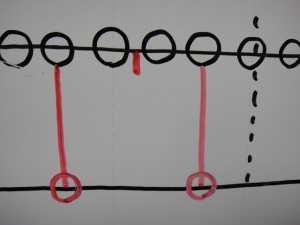
it's here.
There is no corresponding hole on the rim side.
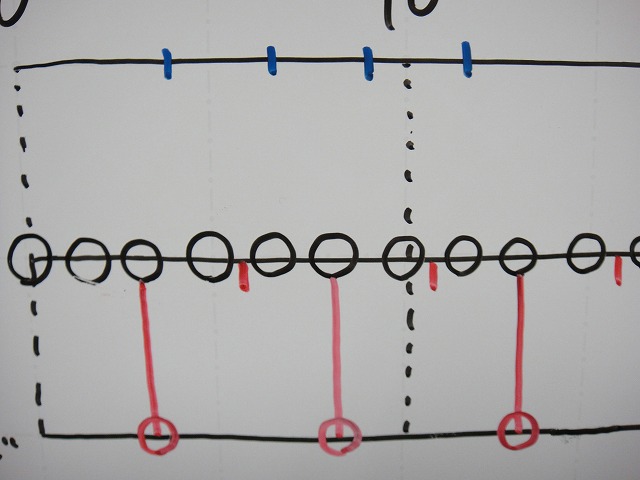
Moving on to drawing the drive-side hole phase,
since this is a 16:16 equal-hole hub,
the phase would be the midpoint of this.
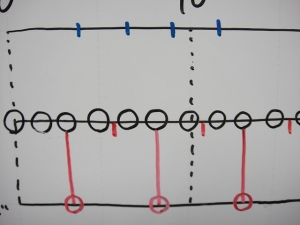
↑You get this.
From none of these hub holes can you do 0-cross and get radial lacing to a rim hole.
This is unusual for a normal wheel, but it's another example of
"0-cross isn't always radial."
To put it another way, if you draw a perpendicular line from a rim hole on the rim line,
it doesn't pass through any of the drive-side hub holes.
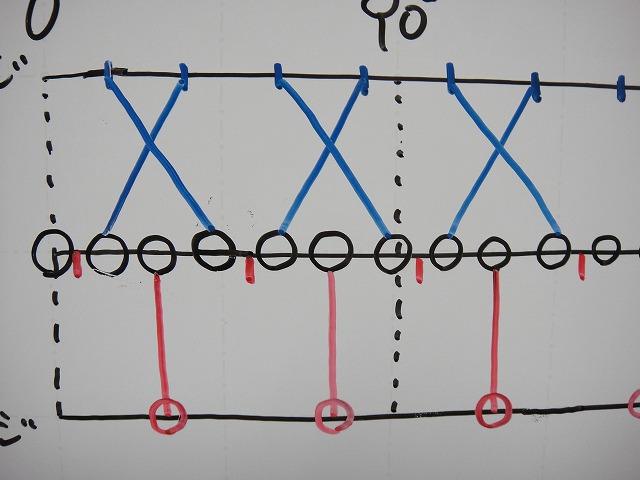
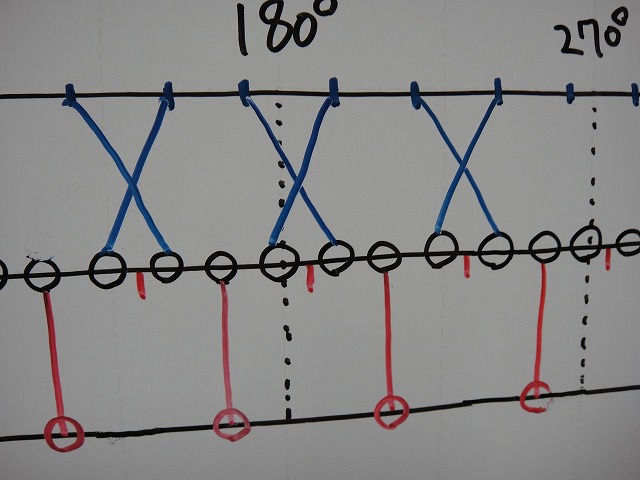
From here, I'll draw both F3 spoke balanced-type and unbalanced-type tangential lacing.
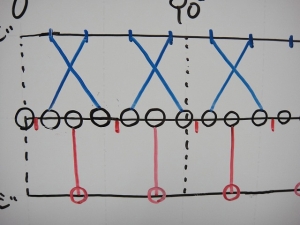
↑Balanced type
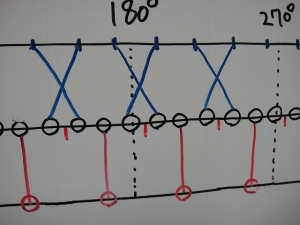
↑Unbalanced type
With this 24H rim / 32H hub 2:1 lacing, though,
it's not as simple as saying
"therefore, F3 spoke balanced-type is superior."
First, with the unbalanced type, fine lateral wobbles can't be fully corrected.
If they don't show up in brake feel when trueing,
the cynical view that "undetectable = effectively doesn't exist" is fine.
With the balanced type, meanwhile, the tangential lacing's final cross gets larger,
so you can't reduce the left-right spoke tension difference as much as the unbalanced type.
However, if you incorporate super high-low flanges,
I think that point can mostly be covered.
Also, spoke length calculation is slightly more tedious with the balanced type.
Either way, with hand-built wheels,
using equal spoke counts on both sides solves all these issues,
so there's no need to be fixated on 2:1 lacing.
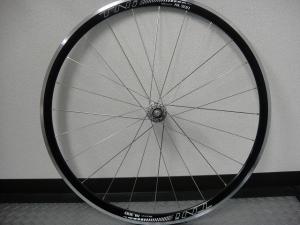
↑With one I built in the past that still has photos,
it's a 24H rim / 32H hub 2:1 laced F3 spoke unbalanced type.
The XR300 rim is quite strong against deformation from spoke tension,
but I still wouldn't try to sell one of these.
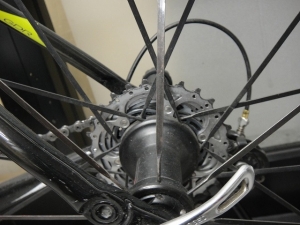
↑This is a Fulcrum Racing 3,
and Fulcrum uses F3 spoke balanced-type lacing.
The initial models had evenly-spaced rim holes,
while current models have unevenly-spaced holes, but
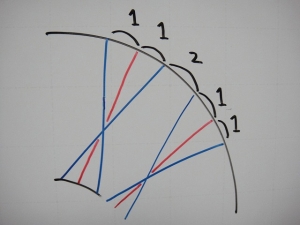
the spacing gaps are exactly double the dense sections,
so with a 21H 2:1 lacing, it's "a rear wheel made by thinning out half the non-drive side from a 28H hub."
Addendum:
"a rear wheel made by thinning out half the non-drive side from a 28H hub,"
but I had the spokes to thin out wrong.
Thank you for pointing that out in the comments.
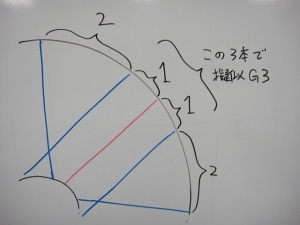
↑If you're thinning out spokes at rest positions,
it comes out like this instead.
This works because they've put a lot of thought into it:
a sturdy rim, straight spokes,
on some models aluminum spokes,
super high-low flanges (I won't go into detail, but the drive-side spoke is nearly tangent to the hub flange),
F3 spoke balanced-type, and so on.
Since most of these can't be realized in hand-building (at this level),
you should think of 2:1 lacing as the privilege of purpose-designed factory-built wheels.
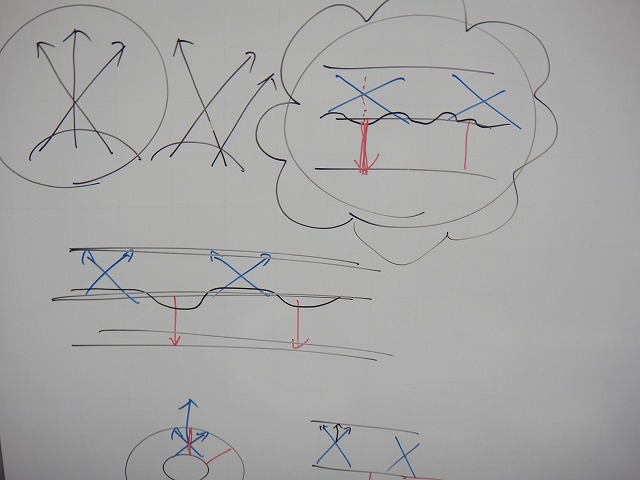
↑I posted a sketch like this,
and I meant to write about it in detail, but work kept me too busy.
I received a comment asking "Is this a comparison of 2:1 lacing patterns?"
and that's exactly right.
In my view, for example, with a rear wheel like 16:8 24H,
you're supporting the non-drive side with only 8 spokes,
and it's unthinkable to lace something like that with J-bend spokes.
It might not break right away,
but the risk of spoke failure is far too great.
Second, if you use 2:1 lacing, the spoke tension on left and right becomes roughly equal,
but since the number of spokes supporting each side of the wheel differs,
I believe the deformation under input from left and right wouldn't be the same either.
These are the "major factors" from a negative perspective,
but today I want to discuss the "minor factors" in the negative view of 2:1 lacing.
The point is that there are basically two types of 2:1 lacing.
And what I thought was a minor factor turned out not to be,
so the F3 spoke unbalanced-type 2:1 lacing really is no good!
which is where we're headed, but...
Right now at the shop we're holding
one hand-built 2:1 laced wheel and
one factory-built 2:1 laced wheel,
and the next article and the article after that will use those as real examples.
I'll draw a rear wheel with equal spokes on both sides and radial lacing on the non-drive side
in a hub-rim-hub wheel flat pattern diagram.
From here, if you simply thin out the non-drive side spokes alternately,
(balance aside) you get a 2:1 laced wheel.
In that case, there are two patterns.
One where you keep the spoke on the far side of the final cross of the drive-side tangential lacing
(top diagram, bottom left),
and the opposite (same, right side).
Are these really the same from a balance perspective?
They would be the same if it were a radial-radial rear wheel, but...
With tangential lacing, the radial direction passing through the cross of the two final-crossing spokes
becomes the resultant of the pulling direction.
↑This holds true when spoke thickness is the same.
In cases of "single-flange different-diameter lacing"—where you think
"when the freewheel body is strongly squeezed forward by pedaling,
only spokes in the porcupine direction really exist,
so let's make only those spokes thicker"—
this doesn't hold.
Single-flange different-diameter lacing is also a bad method (I've actually done it in the past),
but writing about that would get extremely long, so I'll cover it another time.
So I'll call the spokes in the final cross F1 and F2 respectively.
F3, the resultant of F1 and F2, doesn't exist as an actual spoke,
but I'll treat it as a real spoke by calling it the "F3 spoke."

If the non-drive side is also tangentially laced,
you can also define an F3 spoke for the non-drive side.
Slightly off topic, but the virtual rim hole position of the F3 spoke
is not evenly spaced. It looks something like the diagram above.
↑This is my personal WH-6800.
My definition of a hub's hole count is "the number of locations where spokes emerge."
This rear wheel has 20 spokes total on both sides,
but spokes emerge from 10 locations,
so I call this hub a "10-hole 20-spoke" hub.
(I need this definition for spoke length calculations.)

I placed silver spokes from the final cross on a radial line.
This is the visualized F3 spoke.
So in this case, the F3 spoke
is radial-laced spokes emerging from one side's 5 holes.
↑And looking at the base of the opposite-side F3 spoke,
phase-wise it's not at exactly half the angle, but slightly offset.
So a left-right tangentially-laced wheel,
when viewed by F3 spokes, becomes pair-spoke phase radial lacing.
Getting back to the main point, to sum it up:
if you're going to thin out half the spokes from a rear wheel with
drive-side tangential lacing and non-drive-side radial lacing with equal spoke counts,
keeping the spoke that's phase-balanced with the drive-side F3 spoke
gives better lateral true-up balance.
↑I'll call the top of the diagram "F3 spoke balanced-type 2:1 lacing"
and the bottom "F3 spoke unbalanced-type 2:1 lacing."
From experience, the F3 spoke balanced-type definitely
allows for finer lateral true-ups.
However, in this case you're only thinning out half of the non-drive side
from a rear wheel with equal spoke counts (for example, 16:16 32H),
↑so you end up with unused holes on the rim side.
If hub flange holes go unused, there's no water infiltration problem,
but on the rim side it's a nuisance.
Considering phase offset and other factors, the most practically sound
hand-built 2:1 laced wheel combination appears to be
a 24H rim / 32H hub.

I decided to draw that properly in a flat diagram for the first time in a while.
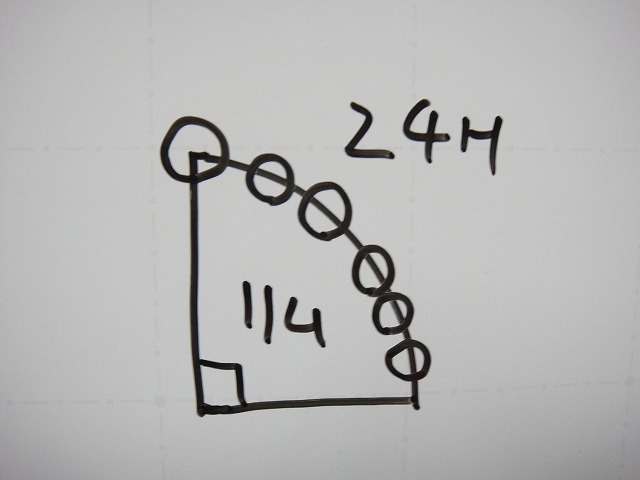
I'll prepare a 24H rim with no hole offset.
Since it's 24H, there are 6 rim holes in a 90° section.
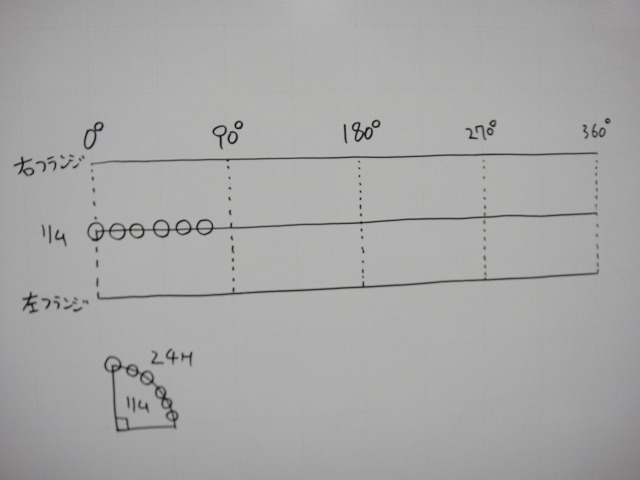
Done.
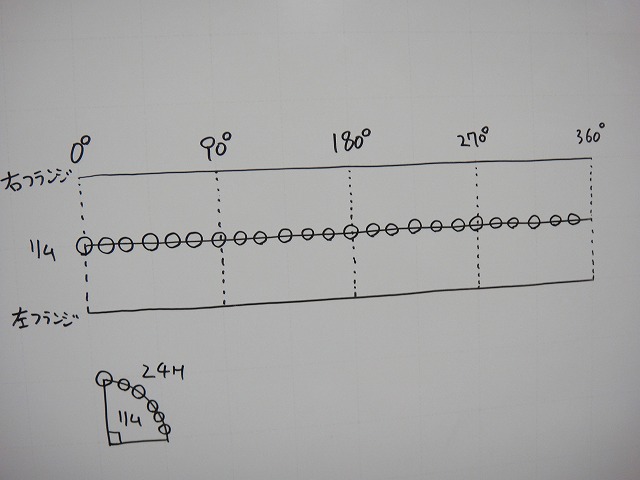
I repeated it 4 times with rotation.
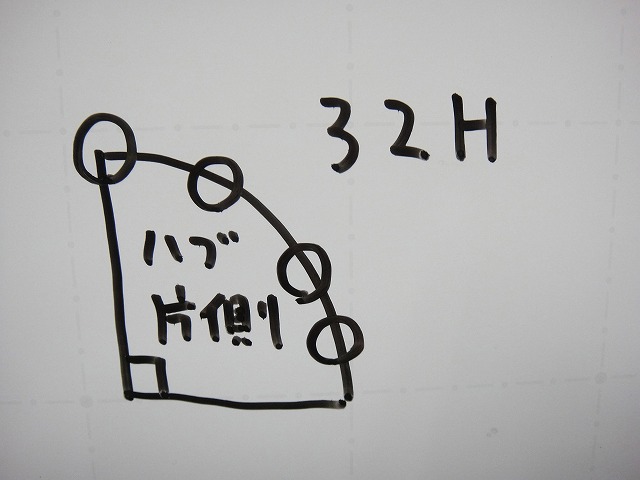
Next I'll draw in the hub-side holes and spokes.
I want 0-cross on the non-drive side as radial, so I'll draw from the non-drive side.
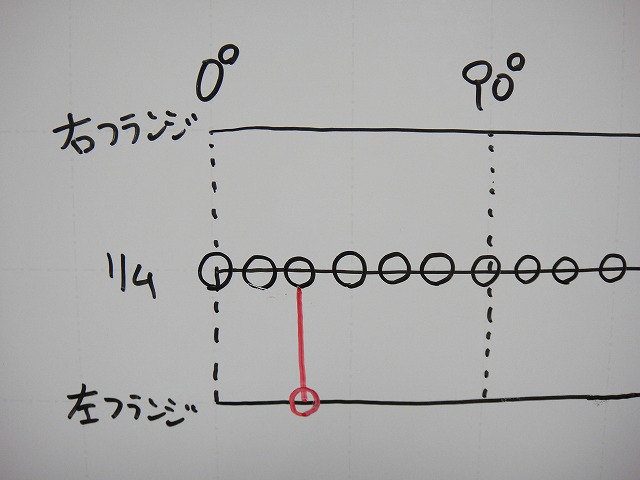
↑Since I know the answer, it's here.
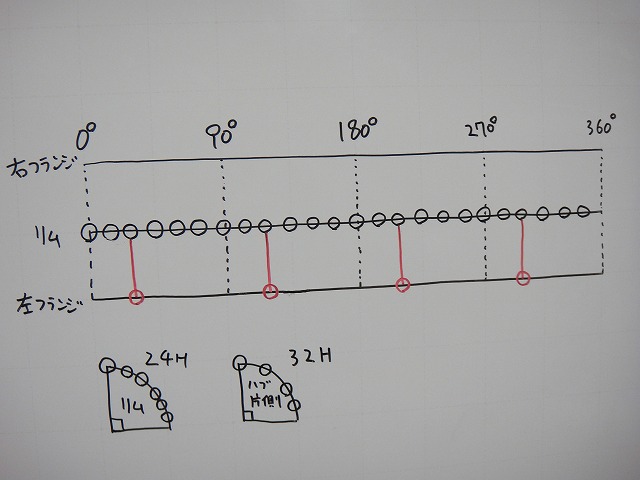
I repeated it every 90°. At this point it's still only 4H.

The remaining 4H would be exactly halfway between the 4H already drawn,
and at that phase there are exactly rim-side holes.
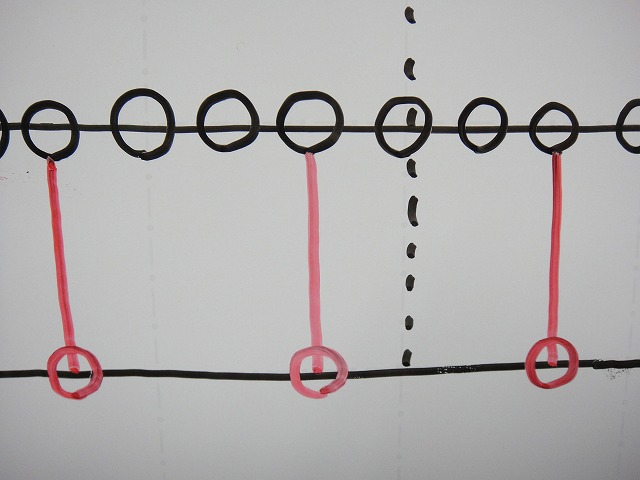
Right here.
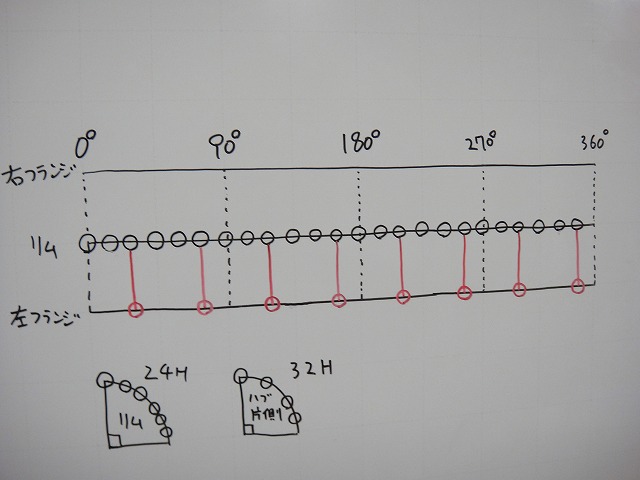
The non-drive side 8H radial lacing is now drawn.

If I draw the midpoint phase of the non-drive side 8H I just drew (on the hub side),
it's here.
There is no corresponding hole on the rim side.
Moving on to drawing the drive-side hole phase,
since this is a 16:16 equal-hole hub,
the phase would be the midpoint of this.
↑You get this.
From none of these hub holes can you do 0-cross and get radial lacing to a rim hole.
This is unusual for a normal wheel, but it's another example of
"0-cross isn't always radial."
To put it another way, if you draw a perpendicular line from a rim hole on the rim line,
it doesn't pass through any of the drive-side hub holes.
From here, I'll draw both F3 spoke balanced-type and unbalanced-type tangential lacing.
↑Balanced type
↑Unbalanced type
With this 24H rim / 32H hub 2:1 lacing, though,
it's not as simple as saying
"therefore, F3 spoke balanced-type is superior."
First, with the unbalanced type, fine lateral wobbles can't be fully corrected.
If they don't show up in brake feel when trueing,
the cynical view that "undetectable = effectively doesn't exist" is fine.
With the balanced type, meanwhile, the tangential lacing's final cross gets larger,
so you can't reduce the left-right spoke tension difference as much as the unbalanced type.
However, if you incorporate super high-low flanges,
I think that point can mostly be covered.
Also, spoke length calculation is slightly more tedious with the balanced type.
Either way, with hand-built wheels,
using equal spoke counts on both sides solves all these issues,
so there's no need to be fixated on 2:1 lacing.
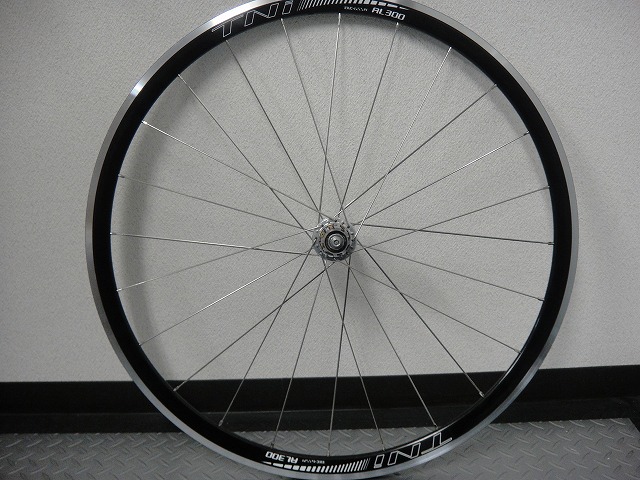
↑With one I built in the past that still has photos,
it's a 24H rim / 32H hub 2:1 laced F3 spoke unbalanced type.
The XR300 rim is quite strong against deformation from spoke tension,
but I still wouldn't try to sell one of these.
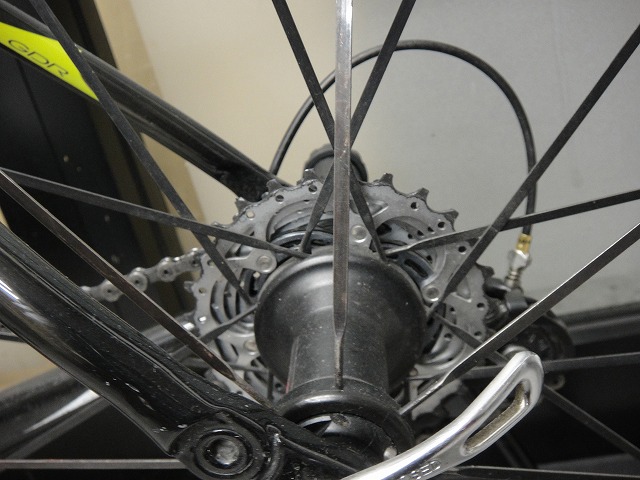
↑This is a Fulcrum Racing 3,
and Fulcrum uses F3 spoke balanced-type lacing.
The initial models had evenly-spaced rim holes,
while current models have unevenly-spaced holes, but
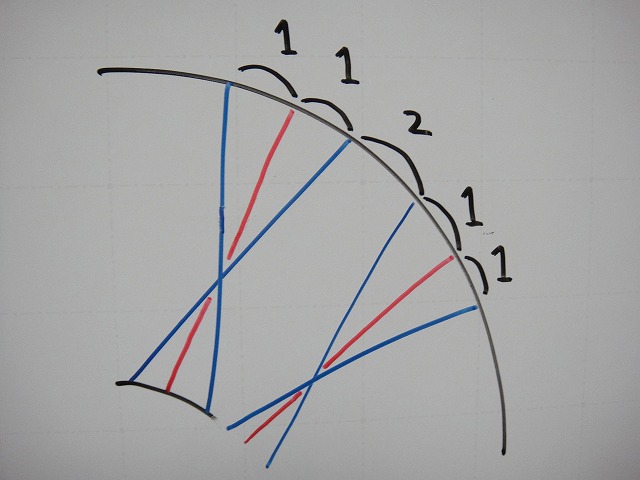
the spacing gaps are exactly double the dense sections,
so with a 21H 2:1 lacing, it's "a rear wheel made by thinning out half the non-drive side from a 28H hub."
Addendum:
"a rear wheel made by thinning out half the non-drive side from a 28H hub,"
but I had the spokes to thin out wrong.
Thank you for pointing that out in the comments.
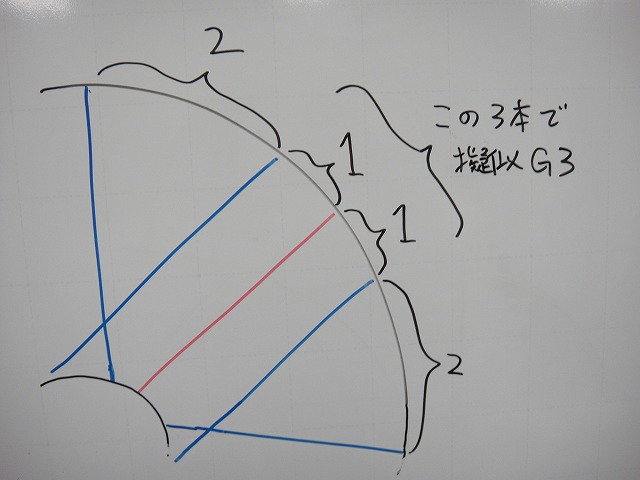
↑If you're thinning out spokes at rest positions,
it comes out like this instead.
This works because they've put a lot of thought into it:
a sturdy rim, straight spokes,
on some models aluminum spokes,
super high-low flanges (I won't go into detail, but the drive-side spoke is nearly tangent to the hub flange),
F3 spoke balanced-type, and so on.
Since most of these can't be realized in hand-building (at this level),
you should think of 2:1 lacing as the privilege of purpose-designed factory-built wheels.