Another day with wheels (and so on).
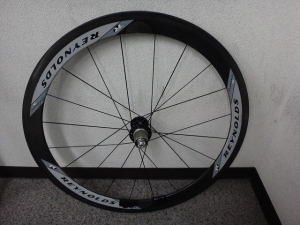
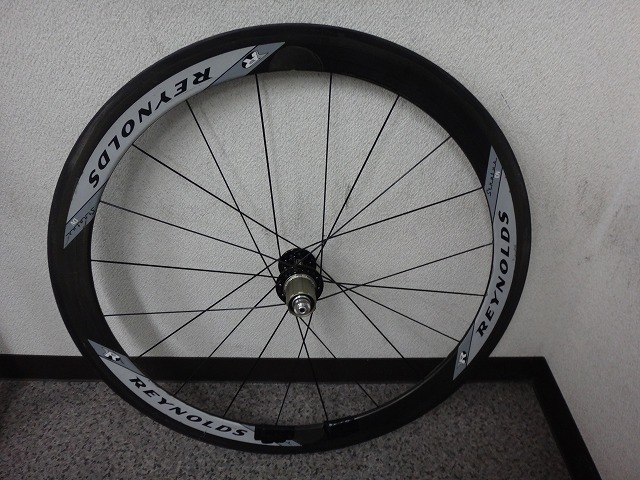
I built up the rear wheel using the Reynolds 26-inch tubular rim I disassembled the other day.
(→This) is a continuation of that project.
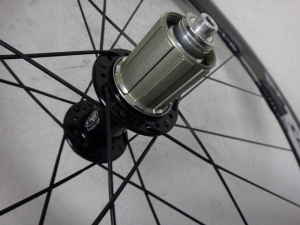
Evolite hub, 20H, black half-competition, 4-cross Italian lacing, no spoke twist.
No spoke twist was the customer's request.
For this Italian lacing, I'm using right-drop lacing.
When doing Italian lacing, 4-cross lacing uses left-drop,
and 6-cross lacing uses right-drop,
but the reason I can build this with right-drop is because I treated the rim hole drilling as a reverse rim.

When looking at just the rim itself,
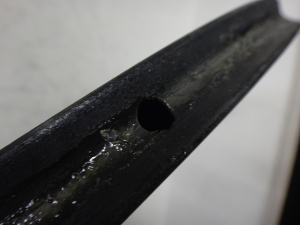
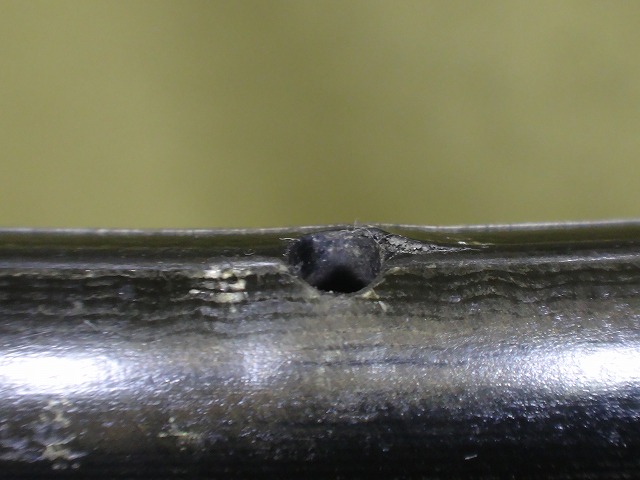
there were several spots where the edges of the rim holes were "sharp."
Given that the rim holes have considerable thickness and this is an internal nipple design,
I don't think they'd break during wheel rebuild,
but it's naturally better to be cautious about it.
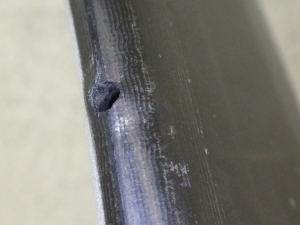
↑ A spot where it's sharp
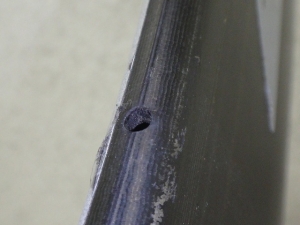
↑ Spots that aren't
Reynolds rims of this generation have no hole drilling offset on either the inner or outer circumference.
They can be built with either standard rim or reverse rim orientation.
Even Reynolds complete wheels mix standard rim and reverse rim orientations.
In hand-built cases, places like Wheelbuilder.com seem to use standard rim orientation, and
I also usually build rim singles using standard rim orientation.
With Lightweight's carbon spoke model "RZR,"
for some reason different generations use reverse rim or standard rim orientation.
I thought I could get Reynolds' official stance by looking at RZR,
but even that turned out to be ambiguous—how troublesome.
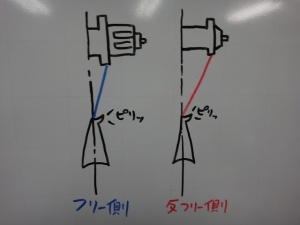
If the pre-rebuild state was standard rim orientation,
as long as I rebuild it in standard rim orientation too,
even if I swap the rim left and right, the direction where the rim holes are sharp and
the spoke pulling direction won't change.
The angle and tension do change depending on whether it's the freewheel side or not.
From this state, by intentionally using reverse rim orientation,
wouldn't it be better to tension the spokes in the opposite direction from where they're sharp?
That's the point of this build.

↑ The pre-rebuild state also mentioned in the linked article.
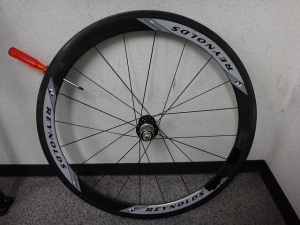
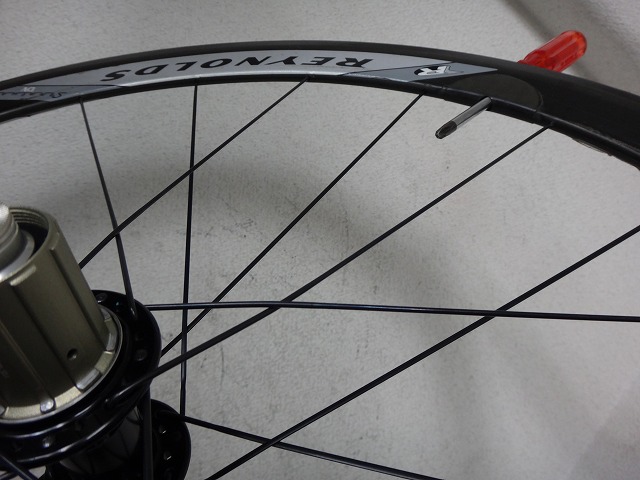
↑ The post-rebuild state photographed at roughly the same phase.
The screwdriver poked in is the valve hole.
As you can see from the weight/magnet sticker on the rim,
I didn't swap the rim left and right during the rebuild.
The pre-rebuild state was left-drop 2-cross reverse Italian lacing, but
when doing Italian or reverse Italian lacing with left-drop,
it should necessarily result in standard rim hole drilling.
However, the pre-rebuild state was reverse rim orientation.
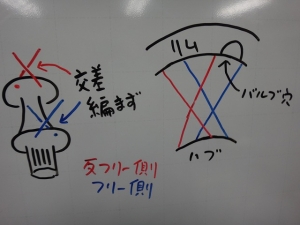
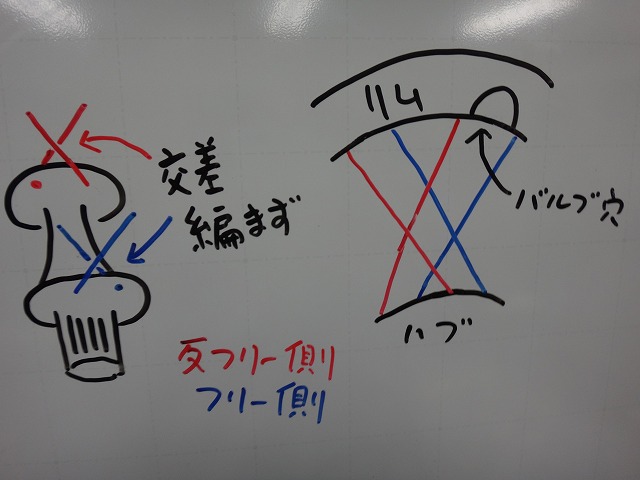
The reason was that the pre-rebuild state had
"the valve hole positioned within the final cross pair of left and right,"
an ugly lacing style,
and this caused the phase to be offset by one.
Clockwise from the valve hole, the adjacent spoke
comes out of the near flange from my perspective,
which is reverse rim orientation.
Since the original is reverse rim orientation, to tension the spokes opposite to the sharp direction,
I could use standard rim orientation... but I had other thoughts,
so I intentionally tensioned the spokes in the same direction as before the rebuild.
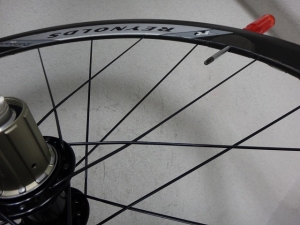
Since I used right-drop, the valve hole comes between the 4-cross left and right lacing.
"If the rim holes weren't sharp, would I have used standard rim orientation?"
If asked that, I probably would have.
Why I intentionally didn't change the spoke tensioning direction, I won't write here.
In the first place, upon seeing the rim holes were sharp, I was trying to change from reverse rim to standard rim, yet
I ended up building it in reverse rim anyway—you might think that's strange,
but I had my reasons for doing so.
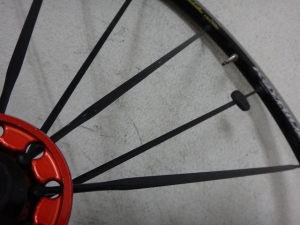
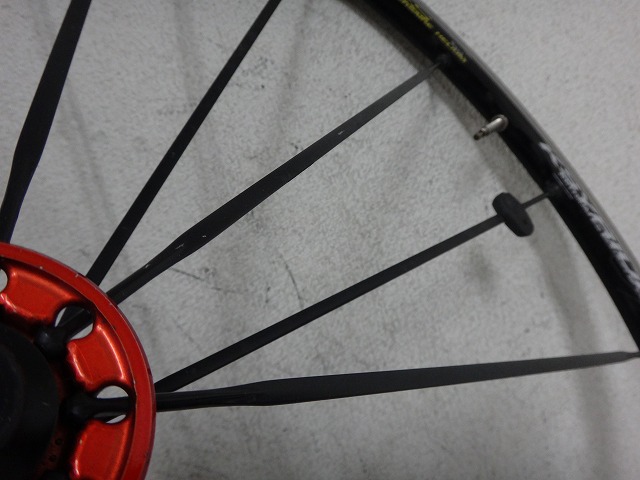
Campagnolo and Fulcrum front wheels are
basically reverse rim radial lacing.
If you're just replacing a spoke or two, it doesn't matter, but
when building from loose parts, you need to be careful.
Rear wheels with asymmetrical spoke counts on left and right
can have the freewheel side spoke on both sides of the valve hole,
so the hole drilling is special.
The image above is Kysrium ES, but
Mavic complete wheels are basically standard hole drilling.
No tire but there's a valve = tubeless valve,
but don't worry about that.
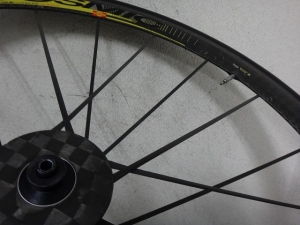
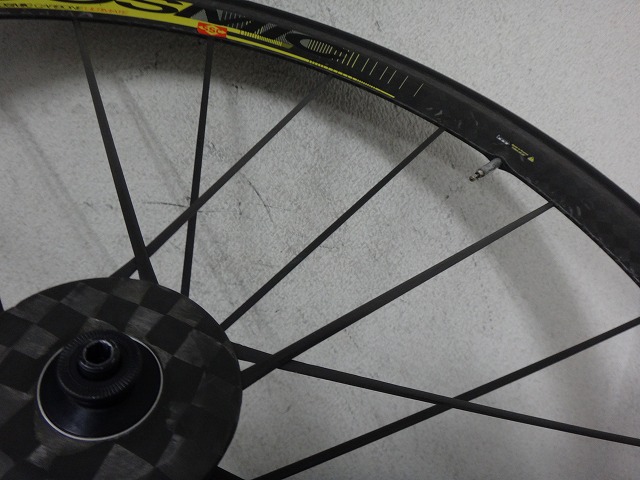
Cosmic Carbon Ultimatte is reverse hole drilling for some reason.
The rim and hub flange molding look exactly the same as Kolima.
Incidentally, Kolima complete wheels are
basically reverse hole drilling, but don't worry about what that means.
I built up the rear wheel using the Reynolds 26-inch tubular rim I disassembled the other day.
(→This) is a continuation of that project.
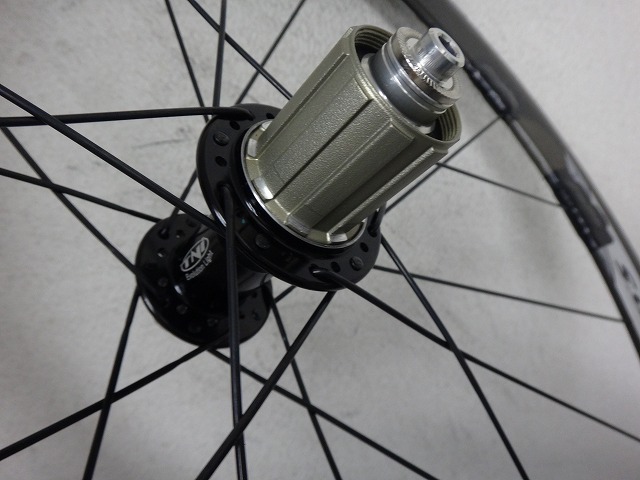
Evolite hub, 20H, black half-competition, 4-cross Italian lacing, no spoke twist.
No spoke twist was the customer's request.
For this Italian lacing, I'm using right-drop lacing.
When doing Italian lacing, 4-cross lacing uses left-drop,
and 6-cross lacing uses right-drop,
but the reason I can build this with right-drop is because I treated the rim hole drilling as a reverse rim.
When looking at just the rim itself,
there were several spots where the edges of the rim holes were "sharp."
Given that the rim holes have considerable thickness and this is an internal nipple design,
I don't think they'd break during wheel rebuild,
but it's naturally better to be cautious about it.
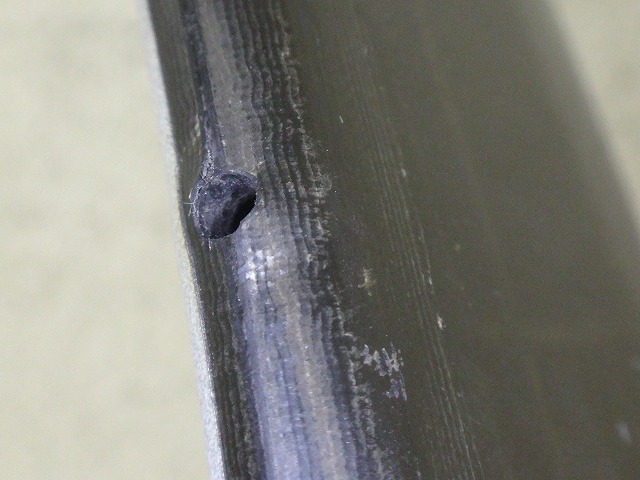
↑ A spot where it's sharp
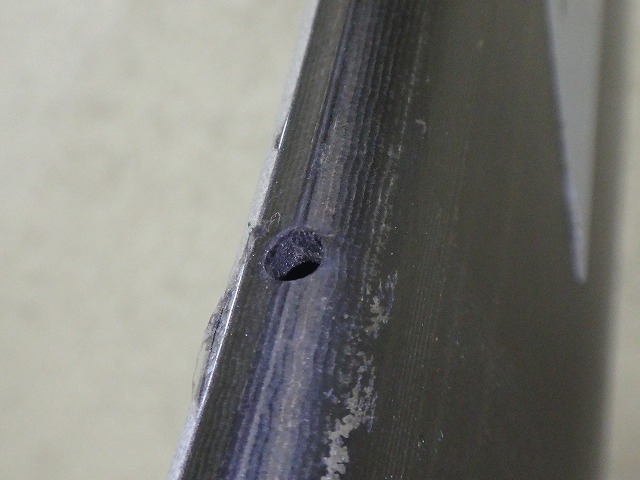
↑ Spots that aren't
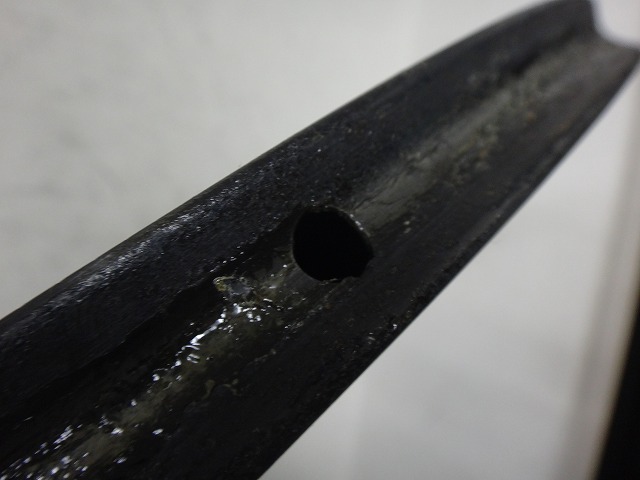
Reynolds rims of this generation have no hole drilling offset on either the inner or outer circumference.
They can be built with either standard rim or reverse rim orientation.
Even Reynolds complete wheels mix standard rim and reverse rim orientations.
In hand-built cases, places like Wheelbuilder.com seem to use standard rim orientation, and
I also usually build rim singles using standard rim orientation.
With Lightweight's carbon spoke model "RZR,"
for some reason different generations use reverse rim or standard rim orientation.
I thought I could get Reynolds' official stance by looking at RZR,
but even that turned out to be ambiguous—how troublesome.
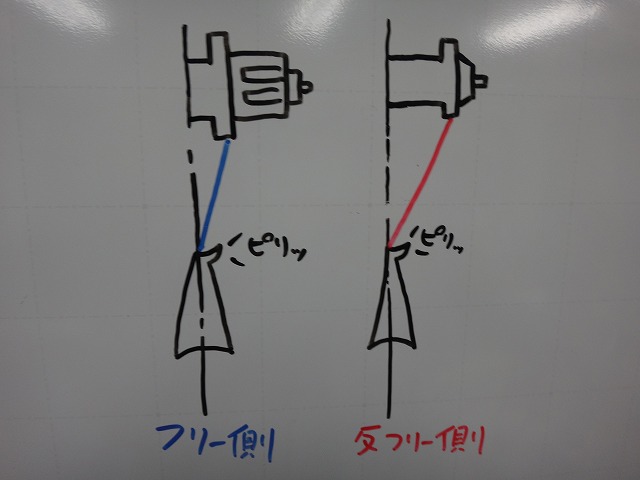
If the pre-rebuild state was standard rim orientation,
as long as I rebuild it in standard rim orientation too,
even if I swap the rim left and right, the direction where the rim holes are sharp and
the spoke pulling direction won't change.
The angle and tension do change depending on whether it's the freewheel side or not.
From this state, by intentionally using reverse rim orientation,
wouldn't it be better to tension the spokes in the opposite direction from where they're sharp?
That's the point of this build.
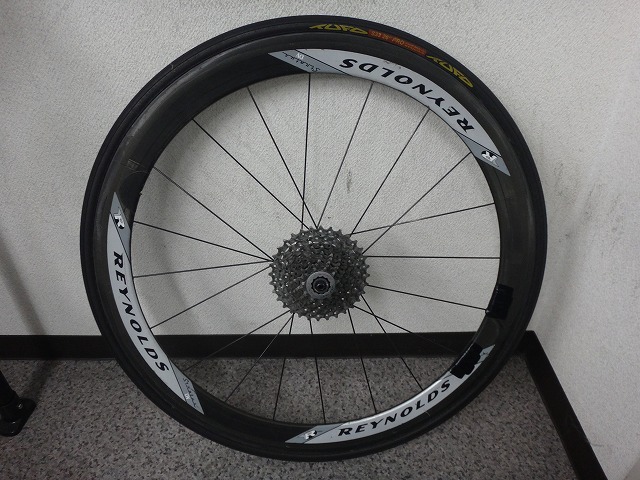
↑ The pre-rebuild state also mentioned in the linked article.
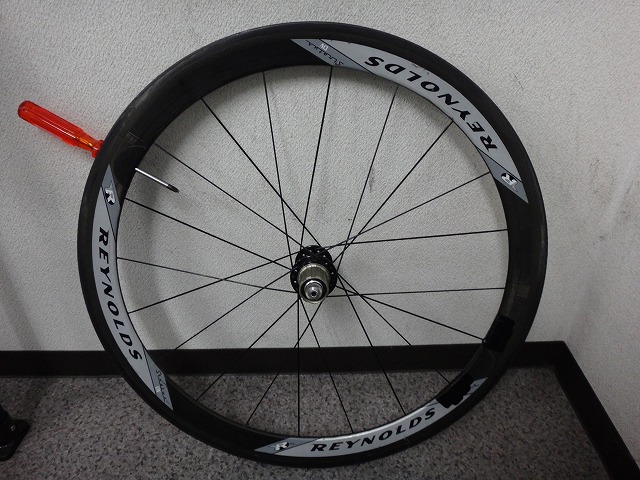
↑ The post-rebuild state photographed at roughly the same phase.
The screwdriver poked in is the valve hole.
As you can see from the weight/magnet sticker on the rim,
I didn't swap the rim left and right during the rebuild.
The pre-rebuild state was left-drop 2-cross reverse Italian lacing, but
when doing Italian or reverse Italian lacing with left-drop,
it should necessarily result in standard rim hole drilling.
However, the pre-rebuild state was reverse rim orientation.
The reason was that the pre-rebuild state had
"the valve hole positioned within the final cross pair of left and right,"
an ugly lacing style,
and this caused the phase to be offset by one.
Clockwise from the valve hole, the adjacent spoke
comes out of the near flange from my perspective,
which is reverse rim orientation.
Since the original is reverse rim orientation, to tension the spokes opposite to the sharp direction,
I could use standard rim orientation... but I had other thoughts,
so I intentionally tensioned the spokes in the same direction as before the rebuild.
Since I used right-drop, the valve hole comes between the 4-cross left and right lacing.
"If the rim holes weren't sharp, would I have used standard rim orientation?"
If asked that, I probably would have.
Why I intentionally didn't change the spoke tensioning direction, I won't write here.
In the first place, upon seeing the rim holes were sharp, I was trying to change from reverse rim to standard rim, yet
I ended up building it in reverse rim anyway—you might think that's strange,
but I had my reasons for doing so.
Campagnolo and Fulcrum front wheels are
basically reverse rim radial lacing.
If you're just replacing a spoke or two, it doesn't matter, but
when building from loose parts, you need to be careful.
Rear wheels with asymmetrical spoke counts on left and right
can have the freewheel side spoke on both sides of the valve hole,
so the hole drilling is special.
The image above is Kysrium ES, but
Mavic complete wheels are basically standard hole drilling.
No tire but there's a valve = tubeless valve,
but don't worry about that.
Cosmic Carbon Ultimatte is reverse hole drilling for some reason.
The rim and hub flange molding look exactly the same as Kolima.
Incidentally, Kolima complete wheels are
basically reverse hole drilling, but don't worry about what that means.