Today it's wheels again (and so on).

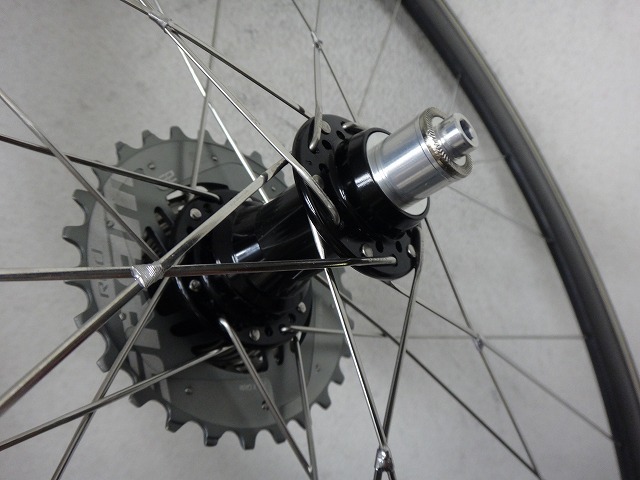
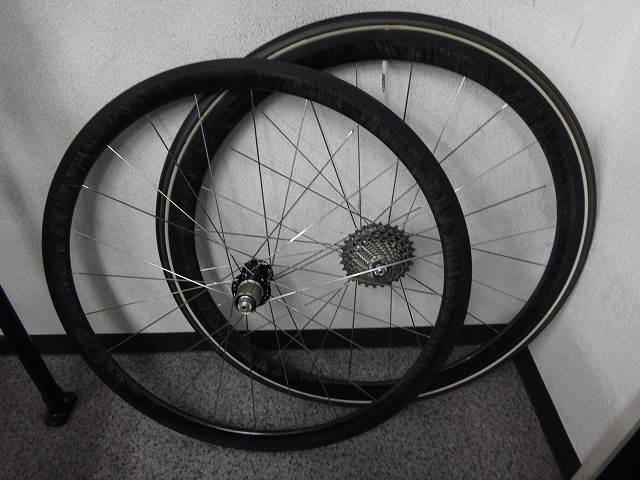
I built the rear wheel for Nomu Lab Wheel #2.
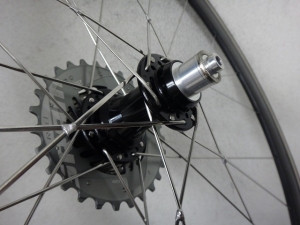
It's an Evocite hub, 24H, half-comp laced with 46-spoke radial pattern and solder joints included.
The reason I'm using a SRAM Red 11-speed sprocket is a message to the customer.
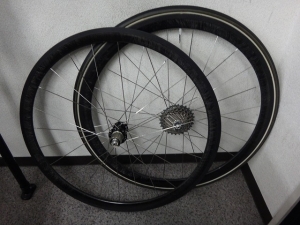
This is separate from the rear wheel from the day before yesterday.
I did all the soldering work for the spoke joints today.
I've already mounted the tire, but
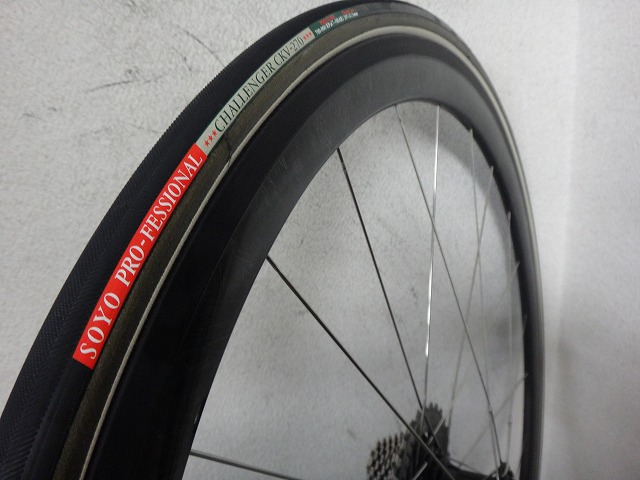
the customer absolutely insisted on "Soyo CKV270 tires,"
so that's what we went with.
I did mention that they're actually Vittoria, or more accurately, a Lion tire brand product.
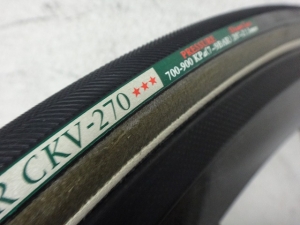
The Soyo CKV270 has been essentially a Corsair CX for quite some time now.
The tread pattern is identical.
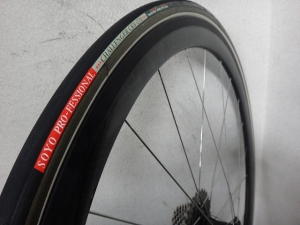
When you mount this tire with the tread pattern facing the correct direction,
the label ends up on the left side.
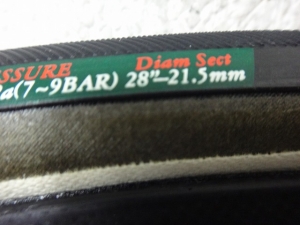
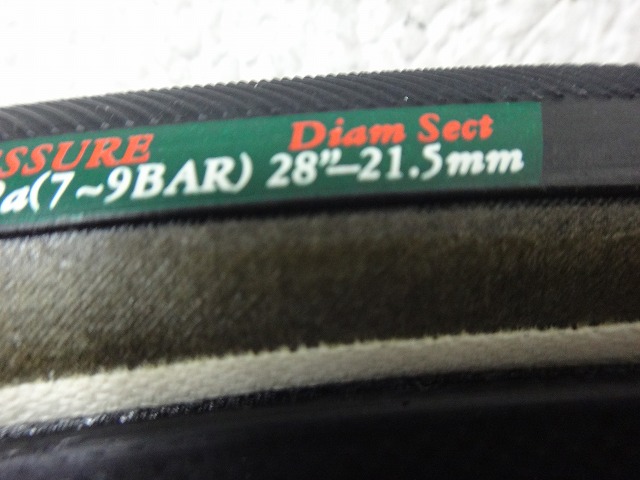
According to the label it's 21.5mm wide, but
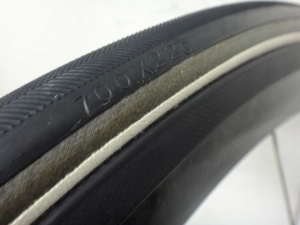
the printing molded into the tire says 22C.
In road racing, tire width is almost never measured strictly,
but in cyclocross it becomes a serious concern.
The rules used to allow up to 35C width, but a few years ago that was revised to a maximum of 33C.
Because of this, most manufacturers now label their race-use tires as 32C.
To eliminate cheater tires like "labeled 32C but actually almost 35C,"
the tire width regulation now states that the widest point must measure less than 33C when actually measured.
Accounting for tire growth over time during use,
manufacturers themselves label these as 32C.
With road bikes, things are much more casual about this.
A 23C tire from one manufacturer and a 25C tire from another
can have nearly identical actual widths when brand new, so
we don't get too strict about the width designation,
but having mixed size markings on a single product does seem odd.
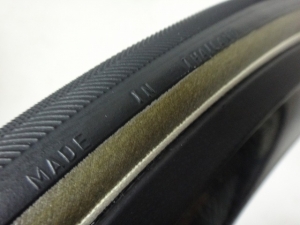
Since it's made by Lion tire, it's made in Thailand.
The way the sidewall is dyed—that dark color bordering on dark green—
it's unmistakably a Lion tire product.
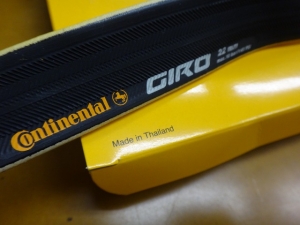
Among Continental's tubular tires,
"Giro" is the only outsourced product, and the box clearly states it's made in Thailand.
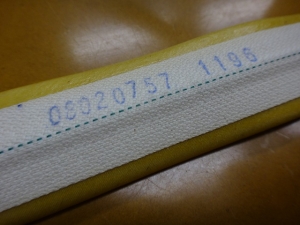
The way the model number is printed and the dotted line marking on the bead look like this,
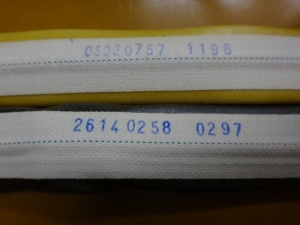
and this Soyo tire was the same way.
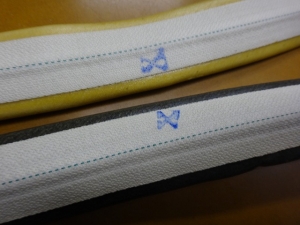
The customary mysterious "X" mark appeared on both tires.
Sometimes this X is a P instead.
There are also cases where D appears alongside the X.
For more on Lion tires (→here),
and on the mysterious X mark (→here).
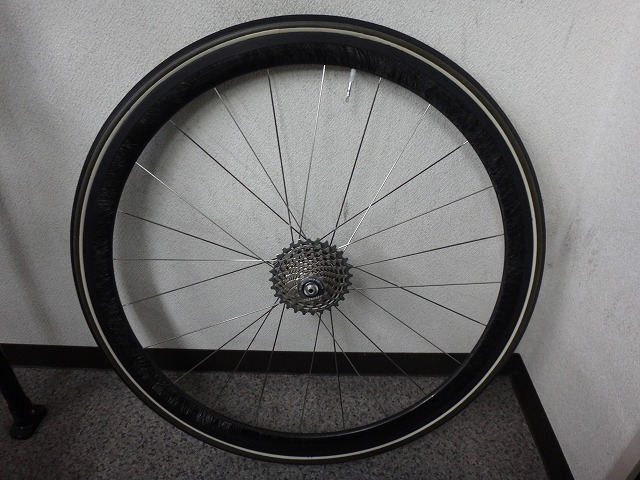
I built the rear wheel for Nomu Lab Wheel #2.
It's an Evocite hub, 24H, half-comp laced with 46-spoke radial pattern and solder joints included.
The reason I'm using a SRAM Red 11-speed sprocket is a message to the customer.
This is separate from the rear wheel from the day before yesterday.
I did all the soldering work for the spoke joints today.
I've already mounted the tire, but
the customer absolutely insisted on "Soyo CKV270 tires,"
so that's what we went with.
I did mention that they're actually Vittoria, or more accurately, a Lion tire brand product.

The Soyo CKV270 has been essentially a Corsair CX for quite some time now.
The tread pattern is identical.
When you mount this tire with the tread pattern facing the correct direction,
the label ends up on the left side.
According to the label it's 21.5mm wide, but
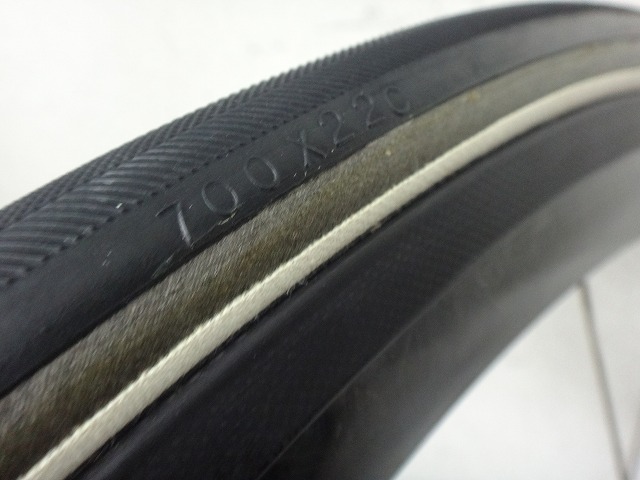
the printing molded into the tire says 22C.
In road racing, tire width is almost never measured strictly,
but in cyclocross it becomes a serious concern.
The rules used to allow up to 35C width, but a few years ago that was revised to a maximum of 33C.
Because of this, most manufacturers now label their race-use tires as 32C.
To eliminate cheater tires like "labeled 32C but actually almost 35C,"
the tire width regulation now states that the widest point must measure less than 33C when actually measured.
Accounting for tire growth over time during use,
manufacturers themselves label these as 32C.
With road bikes, things are much more casual about this.
A 23C tire from one manufacturer and a 25C tire from another
can have nearly identical actual widths when brand new, so
we don't get too strict about the width designation,
but having mixed size markings on a single product does seem odd.
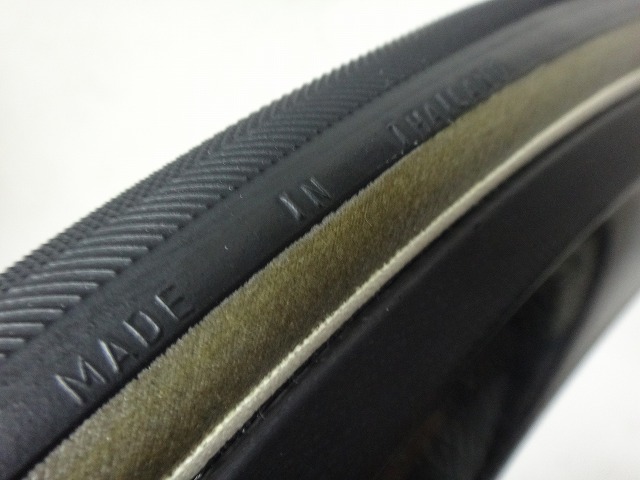
Since it's made by Lion tire, it's made in Thailand.
The way the sidewall is dyed—that dark color bordering on dark green—
it's unmistakably a Lion tire product.
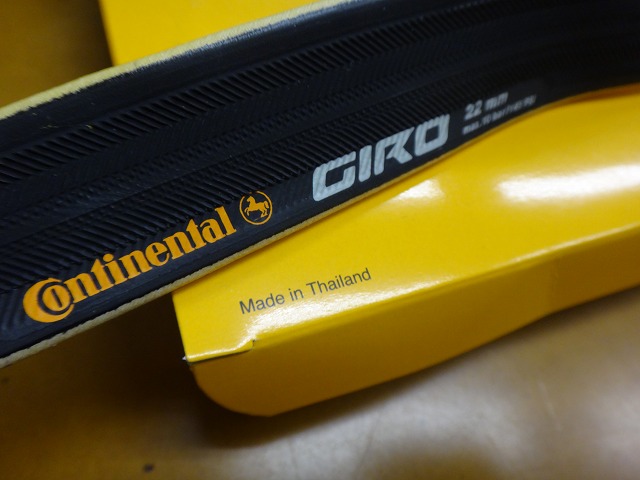
Among Continental's tubular tires,
"Giro" is the only outsourced product, and the box clearly states it's made in Thailand.
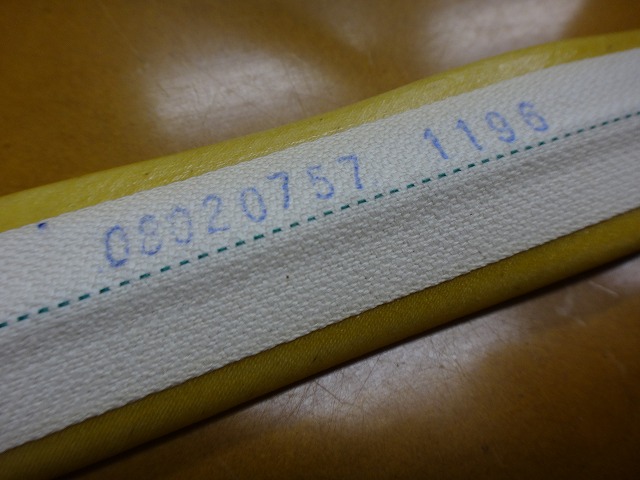
The way the model number is printed and the dotted line marking on the bead look like this,

and this Soyo tire was the same way.
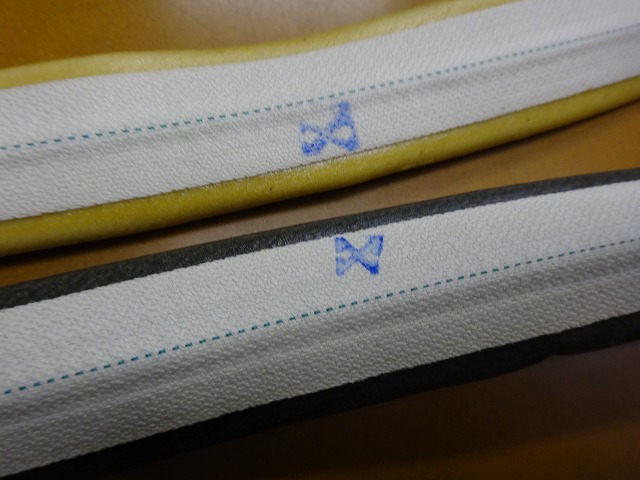
The customary mysterious "X" mark appeared on both tires.
Sometimes this X is a P instead.
There are also cases where D appears alongside the X.
For more on Lion tires (→here),
and on the mysterious X mark (→here).