I wrote an article the other day called "About Nipple Length" (→here),
and I need to make a correction to it.
To summarize what was written in the linked article:
"The depth of the threaded portion from the outer end of the nipple
is the same regardless of the nipple's total length"
However, I received a comment saying:
"With DT nipples, the 12mm, 14mm, and 16mm
each have different lengths for this.
I'm certain from experience as well."
By the way, the commenter also provided trustworthy reference materials,
and their content backed up the comment.
I investigated this myself,
and the comment was correct.
At least for DT's 30-series nipples, there's no doubt about it.
The 30-series refers to the current models, which I'll go into detail about later.
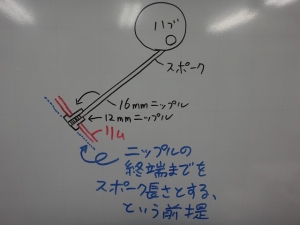
My spoke length calculation formula is set up so that
the length where the spoke reaches the end of the nipple is obtained.
If this premise is overturned (if there are exceptions),
then for certain nipples we'd need to apply a correction factor and make the spokes shorter.
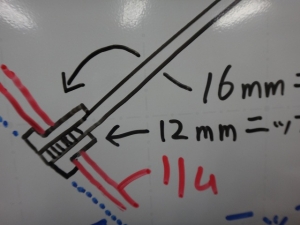
If there are no exceptions, the only difference between nipples is the depth of the thread pockets,
which was the content of my previous article.
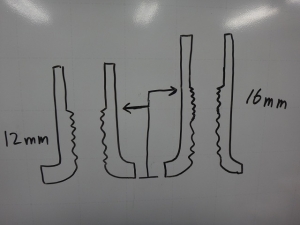
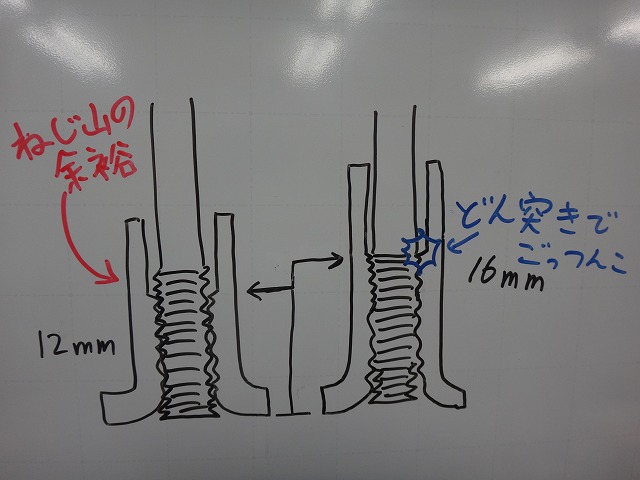
If the thread depth is not uniform between 12mm and 16mm nipples,

when spoke length is set flush (tsuraichi),
with 12mm nipples there's still room for further tightening,
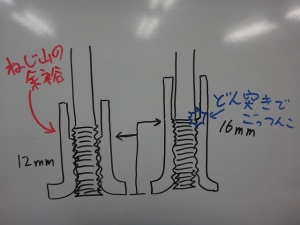
but with 16mm nipples it reaches the bottom stop.
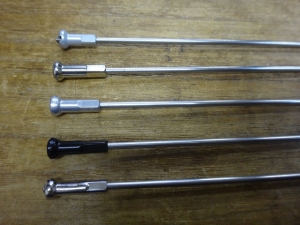
I actually investigated this.
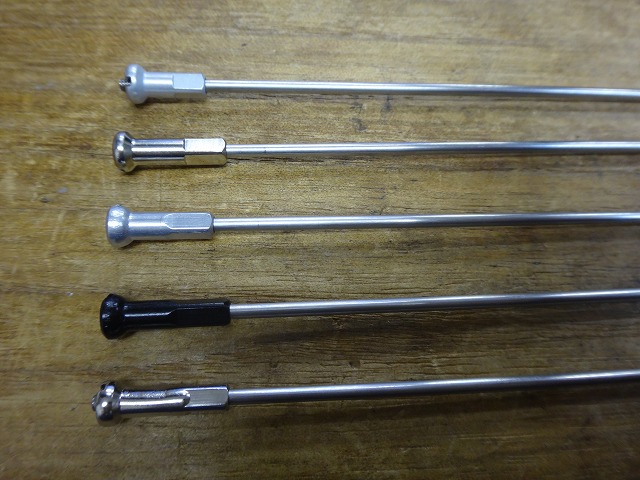
All spokes are DT #14 Champion.
Let me look at the position where the spoke's threads bottom out when tightened.
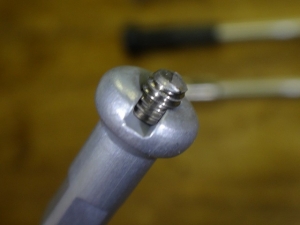
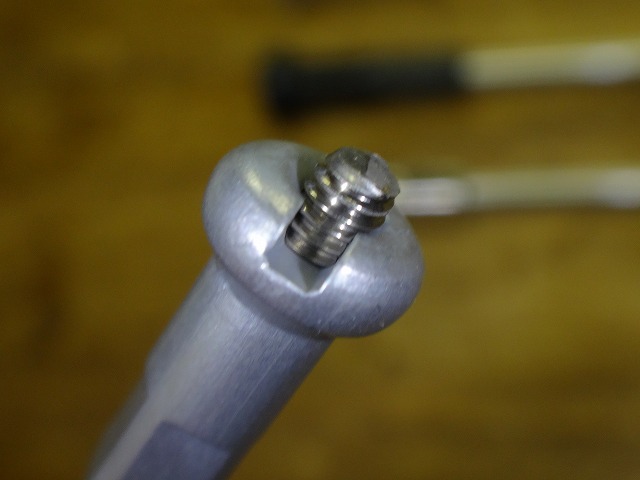
↑This is a DT 12mm aluminum nipple.
About two threads are showing.
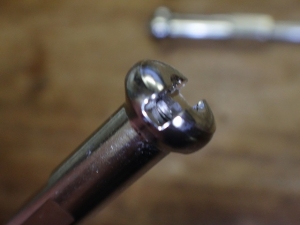
↑This is a DT 16mm brass nipple.
It's about flush at the slot.
This means, as the comment suggested, that the thread depth
from the nipple's end is not uniform.
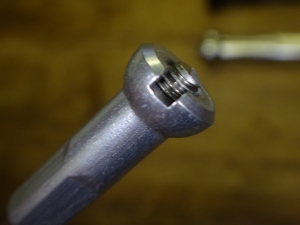
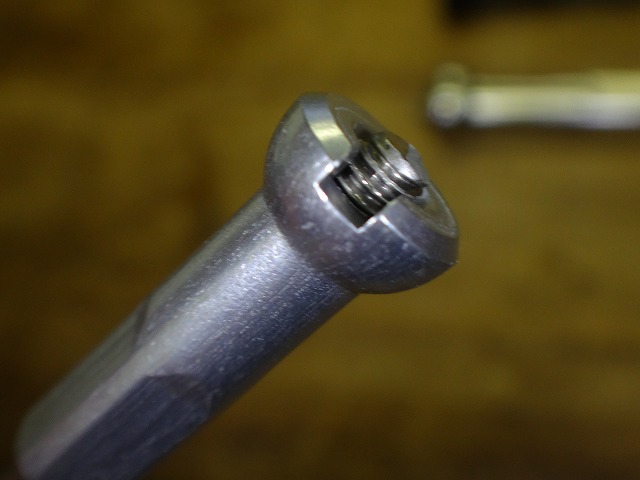
↑This is a Sapim 14mm aluminum nipple.
I don't currently use these, but they come with the CX-RAY.
(The reason I don't use them is unrelated to thread depth)
It protrudes slightly past flush.
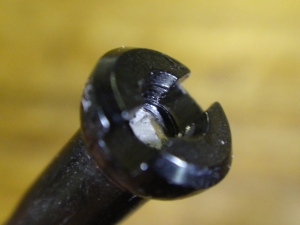
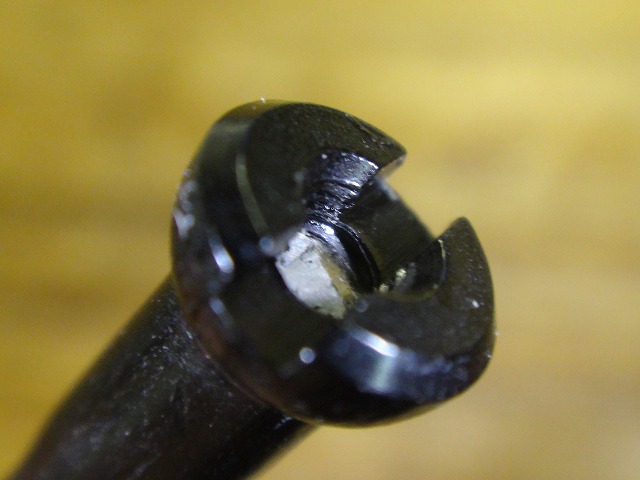
This is a Sapim 16mm aluminum nipple.
It doesn't even reach the slot.
This means that including tightening clearance, we need to calculate
and make the spoke shorter from the computed (flush) length.
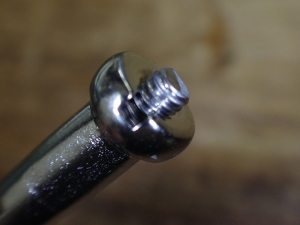
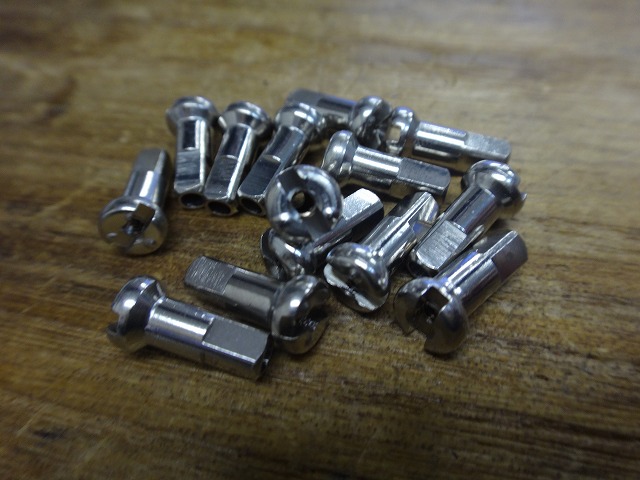
This is a Hoshi 16mm brass nipple.
It protrudes quite a bit.
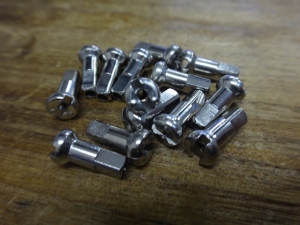
Now about DT nipples.
DT nipples have part numbers,
which change based on material, length, and gauge (there are no color variations).
These used to be five-digit numbers,
but recently they've been changed to numbers like "30-×××".
For example, 12mm 14-gauge brass is 30-001.
The DT nipples I showed earlier were
12mm 14-gauge aluminum 30-008 and
16mm 14-gauge brass 30-007.
The ones in the image above are from the five-digit era.
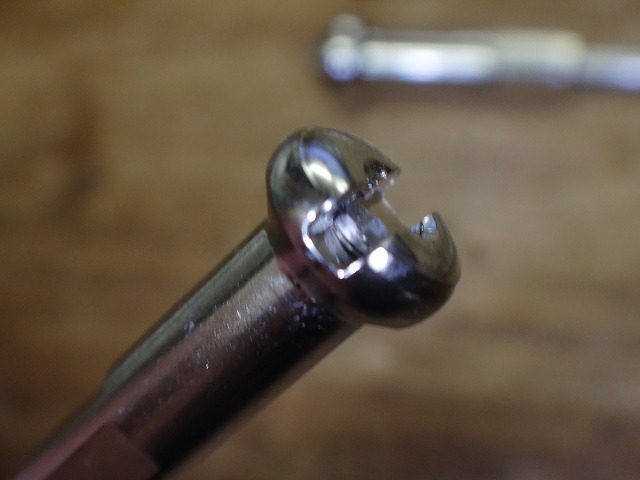
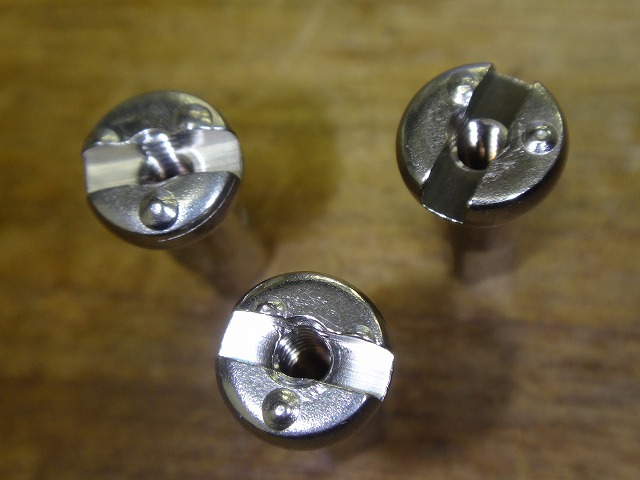
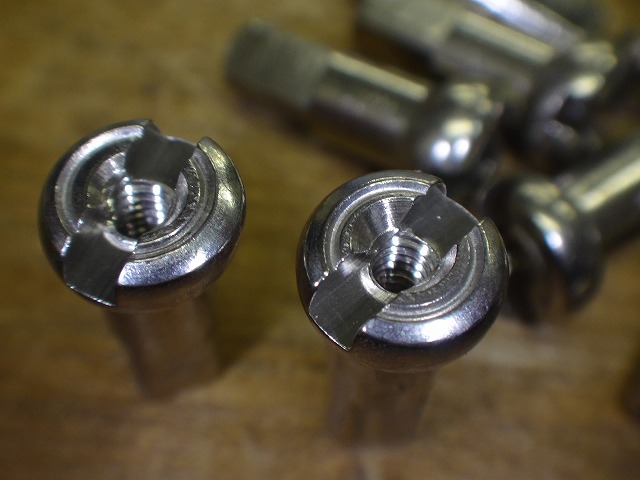
This is 12mm 15-gauge brass numbered 65167,
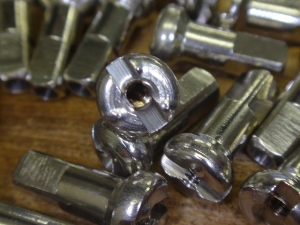
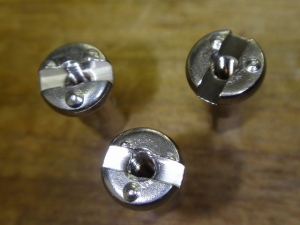
and while the slot may be machined off in some cases,
it has three short legs sticking out.
This is a marking to distinguish that it's 15-gauge, not 14-gauge.
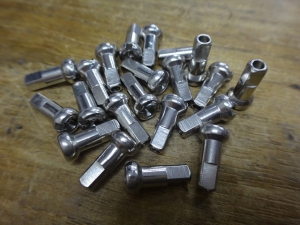
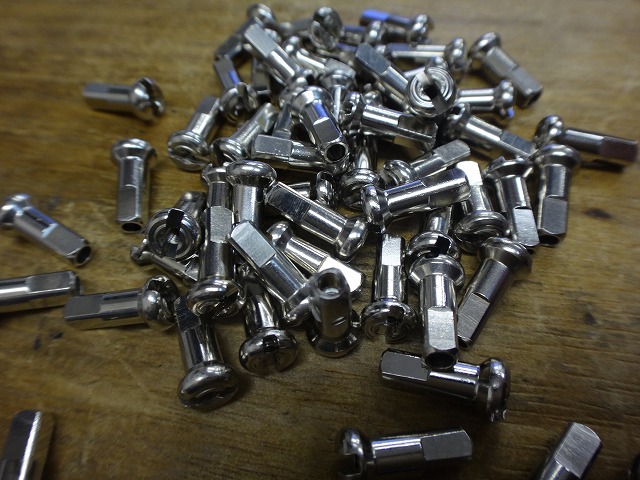
This is also 15-gauge 12mm brass,
but it's a different item numbered 70643.

This one has a rounded machined marking
that indicates it's 15-gauge.
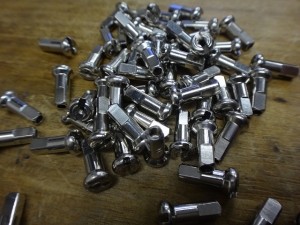
This is also 15-gauge 12mm brass,
and it's the current model 30-035.
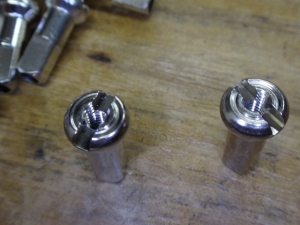
30-035 appears to be the same as 70643 (I manage them separately just in case).
When transitioning from five-digit part numbers to the 30-series,
it seems the specifications remained the same and only the part number changed.
The old five-digit version nipples
should have allowed spokes to reach flush even at 16mm.
That's what I wanted to investigate, but I searched everywhere and couldn't find any.
I probably have some somewhere, but...
Of course, even if that were true, it wouldn't relate to
the thread depth differences in the current 30-series.
I'm correcting that point.
By the way, today I received another comment from the same person:
"Your silence on the nipple issue is pretty harsh."
But I wasn't ignoring it.
Sometimes I intentionally skip things,
but there are also times when I intend to respond properly
but it takes time or I can't find the time to do it.
This was the latter case.
Since this is a correction to something I wrote that was wrong,
I felt I had to write it.
I started writing the original article on October 15th
and posted it at 1 AM on the 16th,
and received the comment pointing out the error early morning on the 16th.
I only ordered the Sapim and Hoshi nipples specifically for verification in this article,
Sapim arrived on the 20th, Hoshi on the 24th,
and I placed the orders 2-3 days before that.
Want to see the receipts?
I was searching for the old five-digit 16mm nipples
and just didn't have time to write this article,
so here we are on the 30th, which is why
I have to say clearly here that being called out for ignoring it
is extremely irritating.
Of course, I'm very grateful for the correction.
This blog also serves as my personal notes,
so it's more important to keep the blog content accurate
than for me personally to avoid embarrassment from writing something wrong.
Also, this blog follows the policy of "not taking back what you've spit out,"
so I basically don't delete things except for typo and grammatical corrections.
So on the original article link,
I'll add a note later to refer to this article to fill in the gaps.
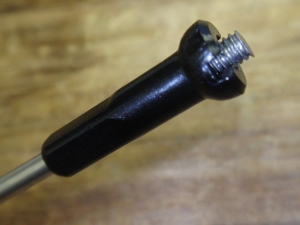
Also, regarding the thread length cut into spokes,
there is individual variation between manufacturers, with differences of up to about two threads.
The thread length created by my spoke cutter is
the same as the longest-threaded spoke mentioned here,
but depending on the settings, you can create spokes like in the image.
With these spokes, you can finish assembly flush.
But considering versatility, whoever repairs a wheel I've built might not be me,
so it's better not to do such special things and instead
adjust the spoke length to match the nipple's thread depth.
Also, regarding what I wrote about mixed spoke gauges on one flange
of rims like Vent and Bora, I received a comment saying:
"Different gauges of spokes just have different elongation per unit stress.
Everybody knows that. Is that really something to make a fuss about?"
But that's not what I'm trying to say.
It's true that thicker spokes have less wobble (unyo-n),
but the out-butted spokes in rims like Vent and Bora
are mixed in purely as weight balancers for rotation.
It's not like these particular spokes are meant to not wobble!
The discussion of mixing different gauges on one flange
and mixing different specifications on one flange are separate,
and after writing probably 4 or 5 more articles about that,
I plan to write about swastika-pattern 7700 wheels,
then about how the composite vector of two-spoke pull direction
in the final crossing of tangent lacing deviates in the hedgehog direction,
then about how incredible—and yet not incredible—DT's Tricon wheels are.
I regret I should have done this sort of thing when I had more free time at work.
In any case, thank you for the comments.
Even if I receive further replies about this,
I won't respond—but that's silence, so rest assured.
Also, the Hoshi nipples go straight to disposal! The cost was a research expense!
Addendum:
I received a comment from someone else, so I'llnot ignore it and share it.
"When spokes of different gauges are mixed on one flange...
the reason you should avoid that is,
on the side with mixed spoke gauges, with years of use,
the lower-tension (thinner gauge) spokes tend to loosen,
and this causes wheel wobble—isn't that it?"
That's correct.
It's not a theoretical matter—
I've confirmed that this actually happens in practice.
What I want to write about goes a bit deeper than that,
but since this topic has motivated me, I'll write about it eventually.
Please wait a bit longer.
and I need to make a correction to it.
To summarize what was written in the linked article:
"The depth of the threaded portion from the outer end of the nipple
is the same regardless of the nipple's total length"
However, I received a comment saying:
"With DT nipples, the 12mm, 14mm, and 16mm
each have different lengths for this.
I'm certain from experience as well."
By the way, the commenter also provided trustworthy reference materials,
and their content backed up the comment.
I investigated this myself,
and the comment was correct.
At least for DT's 30-series nipples, there's no doubt about it.
The 30-series refers to the current models, which I'll go into detail about later.
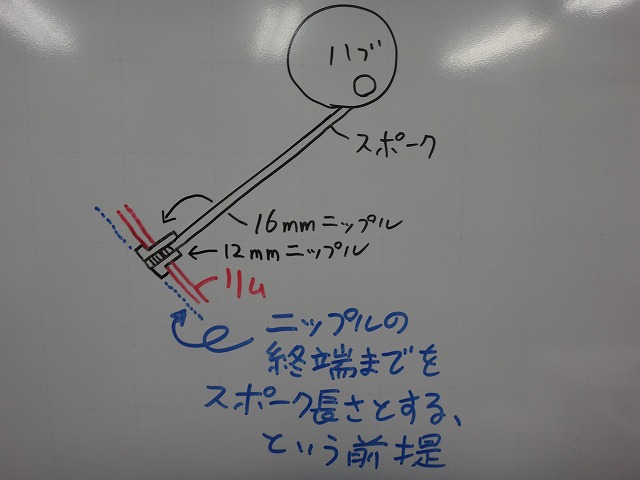
My spoke length calculation formula is set up so that
the length where the spoke reaches the end of the nipple is obtained.
If this premise is overturned (if there are exceptions),
then for certain nipples we'd need to apply a correction factor and make the spokes shorter.

If there are no exceptions, the only difference between nipples is the depth of the thread pockets,
which was the content of my previous article.
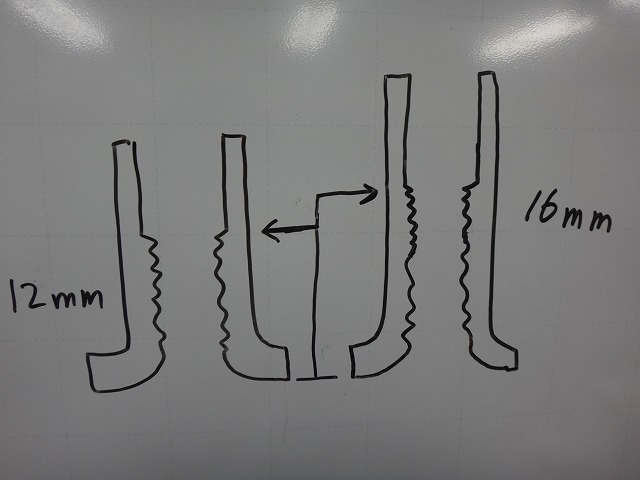
If the thread depth is not uniform between 12mm and 16mm nipples,
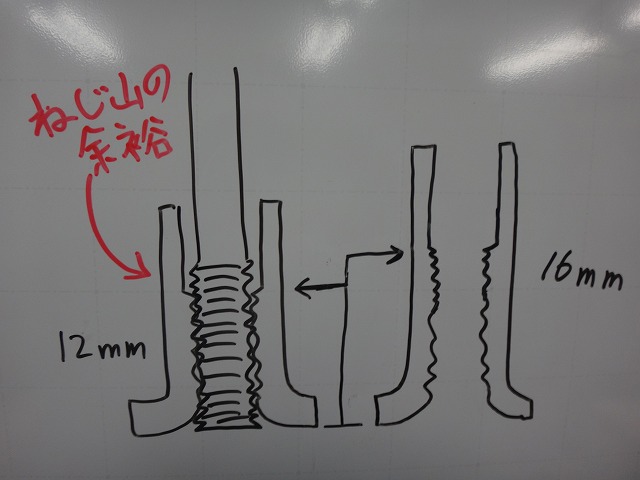
when spoke length is set flush (tsuraichi),
with 12mm nipples there's still room for further tightening,
but with 16mm nipples it reaches the bottom stop.
I actually investigated this.
All spokes are DT #14 Champion.
Let me look at the position where the spoke's threads bottom out when tightened.
↑This is a DT 12mm aluminum nipple.
About two threads are showing.
↑This is a DT 16mm brass nipple.
It's about flush at the slot.
This means, as the comment suggested, that the thread depth
from the nipple's end is not uniform.
↑This is a Sapim 14mm aluminum nipple.
I don't currently use these, but they come with the CX-RAY.
(The reason I don't use them is unrelated to thread depth)
It protrudes slightly past flush.
This is a Sapim 16mm aluminum nipple.
It doesn't even reach the slot.
This means that including tightening clearance, we need to calculate
and make the spoke shorter from the computed (flush) length.

This is a Hoshi 16mm brass nipple.
It protrudes quite a bit.
Now about DT nipples.
DT nipples have part numbers,
which change based on material, length, and gauge (there are no color variations).
These used to be five-digit numbers,
but recently they've been changed to numbers like "30-×××".
For example, 12mm 14-gauge brass is 30-001.
The DT nipples I showed earlier were
12mm 14-gauge aluminum 30-008 and
16mm 14-gauge brass 30-007.
The ones in the image above are from the five-digit era.
This is 12mm 15-gauge brass numbered 65167,

and while the slot may be machined off in some cases,
it has three short legs sticking out.
This is a marking to distinguish that it's 15-gauge, not 14-gauge.

This is also 15-gauge 12mm brass,
but it's a different item numbered 70643.
This one has a rounded machined marking
that indicates it's 15-gauge.
This is also 15-gauge 12mm brass,
and it's the current model 30-035.
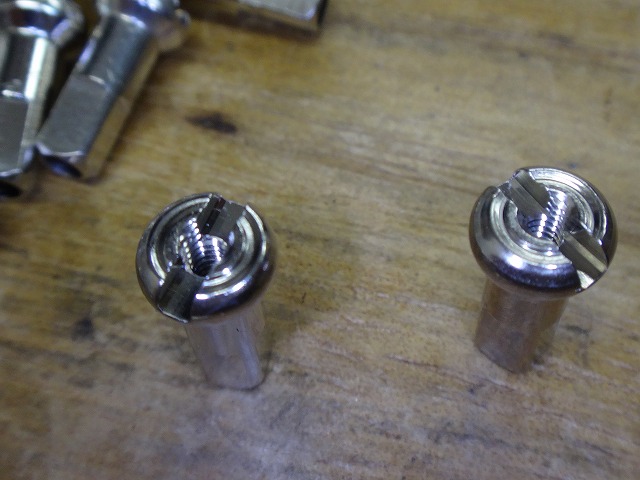
30-035 appears to be the same as 70643 (I manage them separately just in case).
When transitioning from five-digit part numbers to the 30-series,
it seems the specifications remained the same and only the part number changed.
The old five-digit version nipples
should have allowed spokes to reach flush even at 16mm.
That's what I wanted to investigate, but I searched everywhere and couldn't find any.
I probably have some somewhere, but...
Of course, even if that were true, it wouldn't relate to
the thread depth differences in the current 30-series.
I'm correcting that point.
By the way, today I received another comment from the same person:
"Your silence on the nipple issue is pretty harsh."
But I wasn't ignoring it.
Sometimes I intentionally skip things,
but there are also times when I intend to respond properly
but it takes time or I can't find the time to do it.
This was the latter case.
Since this is a correction to something I wrote that was wrong,
I felt I had to write it.
I started writing the original article on October 15th
and posted it at 1 AM on the 16th,
and received the comment pointing out the error early morning on the 16th.
I only ordered the Sapim and Hoshi nipples specifically for verification in this article,
Sapim arrived on the 20th, Hoshi on the 24th,
and I placed the orders 2-3 days before that.
Want to see the receipts?
I was searching for the old five-digit 16mm nipples
and just didn't have time to write this article,
so here we are on the 30th, which is why
I have to say clearly here that being called out for ignoring it
is extremely irritating.
Of course, I'm very grateful for the correction.
This blog also serves as my personal notes,
so it's more important to keep the blog content accurate
than for me personally to avoid embarrassment from writing something wrong.
Also, this blog follows the policy of "not taking back what you've spit out,"
so I basically don't delete things except for typo and grammatical corrections.
So on the original article link,
I'll add a note later to refer to this article to fill in the gaps.
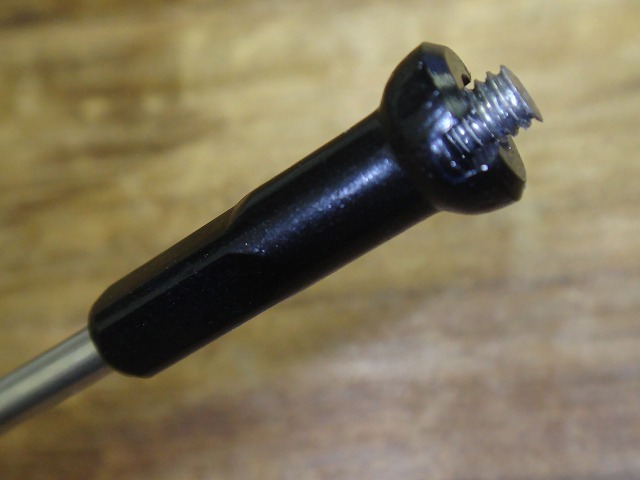
Also, regarding the thread length cut into spokes,
there is individual variation between manufacturers, with differences of up to about two threads.
The thread length created by my spoke cutter is
the same as the longest-threaded spoke mentioned here,
but depending on the settings, you can create spokes like in the image.
With these spokes, you can finish assembly flush.
But considering versatility, whoever repairs a wheel I've built might not be me,
so it's better not to do such special things and instead
adjust the spoke length to match the nipple's thread depth.
Also, regarding what I wrote about mixed spoke gauges on one flange
of rims like Vent and Bora, I received a comment saying:
"Different gauges of spokes just have different elongation per unit stress.
Everybody knows that. Is that really something to make a fuss about?"
But that's not what I'm trying to say.
It's true that thicker spokes have less wobble (unyo-n),
but the out-butted spokes in rims like Vent and Bora
are mixed in purely as weight balancers for rotation.
It's not like these particular spokes are meant to not wobble!
The discussion of mixing different gauges on one flange
and mixing different specifications on one flange are separate,
and after writing probably 4 or 5 more articles about that,
I plan to write about swastika-pattern 7700 wheels,
then about how the composite vector of two-spoke pull direction
in the final crossing of tangent lacing deviates in the hedgehog direction,
then about how incredible—and yet not incredible—DT's Tricon wheels are.
I regret I should have done this sort of thing when I had more free time at work.
In any case, thank you for the comments.
Even if I receive further replies about this,
I won't respond—but that's silence, so rest assured.
Addendum:
I received a comment from someone else, so I'll
"When spokes of different gauges are mixed on one flange...
the reason you should avoid that is,
on the side with mixed spoke gauges, with years of use,
the lower-tension (thinner gauge) spokes tend to loosen,
and this causes wheel wobble—isn't that it?"
That's correct.
It's not a theoretical matter—
I've confirmed that this actually happens in practice.
What I want to write about goes a bit deeper than that,
but since this topic has motivated me, I'll write about it eventually.
Please wait a bit longer.