A customer dropped off a WH-M535 with me.
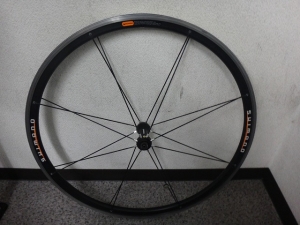
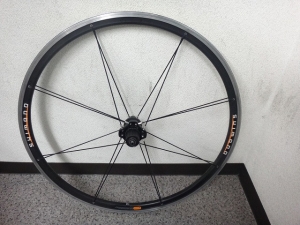
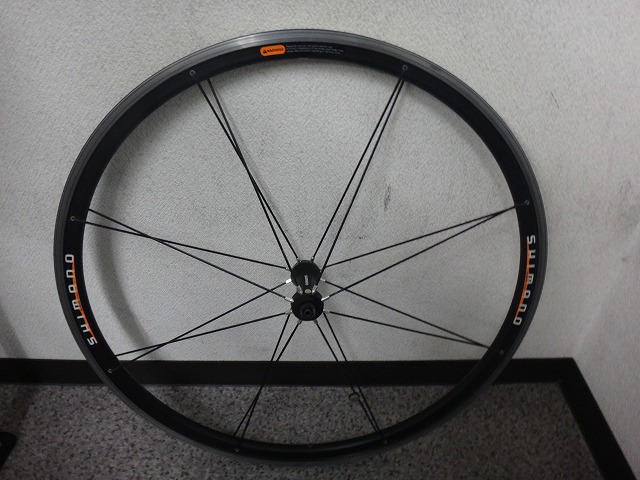
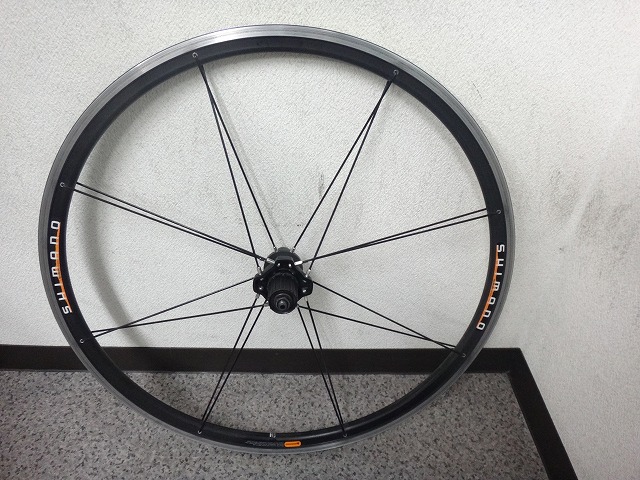
It's an early Shimano MTB complete wheelset from their budget-friendly lineup.
The customer mentioned there was some suspicion of the rear wheel being out of true...
Both front and rear wheels had only slight center offset,
otherwise pretty much no issues.
There wasn't zero lateral runout, but
it's such a negligible amount that it'll disappear once I do a center correction.

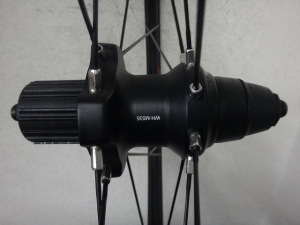
These spokes have a special spoke head neck dimension where they catch the rim,
so even if you modify generic spokes, it's basically impossible
to fabricate a replacement spoke.
↑I'm leaving some wiggle room with "basically," but
I don't typically do this anyway, so don't expect it.
↑I'm leaving some room with "typically," but
I'm telling you—I don't do it.
By the way, the replacement parts were discontinued long ago.
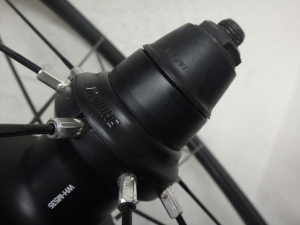
Early Shimano wheelsets,
like the road WH-7700 and the MTB WH-M959,
were rationalized to minimize the number of spare parts,
so the rear wheel had the same spoke length on both sides (same part number too).
Both of those wheels use crossed lacing on both sides (←I wrote it this way because
"tangential lacing" doesn't quite feel right),
but this M535 has radial lacing on the non-drive side
yet the same spoke length and part number on both sides.
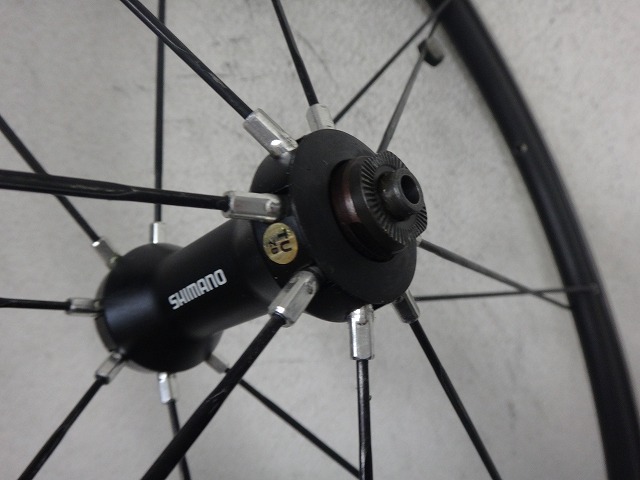
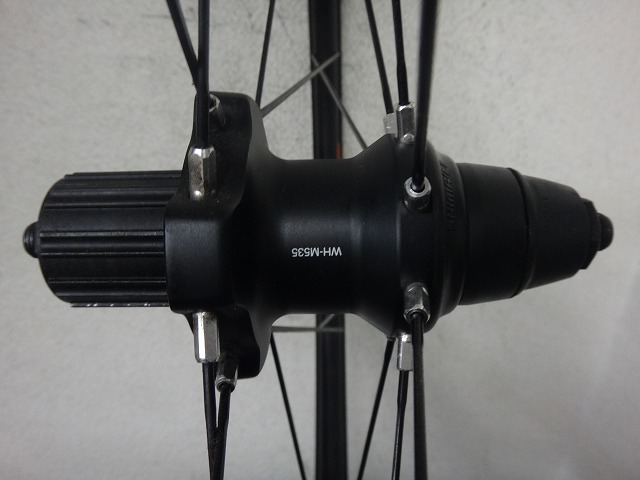
The hub has quite high flanges, but
there's no way the spoke length can be uniform with that configuration—
as you can see, it's got an incredibly narrow flange.
What the customer thought was "the rear wheel being out of true"
was actually the brake shoe rubbing in daily use, but
as I mentioned earlier, the lateral runout is extremely minimal.
It's simply structurally lacking lateral stiffness, so it's just flexing.
Since I'm only looking at the wheel in the stand, I can't tell the brake shoe-to-rim clearance under load,
but when I asked the customer, they said it wasn't adjusted excessively tight.
Incidentally, it's extremely rare for Shimano wheels to have radial lacing on the non-drive side,
except for the Optibal.
It's an early Shimano MTB complete wheelset from their budget-friendly lineup.
The customer mentioned there was some suspicion of the rear wheel being out of true...
Both front and rear wheels had only slight center offset,
otherwise pretty much no issues.
There wasn't zero lateral runout, but
it's such a negligible amount that it'll disappear once I do a center correction.
These spokes have a special spoke head neck dimension where they catch the rim,
so even if you modify generic spokes, it's basically impossible
to fabricate a replacement spoke.
↑I'm leaving some wiggle room with "basically," but
I don't typically do this anyway, so don't expect it.
↑I'm leaving some room with "typically," but
I'm telling you—I don't do it.
By the way, the replacement parts were discontinued long ago.

Early Shimano wheelsets,
like the road WH-7700 and the MTB WH-M959,
were rationalized to minimize the number of spare parts,
so the rear wheel had the same spoke length on both sides (same part number too).
Both of those wheels use crossed lacing on both sides (←I wrote it this way because
"tangential lacing" doesn't quite feel right),
but this M535 has radial lacing on the non-drive side
yet the same spoke length and part number on both sides.
The hub has quite high flanges, but
there's no way the spoke length can be uniform with that configuration—
as you can see, it's got an incredibly narrow flange.
What the customer thought was "the rear wheel being out of true"
was actually the brake shoe rubbing in daily use, but
as I mentioned earlier, the lateral runout is extremely minimal.
It's simply structurally lacking lateral stiffness, so it's just flexing.
Since I'm only looking at the wheel in the stand, I can't tell the brake shoe-to-rim clearance under load,
but when I asked the customer, they said it wasn't adjusted excessively tight.
Incidentally, it's extremely rare for Shimano wheels to have radial lacing on the non-drive side,
except for the Optibal.