Another day, another wheel (and so on).
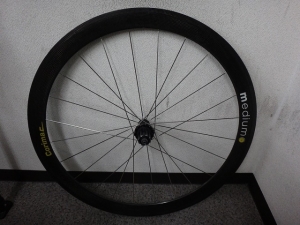
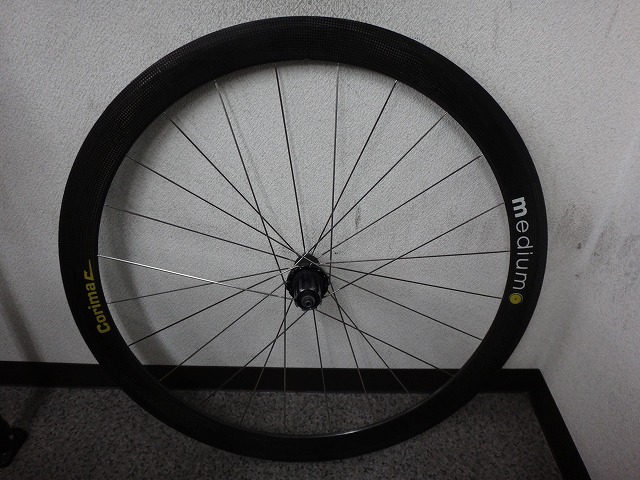
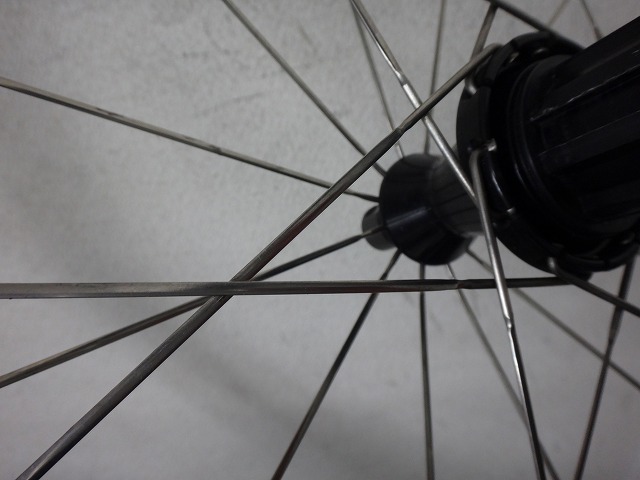
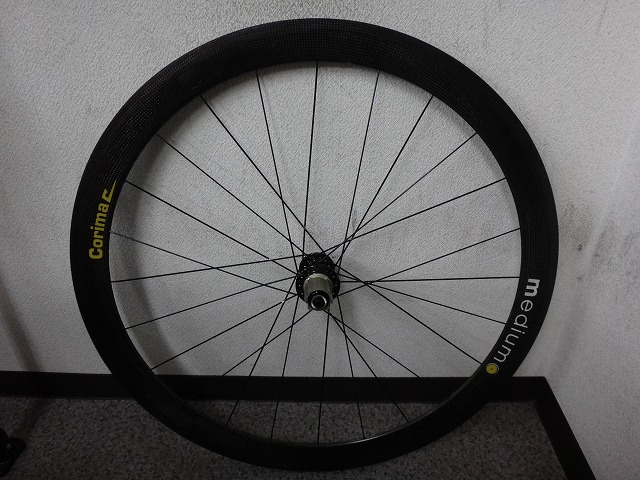
A customer dropped off a Colima Medium rear wheel for me to work on.
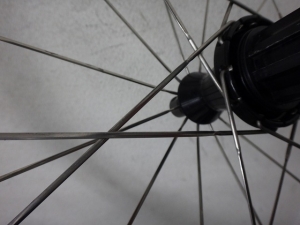
It's gotten loose from years of use, plus the hub's making weird noises,
so they want me to rebuild it.
Yeah, it's abnormally loose. Looser than any new wheel off the shelf should be.
I thought maybe the rim had shifted toward the freewheel side, but
the centering's fine and the wobble is minimal (imperceptible while riding).
Whoa, hold on!
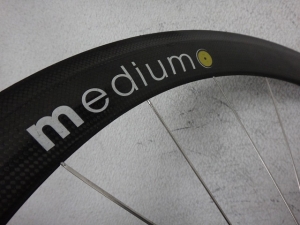
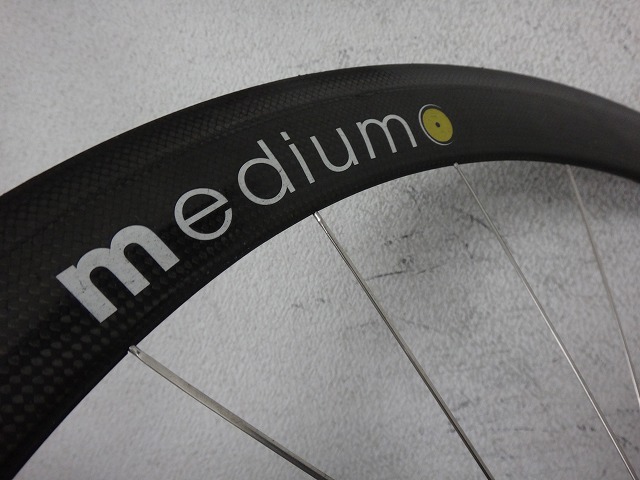
This sticker is first-generation Medium. And I think this actually IS the first-gen Medium.
Today's Colima lineup runs 32/47/73mm depths with fairly wide carbon rims,
but the original Colima rim came only in one model—the 40mm-deep "Aero"
(we're talking rim only; there were also batten wheels and such),
and it became hugely successful across a ton of OEM customers in different spoke counts:
Campagnolo's first-generation Bora rim,
Ambrosio's X-Carbon (though later versions got the ZIPP MID-V285),
Zippeda's C416 (meaning Carbon, 40mm height, 16 holes),
and so on—a super long-seller.
Added to that later were the "Wineum," a 24mm low-profile rim,
and the "Medium," same height as the Aero but lighter.
So the Medium was positioned as "lighter Aero," and the first-generation Medium's rim
was genuinely lighter than the Aero rim itself.
But the later Mediums (as complete wheels)
are just using thinner spokes than the Aero (as complete wheels)—slightly lighter, but
otherwise sharing the same rim as the Aero. In other words, they became a shortcut model.
With this Medium, even though it's not under crazy tension,
the rim sidewall (the lateral surface inboard from the brake zone)
shows a waviness that flexes in and out when you push on it with your finger.
That's a first-gen Medium exclusive trait.
Back then, maybe Colima felt threatened by how light ZIPP's MID-V280 and V285 were,
because this usually-prudent brand made the unusual choice to chase lightness.
Among Mediums, only the first generation reaches actual weights comparable to Wineum
(we're talking complete assembled wheel weight, not rim alone).
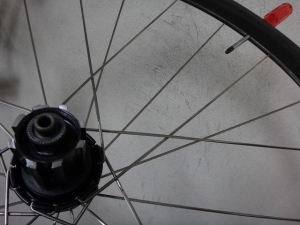
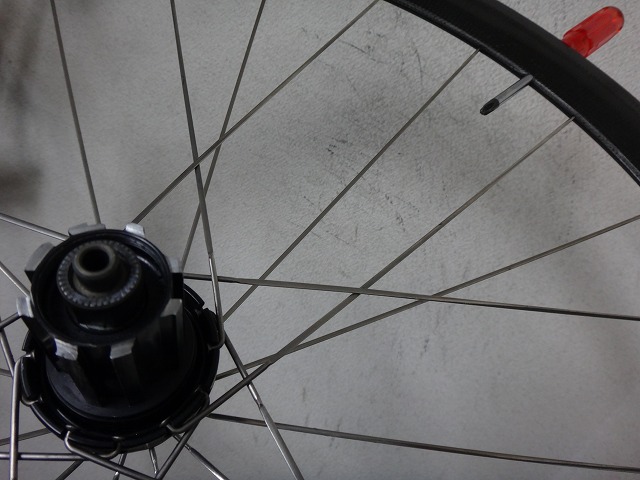
But I'll get to that later. First, the rebuild.
Back then, Colima rims had their spoke hole pattern inverted relative to the valve hole
compared to what most rims do—what I call an "inverted rim" on this blog.
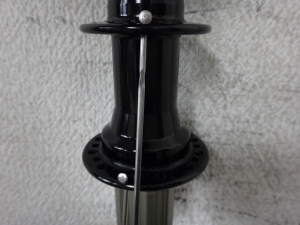
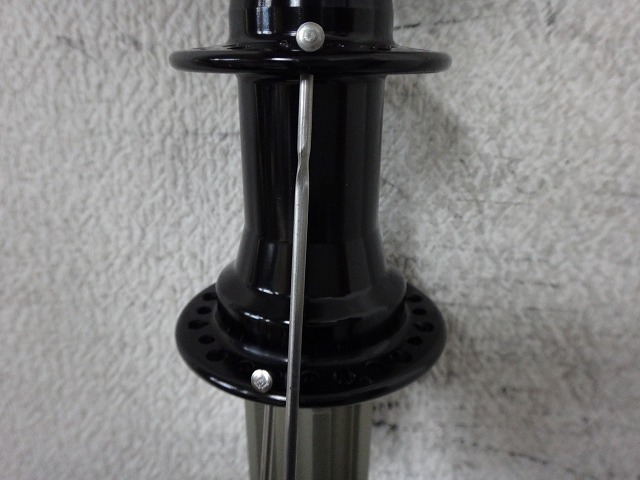
↑Hard to see because the hub flange has extra holes,
but the state in the image is the so-called "left drop."
When four spokes—the final crossing spoke and its counterpart on the far side—
don't straddle the valve hole, and you maintain that ground rule,
a left drop becomes Italian lacing (or reverse Italian lacing).
When you run an outpoke from the upper flange, the question is which side
(left or right neighbor) on the lower flange's inpoke you'll drop into.
If you do asymmetrical spoke patterns—X spokes on the freewheel side and Y on the non-freewheel—
and both X/2 and Y/2 are even OR both odd,
then the right-drop/left-drop relationship doesn't flip.
But with 4-6 lacing, X is 2 and Y is 3 (even and odd), so the relationship flips,
and right drop becomes Italian lacing.
However, that's for normal rims. On an inverted rim doing 4-6 Italian lacing,
it flips again—so it becomes left drop.
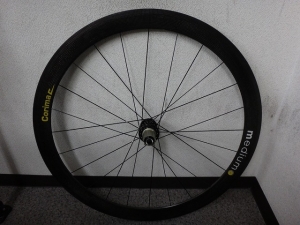
Built.

Black hub, 24-hole, black half-Comp 4-6 lacing with result-wire. Tension set to maximum as requested, hehehehe.
Back to the first-generation Medium as a complete wheel—
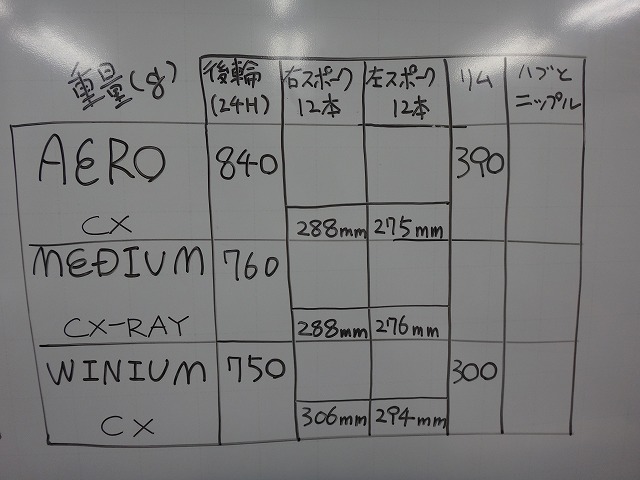
when the original was current, the catalog weight for a 700C tubular 24H rear wheel was:
Aero at 840g, Medium at 760g, Wineum at 750g.
(Any weight difference from Shimano vs. Campagnolo freebodies is supposed to not exist)
At face value that suggests only a 10g rim weight difference between Wineum and Medium,
but that's misleading because the spokes differ, so direct comparison is impossible.
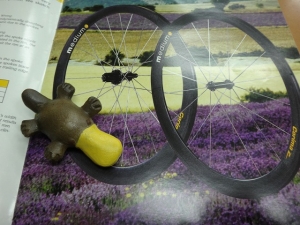
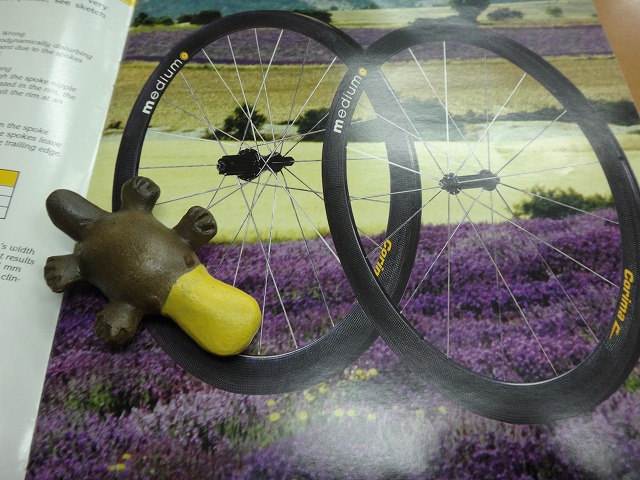
The original catalog and duck-billed calipers.
Aero, Medium, and Wineum all used the same hub model.
Carbon hubs and piercing hubs (→here) weren't released yet.
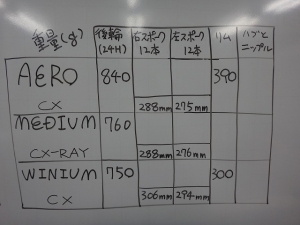
That's what I can glean from this catalog.
The catalog listed complete wheel weights and the rim weights for Aero and Wineum.
Actually, Medium was never sold as a rim alone.
With the later Mediums, you could just buy an Aero rim and slap a Medium sticker on it,
so those don't get sold individually either.
The key detail here is that Aero and Wineum used CX spokes
while Medium used CX-RAY spokes.
Oddly, the non-freewheel spoke length differs by 1mm between Aero and Medium,
and if I estimate spoke weight from spoke density,

I get this. The estimates are in blue pen.
Assuming the hub and nipples (everything except rim and spokes) weigh 270g,
that puts the Medium rim at 379g.
From my experience, the original Medium actually felt lighter than Wineum,
so the rim should be even lighter than that...
What? "Just measure the rim directly, stop being such a drama queen"?
Shut your mouth, don't boss me around!
↑what is this guy, seriously, his attitude sucks
Sorreeeeee!
I got riddled with machine-gun fire from the thought police and became a piercing body, but

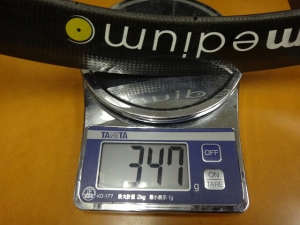
These images came through fine!
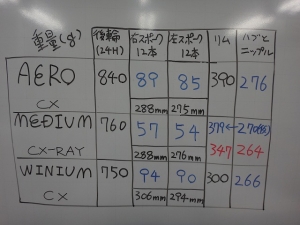
I filled in the actual measurements in red pen!
↑Stooooop that!
A customer dropped off a Colima Medium rear wheel for me to work on.
It's gotten loose from years of use, plus the hub's making weird noises,
so they want me to rebuild it.
Yeah, it's abnormally loose. Looser than any new wheel off the shelf should be.
I thought maybe the rim had shifted toward the freewheel side, but
the centering's fine and the wobble is minimal (imperceptible while riding).
Whoa, hold on!
This sticker is first-generation Medium. And I think this actually IS the first-gen Medium.
Today's Colima lineup runs 32/47/73mm depths with fairly wide carbon rims,
but the original Colima rim came only in one model—the 40mm-deep "Aero"
(we're talking rim only; there were also batten wheels and such),
and it became hugely successful across a ton of OEM customers in different spoke counts:
Campagnolo's first-generation Bora rim,
Ambrosio's X-Carbon (though later versions got the ZIPP MID-V285),
Zippeda's C416 (meaning Carbon, 40mm height, 16 holes),
and so on—a super long-seller.
Added to that later were the "Wineum," a 24mm low-profile rim,
and the "Medium," same height as the Aero but lighter.
So the Medium was positioned as "lighter Aero," and the first-generation Medium's rim
was genuinely lighter than the Aero rim itself.
But the later Mediums (as complete wheels)
are just using thinner spokes than the Aero (as complete wheels)—slightly lighter, but
otherwise sharing the same rim as the Aero. In other words, they became a shortcut model.
With this Medium, even though it's not under crazy tension,
the rim sidewall (the lateral surface inboard from the brake zone)
shows a waviness that flexes in and out when you push on it with your finger.
That's a first-gen Medium exclusive trait.
Back then, maybe Colima felt threatened by how light ZIPP's MID-V280 and V285 were,
because this usually-prudent brand made the unusual choice to chase lightness.
Among Mediums, only the first generation reaches actual weights comparable to Wineum
(we're talking complete assembled wheel weight, not rim alone).
But I'll get to that later. First, the rebuild.
Back then, Colima rims had their spoke hole pattern inverted relative to the valve hole
compared to what most rims do—what I call an "inverted rim" on this blog.
↑Hard to see because the hub flange has extra holes,
but the state in the image is the so-called "left drop."
When four spokes—the final crossing spoke and its counterpart on the far side—
don't straddle the valve hole, and you maintain that ground rule,
a left drop becomes Italian lacing (or reverse Italian lacing).
When you run an outpoke from the upper flange, the question is which side
(left or right neighbor) on the lower flange's inpoke you'll drop into.
If you do asymmetrical spoke patterns—X spokes on the freewheel side and Y on the non-freewheel—
and both X/2 and Y/2 are even OR both odd,
then the right-drop/left-drop relationship doesn't flip.
But with 4-6 lacing, X is 2 and Y is 3 (even and odd), so the relationship flips,
and right drop becomes Italian lacing.
However, that's for normal rims. On an inverted rim doing 4-6 Italian lacing,
it flips again—so it becomes left drop.
Built.

Black hub, 24-hole, black half-Comp 4-6 lacing with result-wire. Tension set to maximum as requested, hehehehe.
Back to the first-generation Medium as a complete wheel—
when the original was current, the catalog weight for a 700C tubular 24H rear wheel was:
Aero at 840g, Medium at 760g, Wineum at 750g.
(Any weight difference from Shimano vs. Campagnolo freebodies is supposed to not exist)
At face value that suggests only a 10g rim weight difference between Wineum and Medium,
but that's misleading because the spokes differ, so direct comparison is impossible.
The original catalog and duck-billed calipers.
Aero, Medium, and Wineum all used the same hub model.
Carbon hubs and piercing hubs (→here) weren't released yet.
That's what I can glean from this catalog.
The catalog listed complete wheel weights and the rim weights for Aero and Wineum.
Actually, Medium was never sold as a rim alone.
With the later Mediums, you could just buy an Aero rim and slap a Medium sticker on it,
so those don't get sold individually either.
The key detail here is that Aero and Wineum used CX spokes
while Medium used CX-RAY spokes.
Oddly, the non-freewheel spoke length differs by 1mm between Aero and Medium,
and if I estimate spoke weight from spoke density,

I get this. The estimates are in blue pen.
Assuming the hub and nipples (everything except rim and spokes) weigh 270g,
that puts the Medium rim at 379g.
From my experience, the original Medium actually felt lighter than Wineum,
so the rim should be even lighter than that...
What? "Just measure the rim directly, stop being such a drama queen"?
Shut your mouth, don't boss me around!
↑what is this guy, seriously, his attitude sucks
Sorreeeeee!
I got riddled with machine-gun fire from the thought police and became a piercing body, but

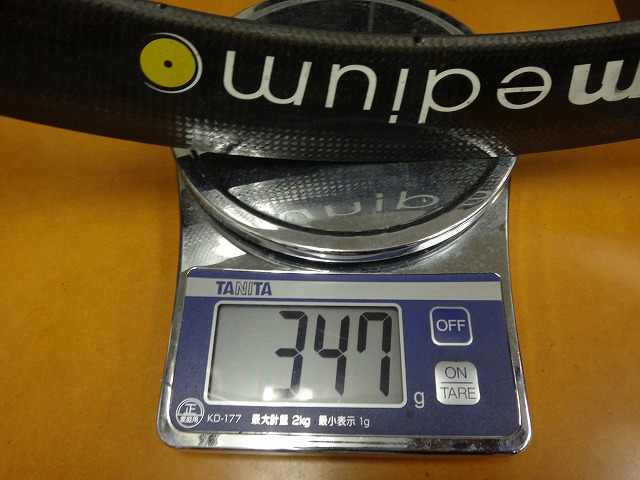
These images came through fine!
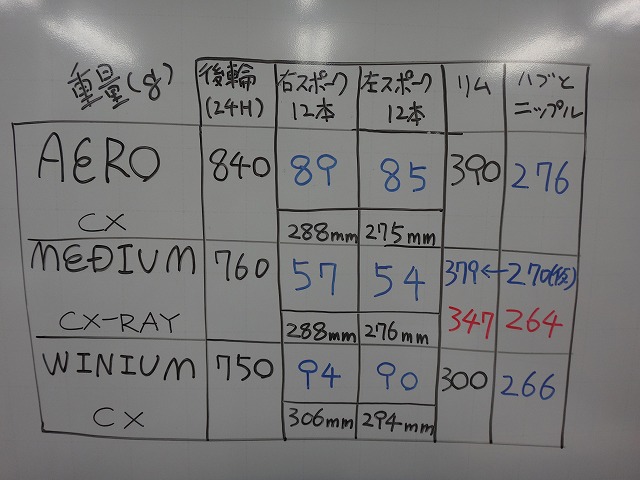
I filled in the actual measurements in red pen!
↑Stooooop that!