Today I'm writing about Colima's aluminum-body hub.
It's got some seriously impressive features.
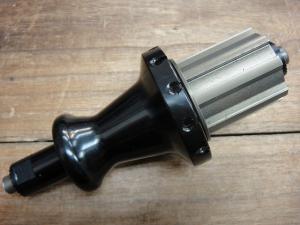
↑Here it is. The left flange position sits a bit inboard, which is slightly disappointing,
but the extremely exaggerated high-low flange design is really well thought out
for correcting spoke tension balance.
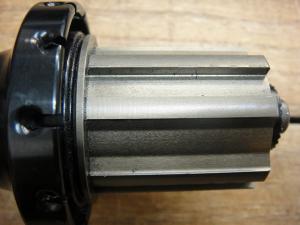
Both flanges use butted spokes,
but the spokes used on the freehub side are a bit unusual.
The direction the spokes pass through the freehub-side flange
is neither inpoke nor outpoke.
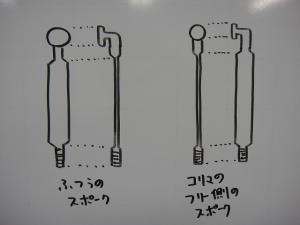
Round spokes wouldn't be a problem, but with aero spokes,
they use a special type where the neck bend is rotated 90 degrees
relative to the flattened section.
It's essentially a Colima-exclusive part.
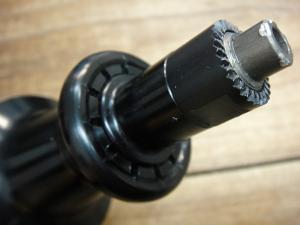
The non-freehub side uses inpoke lacing, just like a front hub.
Actually, this hub has a serious water-resistance problem—water gets in easily.
A few years back, someone used a Colima hub during the Odaigahara hillclimb in heavy rain.
After riding in downpour conditions, they left the wheel sitting around until the next race
(this is a race-day-only wheel, not for everyday use),
and on the morning of the next race, the freehub body started free-wheeling
even when pedaling forward—a real disaster.
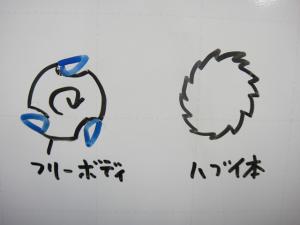
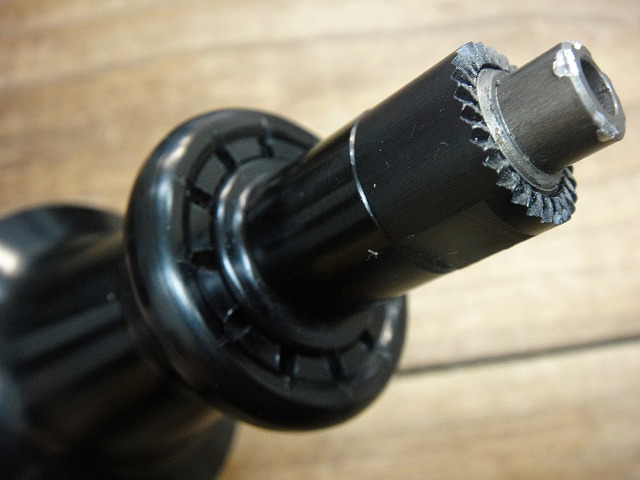
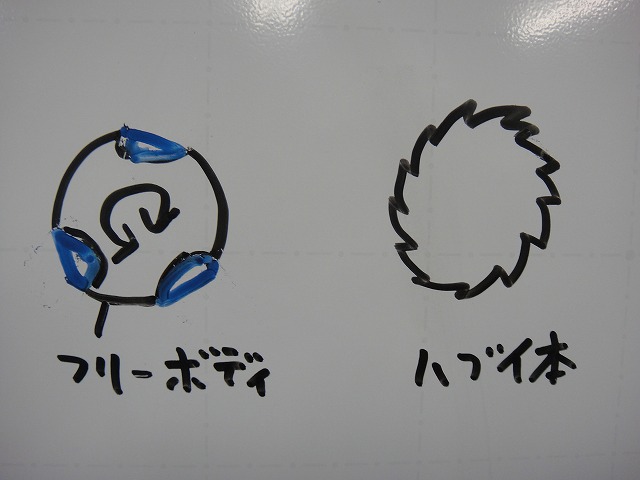
Normally the freehub pawls are always held up by spring tension,
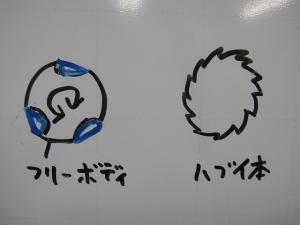
but water had seeped into the pawl area, and after sitting for hours post-race,
the pawls rusted and got stuck in the down position,
causing the freehub body to slip forward.
Colima was clearly aware of this water-resistance issue,
and as an improvement, they released this hub design:
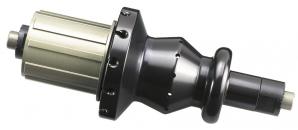
↑That's it.
The Piercing Hub—that's the model name.
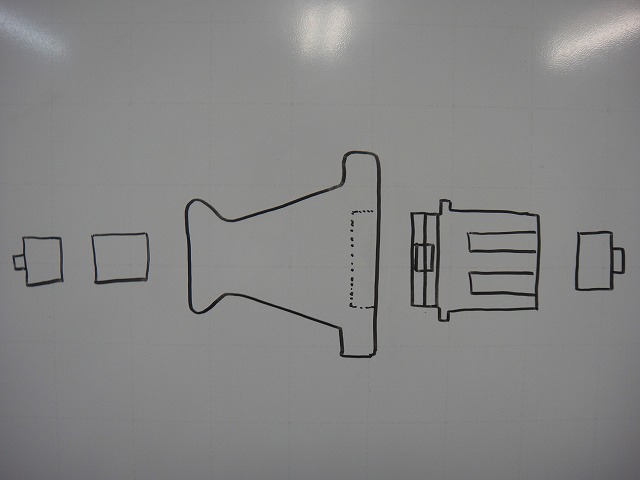
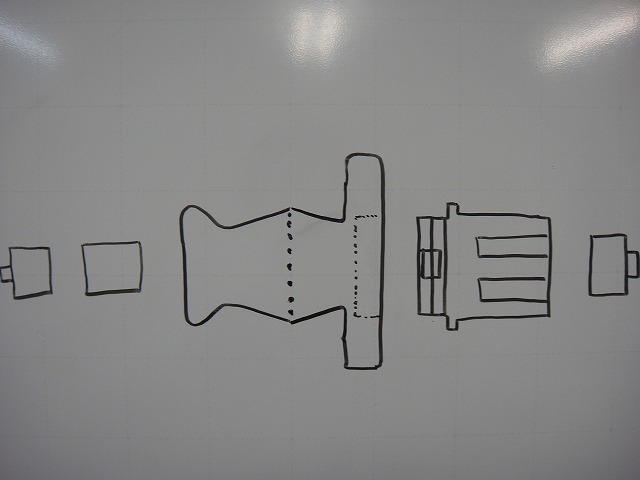
True to its name, it has holes drilled through the hub shell.
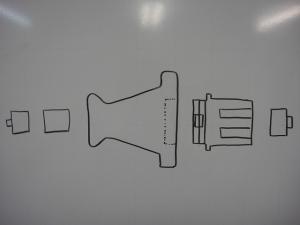
The hub shell shape is designed
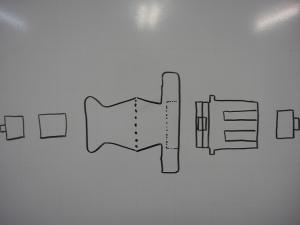
to let water escape easily through centrifugal force when the wheel rotates,

and the holes actually expel water by design.
Rather than improving water resistance, they improved water drainage—it's a pretty audacious idea,
and you'd expect nothing less from Colima.
This hub is still used in some of their models to this day.
People might have mixed opinions about it, but I really like this kind of thinking.
Obviously I'm biased as a Colima enthusiast, but still.
It's got some seriously impressive features.
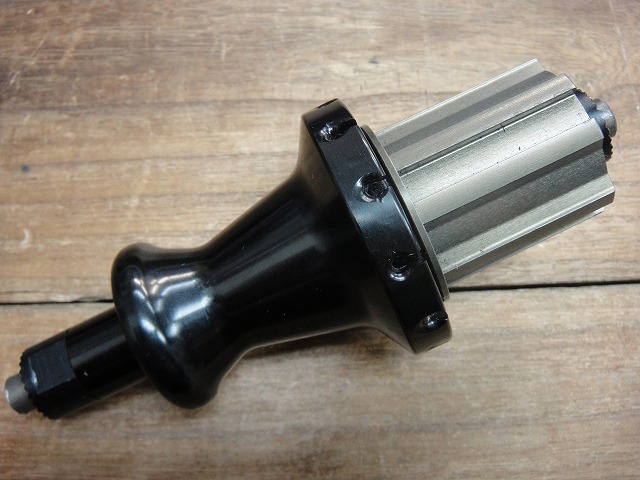
↑Here it is. The left flange position sits a bit inboard, which is slightly disappointing,
but the extremely exaggerated high-low flange design is really well thought out
for correcting spoke tension balance.
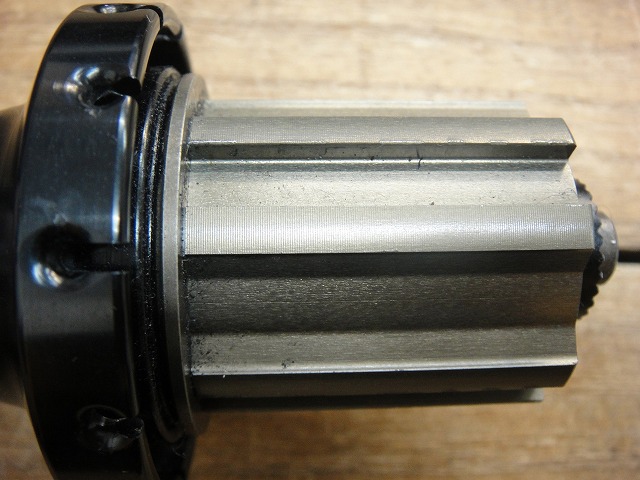
Both flanges use butted spokes,
but the spokes used on the freehub side are a bit unusual.
The direction the spokes pass through the freehub-side flange
is neither inpoke nor outpoke.
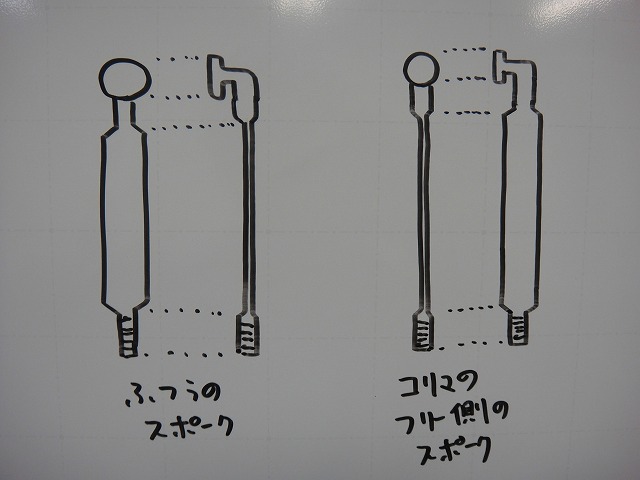
Round spokes wouldn't be a problem, but with aero spokes,
they use a special type where the neck bend is rotated 90 degrees
relative to the flattened section.
It's essentially a Colima-exclusive part.
The non-freehub side uses inpoke lacing, just like a front hub.
Actually, this hub has a serious water-resistance problem—water gets in easily.
A few years back, someone used a Colima hub during the Odaigahara hillclimb in heavy rain.
After riding in downpour conditions, they left the wheel sitting around until the next race
(this is a race-day-only wheel, not for everyday use),
and on the morning of the next race, the freehub body started free-wheeling
even when pedaling forward—a real disaster.

Normally the freehub pawls are always held up by spring tension,
but water had seeped into the pawl area, and after sitting for hours post-race,
the pawls rusted and got stuck in the down position,
causing the freehub body to slip forward.
Colima was clearly aware of this water-resistance issue,
and as an improvement, they released this hub design:

↑That's it.
The Piercing Hub—that's the model name.
True to its name, it has holes drilled through the hub shell.
The hub shell shape is designed
to let water escape easily through centrifugal force when the wheel rotates,
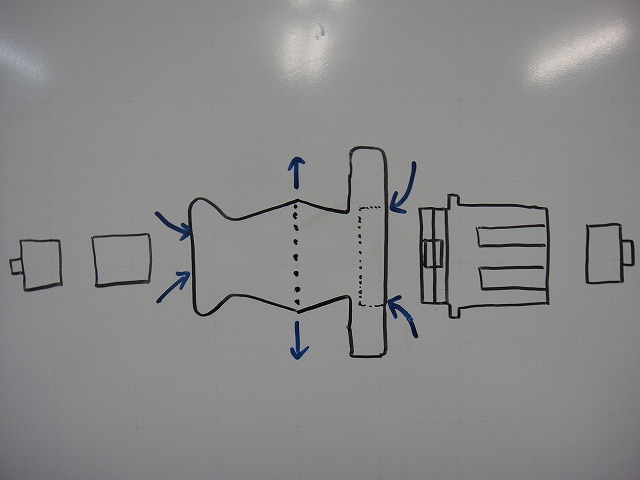
and the holes actually expel water by design.
Rather than improving water resistance, they improved water drainage—it's a pretty audacious idea,
and you'd expect nothing less from Colima.
This hub is still used in some of their models to this day.
People might have mixed opinions about it, but I really like this kind of thinking.
Obviously I'm biased as a Colima enthusiast, but still.