Another wheel day (you know the drill).

This is a follow-up to the situation from the other day with a 24H Star hub and
a 28H XR31T rim that I had on hold.
The customer's order was definitely for 24H,
so after a shipping error on the supplier's end, I received
and took custody of a new 24H rim.

The XR31T comes in a version where the rim holes aren't centered—it's an offset design,
and this one is offset specifically for rear wheel use.

Star hub 24H, black semi-competition lacing.
I plan to do nipple threading, but if you think about why you'd do it,
the point is pretty thin.
It's pretty rare to see the final crossing on the non-freewheel side stay this rigid.
People tend to assume that because it's super high-low flange, left and right spoke tension is similar—
but that's a misconception. The reason left and right spoke tension is closer
is primarily because the flange width is somewhat narrow, so you shouldn't take that at face value.
And of course, in this wheel's case, the offset rim and
left-right diameter-different lacing are also playing a role.
Since this rim is also a wide rim, it has more latitude for offsetting the rim holes
compared to a narrow rim—I think that shows up in the rigidity of the non-freewheel side.
I built a rear wheel with non-offset XR300 rim and Star hub using both
semi-competition and semi-professional lacing for comparison, and
the semi-competition XR31T definitely corrected the left-right spoke tension difference more
than the semi-professional XR300.
So the offset rim is the bigger factor than the 15% weight difference on the freewheel-side spokes.
As I wrote before,
the DT rear hub has its left flange set inward by more than one flange thickness
compared to the Evelite hub, and the dimensions are like a super high-low flange—
it's just recovering the loss from the narrow flange with the high-low flange,
and in terms of lateral stiffness, I think they end up being roughly equivalent.
There might be tradeoffs in spoke aerodynamics and bearing availability and such,
but basically you can choose based on preference.
One more important thing, though.
The DT Star Ratchet rear hub has its Shimano freebody spline end dimension
sticking out considerably further than Shimano OEM.
Because of this, Bontrager and FFWD, which use DT hubs,
and some models from Lightweight need
"shifter adjustment calibrated specifically for that hub alone."
Mavic, Campagnolo, Easton, and Novatech's
self-proclaimed Shimano 11-speed-compatible freebodies don't have that much dimensional difference.
And in fact, the Star hub also has the same thing—
its freebody end position is further out than Shimano OEM.
In other words, the sprocket assembly shifts slightly outward overall.

The Star rear hub comes with two 0.5mm spacers (by our measurement),
but there's no reason to put a spacer in the Star hub when it already has the sprocket sitting further out than Shimano OEM.
Which means these spacers are for
putting into other hubs to bring them closer to the Star hub's dimensions.
Just measured with calipers—the depth from the right dropout to the freebody end is
42.4mm on the Evelite hub and 41.6mm on the Star hub.
At 10-speed and above, a 0.8mm discrepancy will definitely cause shifting problems.
A 0.5mm spacer—as I mentioned when discussing
Shimano and Campagnolo 11-speed compatibility (→here)—
there's a 0.7mm spacer with stable supply,
so we sometimes fine-tune with a 0.7mm instead.

↑And that's this...


Sorry, something dirty got in the shot, but here it is.
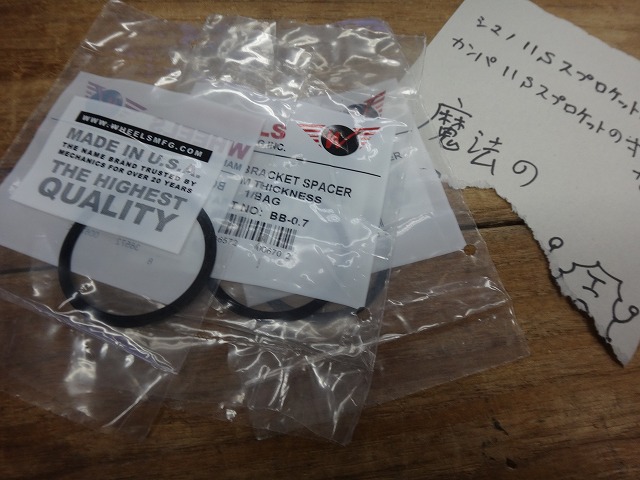
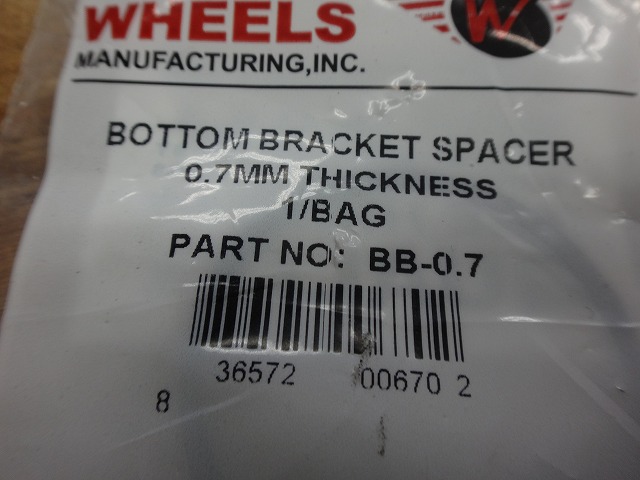
A 0.7mm spacer for BSC bottom bracket use from Wheels Manufacturing,
at our retail price of ¥360 per piece (tax included).


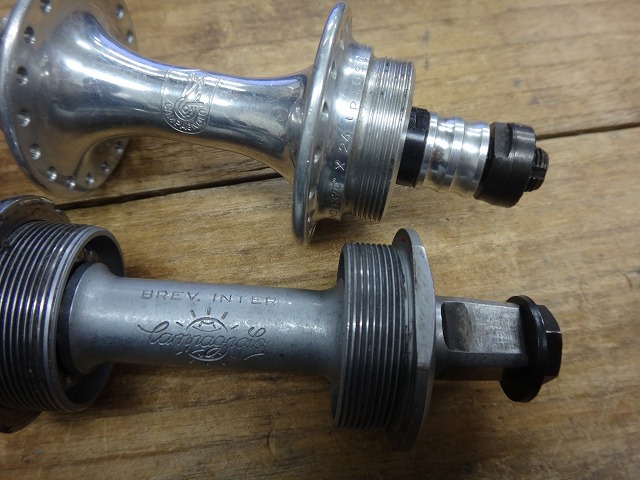
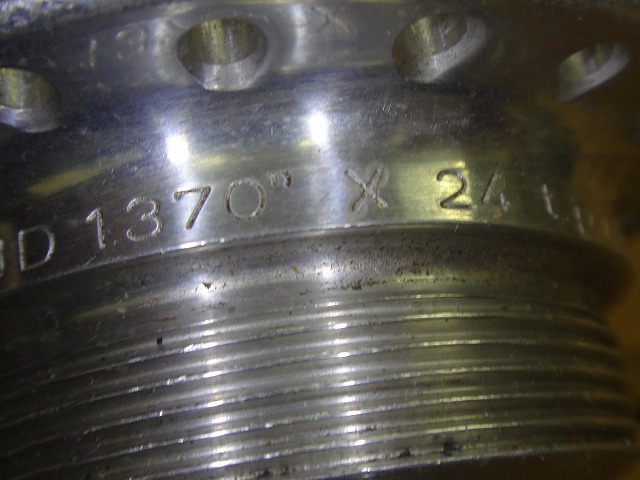
The BSC bottom bracket has a left-hand thread on the right and right-hand thread on the left, and that left thread
is the same size as the gear-mounting thread on a fixed-gear hub or track hub.
When Shimano first released the freebody hub,
they made the spline tooth height the same as the fixed-gear thread pitch diameter, so
a BSC (JIS) bottom bracket spacer can work as a freebody spacer.
Conversely, you can also use a 1.0mm spacer designed for inside a 10-speed sprocket
as a bottom bracket spacer.
So, when fine-tuning the Star hub with all the other hubs,
using one Wheels Manufacturing spacer is probably better than
using one or two of the 0.5mm spacers that come with the Star hub.

This is a follow-up to the situation from the other day with a 24H Star hub and
a 28H XR31T rim that I had on hold.
The customer's order was definitely for 24H,
so after a shipping error on the supplier's end, I received
and took custody of a new 24H rim.

The XR31T comes in a version where the rim holes aren't centered—it's an offset design,
and this one is offset specifically for rear wheel use.
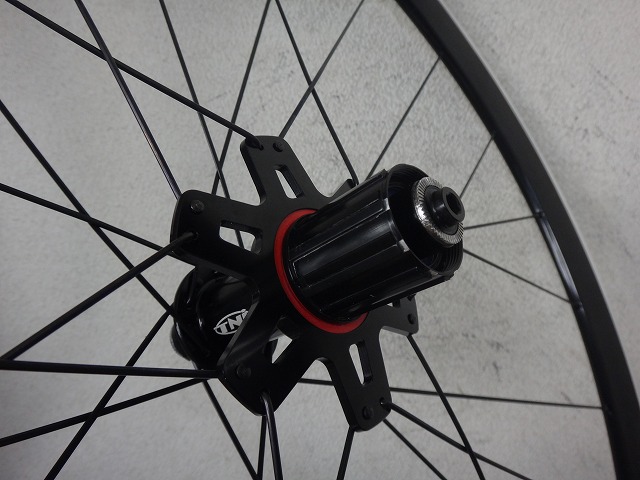
Star hub 24H, black semi-competition lacing.
I plan to do nipple threading, but if you think about why you'd do it,
the point is pretty thin.
It's pretty rare to see the final crossing on the non-freewheel side stay this rigid.
People tend to assume that because it's super high-low flange, left and right spoke tension is similar—
but that's a misconception. The reason left and right spoke tension is closer
is primarily because the flange width is somewhat narrow, so you shouldn't take that at face value.
And of course, in this wheel's case, the offset rim and
left-right diameter-different lacing are also playing a role.
Since this rim is also a wide rim, it has more latitude for offsetting the rim holes
compared to a narrow rim—I think that shows up in the rigidity of the non-freewheel side.
I built a rear wheel with non-offset XR300 rim and Star hub using both
semi-competition and semi-professional lacing for comparison, and
the semi-competition XR31T definitely corrected the left-right spoke tension difference more
than the semi-professional XR300.
So the offset rim is the bigger factor than the 15% weight difference on the freewheel-side spokes.
As I wrote before,
the DT rear hub has its left flange set inward by more than one flange thickness
compared to the Evelite hub, and the dimensions are like a super high-low flange—
it's just recovering the loss from the narrow flange with the high-low flange,
and in terms of lateral stiffness, I think they end up being roughly equivalent.
There might be tradeoffs in spoke aerodynamics and bearing availability and such,
but basically you can choose based on preference.
One more important thing, though.
The DT Star Ratchet rear hub has its Shimano freebody spline end dimension
sticking out considerably further than Shimano OEM.
Because of this, Bontrager and FFWD, which use DT hubs,
and some models from Lightweight need
"shifter adjustment calibrated specifically for that hub alone."
Mavic, Campagnolo, Easton, and Novatech's
self-proclaimed Shimano 11-speed-compatible freebodies don't have that much dimensional difference.
And in fact, the Star hub also has the same thing—
its freebody end position is further out than Shimano OEM.
In other words, the sprocket assembly shifts slightly outward overall.
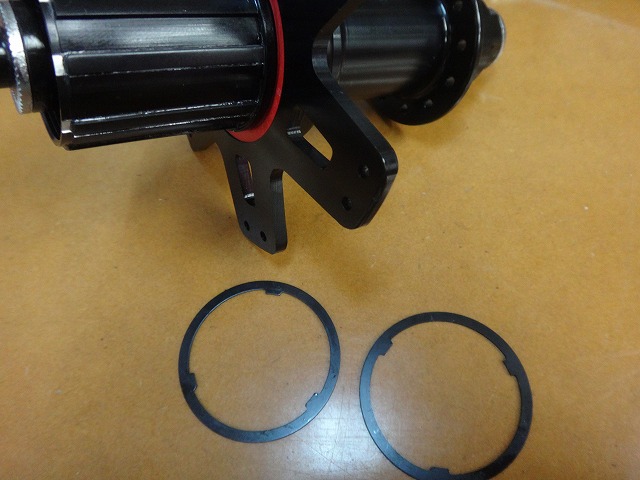
The Star rear hub comes with two 0.5mm spacers (by our measurement),
but there's no reason to put a spacer in the Star hub when it already has the sprocket sitting further out than Shimano OEM.
Which means these spacers are for
putting into other hubs to bring them closer to the Star hub's dimensions.
Just measured with calipers—the depth from the right dropout to the freebody end is
42.4mm on the Evelite hub and 41.6mm on the Star hub.
At 10-speed and above, a 0.8mm discrepancy will definitely cause shifting problems.
A 0.5mm spacer—as I mentioned when discussing
Shimano and Campagnolo 11-speed compatibility (→here)—
there's a 0.7mm spacer with stable supply,
so we sometimes fine-tune with a 0.7mm instead.

↑And that's this...
Sorry, something dirty got in the shot, but here it is.
A 0.7mm spacer for BSC bottom bracket use from Wheels Manufacturing,
at our retail price of ¥360 per piece (tax included).

The BSC bottom bracket has a left-hand thread on the right and right-hand thread on the left, and that left thread
is the same size as the gear-mounting thread on a fixed-gear hub or track hub.
When Shimano first released the freebody hub,
they made the spline tooth height the same as the fixed-gear thread pitch diameter, so
a BSC (JIS) bottom bracket spacer can work as a freebody spacer.
Conversely, you can also use a 1.0mm spacer designed for inside a 10-speed sprocket
as a bottom bracket spacer.
So, when fine-tuning the Star hub with all the other hubs,
using one Wheels Manufacturing spacer is probably better than
using one or two of the 0.5mm spacers that come with the Star hub.